


Now Playing on The Tonearm:

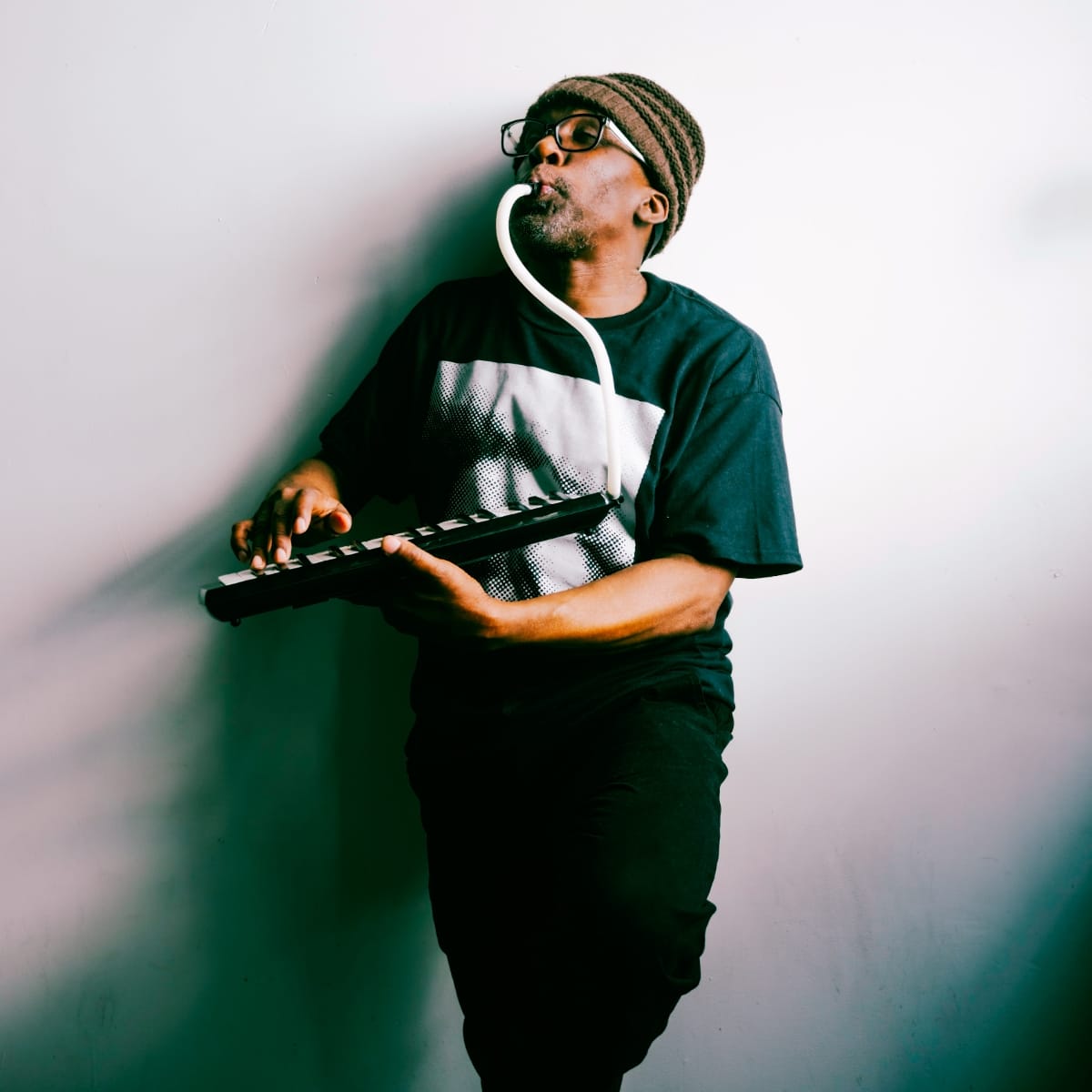
A Monument in Plain Sight — Charles Joseph Smith's Chicago
Dr. Charles Joseph Smith has been one of Chicago's most recognized faces and least-known composers—a paradox that Sooper Records' reissue 'Collected Works and the War of the Martian Ghosts' is now, belatedly, beginning to resolve. Interview by khagan aslanov.
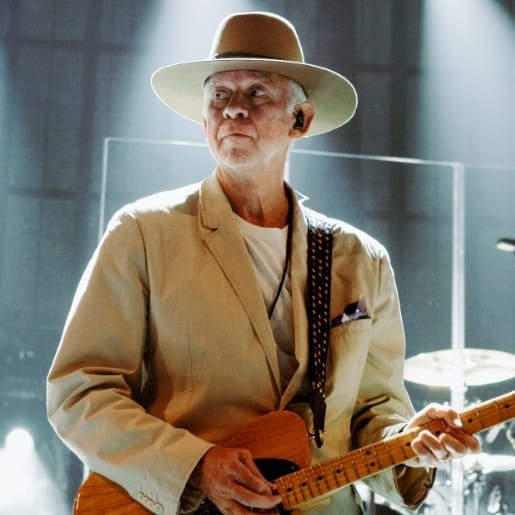
Latin Roots in the Art Rock Canopy — Phil Manzanera's 'Revolución to Roxy'
The Roxy Music guitarist discusses his memoir 'Revolución to Roxy,' his lifelong immersion in Latin music and culture, the family secrets unearthed along the way, and a career built in close collaboration with everyone from Brian Eno to Enrique Bunbury. Interview by Bill Kopp.
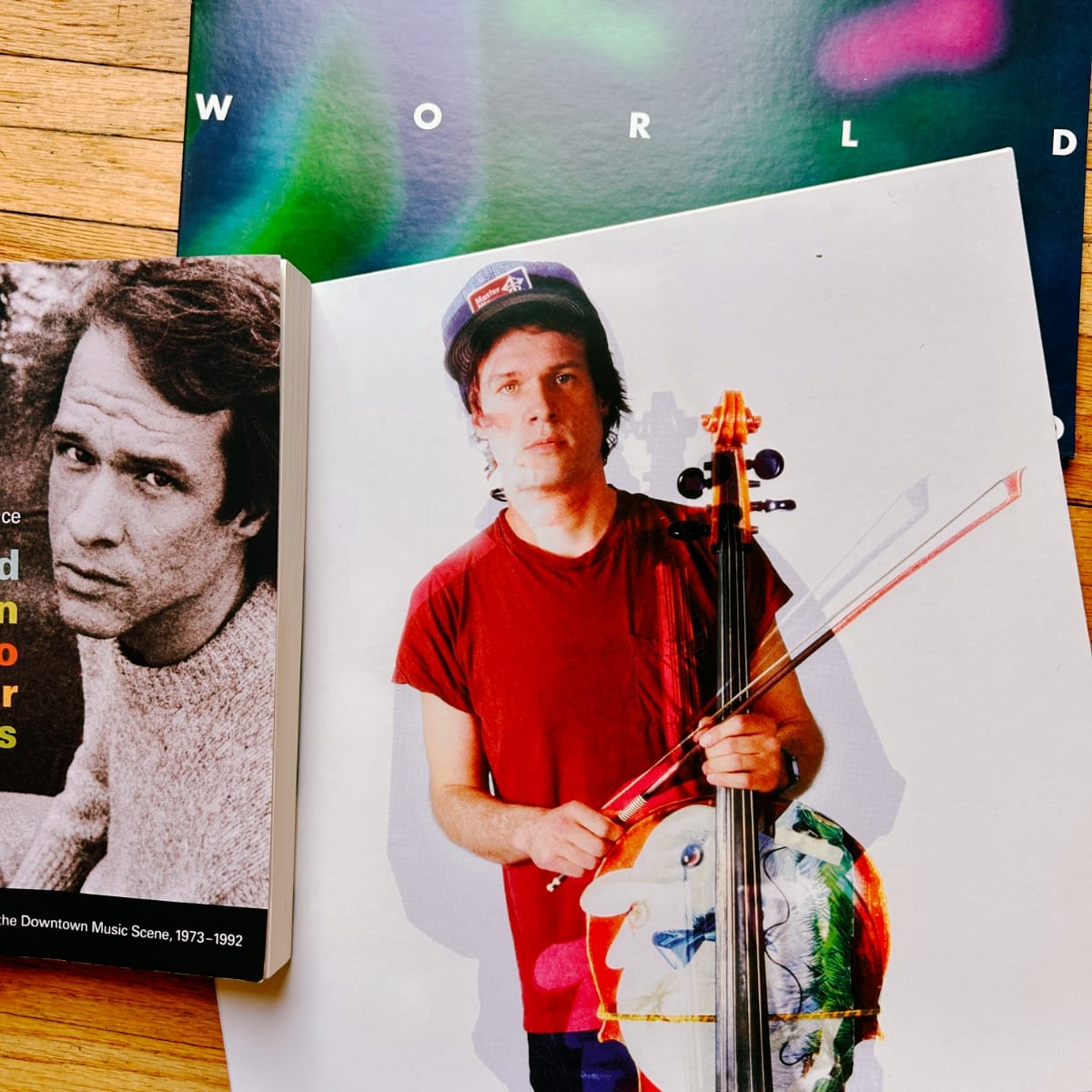
The Radically Earnest Legacy of Arthur Russell
Poet Reuben Gelley Newman and scholar Matt Marble join Carolyn Zaldivar Snow for a roundtable on Arthur Russell's radical gentleness, his uncategorizable output, and the serendipitous webs his music keeps spinning. Interview by Carolyn Zaldivar Snow.
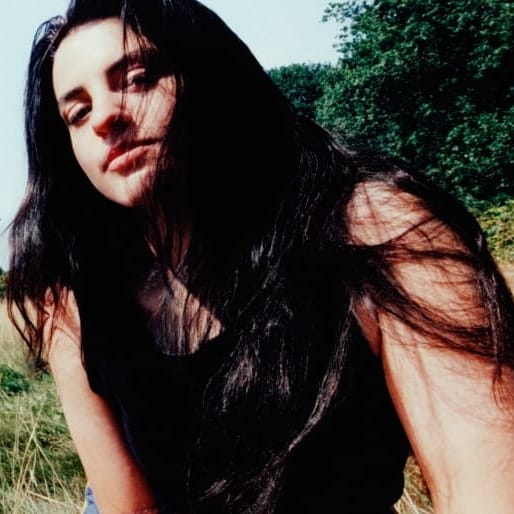
Modern Woman Between the Whisper and the Shriek
Post-punk abrasion, unconventional violin, and lyrics sharpened by a literature degree converge on Modern Woman's debut 'Johnny's Dreamworld,' an album built around the friction of being told you're simultaneously too feminine and not feminine enough. Interview by Damien Joyce.
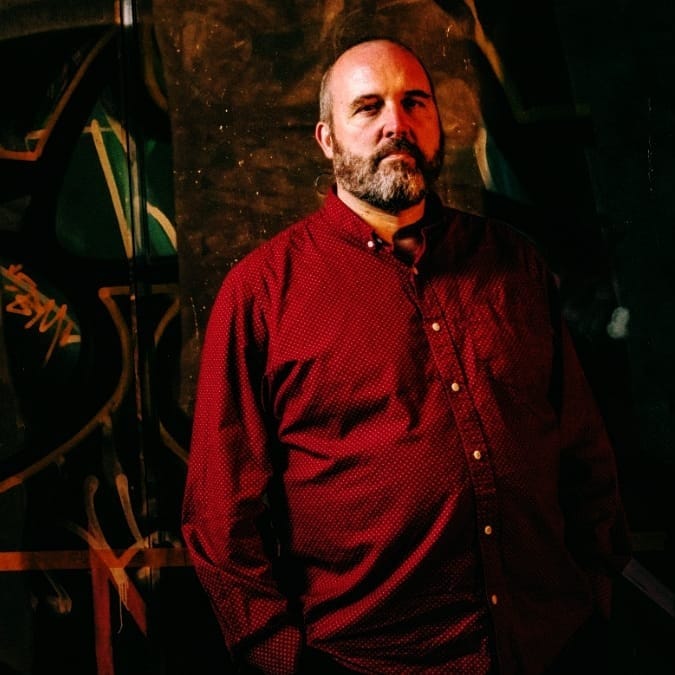
Starting at Square Twenty-Seven — Nick Fraser's 'Areas'
On 'Areas,' his trio's third album, Nick Fraser brings Messiaen-inflected harmony, electroacoustic interludes shaped by John Kameel Farah, and a compositional vocabulary deepened by eleven years of playing with saxophonist Tony Malaby and pianist Kris Davis. Interview by Lawrence Peryer.
This Week's Episode of The Tonearm Podcast:
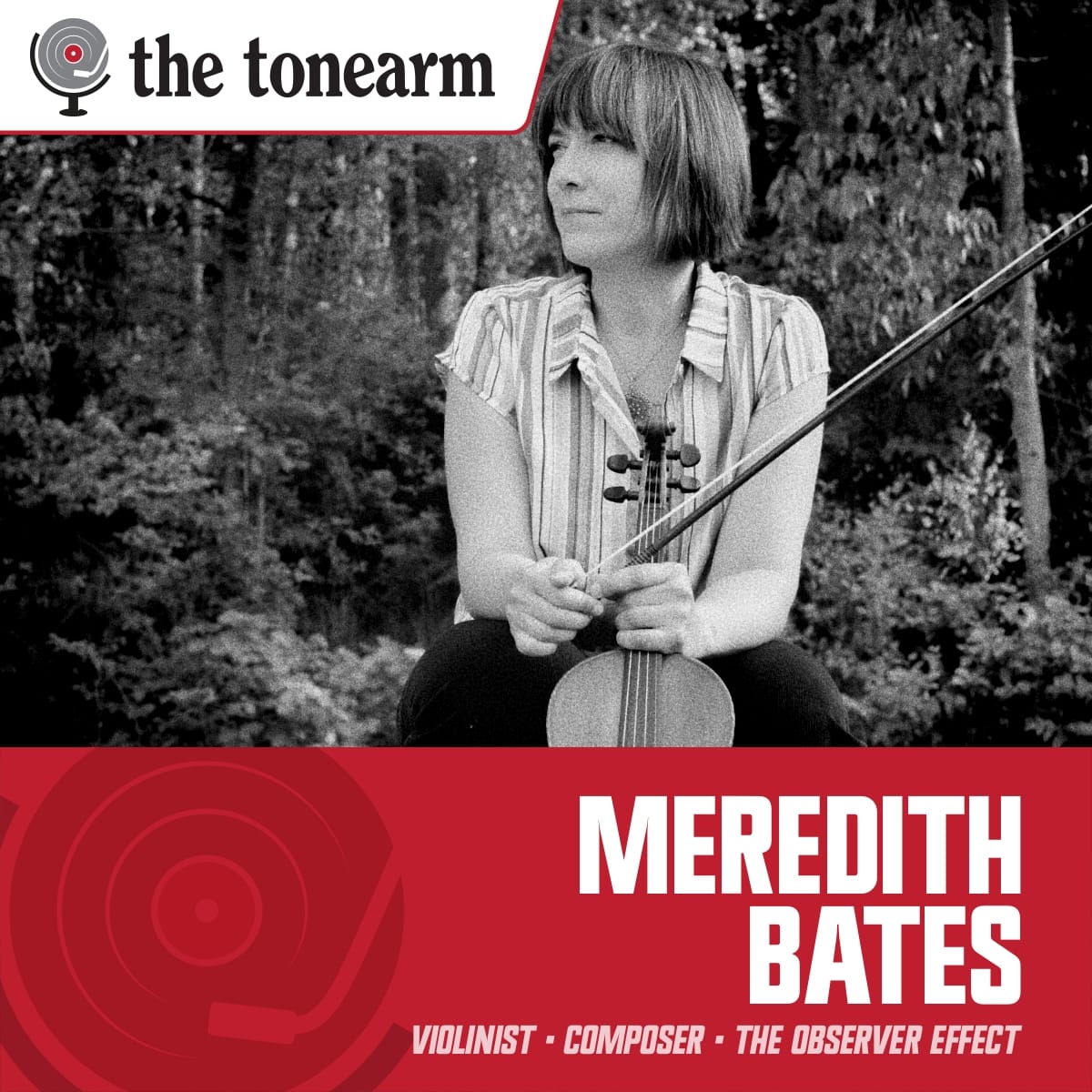
Meredith Bates: The Quiet Science of Sound Worlds
On ‘The Observer Effect’, Canadian composer Meredith Bates builds long-form sound worlds from violin, electronics, and the recordings of the natural world—and finds that art, love, and politics are harder to separate than they appear.
Rotations
Let's check in with Lawrence Peryer as he unspools the latest episode of Rotations, the official radio show of The Tonearm:
When I listened back to the archive of this episode of the radio show, I had a gleeful, somewhat subversive feeling of satisfaction from being able to play multiple 10+ minute free jazz pieces on the radio. It is also satisfying to be building an archive of what are essentially one-hour mixtapes to share with you and to revisit myself.
This coming Tuesday's episode will feature tributes to Miles Davis, as the show airs on what would have been his 100th birthday. I know there are salutes to him coming from all directions, and I am taking a slightly different approach with mine. I hope you will have a listen. 11 PM Pacific on Space 101.1 FM in Seattle or streaming everywhere at space101fm.org.

The Hit Parade:
"['Amazing Grace'] is a recognition of and repentance for America's original sin, an assurance that no wrong is too definitive for the chance of redemption, a promise that we can always do better." ❋ “I knew I was going to work with the records that were mysterious to me, which were the ones from far away. And I figured it would have something to do with colonialism or imperialism; my interests lie there, and in how music migrates, and develops over that migration.” ❋ "After 26 years, 16 albums, thousands of performances, three key personnel shifts, a handful of record labels and an inestimable impact on the modern jazz landscape — the group that named their 2010 album 'Never Stop' is calling it quits. ❋ Modern Ethiopian music stretches far beyond that narrow frame, moving through devotional piano records, military-band arrangements, cassette-era synth experiments and contemporary reinterpretations that still carry the same melodic DNA underneath." ❋ "[The Clash's show] in Berkeley had an audience of students, not spitters. In Joe Strummer’s words, 'boring snobs'. It was one big reason why The Clash added a secret San Francisco show in a grungier San Francisco venue at half the price." ❋ For those who are troubled by inequality, who believe in worker power, and would have their lifestyle better reflect their values, music is an area in which it is entirely possible to limit one’s consumption to reflect the labor required to produce albums." ❋ "A slightly surreal world of fiddle bands, medieval bagpipes, urban community dances, and avant-garde accordion compositions—it’s a little surprising that the folk music of Belgium isn’t more widely known today." ❋ "Social activism and jazz have a long mutual history that arguably reached an apex with the resistance music of the '60s … [Bassist David Ambrosio's band] Civil Disobedience keeps the flame of the '60s alive, not just rhetorically, but musically as well." ❋ “In a sign of how much has changed, Bargeld was awarded the Order of Merit of the Federal Republic of Germany last year, the country’s highest federal honour, recognising him as a role model for creative minds across the nation. An accolade that would have surely been unimaginable to his younger self, squatting buildings in the rubble-strewn playground of postwar West Berlin.” ❋ “When we think of ‘America’ and an ‘American composer,’ it’s been some random white man, and that doesn’t represent the populace of who makes up America — and I should say the U.S. specifically. I love that this project exists, because we’re going to hear a lot more new voices in the coming years.” ❋ “Evoking neither the bounce of East Bay hip-hop nor the skank of Gilman Street punk, the Dead were a separate, baffling inheritance, a weather system I could see on the horizon but couldn’t yet read.” ❋ "BTS may be a factory bent on generating fans, cash, and attention, and its metaphor for itself may be disturbingly military, but at least it is an army which is non-patriarchical, gender fluid, LGBTQ friendly, age non-specific, and on the side of justice . . ." ❋ For more curated music links, be sure to follow The Tonearm’s feeds on Bluesky and Mastodon.
New Music Recommendations: aja monet – the color of rain (RIYL: Gil Scott-Heron, Saul Williams, Moor Mother; surrealist vocal collage over live ensemble with warped post-production) ❋ Ava Mendoza – Alive Alone, Alive Together (RIYL: Blues-inflected avant-guitar, psychedelic edge; Bill Orcutt, Fred Frith) ❋ BAG — This House is a Body (RIYL: Ellen Zweig, early NYC avant-performance art; lysergic poetry over caustic synthesis and field recording, 'scattered with angular detritus and protruding sonic clutter’) ❋ Ed O'Brien - Blue Morpho (RIYL: Radiohead, duh; hypnotic, spiritually inflected guitar music rooted in Wim Hof breathwork and cold-exposure ritual) ❋ Joel Futterman & William Parker — Transcendent Universe (RIYL: Free jazz, ecstatic improvisation; Cecil Taylor, Bobby Few, Don Pullen) ❋ Jungstötter – Sustained (RIYL: Experimental art-pop; ANOHNI, Scott Walker, late period Talk Talk)
The Deepest Cut:
Phillip Golub's previous albums, Filters and Abiding Memory, established him as a Brooklyn-based pianist and composer working at the demanding end of contemporary jazz. Partisan Ship, his third record, is built on microtonal scales and intervals that fall outside the twelve-tone framework jazz has largely relied on, even at its most experimental edges.
The album's origins trace to an invitation from violinist Layale Chaker, who asked Golub to play microtonal keyboard in her Sarafand Ensemble. The experience drew him further into the pitch system's possibilities, and he began organizing monthly Zoom sessions with colleagues — a loose collective that came to call itself the Microtonal Composers Club. Each meeting proposed a scale or melody, and participants wrote short sketches of roughly a minute each. Those sketches became the source material for Partisan Ship.
The compositions run to a 157-page score. Golub recorded them largely at home, with collaborators including trumpeter Amir ElSaffar, clarinetist Yuma Uesaka, saxophonists Anna Webber and David Leon, and violinist Layale Chaker, who contributed parts remotely or in session. The album's title works on two levels: the ship as a vessel of political allegiance, and partisanship as a condition of the present moment. Track titles like "loyalty oath," "mutiny meeting," and "utopian micronation" extend the conceit. Golub has said he sees the music's density as a reflection of the world's own, absorbed into the work through the act of its making.
At first listen, I found myself utterly fascinated by Partisan Ship and needed to learn more. I reached out to Golub for his thoughts on this project, its genesis, its non-musical overtones, and—of course—something he loves that more people should know about.
The most notable forays into microtonal jazz have been by horn players (e.g., Steve Lehman, Amir ElSaffar, Anna Webber). These players developed an approach to playing microtones on their respective instruments that then informed their compositions. Guitarist Alec Goldfarb also fits this description, with his record Fire Lapping at the Creek. Keyboardists can't have this relationship to microtonality. We have to tune our instrument or program our synths or computer, and thus let the instrument do all the work.
One of my biggest influences has been my close friend and colleague, drummer-composer Vicente Atria. His record and microtonal project, Orlando Furioso, was a revelation. I had the honor of being invited by Vicente to produce that record, which showed me up close just as I was moving to New York that it was possible to make a record with jazz musicians that was vast in scope, intricately composed, recorded and produced in such a way to use the studio as an instrument and tool to enhance the expressive possibilities of the ensemble, and just generally full of life. I was also starting to explore microtonality in other projects. My ongoing relationship with the label Greyfade led to the release of a single-track album titled Loop 7. Loop 7 was written using 22 equal divisions of the octave, instead of the usual 12 on the piano. We managed to do some studio trickery to actually record this on a real piano. I'd been bitten by the microtonal bug, and I began exploring what writing microtonal jazz might look like for me.
My initial prompt for Partisan Ship was to create microtonal music for a jazz ensemble, with my own part playable on a standard MIDI keyboard. As I continued writing, I realized that I was not exactly writing music for a new band, but rather I was making a suite for the recording studio. That realization unlocked many possibilities. The sound world became imaginary: I could have layers of instruments or the same person playing multiple instruments at once. I could have waves of electronic sound, interludes made purely through copy and pasting audio, using audio effects, and so on. I could lean into all kinds of impracticalities, notably, writing extremely hard microtones, hard rhythms, and hard passages to balance as an ensemble.
I do have a version of this music that is performable live (NYC adjacent folks: we're doing a release show at Sisters in Brooklyn on July 7th!). Some sections of the music created primarily on a computer are impossible to perform live. That then becomes a fascinating improvisational prompt for the live ensemble: how can we recreate the feeling and spirit of these moments in real time? There are elements of this dynamic already in part of my quintet project, but Partisan Ship takes this approach much further.
We live in a time where liberalism tells us that to be ideological (or 'partisan') is a bad thing. The dominant idea of liberalism is that ideology is antithetical to progress or even democracy itself. Other worldviews hold that ideology is essential; without it, democracy reduces to merely a game for the elites to play, a game over who has more money to buy off factions of society. I believe one of the main problems of the early 21st century is that we haven't had enough ideology, not enough partisanship. The left, in particular, has largely lost its ability to clearly identify what it is and what it isn’t, weakening it and allowing everything to shift much further to the right.
I don't really think this music contains these opinions or analyses. But I see the project as a whole as some kind of musical analogy for the type of politics I believe we should be living—the music, at least, communicates the attitude with which I think we should carry ourselves in the world. The project is, in this sense, ideological or partisan. It is a far-fetched idea, almost doomed to failure. 'Why has socialism failed everywhere it has been tried?' they love to ask. But even though the project seemed almost impossible from the start—I didn't even really know if what I was writing for everybody was possible to play on their instruments, and indeed sometimes it wasn't—I went ahead with it anyway because I believed these ideas must be realizable.
It is in this sense that I am invoking these imaginary 'partisans' out there somewhere, who are fighting for their cause against all odds. I don't know if people will get that message from the music, but I'm hoping it might help them imagine something like this. I don't want to dictate too much of a purpose or narrative to the music. It's a jazz album, after all, not a political platform. Perhaps by the time listeners reach the utopian micronation (where microtonality reigns supreme), they can imagine a world without many of the seemingly immovable rigidities we live with day in and day out.
And now a few beloved things Phillip would like you to consider:
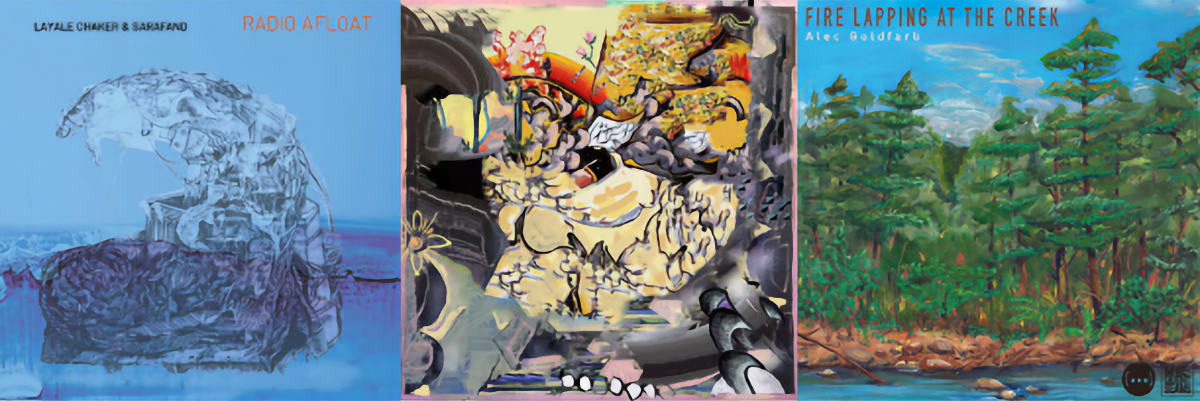
Here are three records by friends and collaborators that I wish more people knew about. They all happen to deal extensively with microtonality, as well:
- Layale Chaker's Sarafand Ensemble — Radio Afloat
- Vicente Atria — Orlando Furioso
- Alec Goldfarb — Fire Lapping at the Creek
Each of these records is a window into a whole world where things are different. Music has the capacity to transport us outside our everyday, to suggest to us, however abstractly or subtly, that things might just be different from what they are. It's not every day that you come across music that manages to take you there. These three records do that for me. I hear possibilities of alternate worlds opening up.
Run-Out Groove:
- The Tonearm is a reader-supported publication, free of advertising and paywalls. Our supporters help fund our writers and make the site possible. Please consider joining and helping us to continue our mission.
- Join the rapscallions of The Tonearm on our new Slack community.
- Sign up to receive our latest articles directly to your inbox in a snazzy, easy-to-read email version. Just go to your account, manage your email preferences, and flick the lever to receive The Total Tonerm.
- The easiest and best way you can help us? Please share this newsletter and our stories with your friends.
Thank you for reading! We'll see you again next week. 🚀


Comments