


While he's best known as the innovative guitarist with Roxy Music, Phil Manzanera's musical endeavors have long extended far beyond the limits of that boundary-pushing art rock ensemble. From his time with pioneering Canterbury group Quiet Sun to his many solo albums, from his work with artists like David Gilmour, Brian Eno, and Godley & Creme, from his production work for (and songwriting with) prominent rock en Español artists, Manzanera has always charted a fascinating path.
Phil Manzanera published his memoir/autobiography Revolución to Roxy in 2024, and this year he is mounting a tour in support of the book. Part solo concert and part Q&A session, Manzanera's live dates explore not only his musical adventures—curating festivals, having his work sampled by hip-hop giants, and much more—but also his personal life. That life has seen him experience the Cuban revolution as a child and, in more recent years, embark on a journey to untangle the complicated story of his heritage.
At age 75, Phil Manzanera is still bursting with boundless creativity, energy, and wit. Ahead of his run of U.S. appearances, I spoke with Manzanera about Revolución to Roxy, his famous band's often fractious history, his deep and lifelong immersion in Latin music and culture, his myriad musical projects, and what the future holds. The conversation has been lightly edited for length and clarity.
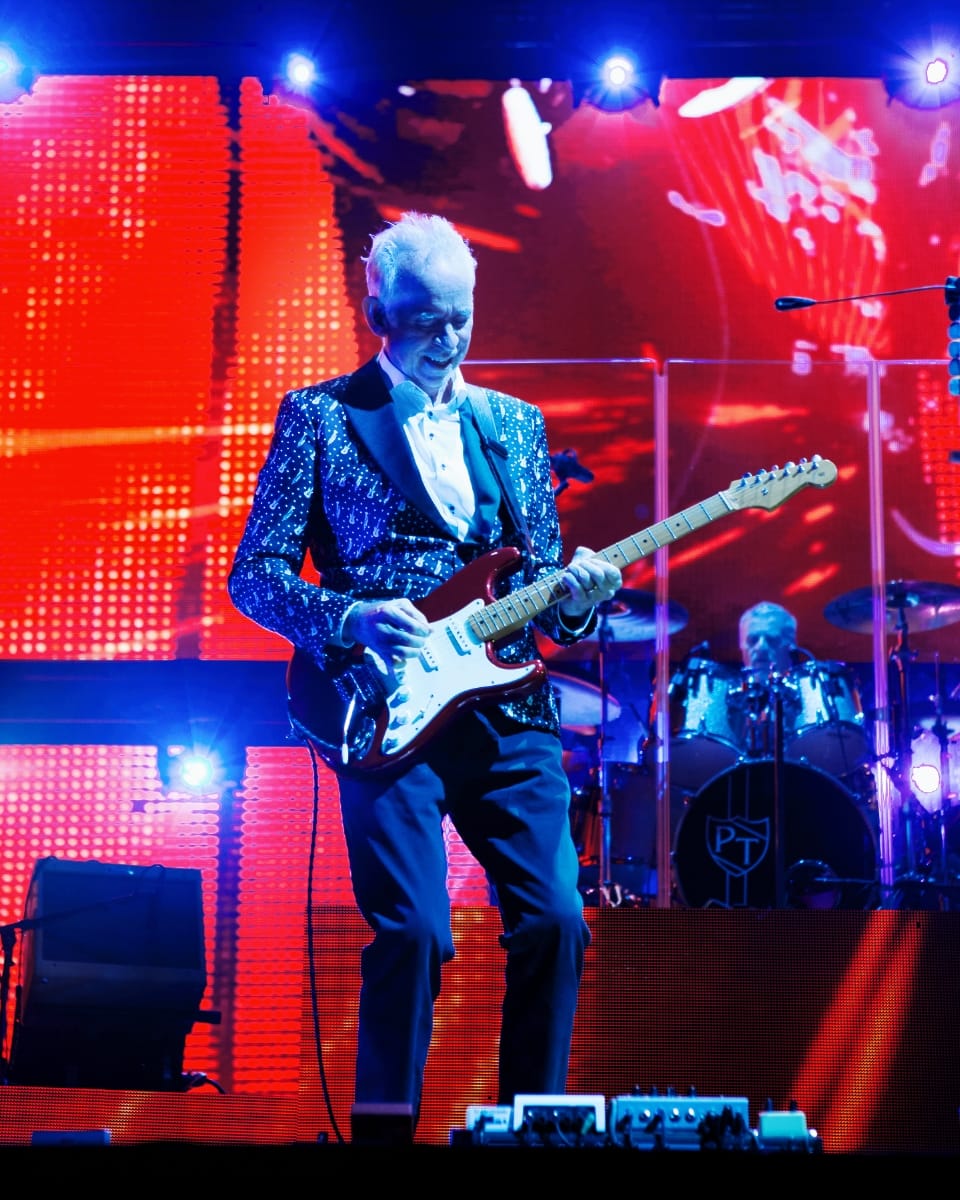
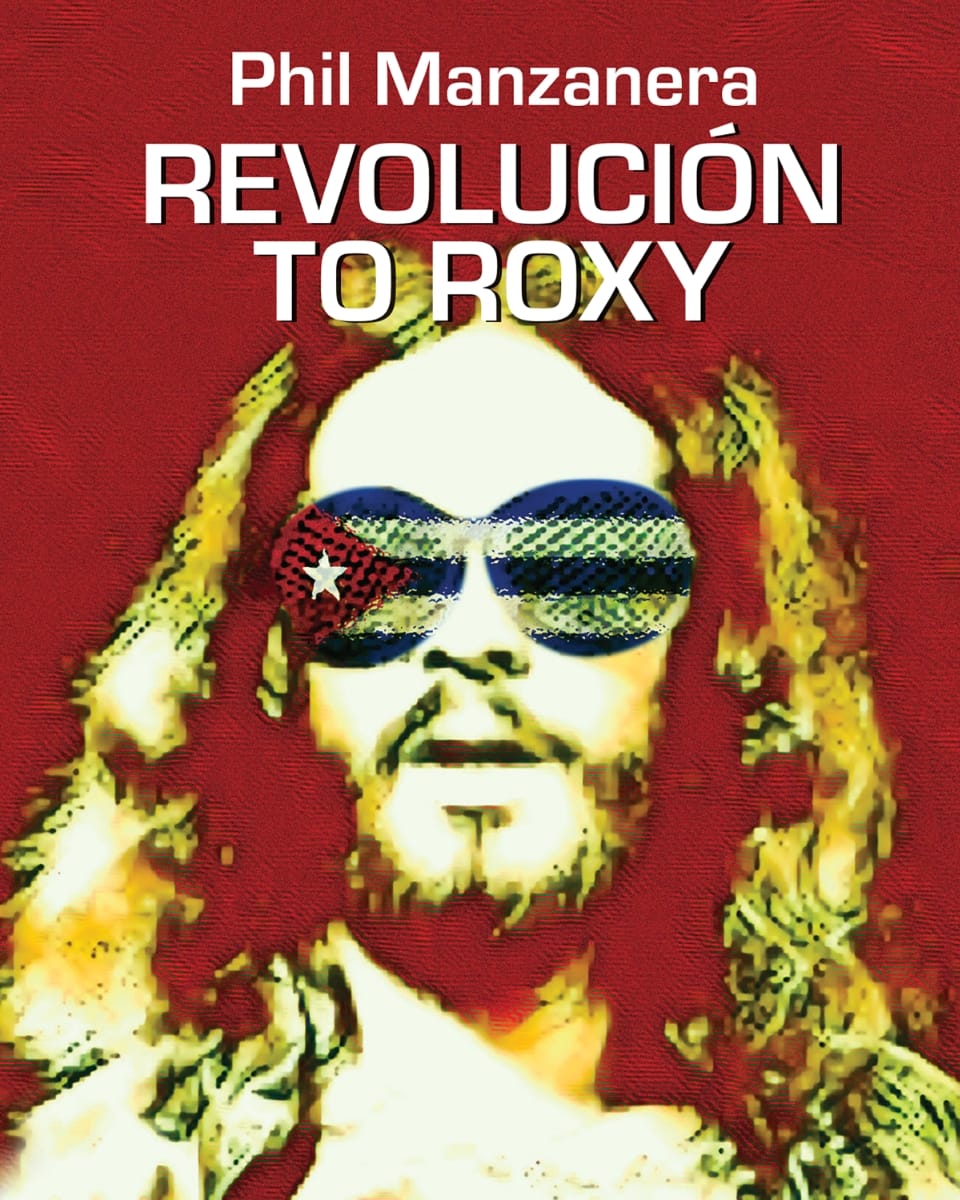
Phil Manzanera in his element. Photo courtesy of CTA. / Revolución to Roxy book cover.
Bill Kopp: What inspired you to write the book?
Phil Manzanera: When you get to a certain age, you begin to ask questions. And you realize that your parents aren't around anymore; they died many years ago, so you can't ask them. There are things I should have asked them to make sense of how I'm sitting here now and why I'm a musician.
So I followed the trail, and it led me into all sorts of areas. And I thought, "I've got a load of cousins on my mother's side in Colombia; 60 of them. They would be fascinated to know where the hell we came from." And on my father's side, that led me to all sorts of things which even are ongoing; they're not in the book. It turned out he was illegitimate. I never knew that his father was a touring Italian oboe player from Naples. I only found this out a couple of months ago.
This whole thing is like a TV show in England called Who Do You Think You Are?, where people find out about their family histories; they go back and back. So, quite apart from my musical career, there's this underlying narrative of where the hell we came from. And it's great fun; you begin to think, "Did they know? Did my mother have any idea about my father's side, that my grandfather wasn't the real grandfather?" and all these things that happen.
It's like a journey, and it's good for me to leave that to my children and my grandchildren when I leave this mortal coil. So that's the reason for doing the book: for me to discover and try to make sense of what happened in my so-called career and in the family.
Bill: Reading Revolución to Roxy, I was impressed with your approach to potentially difficult subjects; you set out the circumstances of what happened, but you left it to the reader to glean from context clues exactly how you reacted emotionally to those situations. One specific thing I'm thinking of is the time you were involved in another project and came back to work on sessions for Roxy Music's Avalon, only to find that someone else had already recorded the parts you were hoping to record.
Phil: That was the beginning of the end of the second period of Roxy. The group seemed to work in five-year chunks, and then everyone wanted to kill each other. And then we didn't work together for three or four years. And then we were together another five years, and it got seriously bad. And then there was an 18-year break.
But miraculously, in 2001, we ended up back working together. And in theory, we're still working together now. We've got stuff coming out in September: the For Your Pleasure deluxe boxed set.
Bill: You assert several times in the book that you didn't perceive a lot of musical opportunities within the framework of Roxy's first run to express your interest in Latin music and culture, in your Latin roots. Are there any examples at all from that period where you did manage to work any of that in?
Phil: Well, I'd like to think there's a riff in the first part of "Mother of Pearl" [from 1973's Stranded] which has a Santana-type Latin groove to it. But you're right. Being in a band can be a series of compromises. You're trying to serve the song, as they say. So you don't want to put in stuff that doesn't seem to make any sense at all, just for the sake of doing it.
But because we all started doing solo albums pretty much immediately from the second or third Roxy Music album onward, I got a chance to do something with a little Latin feel on [1975's] Diamond Head, my first solo album. The first track, "Frontera," is sung in Spanish, and it has a cumbia feel. And there's also a guitar instrumental on Diamond Head that I did with a West African group. It sounds like a Latin track even though it features West African percussionists. So I was chugging along, slipping in bits. Because I like all different kinds of music, I was being tempted by all sorts of things. I was not being strategic; I was just pinballing all over the place.
Bill: Each time that Roxy got back together, based on what you wrote in your book, it seemed that Eno was extended at least a pro forma invitation to participate. And as we know, in each case, he said no. Was there ever a point at which you sensed, "Maybe this time he might"?
Phil: Well, in 2005, we actually rang him up and said, "Look, let's go and do some tracks with the original producer, Chris Thomas, producing." So I went 10 minutes from here, picked him up, went to RAK Studios, and pushed him in the door. I said, "I'll just go and park the car." And then we were off. And then we came back here to my studio, and we did more work on stuff.
But it was rubbish, really. Well… "rubbish" is too strong…
Bill: It wasn't to the standard you wanted?
Phil: It wasn't. It's like a football team. You can get all the names in and everything, and then you lose the match. We tried. But sensibly, we didn't just persevere, finish it off, and put it out, because it would have been a disappointment, quite frankly.
I've got the tracks on my laptop here somewhere, and a few of them have been recycled, if you like. I think one was recycled onto one of Brian's solo albums, but I can't remember the titles at all. And because he's not far from me here, Eno has been on pretty much every solo album I've ever done. Even with the last batch, I'd just pop down there and say, "Just put whatever you want on it."
And occasionally he'd say, "Would you come down? Just play." And I'd play. And then a year later, he said, "Oh, by the way, you're on the new David Byrne album. That time you came down here, I recycled it and put it on." And I'm thrilled.
Bill: That reminds me of Jay-Z's "No Church in the Wild" sampling the title track from your 1978 album K-Scope. That was amusing; that whole story had passed me by when it happened.
Phil: Yeah, that was an amazing story. I'm coming to these book talks in Cleveland, Chicago, Minneapolis, and Milwaukee. And I say to the people interviewing me, "Don't tell me what the questions are going to be; you'll probably get the same answers, whatever the questions." But one of the stories I tell is about how that happened, the Jay-Z and Kanye West thing. (It's a shame Kanye turned into a total loony.)
But, funny enough, I realized that over the years they had sampled [Robert] Fripp and all sorts of the strangest people. That's the thing about sampling: they pick from anywhere, and the strangest combinations end up right. You could never predict. And you could never go out and say, "Oh, please use my riff" or anything; it just doesn't work that way.
Bill: There's a website called whosampled.com . . .
Phil: You're absolutely right. And the first time I was sampled was when Ice-T took the riff from [Roxy Music's] "Amazona" [on "That's How I'm Livin'" from 1993's Home Invasion]. I don't think I put that in the book. But I received a phone call saying Ice-T sampled the thing. And I said, "Well, that's really great. Thanks. Bye." But you have no idea what it meant.
Bill: One of the things that I discovered reading Revolución to Roxy is just how massive your discography is. Your book has really sparked my interest, especially about some of those Spanish-language albums by Héroes del Silencio, the band from Spain.
Phil: This year, Enrique Bunbury, the singer—who is still a very close friend—won the Outstanding Achievement award at the Latin Grammys. Draco Rosa, who is from Puerto Rico, won a Grammy. Fito Páez from Argentina wins Grammys all the time. They're like the gods. I was very lucky to work with these very talented rock en Español people.
And that's a whole different kind of thing. Because I speak and understand Spanish, I was getting extra cream from all this Latin music—rock-oriented, with amazing lyrics and things like that. So I had Anglo-Saxon English rock, rock en Español with great musicians, the German singer Nina Hagen, a French guy, and some Italian guys. It was just so much fun! I can't believe it. When I put together the discography, I said, "I just need to lie down here!"
Bill: As a guitarist, you're recognized for—among other things—your mastery of tone and texture. How much has modern technology changed your approach to the guitar, and to recording the guitar?
Phil: What I like to do now is to record the guitar myself in my little garden shed at home, with one mic, one amp, and maybe this thing called a Universal Audio OX. What I used to do on all the albums was work on stuff at home on a Revox tape recorder. I'd work out ideas, and then go into the studio and record it in there. Now I like to just do it straightaway.
So I can put a track up and play it 20 times, recording 20 versions. And then I listen—what I call "panning for gold"—to see if there are any interesting ideas. And then I whittle it down, strain it down. It's a bit like cooking, where they reduce the thing to create a great sauce. And I like that, because it's tedious for other people to be around when you're doing that kind of thing. So I thought, "I might as well just do it myself."
Bill: Beyond the book tour, what projects do you have coming up?
Phil: We've done a new version of the Quiet Sun album. It's going to come out in August with Dolby Atmos 5.1, some extra tracks, things like that. And of course, at least three songs from the album were used on 801 Live.
And on Wednesday, we start to finish off a brand new Quiet Sun album; it's 95% done. Some of it uses material that was written in 1970; we found these old scores and recorded them. It's some crazy music, and I think it sounds great. So, for people who like Quiet Sun, to have a follow-up album 52 years later. I think it's time.
Check out more like this:
 Lawrence Peryer
 Bill Kopp


Comments