


Modern Woman's debut album, Johnny's Dreamworld, marks their evolution from literature graduate Sophie Harris's solo project into a dynamic band, blending post-punk, jazz, and avant-garde folk with members Adam Blackhurst on drums, Juan Brint-Gutiérrez on bass and saxophone, and violinist and composer David Denyer, the latter bringing a background in experimental composition and textural sound work.
There is quite a variety of songs on there, as the band attempts to reconcile folk lyricism with art-rock noise, layered with post-punk intensity. At times, it can be abrasive and tender, such as right from the opening, surreal, titular track with its layered strings and spoken-word passages. But Modern Woman conjure a dream world built from fragments of film, memory, and imagination, exploring the conflicting themes of the tender/harsh, loud/quiet, and scrappy/polished in modern womanhood, whether too feminine or not feminine enough.
These dichotomies are very much evident in songs like the unsettlingly titled "Killing a Dog." This song opens with gentle strumming as Harris whispers, "Is my defense, is it working?" and her vocals become primal shrieks, matching almost angular guitar riffs. Denyer's floating string parts become agitated, combining with producer Joel Burton's cello and wind-section parts against a steady bass and drums. The track also features guests Nathan Pigott on saxophone and London-based Estonian improviser Kirke Gross on cello. "Daniel" is the complete opposite, with gentle, sparse, and intimate violin, as Harris provides soothing vocals almost in an animated lullaby manner, offering a brief respite from the screechy pitches and sounds.
Usually, when I'm researching new records, I sit with a new release, and it follows me throughout the day. I'm listening to it in the car while doing errands, on headphones while walking my dog, or on a speaker in my kitchen. But with this album, I found I had to give it my full attention because it refused to stay in the background.
I had the opportunity to talk to Sophie Harris, to find out more about her, the band, and this record, which I think has the potential to be a Mercury Music Prize nominee this year. The conversation has been edited for length and clarity.
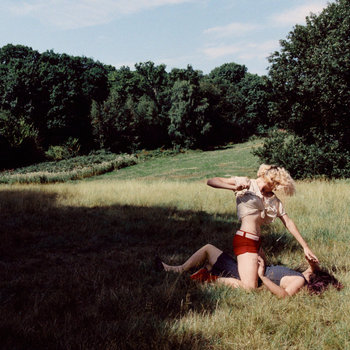
Damien: I’ve been listening to Johnny’s Dreamworld for more than a couple of weeks now, and I found it was a challenging listen initially, but the record has really grown on me. There’s such a blend of influences and sounds. I also love the attention to detail in the sequencing of the album, because, to me, the title track, "Johnny's Dreamworld," is a confrontational opener—was that intentional?
Sophie: The song ordering was a weird process; we didn't really think about it until after the mixing was finished. The only order that sort of felt intentional was that loud opening. But for the rest of the album, apart from “Dashboard Mary” being close to the end, that was the only sort of skeleton structure we had. Then the rest was just where can we slot these songs in that feel like it's not too much in terms of loud and quiet. We also wanted to make sure it translated to vinyl, and that was important to us. We bring it down in the middle of the album and then ramp it back up when the side is flipped.
Damien: Some of these songs have been around for a few years. "Offerings" seems to have changed from when I first heard it, originally appearing on your EP Dogs Fighting in My Dream. This latest version of the song on the album seems to be a bit more ominous.
Sophie: “Offerings” was the first song we ever released, I think, so it was very early for us. We had never been to the studio before and were very new as a band. When it came to recording this record, we were like, let's just try it, and that's kind of how we approached it. We liked how it sounded and how it grabbed a bit more attention.
We recorded some of the songs on this record two years ago, and it's just come out now. There are several reasons for that delay. It was difficult to get the time from everyone in the studio to finish it. We hadn't been signed; we only got signed after recording the album. We were doing it on weekends, basically, around our full-time jobs. We ended up rerecording some of the earlier songs from the beginning of the process just because Joel had gotten better at miking the drums.
That's why I love this record; it was very much a learning process during the recording, and I think that's given us so much for the next album. The rerecording of “Offerings” was kind of like a symbol of that. We developed it from the live set; we have more experience now, so let's go in and record it in that way.
Damien: Does that give you a bit more confidence playing those songs live?
Sophie: Yes, the live show really influenced the production because we've been playing those songs so much. When Joel came to see us live, he had many ideas for how to translate them into the production room. A song on a record is very different from a song performed live, and they do exist differently. And some things have been slightly tweaked and changed since being in the studio. To give an example, in “Dashboard Mary”, there's a flute-like synth that I think was done on a Juno, but that was completely Joel's doing. I think that's such an essential part of that song now. We will go on to translate that live as best as we can.
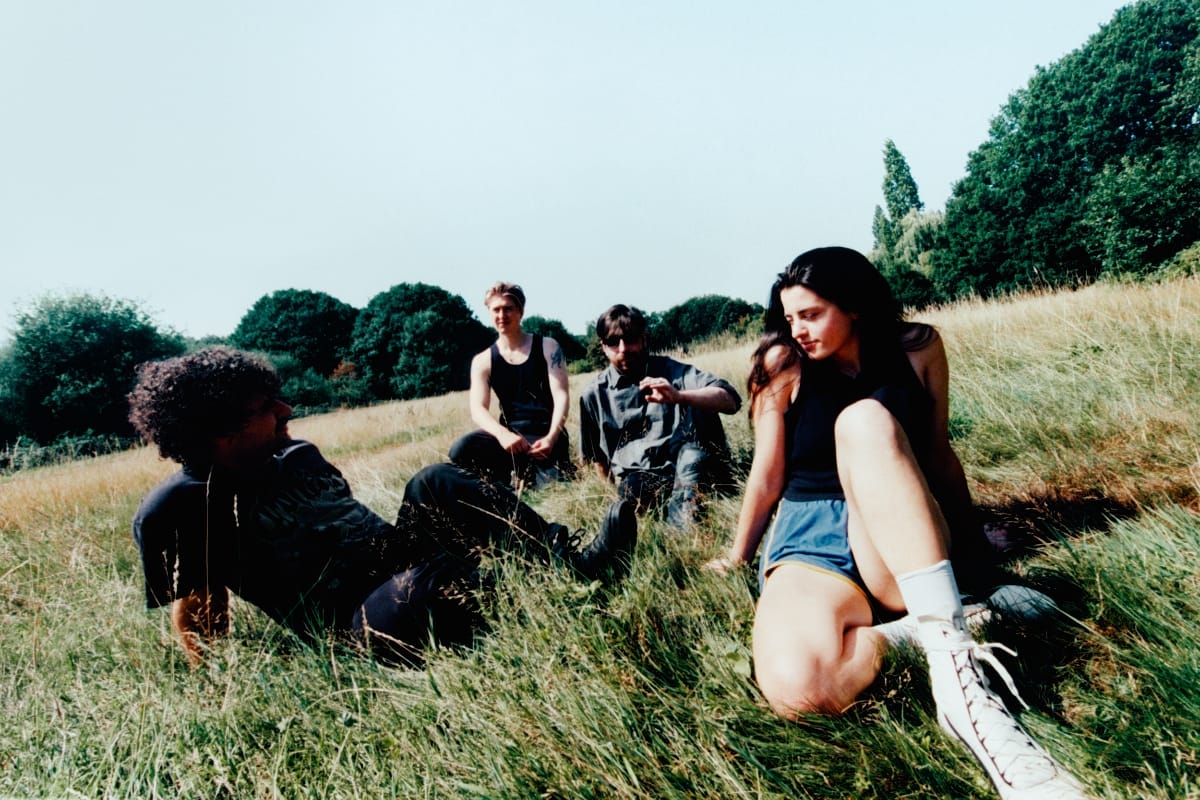
Damien: If we just go back for a little bit, you went from this intimate poetry/songwriting/performance project into a kind of avant-garde ensemble. Has that encouraged you as a performer to take more risks?
Sophie: I think performance has always been essential to me, and meeting the guys made me take a few more risks in certain ways. I think that really came through in the record when the songs came into fruition, when the band sort of developed. I started this intimate ‘folky’ song project simply because I didn’t yet know anyone to be in a band with. But I have always been interested in a full band and how you can create sounds that you struggle to do by yourself, with these shocks, dynamics, and things you can do. What the guys bring to the project is essential to Modern Woman now. There’s a full bandwidth there.
But I am also interested in going back to the early stuff. I might even do a separate project or something, because this feels like it's moved into this new kind of unit, which is Modern Woman. It’s incredible, but it is quite different from that beginning thing.
Damien: I totally get that; I was also thinking of examples like Adrianne Lenker of Big Thief, who goes off on her own with her solo work.
What role does David's experimental compositional background in music for the theatre play in how the band arranged and structured songs? Is he driving an experimental sound?
Sophie: David definitely pushes a little bit towards the experimental, and it's a sort of battle where we end up in this middle ground. I would say both Juan and Adam also have their own interests, and they're influential in how the music is arranged and developed. David is very good at creating atmosphere in his violin work with the tapes and samples. I think that's always been what's drawn me to him and why we started working together in the first place.
But it's an equal process; everybody brings something essential, and they're all good at what they do. We all go into a room and make decisions as a unit. We rarely disagree. There are decisions made at every point, and it's like, “Okay, which way is this chorus going to go? Or which way is this? Are we going to go back to a verse?” I try to do a lot of that at home because it's good to have the song's structure when you come in with ideas. But they then see it from a different angle and bring new things that I hadn't even considered. It's just a process of rehashing and rehashing.
Damien: I didn't notice Adam’s drumming as much the first couple of album plays, but on listening on headphones, this really comes to the fore. Juan's bass lines on the opening track, "Johnny's Dreamworld," are rad too. That bass nearly becomes the lead instrument.
Sophie: For “Johnny’s Dreamworld”, we pulled back the arrangement so the bass line could have more room to hold the floor. That was a song we wrote together. I brought this tiny little guitar riff from the chorus that I just couldn't work out. Then they came up with this amazing groove that is the body of the song. And Adam is a unique drummer with a very particular style.
Damien: Watching you perform live from videos, there's that interplay, almost like a jazz attitude: everyone's given the space to play, and it sounds great.
Sophie: Yes, Adam doesn't overcomplicate things, which I really like. He's self-taught; his approach is different from that of people I've worked with before. There was another drummer in Modern Woman to begin with. Before it was called Modern Woman, we worked with Jamie Staples, who is now in Wunderhorse. He's doing really well and is also an amazing drummer, but his style is different from Adam’s.
Damien: When you're meeting different musicians on the scene, how quickly do you know that a person may be a good fit?
Sophie: Meeting the right people to be in a band was so hard. When I first moved to London, I had to sort of really put myself out there. I used to run these poetry nights where I would put on music, partly to meet people. From the beginning, you'd work with someone who maybe couldn't make the time commitment, or you'd work with someone who maybe didn't quite like it. Then you would work with someone who really liked it, but their guitar playing is maybe a little too overcomplicated. So that didn't work either.
When I met the guys, it was nice because their personalities worked well with where I was. They were very encouraging and really into the songs, which gave me this sort of confidence. I only started singing when I was 18, but I was always a guitarist. So, it was a new experience for me to write songs and work with other people. I remember being so conscious of the fact that I really want this to work, but I'm struggling to articulate to people what the songs would sound like.
When we sort of came together, it felt easy, and the decisions were easy. They were just very good at understanding what I was trying to get at. They are nice people to be around, too. That's a huge thing that people forget—you need to be with people you want to hang out with. We rehearse for hours twice a week in the studio. If you don't get on with those people, it's going to be hell. It was a combination of us getting on really well and them understanding the approach.
Damien: You were very young when you started; most people at that age aren't mature enough to know what they want, but you knew what you were chasing. When you talked about your early songwriting, do you think your literature background helped or hindered you?
Sophie: I do think in some respects, it did take away from it. I got confused about what a song was and the difference between a song and poetry. Someone like Leonard Cohen wrote his poems, then set them to music. I'm sure there was some tweaking, but that's kind of how he approached his music. But I think, by proxy, I've probably absorbed a lot, because reading is my escape.
But in terms of sitting down and trying to write a song that's like a poem, I don't think I've ever done that. I don't think I've ever analyzed poetry in that context. Maybe I should, but I just enjoy reading it and just seeing if it sort of absorbs. When I sit down to write, I try to capture a mood in what I'm writing, rather than think in a poetic way. But I do think it hindered me at the beginning because I overcomplicated things. It’s been a learning curve for me.
That's why music and the popular song are so amazing—you can say things in a short amount of time that have a lot of punch. Some amazing poets do that. But for me, it's like trying to learn how to do that myself through a process. But whether literature has had an influence, I'm sure it has, but not consciously. I'm not like, “Oh, I'm going to write poetry instead of lyrics.” I don't do that."
Damien: I was curious if it would force you to be hypercritical and put a bit more pressure on yourself?
Sophie: Probably. I might think, “Is that good enough? Do I need to make it more complicated?” But a lot of the time, the emotion that you're trying to articulate can be put through the simplest language. I think that's something I'm trying to get better at. Leonard Cohen or even Nick Cave have incredible lines; they're so tight, and you get a whole mood and feeling through the exact words they put in a line.
How that line works with the music and how certain words are emphasized are multifaceted processes. I do think some writing is serendipitous as well, just how things fall. But I'm still learning, and I still feel quite new to it even though it's been quite a few years now.
Damien: I did like your attention to long-form videos, especially for the singles on this album. Is the visual aspect of the music something important to you and the band?
Sophie: Definitely. There's something amazing about putting visuals to a song. When the record was finished, I sat down and tried to think of the overarching theme, like the mood I wanted the videos to have and the feeling. I pulled together images, words, and stuff that I felt worked, and I've used that as an anchor throughout.
I started the music videos off with the “Dashboard Mary” single simply because I wanted to get the song’s feeling across in a bit of film. It felt natural for me just to take that first one. We had really amazing video directors, like Sandra Ebert, who shot the cover art, which is really striking. Joel Kerr created one for “Daniel”, and Joseph Brett did this amazing animation for “Neptune Girl”. He really got what the song was trying to push across and understood that sort of nostalgic childhood sort of feeling.
I think the videos were really helpful to pair with the music. It's the first time we've actually had enough funds to produce proper videos. But we ended up spending quite a lot of time getting the first video together when we probably should have been writing the next record.
Damien: There's an intensity about creating an album, and before you have time to process the release, you're set to go on tour. Are you ready for that?
Sophie: I hope so! I feel ready, and we're excited about it because it's the first time we're bringing a little bit of stuff on stage as part of the set. We're trying to build the show's visual element a bit more. We've been playing these songs for such a long time; we're hoping to start introducing some new ones and steer towards the new record.
Check out more like this:
 Meredith Hobbs Coons
 Damien Joyce


Comments