


During the first song of drummer Tom Skinner's set at the Big Ears Festival, as he led four accomplished acoustic musicians, I took some notes. I wrote that the opener felt like a "silhouette of a song, an echo of a beat." It's like the first song knew where it was going, and where it wanted to go, but wouldn't reveal itself entirely. Tom Skinner's take on live jazz saw my associative brain think about a silhouette, and when has an artist ever made me think that? How does that sonic resonance come about?
Tom Skinner was, of course, on drums, though he lacked the electronic gadgets I saw perched next to many of the drummers at Big Ears. He was flanked on stage right by two wind players—both alternating saxophone and flute—and on the left by a cellist and double bass player. As I watched this extraordinary jazz performance unfold along with The Tonearm's Michael Donaldson, the band dipped in and out of strong grooves and interplay, and reflecting on the performance now, it's like each song was a vignette. And because I like looking at definitions, one of the Merriam-Webster online definitions of a vignette is: "a picture (such as an engraving or photograph) that shades off gradually into the surrounding paper." This makes me think of the artist Kara Walker. The stories that are told in her series of silhouette art are striking and moving. Silhouettes are subtle while distinctive, and powerful.
I think I understood the band's sound a bit better when the vocalist, Contour, came onstage in the middle of the set. He spoke to the crowd about imperialism, that we should stop bombing people, and dedicated the song that followed to all the innocents—especially children—who've been killed and/or affected by the ongoing wars. He sang softly in a conversational tempo. The band formed around Contour's voice, playing in contrast to his tone and melody. The harmonies formed with the instrumentation were closer in octaves than distant, and were stunning. Skinner's drums were more straightforward, rarely deviating from the beat, yet still crafty and impressive, while the flutes had trills; everything moved in the same direction, all fanning out from Contour's voice, letting it fly.
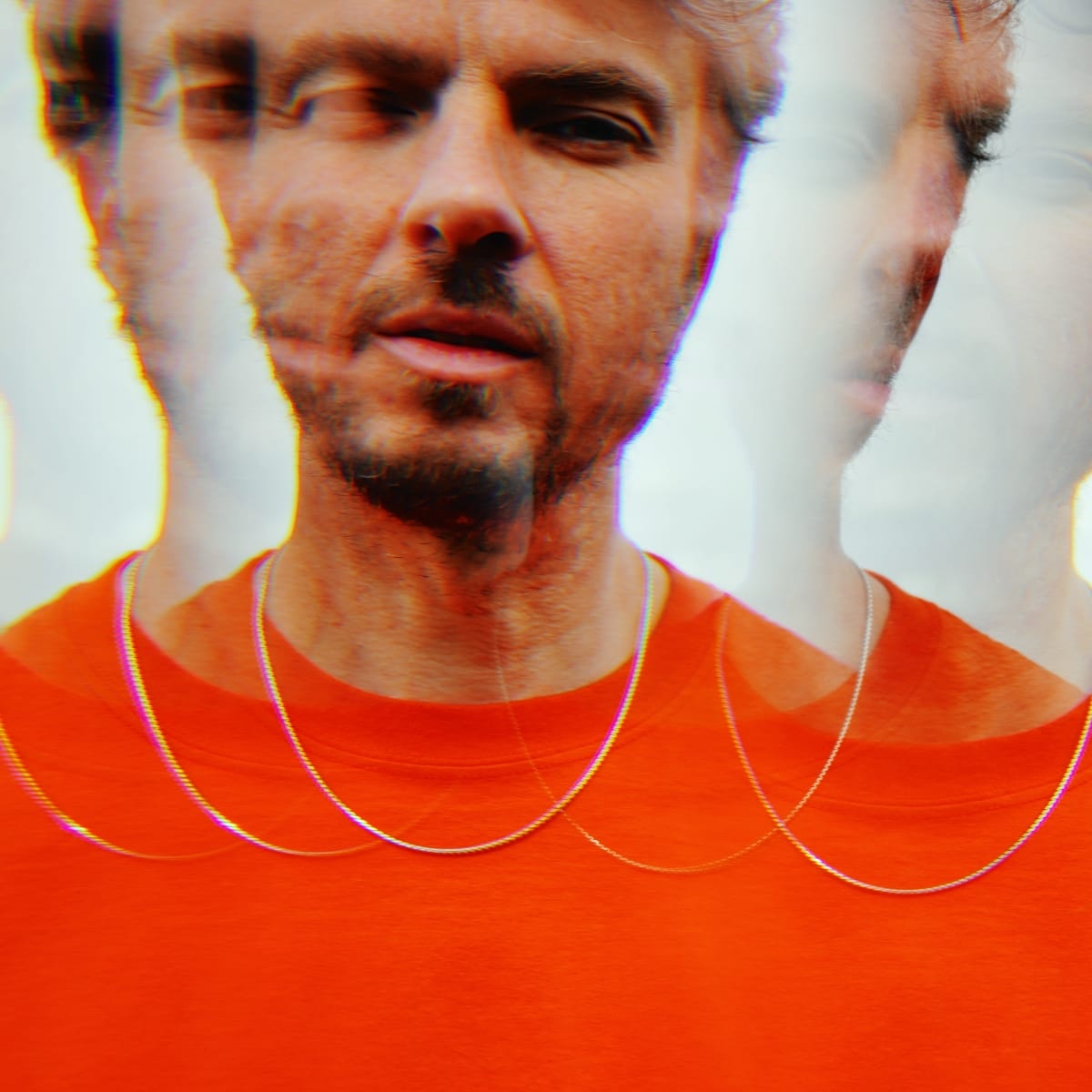
Something that Skinner said about his 2022 album, Voices of Bishara, stuck out to me: "This record is an attempt to put something truthful into the world, through collaboration and community, at a time of rising dishonesty and disinformation." The first word that stuck out to me like the sorest of thumbs was "truth." It's such a deliberate word. Truth. I imagine that Tom Skinner feels tied to his values; how he works in composition, how he works with people, how he sees people. I imagined him entering the studio space with different players, with intention and determination, to bring himself to the table with discipline and curiosity.
"I've got to have a level of trust with someone before we even start playing, then it's all about listening and allowing space for everyone to express themselves," is what Skinner said in a 2022 interview in The Guardian. I bet this culmination of ideas shapes the composition of Skinner's songs, including those on last year's International Anthem-released album, Kaleidoscopic Visions. They play with space together, listening to each other, trusting, and allowing the sound to take form as it may. The result is something that's quite contemporary; there's a flow state of culture, a living conversation in and through music. Like the name of his latest record, a kaleidoscope uses mirrors to reflect vibrant, symmetrical patterns that are beautiful. It's also refractive.
Tom Skinner has been steeped in the U.K. jazz scene for a long time, co-founding Sons of Kemet with Shabaka Hutchings, and, alongside his own band, is the drummer for The Smile with Jonny Greenwood and Thom Yorke of Radiohead. He's collaborated with so many more musicians, building trust and community.
After the show, Michael, Tom, and I ended up standing in a triangle, on the offshoot section of the beautiful loft-style greenroom at The Standard. Tom's energy was warm, perhaps from the afterglow of a live set. We asked him if he wanted to sit or stand. He said he'd like to stand because he's always sitting on a drum stool. And then our conversation, edited here for length and clarity, commenced.
Michael Donaldson: I was talking to Jonah earlier about your album, Kaleidoscopic Visions. There are a lot of electronics going on there, so it’s refreshing that you weren't really doing that with this band. It was ‘straightforward,' which is a weird word to say, but I think you know what I mean.
Tom Skinner: Yeah, I don't necessarily call it straightforward, but essentially, it is like an acoustic group.
Michael: Is there any intention to keep away from electronics with this group?
Tom: The record itself is quite produced. There are electronics and effects used in the production of the record. I wouldn't want to restrict myself in any way, but at the same time, the concept behind this group came from previous records, and the band’s sound is just what it is. And obviously, with cello and double bass, I don't want to take anything away from the beautiful-sounding instruments that they are. Then, there are the people I have playing them: Lester St. Louis tonight, Kareem Dayes playing cello in my band in the UK, and Joshua Abrams on bass here, and Tom Herbert [on bass in the UK]. I think really the core of the project is the sound of the band. I'm not averse to using some effects or things, if necessary. But I guess that's where my head is at the moment.
Previously, I've done quite a lot of work, some of it not under my name but under a different name, Hello Skinny, which was much more electronic.
Michael: Wait—you had a project called Hello Skinny? Like the Residents song?
Tom: (laughter) Yeah. I actually did a cover of that song on a Hello Skinny album.
Michael: I went to the college in North Louisiana, where the two main Residents supposedly met as randomly assigned roommates.
Tom: Oh, really? Cool!
Jonah Evans: What was that like to translate from a very produced record into an acoustic live session and keep it the way you want it?
Tom: We've sort of done it in a few different ways. Like right now with this group in the US, it's just the acoustic group sound. And in the last few months since the record came out, we've done quite a few gigs in Europe with an additional keyboard player—a synth and piano player who was also singing on some of the songs. So we did versions of "Logue," which is the song that features Khari [Contour] on the record. But we did it with my friend Jonathan [Yaffra], who actually is singing on the final track on that album, "See How They Run." That's his feature. He came and joined us for a few shows.
So he was playing a bit of synth in the group, which was actually really great, and it expanded the sound in a sort of different way. But he's now unavailable for the time being; he's touring with Harry Styles. (laughter) So we're back to doing the acoustic group in Europe and here as well.
I like to think that the music is malleable enough to exist in different contexts and in different ways. I'm open to exploring all sorts of things. Also, we've had Adrian Utley [Portishead’s guitarist] come and join us, playing guitar and a few gigs as well. I think the idea is that when we have some extra people coming in to play different instruments and expand the sound, we can do that. But we can also play it as an acoustic group.
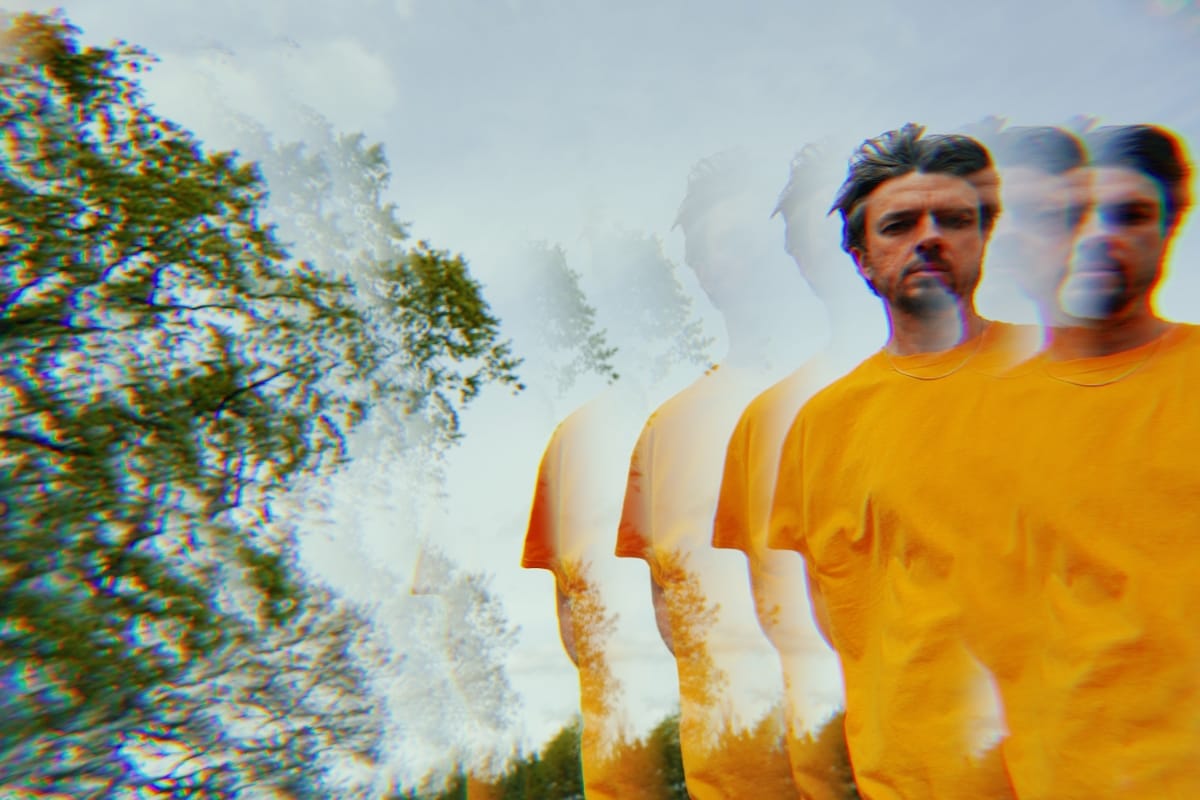
Michael: So this is the core group that we saw tonight?
Tom: This is the core group in the US. Chelsea Carmichael is from London as well. So she plays in the UK/EU group. But everyone else is US-based.
Michael: It's interesting to hear because I was actually going to comment on the makeup of the instrumentation. The bass, the cello, and the two winds. That's unique in itself, but it really struck me when Contour came out because it created such a great space for his vocals and that instrumentation, especially toward the end with the two flutes. Is there any determination of this instrumentation lineup? Or is it who's available?
Tom: Well, that was always a concept of the group. In some ways, it's like a small orchestra. I don't want to call it chamber jazz, but I guess, in some ways, it is. You have the winds on one side, where they're doubling saxophones and flutes, or clarinets sometimes as well. And then you have the double bass and cello string section on the other side, and percussion in the middle. I feel like there's a lot of scope to explore the sounds of that combination of instruments, and I just got obsessed with cello, as well. I love that instrument and the way that it blends with the winds and the bass. Two string instruments like that, there's a lot of depth.
Jonah: I always love the tone of the cello. It's so warm, but it has that little sharpness to it. It's also not cutting through everything.
Tom: Yeah, it’s in the mid-range. I think it works really well with the tenor, too. They're in the same kind of space. When they're playing just chords with the winds and the cellos, it's such a rich sound; they're all in the same register.
Jonah: I noticed you talk a lot about community and collaboration in interviews. You’ve mentioned that the jazz scene in London isn't new, that it's been going on for a long time, but sometimes it's framed as new. What do you think about the lineage of music that you come from, or how it informs the music that you make today, and maybe even within the scene in the UK?
Tom: It massively informs everything. Obviously, I've got my heroes, people I’ve aspired to be like—jazz greats or whatever, but really it's my peers. They're the people who push me forward, I think. They're the most inspirational people because they're there with me, doing things together and pushing the whole thing forward. And yeah, as you said, this whole kind of UK jazz explosion, quote unquote—I guess in some ways it is, and I'm very pleased that the UK in the last 10 or so years has gotten much more exposure in terms of the music that's been coming out there. I think that can only be a good thing. But I'm a bit older than a lot of the players in that scene. I guess I'm part of it in some ways, but there are whole generations that have come before, who really paved the way for that to happen.
Michael: It sounds to me like rather than being an ‘explosion,' it's just a really tight community of peers pushing each other. Which, to everyone else outside it, might seem like an ‘explosion.' To you guys, it's just you pushing each other and making it better.
Tom: Yeah, but I guess it's a moment. It's like all these things coalesced to that point where suddenly everyone's like "Oh, that's happening!" But it's been happening the whole time. Suddenly, it's piqued an interest, or it's that people are aware of it, and that's great. I'm happy about that.
Jonah: It's like you're with that community and in collaboration. You're also creating through curiosity with your friends. You're allowing the process to come to you and to push and to be pushed at the same time.
Tom: Absolutely. It's all about process. I think it's all about just doing it. For me, that's been the best way to learn. I never went to a music college because I probably could have, but I was already doing well by the time I left school. To be honest, the best learning for me was just trying to get out there and do it—playing with people, people who were older than me and better than me, and who made me play better. They’d kick my ass. That's the best way to learn, I think. And then also playing with my friends every day, as much as possible. You know, just doing the thing that you want to do—keep doing it.
Michael: Did you have a particular mentor experience?
Tom: Yeah, there are different people, like my drum teachers at school. More recently, in the last 10 to 20 years, it's the guy who mixes all my stuff, Dilip Harris. He's mixed the Sons of Kemet records, a fantastic producer and mixing engineer. So, he's a sort of mentor, but not just for me, but for Shabaka and a whole host of us in the UK. It's people like that who support you, who you can bounce ideas off. I'll go to him, and I'll be like, "I want to try doing this. What do you think?" He always has an interesting perspective, and having those kinds of people you can trust and throw ideas around with is valuable. You know they've got your back, they're going to support you, and they can actually help you be the best that you can be.
Check out more like this:
 Lawrence Peryer
 Mariam Abdel-Razek


Comments