


Meeting the right person at the right time can be life-changing. For Beibei Wang and Hannah Peel, it became an opportunity to create incredible, hard-to-define music. On the surface, the two couldn't be more different. A multi-instrumentalist (piano, synthesizer, vocals, trombone, violin), Peel is a British composer who typically scores music for television (like the science fiction series The Midwich Cuckoos) and film (like the documentary Game of Thrones: The Last Watch), whereas Wang, a Chinese percussionist, has played with several orchestras around the world (BBC Concert Orchestra, Mahler Chamber Orchestra, Toronto Symphony Orchestra, and the MDR Leipzig Radio Symphony Orchestra, among others).
The two first met when Peel wrote a composition for the chamber music ensemble, the Manchester Collective, in 2021. Approaching each other during a break, the two clicked quickly and decided to work together.
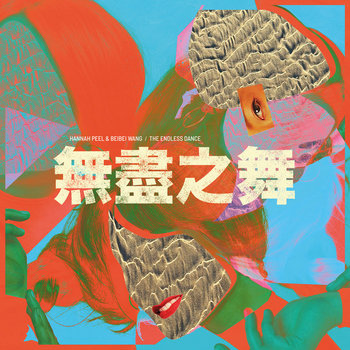
After a few gigs, they decided to further collaborate on an album: The Endless Dance. A beautiful, fiery journey through the Chinese solar calendar, it's full of life and energy. As if to mirror this joie de vivre, track names are often based on flora and fauna, such as "Wild Geese Arrive" or "Tiger Sex." While Peel adds layers of synthesizers, Wang peppers in marimbas, toms, rice bowls, and wood blocks. All nine tracks were wholly improvised in a few sessions before being reimagined by producer Mike Lindsay, who gave the album a completely new edge.
Regularly on The Endless Dance, songs click into an exciting groove that evolves and moves through a piece. "Awaken the Insects" features what feels like a powerful Chinese rap verse with a bubbly synth. "Mantis vs. Horse" has an intense energy that makes it hard to keep your speed in check if you're driving. Clanging metal chimes dance around hard electronic licks in "Offerings To The Beast," building in intensity throughout the tune.
Listening to this fun and exciting genre-blending music, I jumped at the opportunity to speak with both Wang and Peel. Right before their album release, I spoke with them on a video call, discussing their approach to creating The Endless Dance, how the two collaborated and pushed each other, what they learned from the experience, and what makes a good groove. The conversation has been lightly edited for length and clarity.
Bill Cooper: This album is a collaboration between the two of you. I'm curious what music you're both into right now. Additionally, have you both shared music with each other and discovered new artists as a result?
Beibei Wang: Because of Hannah, I started listening to electronic music. So, it's been an eye-opening, brain-opening, ear-opening process for me since I've been playing with Hannah.
I recently discovered an artist based in San Francisco named Lucy Liyou. They put together different weird field recordings, room sounds, and weird jazz piano. I like seeing classical musicians or musicians from other genres using electronic music to expand their practice.
Hannah Peel: I think one of the influences before we went into the recording that we could see a relation to was Dawn of Midi—especially their repetitive patterns, the drums, and the use of prepared pianos, along with the ethos of how they create their music.
The other was James Holden. His album has a really long title [Imagine This is a High Dimensional Space of All Possibilities]. I felt like that record was this psychedelic otherworldly place that can be imagined and created through music.
The other one was a band from Liverpool called Ex-Easter Island Head. They do the most amazing performances with guitars. The strings are laid out, and they use MIDI instruments to play the guitars. It's quite minimalist.
I think all those records have, without our realizing it, a mix of cultures in a way. It's taking what your strengths are and putting them together.
Bill: One of the things that fascinated me about this album is how it mixes genres and has an otherworldly sense to it. I find it interesting how you're able to ground the music while also going off into these different ethereal places.
I know one of the things you've been doing in this album is relating it to nature. I wanted to know how you let nature guide you to make your music.
Hannah: Beibei is great at explaining more of that side of things, but one thing I'm very hesitant about saying is "nature." Because there is this genre going on now where people say they're influenced by nature and do some field recordings. Especially in the UK, there's this minimalist, contemporary classic sound that developed. It's almost saccharine.
I find that quite inhuman. I feel like that's not what we're here for. I feel like we're here to offer what our human nuances are wanting. The nature-inspired side of The Endless Dance came from elements like the use of skin, wood, metal, and bone, and from finding a world that sits beautifully with the electronic side. And it's based on a solar calendar, which was not something we set out to do.
Beibei: I echo what Hannah says. For me, I grew up with the idea that we are part of nature. We are never separate from it. Our bodies are 70% nature: water. We made this album completely improvised, and then we discovered so many things after we recorded it. Your being guides you, then tells you what you've done. We didn't plan for anything. We follow the flow, and then we see ourselves.
This is a holistic way of thinking about music, the world, time, and cultures. Hannah and I have different energies, but we totally understand each other. We just play without thinking too much. That also comes from Taoism. We're not doing anything. We're just being there.
Bill: As you've said, the album is improvised, and you did everything in the moment. I know you both come from a composing background. Maybe I'm assuming here, but I would imagine there's typically more planning involved in what you're trying to create.
Hannah: Certainly, most of my work life is planned, critically analyzed, and redone. Especially in film and TV, you are met with notes from all angles on your music before it's anywhere close to being released or performed.
There's definitely this side of us. It's all thought out and presented in a way that has the most impact. That also comes to shaping this as a record. Even though it was improvised at the beginning, which was a complete step outside my comfort zone, bringing in the producer Mike Lindsay to help us shape the record was the most beneficial thing we've ever done with this music. I feel like it needed someone to take it out of this live element and put it into a recording, which is always a different art form in itself. Because of our backgrounds, it really helped shape the tracks to become what they are. Having Mike's third voice was essential to helping us realize how we could take the vision forward.
That first gig where we met up, we'd never really spoken before. We were doing a completely different recording for a different album. I really loved Beibei's vibe and thought she was an incredibly special performer. So I suggested doing a live gig. When we did it, it was so full of fire. After, everybody said, "You gotta make that into a record." I would never normally opt to do live improvised shows, but I trust that with Beibei, I'm in safe hands. If I make something up and it goes horribly wrong, she will cover my back and carry me through. If somebody else asked, I'd think twice.
Beibei: It's like we are feeding each other's energy and each other's life. We support each other when we see it's not balanced. It's a nice friendship and encounter between two humans.
Bill: It really does feel like a conversation is being had. One of the things I get when I listen to this album is joy, excitement, and play, especially on tracks like "Awaken the Insects." Was that something you were mindful of during the process, or did that come out of it? Did Mike Lindsay help push you toward these themes or create this conversation?
Hannah: Mike wasn't available because he was having a baby, so a friend of ours, Tim Allen, who is credited as an engineer and co-producer on a couple of tracks, came to the sessions to keep us in check. If we did go off—which happens a lot—he was able to send us back and overlay a part so it works. If I were playing something and I wasn't too sure, he was the voice in the room to help.
One of those nights when we weren't even recording and just finishing up, Beibei got out these clappers and started doing this tongue-twister Chinese rap. All of us in the room were like, "Oh my God. What is that?"
[Addressing Beibei] You were like, "Oh no, this is silly." But to the Western ear, it was interesting, fiery, and a lot of fun.
Beibei: I learned this when I was five. My dad wanted me to learn some Chinese traditional art forms. This part comes from a comedy before cinema where people would gather on the street. An old guy would tell funny stories like "I eat grapefruit, and I don't spit out the skin. If I don't eat grapefruit, I spit out the skin." It's nonsense. Only my partner and I understand. Nobody else in the room understands what I'm talking about. Everyone else thinks it sounds like a protest or something political. My partner told me to stop, but Hannah said, "No, carry on. That's so good." Tim was even more excited and started to record.
When I'm in the classical music world, you aren't encouraged to bring your own personality, creativity, and childhood into a creative process. Here, I felt I could go naked, wild, like a kid running around in a playground. That's why we found the album surprisingly beautiful because it's very genuine.
Hannah: I think that's the difference between the classical world and making a record. You get to put a story in there that people can connect to, because they feel something. You are going to know better than anyone your own background knowledge.
Beibei: I notice successful examples of cross-cultural, cross-disciplinary, or even cross-industry innovation work always come from outside. I am so familiar with these traditional things. I thought [the Chinese tongue twister in "Awaken the Insects"] was dated, old, and not alive. Then Hannah thought, this is so cool, edgy, innovative, and fresh. In between those two thoughts, we connect. When people connect, beautiful things happen.
Bill: Beibei, you talked about bringing your heritage and childhood elements into the recording. Hannah, did you bring anything to the album in different ways?
Hannah: Because my background is Northern Irish, I didn't—I felt like it would have been too cheesy. I think my music always speaks to my heritage through chordal movement and maybe harmonic voicing. I tend to write a lot of fifths, pentatonic or sevenths, so you always get this sort of half-melancholy aspect to the music, but it's also kind of not there.
The thing connecting both of us is storytelling and folk traditions, whether they're present or not. I love that we made this record out of skin, bone, and electronics, but when we sat around looking at the tracks as they were finished and summing up what they meant to us, it was based on folk storytelling and what happens in a season. For example, "Tiger Sex" is based on the part of the season where tigers mate.
Bill: Yes, you play with so many different electronic and natural instruments throughout. I'm curious how you arrived at using certain instruments for certain tracks and how you worked through that process.
Hannah: Sounds like the Moog Subharmonicon and DFAM have always threaded through my music. They're more woody sounds; I'm not really into the higher frequencies. These sounds work really well, especially in scoring with woodwinds and more natural elements. From the beginning, when I said to Beibei, "Do you want to do this gig?" I sent her an example of Moog playing, and she instantly put marimba on top of it, and some woodblock things she had.
I think there was always this element of what works and what complements our collaboration. It could have been as off-the-wall as dipping both cymbals into water and hearing that kind of [mimics "woo" sound], and it seemed to fit together quite naturally. I don't think there was a time when we felt an instrument didn't work.
Beibei, what track is it, maybe "Mantis vs. Horse," where it opens with the rice bowls that you're playing?
Beibei: "Grain Rain"
Hannah: Yeah, that's literally rice bowls from your kitchen.
Beibei: Yeah, I have so many rice bowls. I'm a silly person. I kept collecting things from different places to make new sounds. Even the rubbish or the hardware store.
Bill: To me, a lot of this album is about grooves. You lock into something for a while and then move. How do you both determine what makes a good groove, and how do you know when you've nailed it?
Hannah: When we were doing the live shows, before we even recorded, we experimented with what works and what doesn't. After the first gig we did, I asked Beibei what we should work on that we enjoyed last time. The first one had elements of grooves that were ritualistic and had visceral nuances. Instead of an African beat or a hip-hop groove, it was more about a pulse.
So in the second gig we did, that was what we decided to work on. Whenever we got to that stage where we liked something that was really pushing forward, we stuck with it and kept going. By the time we got to the recording, that was the mindset of what we were going for. Everything was led by either a kick drum or synthesizer beats that were programmed up. Almost machine-like—you can imagine being in a factory. What I found in my role was that it allowed Beibei to go wild on top of it, so she wasn't restricted to a certain groove or anything.
Is that how you feel, Beibei? We've not spoken about this.
Beibei: Yeah, we haven't. I'm very excited because I want to share—Hannah, maybe you haven't heard this yet.
I have a traditional Chinese percussion background, but I also studied Western classical percussion. These are two separate fields. When you create a bed of sound for me, I'm doing something I learned from Beijing opera. When I was in China, one of the roots of traditional music is Beijing opera, an old form featuring a percussion quartet consisting of a small gong, a big gong, a small drum, and a small cymbal. This quartet forms a band to react to an opera singer on stage. It's not the same way in Western classical music. There, you have a time signature like 4/4 or 3/4.
But you have to teach Chinese students from the conservatory how to understand Western classical music theory. The music teacher translates traditional ideas into Western classical theory. There is no standard, so they noted it all in a 1/4 time signature. You can stretch the speed, improvise with a 1/4 idea, and form it into 4/5, 4/4, or 3/4. You can do whatever loop, pattern, or groove you want. You can also maybe stay in this slow-to-fast processing idea.
Though I didn't practice for this collaboration, all my years were preparation for this project.
Stay on top of The Tonearm.
Subscribe for exclusive interviews, cultural tip-offs, and community fun.
And your support keeps our site free of advertising and paywalls.
Bill: I wanted to shift a bit to talk about how the album travels through the 24 solar terms of the Chinese calendar. I'm curious what that means, how you realized you did it, and how it all came to be.
Hannah: Bill, it was magical. We'd sat down in Mike Lindsay's studio in Margate East Base, and Beibei said, "Oh, these tracks remind me of the solar calendar." When she started to describe all the different elements in that, everything she described fit.
Beibei: The calendar is based on 24 seasons, aligned with agricultural activities. When farmers saw events on the calendar, they would plant the seeds or flowers, or know it was harvest time. In old times, people didn't watch the clock. The way they perceived time is when the animals do something. I think that's fascinating. As modern people, we have all these technologies, but the older generation perceives time organically.
The calendar idea came to mind when I heard the sounds on the tracks we recorded. Then we started doing some research on the calendar and what it's based on, and it's all about the natural world and how it loops and cycles. Like our lives, seasons alternate. Then, the concept was complete. The album title, The Endless Dance, just naturally came up because of the grooves, the joyfulness, the playfulness, and that life should be an endless dance. Everything comes from the same concept.
Bill: When you were setting up the track order, does it reflect the solar calendar as well? I know there's no start or finish, but are tracks set up to flow like the seasons?
Hannah: Yeah, by the time you get to "The Limit of Heat," it's like the end of summer, and then if you go back to "When the Wild Geese Arrive," it's like the coming of Spring.
Everything we've done together has been in the summer and spring. There was no winter stuff. It was more spring and coming of age, this beauty, and then dying off in the heat. It was a summer record, so it feels quite nice to put out in May.
Beibei: That's a hint. We're going to do a winter album next.
Hannah: Nailed it. (laughter)
Bill: I read that "Offering to the Beast" was originally called "Metal," because you used metal instruments. How did you figure out those track names? I know a lot of them are floral and fauna. Were you just talking them out? How did that work?
Hannah: "Tiger Sex" was that period in the summer when they're mating, so we called it that. I think "The Wild Geese Arrive" is when you look at the calendar and it says that. I don't think there was anything on there that we made up. Maybe "Mantis vs. Horse," but it's all the same part of the calendar.
Beibei: Yeah, we put those two animals together for that track, but they are both doing this on the calendar during that period.
Hannah: Yeah, "Awaken the Insects" was a point where the insects are starting to come out, and it felt like you were calling to them. All the titles are directly related to the calendar.
Bill: What was Mike Lindsay's role in the process? How did you collaborate with him?
Hannah: After we recorded, I said to Beibei that I would put the tracks together, edit, and produce it as I do with my other music. After about six months, I hadn't done a thing. I tried some stuff and found it wasn't working. I asked Beibei if she would be interested in getting a producer on board to look at this, but not just take it and do an edit job. It needed somebody who has a creative mind.
I'd worked with Mike previously and knew him for a long time. He has an amazing amount of energy. He's not the sort who sits at the computer. He's up and about, playing with tape machines and vintage reverbs, putting on synth lines. I knew he would take it in this totally different direction than I could have. We knew we wanted it to be a record that was more accessible, with that feeling of blood pumping in your body. We needed something powerful and direct. Mike knew that. We gave him the sessions we recorded, and he came back to us with these two amazing tracks. From there, we asked him if he would take it further.
It was almost like a remix of our work. In the end, we got together and put the finishing touches on, talked about the tracks, what order they were in, and what needed to be cut down or added. We added some vocals on that trip and also invited a Korean flute player based in London to play her amazing Daegeum flute. It has amazing overtones and aggressive features, but in a beautiful way.
Bill: I like the idea of you making this thing and, in a sense, giving it up to let Mike put it together in a completely new way. How did it feel to do that, and what have you learned from doing that?
Hannah: The best parts of it have always been where we go to a room, try stuff out, and give up a lot. To do that, though, you have to trust and bring in the right people. It's certainly been a learning curve to let go of stuff and see what happens for the fun of it, really.
Beibei: Experimentation is at the heart of this entire process. We embrace that and become very open. I feel like this is a new chapter for me to reflect on what I've been practicing and learning. Through it all, I found my own voice.
I really echo what Hannah mentioned. If you force something, you can probably finish the job, but it's not art. It's more inspiring to see things in a different way. If we create music, we're thinking about other things, like connecting with people first. Having another perspective helps you solve the problem. It's a lifelong learning process for me.
Hannah: One of the things that's quite important we've both forgotten about is that at the beginning, we were talking about what we wanted out of a record, we were talking about kung fu. If you look at the art, dance, and movement of kung fu, it's not a fight. It's a complementary movement of the yin and yang. If you break it down, all the moves are based on animals or scenarios, such as the tiger or crane moves. Film and TV take it in a totally different direction, but the actual art form is beautiful.
Beibei: Kung fu in Mandarin and dance in Mandarin are the same pronunciation and a different character. So that's another beautiful thing you never really think about, but they have the same sort of connection.
Bill: In the process, what else have you learned that you want to bring to your next project?
Hannah: I've learned through this process not to overanalyze and worry as much. We're very lucky we can release music with no expectations. A famous pop star over here, I can't remember who it was, said his favorite tracks got left off records because the label said audiences won't want this type of music.
We're lucky we have no boundaries. We are just releasing this because we love it, and there are no expectations. That's been a learning curve: to have an appreciation of that.
Beibei: Making connections is more important than anything else. When you connect, you listen, and when you listen, you don't worry about what you say. When we don't have things prepared, we really enjoy a friendly chat that brings out the genuine you in conversation. The album is like this. We haven't prepared much, but we've also prepared our whole life.
We're different, and we appreciate that difference. That's what we need in the world now—to appreciate and listen to each other. To spot the good things from your friends and the people you don't know, to help solve so many problems in this world.
Also, trust your instinct. When I see Hannah [mimics Hannah nodding], I know that's right. She encourages me. That energy matters.
Check out more like this:
 Michael Donaldson
 Bill Cooper


Comments