


Now Playing on The Tonearm:
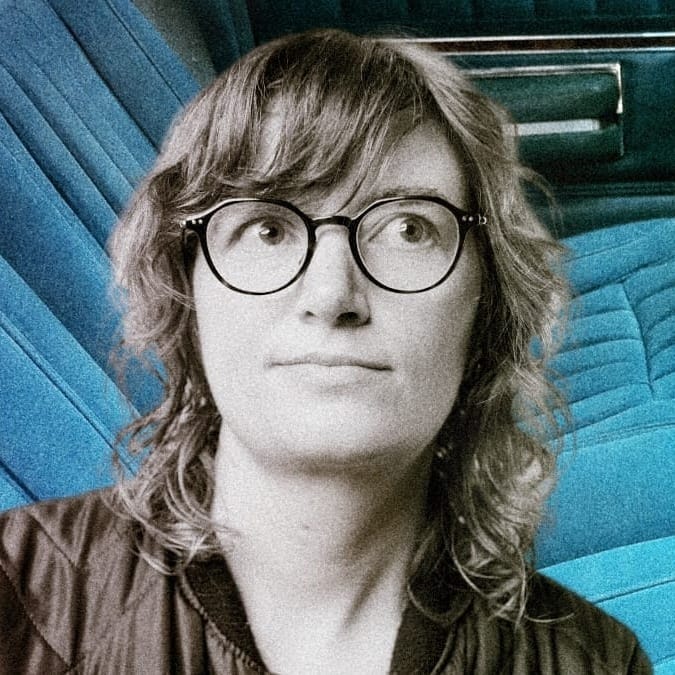
Charlotte Cornfield's Hard-Won Reckoning
Charlotte Cornfield's album 'Hurts Like Hell' maps a songwriter's life from drink-ticket gigs in Montreal to the steadier ground of family, community, and creative confidence in Toronto. Interview by Meredith Hobbs Coons.
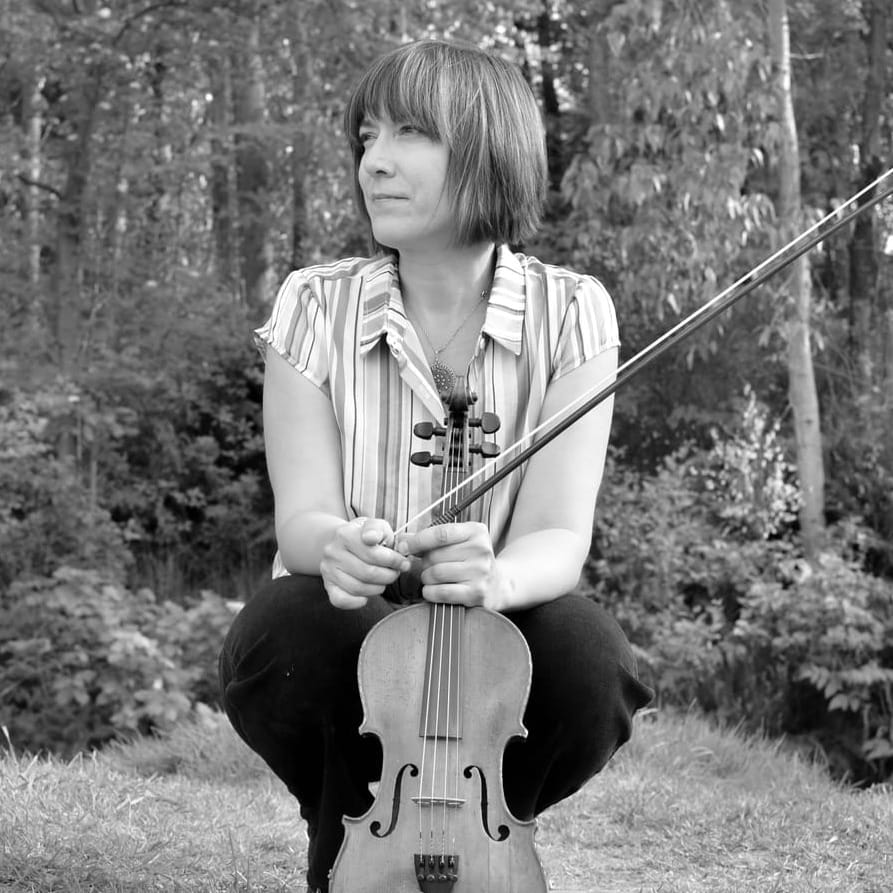
Molecules Lining Up — Meredith Bates's 'The Observer Effect'
'The Observer Effect' finds violinist Meredith Bates recasting quantum mechanics, feminist intuition, and acoustic ecology as one long, uninterrupted act of listening. Interview by Lawrence Peryer.
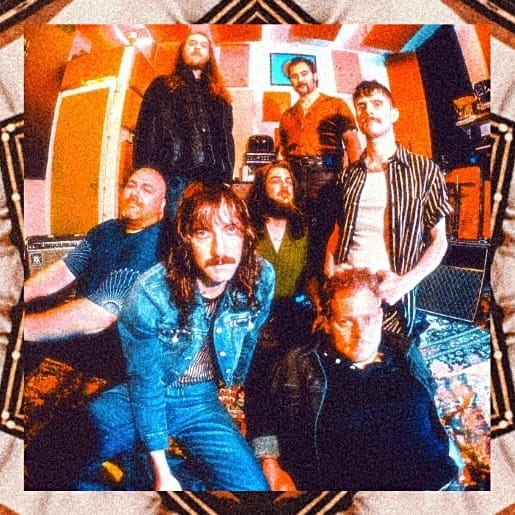
Evolfo Draws a Line in the Sand
Evolfo's Rafferty Swink and Matt Gibbs on 'Of Love,' the collective improvisational process behind it, and why a seven-piece Brooklyn band decided Spotify wasn't worth the compromise. Interview by Bill Kopp.
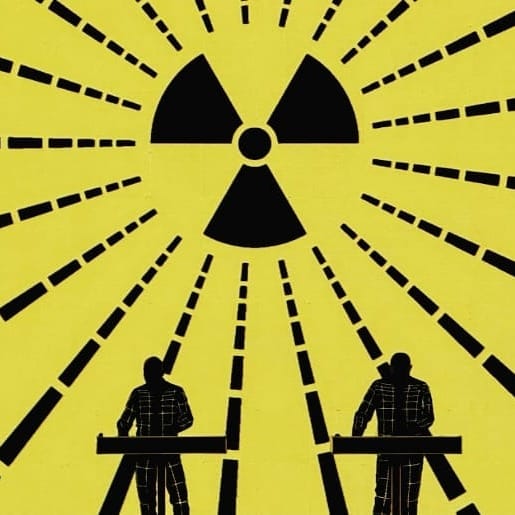
Bleeps, Boops, and Nuclear Dread — Kraftwerk's 'Radio-Activity'
Kraftwerk's 'Radio-Activity' turns fifty this year, and half a century on, the group's first all-electronic album reads as an unintentional field report from a nuclear age that was already, quietly, beginning to fall apart around it. Essay by Andrew Hamlin.
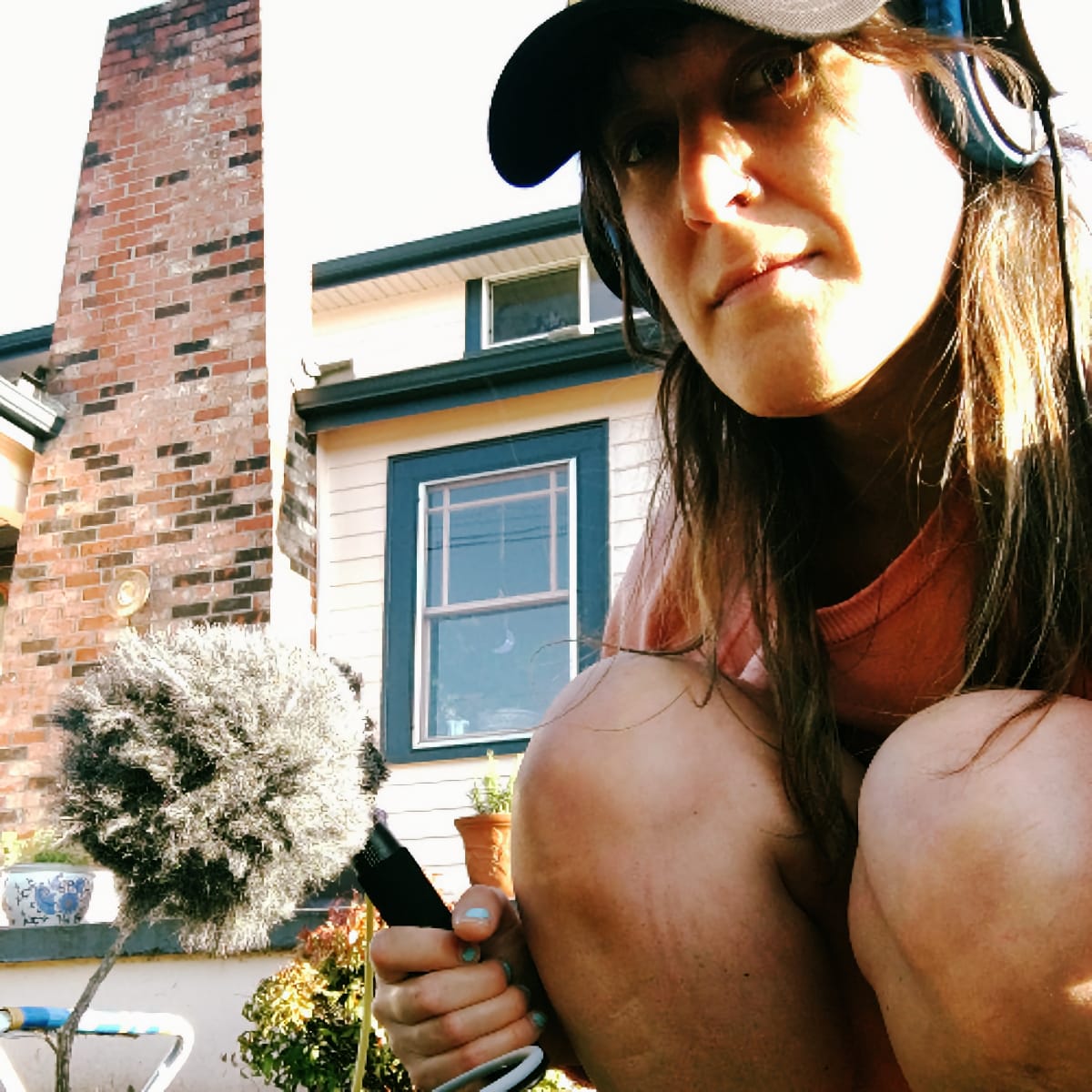
Deep Listening, Deep Soil — Lisa Ann Schonberg's Myrmecological Music
The Brooklyn-based composer and percussionist discusses her field expeditions with myrmecologists in Brazil, the feedback loops she builds between insect recordings and organic substrates, and what it means to make music from sounds too small for human perception. Interview by Chaz Underriner.
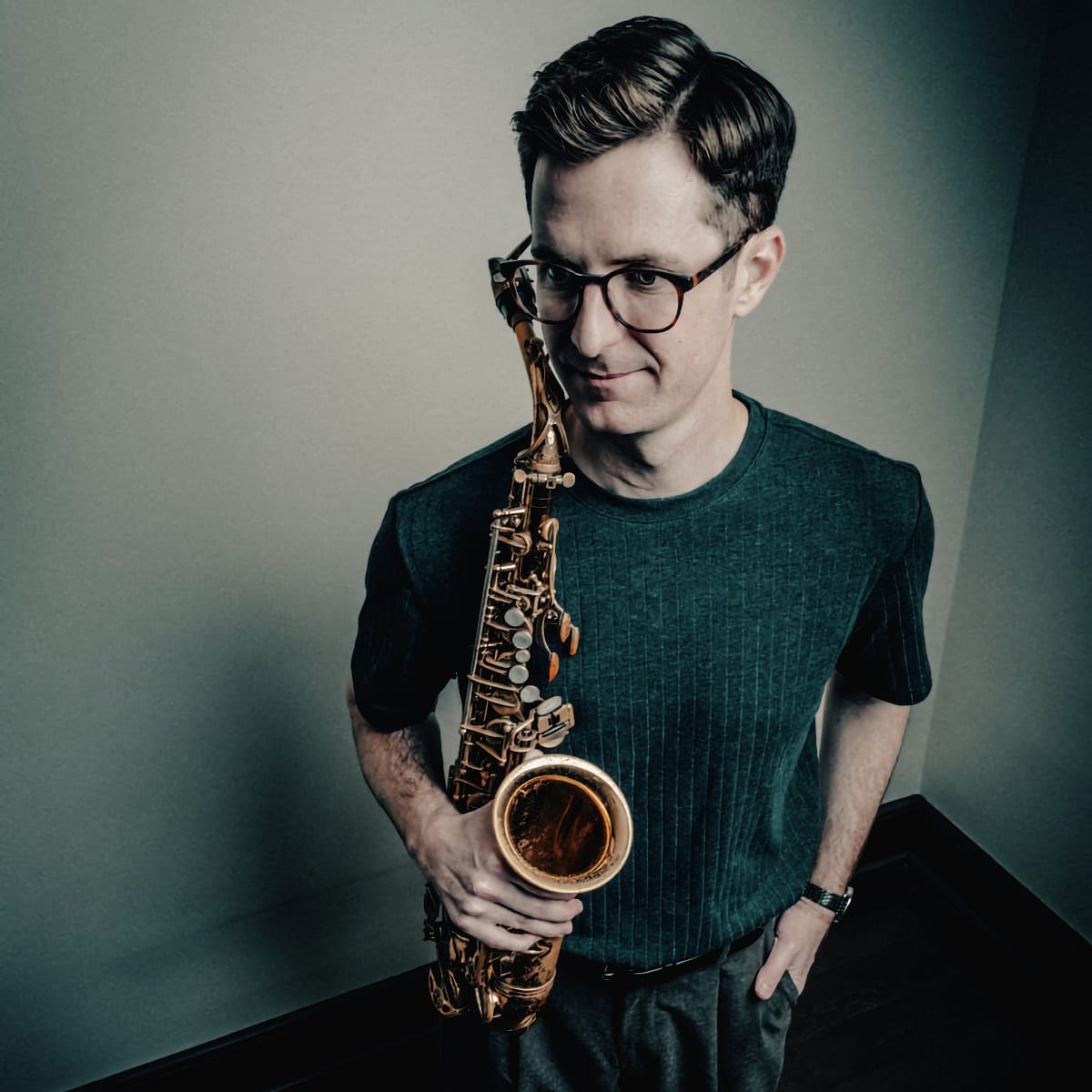
Ethan Helm's Geography of Loops
Inspired by the geological scale of Japan and the productive accidents of a standard looping pedal, Ethan Helm's 'Dreamscapes' extends a jazz improviser's instincts into the territory of self-reliance. Interview by Garrett Schumann.
Listen to an audio edition of this week's newsletter, which includes selected music from each of the artists featured. Follow along!

This Week's Episode of The Tonearm Podcast:
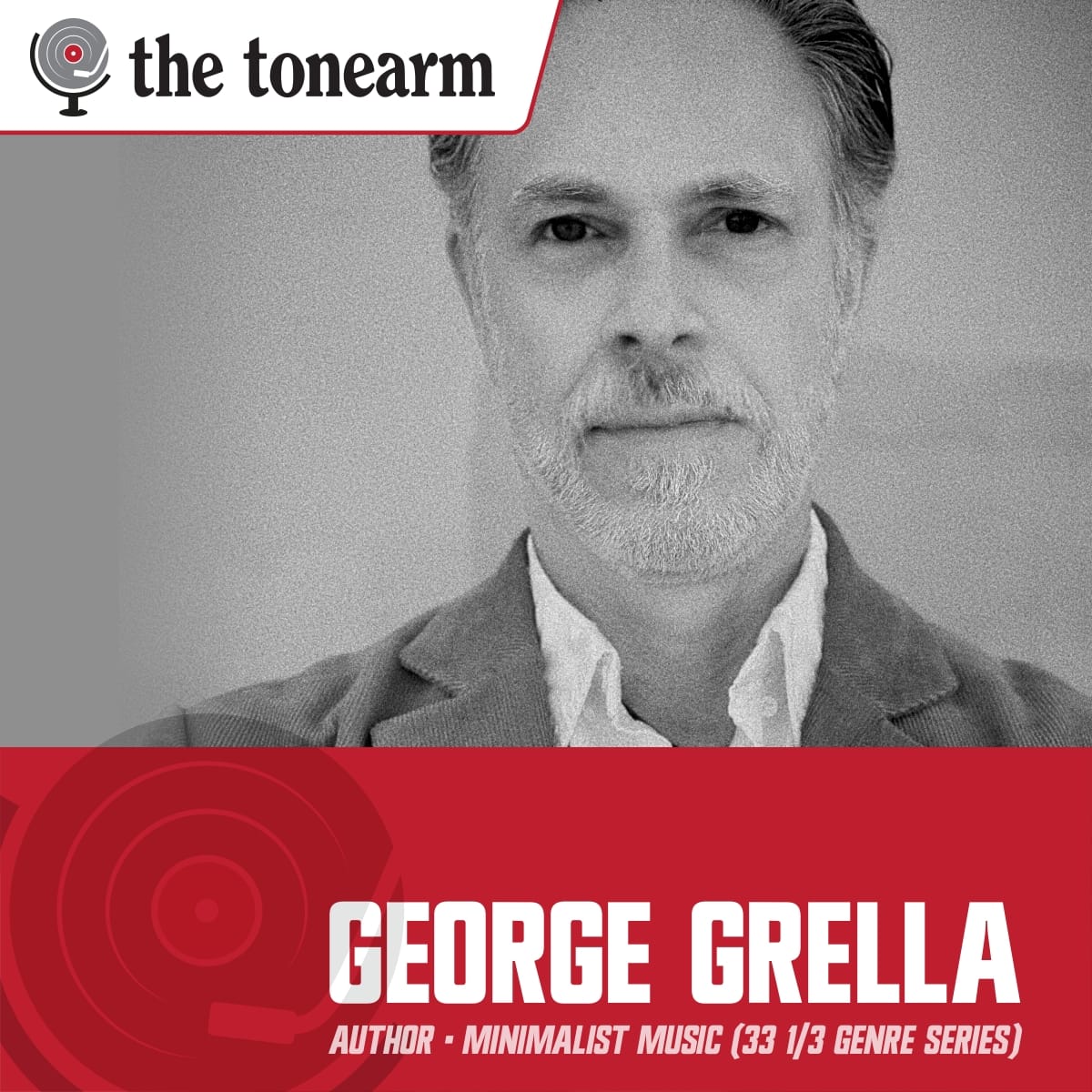
George Grella: The Time-Bending Art of Minimalist Music
George Grella joins the podcast to discuss his book 'Minimalist Music' and argue that the genre has nothing to do with sparse materials and everything to do with time.
Rotations
Lawrence Peryer drops the seventh episode of Rotations, the official radio show of The Tonearm, to the archive, featuring an unconventional Miles tribute. Listen in:
This past Tuesday marked the 100th anniversary of Miles Davis's birth. I had my own take on a tribute, and I tried to be a little unconventional in approach. Rather than tracing his biography or pulling from the obvious catalog, the hour focused on the musicians who lived in Miles's orbit and carried his ideas forward: Coltrane, the Grateful Dead, John McLaughlin, Prince, and more.
Coming up this week, an episode with no through line beyond vibe. Balinese gamelan, Lithuanian synth minimalism, a ferocious free-improv trio, followed by a Munich jazz ensemble doing covers. A middle section featuring Steve Reich's Drumming, which came out of prep for this week's Tonearm podcast conversation about minimalism (a case of research bleeding productively into the programming). It closed with Stars of the Lid, which is about as good an example of ambient packing emotional weight as opposed to serving as background texture. Tune in at 11 PM Pacific on Space 101.1 FM in Seattle or streaming everywhere at space101fm.org.

The Hit Parade:
"With his ferocious energy, his penchant for playing the unexpected note at the unexpected moment, and his unusual sound — sometimes harsh and mocking, sometimes lush and romantic — Sonny Rollins was ultimately unclassifiable." ❋ "Although often associated with folkloric traditions, Totó la Momposina insisted that she was part of a dynamic process that stretched to the present. 'While I respect the word ‘folklore,’ to me it means something that’s dead — in a museum . . .'" ❋ "Miles Davis always had popular appeal because he was always communicating coherently to the listener, and his aesthetic sense made for a beautiful ensemble sound. People could dig him, and deeply dig they did, without having to dig him." ❋ "With the waning of religion in modern society, modern shrines can be a way of engaging with the great beyond and the mysteries of mortality, helping us ponder the unanswerable questions of death. 'It’s like, when Bowie died, where’s he gone?'" ❋ "In the beginning of Irakere, we weren’t allowed to use the cymbals on the drums, because they said that sounded too American. We had to change the cymbals and put cowbells and all the things [for] that reason, you know, but at the end we masqueraded bebop and jazz [on top of] a Cuban rhythm." ❋ "For all that 'Spirit Of Eden' connects on a profoundly emotional and even spiritual level, it’s a highly technical construct. It plays with sound and space, manipulating notions of authenticity and spontaneity as cleverly and ruthlessly as any three-minute pop single." ❋ "At the Loft, the Klipschorn took on a second life. . . . The speaker was no longer just a domestic object prized by hi-fi obsessives. It became part of a collective technique, using sound to shape the room itself and the relationships inside it." ❋ An interview with Samuel Mulugeta, co-founder of "Muzikawi, the cross-national Addis Ababa and Stockholm-based label preserving and reissuing some of the most vital recordings in Ethiopian music history, while simultaneously building a future for the country’s contemporary artists." ❋ "As the excitement around 'Inferno' reaches its climax, Aidan Hanratty digs into Boards of Canada’s discography to provide an in-depth primer for new listeners, mapping the route from their earliest releases to today." ❋ "Real cowboys, as imagined, don't exist; if they did, though, Sonny Rollins was one. Steadfast, independent, resolutely original, fearless, timeless … [and he] claimed the title, more or less, on his 1957 album 'Way Out West' …" ❋ What follows is an oral history of the music scene in Athens, GA, told by people who have lived it. Even they’re not sure how a midsize Georgia city known for football and frat parties became one of the most important music towns on the planet. But they have some theories. And they definitely have some stories." ❋ "I was, I'll admit, rather concerned when Simon started speaking. He's in his mid eighties now … [and] Simon's speaking voice was a husky whisper, almost unrecognisable as the same man. But then the music started. Simon started playing the guitar, and I knew I was in for something special." ❋ “We want to utilize the talents that each band member brings. We don’t want to compensate for perceived ‘weaknesses’ or ‘flaws’ of individual musicians. Rather, we try to incorporate them if they align with our shared artistic intention.” ❋ When the singer-songwriter Mo Sabri was growing up in East Tennessee, his Pakistani immigrant parents loved playing the swirling, rhythmic sounds of qawwali, Sufi Muslim devotional music. They also loved playing country classics by Kenny Rogers and Dolly Parton." ❋ "Their repertoire of songs tackles everything from unaffordable care home fees, to male attitudes towards older women, to the frustrations of recycling. And they are possibly the only band to have ever been featured on both the homepage of guitar.com and a poster campaign for Age Cymru." ❋ "Mr. Loc is Vietnam’s last, most steadfast singer of the heartfelt music that defined Hanoi before and soon after the country split in 1954. And like his life story, the [songs] carry waves of nostalgia, pain, longing and the lessons of connections lost when societies divide, and leaders demand cultural obedience." ❋ "As a practice, art music attempts to illuminate the human experience through sound — to address or unveil what it means to be alive in a body, in a society, in a particular historical moment, subject to love, grief, power, and longing. In other words, art music asks: how does it feel to be human, here and now?" ❋ The Ordinary, Extraordinary To-Do Lists of Keith Haring ❋ Sonny Rollins on Monk and the Bridge ❋ Current Rothko ❋ For more curated music links, be sure to follow The Tonearm’s feeds on Bluesky and Mastodon.
New Music Recommendations: Alicia Waller – Louder, Then (RIYL: bel canto meets Black American vernacular, D'Angelo-adjacent in weight and ambition) ❋ Bahar Movahed - Together Yet Alone (RIYL: Persian tradition, diaspora songwriting; Googoosh adjacent in emotional register but rooted in ancient modal forms) ❋ Carlos Ferreira — a failure may be imminent and cause unpredictable error (RIYL: Processed guitar abstracted to the edge of recognition; Rafael Toral, Heldon, Christian Fennesz) ❋ Columbia Icefield - A Silence Opens (RIYL: Free improvisation, emotionally direct and elegiac; Mary Halvorson, Wadada Leo Smith, Tim Berne) ❋ District Five - GLUT (RIYL: Art rock that’s politically charged, rhythmically knotty, melodically restless; black midi, Dirty Projectors, Clinic) ❋ Gigi Masin - Movement (RIYL: Balearic electronics; hauntological synthesizers; Sun Electric meeting Carl Craig at the edge of the ocean) ❋ Kikù Hibino & Merzbow – Rococo ∞ Echomatter (RIYL: Harsh noise with ASMR-inflected spoken word and orchestral interjections; Carsten Nicolai, Oval) ❋ Nils Berg & Norrbotten Big Band - Paid To Cry (RIYL: Nordic contemporary jazz big band; Maria Schneider, Chris Potter, Carla Bley) ❋ Yottie – CASINO (RIYL: Experimental electronic + glitch that’s emotive and frenetic; Tim Hecker)
The Deepest Cut:
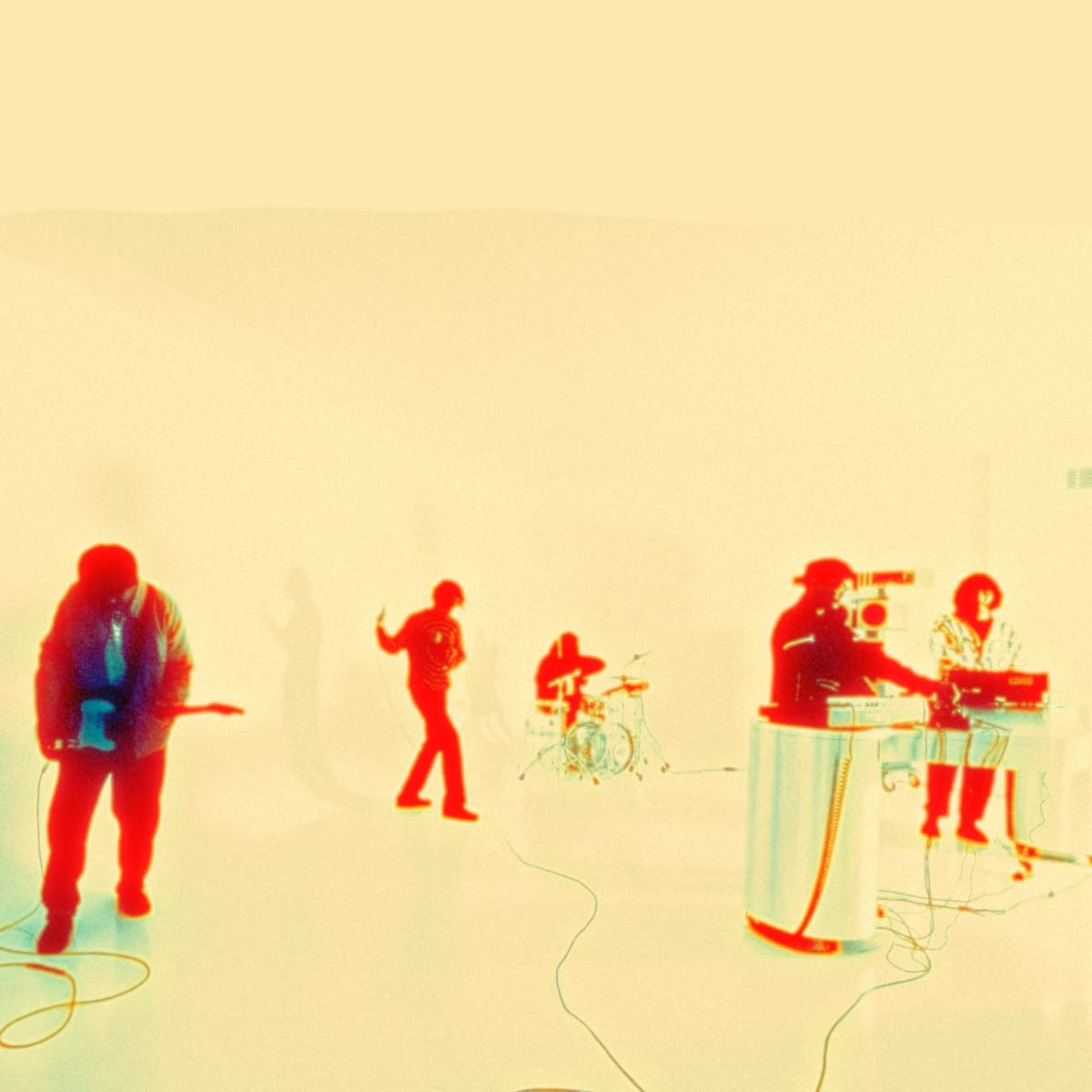
This week, we focus on Strange Fruit, a Jakarta five-piece who have spent more than a decade moving through kosmische, krautrock, shoegaze, and leftfield electronics. Drips EP, released last month on Gentle Tuesday Recordings, collects four original tracks and five remixes in the band's most concentrated attempt to pull those influences together. The five members are Baldi Calvianca on vocals and synthesizer, Irza Aryadiaz on synthesizer, John Tampubolon on guitar, Nabil Favian on bass, and Dino Kristianto on drums.
The record was produced with Bernardus Fritz, and its songs span motorik pulse, shoegaze haze, and leftfield pop. In a savvy move to expand the band's audience to the overlapping electronic segment, there are fine remixes from Jonathan Kusuma of Jakarta's Dekadenz collective, Sean Johnston of A Love From Outer Space, and Tom Furse, whose credits include The Horrors and MIEN.
The band reached out to me through their label, and as a longtime fan of this psychedelic and hazy indie rock style, I was intrigued. I hadn't heard of shoegaze from Jakarta before. But the band set me straight—I shouldn't be surprised by the variety of underground music based in what the United Nations has deemed the world's largest city (about 42 million people). Three members of the band discussed this with me over email and explained the influence of European music and the choice of the unintentionally provocative band name.
Irza Aryadiaz: We're based in Jakarta, but the music doesn't really belong to any one place. There's a growing community in here, so it's not isolated—but it doesn't always line up perfectly either. I don't think the distance feels as far as people imagine. People are building spaces, organizing shows, and pushing this kind of sound forward. A few artists from here are also touring and connecting with scenes abroad, so there's already an exchange happening. Some people get it, some don't, which is probably how it should be. A lot of it also connects with people elsewhere, which feels natural. We've made peace with that. The music moves first, and everything else follows.
I've seen shows in Europe too, and while the context is different, the feeling is very similar. People are there for the same reason: to connect through music. So when we make music, it doesn't really feel like translation anymore. It's more like being part of an ongoing conversation. The references might come from different places, but the intention feels shared.
Dino Kristianto: Jakarta is the catalyst, but the music is the escape. Creating Drips was a solitary journey shared by the few who truly speak our language. We don't feel 'misunderstood' at home; we feel like a hidden frequency. If our audience lives elsewhere, we see it as an expansion, not a rejection. We've embraced the distance. There's a quiet power in knowing that while we breathe Jakarta's air, our music is drifting somewhere far away, finding its own home.
Baldi Calvianca: At first, [our influences] came in fragments—magazines, the internet, digging through whatever we could find. But more importantly, Jakarta has a tight circle of people deeply into music, and that kind of exchange accelerates everything. You're constantly being exposed to references you might not have found on your own. When we make music, it's inevitably a reflection of what we've absorbed. I won't deny there's an element of translation in there. Over time, it's grown into something more personal, shaped by where we are, what we've made before, and how those influences evolve once they pass through us.
I grew up on a lot of British music from the '90s, so that lineage is already embedded in how I hear and make things. And it's not just me; there’s a whole circle here who share that reference point, so it doesn't feel distant or forced. Reaching out to the UK isn’t a calculated move. It just makes sense. The infrastructure and context for this kind of music have been in place for a long time, so when a connection forms, it feels like a continuation rather than a stretch.
When we chose the band name, we were younger and approached it from a more abstract and artistic place rather than a political one. To us, "Strange Fruit" functioned more as an image or metaphor—something unusual, unpredictable, and varied, like one tree producing different kinds of fruit. That idea still resonates with how we make music now: always shifting, always exploring, trying not to stay in one place for too long.
We're aware of "Strange Fruit" and everything it carries, and we have a lot of respect for that history and its significance. The song's connection to racism, violence, and the history of lynching in America is something we absolutely do not take lightly. We stand firmly against oppression in all its forms.
Run-Out Groove:
- The Tonearm is a reader-supported publication, free of advertising and paywalls. Our supporters help fund our writers and make the site possible. Please consider joining and helping us to continue our mission.
- Join the rapscallions of The Tonearm on our new Slack community.
- Sign up to receive our latest articles directly to your inbox in a snazzy, easy-to-read email version. Just go to your account, manage your email preferences, and flick the lever to receive The Total Tonerm.
- The easiest and best way you can help us? Please share this newsletter and our stories with your friends.
Thank you for reading! We'll see you again next week. 🚀


Comments