


Now Playing on The Tonearm

Speaking the Word of the Buchla — Suzanne Ciani’s Orchestral Wave
On the occasion of CIANI/ORKEST, Suzanne Ciani discusses handing her solitary Buchla music to a 50-piece orchestra, the ocean and the wave beneath her compositions, and the young players bringing analog modular synthesis back. Interview by Lawrence Peryer.
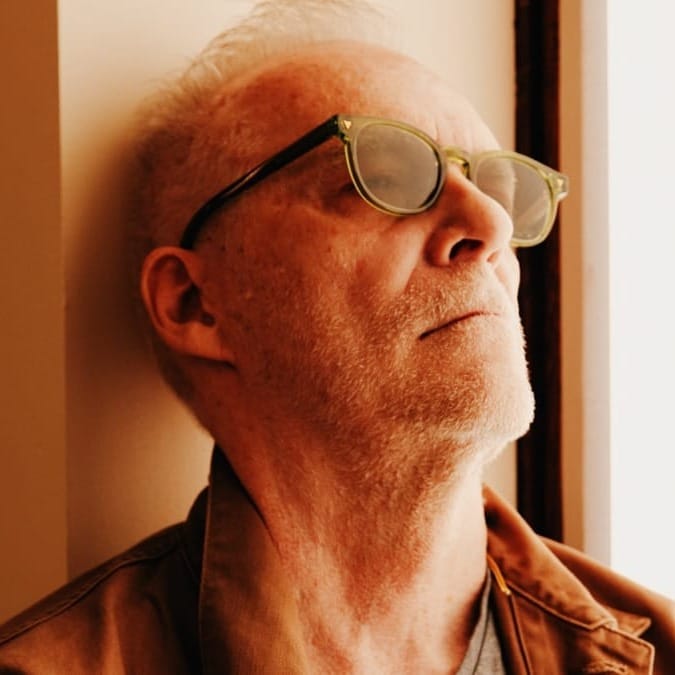
I Still Miss Someone — The Boys of Nirosta Steel
Guitar in hand and Arthur Russell forever at his shoulder, Steven Hall turns half a century of desire into harmony he mostly sings to himself. Interview by Carolyn Zaldivar Snow.
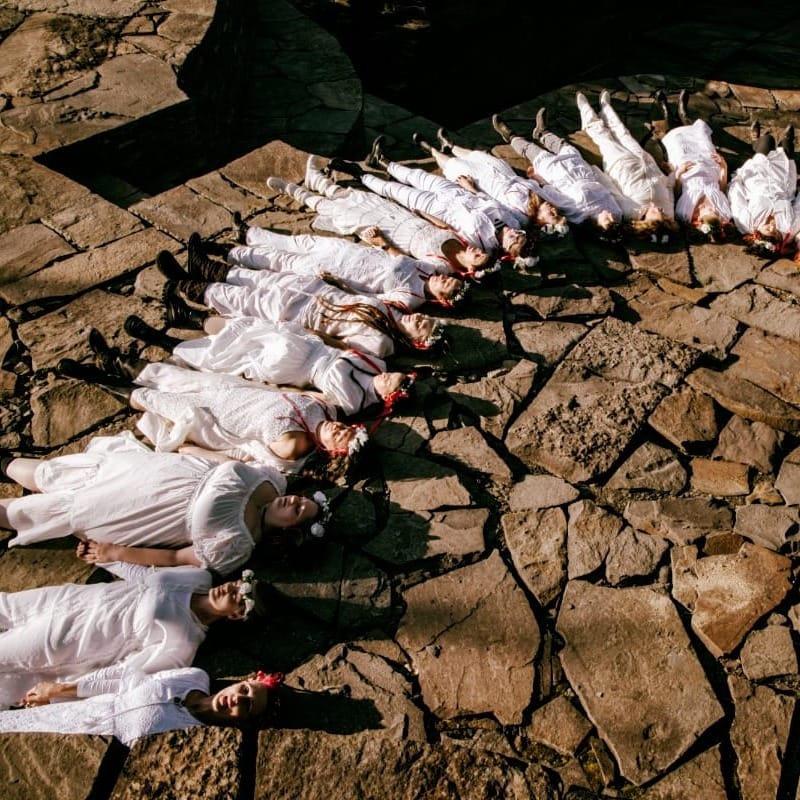
Shana Falana, the Goddess Party, and a Cult Worth Joining
The Hudson Valley musician and Goddess Party founder on self-marriage, Bulgarian choral music, and running a benevolent hierarchy, ahead of ‘The Wedding,’ a two-night rite of borrowed gowns and mirror-held vows. Interview by Meredith Hobbs Coons.
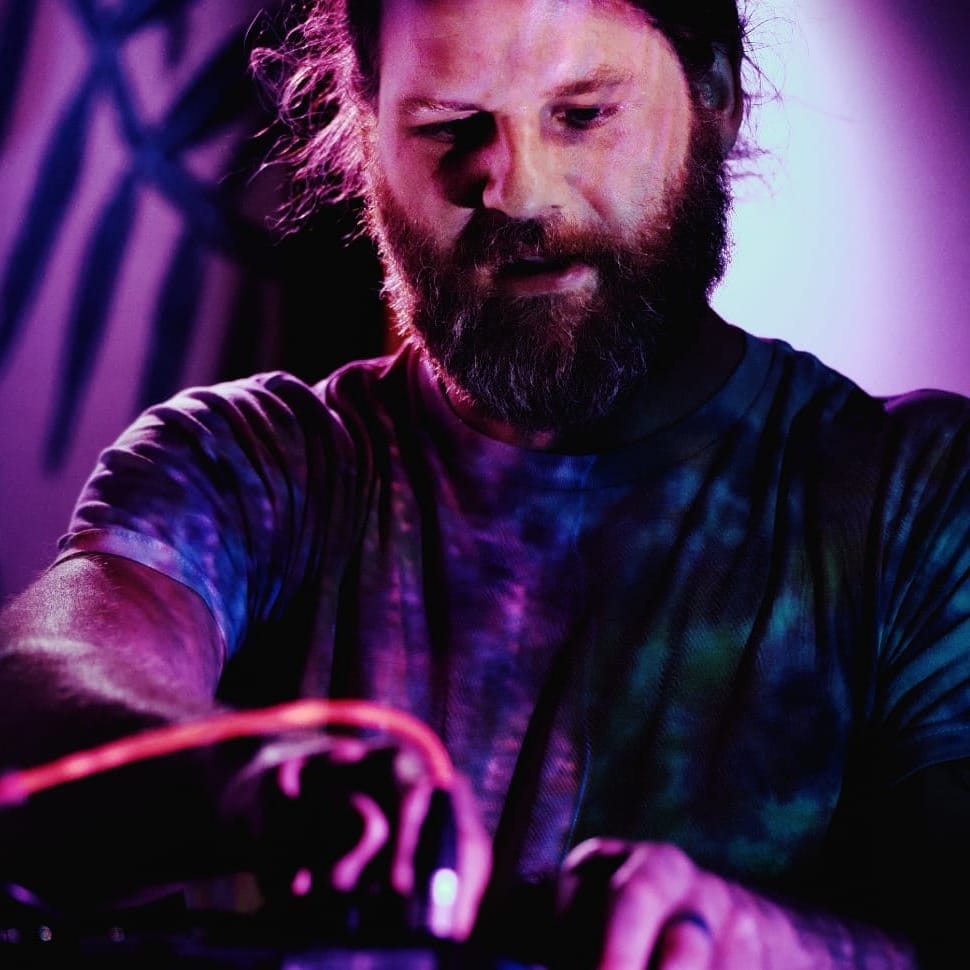
The Euphoric and Exuberant Noise of Nolan Hildebrand
After the release of ‘Noise Trip Explosion,’ the Toronto composer and Black Galaxie noise artist talks doctoral research, acoustic startle experiments, and why it’s worth keeping his wildest studio accidents. Interview by Jon Buckland.

Manifesting Mixol
Beijing-based artist Mixol discusses manifestation and tarot, the self-doubt that once made her quit songwriting, and the eight-bit narrative game she built to play alongside her debut EP, ‘The Fool.’ Interview by Bill Cooper.
This Week’s Episode of The Tonearm Podcast

Danalogue: Telling the Future Through Old Machines
On his debut solo album, ‘Teleportations,’ the synthesist, producer, and founding member of The Comet Is Coming turns grief and upheaval into a science-fictional voyage built entirely from analog machines.
Rotations
Lawrence Peryer’s Rotations, the official radio show of The Tonearm, reaches episode fifteen, and it doubles as a soundtrack for most of what you just read:
Episode 15 of our radio show is now up on the Mixcloud archive. The show continues to be a way to preview the artists we cover on The Tonearm. This episode features music from electronic-music pioneer Suzanne Ciani; Steven Hall, recording as Nirosta Steel, unveiling a forty-year-old Arthur Russell collaboration; Hudson Valley psych-pop artist Shana Falana, the subject of a piece on The Goddess Party, her progressive-theater project born out of wanting to be around women; and an absurd (in the best way possible) piece from Toronto noise composer Nolan Hildebrand.
We also played music from a tribute EP honoring the late AACM pianist and educator Ann “Mama Ann” Ward, visited new records from saxophonist Camila Nebbia and trombonist Robinson Khoury, and made room for Seattle’s own forró sextet Foleada, who are performing for free tonight, July 26, at Marvista Park in Normandy Park. I am MCing the show, so if you are in the area, stop by and say hello.
As always, a new episode of Rotations premieres this Tuesday at 11 p.m. Pacific on SPACE 101.1 FM in Seattle and streams at space101fm.org.

The Hit Parade
“[Plas Johnson] had an ample list of credits as varied as 1950s rock ‘n’ roll hits, TV theme songs and recording dates with superstars. But the work that stood out was the theme of ‘The Pink Panther’ . . .” ❋ “As ‘one of the originators that showed that battle rap ain’t just for men,’ as the rapper Big Daddy Kane once put it, [Sparky D] helped establish a lasting hip-hop truism: Bad blood is good business.” ❋ “One day, Mr. Melson noticed Mr. Orbison sitting in his car, working through a melody on his guitar. He tapped on the glass and they struck up a conversation. Soon they were writing together.” ❋ “I’d had a very happy childhood until my father died when I was doing my O-levels, but I’ve come to the conclusion that the really bad things gave me more than they could ever take. How can you know happiness until you’ve known deep sadness?” ❋ “Betty [Carter] leans over to me off-mic and whispers, ‘It’s too noisy,’ right to my face. Immediately, that became the most important lesson I learned onstage: just serve the music . . . that’s four years of music school in 30 seconds.” ❋ “If I’m designing a record cover, I don’t want it to look like a record cover. If I’m designing a corporate logo, then I’d rather it look like a record cover.” ❋ “You can’t ignore Miles, Coltrane, Duke or Monk and simply decide to call something jazz. But if you have one foot rooted in the tradition and another in experimentation, jazz can be incredibly expansive.” ❋ “The Western world is going through a serious period of reaction, and I’m not afraid for the future . . . I believe in the capacity of the human spirit to triumph over oppression.” ❋ “[Gary] Stewart’s reign at the top would be relatively brief—a half decade of hits interspersed with headlines about his drug busts and record label battles. His self-destructive streak helped turn him into a vanishing act.” ❋ “[Barbara] Rubin may not have introduced the underground to sex and drugs, but as the movement’s resident baby boomer she added a measure of rock ‘n’ roll.” ❋ “[Teddy Mac] talked about his time playing in Addis’ most popular hotel ballrooms in the ’70s, his work helping to define the sound of the beloved Ethiopian singer Aster Aweke, and a chance encounter with the one and only Bob Marley . . .” ❋ “I would go to bed every night and have dreams about a time machine. Somehow, I’d have the ability to move through time and space, and I’d save her. Do you think that’s embarrassing?” ❋ “90% of [Cambodia’s] artists, singers, musicians, composers, and industry professionals were murdered; studios, master recordings, equipment, contracts, and legal documents were lost or destroyed.” ❋ “Writers and editors in the dance music press didn’t just swallow a line — they didn’t bother to check who was baiting it.” ❋ “[CDs are] a declaration of music as identity, whether that’s an affirmation to oneself or an aesthetically pleasing photo for the grid. Music has always had that power and it’s not fading.” ❋ “If they can convince you a song produced by such a beast [an AI] is good, then what use is there for any of us? Let the machine work and drain and sputter and purge; may we dance and clap at what meager pleasures it can conjure.” ❋ “People talk about vinyl and wax, and it sounds cool, but there is no getting around that vinyl records are PVC and every one that I make adds to the plastic in the world.” ❋ For more curated music links, be sure to follow The Tonearm’s feeds on Bluesky and Mastodon.
New Music Recommendations: Curió Curió - Curió Curió (RIYL: Brazilian MPB filtered through psychedelic disco, Tropicália warmth, and a dancefloor pulse) ❋ Wild Gods - The Glorious Abysmal (RIYL: Celtic folk and electronics — Lankum and the Bad Seeds on a Highlands moor, with archival Gàidhlig samples and sub-bass)
The Deepest Cut

Tyler Pursel mixed and mastered In the Pasture of Obsolete Suns himself, at home in Philadelphia, and the record carries the marks of that self-containment. Its ten pieces are built from sampling, synthesis, organic texture, and deliberately unstable generative systems. Low-end currents move underneath corroded tones and blurred loops, and the melodies become residue. Pursel works as a visual artist too, in mixed media and organic materials, with the same logic of layered decay running through both.
He also records as half of Earthroom with Morgan Evans-Weiler, a duo that started in 2022 after both became obsessed with serenitatem, the 2019 FRKWYS album from Visible Cloaks, Yoshio Ojima, and Satsuki Shibano. Their second record, Heuristic Environments, came out of a stretch when the pair were deep in kankyo ongaku and one particular idea of Brian Eno’s. “I recall reading some Eno thing about the concept of music as a ‘reliable portable environment,’ which I really loved,” Pursel has said. “If you are listening to music in headphones while traveling, the sounds of the outer world enter and intertwine with what you’re listening to.” He arrived at all of this by way of the Philadelphia DIY circuit, playing a lot of instruments in a lot of hardcore and punk bands before Autechre, Boards of Canada, and Jon Hassell got hold of him.
I reached out to Tyler and asked where the line falls between setting a generative system loose and steering it, and about the track titles—“Motherbored” in particular, which I still can’t decide is a joke or a lament. And, of course, I also asked for something he loves that more people should know about. He answered all of it, at length.
In the Pasture of Obsolete Suns is really a sort of convergence of all of the sounds and textures I like, spanning experimental music. It’s the first time I’ve made something with less rigidity as far as what was or was not allowed in, and in that process I believe I found some version of my own sound. I’ve never been super conceptual in my creative process, so it was more just about tones and sounds that suit that sort of mood (maybe that is conceptual). I wanted the record to sound like a tree with a computer inside of it, or a melted cassette tape playing from the inside of a cello (haha), but I’m not exactly sure if I accomplished that.
Working with generative systems is a total tightrope walk or mindfuck, and I’m never quite sure how it’s gonna go. I don’t know that there’s a definitive line really; it’s more of just a feeling. I’ll construct fully generative systems within Ableton and let them run for any varying amount of time and then sort of excavate and resample the bits that are appealing to me. The line, so to speak, kind of presents itself. Sometimes it really gets to something, and other times I’ll spend hours with it and get nothing of use. It’s like having a messed up semi-unreliable band member or collaborator who occasionally comes up with something amazing, but in the time until that happens there can be a good bit of frustration.
I think ultimately when I’m making anything I’m trying to escape myself and my tonal and rhythmic inclinations and hang-ups. Utilizing these tools helps me to do that.
Working with tape, old samplers, and any sort of destructive techniques and “obsolete” tech can feel a bit more collaborative, but in my case it’s also very specific. I know the tools I use for this pretty well, and I usually call on them for reliable results. I know just what level to hit my Tascam 4-track so something will saturate in a pleasing way, or the way my S1000 will do a really grainy time stretch but also sort of widen the stereo field a bit.
It’s rare for me to title anything during the creation process. It’s almost always afterward, or I give them a generic name that always changes before release. While the title was fully sort of a joke, I do feel as though there is a certain emotionality to “Motherbored” if you hear the track. I think of that song as an auditory representation of a doom-scroll. Moments of it are fun, pretty, and nice, while others are glitchy, messy, ugly, and uncomfortable.
I think calling the track “Motherbored” as opposed to “Motherboard” alludes to an abstract idea: maybe the computers and algorithms making all of this happen could have sentience, and if they do, they are just as jaded and unhappy about these things as we are. The motherboard is the heart of the computer, and she has grown bored with her assigned purpose and yearns for something more.
Tyler Pursel then generously ran down a few things he loves:
Sharing things I find amazing with other people is one of the only pure sources of happiness I think exists.
Album: Choosing one album is impossible, but I’m going to say the complete discographies of Oneohtrix Point Never, Boards of Canada, and Visible Cloaks. Without their work, my work would not exist. To me, they are all so purely and honestly within their own specific sonic worlds that they often defy genres. I strive to reach that place in my own music.
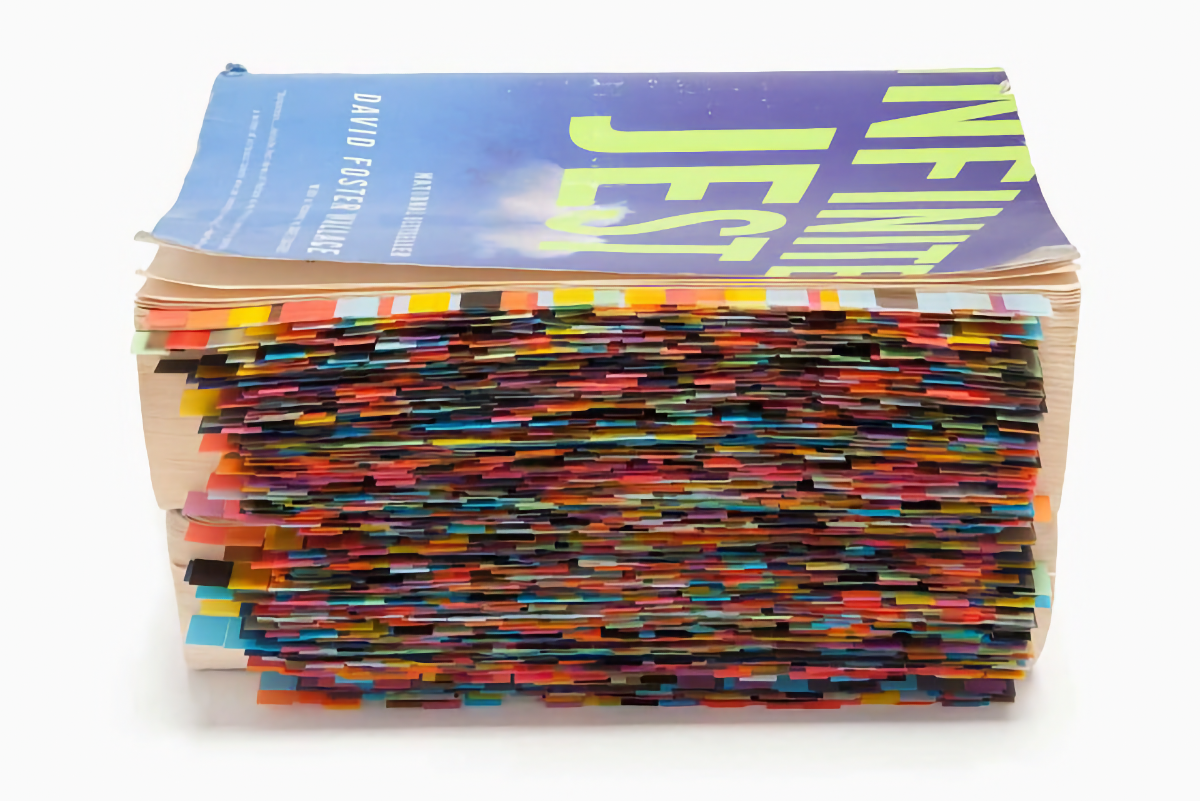
Book: Years ago on a tour I read Infinite Jest by David Foster Wallace. While it’s hardly a secret or unknown book, there’s a part where this character Don is in an addiction recovery rehab, and this quote appears: “no single, individual moment is in and of itself unendurable.” As a person living with depression, anxiety, and PTSD, I think about that often when things become overwhelming, and it really helps me to deal with things that seem insurmountable.
A Person: A real hero of mine is Bill Watterson, author of the Calvin and Hobbes comic strips. Maybe one of the punkest dudes to ever live. Created two of the most iconic comic characters ever and refused to allow their likenesses to be exploited or merchandised. Nostalgia had me recently rereading some of the old strips, and there’s just so much purity of heart and honesty in them without being overly sappy or sentimental, and I don’t feel like that about many things. His existence and the enduring legacy of those comics is a reminder to protect the things that are important.
Idea: Surrealism. I spent so much time in my creative process compartmentalizing things I liked and creating barriers. I started to think about music in the same framework as the surrealist art movement. Being illogical, absurd, and mashing things together has resulted in music I’m truly proud of. Every instrument sound and texture is just clay or mud or paint or sand, and they can all be mixed together. Forget rules.
The Run-Out Groove
- The Tonearm is a reader-supported publication, free of advertising and paywalls. Our supporters help fund our writers and make the site possible. Please consider joining and helping us to continue our mission.
- Join the rapscallions of The Tonearm on our new Slack community.
- Sign up to receive our latest articles directly to your inbox in a snazzy, easy-to-read email version. Just go to your account, manage your email preferences, and flick the lever to receive The Total Tonearm.
- The easiest and best way you can help us? Please share this newsletter and our stories with your friends.
Thank you for reading! We’ll see you again next week. 🚀


Comments