


A few years ago, a New Jersey noise artist who goes by the name of EROSLOVESYOU printed a run of t-shirts with the phrase "The difference between sound art and noise is institutional funding." They might not be the first person to have had that thought, nor the first to draw comparisons between the worlds of academia and DIY movements, but they were certainly the first to print it on a t-shirt and ship them worldwide.
In the final throes of his doctoral thesis at the University of Toronto, Nolan Hildebrand is a composer and noise artist who straddles the twin worlds of underground music and funded sonic experimentation. In one walk of life, he performs under his Black Galaxie alias at shows put on in bars by the likes of 'Super Jen' of More Noise Please. In the other, he travels to the University of Huddersfield in the UK to conduct research into 'acoustic startle responses', blasting participants with lashings of sound and recording their reactions.
Having attended concerts at academic conferences such as the International Computer Music Festival, Hildebrand, speaking via video call, confirms that these have featured "performances that could be considered noise music in one way or another but in an academic institutional context." And, whilst Canada is quite generous in its funding of the arts (particularly when compared to the USA and UK), with a range of grants available to organizations and individuals, being part of an institution is in no way a guarantee of financial security. "It's not like everybody in academia is making a bunch of money off their music," he clarifies, "even though people are getting grants, it's just as hard in there too."
Before relocating to Toronto to complete his Master's in Composition, Hildebrand was studying music in Winnipeg, Manitoba. It was here that he was introduced to a broad range of experimental musicians, including free jazz giants Peter Brötzmann and Ornette Coleman. "I still love that stuff," he shares, "but I lean more towards non-idiomatic free improv." His professor, Gordon Fitzell, was also responsible for sending Hildebrand off down a path of noise. "I didn't know a lot of stuff that early on. He showed me Merzbow, and that opened up all sorts of doors."
There are some similarities between how he approaches the two disciplines. There's crossover in how the sounds are presented and how they're generated. For example, both techniques feature no-input mixer feedback, which Hildebrand describes as "a wild beast, so it's tough to tame." This unpredictable cacophony occurs when you run an output channel back into one of the input channels on a mixer.
One of the main differences, however, is that you're unlikely to find Hildebrand's voice in his compositional practice. Whereas, with Black Galaxie, his vocals tend to be present. He also leans more towards electroacoustic performances and collaboration when composing for his research. He finds the "blending of electronics and acoustic timbres super exciting," adding that "the loudness, of course, has something to do with it. Everything is louder when you play it through a speaker system." But there's also an aspect of confusing the audience which appeals to him, "to make them unsure what's electronic and what's acoustic, that kind of relationship is the backbone of what I'm interested in."
This element of confusion takes on a psychedelic dimension when applied to noise. Hildebrand explains that whether it's through vertical density "where there's a bunch of different layers on top of each other and most of the time the whole frequency spectrum is being filled" or through horizontal density in which "there's a lot of stuff happening quickly in a short amount of time," a bedazzling form of sonic confusion results. It's an overload of information from all angles, rendering the listener perplexed and disoriented. Expectations are confounded. Overwhelm is the point. It's all that you can do to hang on for dear life.
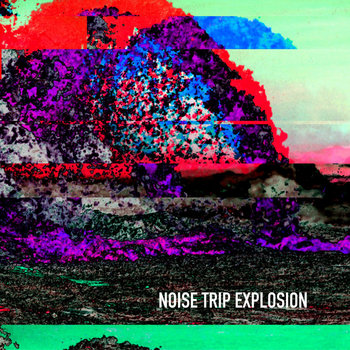
This is perhaps best represented on the second track of Hildebrand's new album Noise Trip Explosion. The unshackled experimentation that makes up "Knurl Cracked Green" comes across like a tantrum in a prop cupboard. Someone's wailing on a piano. Strings are being used as percussion. There are squealing drones and shrieked noises littered throughout. You get a real sense of Hildebrand's propensity for mayhem and chugging disharmony. It's something that alludes to his metal background (he previously drummed in a number of metal bands). The slamming violence and trudging metallic cadence of the sounds calling back to his past.
In academic work, there can be a risk of the compositions appearing dry, clinical, or staid, but this record burns with a fiery and playful intent. Hildebrand says that he's "always been drawn to excessive changes from one texture or riff to something very dramatically different." Something he refers to as "rug-pull moments." But this has never led him to the darker, grislier side of noise that tends to focus on gore and taboo subject matter. It's "the euphoria and exuberance of noise" that he finds most interesting.
Nevertheless, it can be tricky to maintain this element of euphoric surprise when composing. To avoid complacency or getting stuck in a rut, Hildebrand employs innovative methodology to structure his pieces. For the 16-minute penultimate track, "portals II (everywhere and everything right now)," he used a graphic score to signify different sound "universes". This entails a series of "geometric, angular patterns that are very sectionalized on the score." Experimenting with different types of visual noise to "evoke a noisy performance."
Inspired by the concept of the multiverse, the idea is that the performers begin by playing completely separately from one another, essentially ignoring each other. They're then able to travel via "portals", which are circular splodges on the scores, into the sonic universe of their fellow performers. "It's this kind of paradox in the piece where I'm asking them to not listen but also listen at the same time," Hildebrand clarifies.
To pull this feat off, he recruited musicians capable of holding these contradictory positions at the same time. Fortunately, the scene around the city of Toronto features a host of adept musicians able to bring the spontaneity necessary for such a piece. People such as saxophonist Colin Fisher, guitarist Patrick O'Reilly, violinists Veronica Zupanic and Roan Ma, pianist Hirad Moradi, and drummer Louis Pino.
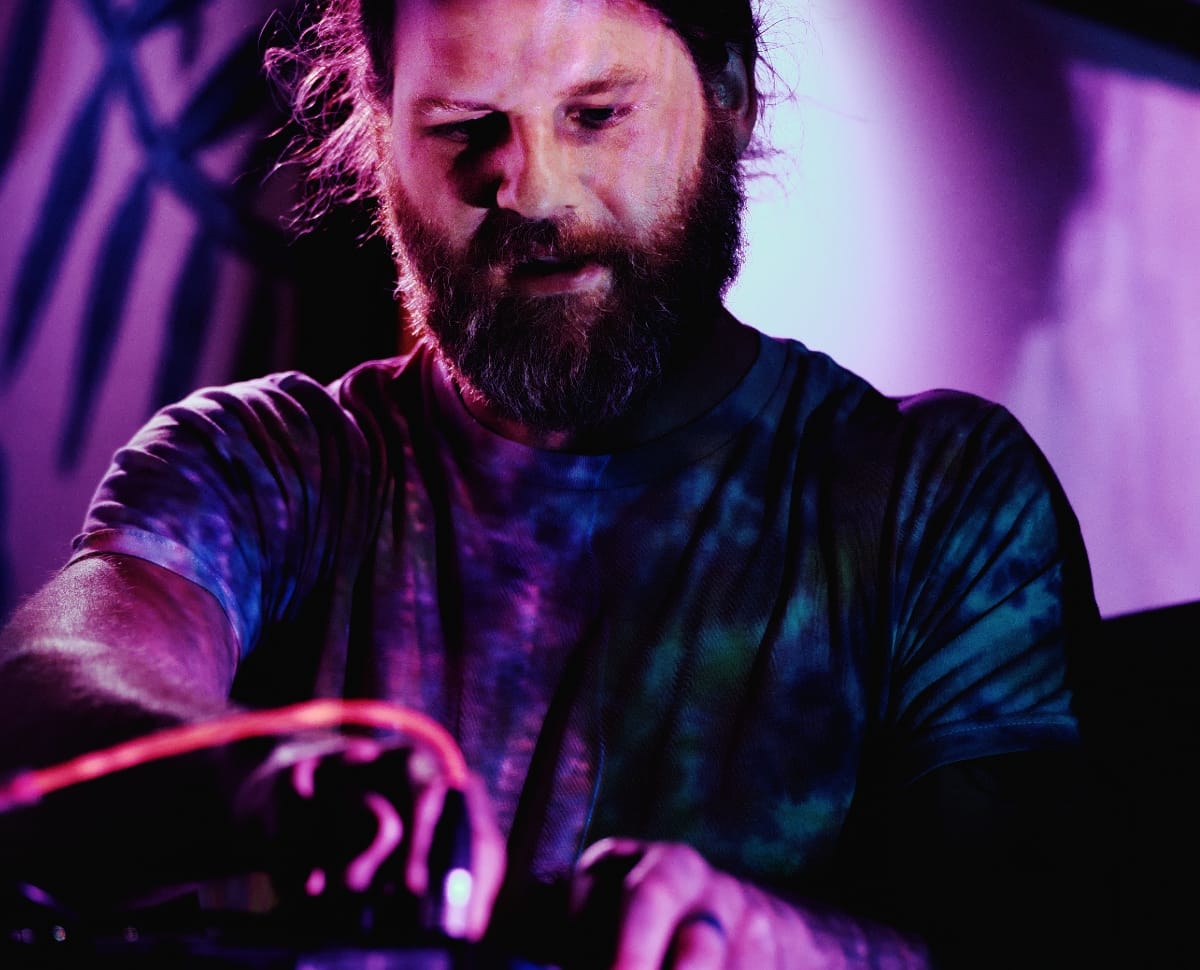
Thoroughly composed and with barely any improvisation, album closer "Dada Bender" features Pino's percussion accompanied by Nikki Huang, Hoi Tong Keung, Jasmine Tsui, Tomas Li, and Bevis Ng. The track's title is a play on the process of 'data bending', which involves importing non-musical file types as raw data into a DAW (Digital Audio Workstation). The data is then wrapped into sound, resulting in curious glitches that can fluctuate from extremely noisy to simplistic, dense, and lengthy, or vanish in a flash. The more complex the file type, the wilder the result. JPGs and PDFs don't seem to do as much as DLLs, where, some of the time, you get "really glitchy stuff with cool rhythms." The files that make straight white noise, Hildebrand finds less interesting.
Combining these experiments with the physical percussion of six musicians galumphing through a thin sea of static, "Dada Bender" builds up to a huge blast of sound akin to a giant drill carving through a quarry wall. Bits of sparking rock whizz past like shrapnel. It then devolves into a rumbling, tumbling rhythm that sounds like the climax of Holst's The Planets gone wonderfully awry, as if played by a clown orchestra on car doors and a kazoo.
John Cage's Indeterminacy—a set of ninety anecdotes, each read aloud over the course of ninety minutes whilst musicians improvise over the top—serves as important lineage for the more improvisatory pieces on Noise Trip Explosion. The freedom provided to the performers allows for startling chance encounters that would otherwise not exist.
This, of course, comes with its own drawbacks. Hildebrand wrote some pieces that were "totally open and totally free where anything's good, anything goes," but then received some interpretations that weren't quite to his liking. "It's fine that they interpreted it that way," he explains, "but I always want to put forth a certain aesthetic with my art so, when things are open, I'm still giving text notes instead of just saying 'do whatever' because I don't want them to play a pretty little melody or quote some Mozart passage or something like that."
When these happy accidents do work, however, Hildebrand's main focus is to get it down and recorded. And it's these recordings that make up Noise Trip Explosion. The reason being that "in the world of contemporary new classical electro-acoustic music, a lot of people only get one performance of a work." You might work on a piece for a year or more, only for it to be performed one time only. He's fearful that even if you have a good performance, "maybe there are only five people there to hear it." So, instead, he prioritizes the studio recording where you also have the tricks and power of the studio at your fingertips. The ability to edit and try out different things over multiple takes.
So, when you hear the high pitch frequencies of "generative open graphic score #1" twist and dive as if an elaborate guitar solo is being played on dying circuit boards, or sounds slipping and sliding, shrieking and swarming, creaking, ratcheting, fizzing, gurgling, and exploding like a tommy-gunned china shop on "Raw Data Speed Demons," it's the culmination of a studied process that includes careful orchestration, wild improvisation, and deft application of all that a studio has to offer.
It's sound art. It's noise. It's a flurry of mind-boggling experimentation that hits you like twelve tidal waves from every point on the compass. It's an undeniable joy, no matter how it's funded.
Check out more like this:
 khagan aslanov
 Jon Buckland


Comments