


In July 1975, Lou Reed released Metal Machine Music. It followed on the back of his most commercially successful album—Sally Can't Dance—a record that Reed despised so much that it hasn't been officially reissued on vinyl for nearly 40 years. Speaking to The Varsity in '76, Reed described Sally Can't Dance as "a piece of shit from beginning to end," adding that "the worse they [his albums] get, the more they sell." After three weeks on the market, Metal Machine Music was withdrawn from sale.
Consisting of four sixteen-minute-long pieces formed from an array of effects units feeding back into a wall of amps, the legacy of MMM precedes it. Even 50 years later, it's an album of misconceptions, of contradictions, of myth and rumor. Misinformation is rife. It has been suggested that it was a joke. That it was used to get out of a recording contract. That it was career suicide. With only the tip of his tongue nestled in his cheek, the most famous music critic of the past century—Lester Bangs—referred to it as "the greatest record ever made in the history of the human eardrum." Q Magazine placed it fourth in their fifty worst albums of all-time list and, in response, The Wire's Brian Duguid asked, "What higher recommendation could you possibly need?"
The uncomfortable truth for many is that Lou Reed spent years planning and piecing together Metal Machine Music. David Holzer's article for Ugly Thing Magazine reveals "that a tape on display at the New York Public Library's Caught Between the Twisted Stars exhibition of material from Lou's archive labelled 'Electric Rock Symphony,' initially thought to be a 1970s demo for MMM featuring guitar and piano, actually dates from 1965 or possibly 1966." The New York Times described it as "a sign of how long the 'Metal Machine' technique—feedback-driven guitar drones adapted from composer La Monte Young—had gestated."
Often derided as unlistenable or impenetrable noise and exacerbated by regular appearances on clickbait lists titled 'Terrible Records by Great Artists', Metal Machine Music is a record people assume they know before hearing a note. Actually listening to it, however, often bursts prejudiced preconceptions. A symbiotic merging of man and machine, it is not the block of incomprehensible distortion that some might presume. It doesn't shriek into the ear like a thousand sharpened nails drawn down a sleek blackboard. First-time listeners may well be surprised by the abundance of melody amongst the chaotic, dancing sprites.
At points, you'll think there are birds calling, or waterfalls rushing, or maybe you'll even catch traces of a ghostly sonata buried beneath the hypnotic squall, flashing across frequencies faster than the ear can hear. It's not an aggressive listen. If anything, it's a maximalist ambient assault with an avalanche of sounds dappling your brain like a head massager's myriad prongs. If you're willing to let go and let it wash over you, it's surprisingly soothing.
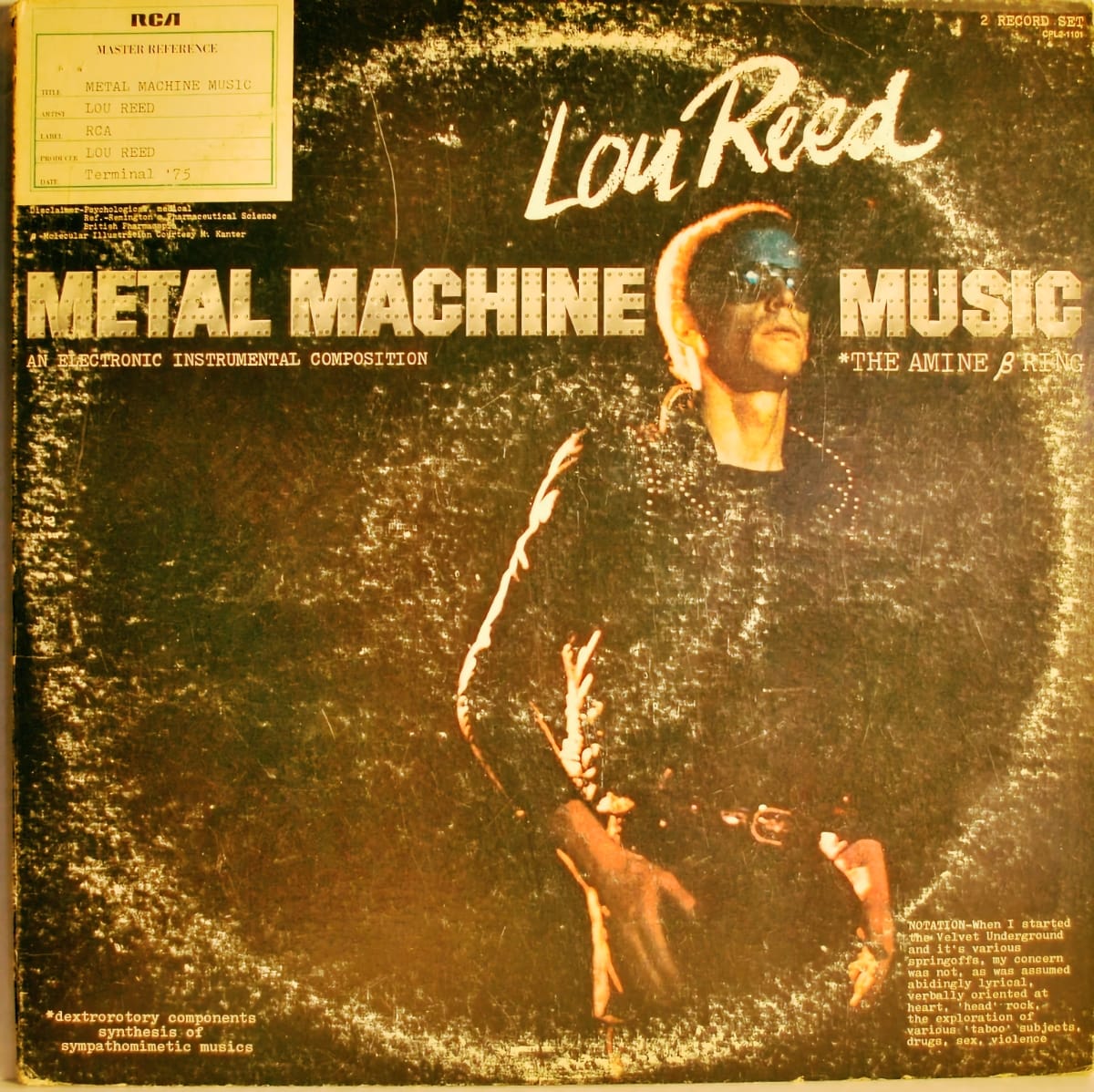
Shaun Cohen is the producer and driving force behind the Metal Machine Music: Power to Consume compilation series. Both an homage to and inspired by Lou Reed's mid-70s experimental release, the second volume has been released for Record Store Day and comes after the success of the initial installment, which was released to coincide with the 50th anniversary of the original Metal Machine Music last year.
For Cohen, it has been a labor of love that goes far beyond his day job. Speaking via video call, he describes it as his "main creative focus for over the past year." Yet the roots formed long before that—when he first heard Reed's ode to feedback and distortion, he was barely in double-digits. Just as many before him, he took the cover art as a sign that MMM would be another Lou Reed solo album, in a vein not dissimilar to The Velvet Underground. Of course, it wasn't. He found himself "totally blown away." He was just ten years old and "a little bit scared by it. I thought something malfunctioned on my computer or on the speakers or something, and I left it for a while."
He tried again a few years later, finding more to enjoy, but it wasn't until he was in his early twenties that it finally clicked. "I remember right after I listened to [Silent Servant's] Negative Fascination for the first time, I put on Metal Machine Music and it wasn't like I was blown out of my chair because I was freaked out, it wasn't like I was starting to conceptualise it from like a guitar and feedback level when I was 16, it was like a calm washed over me and I almost went into this meditative trance with it."
This transcendent state could be due to Reed's interest in the esoteric author Alice Bailey. Bailey's book, A Treatise on White Magic, in particular, seems to have had a big impact on him. Velvet Underground biographer, Richie Unterberger, reveals that the title of their 1968 album White Light/White Heat refers to her "direct method of relaxation, concentration, stillness and flushing the entire personality with pure White Light, with instructions on how to 'call down a stream of pure White Light.'"
The 'White Heat' part of the title, however, deals more specifically with another of Lou's interests: amphetamines. It's no secret that the man loved speed and was in such thrall to Benzedrine that he slapped what he believed to be a diagram for the chemical compound on Metal Machine Music's original back cover. This is replicated in the accompanying booklets for both of the Power to Consume compilations.
![Black-and-white collage album cover for Metal Machine Music [vol. 2] featuring layered noise textures, ink splashes, halftone dot grids, distressed typography, and a tracklist naming Emil Beaulieau, Lydia Lunch, Merzbow, and others.](https://storage.ghost.io/c/9b/de/9bde2b5a-bb56-4179-b010-03340ac25ec6/content/images/2026/05/Power-To-Consume-2.jpg)
From white light to white heat and into white noise. Volume 2 of Power to Consume begins with a full-pelt blizzard of harsh distortion courtesy of Emil Beaulieau. This two-minute blast of rasping pedals, whining feedback, and scratchy sounds is short, sharp, and not very sweet. For Ron Lessard (AKA Emil Beaulieau), Metal Machine Music was initially a mystery. As he explains in the booklet for Volume 2, it wasn't until he "started listening to records by John Cage and reading his book Silence that the whole thing started to make sense."
Cage's writings are as important to post-20th-century music as his compositions. He encourages people to listen differently. To hear the incidental sounds of the world as part of a greater symphony. This shift in perception can help us find value in noises that might previously have annoyed or enraged us. Pneumatic drilling in the street, a blaring car alarm, inconsiderately loud conversations, and uninvited songs played from a mobile phone on public transport can all become interesting aspects of a broader sound palette.
Of course, this is easier said than done. But persevering can alter how you listen to music. Supposedly 'difficult' records such as Metal Machine Music become laden with swathes of intriguing sounds. Noises that appear for a brief moment, never to recur again, are now imbued with meaning. A piercing sound at an uncomfortable frequency demands that you question your knee-jerk response to it. Why am I reacting this way? How does it fit within the other sounds? Am I supposed to hate it and, if so, why?
With the exception of Mark Solotroff and Drew McDowall's drone-based contributions, Volume 1 leans heavily into the static. Whether it's the feedback wrought from Thurston Moore's guitars on the opener or The Rita's engulfing wall of blistered noise layered with World War II fighter engines that closes it, there's a brutal bent to these six long-form pieces of distortion.
Volume 2 takes a different tack, with a more diverse range of sounds on display during its nine tracks. A fellow New Yorker, Suicide's Martin Rev translates Reed's distorted symphony into a zero-gravity rainfall of somersaulting synth pads, sporadic electric drum-kit hits, and keys that sound as if they're being fingered by someone in the throes of a seizure. This discombobulating effect is akin to the audio of a 'Shreds' video being deconstructed and patched back together. And equally joyful.
Veering further still from MMM's machine noise blueprint, multiple voices appear on this release. Blixa Bargeld shares a side with Eros' exploratory drones, opening his throat to unleash a high-pitched whine that morphs from one pressurized gargle to the next. The piled shrieks appear like a strained engine, a distraught kitten, a boiling kettle run dry. Lydia Lunch's offering, however, leans more towards spoken word as she appropriates Reed's lyrics in her gravelly voice over the eerie jangling of a shepherd's bells. It has an atmosphere like a freight yard at midnight . . . or, more specifically, '2.32 AM on a Tuesday morning'. She repeats phrases until they lose their meaning, like the ramblings of a maniac on a train who you're desperately trying not to make eye contact with.
Initially, Cohen was hoping to use this as an opportunity for collaboration, asking Lunch if she'd like to do vocals over someone else's composition. She called him a day later "in her amazing raspy voice and she's like 'so, we can talk about this but check your inbox because I was up at 2.30 last night and I just finished this track, I don't need anybody else to help me with this.'" She doesn't take any shit, nor does she pull her punches, saying that, for her "noise doesn't hit you in the groin; it hits you in the bloodstream. Some of it reminds me of having a vibrator on for 24 hours and not being able to get off."
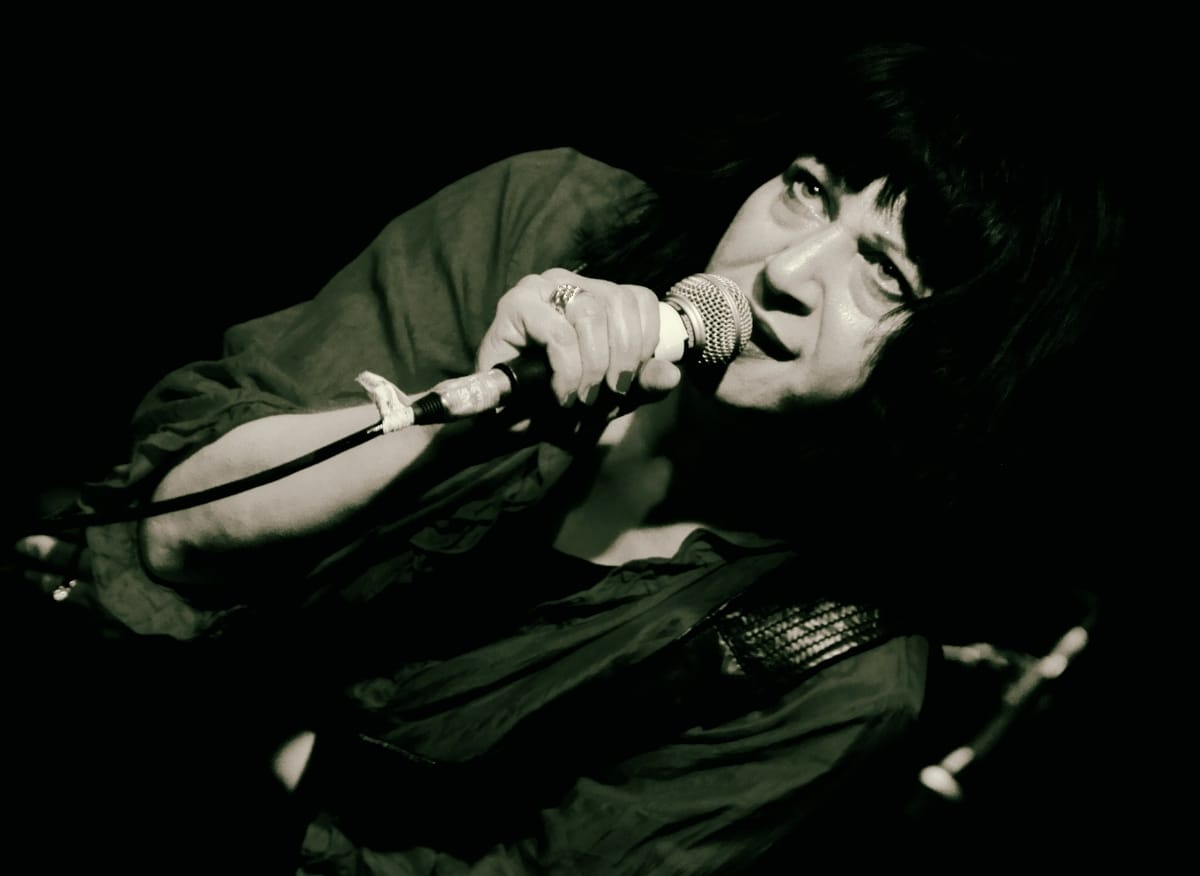
Masonna would likely disagree with Lunch's analysis. The reclusive noise artist ends Volume 2 with a typically chaotic and untethered four seconds of cacophonous sound. It's rock 'n' roll triple-distilled to its libidinal core. An outburst of cathartic mayhem as unambiguous as a hammer crashing a nail into splintering wood. And sexuality plays a part in Moonbeam Terror's track "They Tried To Cure Him With Electricity"—a reference to the electroconvulsive shock therapy that Lou Reed's parents forced him to undergo in a bid to 'fix' his homosexual tendencies. She creates a nightmare in a slaughterhouse with animals whinnying and bleating against the whirring steel and blasted distortion of malfunctioning machinery.
In his excellent book on drone music, Monolithic Undertow, Harry Sword dismisses MMM's revolutionary impact as "karaoke Cale," stating that "it's often erroneously posited as the precursor to subgenres like noise, industrial, and power electronics." Instead, he points to the work of La Monte Young, Tony Conrad, and The Theatre of Eternal Music as laying the groundwork for MMM, which Reed himself acknowledged in interviews and by including Young's misspelled name on the original album artwork. What Sword fails to mention is the clear impact that MMM had on arguably the biggest noise artist of all time—Merzbow.
Included in the compilation's accompanying booklet is an interview with Masami Akita (AKA Merzbow) in which he advises that he titled his "earliest album Metal Acoustic Music, so it's clear this album influenced me." Repaying the favor, Merzbow takes the penultimate slot on Volume 2, unleashing a piano assault with each key run through a legion of effects. What begins as timid tinkling grows increasingly erratic, punctuated with those fists of red-lined distortion that we've come to know and love from the harsh noise maestro. A harpsichord kerfuffle shifts into clatters and clunks processed through pedals with sound-obliterating qualities. You can almost make out glimpses of slapped bass funk in the midst of the maelstrom.
Much like the original record, Merzbow's "anestolapas" is wild and unbridled but softer on the ears than you might expect. Pleasing flurries of notes emerge from thrashed fretboards, and there's an unexpected dose of rhythm thumping along for a section or two, before the anticipated wall of blistered static and ringing feedback takes hold. These transitions between sound sources seem to track the evolution of what has been considered noise since the beginning of organized sound.
Keep The Tonearm free.
We publish without advertising or paywalls.
Reader support makes that possible.
Similarly, there are distinct layers of planning and thought that have gone into making Volumes 1 and 2. It's no coincidence, for example, that Volume 1 begins with Thurston Moore, who also wrote the liner notes for the 50th anniversary of Metal Machine Music, and Volume 2 ends with Masonna, an artist who Moore once introduced as "one of his favorite noise freaks" during an edition of MTV's 120 Minutes which he curated in 1994.
And that's what these compilations manage so well: they recontextualize MMM from an album that is so often viewed as a misjudged burp in a speed freak's chaotic back catalog into an integral piece within modern musical progression. They map a meandering thread which takes in Reed contemporaries such as Suicide and Lydia Lunch, before lurching out to German industrial peddlers in the shape of Einstürzende Neubauten associates Bargeld and Eros' Boris Waldorf, via the extreme sonics of Japan, through to more contemporary artists like Pharmakon and Pod Blotz.
It stands to reason, then, that within these takes on Reed's distorted opus lies a pathway for musicians of the future.
With the rise of AI, machines are now capable of full music creation, but done in a way that attempts to mimic the work of humans—to masquerade as them. An article on TechCentral claims that almost half of all music uploaded to Deezer is now generated by artificial intelligence. In a bid to battle against this, Bandcamp has applied a blanket ban on AI-generated music, and Spotify, notoriously unwilling to remunerate human musicians, surprised everyone by announcing it will not verify AI artists on its platform.
Lou Reed had no interest in presenting Metal Machine Music as sounds made solely by man (despite there being carefully coordinated human-scored pieces buried within the mix). This was clearly a cyborg creation with machines coursing ahead whilst a man twiddles knobs, alters inputs and outputs, and carves it all into shape. It was part man, part machine. And that, in some constantly shifting ratio, seems to be what the future holds for us. As Shaun Cohen says, the results may entirely depend "on how the human beings behind all this music adapt and improvise with the technology as it grows and as we all try to use it in different ways. I really think it is a merging of the man and the machine and how we use those things together to create the output of music."
Defining where the man ends and the machine begins may no longer be significant. If a Volume 3 of Power to Consume is on the cards, perhaps it will feature loops of AI-generated sound feeding back into itself until the notes disintegrate into an unpredictable, fizzing wash of distortion that obliterates all traces of humanity from its process. And, if so, there's a good chance that it will still be better than Sally Can't Dance.
Check out more like this:
 Lawrence Peryer
 Gabriel Kennedy


.jpg?ref=thetonearm.com)
Comments