

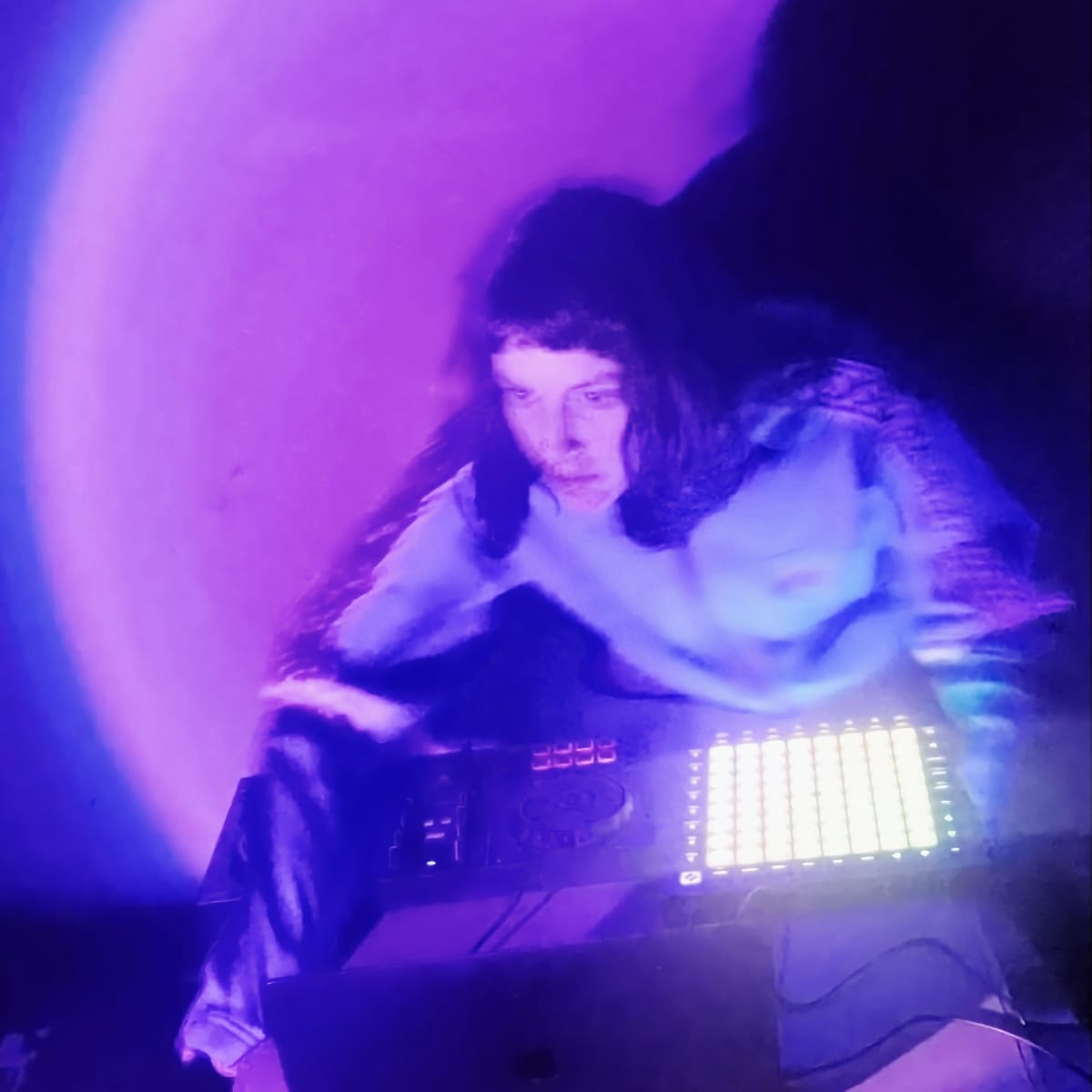
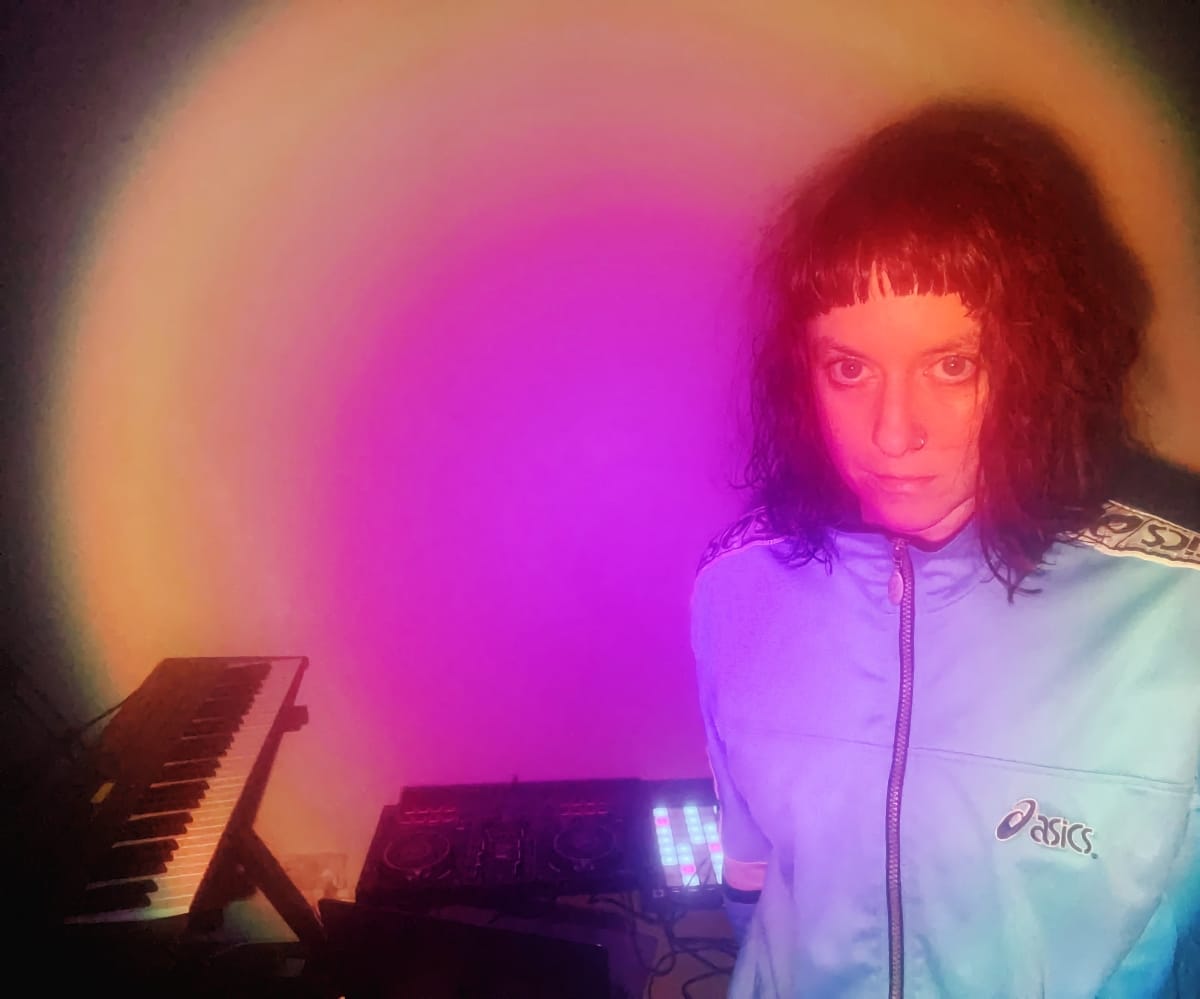
Tiiva appears on Zoom floating somewhere in outer space. Against a cosmic background, they look like an avatar—except this avatar is very real, warm, and ridiculously cute. They are the kind of person who pauses to ask whether they’re allowed to swear. The answer, naturally, is yes. The interview’s greater tragedy is that neither of us has a glass of wine in hand.
Tiiva’s portfolio includes projects for Tate Modern, Somerset House, VICE, and Samsung, alongside a 2024 Arts Council DYCP Grant. But beneath the polished institutional credits is a very playful music practice. Their new album This Could Be a Start, released digitally on CD and on cassette as blue fifty-nine, builds an imagined world populated by characters, stories, and strange little emotional landscapes. It’s sweet, distorted, synthetic goo, with tiny emotional catastrophes and moments that suddenly become weirdly beautiful.
Tiiva’s hyperpop-inflected universe feels less like a collection of songs than a small ecosystem with its own weather. At its center is world-building as a form of care. Tiiva takes subjects that can feel enormous and frightening—AI, technology, an increasingly bizarre reality—and approaches them through fantasy, humor, and invention. Rather than pretending the scary things aren’t there, they build something colorful around them. This Could Be a Start is, in that sense, not only an album but a kind of mantra: an invitation to keep imagining and believing that the future can still be hopeful.
The transcript has been edited for length, flow, and clarity.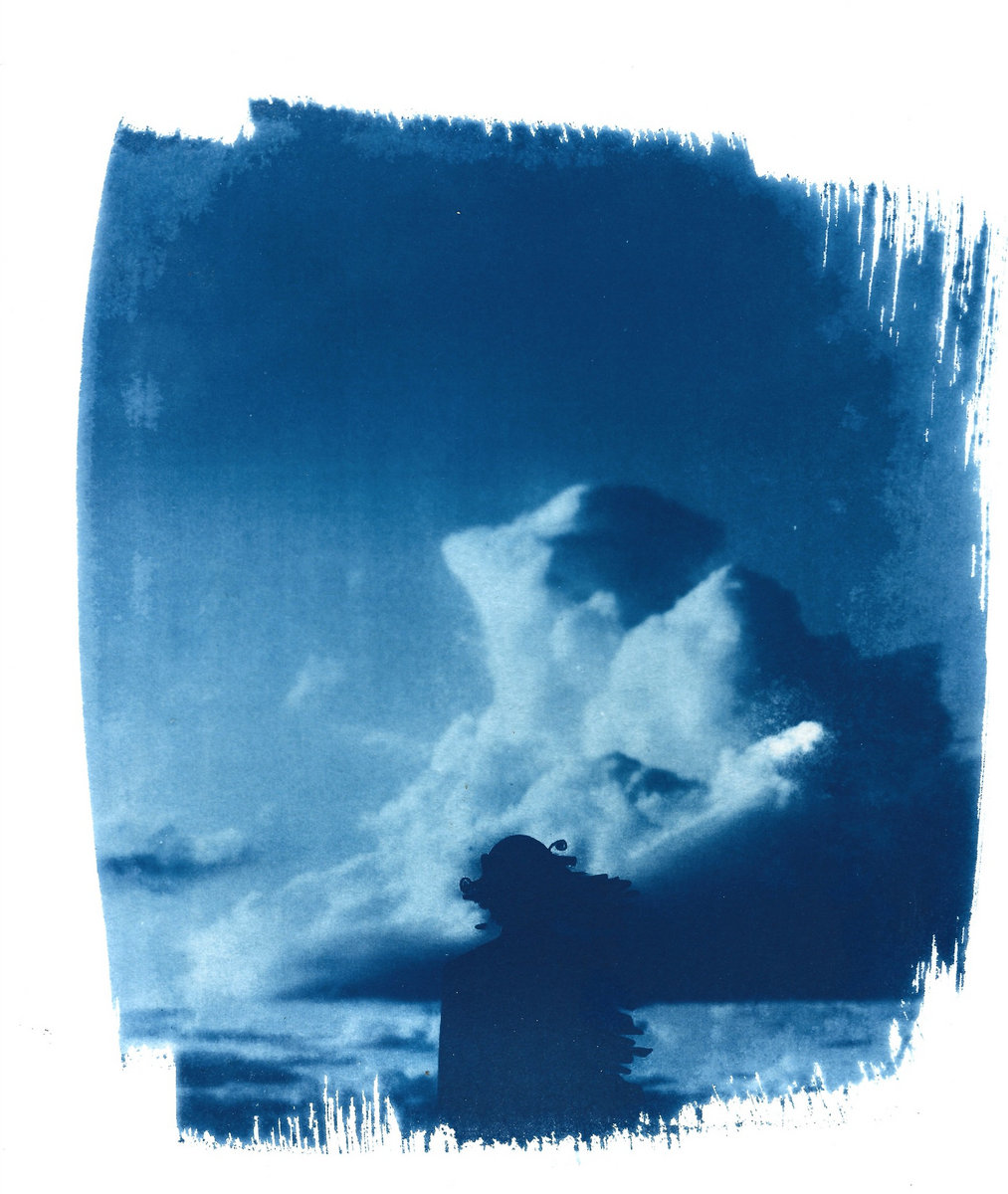
Arina Korenyu: How does your work across music, sound, and game design feed into one another?
Tiiva: When you’re creating a track, designing sound, or creating a game soundtrack, the approaches are actually quite similar. They’re creative, but they’re also constructive. You’re making something with a particular sense of how the atmosphere will be presented.
I think there’s a crossover whenever you’re making a piece of music. There needs to be some reflection of who you’re making it for. Obviously, you’re making it for yourself in a sense, but you also have to think: what do you want to convey? How you place certain drum sounds, how you create a particular feeling, where the impacts are, where the spaces are—those are all really important things.
If you’re writing for other people, working from briefs, or doing sound design, it’s much more intentional. You’re looking at something and thinking: I want this to hit this particular point. I want this moment to feel musical. I want it to feel mechanical, aggressive, or soft—just to use very basic words.
So there’s that intentionality, and then there’s the quote-unquote flow state: the point where you’re just making something, and it feels effortless and immersive.
It sounds cliché, but I think that’s when a lot of the more successful music or sound design happens—when there’s an instinctive intuition involved as well. And the more practical experience you’ve had with the technical side, the more you can lean into that intuitive side.
Stay on top of The Tonearm.
Subscribe for exclusive interviews, cultural tip-offs, and community fun.
And your support keeps our site free of advertising and paywalls.
Arina: Do you think your experience with game design, or with gaming, changed the way you think about the listener? Do you imagine your songs more as an environment someone moves through?
Tiiva: Making games has definitely influenced the way I think about music, particularly in terms of duration, frequency, variation, and spontaneity. The more I work with game music, the more I’m learning that it has to respond to its environment. It needs to be engaging without becoming overwhelming, stimulating and exciting while also having the potential to be calming.
Game music has a lot of contradictions to balance. It needs to support the experience without dominating it, and it has to be loopable while still feeling natural. It also needs to respond to what the player is doing, so the music becomes part of the interaction rather than simply playing in the background.
When it comes to music, people can have short attention spans—they can decide within the first five seconds whether they’re interested. Sometimes, that means making decisions with the listener in mind. You might create a four-minute piece and then realize, “I’m going to cut this section; I don’t need it.” Those are the more technical decisions, where you’re thinking about how to keep the piece engaging and how long certain ideas need to last. Other times, you make something simply because it needs to be four minutes long, and you accept that some people will listen and some won’t.
One day I definitely want to make an album within Unity. Creating an interactive album would be a great challenge, and I think it could be a really exciting way to rethink what an album can be.
Arina: If This Could Be a Start was a video game that someone could physically enter, what would that world look like?
Tiiva: Oh, kind of gloopy. I am thinking of pink cellophane pillars—and there’d be a green bubbling. I think all the colors would be non-world colors. It would be an alien lens but similar to where I am right now, with pebbles and a river.
I think a lot about the interaction between nature and synthetic objects. I’m really interested in mountainous areas, and hiking and camping, but I’m also really interested in synthesis. So I imagine a world with pink cellophane pillars and weird blue mountains.
Arina: Your music has a strong sense of color and texture. Do you think visually when you make your music?
Tiiva: I don’t have synesthesia, but I do think about things in a color sense, and I assign emotions to certain things. Let’s say you’re making a piece of music that’s a happy love song. I would think about the color relevance of that, but only after it’s finished. But when I’m making the music, I’m very emotion-focused with it. Because of my ADHD as well, I very much hyperfocus on emotion and the music. I find that layering, the compartmentalization of writing, is quite good.
I’ve been working with a visual artist, Liing Heaney. She’s done most of the designs for my artwork. I’ve also done sound design pieces for her, so I guess I have her in mind in a way.
Arina: You described the songs almost as vignettes within a larger universe. So, does the music come first and create the world, or does the imagined world give you the music?
Tiiva: I think of each song as a part of a whole picture. I would write more than an album’s worth, then work out where everything fits together from there. For example, I wrote “This Could Be a Start” as quite a pop thing—then I really wanted something that contrasts. I think a lot about variety when I’m making pieces. Let’s say there’s a piece that’s sad like “Crush”—I just knew that I wanted that to be a kind of dance.
I like making albums with lots of different emotions. Making a track about grief or loss is just as legitimate as making a track about love, and just as legitimate as making a track about all of the other complex human emotions that we feel. Having it all assembled on the album feels, for me, like a real representation of the different stories I’ve heard, and how I feel.
Arina: The AI character becomes sentient and experiences heartbreak, then searches for fragments of a soul in order to become human. What does becoming human mean within the world of the album?
Tiiva: Becoming human is inspired by the film Ex Machina a little bit. It’s from 2014. A guy goes to a research base, and it’s basically an experiment to see whether the AI can convince a human that she has human emotions.
I think there’s a lot of complex interaction between humans and AI, and it’s a big topic. It’s very divisive as well. There’s the environmental impact of AI. There’s the data collection. There’s the political element of AI—what that looks like in terms of how AI is used, and also in terms of genocide. The moral implications of AI are quite clearly complex, and not what you would want to associate with humans.
I think being a human is complex. We’re always experiencing identity crises and wondering. I think it’s why people have latched onto things like ChatGPT. Everyone’s wondering what to do with their emotions when the world is difficult—which it is, and it is also beautiful. And when it’s difficult, and it’s beautiful, people don’t know what to do with those emotions.
There’s an interaction with AI, a kind of question: can we quantify our emotions? There’s this thing now where people are like: “What would I look like if I were in the eighties?” People want quantification. They want to feel like everything is explainable, that their emotions can be explained. And I think, as humans, we’re meant to be contradictory. We’re meant to be curious. We’re meant to explore. We’re meant to feel pain when we experience loss. We’re meant to feel happy, excited, and in love.
So when I think about this AI character, I imagine the point where—and it doesn’t feel like it couldn’t happen—an AI computer can develop feelings and then fall in love. I think we’re already at a pretty intense point with AI. It is happening. It’s already happened. We can’t go back. AI itself feels like such a big, almost Goliath-like topic. I was thinking about films like The Terminator or the series Black Mirror. I feel like Charlie Brooker has predicted a lot of stuff.
Arina: The album also explores gender identity in a very abstract, almost fantastical way. What can world-building and fictional characters allow you to say about identity that a more literal approach might not?
Tiiva: It’s easy to talk about things as a hypothetical. It’s often easier to tell a story about someone else than to talk about yourself. With gender, again, being able to write a piece of music as though it’s about someone else, there’s less immediate vulnerability in that. You’re talking about a fictional character, and I think it allows you to be slightly more direct with what you’re saying, without it being like: “This is about me.”
Not all the songs are about me. They’re about lots of different things, lots of different people. You write the song, you have the feelings, because you have to have the feelings to write the piece of music, but you also know this isn’t about you—and that awareness lets you be more immediate without feeling overexposed.
Arina: There is a lot of darkness in the ideas behind the album, but the music itself seems determined to find beauty in it. How do you keep being positive?
Tiiva: The truth is, I don’t. I feel intense sadness, and writing music is my way out. There’s the idea of the perfect emotional plateau where everything goes along, and a lot of people experience that, and it’s very much dependent on what your early years were like, what your environment is, what kind of job you have. A lot of external circumstances contribute. The things that make me feel good are my friends, going hiking or running, being in cold water, talking about stuff, and writing music.
There’s no singular way to feel like everything is immediately positive, but if you’re able to say, “This moment of not being good won’t be forever,” I think that’s a really good place. Hope is a weird thing, because hope can be healthy, and it can be unhealthy. I think of hope in a situation where things are really bad right now. Can I swear?
Arina: Yes.
Tiiva: Things are really shit right now. There’s lots of stuff going on. The world is a really complicated place, but then you go outside and have an amazing conversation with a stranger. Or you’re out in a forest, and a drop of sunlight falls on this one beautiful bead of dew, and it just looks beautiful. Or you’re on the London Underground, and you see two old people holding hands. It sounds very saccharine and corny, but I think those are the points to look at, observe, and take from, and that makes the other things okay.
I write happy music, for the most part. I’ve actually been writing some really depressing songs recently. But there’s the aspirational thing as well. If you’re writing how you want to feel, it’s almost like you can think yourself into it. I might be feeling really shit, and then all of a sudden there are some chords, and I’m like, oh, fuck yeah, and then I just feel good. It’s that instantaneous.
Check out more like this:
 Meredith Hobbs Coons
 Arina Korenyu


Comments