


By the age of fifteen, Mark Isham was playing in San Francisco jazz clubs while also performing with the Oakland and San Francisco symphonies. Born in New York City to musician parents, he studied piano and violin before the trumpet captured his imagination. He formed Group 87 with guitarist Peter Maunu and bassist Patrick O’Hearn, and in 1983 he released his solo debut, Vapor Drawings.
Isham came to film music by accident, when a demo he circulated for ECM Records reached director Carroll Ballard, who hired him to score Disney’s Never Cry Wolf. Over the following four decades, he scored A River Runs Through It, Crash, and Judas and the Black Messiah. His television work spans Once Upon a Time to Hulu’s Little Fires Everywhere, which earned him his sixth Emmy nomination. He kept a recording career running alongside the screen work, winning a Grammy for Mark Isham and earning jazz honors for Blue Sun and Miles Remembered: The Silent Way Project. As he tells it, “there was something about the way I saw, perceived, and wrote music that was intrinsic to storytelling.”
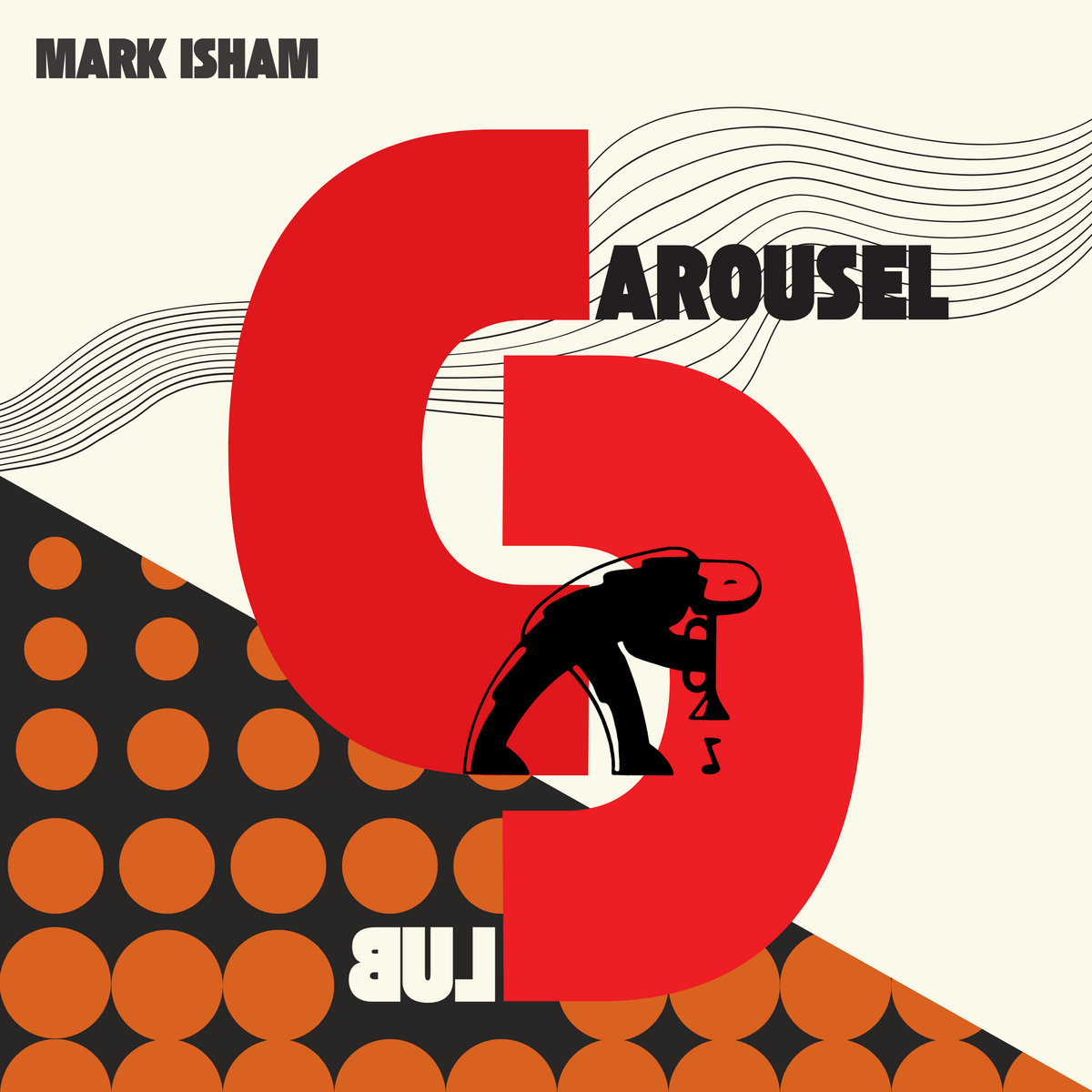
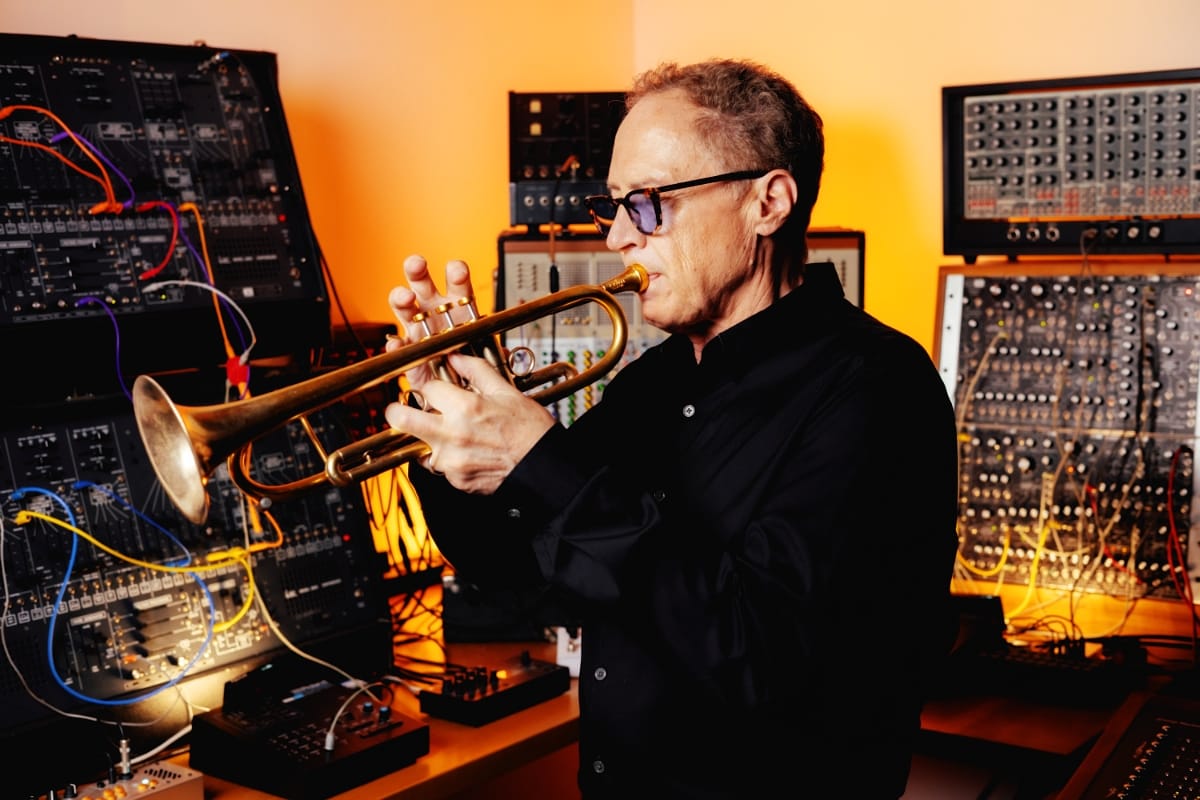
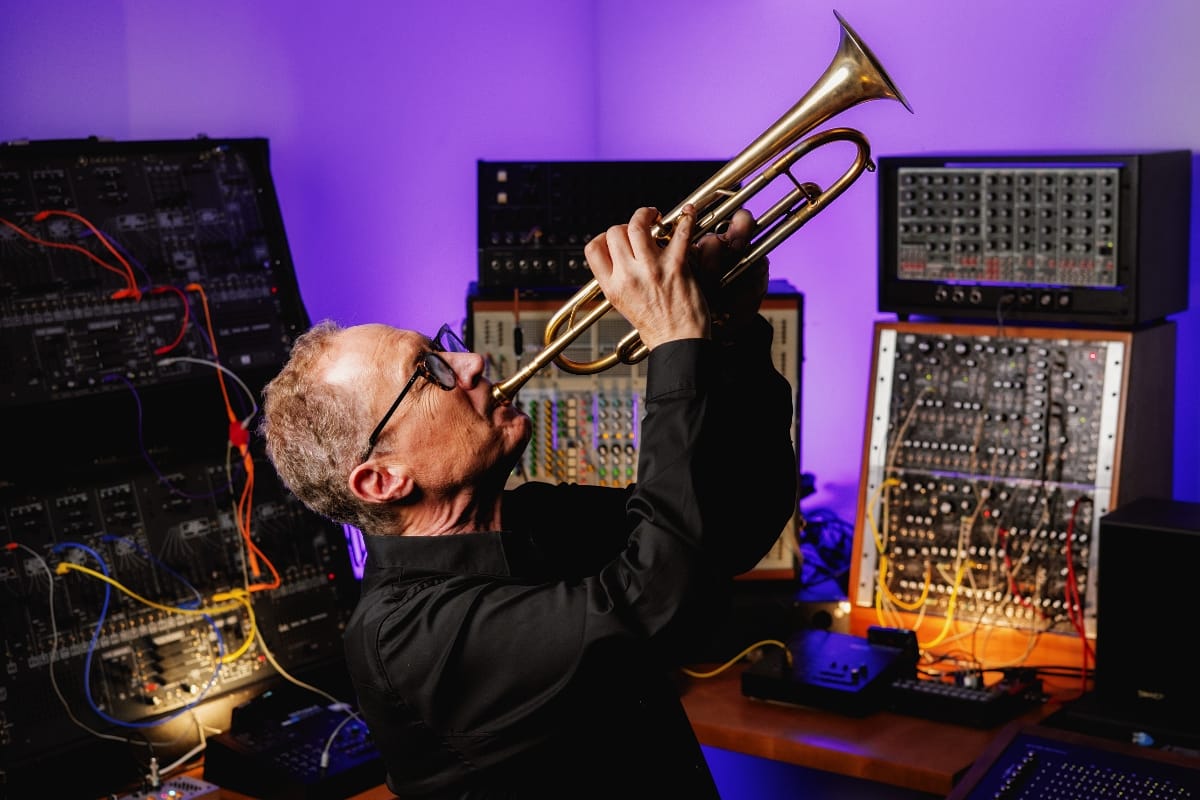
At the Carousel Club, self-released in August on his own E-Tones Records, is Isham’s first solo album in fifteen years. It began in the quiet of early Covid, when he had three uninterrupted weeks with the wall of vintage analog synthesizers and modular instruments in his studio, patched together into a single system he compares to TONTO. He then edited those electronic pieces into forms that could hold a live band, and recorded the band at Mad Hatter Studios with Nels Cline, Vinnie Colaiuta, Kaveh Rastegar, Ayo Awosika, and the Orchid String Quartet. His approach with the players was to “withhold the stuff you want to withhold, so that you get some of their choices involved, but make sure they understand the stuff that has to be there.”
Lawrence Peryer recently spoke with Mark Isham on The Tonearm Podcast. They discussed the vintage analog machines at the center of the record, the trumpet’s long hold on Isham, his work with David Sylvian, and his decision to put the new album out himself.
You can listen to the entire conversation in the audio player embedded below. The transcript has been edited for length, clarity, and flow.
LP: You compared the vintage synthesizer setup you have on the back wall of your studio to TONTO. That made me laugh, because I’m curious: does your setup misbehave the way TONTO does, in terms of seeming to have its own mind and autonomy?
MI: Well, I think I’ve got it pretty much under control. I actually look for some of that strangeness and those things that are unpredictable, and that’s really why I enjoy those older machines. We do use MIDI, which I guess technically is digital, but it’s such early, early digital that it’s hardly digital. A lot of it is still control voltages and gate voltages, which are analog voltages. That’s the beauty of it. It’s sort of a little untamable beast at times. That’s just why I love it. I want those things to happen that I would not think about.
LP: It reminds me, in an indirect way, of guitarists who like to play with feedback, or any kind of element of chance or noise that allows you to turn sound into noise, into music.
MI: I love that. That’s one reason Nels Cline is all over this record, because he is the master of that. Just to jump right into those sorts of details, he’s the master avant-garde guitar player, but now, of course, he’s known more for Wilco. I knew him long before Wilco, when he was doing all the weird Cline ensemble stuff, and I’ve loved him forever. So it was great to have him back after all these years to play on this record and to bring that exact thing you just described—this harnessed noise.
LP: The combination of him with Wilco is so inspired. I’m so happy for him, too. I’m happy for that band that they have him, and as a fan I’m happy, but it’s such a wonderful, odd thing to have happened. It would strike me as—I don’t know who the modern-day equivalent band would be, but as if some hard rock or heavy metal band had enlisted Sonny Sharrock or something.
MI: Exactly. And Nels, of course, is completely the wild card. I have nothing to say to Nels except, “I want G Mixolydian. You can fuck it up as much as you want. Just don’t play the F sharp. Go.” He is so intelligent and so well-versed in music that he doesn’t just give me an amorphous cloud. He gives me the G Mixolydian without the F sharp, but it’s also really cool and really strange. I know that I can tell him that, and it’s going to fit compositionally with everything else it’s going to blend with.
LP: Tell me about the genesis of this project. I understand that Weather Report and I Sing the Body Electric were somehow in your mind and heart leading into this. Can you tell me about that?
MI: I think I Sing the Body Electric was perhaps—I mean, there have been several along the way, but certainly in the top five, and maybe the top three, and maybe the top one of all-time influential records upon me and what I learned music could be. It’s interesting: I first heard a Weather Report record at a friend’s house. I hadn’t heard it before, and it blew me away. So on my way home, I stopped by Tower Records to pick up my own copy, but they didn’t have it anymore; they did have I Sing the Body Electric, which had just come out. I had no idea what it was, and that first track just changed my life. It was the perfect combination of [Joe] Zawinul’s European classical crossover education, the ferocity of Eric Gravatt, and the brilliant melodic improvisation of Wayne [Shorter], all put together, and it made so much sense. A lot of the time, these genre fusions are a little creaky. You feel the Scotch tape. But boy, you didn’t feel any Scotch tape here. This stuff just felt like it all belonged together—perfectly constructed and perfectly designed —and I’ve taken that as an influence ever since: things from different worlds, from different genres, can live together comfortably and interact with each other.
That’s really what this record is. It’s composition; it’s harnessing the performances of great players and improvisers; cinematic compositions; cinematic orchestrations. All of it sort of tries to work together—I’m very proud of this record, so I won’t say it tries. It does. I solved the problem. I did it. I managed to make all this stuff really work together.
LP: The more you talk about the project, the more it really does seem like something special.
MI: I think so. It’s more than I ever really imagined. It’s interesting that we’re self-releasing this. I’ve always had a record label, or just sort of thrown something out on my own and not really bothered to do anything with it, just put it out there. But we’re taking this on—we’re a label now, and we’re doing all the things that labels do. And I’ve got to say, as much as I’ve had a love-hate relationship with record labels, I do understand that there’s a lot of work to do, especially in this day and age, where it’s still sort of the Wild, Wild West up there. Nobody really knows the rules, but you do your best, and the basic game is still the same: you get as many people to hear it and, hopefully, enjoy it as possible.
LP: Do you think there’s something you’re doing differently as a label than a label would do if you had turned in a master or licensed this to someone?
MI: It depends on the label. I talked to a whole bunch of labels before we decided to do this. I think the one thing we have going for us, that I don’t know if any label would, is that we’re 100 percent committed to this. I had labels say, “Well, we don’t know what genre it is. We’re unsure. I have to take it around to the different A&R people and see.” They’re still trying to play by some unwritten rule, as if there really were a bin in the record store that it had to fit in. Well, there isn’t anymore. Although I guess there are genres and subgenres and sub-sub-subgenres, and there’s got to be a sub-sub-sub-sub-subgenre somewhere that this fits into. So we don’t care. Now we could get right into the current state of the art and our culture, but I think art will survive only if the unique vision is supported—the original thought. And this is very much an original thought. We’re just going to say, “Well, to hell with everybody. This is it. This is what’s there.” There’s never a thought of, “We’ll change this to fit the market.” No. Find the market. Create the market. Which I think is a slightly different point of view than a lot of labels have.
LP: I’m intrigued by the role narrative can play, and often does play, in instrumental music. Is that a thing?
MI: Absolutely. I would much rather think emotionally about what should happen next than, “Oh, this is an A-A-B-B-C-D-A-B form, and I shouldn’t go to the D section.” I don’t care. You’ll see that is very prevalent on this record. There is some adherence to traditional form, but a lot of the time I throw it out the window because I feel that, as a storyteller, we need them to shift. We need to make a complete about-face, or a dramatic bang, or a complete absence of emotion for a second. You don’t do that in pop music, which is fine. I understand the rules of pop music, and they’re pretty strict. But the stuff that really excites people is the stuff that breaks the rules, right? So I’ve always been an adherent to that—that I am experienced enough and knowledgeable enough that I can break the rules without sounding wrong, because I know how this stuff works. I’ve been doing this for a long time now, and I’ve done my homework.
LP: Some of the language you use about the trumpet seems almost to give it personification. I’m very curious: when did you start to perceive it as its own life force? And what’s the significance of that to you?
MI: Well, there are two seminal events with me and the trumpet. My mother was a professional violinist and played in symphony orchestras worldwide. My father was a professor, so we didn’t have much money for babysitters. I would always get hauled off to orchestra rehearsals with my homework, and I’d sit in the auditorium, finish it, and listen as they rehearsed. So I would be there in front of an orchestra playing various types of music, and I’ll never forget the time they played, I think, the Bach B minor Mass. Bach wrote for the clarino trumpet, which is this high, high trumpet. That technique was actually lost after Bach and wasn’t resurrected until the beginning of the twentieth century. And it’s just the most sublime music in the world. My head came up, and I went, “What is that?” It’s spiritual. It’s extroverting. It’s just glorious. Bach was making it as talking with God, trying to bring God into the room. And for me it sort of had that experience. Although I’m not traditionally religious, it opened me up. It just has this call to beauty and aesthetics and the greater parts of life, and that made me go to my mother and say, “I want to play the trumpet. I want to be able to have that effect upon people that that music has upon me. That’s my calling.”
So I was practicing diligently, and I was a really good classical trumpet player. I was playing along, and one day I came across a jazz radio station and heard Miles Davis. It just took over in my head. Any instrument that could make me feel the presence of an infinite spiritual being, or an infinite spirituality, and whisper in my ear—sexy, sexy shit. Any instrument that could do those two things, that’s it. You don’t need much more if that instrument can do that level of expression, from the highest exaltation down to the coolest, most intimate statement. I’m in, and I’ve been in ever since.
So I really do look at it as a vessel for communication. It’s a tubing, and I’m still worried about mouthpieces, as every trumpet player’s worried about their mouthpiece. Do I have the right mouthpiece? It is an extension of me. It allows me to perhaps express things in a way I wouldn’t know how to in any other way.
Stay on top of The Tonearm.
Subscribe for exclusive interviews, cultural tip-offs, and community fun.
And your support keeps our site free of advertising and paywalls.
LP: Just to rabbit-hole for a second, because you brought it up: tell me about mouthpieces. What’s the journey there? Is it never-ending?
MI: Look, Johnny Carson was making jokes with Doc Severinsen about mouthpieces. It’s become sort of a cultural thing for trumpet players. Dave Monette, one of the great custom handmade horn builders around these days, says the mouthpiece is 80 to 90 percent of the instrument’s design. I don’t know if everybody agrees, but the mouthpiece certainly is a huge factor. It can change the sound. It can change the way you play. It can change how you have to practice. The bigger the mouthpiece, the bigger, the broader the sound. The smaller the mouthpiece, the easier it is to play high and to play brilliantly. And having said that, Maynard Ferguson didn’t especially play a very small mouthpiece, and he could play anywhere on the horn. The great Cuban trumpet player Arturo Sandoval, who’s possibly the greatest technician on the instrument we’ve ever seen, plays a very large mouthpiece, and he can play as high as you could possibly want. So this is where the mystique comes in: do you get the perfect mouthpiece so you can play everything you want to play, or do you just practice? I’d like to think that basically you just have to practice, and you pick a mouthpiece that’s comfortable, that you can learn, so that you know where everything is.
LP: If you don’t mind me asking, could you tell me the story of David Sylvian?
MI: Sure. Now, let me think about how it started. I think he asked Richard Chadwick, his manager, “Are there any cool modern trumpet players here in London?” And Richard, for some reason, had heard that I was living in London and said, “Well, there’s this American guy who’s pretty cool, and he’s living here. Maybe you should try him.” So I went over there.
Holger Czukay had this thing that you would sample on and then play with a pencil, as only Holger would, and he had sampled a trumpet and then played these weird trumpet parts on the record. David loved it, and then realized, well, it would really be good if it didn’t go up there but went down—it would help the vocal better. And Holger had left; he was no longer in London. So I said, “Well, maybe we can augment this with a real trumpet.” So I came in, and we basically did that. I put a mute in the horn. We off-mic’ed it. I growled. I did everything to make it sound like an eight-bit sample played by a pencil. And it worked, and he got what he wanted, and that sort of started this relationship.
A number of years later, I’d moved back to America, and he called me up and said, “I want you to come and play on this record.” I flew to London and played on a big piece that sort of featured me. And then he did a world tour, and because he had Kenny Wheeler, Jon Hassell, and me on his records, I think he said, “Well, Mark can probably do the Kenny stuff. Nobody can do the Jon stuff, but if anybody can, it might be Mark. So Mark’s going to be the guy on tour.” And what a job—to play what Kenny had played, who was one of the all-time most brilliant trumpet players, and then Hassell, who’s just totally iconoclastic. God knows how to describe what he does. So I somehow managed to cover the trumpet chair in the David Sylvian band.
LP: That’s pretty amazing.
MI: But again, it comes from being somewhat eclectic and having played traditional jazz. I played with Horace Silver, and I played with Charles Lloyd, and I’ve played traditional jazz trumpet, so I could understand exactly what Kenny was doing, and I could do that. And I knew enough about pedals and harmonizers and stuff that I could at least get into the world of Jon Hassell. Nobody will ever be Jon Hassell, but I could approximate that field.
LP: When you’re the composer and arranger and bandleader and producer, you’re manifesting your vision. Is that something you’ve come to recently? When did you develop the trust and confidence in your vision as an artist?
MI: I think the basic trust has been there since I realized that the choices I would make to write something or play something were not just copying somebody else. I’d gone through the phase where I wanted to play like Miles, so I played like Miles. And then I realized, well, now that I’ve learned that, I know what Miles did, but I have to find out who Mark Isham is, right? And play like Mark Isham. Once I figured that out—and it took several years—there was a point when I said, “That doesn’t sound like Miles. Doesn’t sound like Wayne Shorter. Doesn’t sound like Chet Baker. Doesn’t sound like Freddie Hubbard. It sounds like me.” And then, as I started doing more composition, I could see that in the composition. People would come up to me after six or seven movie scores and say, “I saw this score. I knew it was you right away.” And I realized, yes, there is something there in what I do. I have now endowed what I do with my point of view. And I’m not even sure what it is, but it does happen.
LP: I love that.
MI: Now, the word “confidence” is a different thing. I can recognize that it’s part of what I’ve developed, but are you kidding me? Five hours into building something, I still sort of listen and say, “Oh, this is a piece of shit. I’ll never work again in this town.” You get the voices, and that has gotten better over the years. So in terms of the word “confidence,” the things that have made me less confident—the more I realize that’s not really me. That’s not me, the individual, the artist. That’s whatever—however you look at psychology—it’s the other shit, right? And if you can just tune that out and acknowledge that’s the other shit, that’s not me, the person who had the balls to sit down here in the first place and write a piece of music.
I always used to say, when people would ask me about writer’s block, that the problem with writer’s block is that basically you have the gurgitator, right? The part of you that’s just willing to put stuff out—“I’m doing this, I’m doing this.” And then, sitting right there at the door, is the editor: “You really want to put that out? I don’t think so. Don’t put that out.” And you have to get the editor to just shut the fuck up and call them in when they’re required. If they can have a qualitative evaluation of what you’re doing, fine. But if it’s just to say no, to hell with them.
LP: I hate that guy.
MI: Yeah, he is a real jerk. And I think it’s fun and interesting to actually be able to say “that guy.”
LP: No, that’s a key part of solving it.
MI: Yeah. It acknowledges that you are the one creating this stuff, and that creating isn’t thinking. Thinking is somebody—“Ah, that’s not good”—because I’m thinking about it. No, just shut up. Create. And I think the more you can separate those things out—at least this has worked for me—the more you can separate that stuff out, the more that confidence you asked about goes up. Then I can sit there and make this record, and I can go into the studio for maybe a total of four and a half days and get it done and know that it’s going to be great.
LP: Are you still a listener, or do you have to block yourself off from the influences of other music?
MI: I’m sort of back into listening right now, in the car. All the channels I have are comedy channels, but I did get Spotify to work in the car the other day, because I’ve especially been listening to the—I say young trumpet players, and I realize these guys are in their thirties.
LP: Well, for us it’s young.
MI: I’ve been listening to the generations of trumpet players after me, like Christian Scott and Keyon Harrold, Theo Croker. These guys are really, really good trumpet players. And because I’m practicing again, and I want to be able to get on the stage for an hour and a half and play this show, of this album and other material, I’m just listening to these cats and saying, “Well, if they can do it, I should still be able to do that.”
LP: Nice. You’re optimistic about the state of the horn, though.
MI: Absolutely. I’m looking at these guys, and several of them are plugged into all the pedals. Now, I did plug into pedals when I was nineteen or twenty years old, so I’ve been plugged into pedals for a long, long time. But it’s gratifying to see the post–Wynton Marsalis [generation], because Wynton Marsalis would never plug into a pedal to save his life. And God bless him. He is still the greatest trumpet player of all time. I love his playing, and he’s just fabulous. But he has that point of view, and I don’t have that point of view. I’ve been plugged into pedals since I literally borrowed one at the age of nineteen from my friend, the guitar player. And some of these younger guys are plugging into the pedals, and they’re having a blast with it, and they’re making some incredibly new music. I just think it’s wonderful.
Check out more like this:
 Lawrence Peryer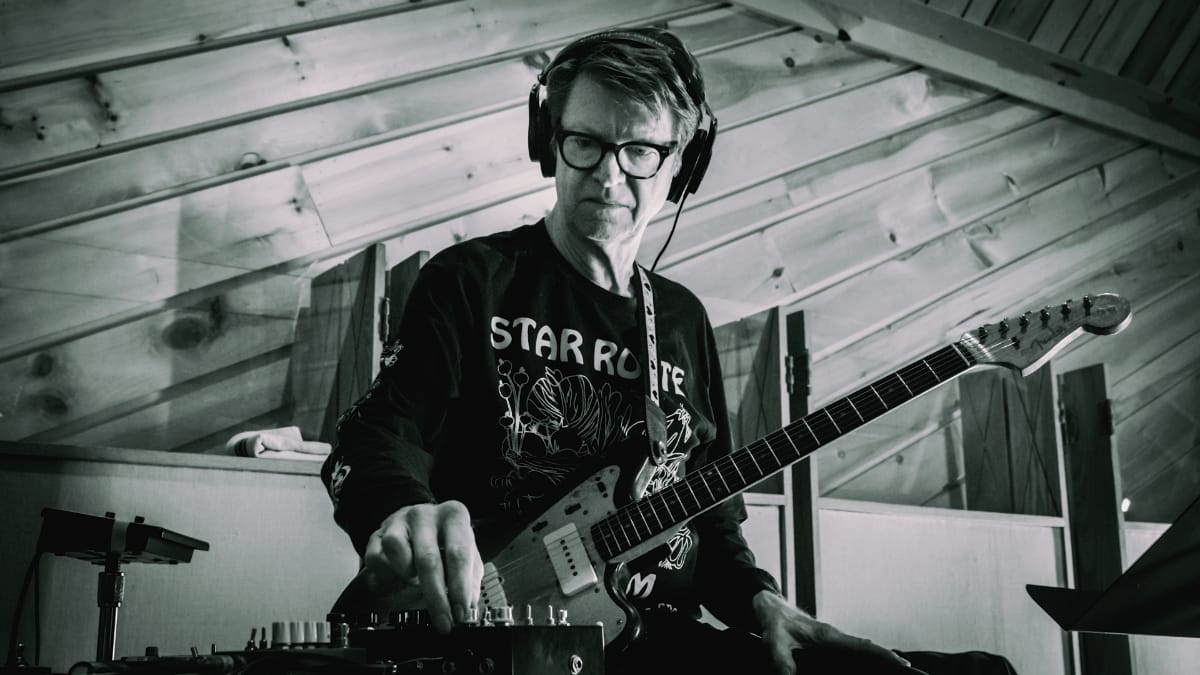
 Lawrence Peryer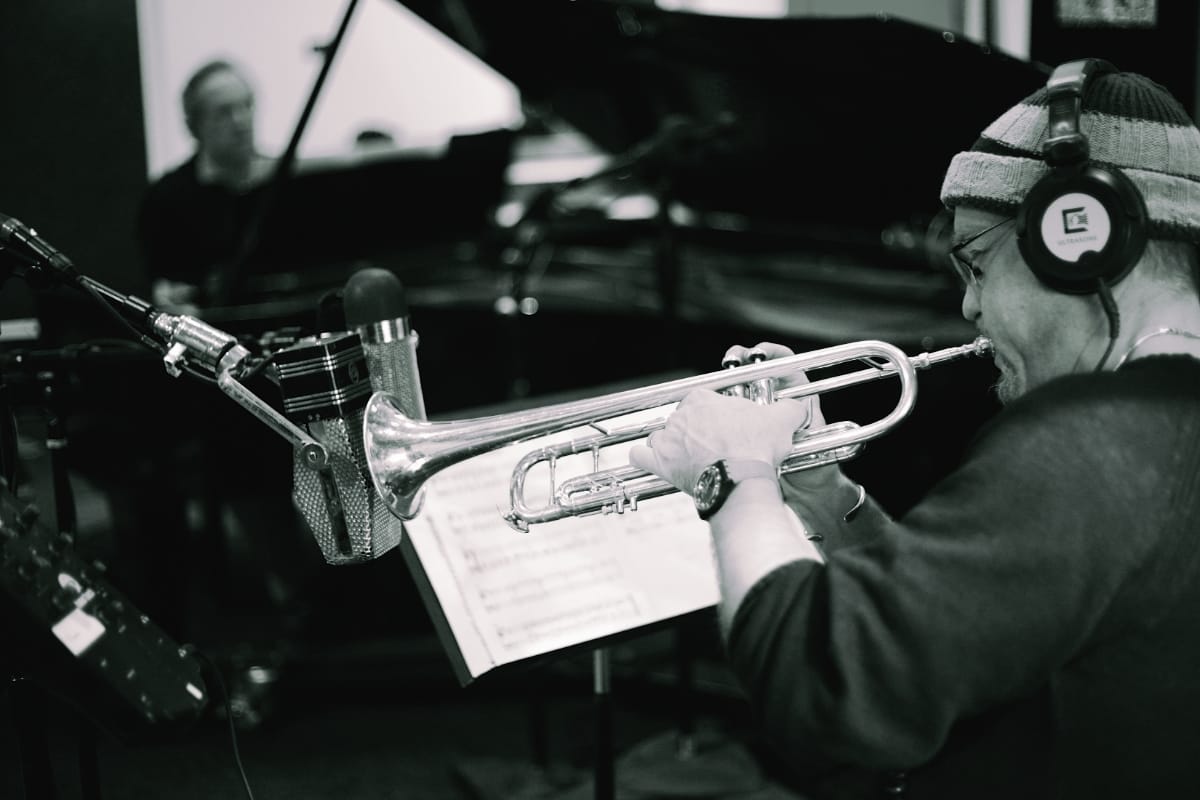


Comments