


Tom Wilson stood six feet four, always dressed elegantly, and liked to call himself “the folk-rock czar.” The title fit a man who oversaw Bob Dylan’s first electric sessions and overdubbed a rock band onto Simon & Garfunkel’s “The Sound of Silence” in 1965. In 1966, he took on Frank Zappa and the Mothers of Invention, the Velvet Underground, and Hugh Masekela. The Waco-born producer made all of these records as a Black man in almost exclusively white studios, and when he died at forty-seven in 1978, he left no significant archive of interviews or writings.
Author and literary historian Steven E. Jones arrived at Wilson through Percy Bysshe Shelley, editing two volumes of the poet’s draft notebooks before turning to books about the Nintendo Wii and the cell tower. He added pop music to that range after retiring in 2021 from the University of South Florida, where he held the DeBartolo Chair in Liberal Arts.
The result is Everything Is Everything: Tom Wilson and Pop Music in 1966, which is out now from Stanford University Press. The book takes its title from Wilson’s favorite catchphrase and its subject from a year when go-go ran into the blues, and free jazz ran into psychedelia. Jonathan Lethem’s blurb calls Wilson “the great Zelig-provocateur-enabler of sixties rock,” and Jones reads Wilson’s radical eclecticism as a response to what Wilson called “an era of complex mixed media.” “There’s a sense that everything is happening,” Jones says of 1966, “and that everything would maybe amount to everything.”
Lawrence Peryer recently spoke with Jones on The Tonearm Podcast about how Sun Ra and Batman set the book in motion and what a Romanticist hears in studio outtakes. They also get into Wilson’s appetite for mixing genres, his stubborn loyalty to Nico, and the color line in 1960s pop. Listen to the full conversation in our audio player. The transcript has been edited for clarity, length, and flow.
Lawrence Peryer: I wanted to start by asking about something later in the process: being in Waco for the launch event. I’m so curious about that event and your experience.
Steven E. Jones: I’m still buzzing about it. Waco is the birthplace of Tom Wilson Jr., the guy the book is about, and his family has connections there, and a lot of people there knew his family. We had standing room only that night. A lot of people showed up, including the mayor of Waco, who came to make a proclamation about Tom Wilson, and I was honored to be joined on the stage by Tom Wilson III, the son of the producer, who came and said a few words about his dad and then joined in the discussion of Tom Wilson and of my book.
Lawrence: My perspective was that, when I put the book down, it wasn’t clear to me who, outside the music world, really felt connected to him, remembered him, or knew him, so you went back to the source.
Steven: There were older people in the audience who had known his family, and some of them stood up and provided local color and context for the stories we were all discussing, so that was really interesting. But there were also people, to be honest, more than one person, who started their question during the Q&A by saying, “I’ll be honest, I didn’t know anything about him until this came.” So even there in Waco. That’s part of what’s going on.
And Tom Wilson himself made a joke once and said, “As the best record producer ever to come out of Waco, Texas, let me say . . .” Throughout his career—and you can hear this because there are recordings of him on his radio show, and now and then on the recordings that accompany albums you can hear him calling takes and discussing things—you can still hear his Texas accent. He went to Harvard; he had this brief but hugely influential career in big cities around the country, but there was a sense that his slow-talking, no-bull style was something he probably picked up there in Texas. It was heartening that there was so much interest in this guy, who deserves a lot more attention than he’s been given.
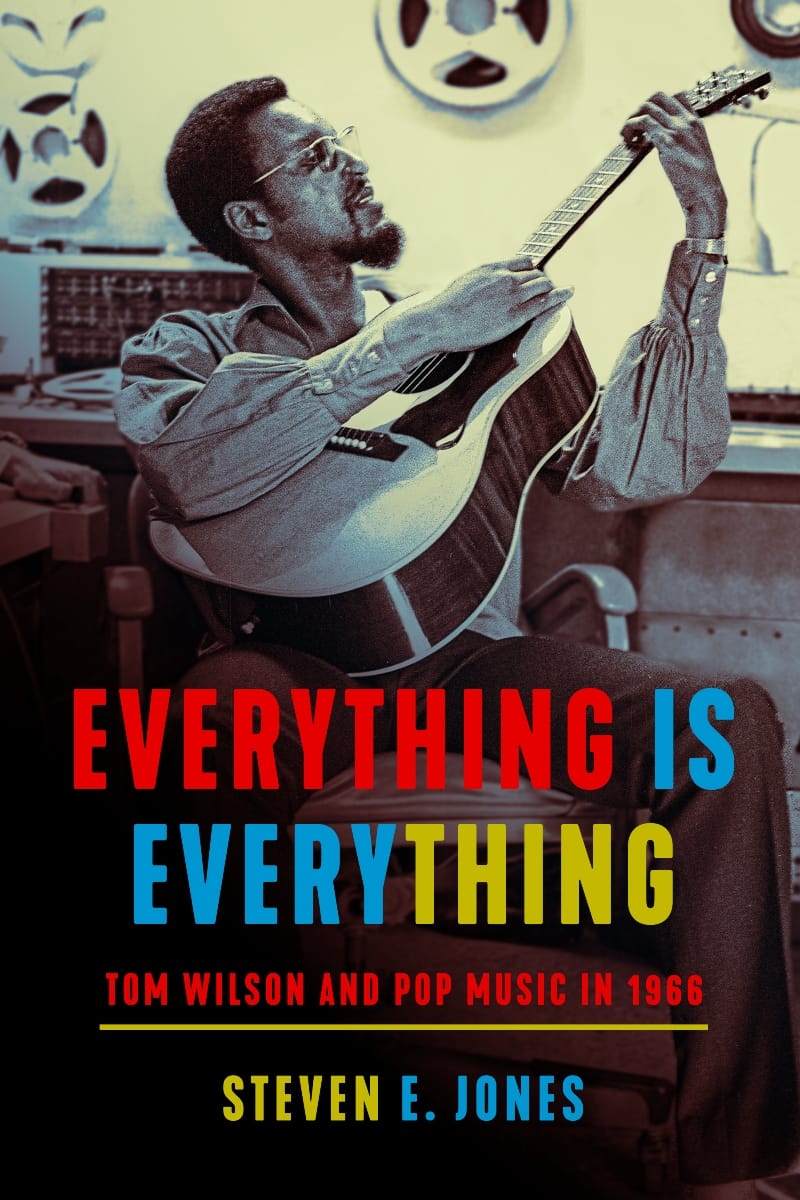

Everything Is Everything book cover, courtesy of Stanford University Press. Steven E. Jones, photo by Heidi S. Jones.
Lawrence: One of the things that obviously stands out in your book is the sheer volume of work he did, especially in the concentrated period you look at.
Steven: Wilson seems to me to stand out because he had an interest—not in every album he produced; some of them were clearly for commercial or contractual purposes—but he certainly had an interest in the majority of the things he did that went beyond their commercial potential. The year 1966—or let’s call it late ’65 to early ’67—was Wilson’s annus mirabilis. It was the miraculous year in his career when he produced almost twenty albums in a variety of subgenres, and several of them were hugely influential: records that changed music history, or that influenced other musicians so much that their ripple effects are still being felt.
Lawrence: I love the Sun Ra Batman record. Was that a working musician picking up a payday? Was it Wilson being in a position to throw somebody he admired a subversive payday? What was going on there?
Steven: A little of all of the above. There’s a strain running throughout Wilson’s career of this almost pop-art interest in commercial products from an ironic perspective, I think. Later on, he produced an album of TV commercials, with the great Benny Golson arranging and performing on it. He was not averse to indulging in that kind of pop-art approach. In some ways, these were like Warhol soup cans for him.
So it was always a little bit tongue-in-cheek, but then so was Batman. It’s in the spirit of the TV show that premiered that year. In fact, I argue in the book that that kind of double-voiced, multiple-audience irony was always part of that side of the Batman universe, and the TV producers just tapped into it.
And Wilson was onto that already. It turns out he was a fan of the TV show. There’s an engineer who reported to Marshall Crenshaw, who then told me that Wilson used to schedule recording sessions so he could get home in time to see Batman. In some ways, it was a pet project. It was clearly a commercial project; he hoped to ride the wave of Batmania that year, which he could probably see coming early in the year because there was so much Batman everywhere. But there’s also that interesting thing where he shoehorns these overqualified avant-garde musicians—Sun Ra, for God’s sake, playing Hammond organ—onto that kids’ record. It’s a kids’ record, and it isn’t, as I say in the book. I admit in the book that it’s the origin story of my book. That was the first album I bought with my own allowance money, in 1966.
Lawrence: That’s beautiful.
Steven: WFMU, the radio station back east, had a blog analyzing the album and revealed that it was produced by Tom Wilson and that Sun Ra had played on it, along with members of the Blues Project, who at the time were seen as a kind of underground folk-rock band. So it got more and more interesting, and decades later I began to think that something could be done with it. I first thought of a single book on the Batman album that, like an exploded diagram, would explore all the possibilities.
Lawrence: It’s a good 33⅓ book.
Steven: That’s exactly the series I had in mind, and the proposal didn’t fly.
Lawrence: Their loss.
Steven: It sent me back to the drawing board, and then I thought that the exploded diagram could turn into multiple chapters, and it could be a bigger thing. I could write a book about all of those connections. So it starts with that Batman album and learning that strange truth about it—who produced it and who was on it—and then exploring the context to build a picture in great detail from those connections.
Stay on top of The Tonearm.
Subscribe for exclusive interviews, cultural tip-offs, and community fun.
And your support keeps our site free of advertising and paywalls.
Lawrence: It was a great framing device for the themes you explore around authenticity, around irony, around the hybridization that was going on in music. I’m really curious about the eclecticism of the 1966 era. How much of that was Wilson driving? How much of it was his taste, versus something similar to what he did with Batman? He saw the wave, or he intuited where the industry was going, whether it was radio formats or—was he pushing or pulling?
Steven: Both. That’s always the easy answer, but I think it’s true. As a lapsed English professor who was interested in literary history, that’s like the question of intention. Did this writer come up with this idea, or was it in the zeitgeist, whatever that is? Was it in the air, and the writer is merely the channel that expresses it? The more you look, it’s almost always a combination of those things.
Tom Wilson articulated a philosophy of eclecticism. He said outright—which is where my book’s title comes from—that everything is everything. He used it to describe genre more than anything else: a mixture of genres, and a general openness to radical eclecticism when it came to musical genre. He said he was interested in an operatic form of music that he saw coming, and he thought it was made possible, or facilitated, by the material format of the LP album: there would be more genre combinations, and there would be these longer forms.
If you go back to the jazz label he founded when he graduated from Harvard, Transition Records—there’s a book out now, a collection of essays edited by Anaïs Ngbanzo, that has an essay in it about his jazz label—it shows that he had originally planned to have catalog letters standing for other genres besides jazz. In the short time it existed, it ended up being pretty much just a jazz label. But he had in mind classical albums he would produce. He also had folk albums in mind, and he even used an M in the album code for mood music.
That carried straight through to the final project he had in mind in the seventies, where he was collaborating on an R&B opera. From what we’ve heard, it seems to have been planned as a kind of Afrofuturistic epic that would involve all kinds of things. He hoped to have Bob Marley do some music, and he thought of people like Minnie Riperton as maybe being performers. So he meant that operatic form literally in some ways.
To go back to your question, I think it was in the air, and sometimes for crass commercial reasons. Radio formats were differentiating themselves to reach a segmented audience; that was one reason for the proliferation of genres. But while that was going on, people like Wilson were trying to view it from a more creative and artistic perspective.
Lawrence: I wanted to ask you something about you and your academic training, because you’re someone who is familiar with, or has been immersed at different times in, the drafts, the notebooks, the works that we as laypeople don’t always see. I’m curious how that training and that experience apply when you listen to the session tapes and the outtakes, the things that don’t get included.
Steven: It is true. I was trained as a literary historian, and I worked with poetic manuscripts early on in my career and later, but especially early on.
I was always a materialist historian. I was always interested in the stuff of history and in artifacts, as you say: not just manuscripts, but later published books, political cartoons that inspired poetry, broadsides distributed to the masses, and all of this. Later, I wrote books about video games from a similarly materialist perspective, looking at how the controllers and cartridges actually affected gameplay. And I went on to look at infrastructure. I wrote a little book about cell towers that was about how we deny the gross materialities of the infrastructure that surrounds us every day and that we depend on, because we want to believe our phones are magic.
So, as you say, records: the tapes behind the vinyl records, but also album cover art, liner notes, who wrote them, how they vary, and the ways albums come in issues like scholarly editions of a literary work that reveal its evolution. Sometimes there are paratextual materials, as we call them: the stuff that surrounds the marketing. Freak Out! was marketed with a jigsaw puzzle that they sent to DJs one piece at a time. As they constructed it, they got to see the album cover. And you could write away for a map of the freak scene in LA from an address that appeared only on the cover of the earliest issues of the album.
There’s an interesting history to how all of this material contributes to our experience of an art form that too many people think of as dematerialized and ethereal, pure sound that comes and goes and is ephemeral, when in fact it’s all caught up in all of this stuff.
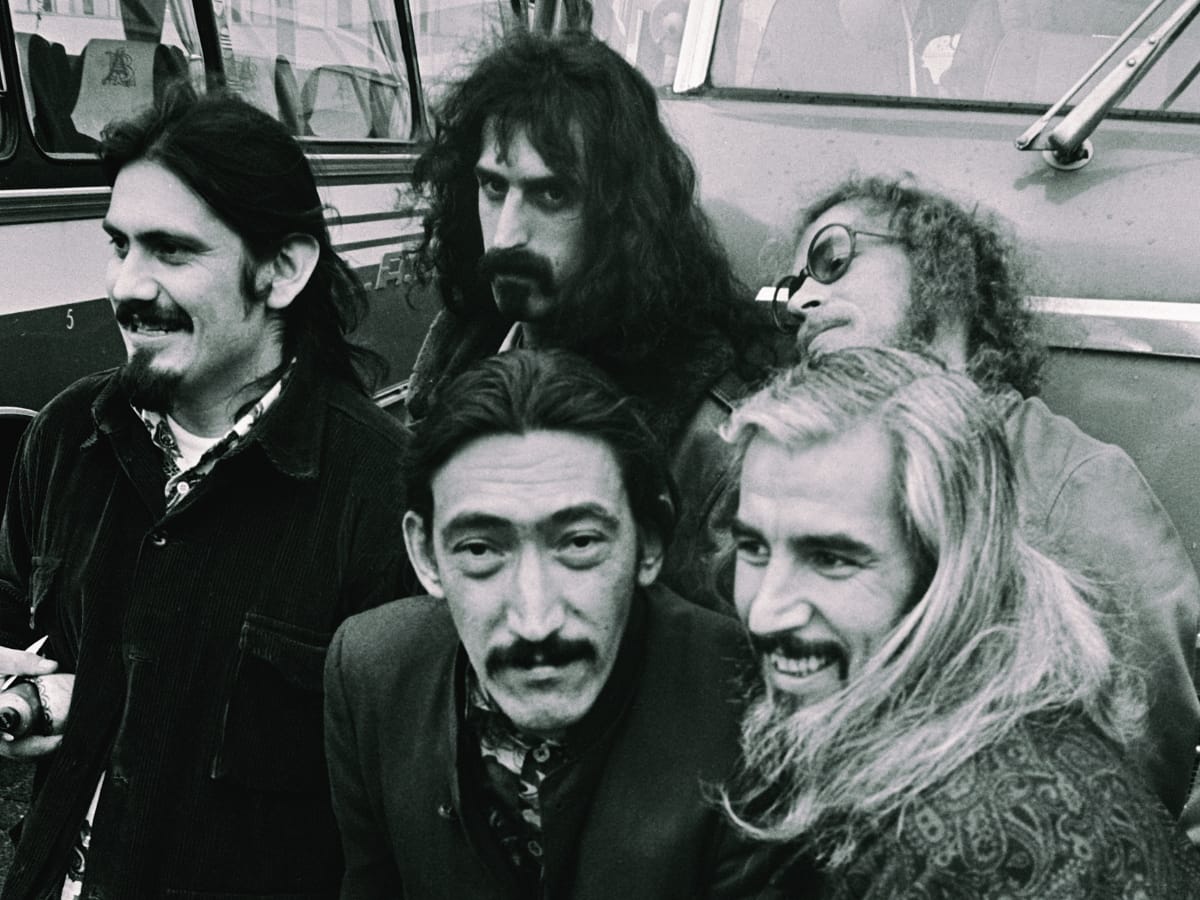
Lawrence: So, Zappa. The fact that Frank had anything nice to say about him years later is a little shocking, because that’s not necessarily always Frank.
Steven: He would tease him for his lack of interest in the recording process, and he would tease him about not knowing he had signed this avant-garde group when he thought he was getting a white R&B band, and all of that. That’s a typical Zappa story. There’s no question that Tom Wilson knew what he was getting into.
Tom Wilson was a cosmopolitan, highly trained ear who also worked with avant-garde jazz musicians like Cecil Taylor and Sun Ra. He would not have been freaked out by Frank Zappa’s music. But the proof of the pudding is in the eating, and in the recording, because Tom Wilson then made sure to secure the funds and support the band in making one of the first double albums in rock. Tom Wilson supported this project all the way and fought for it. In fact, he called Zappa a musical genius.
Lawrence: What caused Wilson to stand by Nico so strongly?
Steven: Well, she was a striking figure, after all. As I say in the book, I don’t think she gets enough credit in later years for how cool she would have seemed at the time. She later became a kind of goth princess and dressed in all black and all that. But at the time, she was one of Warhol’s women. In fact, in Chelsea Girls, she stands out. Her first solo album, produced by Tom Wilson, was Chelsea Girl.
But she was also a kind of European chanteuse. She was like a Marlene Dietrich of the recording studio, and I think Wilson was drawn to her cosmopolitan sensibilities and her ability to perform under this kind of cabaret sound in the studio. And he pushed back against the Velvet Underground’s general resentment of Nico because, overall, John Cale and Lou Reed didn’t appreciate having Nico in the band and felt Warhol and then Wilson had pushed her on them.
She was cooler than these guys who thought they were the coolest band in New York. She was already an international avant-garde figure when she came to the band. She played strange instruments and was known for it, and she didn’t like some of what Wilson did to the mix of Chelsea Girl. Everybody complained about the flute and the strings on some of those songs, but I argue in the book that they made that album what it was: that strange kind of European cabaret-sounding record.
Lawrence: Nico was a bit of an outsider, and I would think, given the issues of race at the time, Wilson was a bit of an outsider. He didn’t talk a lot about being a Black man in a white world, did he? Or in the white genres he worked in?
Steven: He did say some things, but he made subtle references without saying it out loud. When somebody said, “Hey, what are you doing producing folk music?” he said, “What do you mean by that? I’m just folk,” which is an oblique reference to the whole question of who had the right to certain kinds of authenticity in music. But there’s also that very odd story I recount from a 1968 profile of Wilson in the New York Times Magazine.
It’s a cover story. It has him on the cover with a young singer from the band Fear Itself. Inside the story, he’s depicted as the coolest guy in the business, including his amazing wardrobe and the fact that he drives an Aston Martin. And then the very last anecdote is that they’re out on Sixth Avenue in New York, and he sees a cab driver pass a Black man on the street, and he races to confront the guy. He pulls him over, stops him, gets out of the car, and it even says he cuffed him and gave him a lecture about how Black men like that were fighting and dying in Vietnam for him, and they were citizens just like him, and how dare he. There are moments that emerge, but as a member of the industry, you’re right that he didn’t overstress it.
And pretty clearly, from the arc of his career, he didn’t have to, in terms of his own power. That’s maybe one reason. And of course the irony about Nico is that he may have supported her because she was weird and an outsider, but she herself is known to have a history of racism and to have made remarks that are racist. Nico’s a complicated, strange figure for somebody like Wilson to have championed.

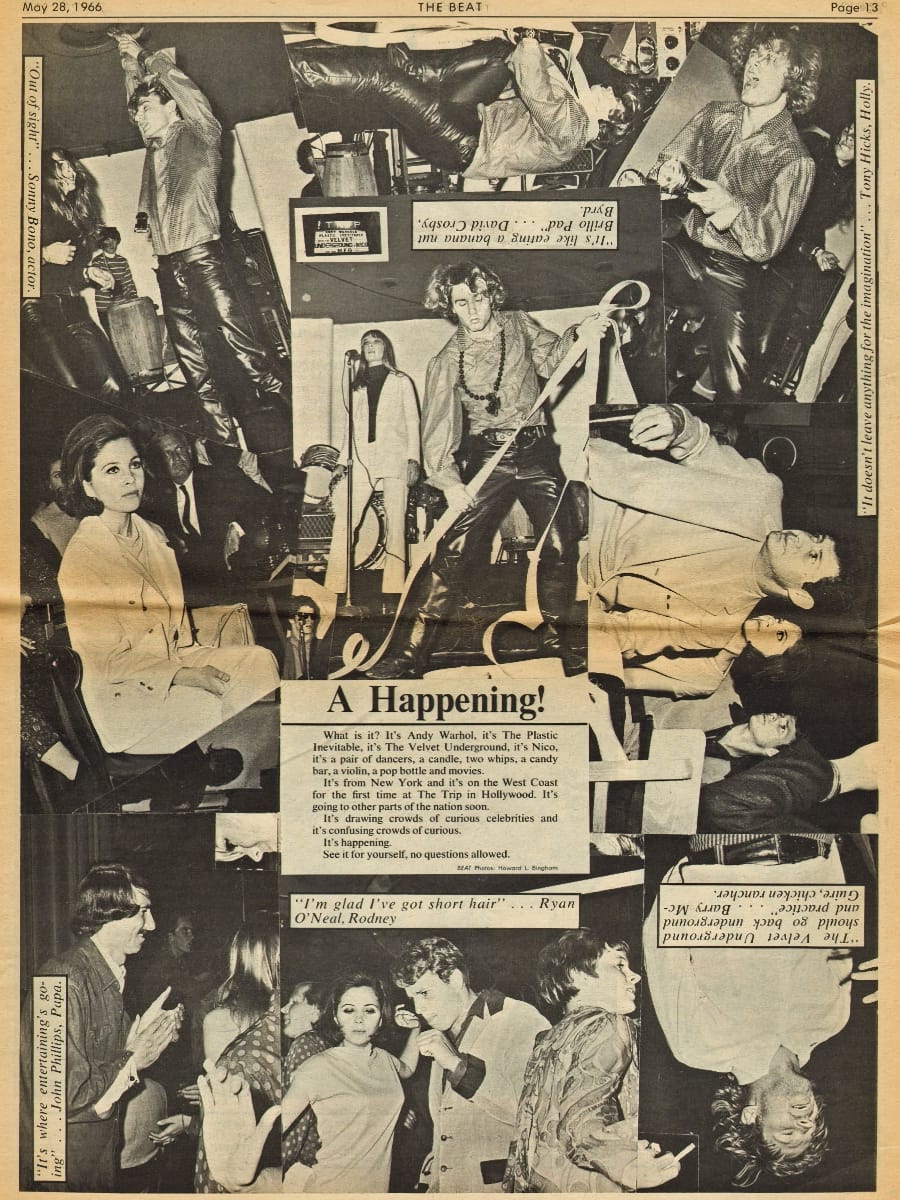
The Velvet Underground in 1966. MGM/Verve publicity photo (left); photo by Howard L. Bingham for KRLA Beat (right). Via Wikimedia Commons.
Lawrence: As I was reading the book, it never felt completely resolved, although you stated up front that it wasn’t a Wilson book. It’s this struggle between it being a Wilson book and being bigger than him. Was the book always framed through Wilson?
Steven: There are any number of ways to frame anything. You stand to one side, and you do this, and you get a different thing. But it was Wilson’s project with that Batman album that drew me to it in the first place, and it was his connections, as they unfolded from my research on that album, that made it interesting to me. I thought of it as a kind of tangled web. Everything in the book is connected to him for a reason.
It wasn’t my doing. That’s what I discovered. He had his hand in so many projects and worked with so many bands that it’s all connected to each other and back to him. So it’s not two books, really. It’s two stories in one book, and I really did want them to be intertwined. The whole point was that intertwining. The book’s subject is really the intertwining.
It’s an old historicist question: what do intention and agency on the part of individual humans have to do with history and these larger events? This is a slightly more compressed and music-focused version of that question. What can one producer do to affect it, and how does he affect it? You have to have both sides of that in order to explore it. What I say is that it’s actually not a biography of Wilson. It is a book about Wilson, but it’s a book about Wilson’s intertwining with the pop music history of that moment.
Lawrence: With the Marshall Crenshaw documentary on Tom Wilson forthcoming, and you being very adamant that this book is not the biography, what’s a piece of Wilson’s story that you didn’t get to explore that you hope somebody else chases or uncovers or brings to the world?
Steven: Well, I know there are actually two films underway. There’s a feature biopic underway, as well as Crenshaw’s documentary. I hope that his youth in Waco, and the time between then and Harvard, could stand more exploration. Transition Records itself is a fascinating story. He borrowed something like $940 to start it, ran it mostly out of his house, used Harvard radio station studios to record, sometimes went out into clubs and recorded things live, and also staged jam sessions. And there are the stories of jam sessions in his grandfather’s carpet-cleaning warehouse in Waco as he was growing up. Jazz musicians would play there just for fun.
He died so young. He died in ’78, and this R&B opera was underway, and he had done some other things, but his own production had taken a back seat to a kind of meta-production, facilitating production for other people, in a way that I think we could learn a lot more about.
Lawrence: There’s so much we didn’t get to. But those are all things our listeners can go learn for themselves.
Steven: That’s right. And the book has a playlist. All the things mentioned are on streaming services, and people can go hear them for themselves. Or, if you’re lucky and you want to do it right, go find the albums, because a lot of them are still out there in record stores. And the vinyl always has revelations.
Check out more like this:
 Bill Kopp
 Lawrence Peryer


Comments