


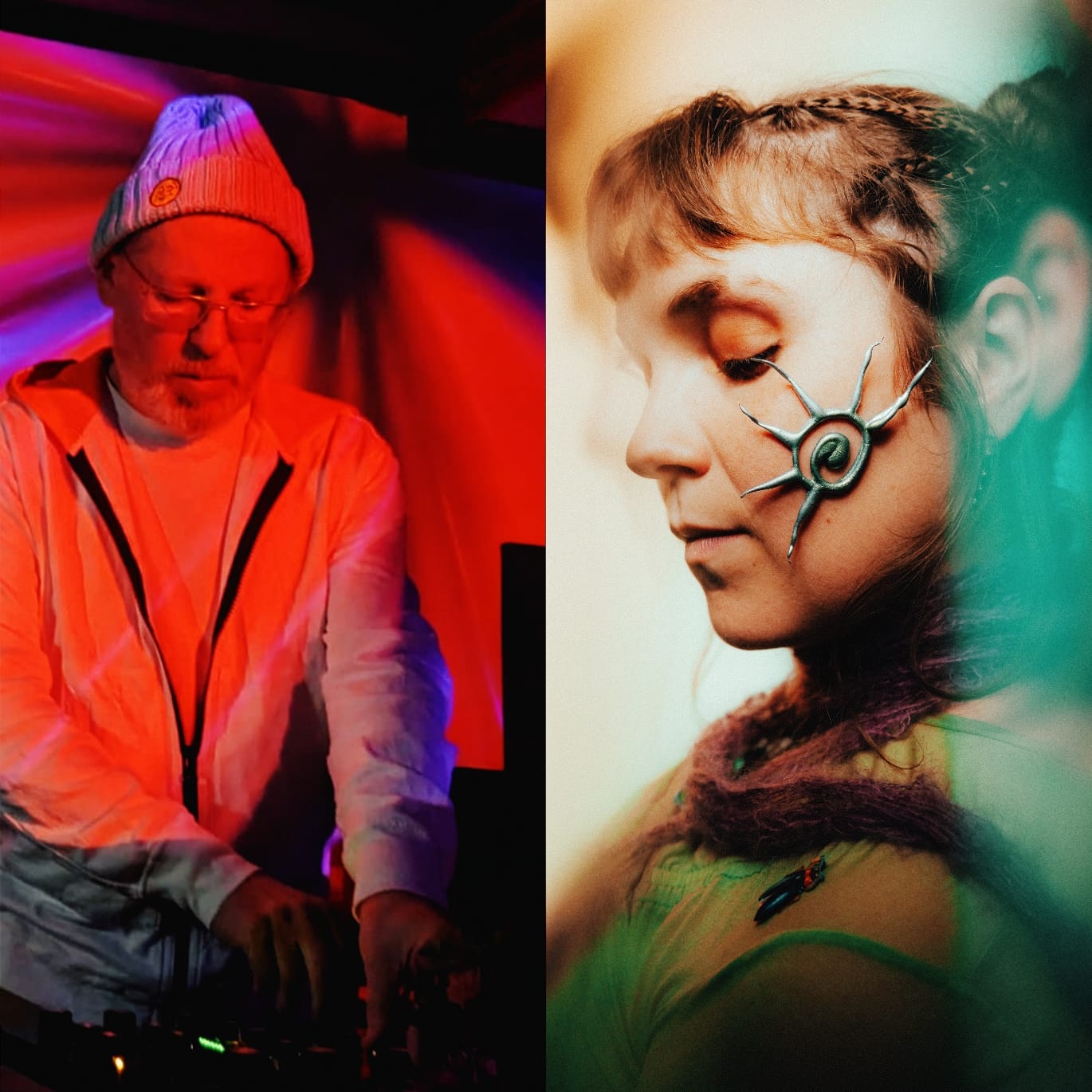
Some music feels as though it arrives from a place just beyond the present. Jon Tye, the veteran electronic musician and founder of Lo Recordings, and Bethany Ley, a young composer, singer, and harpist, came together as Ocean Moon and Silver Ley to create Prismatic Fields, an album that seems to exist between the ancient and the futuristic. I had not only the rare opportunity to hear the record before its release but even to see the duo perform it live at this year’s Reeperbahn Festival in Hamburg, where they presented the album as part of the Sonoton Music Showcase. The performance also marked the introduction of Open Universe, a new Sonoton Music imprint curated by Tye and dedicated to more experimental territories within the library-music world.
In the hectic environment of a festival, there was something remarkably composed about the way Ocean Moon and Silver Ley supported one another on stage. Silver Ley’s voice moved between extremes—from crystalline, almost impossibly clean high notes to something much more ritualistic, sinking into the music as if from somewhere beneath its surface. Beside them, Ocean Moon was constantly smiling as electronic layers of sound accumulated around them.
Since founding Lo Recordings in 1995, Jon Tye has spent more than three decades treating the label less as a genre category than as a laboratory for curious sounds. Lo has released more than fifty records, tracing an unusually wide path through alternative electronic music, experimentalism, psychedelia, ambient, and the left-field fringes of pop.
Opposite him is Bethany Ley, who now records as Silver Ley—a Bristol-based harpist, singer, and composer whose work brings a very different musical vocabulary into the equation. Their harp and voice provide Prismatic Fields with much of its organic, almost ceremonial character. Their demo of the EP Sundial caught Tye’s attention strongly enough for him to bring them into the Lo Recordings family, and their development has also been supported through initiatives connected with the PRS Foundation and Future Bubblers, a talent-development project associated with Gilles Peterson and Brownswood Music.
They created their first collaborative album, Prismatic Fields, in just a few days while staying together in a coastguard cottage overlooking the sea. They themselves acknowledge that the record would probably have sounded different had it been made somewhere else. Here ancient timbres acquire futuristic edges; synthetic sounds become almost tactile; voices turn into textures and textures begin to feel alive.
The transcript has been edited for length, flow, and clarity.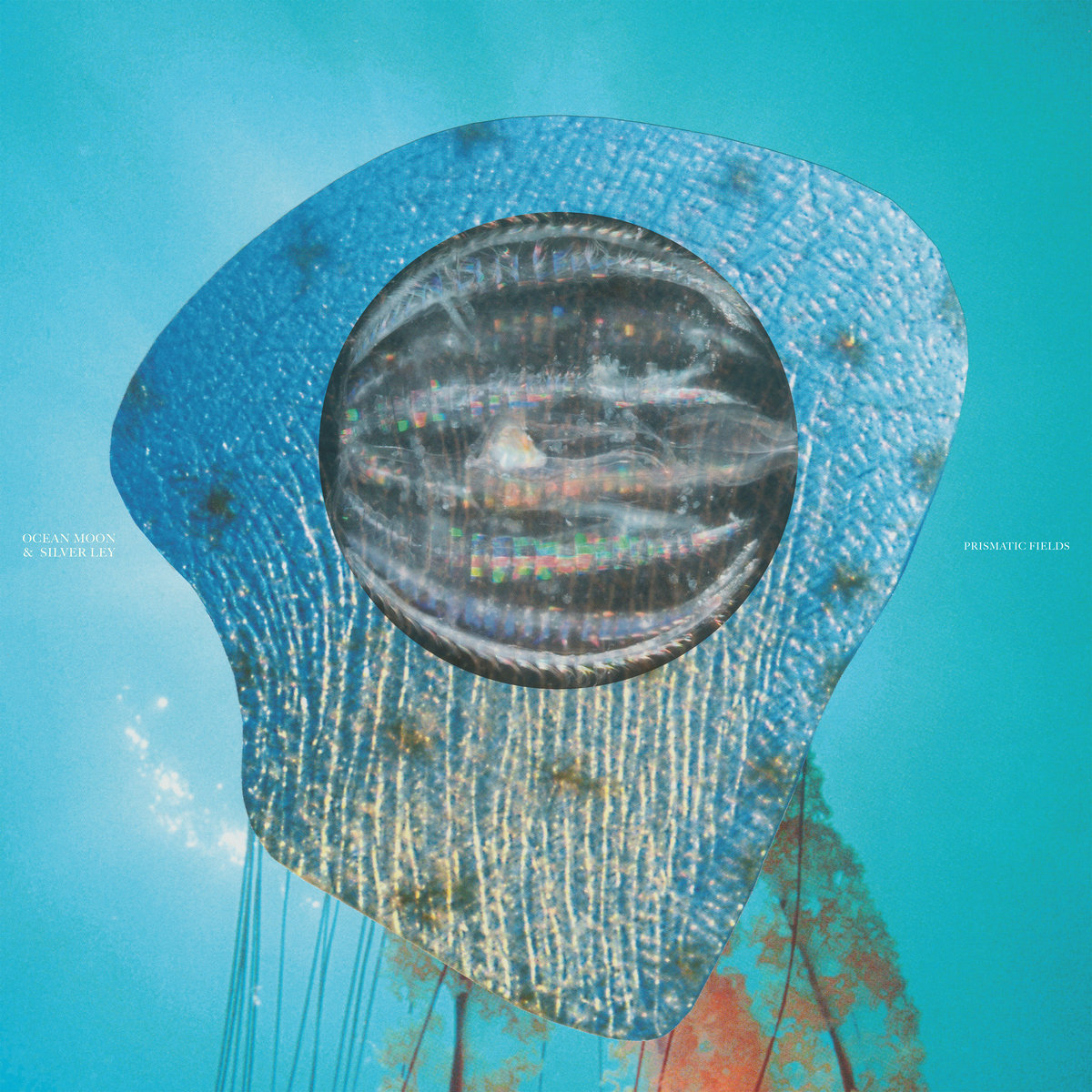
Arina Korenyu: Silver Ley’s EP Sundial was released through Lo Recordings. Is that where the two of you first crossed paths, or did you meet earlier?
Jon Tye: It is. It’s rare to get a demo and end up releasing something by that person, but Bethany’s demo was outstanding.
Arina: What was it about each other’s work that sparked the idea of collaborating?
Jon: It was just the sense of invention and adventure in what Bethany does. It’s very, very unique and very engaging.
Silver Ley: I also thought it was a good match. Even just the names work quite well put together. But sonically, I like to think of the music I make as environments and spaces, and I felt like those spaces could exist in harmony.
Arina: Jon, you founded Lo Recordings more than three decades ago, and the label has become closely associated with forward-thinking and unconventional music. Now, with Open Universe as a new imprint within Sonoton Music, you’re opening up another space for this kind of work. What about Open Universe feels different?
Jon: The main difference is that we have a budget. But really, it’s a chance to collaborate and explore—a mutual opportunity to do something that hasn’t been done before. Collaboration has always been my trajectory. The second album on Lo Recordings was built around collaborations with people of different ages, histories, and backgrounds. It’s not about how old you are or what instrument you play; it’s about what can happen when you bring different perspectives together. And I think I’m doing more of that now again.
Arina: We’re talking here at Reeperbahn Festival, where there are more than four hundred concerts, but relatively few that venture into more experimental territory. Since you have been promoting that kind of music for years, from your perspective, how much space is there for music that doesn’t immediately fit into familiar categories?
Jon: I was talking to people last night, and I think if people experience it, they’re quite open, but they wouldn’t necessarily listen to that music on the music channel. A lot of the time, people get fed the same thing. It’s like an algorithm, and I think we’re against that outcome.
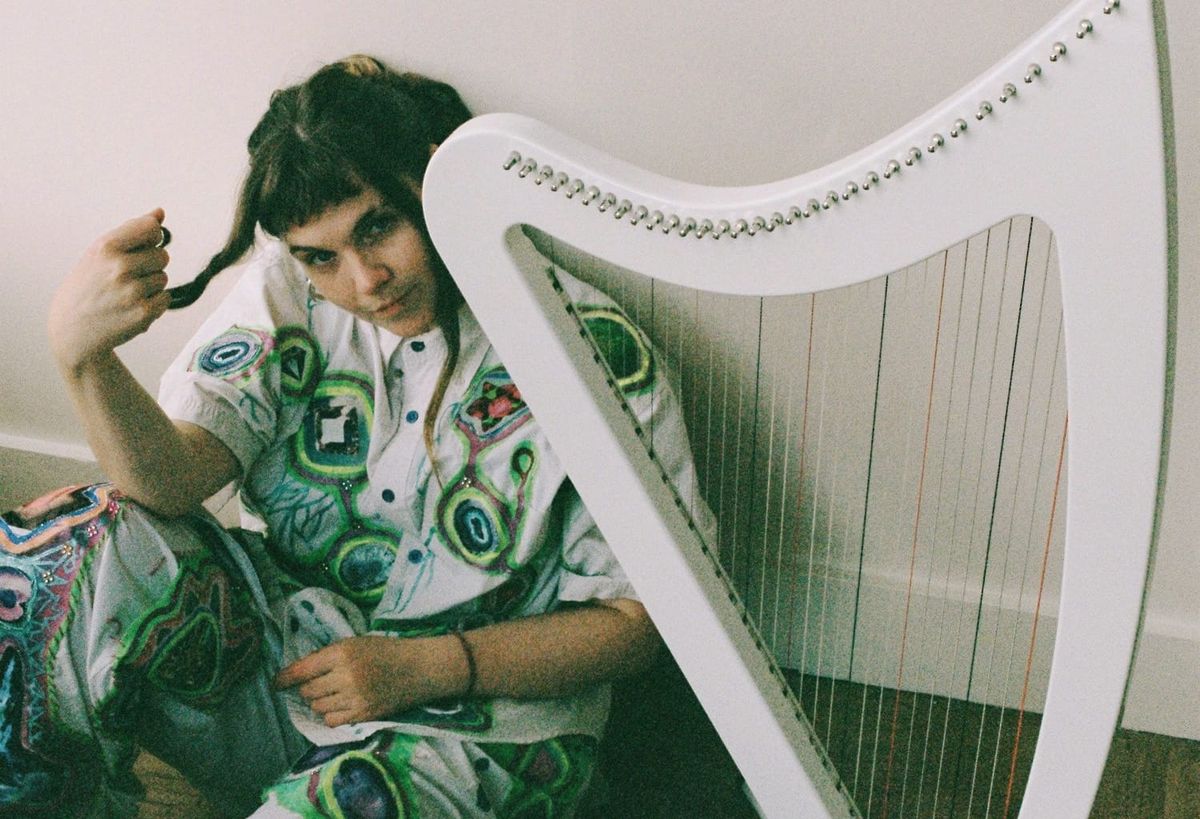
Arina: Bethany, I’d love to go back to the beginning of your relationship with the harp. It’s quite an unusual instrument to start with as a child. Was choosing it your own decision, or did someone introduce you to it? And what did you initially love about the instrument?
Silver Ley: People ask me this sometimes, and I don’t actually remember why I wanted to play the harp so much. When I was about ten, I asked to play the harp, but I couldn’t back then, so I didn’t. But when I moved to Bristol and worked in a music shop, my boss lent me a harp because I said I still wanted to learn it. So then I taught myself as an adult.
Arina: When you were studying, did you imagine yourself following a more traditional path—perhaps playing in an orchestra or working within classical music—or was there already a feeling that you wanted to take the harp somewhere else?
Silver Ley: I played in lots of orchestras pretty much my whole life, actually, playing viola, and I knew deep down, by the end of studying, that it wasn’t for me. I think I knew I wanted to do a bit more of a cross-pollination of something, because I always liked to write music as well, to compose and produce. So I guess it happened organically.
Arina: At what point did composition become as important to you as performing?
Silver Ley: I think I wrote my first song when I was fifteen, maybe, if that counts. I don’t know—somewhere around then. I used to write songs on my laptop, probably very badly. Just experiments. I guess I didn’t know I was composing and producing, but I was. I was doing a lot of sound collaging and stuff like that.
Arina: Let’s talk about Prismatic Fields. The harp gives the record this quite old, medieval quality, while the electronic and Fourth World–inspired textures place it somewhere much more speculative. Where did the initial idea for this world come from? Was there a particular image, place, sound, or concept at its starting point, or how did it develop?
Silver Ley: I’m trying to remember. I think it started with you. You brought some kind of—
Jon: Sketches.
Silver Ley: Sketches that were very inspiring for me. It was quite conversational.
Jon: It was spontaneous. We recorded the whole album in three or four days. Bethany came down to Cornwall, where I live and work, and I had some basic starting points, and then we just improvised around that. So I don’t think there was a concept in place. I think it was a real meeting of what we do.
Silver Ley: I remember thinking when we were writing it that it felt super balanced, which is a great thing in a collaboration. It really did feel like a meeting: a little of each of us, bringing different ideas, or one person bringing an idea and then the other person having an idea about the idea. It just felt entwined in that way.
Jon: I think the location really helped, because we were overlooking the sea in the coastguard cottage. There was that space to create and be surrounded by this.
Silver Ley: Also, the window of the place we were writing in is super big, so you’re just looking out onto the horizon, and Rame Head, which is the name of the last track on here. Is it a little church on it?
Jon: It’s a small chapel.
Silver Ley: A little, kind of dilapidated chapel on Rame Head. So that was the ground for it. We were looking at it for days, so I feel like that probably came into it quite a lot.
Arina: So you basically sat and jammed together. And what was it like afterward? Were you still sending files to each other?
Silver Ley: A couple of refining aspects, particularly with the vocal tracks. Maybe we would record those somewhere more sound-friendly, because obviously it was in a house with lots of windows and things. I think that was the main one I recorded. Even the arrangements and stuff—we would sit as it started to get dark and think about if we’d laid down a synth part, which bits we wanted to keep, and just chop up the arrangement and figure it out there. It felt nice that it was all made mostly in three or four days.
Arina: When you work together, do you ever argue?
Silver Ley: To be fair, it depends on the project. In the studio, I’m very opinionated, but I think we mostly had the same vision. Which, obviously, I will budge for. But there are definitely some projects where I have very strong, non-budging opinions, like my own stuff in particular. In this case, if either one of us had a suggestion, I think we would take it on board and try it. I think that’s the beauty of a collaborative thing as well: there’s less ego. It’s more just creating something with someone else, with a collective mentality.
Jon: I guess we also had certain parameters in making an album for Sonoton, and we had a time limit and that budget. It’s really good to have those deadlines and restrictions, because we wouldn’t get paid until we finished it. It focuses you.
Arina: What was your compositional process like?
Jon: I often had a starting point, and then Bethany would just improvise on that. Bethany’s very spontaneous and creative, using pedals like the Microcosm, so it was very swift. I don’t think there was ever a point where I’d say, “I’m not sure about that.” It really did flow.
Silver Ley: I had the Minilogue synth with me as well, and we both had our Teenage Engineering devices, and then the harp and lots of hardware pedals and things. So I guess it’s the dual process of experimentation and refining. We would capture something that sounds a bit more spontaneous, and then the slightly more cerebral moment would come, when we would go through it all and see which ones worked arrangement-wise, and maybe shape the arc of the song a little bit more, with the structure of the album, all that kind of stuff.
Jon: In old-fashioned terms, you’d record the vocal and put the effects on afterward. We didn’t work that way. The initial idea is the same as the recording.
Silver Ley: I love using vocals in a slightly more textural or rhythmic way, or in a non-traditional way. So I enjoyed making rhythmic samples of the vocals, which I think quite a few of the songs have. Only two of them have more lyrically based singing. I guess it’s using the voice as an instrument in a different way.
Arina: If you had to remove all of the descriptive language around Prismatic Fields and describe the album using only things you can actually hear—what would they be?
Jon: I think it’s an exploration. We’ve created a unique space, so hopefully it’ll take the listener somewhere they haven’t been before. It’s not completely divorced from any other music. It’s not revolutionary, but I think it has a unique kind of sound world. I mean, we didn’t really think about it, but it has got a ritualistic quality, and that’s the kind of thing we’re definitely interested in. And there was the book by Robin Wall Kimmerer—it’s dedicated to her. It’s just the idea of an alternative: that you don’t have to accept the given reality.
Silver Ley: Braiding Sweetgrass is a very beautiful book. For me, quite a lot of the lyrics on this album, and maybe some of the titles, feel quite plant-based, garden-like. But the sound world I think of is very glassy. It feels like moss and glass, something like that, maybe crystalline.
Jon: Fluidity.
Silver Ley: It feels quite smooth. Maybe a smooth journey for the listener.
Arina: Bethany, you recently received support through PRS Foundation’s Women Make Music initiative. What did that support make possible for you that might otherwise have been difficult to pursue?
Silver Ley: It was actually crazy how much it enabled me to make things. Firstly, I’m grateful that Lo took on Sundial, my EP. I reached out because one of my favorite albums is Susumu Yokota’s Symbol, and that’s how I found out about Lo Recordings. That first support slowly led to more things along the way. But what PRS enabled was that I could mix a new EP with an amazing producer and mix engineer, Samuel Organ. It was cool to work with him and see how he works. And I made two music videos, working with directors and a choreographer—in fact, two movement directors, one for each video. Just exploring new things; I’ve never had the experience to do so before.
Arina: Looking ahead, for both of you, are there any sounds, instruments, technology, or ideas that you haven’t explored yet but feel drawn toward?
Jon: I think so. The next album we’re planning is maybe more focused on medieval and choral music.
Silver Ley: Choral, medieval, maybe slightly Dungeons & Dragons.
Jon: But through our lens. There are interesting spaces where I live, and churches, where I think we’d try to record.
Silver Ley: I’m really interested in different traditional vocal techniques in general, but more so as time goes on. I’ve been studying Old Roman chant, which I’ve found super inspiring, because it’s an amazing ancient European tradition. I also love all kinds of vocal traditions and ornamentation, and I think I’m barely scratching the surface. And also just deepening compositionally. I’m looking forward to learning a bit more gamelan stuff.
Jon: It’s going to be really interesting, a mixture of gamelan and medieval. I’m very lucky with Sonoton. Generally, you can bring in all sorts of influences and ideas and just explore. I think that’s the idea of Open Universe: to really have no boundaries in terms of sound. That’s the great thing about it—it’s surprising. Pieces that you might not hear on the radio.
Check out more like this:
 Michael Donaldson
 Arina Korenyu



Comments