


Imagine spending two decades becoming fluent in a language where every phrase is measured, every accent inherited from someone else's centuries-old sentence—and then, one day, choosing to stutter on purpose. That is close to what sachi's mirror has done: traded the perfect grammar of classical violin for something rougher, more instinctive—a new dialect from voice memos, out-of-tune pianos, and the accidental poetry of a partner's offhand remark caught on tape.
That remark became her new album's title, Talking in a Different Way, the debut full-length from Oakland's Shaina Pan under the name sachi's mirror, out now on Constellation Tatsu. The album drifts effortlessly between ambient, dream pop, electronic music, and contemporary classical composition, suspending fragile string arrangements, looping textures, field recordings, and her ethereal voice somewhere between memory and possibility.
Pan produced it herself, working from material gathered during a month-long residency in Vallejo in the spring of 2025. It arrives a year after her debut EP, room to receive, on Cone Shape Top Imprint. Between the two, the compositions became songs, and the voice moved to the front.
Talking in a Different Way is a record about transformation, not the dramatic kind that arrives all at once, but the quiet, almost imperceptible shifts that slowly reshape who we are. It is the record of an artist who keeps talking before she knows whether the new language can carry what she means.
The transcript has been edited for length, flow, and clarity.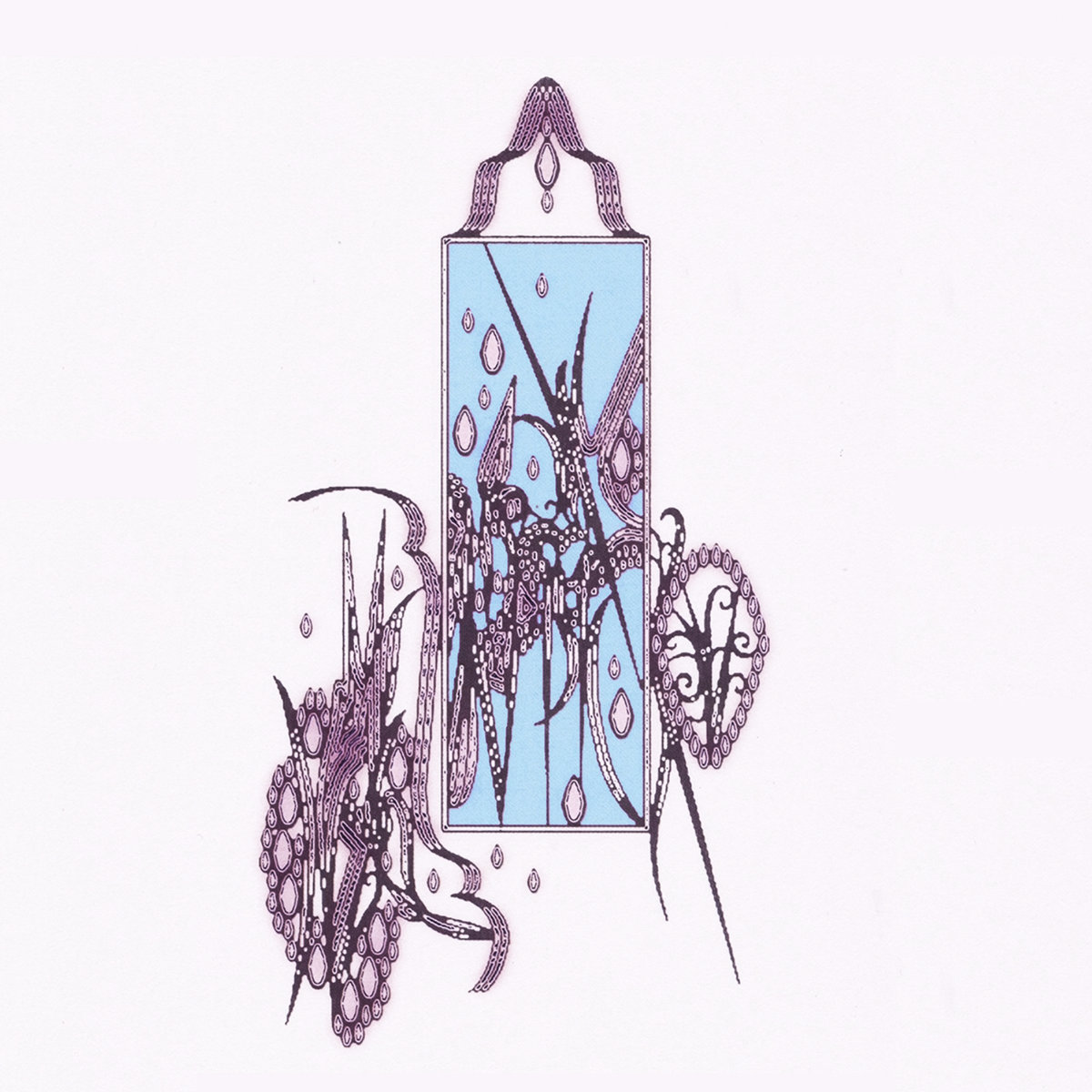
Arina Korenyu: You spent years studying violin performance and nearly two decades performing in classical ensembles before leaving that world behind. What ultimately gave you the courage to make that change, because, as I can imagine, it was not an easy one?
sachi's mirror: Honestly, it still feels like a process I'm in. Being a classical violinist has been part of my identity for most of my life, so I hesitate to say I'm no longer that. It's more of a slow shedding of layers.
I was pretty locked into that path until around the end of the pandemic. I'd moved from the Bay Area to upstate New York to play in a training orchestra—a fellowship where you're paid while preparing to audition for a symphony. With no live performances happening, I was stuck in the middle of nowhere for a year, mostly alone in my room, trying to figure out what I was doing with my life. That time gave me space to reevaluate what actually felt fulfilling, and that was the beginning of the shift.
When things went back to 'normal,' I moved back to Oakland—not as an intentional break from classical music, but I kept ending up farther and farther from it, and I found I was okay with that. I moved in with my partner and started playing in his post-punk band Juicebumps. That was the first time I'd ever played in a band, learning bass along the way. Writing music with them is what made me realize I actually enjoyed composing. I'd always loved playing new and contemporary classical music, but always other people's music. It's been a very gradual process, and honestly, it's still happening.
Arina: You have spoken about feeling burnt out by the rigidity of the classical music world. What first drew you into that world, and at what point did it stop feeling like it belonged to you?
sachi's mirror: What drew me to classical music originally was community; a lot of my friends were doing it, and it gave me a sense of belonging. Once I left the conservatory environment and moved away from that community, things started to shift.
Looking back, classical music culture is very rigid. You're trained to play within a small box—to recreate well-known works flawlessly, to live up to an ideal. I loved music school, but the teacher dynamic was often unhealthy: a very imbalanced power dynamic where a teacher could say horrible things to you, and you just had to nod along. Combine that with a culture more focused on technical correctness than creativity, and after years of it, I got tired. Some people thrive under that kind of tight control, but for me it became suffocating. I still love the music itself; I just find the culture around it unhealthy at times, and I know I'm not alone in that.
Arina: The title of your new album, Talking in a Different Way, suggests perhaps a new way of relating—to yourself, to other people, or even to music. Is the title connected to your move away from the classical music establishment, or does it point to something broader?
sachi's mirror: It ended up connected to my own experience, though it started more simply: it's named after one of the songs, which came from a voice memo of my partner saying that phrase. But the title also reflects the approach I wanted for the whole album: embracing intuition without a fixed plan. A lot of these songs came together from a single source—a field recording, a voice memo—without me overthinking it. Looping was a big part of that process too.
As a classical musician, I was trained to take everything apart on a micro level and make sure it was perfect. This album was about turning that off and trusting myself instead: distorting and chopping up sound, starting with something that maybe didn't consciously mean anything, and figuring out the meaning later. It's a reverse process, and I like working that way: write on intuition first, then come back and find the theme.
Arina: Talking in a Different Way asks a profound question: "What are we if the world we were born into no longer exists?" After spending so much time living with these songs, do you feel you've found your own answer, or is the album itself your way of continuing that search?
sachi's mirror: Definitely still a search. Like in life: you think you've figured something out, and then you're just as confused as before, because things keep changing. It can feel wrong, even punishable, to change your mind about something you said you'd do. But working through that, even when it feels lonely, is necessary.
Arina: Your music moves between genres with remarkable ease. Which artists, composers, or records have had the biggest influence on your sound, both from the classical world and beyond?
sachi's mirror: The cellist Mabe Fratti has been a big inspiration. She's based in Mexico City and makes genre-fluid, experimental pop. I'd always struggled to find people using classical string instruments outside the classical box. Andrew Bird's looping violin work was an early example when I was younger, but hearing Mabe Fratti and Arthur Russell—people using a 'sacred' classical instrument to write pop music—was eye-opening. Coming from that classical bubble, it felt like getting permission to do my own thing with the violin.
For this album specifically, I was listening to a lot of '90s and early-2000s experimental electronic music—Boards of Canada, the trip-hop band Locust, and the Japanese band Fishmans. Their thirty-five-minute song "Long Season"—one track spanning a whole album—feels almost symphonic: themes appear, degrade, and return in a different context. I love when artists recontextualize an opening theme like that.
Arina: The album grew out of a month-long residency in Vallejo, where field recordings and looped textures became the foundation for many of the pieces. Were there specific sounds or moments from the residency that found their way directly into the record?
sachi's mirror: Vallejo is about an hour from Oakland. I stayed at Winslow House Project, a relatively new residency program in a historic house. It hosts about five artists, and even though I was 'living' there for the month, I was going back and forth since it's still close to home.
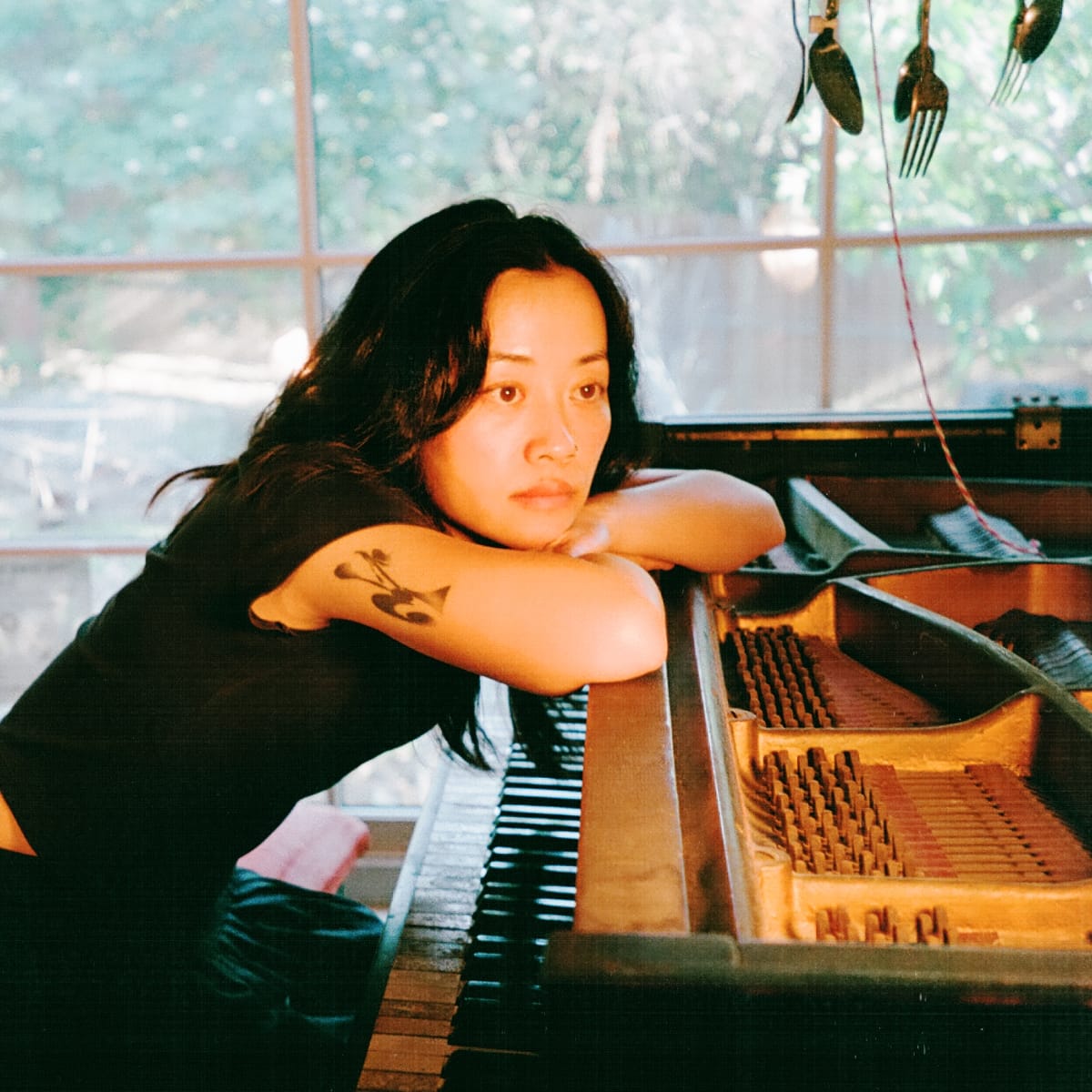
The house has two old, untuned pianos in the living room, probably not touched in decades, pedals barely working. I'm not a pianist, but I recorded myself messing around on the keys, and that became the backbone of one of the songs. I composed on top of it. Having that space, and often having the huge, slightly haunted house to myself, made it feel like escaping into my own world.
Arina: Your vocals are much more prominent on this record than on your previous EP. What changed? Did these songs simply demand to be sung?
sachi's mirror: With the EP, I was still figuring out how to write and didn't really feel like a vocalist; those felt more like compositions than songs. This time, I leaned into the song quality and felt more confident in my voice and my ability to sing. There are still ambient, vocal-free abstractions too, but overall the songs feel more like songs.
Arina: The album artwork is enigmatic. Could you tell us what we're looking at? How does it relate to the album's themes of identity, reflection, and transformation?
sachi's mirror: The art is by an artist named Ramon Keimig, who also did my EP artwork. I found his work on Instagram. When I first saw this piece, it didn't even register as a mirror; it felt more like a portal, something you could step into. Later I noticed the mirror or window quality too, but those all share something in common.
There's an object outside the frame being reflected back, slightly distorted, which feels a lot like music itself: someone hears a song and projects their own life and experience onto it, and that's what makes the connection meaningful. Whether you read the piece as a window, mirror, or portal, it's a way into a state of mind, an outlet for feeling.
Arina: Finally, where does your musical journey take you next? Are there artistic territories that you are eager to explore but haven't yet?
sachi's mirror: I just want to keep writing. The solitude of it, the not-knowing what comes next: that uncertainty is the most exciting part right now. I haven't written anything new since finishing this album, and I don't want to force it, so it'll happen when it happens. Beyond that, I have no real plan for what's next, and I like it that way.
Check out more like this:
 Steven Garnett
 Arina Korenyu


Comments