


Ask arc rae about method, and he offers one rule, which is not to repeat himself. Everything else stays open, with no theory to serve and no fixed process. Thus, Bow and Arrow began with a batch of freely improvised sessions between the Berlin-based French musician arc rae and the cellist, vocalist, and composer Mathilde Vendramin, recorded with no destination in mind.
The pieces stand apart from one another and still come from the same hand, following the wandering logic of a beat tape. Acoustic warmth and electronic precision sit shoulder to shoulder, and the generative textures, tight motifs, restless beats, and small tactile details find their footing as each track goes. That balance has held across the catalog. Spells, a 2021 collaboration with the American producer Owen Ross for Slowtrane, ran on longing and rhythmic drift. Primitive followed on Mystery Circles a few months later, quiet and contemplative. New Moon arrived in 2025 with jazzy chords surrounded by clicks, scrapes, and pings that First Floor described as pieced together with the precision of a master watchmaker.
Bow and Arrow shows that structure can be found after the fact, in what impulse, vulnerability, and luck leave behind. Most sessions worked this way come up empty, which is the cost of the only rule he keeps.
The transcript has been edited for length, flow, and clarity.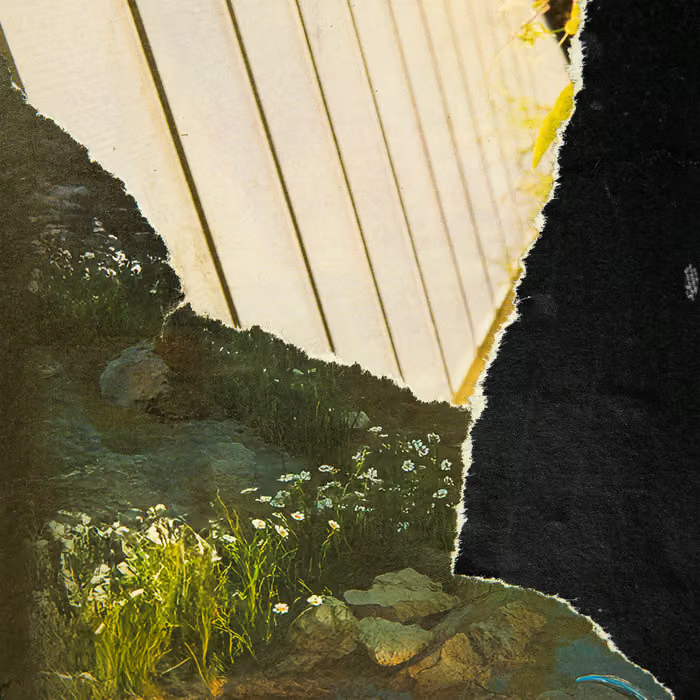
Arina Korenyu: What kind of music did you grow up with, and what eventually drew you toward an electronic sound?
arc rae: I was born in a relatively small city in the center of France. There's a lot of nature around—I used to go for walks with my parents every weekend. It's a pretty unique landscape, with this chain of volcanoes. Not the insane, active kind you'd find in Indonesia or Italy—these are older ones, and they're not really erupting, thankfully. But they're not dead either—I think they call them 'asleep.' They actually know there's going to be a massive earthquake in the Los Angeles area at some point in the next however-many years, and similarly, they know my area in France will erupt again someday—just not when. Probably a few thousand years out. But it'll happen eventually.
So that's the environment I grew up in—a lot of nature, but still from a city. I was playing in bands, mostly listening to rock, punk, and metal. I think if you're into rock and metal, there's a natural inclination to drift toward weirder stuff—more extreme metal, and from there into electronic music, jazz, whatever. People who listen to all kinds of weird music tend to share one thing: curiosity. That's definitely me.
Electronic music came later. I started with the typical Ninja Tune and Warp stuff—Boards of Canada, Aphex Twin, Bonobo. Eventually I got into jazz too, and now I listen to a lot of it. I'm pretty open-minded these days—I know it's a cliché to say, but I really will listen to almost anything as long as it fits a certain aesthetic sensibility. Mostly I still gravitate toward jazz, electronic, and extreme music.
Arina: Did you begin working with modular synthesis before moving to Berlin, or was Berlin itself an important catalyst for exploring that world?
arc rae: My first real encounter with anything modular-adjacent was Reason, which you can patch to some degree—not hugely flexible, but enough. Back then, people who could really flip the rack and patch things felt kind of mysterious to me; I had no idea how any of it worked.
By the time I moved to Berlin, I already had some basic understanding, but it was limited. Pretty naturally, once you're into music and gear here, you find out about places like SchneidersLaden and start hanging around people who are into the same things. After a year or two in Berlin, I decided to buy a modular rack and see where it took me. I already had some desktop gear, but I wanted to go further.
I sort of lost interest in gear and sold a lot of it. Something shifted after COVID—I was meeting a lot of people, hanging out, playing together, and then it all stopped. Some of the places we used to hang out at closed down, and people—myself included—just lost some of that momentum.
I come from a software background, and I'll probably stick with software in the end. I don't need hardware so much—I've always thought of it as a luxury toy. I really enjoy having it, but it's not my main tool; I still work primarily in software. For playing live, though, I think hardware is more interesting.
Arina: I guess it's good for your wallet too—once people start with modular, it's rack after rack.
arc rae: I've been pretty reasonable about it, actually. When I bought my case, it wasn't huge—a 'human-sized' case—and I decided early on I'd never expand it. I never did. If I buy something new, something else has to go. It's still a lot of money, but it never got out of hand. I've kept a good grip on it.
Arina: Why the title Bow and Arrow? What does it represent for you?
arc rae: There's nothing especially intellectual behind it. It's almost a little joke. I was trying to come up with names for the record. I never expected to make another one so soon, since I'd released one just the year before, so I wasn't in a rush. But somehow it happened, and suddenly I had a finished record and needed a title.
My first choice was actually 'The Map Is Not the Territory'—a phrase I'd seen as graffiti near our house in Berlin. I looked it up later, and it turns out to reference a concept from a philosopher [Alfred Korzybski]. I liked it, and it fit the music, but I worried it might read as having some political angle I didn't want to bring into the work. So I wanted something lighter.
Then one day in the shower, Bow and Arrow came to me—the bow being the obvious reference to the cello bow, and the arrow being like a mouse pointer. That felt right: the music is essentially me playing around with the computer and cello samples. It felt playful and safe—nobody was going to read anything political into it.
What sealed it was the artwork—Mathilde made something that ended up looking a bit like bow strings, and it just clicked. It wasn't planned, but it worked. Funny side story: I originally put a tiny, static mouse pointer somewhere in the artwork. David from Mystery Circles thought his screen was glitching because the pointer wasn't moving with his actual cursor. He wasn't sure if it was intentional. I liked the idea, but worried people might just find it confusing, so I ended up removing it—even though it made the title connection clearer. If it were entirely up to me, I'd probably skip artwork and titles altogether and just release the music, but that's not really how it works.
Stay on top of The Tonearm.
Subscribe for exclusive interviews, cultural tip-offs, and community fun.
And your support keeps our site free of advertising and paywalls.
Arina: The album grew out of a series of freely improvised recordings by the cellist Mathilde Vendramin. Once you began working with the material, did you impose any rules or limitations on yourself during the transformation process?
arc rae: It was definitely improvised on her end—I had no plan going in. Cello isn't an instrument you have easy access to unless you happen to live with a cellist, which I do, so I figured we'd just try recording something. We ended up with about half an hour of material. I gave her some loose direction—keep things relatively short, not too evolving, more tonal or more percussive—and she just played around.
After that, I had no fixed idea what to do with it, but that's basically always my process: I sit at the computer without a plan and mess around until something clicks. Maybe 80 percent of the time it goes nowhere, but occasionally there's a happy accident, and you start reeling it in. This time I had extra material to start from, which isn't usually the case. Normally I generate my own raw samples from guitar or modular first.
I don't really work with rules, except one meta-rule: don't repeat yourself. For this record I actually had more tracks than the final seven, but I cut a few that felt too similar to others. I don't like making the same thing twice—each one should have its own world.
Arina: How much generative process do you use? In a sense, generative work is also a form of improvisation, versus more controlled production.
arc rae: I'm not sure 'generative' is exactly the right word for what I do, but I get what you mean, and it's not something I do in the strict sense. What I do is looser. For example, I'll load a cello sample into a sampler and randomly pick slices, trying maybe fifty combinations until something sounds good. That process involves chance, since the slice points are randomized, and I keep reshuffling until something clicks.
It's not generative in the sense of building a rule-based system that composes melodies. It's more about playing with chance and randomness, reshuffling until I land on something I like. Once I do, the process becomes very deliberate, and I sculpt it precisely from there. So it's a mix: roughly half chance-driven exploration, half conscious shaping. I'd never release something entirely random—the randomness generates raw ideas, but I'm always the one steering and making final decisions.
Arina: So if I understood correctly, you and Mathilde are partners outside of music as well. How does that affect how you work together creatively? Does it make collaboration easier, or does it bring its own challenges?
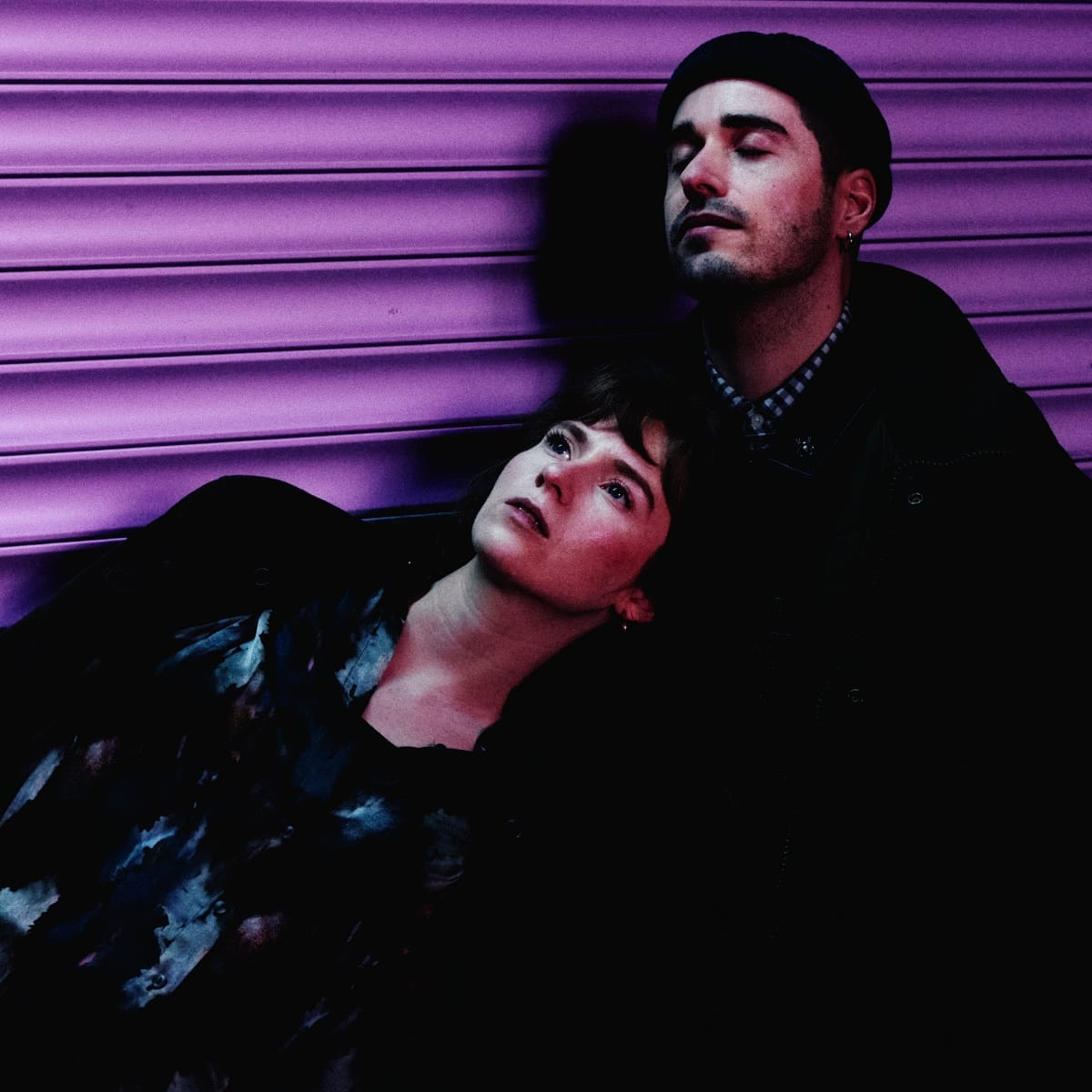
arc rae: This project was a bit particular, since she knew it was more 'my' project—her role was more passive, in that she recorded the raw material and I did most of the shaping afterward. But without her recordings, the record wouldn't exist, so her contribution was essential. When I was close to finishing a track, I'd check in with her, and she'd give me direct feedback—telling me when something was losing energy or needed adjusting. I took that seriously, and I think she ended up happy with how the tracks turned out.
For her, though, this was a different experience than usual—she mostly plays in jazz scenes with highly trained musicians who communicate in very precise terms about theory and structure. With me it was the opposite: much more open-ended, "just do whatever feels right." That threw her off a bit at first, so I had to narrow the scope somewhat. But I think she ended up enjoying the freedom.
Arina: Do you imagine the album being performed live? If so, would you want the performances to preserve that same sense of improvisation and unpredictability as the recordings?
arc rae: That's a complicated one for me. My personal view on electronic music performance is shaped by my background in bands. For me, the most fun as a musician comes from actually playing an instrument live with other people, the way Mathilde does in her jazz scene. I've played electronic shows for this project, and they were fun, but I still prefer playing an actual instrument onstage.
That said, I think there are ways to make it more engaging. Just replaying the record live by triggering clips holds zero interest for me. I'd never want to perform a past record exactly as it sounds on the recording. A lot of electronic artists do that, and that's totally fine for them, but it's not for me. What I do instead is bring entirely new material and treat it more like a live system: sounds that react to and mix with each other, following certain rules but never sounding exactly the same twice. That's more exciting, even if it's a bit nerve-wracking not knowing exactly how it'll go.
Mathilde and I have talked about doing something similar using sounds from the record, with her improvising cello on top. I think that would be a lot more interesting than trying to replicate the record—more like a weird, partly improvised remix that references the album without reproducing it.
Arina: Are there any other plans you'd like to share?
arc rae: I'm pretty much always making new material, which is exactly how this record happened in the first place—with zero plans going in. The way I see music-making: every day is like drawing a straw. Some days you get a short one, and nothing works. Other days you get a long one, and things click.
I think that's a skill musicians need—accepting that you don't win every day, and that winning is actually pretty rare. When it happens, you celebrate it, and eventually you gather those wins into something coherent, like a record. It's hard to predict. I never understand people who say "I'm planning to release an album in 2027"—for me, it just doesn't work that way.
Check out more like this:
 Bill Kopp
 Arina Korenyu


Comments