


Few songwriters are as restlessly prolific as Darren Hayman. Since emerging as the frontman of Hefner, he has spent decades moving between bands, solo records, and ambitious conceptual projects, writing about everything from English history to forgotten communities and the people who shape our lives. His appetite for making music seems almost inexhaustible, although the sheer volume of his output means that some records inevitably get left behind.
His new album, I’m Your Team, is a case in point: written after 2022’s You Will Not Die, it was shelved as other projects took precedence, until Hayman returned to it and recognized something worth bringing into the world. Now released by New York-based independent label Audio Antihero, it transforms musical limitations into an intimate collection of songs, using a Yamaha DX7 synthesizer, a TR-707 drum machine, and a Rickenbacker bass to explore emotional territory without hiding behind elaborate concepts. The restrictions become a creative catalyst, finding unexpected warmth and vulnerability in instruments often dismissed as dated or unfashionable.
That spirit of rediscovery extends to TV Themes, a collection of recordings by The French, his electronic duo with fellow Hefner alumnus John Morrison. Originally arranged for one of John Peel’s celebrated BBC sessions, broadcast in July 2004, the tracks reimagine television themes including Hill Street Blues, Big John, Little John, Miami Vice, and The Littlest Hobo with a playful, experimental sensibility. Now, with TV Themes also released through Audio Antihero, material that might otherwise have remained in the archives is finding a new audience.
For an artist who has spent much of his career chasing new ideas, these rediscovered records reveal another side of his creativity: the willingness to return to unfinished business, reconsider old assumptions, and find fresh meaning in music that might otherwise have remained unheard. Whether imposing constraints on a new album or bringing forgotten recordings back into the light, Hayman remains guided by the same tireless instinct to keep making things and to never quite stand still.
The transcript has been edited for length, flow, and clarity.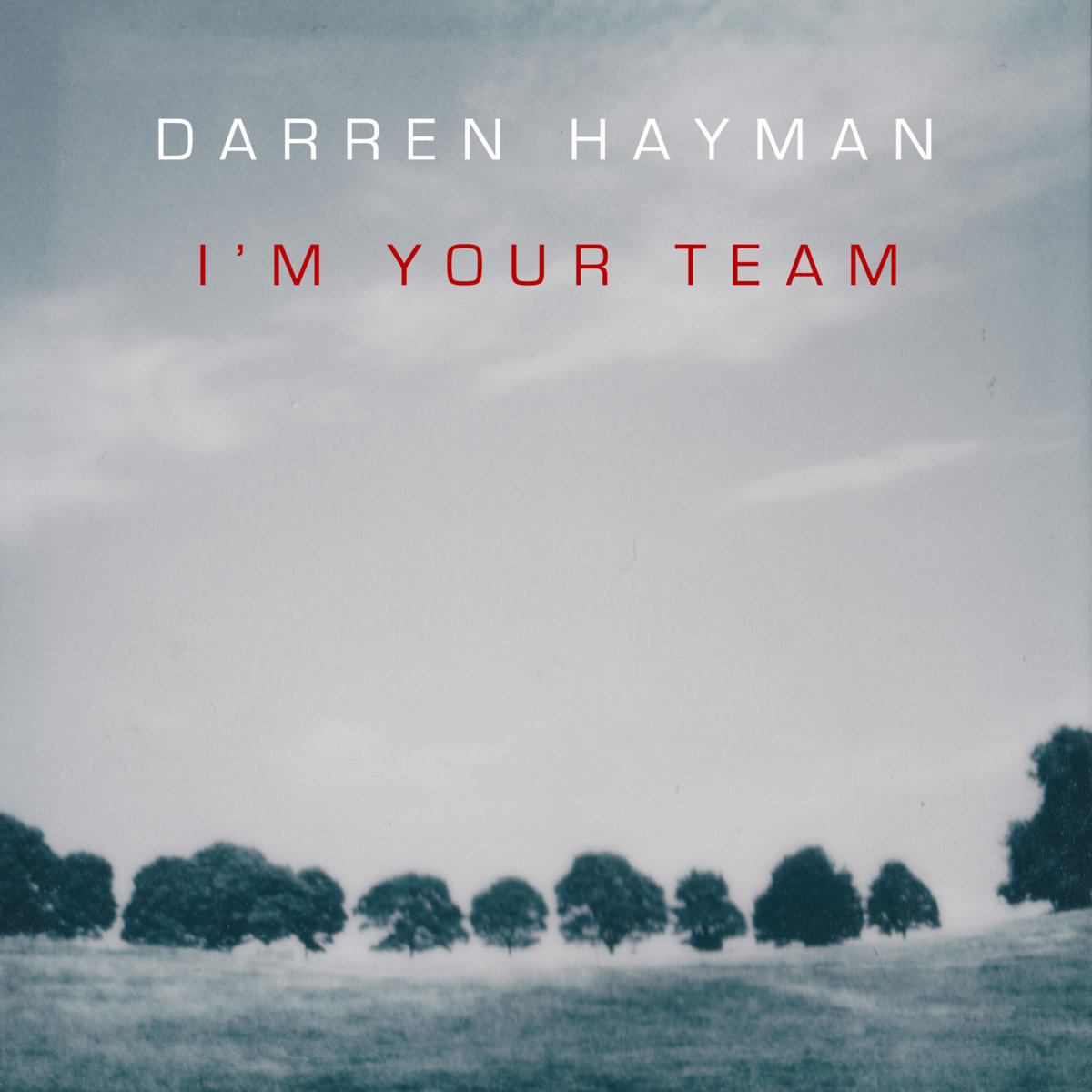
Arina Korenyu: You’ve had a rather unusual couple of months, with The French suddenly returning with TV Themes, and now your own album is coming a month later. What’s going on? Why both of those now?
Darren Hayman: I make too much music, probably. I always have; I do it compulsively. As we become more aware of neurodivergence, I’ve started to wonder whether I might have ADHD. I write and record songs constantly, almost like a habit—the way other people might do crossword puzzles. Over time, it’s become quite a mess.
I’m not very organized. I have loads of hard drives, and everything is chaotic. Jamie Halliday, who runs Audio Antihero from New York, got in touch and asked, “Do you realize what a mess your back catalog is?” I said, “Yes, I do. Can you fix it for me?” So he’s slowly working through it all and making things easier for people to find.
In the process, he started asking me for artwork and other bits and pieces, which led to conversations like this: “Oh, by the way, there’s this album.” He’d ask, “What’s that?” and I’d say, “I don’t know. I recorded it two years ago and never really released it.” Then there’d be something else: “There’s this French collection of TV themes we made twenty years ago.” “Haven’t you released that?” “I don’t know.”
There genuinely is too much music. It’s almost overwhelming to know what to do with it all. Even if you think releasing two albums a year is reasonable for an artist—and I’m not sure it is—I still have more than enough material.
I’ve noticed that some bigger artists occasionally release an album without any press or announcement. They just put it online. There are plenty of things I dislike about streaming, Spotify, and the way music works now. I love records, especially having a big physical record in my hands. But one advantage of the digital world is that you can simply put music out there. I could release a record tomorrow, or next week. So Jamie and I started thinking: why not? Why not just put the music out there?
Arina: You’ve spoken about coming to understand your possible neurodivergence in recent years. Has that changed how you understand your older work—or how you approach making music now?
Darren: Yeah, it has. It’s a complicated question, isn’t it, whether diagnosis, or simply recognizing things in ourselves, helps us become better. I think it has positive and negative aspects. One way I used to think about myself was, “I’m so creative. I’m so obsessive. I’m full of ideas.” I’m not saying that’s necessarily how it was, but that was perhaps how I saw it. What I didn’t always recognize was how unhappy it could make me, or how frustrated I’d become. It could also make me unfair to other people and their time. I’d get frustrated with other musicians, including people in my bands, because I felt they weren’t doing enough. I’d think, “Why can’t you do this for the next three days? Why aren’t you available to me?” I’d become frustrated with myself, too, and end up confused and disorganized, losing things and losing track of where I was.
So there are positives and negatives. Ten years ago, I didn’t really know what ADHD or neurodivergence meant. I think I’m kinder to myself now. I also have friends who’ve been formally diagnosed, some of whom take medication, and talking to them about their experiences has been a real help.
My short answer is that I don’t know. I’m not sure whether it’s necessarily better to know these things about yourself, but I think it does make me more aware. In the past, I wasn’t very good at recognizing when an activity was good or bad for me. I’d think that spending six hours painting or making music without stopping to eat was a good thing—that it was part of being creative. I think I’m better now at recognizing that it isn’t necessarily healthy, and that something which feels creatively positive can also affect you in negative ways.

Arina: You have a long history of conceptual, thematic projects. Has there ever been a point where the concept became a burden rather than a useful constraint?
Darren: Yes, is the simple answer, and it relates to what we’ve been talking about. I have a lot of unfinished records. I made an album called Lido about open-air swimming pools, then started a sequel about British Victorian piers stretching out to sea. I probably spent six or seven months on it, visiting piers all over the country, but never finished the record. It’s sitting on a hard drive somewhere. My attention moved on, and perhaps the concept had become too big. I’m not sure, but it’s a really good question.
A couple of years ago, I started making records with much lighter concepts. If I were to criticize myself as a music critic, I might say that I’m sometimes a little too pleased with my ideas, and too much of a slave to them. From the outside, the concept might seem to overwhelm the music itself.
Ultimately, all I want from any of these projects is good tunes. I want to write a good song, then a better one than I wrote yesterday. I want to write the best song I’ve ever written—one that breaks your heart and makes you cry. That’s really all I’m trying to do. The concepts are just different ways of getting there.
Recently, I’ve become more aware that you don’t necessarily need rules or a concept to write that kind of song. It might come simply from how I feel one morning. So I’ve made some less conceptual records, too.
Arina: The restrictions on your new album, I’m Your Team, are unusually severe. You have only three instruments. What happens creatively when you remove almost all of the choices available to you?
Darren: You go into the room and know exactly where to start. In this case, one of the three instruments was a DX7 synthesizer. Without getting too technical, the DX7 was a revolutionary keyboard that changed music. It has sounds that everyone recognizes: that very American soul-piano sound you hear on R&B and pop records, the slightly cheesy electric piano you might associate with Whitney Houston. It was notoriously expensive, although you can now pick one up for around £300. It was also incredibly difficult to program, using a new system with a little data window that made editing and manipulating sounds quite complicated. In a way, that difficulty makes things easier, because it removes a whole range of stylistic and aesthetic choices. You’re left thinking, “How do I make this sound good?”
After a while, your ears also become immune to the instrument itself, which I find interesting. We all develop prejudices about sounds through years of listening to music. Because of my age, I almost have an allergic reaction to the chorus effect on guitars. It’s so associated with a particular era that I find it difficult to use, and the DX7 falls into a similar category.
So it was interesting to use it every day while making this record. After a few weeks, I reached a point where I couldn’t hear it objectively anymore. Was it still cheesy, or was it good? Was it good because I was knowingly quoting a supposedly bad sound, or did I genuinely like it? Was I enjoying it ironically, or had I come to like it in its own right? And was that simply because I’d heard it so much? Those questions became part of the process.
I also hope the constraints make me think a little harder. It relates to your question about a concept overwhelming the music, because perhaps that happened here. If you hate the sound of a DX7, you’ll probably hate this record. But when certain things are non-negotiable—when you know those sounds have to stay—you’re forced to ask yourself what’s left. And you’d better write a really good song.
Arina: Did restricting yourself to these three instruments change the way you approached songwriting and chord progressions?
Darren: Yeah. Another instrument was a TR-707 drum machine, which hasn’t become as hip as the 606 and 808, which have each had their moments. Writing to a rhythm is interesting because it’s not something I always do. Usually, you start a song with a piano or guitar, so beginning with a rhythm means starting with something you’d normally add at the end. It makes you think differently about songwriting, particularly the phonetics and rhythms of words. Sometimes the sounds of the drums themselves suggest a melody.
I imagine the sounds and associations of the instruments are also working on a subconscious level. A particular piano sound on the DX7 reminds me of Whitney Houston. Normally, I wouldn’t write a song thinking, “I’m going to pitch this to Whitney Houston.” There are several reasons why I wouldn’t do that, one being that she’s dead. But the sound might still be making subconscious connections between that kind of music and my own songwriting. It might make me wonder whether a particular chord inversion evokes something from that world. There are all sorts of layers to the reasons I might choose to do something or avoid it. I’m trying to disrupt those instincts and see what happens when I step outside them.
Arina: Television themes are often incredibly economical: they have to establish a mood and identity in a very short space of time. What appealed to you about that approach?
Darren: I think you’d be hard-pressed to find a songwriter or pop musician who hasn’t thought about working in film or television music at some point. It’s almost a cliché: “What would you like to do?” “I’d like to get into film music.” I’d love to, too, but I’ve never pursued it as seriously as some people have.
I’m interested in the different functions music can serve, particularly when it takes a secondary role: setting a mood or supporting the images on screen. In a film, you have dialogue and action, and then music comes in as a third element, shaping how we experience both. I’m not sure music can ever be quite as important as those other elements, although perhaps it can.
I became interested in something similar when I was exploring folk music for an album a long time ago. I was looking at seventeenth-century folk music, when songs could serve almost as news reporting. I was interested in the idea of a song communicating something literally—not just expressing something, as my songs do, but actually telling people what was happening. I’m also fascinated by music we have no choice but to hear, such as the music played in lifts or supermarkets, which serves an entirely different purpose.
On this EP, one piece is actually incidental music, while the other three are theme tunes. A theme tune introduces you to a television program and often becomes its cultural calling card, its identity. Think of Friends: you probably hear the theme tune in your head immediately. I’d love to write something like that for a program, to be commissioned to do it and asked, “Does this suit what we’re trying to make?”

Arina: Many of these themes were basically your childhood memories. Was it hard to deconstruct those?
Darren: It’s a long time ago, but sometimes it’s more interesting to talk about something you forgot about than a record you released last week. The project was by The French, a band I had with my friend John. In our previous band, we’d done several sessions for the British DJ John Peel, where you recorded four songs. Sometimes, rather than playing tracks from our latest album, we’d ask to do something thematically linked. We once recorded four gospel songs, and John Peel loved the idea. So we decided to do TV themes.
The programs were already at the edge of our memories, and I love that feeling of trying to grasp something you can barely remember. I love Boards of Canada for a similar reason: their records evoke something you might almost have experienced, a sort of hazy, half-remembered world.
Working out the themes to Hill Street Blues and “Crockett’s Theme” from Miami Vice was particularly educational. I could hum both melodies, but I hadn’t realized how complex the underlying chords were. They used modal harmonies, major sevenths, and progressions that didn’t simply repeat. John took one away to work out, and when we got back together a few days later, we were both thinking, “Fucking hell, this is really difficult.” Coming from an indie and punk background, it was a reminder of what accomplished composers could do.
We had to be surprisingly forensic in reproducing those two pieces. It’s a bit like learning a Beatles or McCartney song: with some music, you can change things and still have the same song, but with something like “Yesterday,” every detail matters. These themes were similar, so we tried to copy them very precisely. As an electronic band, we had more freedom in the sounds we used, and that was where we could bring something of ourselves to the arrangements. But ultimately, the process was a lesson in slavish imitation.
There’s a Japanese philosophy of creativity, I think, that involves copying other people for years before attempting to create something of your own. The idea is that you first learn the techniques and mechanics through imitation, and only then begin to develop your own approach. I’ve only heard about it recently, but it’s an interesting idea.
Arina: Do you remember John Peel’s reaction when he heard it?
Darren: Not specifically for this one, but I remember John Peel being really excited when we did the Hefner gospel session. I was listening to the radio when he said, “This is exactly what I want bands to do. Why don’t bands do it?”
We did loads of Peel Sessions, and I’m very proud of that. Oddly, though, when I met him, I sometimes wondered whether he actually liked my band. Perhaps that was just my own imposter syndrome. He played us on the radio plenty, so I’m sure he did, but I always felt he was drawn as much to our spirit as to our sound—that attitude of “Why not? Let’s give it a go.” I imagine he liked the TV themes for that reason, too.
It was the last Peel Session I ever recorded. John died not long afterward. Of course, I’m sad that he died, but I like the fact that our final session was something silly and spontaneous. That feels quite fitting.
Arina: And when you returned to this material now, did it make you miss The French?
Darren: Yeah, it does make me miss The French. It was a really interesting experience, working so closely with one person. We released one album and two EPs, but recorded at least another two albums’ worth of material, which might still come out.
I don’t often listen back to my own music, but I’ve been revisiting The French for a series of commentaries on my Patreon. The records are much stranger than I remembered. I thought we’d made something more like synth-pop—Kraftwerk, the Human League, or Erasure, all bands I love. But listening again, it sounds much more odd, broken, and wrong. I think that might be down to John’s influence; he was into more experimental electronic music, like Autechre and Aphex Twin. It might also be because we didn’t really know what we were doing. That’s another advantage of imposing rules or working with unfamiliar instruments: not knowing how to use them properly can push you towards making something entirely new.
Arina: Do you ever wonder what the band would have become if you hadn’t parted ways?
Darren: Oh, a little bit. John and I haven’t spoken for ages, although he came to stay with me a couple of years ago and we wrote a song called “Snow.” We also started making some music together again, wondering whether we might do another French record. We never consciously stopped, but that’s often how creativity works: you don’t decide to stop, you just drift away from something and suddenly realize you never finished it. There are still six or seven song ideas on a computer in the other room that I haven’t listened to in a couple of years.
There’s no personal or creative reason why we couldn’t do it again. Interestingly, though, I feel differently about reforming Hefner. Because there are four of us and it was more of a traditional band, getting back together feels a bit like a betrayal. It seems slightly naff—just another band reforming, and who really cares? With The French, perhaps because it was a duo and we rarely played live, I’m much less opposed to making another record. I wouldn’t rule it out, whereas I wouldn’t want to reform Hefner.
Arina: Is there anything else that used to be very important to you but that you wouldn’t have any desire to return to now?
Darren: Most things, really. I think that’s what you’re supposed to do as an artist, isn’t it? You’re supposed to look ahead and say, “That’s over. That’s done.” And I think that’s one of the sad things about being an artist: you never really get to enjoy or appreciate what you make, because you can’t live with it in the same way the audience does. And yet all you’re trying to do is make something you would like because you don’t know how else to judge it. But I’m doomed to failure, in a way, because by the time I’ve finished it, I know it inside out. So you push it away, release it, and then try again.
I don’t really have a desire to revisit most of the projects or bands I’ve been involved in. I don’t want to reform Hefner. Emma Kupa and I sometimes talk about making another record, but I think I’m less keen on the idea than she is. I feel we’ve done it, and we’ve remained friends. That’s the thing: if you can be in a band with someone, make a few records, and come out of it still friends, you probably shouldn’t do it again. It’s such an achievement to come through a creative relationship and remain friends. I think I’m still friends with most of the people I’ve played in bands with—no, actually, I think I’m friends with everyone. I hope they’d say the same.
Check out more like this:
 Bill Kopp

 Arina Korenyu



Comments