


Now Playing on The Tonearm
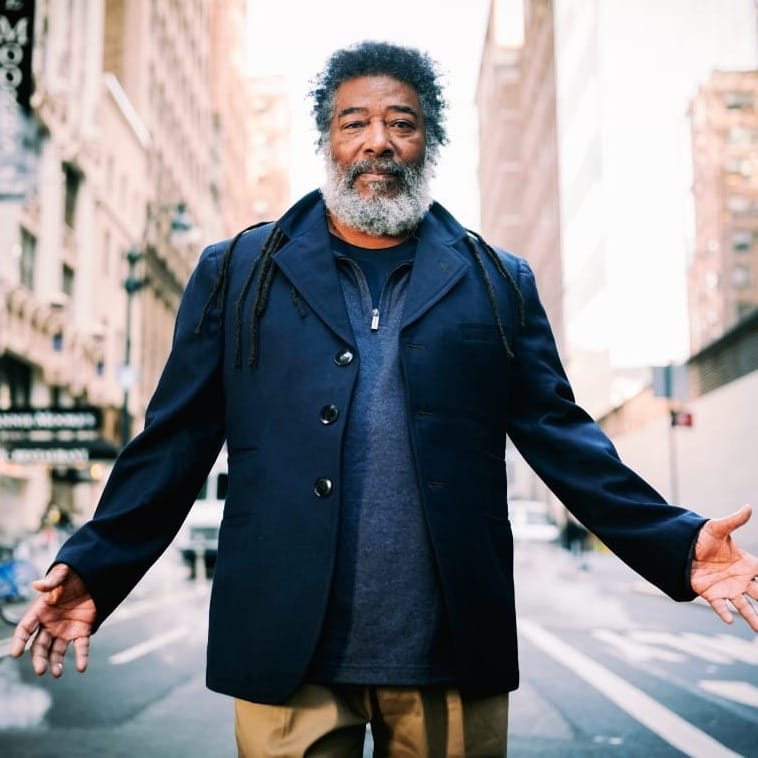
Wadada Leo Smith’s Long Study of Light
From Einstein’s particles to Teo Macero’s overdubs, the trumpeter traces the ideas behind ‘Constellations and Hemispheres’ and six decades of Ankhrasmation scores. Interview by Lawrence Peryer.
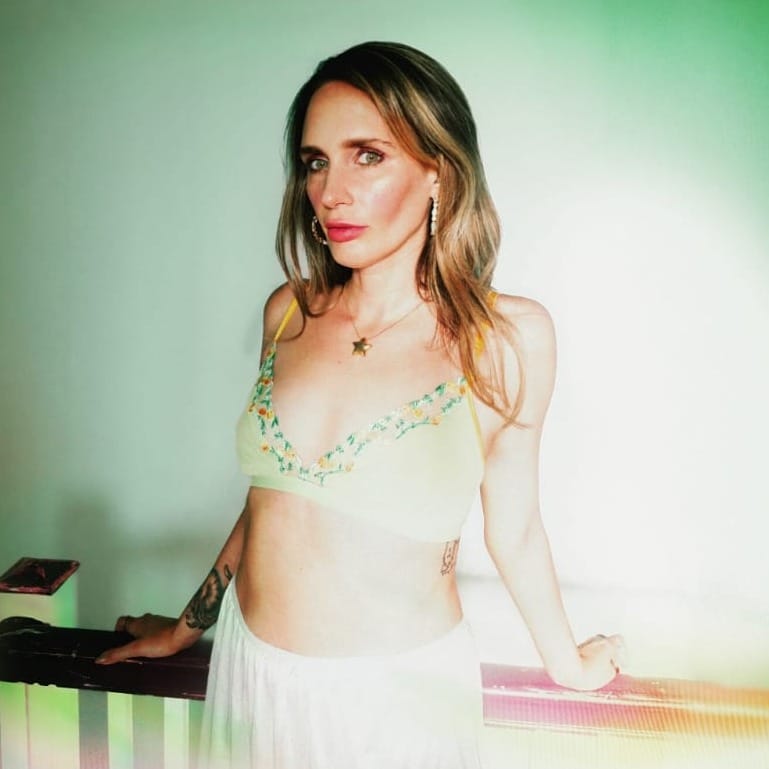
Sad13 in Sixty Seconds or So
On ‘1331,’ Sadie Dupuis wrote, performed, and mixed her own theme songs, and she would like the record to show she is not an easy hang. Interview by Meredith Hobbs Coons.

Pat Blashill’s Texas Punk, Weird by Design
The Austin-born photographer shot the Big Boys, the Dicks, and the Butthole Surfers from the middle of the crowd, and in ‘Someday All the Adults Will Die! The Birth of Texas Punk,’ he lets the scene tell its story in its own Texan voices. Interview by Andrew Hamlin.
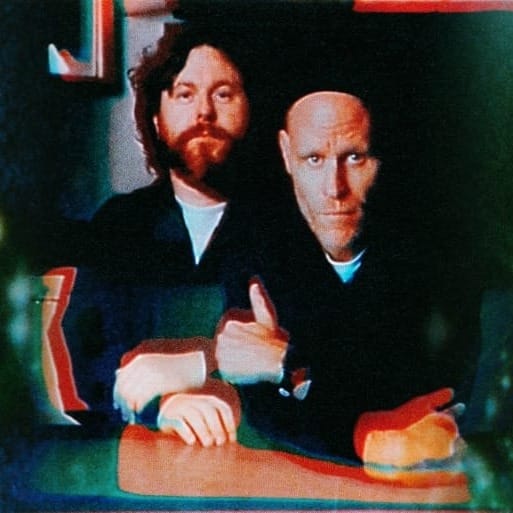
From the Club to Kankyo Ongaku — Francis Harris and Gareth Quinn Redmond
Harris and Quinn Redmond talk through the making of ‘Eyes Bright and Low,’ Rachael Lavelle’s vocals, the Japanese idea of ma, and Harris’s case for melancholy as a tool of liberation. Interview by Carl Dexter.
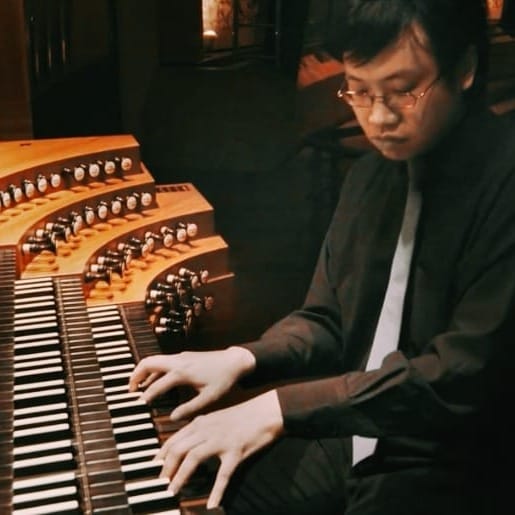
Andrew Minear and Phoon Yu Listen Past the Sanctuary Walls
A choir director who once went to raves and an organist who grew up on Game Boy soundtracks bring the whole of their listening to Sunday services. Interview by Steven Garnett.
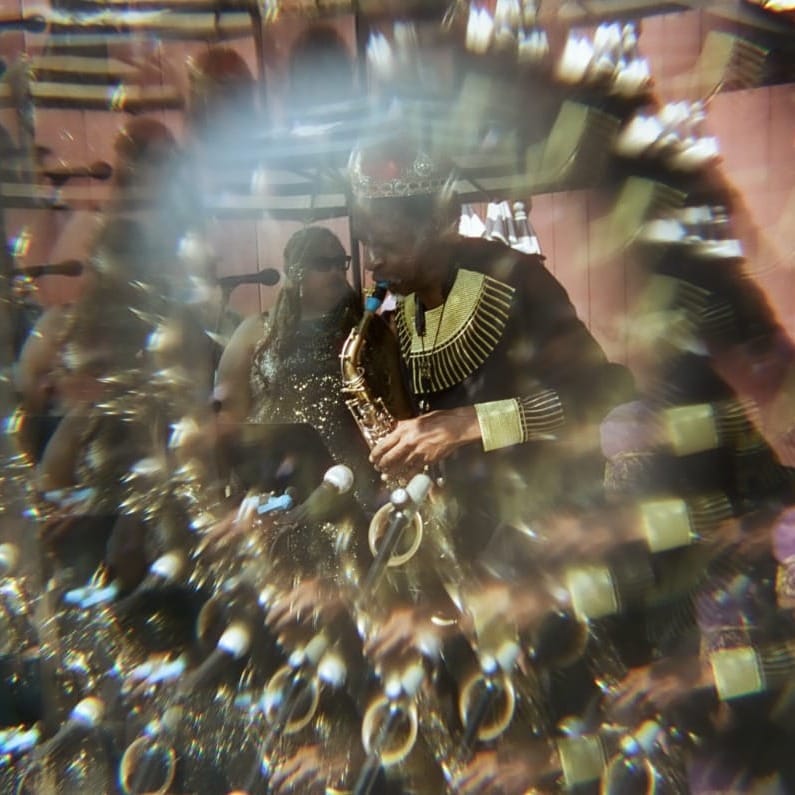
This Week’s Episode of The Tonearm Podcast

Koen Holtkamp: Modular Plucks, Drums, and Horns After Dark
Koen Holtkamp set aside the loops of his work with Mountains, spent a year and a half coaxing plucked strings from his modular synth, and gave every player on ‘Nightlife’ a space of their own.
The Hit Parade
“Next to Diana Ross and the Supremes, Martha and the Vandellas were Motown’s premier female act during the 1960s. The Supremes were silky smooth, but Martha and the Vandellas had a grittier, more soulful sound, drawing on the counterpoint between Ms. Reeves’s powerhouse alto and Ms. Ashford’s soprano.” ❋ “Those sonic signatures can be traced back beyond the musicians themselves to a man in his New Jersey workshop: Mike Beigel, an M.I.T.-trained engineer who developed a groundbreaking effects pedal, the Mu-Tron III.” ❋ “Lunny was born in Tullamore, County Offaly, and was a multi-instrumentalist but was best known for his mastery of the bouzouki. He was a talented melody writer and considered central to the revival of traditional music as he produced 17 albums under his record label Mulligan Records.” ❋ “When I used to listen to punk music in early high school, it was primarily because of the energy and feeling it gave me. I didn’t understand why these bands were all talking about the government or class struggle or this DIY mentality. Now it’s like, how can you not have these things influencing or being part of your music?” ❋ “There’s a scene in ‘The Jean Genie’ where the band are trading solos and David goes offstage and into the shadows, grabs a beer and lights up a cigarette, just smiling and dancing and there’s no lights on him. David is as engaged and entertained as anyone in the audience.” ❋ “One thing a lot of people don’t realize is that I also never write music from my horn; I write all of my music from the piano. . . . I feel like I can operate in a deficit on the piano compared to the saxophone. That helps me get to a true sense of melodic simplicity because it forces me to rely on my musicality to lead the way.” ❋ “The backing band [for ‘Monster Mash’], dubbed The Crypt-Kicker Five, included Leon Russell on piano and Mel Taylor, drummer for The Ventures. . . . Then there were the sound effects. For the coffin opening, Paxton pulled a nail out of a piece of wood. For the bubbling cauldron, he and Capizzi blew straws into glasses of water.” ❋ “[Jimmy Heath] stood there in rapt attention, stroking his goatee with an impish grin as he checked out the band just a few feet in front of him. And then he said to no one in particular and yet everyone within earshot, his voice dripping in sarcasm: ‘Huh! Interesting! Jazz that doesn’t swing!!’” ❋ “At that time, I was into a lot of esoteric philosophical stuff, and [David Sylvian] was very hungry to learn about that. I gave him a list of obscure books, which he sent his girlfriend out to buy from Atlantis Bookshop in Museum Street. I also introduced him to the music of Jon Hassell and they ended up working together.” ❋ “. . . what I saw behind the main Bodhisattva statue, was one of these ’90s or ’80s-era phone-answering devices, the kind that had the tape loop that would record messages, and the tape loop would be the pre-played message, before another cassette would click on and record the message. They had repurposed this device for chanting.” ❋ “Rock In Opposition (RIO) was a loose federation of political, prog-leaning bands and post-punk collectives that formed during punk’s initial flowering. These bands shared a commitment to radical, communal lifestyles and art-making along with an omnivorous appetite for adapting a wide range of musical approaches in their work.” ❋ “In the wake of the fire, I set to writing in an attempt to correct the prevailing mainstream media narrative and to memorialize my dead friends, all of whom were musicians, DJs, photographers, artists, and organizers. I produced a volume of work about the fire itself—but in many senses, everything I’ve written in the past decade is about Ghost Ship to a greater or lesser degree.” ❋ “Lemos, Antropoceno’s Lua Viana, and a few others like Gloios’ Rafael Xavier and Fossilization’s Thiago Vakka belong to a loose cluster of Brazilian heavy music artists whose projects have gone international through niche communities on Bandcamp and RateYourMusic.” ❋ “This summer, music streaming company Deezer reported that for the first time ever, AI-generated songs constituted more than 50% of its daily uploads in the month of June. But the songs accounted for less than 3% of total streams on the platform, and a majority of those streams were driven by bots rather than human listeners.” ❋ For more curated music links, be sure to follow The Tonearm’s feeds on Bluesky and Mastodon.
New Music Recommendations: Alan Good Parker - VESPER (RIYL: improvised iPad granular synthesis with Nate Smith drumming over it in one take) ❋ Andy Stott - Late Loop (RIYL: slowed, screwed “knackered house” stripped to a delay unit and two dreampop singers) ❋ Anna Webber - it’s easier to imagine the end of the world . . . (RIYL: avant-garde jazz for nonet, from Henry Threadgill and Tim Berne to Ligeti) ❋ Chrome Chasm - Interpreter (RIYL: acid folk, spiritual jazz, and radical ambient filtered through Texas psychedelia) ❋ Cicada Woods - Seasons (RIYL: a tango-fusion string quartet playing Piazzolla’s Estaciones Porteñas) ❋ CoH - Iron (RIYL: heavy metal reduced to its mid-frequency grain, in the Coil and Eskaton lineage) ❋ Eric Angelo Bessel - Illusion of an Inland Ocean (RIYL: slow Mellotron-and-guitar ambient and hauntological electronics) ❋ Ex:Re - Save As (RIYL: Elena Tonra’s psychedelic indie folk, for fans of PJ Harvey and Aldous Harding) ❋ Felipe Tovar-Henao - Fully Automated Luxury Music (RIYL: rule-generated algorithmic composition from acoustic samples, in the shadow of David Cope) ❋ Floex & Jan Šikl - Directors (RIYL: neoclassical chamber music with electronics, from Steve Reich to Floating Points) ❋ India Gailey & Leah Plave - The Way Appears (RIYL: new Canadian commissions for cello duo, including one of Cris Derksen’s final pieces) ❋ Isik Kural - Motorcycles and Cherry Wind (RIYL: whispered chamber folk with woodwinds, strings, and field recordings) ❋ Jason Robinson’s Janus Orchestra - Blue Salience: For Yusef Lateef (RIYL: large-ensemble creative jazz in the lineage of Lateef and Ellington) ❋ Jeremiah Chiu - Edge Conditions (RIYL: densely layered modular electronics, from YMO spinoffs to Boards of Canada) ❋ Jukka Rintamäki & The Lost Companions - Captain of the Birds (RIYL: modern classical chamber music recorded live in a room, with light electronics) ❋ Kali Malone - Burning Song (RIYL: drone for the Bach Organ at Leipzig’s Thomaskirche, with Lucy Railton and Stephen O’Malley) ❋ Lowly - Softy (RIYL: dreampop and art pop with airy nineties-style vocals) ❋ Marc Ribot Quartet - Hurry Red Telephone (RIYL: “free-jazz-punk” guitar quartet with James Brandon Lewis on tenor) ❋ Matthew Aucoin - Music for New Bodies (RIYL: a vocal symphony from Jorie Graham’s poems, Mahler for our time) ❋ Skinshape - Chapman’s Pool (RIYL: psych soul with Mellotron and 1960s film-score touches) ❋ THAO - Show Me (RIYL: indie folk-pop with a funk undertow, for fans of Neko Case and Tune-Yards) ❋ Yr Knives - Begin Yr Singing (RIYL: twin-guitar jazz-rock from Sonny Sharrock to Crazy Horse and Television)
The Deepest Cut
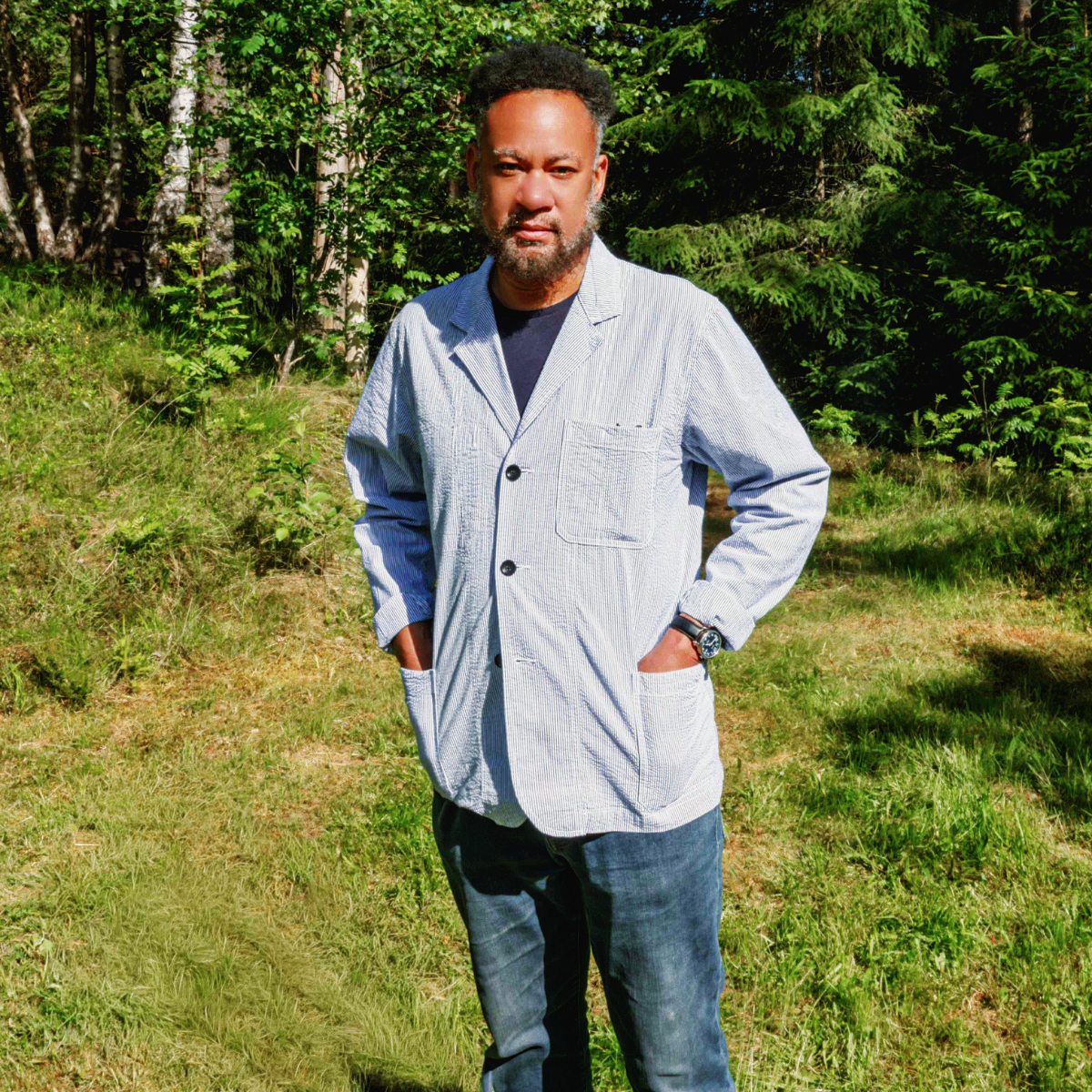
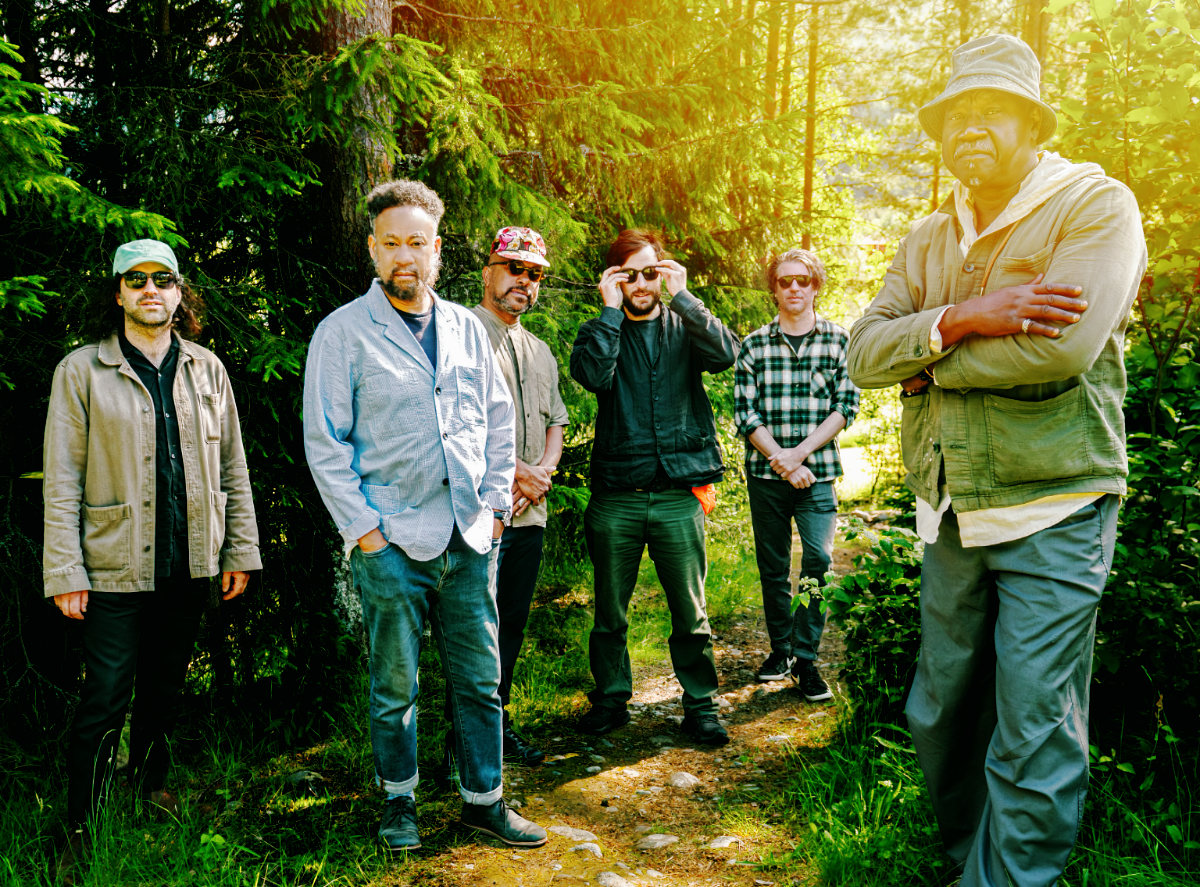
Sing the Color Blue, the second album from Mike Reed’s Separatist Party, reunites the Chicago drummer with Rob Frye, Cooper Crain, and Dan Quinlivan (together, the trio Bitchin Bajas), poet and vocalist Marvin Tate, and cornetist Ben LaMar Gay. Its eleven fiery tracks set Tate’s poems and Chicago street scenes over Frye’s flute and tenor saxophone, the Bajas’ synthesizers and guitar, Gay’s cornet, and Reed’s drums and organ, along with an arrangement of a Conlon Nancarrow player-piano study and a cover of Tristan Honsinger’s “Restless in Pieces.”
This record has been long in the making. Tracking began at Chicago’s Constellation in January 2022, most of the work happened at Electrical Audio between November 2023 and April 2024, and some of Tate’s vocals date back even further. The title came together just as piecemeal. A friend had teased Reed about his nearly all-blue wardrobe, and then he heard the phrase “dance the color blue” in a documentary. Reed changed one verb, giving this equally vibrant and color-rich album its name.
I was intrigued by the stretched-out process behind Sing the Color Blue, particularly how Reed incorporates Tate’s words when they precede the sessions, and then cuts them apart to suit the music. I also thought opening the record with a song called “Closing” was curious, as well as the band’s choice to tackle a Nancarrow study originally written for player piano. I reached out with my questions, and when I asked for something Reed loves, he answered like a man filling out a dating profile.
What may not have been covered about this record is that a lot of constraints drove the process. The timing of getting everyone in the same room was difficult, and I had to find ways to creatively piece together an album. One thing that carried over from the first record was that no one could bring an instrument they couldn’t carry on a plane or a train. Bajas usually tour with a lot of gear, and I swore that if this project ever played shows, we were not going to be in a van full of equipment. So the challenge was to make something that sounds big and has real ambition, but to get there by being inventive in the studio, in a way we could reproduce live without much production or backline.
Some of Marvin’s parts were constructed, and some weren’t. That’s the nature of being creative. I had to work with what I had. What I had was years of material. Starting in 2017, I’d put Marvin in the vocal booth by himself for 40 minutes to an hour and let him go: old poems, songs sung a cappella, stories, tangents, what happened to him that week. It gave me something like a catalog of Marvin. On this record, when a new take didn’t have the right meaning or inflection, I’d go back to the catalog and see what fit. Our default was to have him re-sing the whole part so it sounded like it was meant that way, but sometimes the older recording was just better.
“Closing” wasn’t planned at all. It’s an excerpt from a longer improvisation. Marvin had something new, and I improvised a drum background under it. It wasn’t until a year later that I realized I could make a piece out of it. I cut it down, added layered stereo-panned drums, and brought in a horn improvisation from a completely different recording session to build the groundwork of what became “Closing.” The panning idea came from New Orleans during Mardi Gras, under the Claiborne Avenue overpass in Tremé, where the concrete throws the sound of the marching bands back and forth across the street.
It wasn’t meant to be the opening of the record. We didn’t have an opening for the record. The title has no symbolism; the working title was “Playground.” There isn’t any social or political agenda here, either. These are just scenes from what happens in Chicago. Everybody is fucked up and just dealing with a regular day.
The Nancarrow piece wasn’t a band of humans playing against Nancarrow. None of us were in the same room at the same time for this track. I reduced the piece to a version of what would become the underlying bass part, and Dan Quinlivan processed that through Ableton. The cornet solo was constructed from the cutting room floor of other tracks that had nothing to do with this one. I overdubbed vibraphone played with bows and an oscillating metal tool, and then we put it in reverse.
Nothing on the track was meant to be replicated live. So, in an ironic way, I was doing what Nancarrow was striving for, just with a different technological system. That being said, we do try to play it live, and to replicate something that can’t be replicated.
As far as the record goes, Honsinger and Nancarrow have nothing to do with each other. I was friends with Tristan, and I liked his piece. He was a contemporary of Cecil Taylor, Derek Bailey, Misha Mengelberg, and Anthony Braxton, and he was quite a surrealist. He didn’t just push boundaries; he fully demolished them, for the sake of demolishing something. When I played the piece with Tristan, he called it “Pieces.” We tried to do a little justice to it.
If anything ties the album together, it’s that everything means nothing, or as much as you need it to mean. As Marvin says on “Tea Leaves Part 2,” “Life is what you can get away with” . . . or something like that.
Reed told me about the things he loves:
Hmmmm. Well, the best-sounding thing in the world is the person you’re in love with saying your name. I’d love to hear that again one day. But in the meantime, things I love are long walks on the beach, Mom’s chili, and someone who can make me laugh. Plus Maker’s Mark.
The Run-Out Groove
- The Tonearm is a reader-supported publication, free of advertising and paywalls. Our supporters help fund our writers and make the site possible. Please consider joining and helping us to continue our mission.
- Join the rapscallions of The Tonearm on our new Slack community.
- Sign up to receive our latest articles directly to your inbox in a snazzy, easy-to-read email version. Just go to your account, manage your email preferences, and flick the lever to receive The Total Tonearm.
- The easiest and best way you can help us? Please share this newsletter and our stories with your friends.
Thank you for reading! We’ll see you again next week. 🚀


Comments