


Before I ever heard her music, I encountered Sadie Dupuis in print—first featured in Mirror Sound by Spencer Tweedy and Lawrence Azerrad (there, photographed by Daniel Topete); next interviewed by Larry Crane in Tape Op; then interviewing Sarah Tudzin, Suzy Shinn, and Tegan & Sara for Tape Op; always lending her expertise to conversations about recording and production with her own colorful flair, depth of knowledge, and dynamic wit. I’d later learn more about her discipline-spanning creative practice—from poetry to art to music—and the organizations dear to her, including We Are Moving the Needle and United Musicians & Allied Workers. I also got to know her music with her band Speedy Ortiz, as well as her more personal project Sad13, and read and admire her most recent book of poetry, Cry Perfume.
We had this conversation shortly after the release of the Sad13 album 1331, which adopted a theme-music/jingle construct for each song, keeping them all hovering around 60 seconds in length. It reminds me of an exercise I have always meant to try (but have shied away from) that entails fully producing a minute-long musical composition in an hour. Upon listening to Dupuis’s album, however, it becomes clear that this is more than a simple sonic experiment for her: she’s a genuine fan of the short form. Be it a theme for a podcast or a slogan set to melody to uplift pressing political causes, Dupuis can get it done. In fact, we caught up just as she returned from a last-minute performance in Boston at a rally for Ed Markey’s reelection, hosted by Bernie Sanders.
The transcript has been edited for length, flow, and clarity.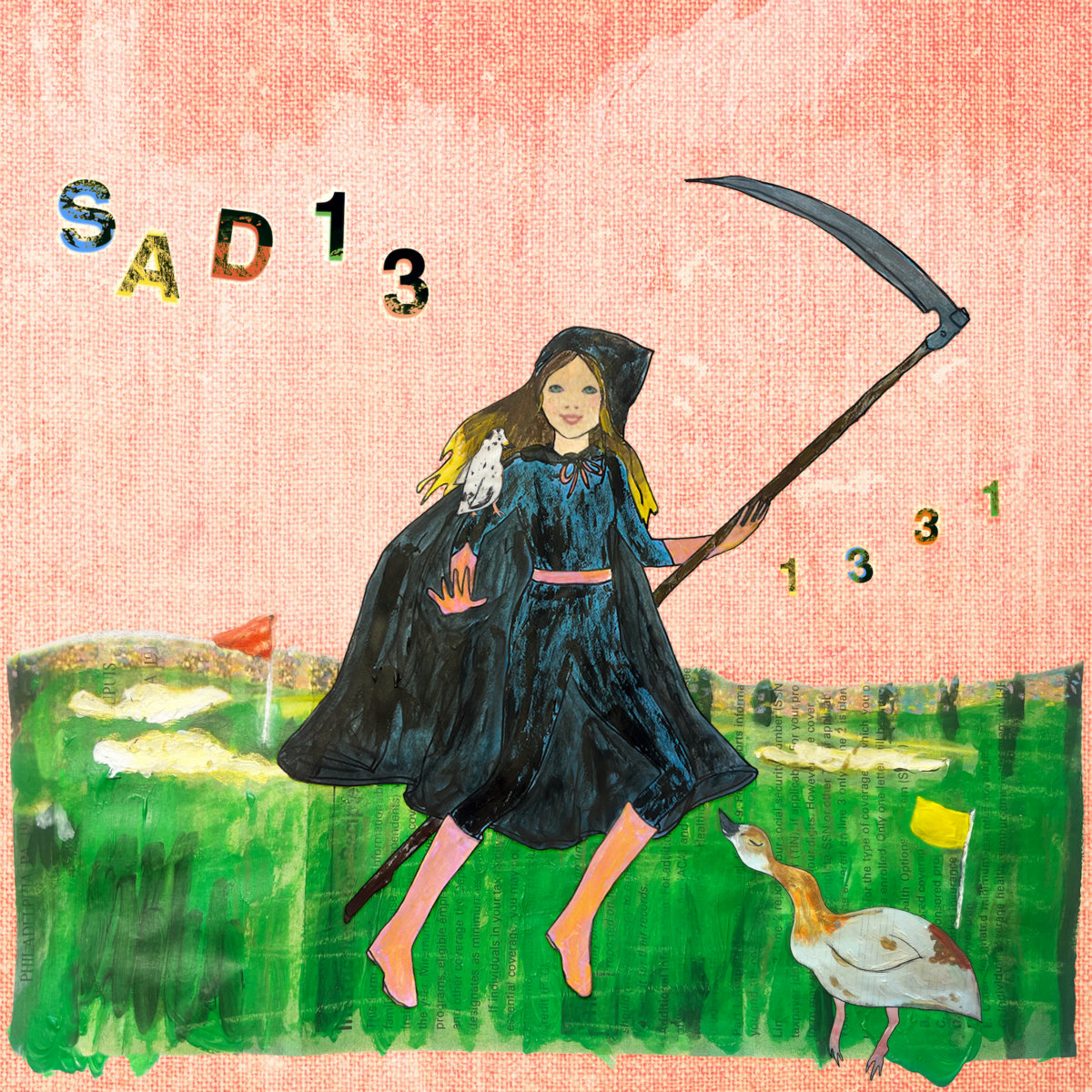
Meredith Hobbs Coons: It’s interesting to talk about Sad13 playing that Ed Markey/Bernie Sanders rally in the context of your album 1331, which is made up of jingles, since jingles can have a political connotation.
Sadie Dupuis: It’s not untrue of Speedy Ortiz songs—and we did do a Bernie rally; I mentioned to him that we played the Helen Gym mayoral rally, and he was very nice about that. Some of my songs come out of attending protests, and hearing drums beat a protest chant. I even wrote one specifically about that mayoral rally, my last time playing for Bernie. It is fun to do things that are slightly more political, because people are there to hear speeches. They want to hear the quotes that speak to the values that are shared among the people in the room, and sometimes, at a gig, it feels a little corny to say things like, “This song is about these specific youth activists for trans rights, etc.” or, “This song is about these student organizers.” But at a rally, they want to hear the song explanations as much as they want to hear the songs—if not more. So it is kind of fun to get to bust out these songs in that context and get to give the explanation that’s about as long as the song in terms of how that relates to the socialist or progressive candidates that are up for support.
Meredith: Continuing on the jingles and themes note, what are some of your favorites, and what do you think makes them so appealing?
Sadie: I’m not a big theme-song skipper, so I’ll sit through ones I don’t like. I’ve covered a few that I like a lot. I love teen shows, especially if there’s a mystery component. Veronica Mars is one of my all-time favorite TV shows, and it was kind of my entry into getting into TV as an adult. I barely watched it as a teenager, but when Netflix started streaming TV shows, I got really into Veronica Mars at, like, 23 or so, and I’ve lost thousands of hours of my life to it since then. I’ve covered “We Used to Be Friends” by the Dandy Warhols, the show’s theme song. I’ve also covered the instrumental Gossip Girl theme song that features Kristen Bell’s voiceover. (Maybe Kristen Bell is the common denominator in my theme song-liking?) And I’ve covered “California,” the O.C. theme song by Phantom Planet. I always go for the shortened version. There’s always something intriguing about the edit for the 30- to 40-second slot, and it’s always fascinating to me when the music editor drops a beat or something, and suddenly there’s a measure of seven in this otherwise normal song.
Initially, I was trying very stringently to get each song within a 60-second parameter, but I gave up after a couple of songs, because it made me just ramp up the BPMs to fit the song into 60 seconds. (laughter) There was no reason to be so hard and fast about the rules. All of the songs could be recorded within 60 seconds, but I was definitely thinking about how, sometimes, there’s kind of a weird edit that I know is done for time, and how much that is appealing to me as its own form. The Yellowjackets theme song that Craig Wedren and Anna Waronker did is another one like that, where there’s a really weird beat, and I think it’s the result of the edit, but it became part of the song for them, and I like things like that. A dropped beat here and there is part of my writing and composing style anyway, but I did it even more on this record, in the spirit of fitting much longer ideas into this truncated form.
Meredith: An album is kind of long-form, if you think about it as the totality of an album, but then you have these shorter-form songs within that—and you write poetry as well. Can you speak to how you fit things into different time allotments in general?
Sadie: Yeah, I’m a big fan of projects having a container—not necessarily a thematic through line that has to apply to every single component of it, but an overarching sense of something that differentiates the project in your mind from your previous work. I don’t usually approach a record as just the next collection of songs. I might have written two or three or four without a total understanding of what I’m going for, but once I’ve done a few, I get a sense of what I’m interested in exploring this time around—this kind of song, or this length of songwriting, or even this musical genre.
1331 was inspired specifically by doing theme songs. Jamie Loftus is a long-term collaborator for me, and I have done a few different podcast theme songs for her—most recently, this show Sixteenth Minute (Of Fame), exploring internet “main characters” and how they spoke to the cultural moment they were part of. It’s a really good podcast with tremendous journalism and compassion for people who were pilloried on Twitter, but who have whole lives behind them. I had a lot of fun doing that theme song, and I’ve really enjoyed working for Jamie, where I have the context of maybe the entire season’s scripts and try to boil it all down to a 30- to 60-second song. I wanted to approach that without the constraint of it being for a show.
I do tend to really like knowing here’s the constraint this time around. Maybe there are some loose rules that I’ll use to get motivated or excited, but I don’t necessarily have to stick to them. They’re just there as a guiding or inciting force.
Meredith: I love a good constraint. I liked what you said, too, about summing up a whole podcast that runs for however many episodes with a theme, and being aware of how it fits into that context.
Sadie: That’s what has felt especially funny about promoting these songs. I think the shortest one is like 50 seconds, and the longest is like a minute-twenty. I had to write all this backstory stuff for the press campaign, sometimes four pages about a song that is 50 to 80 seconds long. And same deal with talking at a political rally. I’m like, “Here’s this whole backstory about the song and how this applies to this political moment, where you and I are aligned, and what we want for our neighbors and ourselves,” and then the song is like a third as long as the time I spent talking about it.
Meredith: It’s a lovely reminder to think about. Sure, it’s a 50- to 80-second piece of music, but all these micro-decisions went into the lyrics, every sound, every choice of instrument, and everything that informed the work. You lose that if you try to shortcut the process. It’s almost like, in having these shorter-form works, you’re highlighting how much time it can take even to make a short thing.
Sadie: And to be fair, I feel like I will always assume that an artist has a lot more going into the project in terms of their experience and thinking in their day-to-day lives than maybe they’re going to speak to onstage or in interviews. I can think of my partner sitting downstairs who, I know, does, thinks, and consumes all kinds of different things that go into his songwriting, and then does not want to talk about it whatsoever, once there’s a second person involved, whereas I am a little yappy, so I might just be more of an open book about that kind of stuff than other artists. I always want to assume the best of other people’s work and intentions, even if it’s not something I connect to.
Meredith: Not everybody knows how to explain their process. That’s its own unique skill, and you have taught, so you’ve had to build some kind of metacognition around that.
Sadie: Yeah, and coming from a poetry background is essentially coming from a fine arts background, where artists become very good at talking about the intention behind their work, even if their process and intention are more abstract. I definitely have that academic privilege in terms of being able to summarize.

Meredith: You mentioned the press cycle, and I enjoyed that you involved yourself in so many steps of it: the photos you took yourself, the blurbs on your Instagram, where you also showed your work, saying, “It took me two hours to write this post . . .”
Sadie: (laughter) It’s so embarrassing. This is the dark academia coming through. Doing anything simple and public-facing takes me so long that most of the time I just lose interest and don’t do it.
Meredith: I’ve noticed a lot of parallels between you and Fiona Apple. You’ve mentioned before that you’re a fan. She takes her own press photos—or has her best friend Zelda Hallman do it.
Sadie: Yeah, I love that.
Meredith: She does her own album art, like on the Idler Wheel. She writes theme music for TV shows. You both take creative control for so many different aspects of how you exist as artists.
Sadie: Well, you’re blowing my mind today, making my brain fog even worse, because I’m being complimented. I mean, she’s an all-time favorite and one of the artists I’ve returned to most, not only for her lyrics but also for her approach to production and, obviously, her performance on her instruments, including her voice. I also think of her as an incredibly singular writer and performer, and pretty uncopyable. It’s nice to have her as a guiding influence. I feel like it’s hard to like her music and then say, “I’m going to copy it,” because you kind of know you can’t. She’s carved, and continues to carve, such a specific voice for herself, and I do think a lot of that comes from, as you said, helming so many corners of the process herself, and also being unwilling to waste time with the elements of the process that are not appealing to her or healthy for her.
I’ve also appreciated, in recent years, her change of perspective on music licensing, which is something that is a big influence on my band saying no to things. Once in a while, I’m looking in my email for something unrelated . . . like I found an email once that was like, “This bubble gum company wants to give you guys a drastic amount of money to do some official collaboration with them and make some posts.” This was like 10 years ago. We were like, “We’re not going to do this thing with this bubble gum company. What would Fiona Apple do?” But in hindsight, Fiona Apple has really changed her tune. She’s now saying money can make a drastic difference in changing someone’s life. Why is my ego more important than repurposing that money somewhere where I can have control over it? So if the bubble gum companies come knocking again, I think I’ve maybe changed my tune somewhat on what to do with music licensing and sync based on watching Fiona Apple’s influence over the last decade.
Meredith: You can allocate a portion or the entirety of those profits to whatever cause you want.
Sadie: Certainly there are things that are tied to companies capital E evil enough that Fiona Apple, or anyone reasonable, wouldn’t drop a yes in the chat, but the bubble gum company? I don’t know. We were too cool for school, I guess.
Meredith: Well, I’m glad I got to introduce that comparison.
Sadie: I’ll take it. I was just joking the other day that Speedy wanted to sound like the intersection of Fiona Apple and Drive Like Jehu or something like that, but now I want to sound like Ariana Grande and Faith No More. Everybody’s growing up.
Meredith: Again, with the theme of authorship, this mixtape marks the first time in 15 years you’ve returned to elements of music-making you had outsourced to collaborators. What inspired that move?
Sadie: There are some little things here and there that I’ve done entirely solo, including that Jamie Loftus theme, which I had even quote unquote “mastered” with plugins myself. Having done it on a handful of other projects here and there, like remixes for others or one-off tracks for compilations, I’ve just gotten more comfortable with mixing. I don’t think I’m a top-tier mixer, but in terms of translating what I’m working on, it felt easier, and I had enough technical knowledge by then not to feel the need to outsource it. And to be fair, Emily [Lazar] at the Lodge picked up a lot of my slack. I was like, “So I mixed this. Here are the stems. What needs to be fixed?” So she’s got the co-mix credit on that.
The initial Speedy stuff was entirely me, and I didn’t think anyone would hear it. It was really an exercise in hearing something in my head and wanting to try to figure it out as the engineer, as the performer, as the drummer, as the mixer, and then that was well received enough. But then you’re expected to get into the studio with a professional, and I felt more and more like layers were getting away from me, and I no longer felt like I had an outlet to get better at production or mixing. That was why I decided to approach it solo. Also, 1331 was a very different project because it was short theme songs, so it felt best to chip away at it myself and see what I could uncover over the year of working on it.
Stay on top of The Tonearm.
Subscribe for exclusive interviews, cultural tip-offs, and community fun.
And your support keeps our site free of advertising and paywalls.
Meredith: So then, having dialed it all the way back and taken full ownership of the process, but having had that experience of outsourcing to professionals as well, where do you see yourself going for future projects?
Sadie: Even when I’ve had other people work on it, I’m always in the mix as well. It’s not like I’ve just emailed off the files to get mixed. I’ve always been there and often get the co-mix credit. I like working both ways. I considered working with a mixer on this one, and I sent it to a few friends whose mixes I like to try their hands at a spec mix, and I wound up preferring my mixes. That’s why it turned out that way, though that doesn’t mean it’ll be that way next time. I like to see what the project calls for, and it’s not always clear until you are deep enough into the recording process to have a sense of how it should go. All ways of working are cool and doable.
Meredith: That’s wise. I’m definitely noting that it’s not outsourced.
Sadie: I mean, almost everyone I’ve worked with is someone I remain close pals with, and I think they would all lovingly say I’m a control freak and have a very specific way I like things to sound and for things to be done. I really just want you to correct the record so no one thinks I’m a chill, easy hang to work with. (laughter) I’ll be making minute EQ, decibel, and compression changes until the very end.
Meredith: You’re like, “Please let the record show that I’m a nightmare.”
Sadie: “I’m annoying.” Yeah.
Meredith: Is there anything that you want to be sure that we touch on that I haven’t already covered in my questions for you today?
Sadie: I have a couple of other recording projects in the mix this summer, some of which I can’t talk about at all because they involve other people.
Meredith: Bernie Sanders?
Sadie: I’m producing Bernie’s new rap album. Just an iconic voice. I got to do a co-prod with Grocer on their upcoming record that I think is so, so good, and any reader that is following your work or my work and reading The Tonearm should be excited for it. I asked them to give themselves co-production credit, because sometimes artists don’t take that credit, even though it’s true of what they’ve been up to in the room. They’re just a wonderful Philly three-piece, all very astute performers, writers, and people. I was already a huge fan of the band, and even without my involvement, I would still think these were the strongest songs they’d done yet. Seth Manchester was on the engineering and mix side, so it was a really nice crew all around. I’m beyond honored to have been part of that.
There’s another Sad13 thing in the works, and something that’s been really fun for me this time around is I’m really into people on Instagram who are quote-unquote “terrible” at music. I get fed this stuff where it’s someone who’s kind of a brand-new songwriter, so their sense of pitch and melody and timing is untrained and unaffected by certain norms. I find that stuff fascinating, especially in the era of so much AI music.
I’m still being a perfectionist, but also a bit anti-perfectionist with this new Sad13 stuff. I’ll play sans click, and then build the click to the natural performance. It’s been interesting to try this as a home-recording musician. If you’re tracking a band live, it’s easy for them to play without a click and figure it out, because they’re connecting with one another in the room. And it’s been interesting to build elements into this recording process that are against the perfectionistic, tuned-and-quantized approach, while still staying in line with the pop music process. I’m really inspired by music with mistakes, out-of-tune elements, and out-of-time elements, and it’s been fun working on a version of Sad13 that incorporates a little more of that.
Meredith: Now you’re getting a little rougher around the edges.
Sadie: In a very control-freak-y way. (laughter) Tapping out the BPMs.
Check out more like this:
 Arina Korenyu

 Meredith Hobbs Coons


Comments