


Traveling to the Hudson Valley from the suburbs of Philadelphia, there’s the low drone of the electric car I’m traveling in. We are listening to Mother Earth’s Plantasia, which some may consider Mort Garson’s opus of electronic music, or possibly the most memorable record crafted by a wizard of Moog. Garson was otherworldly, prolific, and just had a way of existing as a personified sunflower in an autumn field. Sure, a sunflower is friendly, but maybe a little ominous when you recognize the scale of it all.
Celebrating 50 years of this record with an enthusiastic crowd is amazing for such a collection of tunes meant to sell boutique houseplants in a 1976 Los Angeles. And not just sell plants, but keep them company when they arrive in your home. The Secret Life of Plants is the original muse text spawning Plantasia, which concluded that in addition to plants being sentient and dire, they might have musical preferences. (I mean, who doesn’t? We live, we breathe, we fight about genre. Maybe the plants do too.)
In the fields of Kingston, we are convening at Seed Song Farm, which supports education for those pursuing agriculture in an era where one might have a snake plant sent by Big Retail Online Warehouse Drone (™). The minute I exit said electric car and join the swarms trudging to the entrance gate, I realize this is not a typical music festival.
First, I am not dressed like a plant. The amount of festival garb with succulents, camo, and anything green is apparent. Next—kids are everywhere. These are kids about to listen to and appreciate Gigi Masin, Laraaji, and Flore Laurentienne. Two different duck families in sandy brown are idly crossing with a stream of baby ducks through the stage area and live engineering tent. Everyone is unfazed; it’s clear this is how the farm works. Families are whittling carrot whistles, and dads are wearing flower crowns, clutching plant-themed cocktails.
It’s nice here. There are endless rows of sunflowers, and the sky is slightly moody on the first weekend of autumn. Mary Lattimore is setting up for the evening show in a pair of muddy Doc Martens and a denim skirt. She’ll later wow us with a live rendition of “Wawa by the Ocean,” which is indeed about a Wawa (not a Sheetz) by the ocean. Lattimore was kind enough to chat before soundcheck.
The transcript has been edited for length, flow, and clarity.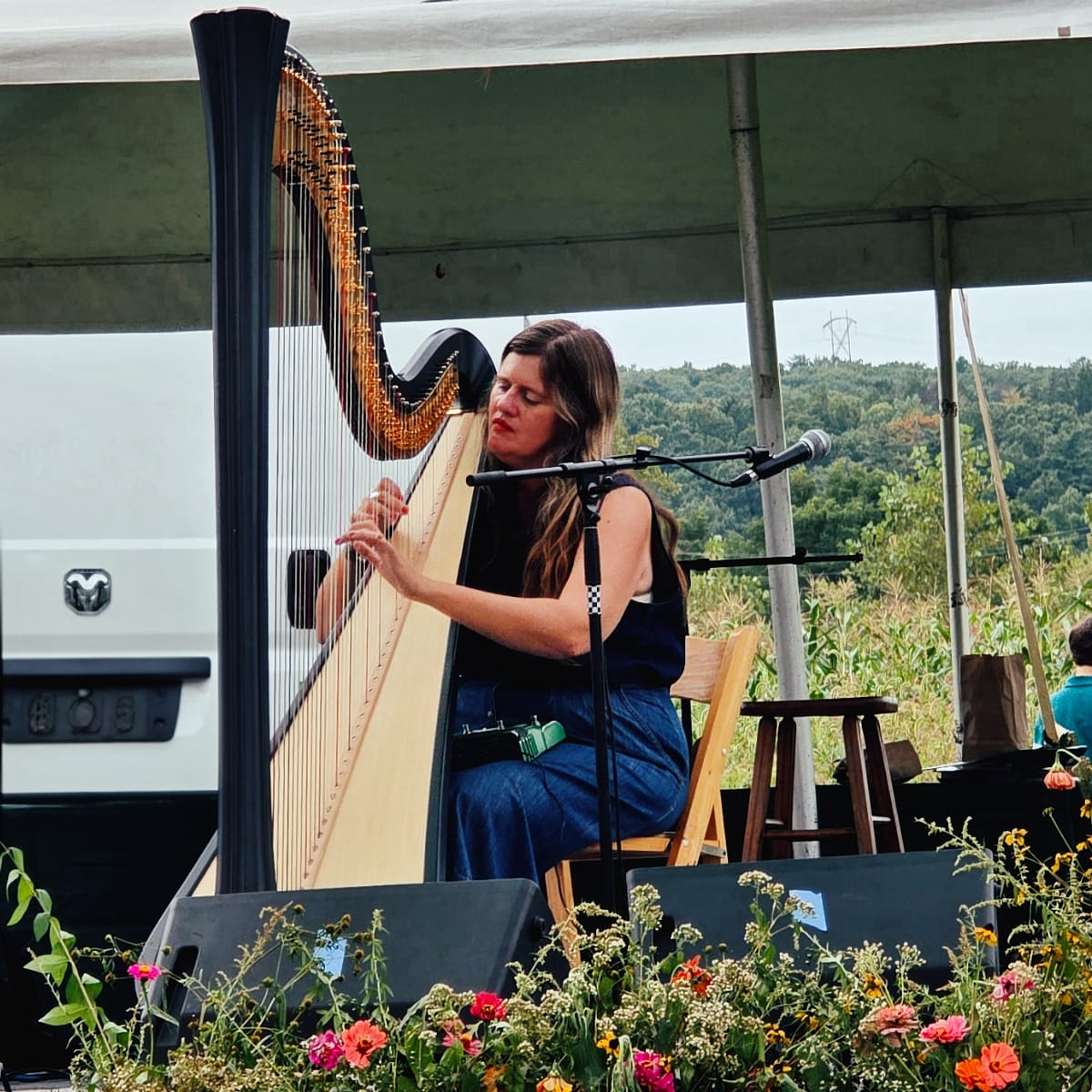
Carolyn Zaldivar Snow: We have a joke in our office that you’re everywhere. The Omnipresent Mary Lattimore, but yes—I saw you from a distance at the Grouper show in Philadelphia the other day. What is it like to watch someone else’s set?
Mary Lattimore: Oh, I love it, and I’m sure Liz can say the same thing. The more music you see, the more ideas that are flowing. It’s also kind of a relief not to cart a harp around to venues.
Carolyn: You mentioned over email that the harp [here at Plantasia] is a rental. Instruments are very personal, and I imagine it’s like getting used to a different piano in a different concert hall. What are the nuances of the harp that you have with you today?
Mary: I have never played it—or, I haven’t played it yet. Right after this [interview], I’m going to go touch it for the first time, but I have met the harpist. I could tell from the way she described the harp that it was going to be a good one. If it’s precious to the harpist, who’s renting it to me, then it’s going to be a good instrument.
Carolyn: What are the tenets of feeling good about this rogue harp you’ve never played?
Mary: I mean, the fact that it has Dusty Harp Pickups in it, I feel like that’s top of the line. It’s what I have in my harp at home. You can really get such a good sound with this particular pickup. I feel like that gives me confidence it’s going to be a really fun experience today.
Carolyn: Any particularly memorable harps you’ve played?
Mary: I have a horrible harp in New York City that I hate, and I call it “Dog Bite,” because it looks like a dog has taken a bite out of it. It’s kind of famous among us harpists who rent harps in New York. It’s like, “Oh no, I had to play Dog Bite again.” It’s the kind of harp that hasn’t been maintained very well, but it’s one of the few that you can rent in New York. I feel like you can be more experimental with it because it has weird rattles, and you don’t have to be so precious about it. So that’s the bright side of playing it.
Carolyn: Will tonight’s performance be improvised?
Mary: It will be improvised within a structure. A structure of some songs, but then it will go off into its own place. Probably inspired by this beautiful landscape, you know?
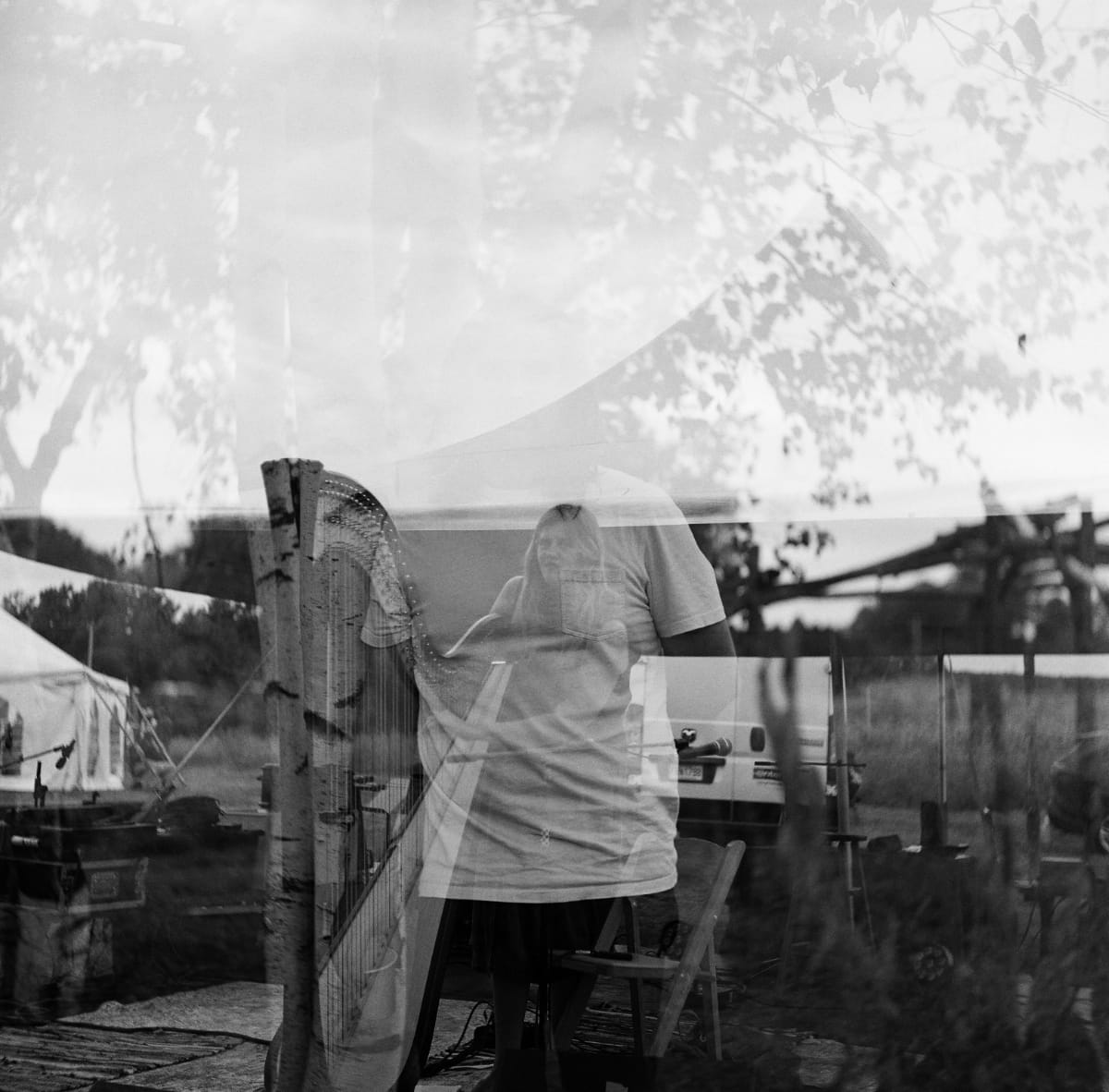
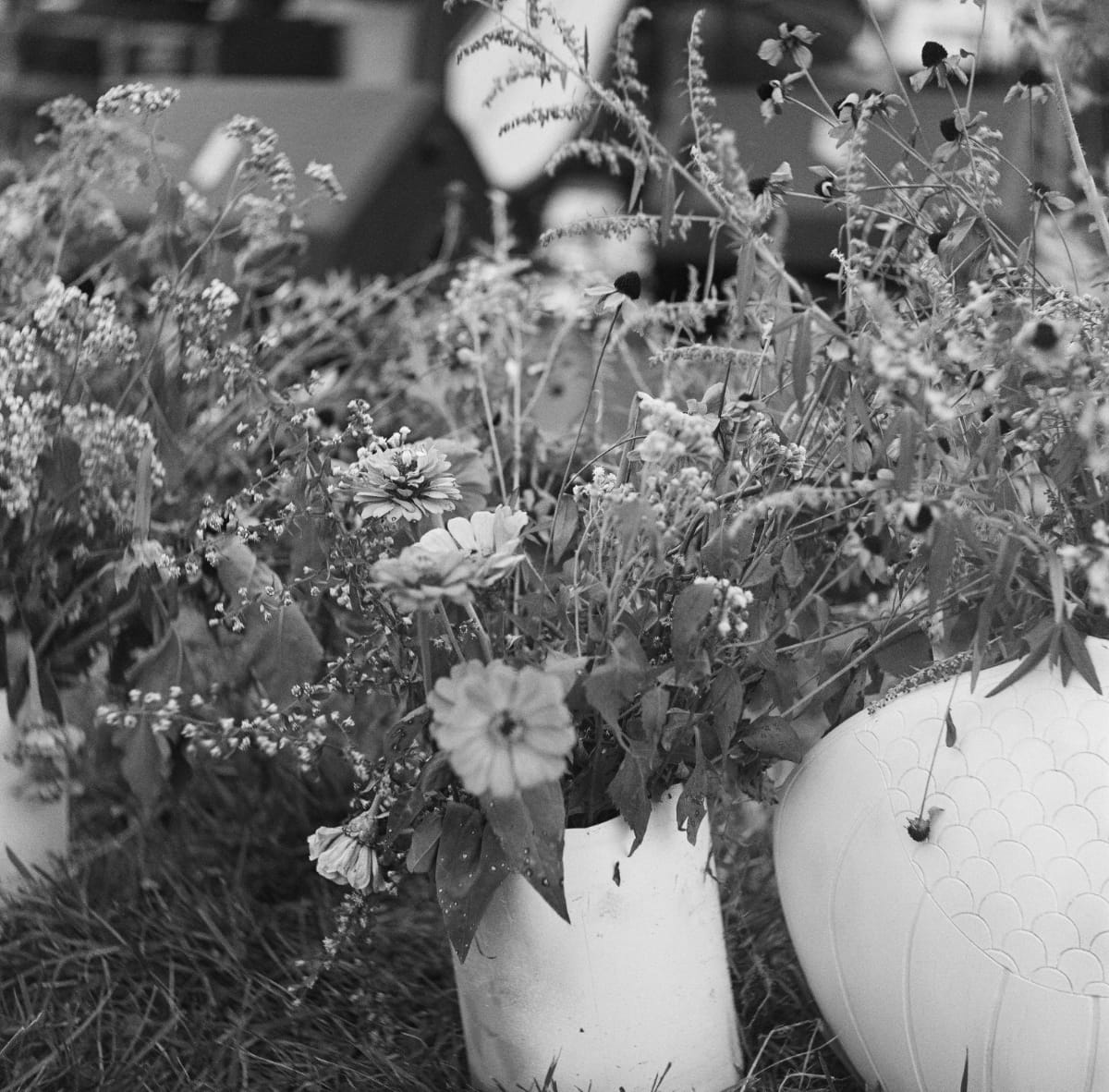
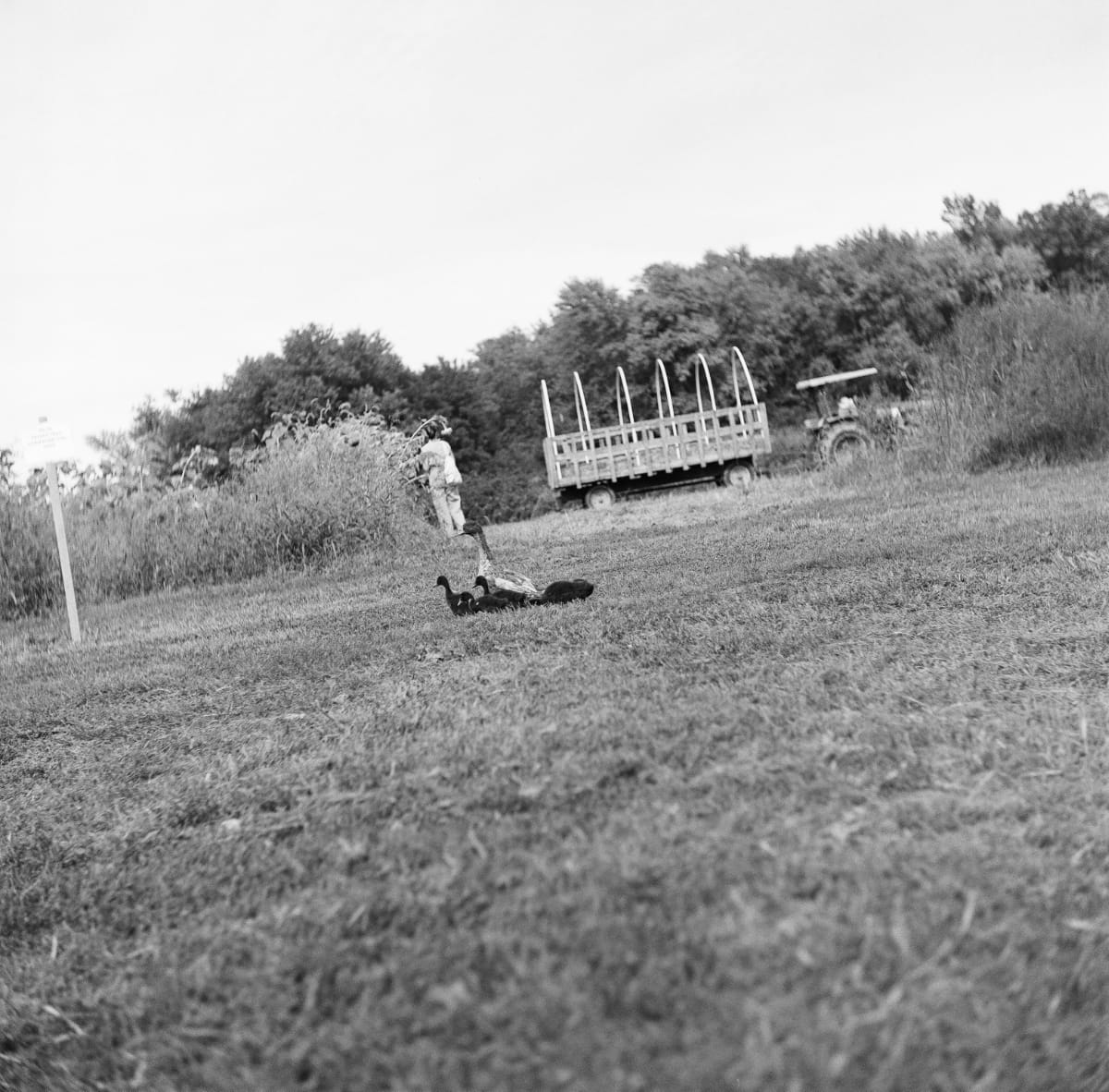
Photos from Plantasia by Moxy Martinez
Carolyn: For people reading at home, describe what you’re seeing here today.
Mary: There are lots of blankets on the ground in front of the stage, along with buckets of beautiful zinnias and daisies. There’s a background of corn and a wall of sunflowers that are kind of tipping over but really beautiful. It’s very green. There are chickens. There are sheep, and lots of fun activities here. Like making a whistle out of a carrot, and making a flower crown.
Carolyn: Does this record have meaning for you, since we are here together celebrating 50 years of Plantasia?
Mary: I’ve listened to it a lot. I’ve owned it for a long time, and I’ve played a few other Plantasia events. I feel like it’s such an easy record to love. The music puts you in a good mood, as it’s supposed to be, like, food for plants; I feel like it’s also just good food for us, too.
Carolyn: You tour often. Do you have plants at home that are in need of your care?
Mary: I do. I have a lot of plants. I have a garden in my front yard that’s all succulents, but I have a ton of plants in my house, and I have some dedicated house sitters and cat sitters who are careful with my plants. Sometimes I come back, and they’re treated even better than I would.
Carolyn: Do you think your plants are responsive to your music?
Mary: I feel like in my studio, I don’t have any plants. I should move some in there, probably, just to test that. I’m hoping that the plants here today are listening. It’s a very cool idea.
Carolyn: Will you be attending Laraaji’s laughter workshop tomorrow morning? Are you headed out?
Mary: I will be driving to Philadelphia to play Making Time, which I think Laraaji is playing Making Time tonight. We’re kind of switching places.
Carolyn: Are you going to high-five in passing?
Mary: We might, we might. I feel very happy to be here, in that this and tomorrow at Making Time are just total opposites, and it’s nice to be invited to this wholesome, family-friendly space—
Carolyn: And then dropped into the world of Dave P. [the prolific DJ and event producer] tomorrow morning? (Laughter)
Mary: I’m leaving at 6:30 a.m. I’m driving to the Fort. It’s a totally different end of the spectrum.
Carolyn: Will there be a different harp?
Mary: I’ve been playing Making Time for the past couple of years, and it’s always the same harp, so I know that one. So, no, but it’s cared for by a very lovely harpist, and it’s not Dog Bite.
Check out more like this:
 Lawrence Peryer
 Carolyn Zaldivar Snow


Comments