


If you read a hundred articles touching on free improvisation and open-ended music, you’ll likely encounter the word ‘entropy’ dozens of times. The word and physics concept, meant to represent energy’s unpredictable dispersal across a system’s microstates, has become a catch-all term for ‘chaotic creativity,’ used to encapsulate and describe any art that exists in a state of purposeful flux. It is perhaps telling then that the new album by New York–based experimentalists Ka Baird and Chris Ryan Williams is named after entropy’s foil—Enthalpy.
In simple terms, enthalpy represents the internal energy and structural heat locked within a system, essentially the cohesive bond that maintains equilibrium under constant pressure. It is both the energy required to create a system, and the effort needed to hold its components together against the crushing push of the surrounding environment. Because nature so often seeks paths of least resistance, it looks to minimize enthalpy and maximize chaos. And so, in the physical world, the two concepts tend to represent opposing desires. While they can occasionally collide in explosive, cooperative matches, they more often lock into mutual opposition and impossible reversals. Still, their conflicting relationship is the necessary force that determines whether anything can occur spontaneously. That overarching concept is called Gibbs free energy.
And this, at least to this humble listener, is the crux of Enthalpy, an intoxicating and astonishing electronic landscape of breath, spit, and sheer physical stamina. What Baird and Williams achieve is a direct sonic reconciliation of that precise thermodynamic tug-of-war, utilizing the vocabulary of free improvisation to map out the physical laws of both energy’s containment and its unbridled dissipation.
The album locks down structural heat and internal energy through highly focused, high-pressure performance elements. Williams’s pressurized trumpet techniques and Baird’s intense bass flute, vocalizations, and electronic patches generate dense, concentrated acoustic zones. But rather than letting the system collapse completely into static chaos, the duo scatter those concentrated bonds through fractured trumpet blasts, shattered vocal frequencies, and heavy post-production, sending the pieces decaying across the stereo field. In a brilliant throw to Gibbs free energy, what Baird and Williams show is that avant-garde music doesn’t just embrace unadulterated chaos, but that it requires a high-intensity crucible of structure and physical exertion to give that chaos its explosive, spontaneous power.
The transcript has been edited for length, flow, and clarity.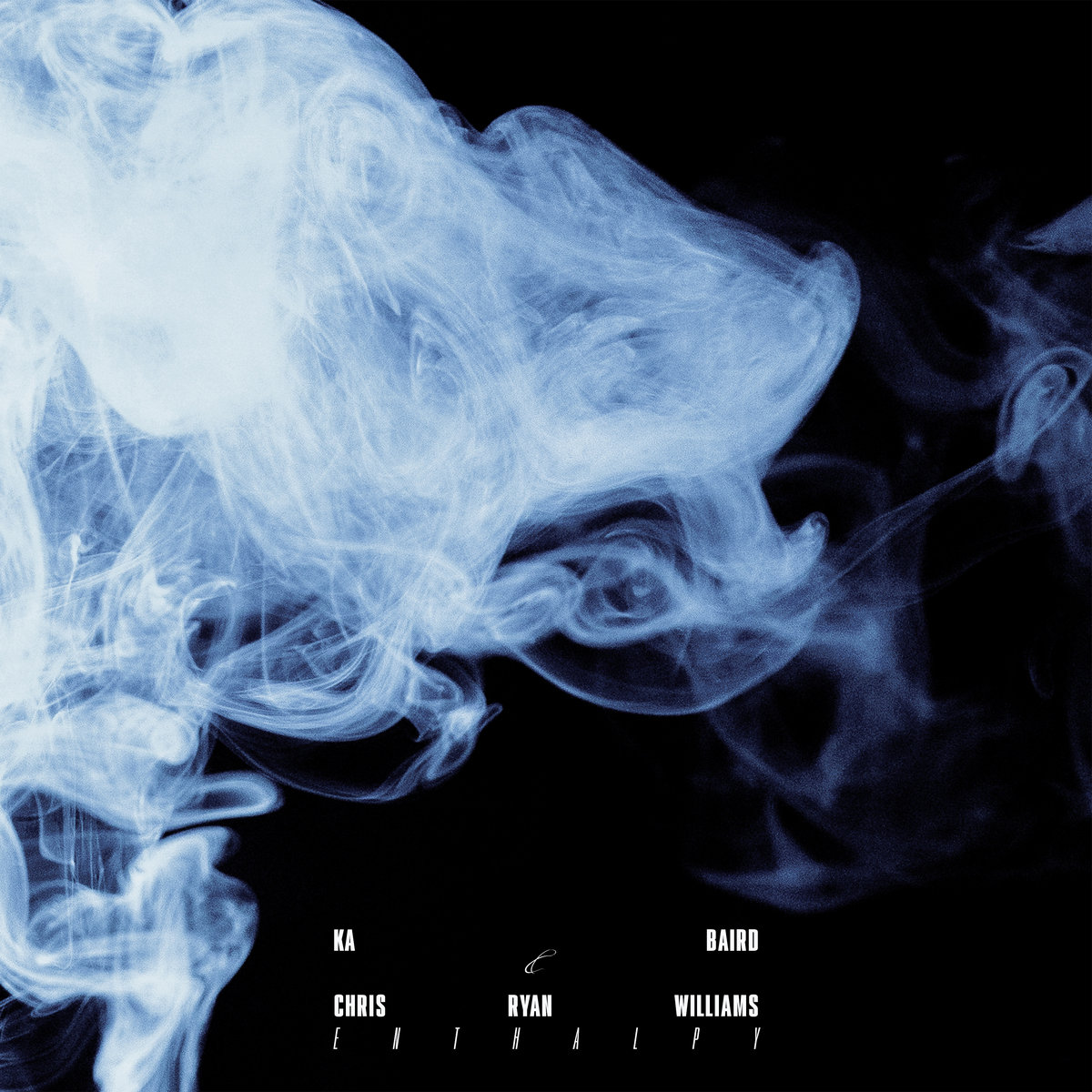
Khagan Aslanov: It’s often the case when speaking to experimental artists that titles of albums or pieces are very arbitrary. I think a lot of musicians, if they could get away with it, would just like to call everything “Untitled.” But there does seem to be a purposeful through-line in how the music is put together, and the language of the titles. So, why is the album called Enthalpy?
Ka Baird: I was trying to come up with something that communicated a combination of air, and pressure, and tension, and volume that Chris and I were exploring. I am no expert in thermodynamics, but this term to me, abstractly, poetically, really matched the music—this idea of enthalpy being the sum of systems, of their internal energy. When I think of this as a visual, it is as a pot of boiling water. The lid is on, and the energy is shaking the lid, maybe eventually pushing it off.
Khagan: There’s an odd mood to this album. It’s insular and very minimalist in many ways, with so much micro detail, but when you step back, it’s also vast and ecstatic. Do you plan these moods and tones to any measure, or is it all off the cuff?
Ka: These recordings came from just two sessions between Chris and me. And correct me if I’m wrong, Chris, but when we went in, there wasn’t any conversation in terms of concept or approach.
Chris Ryan Williams: Not at all.
Ka: In some ways, I was even shocked and surprised by how cohesive and easy it was to turn these two sessions into a record.
Chris: From my end, what gave me some insight was when I added a little bit to your Bearings record. I remember we spoke briefly about the things that I sent. Maybe half of what I sent made it into the record, but it stayed in the back of my mind. The direction I was already naturally going toward—less tonal-based trumpet, and more about pushing its sonic capabilities. What a breath attack, or even just tapping on my instrument, would produce; how that would activate some type of signal chain; and what the reaction would be.
It’s something that I saw happening when I would go and see Ka play solo sets. I remember the experience of watching you hit two microphones together; something happens and it’s not the same thing every time. All these little things made me think. I didn’t need to see under the hood, but I was curious about what that would be like for me. How do I create indeterminate systems that also give me some control, and allow me to interact with somebody?
Ka was already deep into it, and I was already pushing in that direction. So when we came together, it was magic—two sessions, easy.
Ka: It was incredible. Though we didn’t have a firm concept with these recording sessions, I was very familiar with Chris’s vocabulary, and I felt a kinship with his playing of all these textural, percussive, noisy elements that had hints of rhythm, these moments of tonal reprieve. So I was assuming we would be going down these paths.
I feel like Chris is a master electro-acoustic musician, and I also do so much with electro-acoustics. We have both really perfected our systems, and they work well with each other. When you start processing sounds on acoustic instruments, so many things can go wrong, or so much can be overdone. But I feel there is a real freshness to Chris’s approach, and I was really excited to work with him.
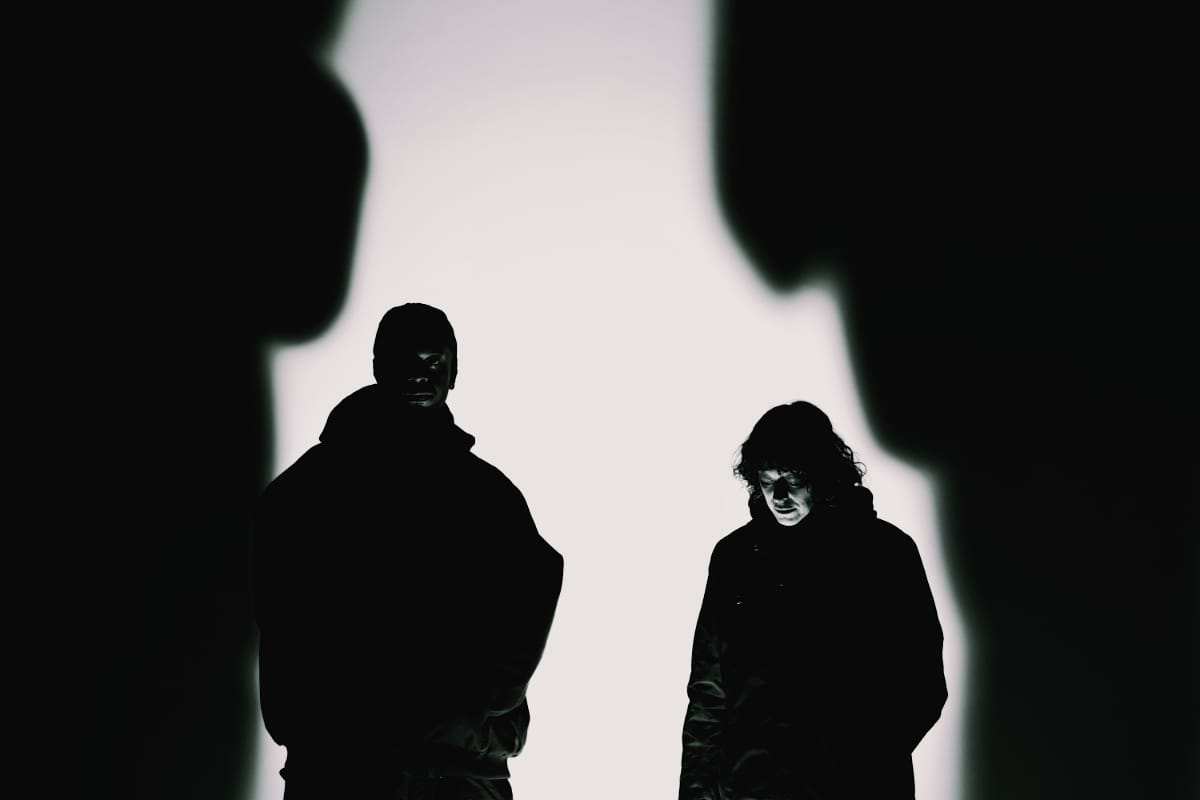
It perhaps goes without saying that the interplay between Baird and Williams is something to behold. Their collision feels neither like a rehearsed or deftly improvised duet, but like two nervous systems wired into one circuit. There are no traded solos to find on Enthalpy, at least not in the common variety of what that feels like when you hear it; they anticipate each other’s physical friction, catching a split-second vocal rasp and instantly mirroring it with a fractured split-tone. There is a breathtaking elasticity to how they listen, allowing the music to stretch to an absolute breaking point of silence and tension, before snapping back into a unified wall of noise. It is an incredibly high-stakes musical dialogue, with neither artist retreating into safety, but rather carving out a rare chemistry, where you can actively hear two minds co-authoring something in real time.
Khagan: How did you two meet in the first place?
Chris: We met in Finland. Ka was an artist-in-residence at a festival and hosted different musicians in pop-up concerts. I was there playing with Alex Zhang Hungtai. The promoter asked if I would play with Ka, and I was super down, of course.
I didn’t really know Ka at that point, and I kind of kept it that way. I wanted to see what it was.
We did twenty minutes in this luxurious hotel room, and I feel like our sound worlds clicked immediately. We were both so deep into pushing breath and metal, and what comes at the intersection of that. It all felt very natural.
Ka: I was going to do four duo performances with other artists that I could choose from. They mentioned Chris was going to be there for a secret show at the beginning of the festival. I knew about Chris. I’d seen him perform at a DIY show in 2021. They had mentioned the shows would be in the hotel. I’d assumed that meant in the conference room or something. But it was in this suite, a very intimate show, people lying on the bed, surrounding us. A very intimate first encounter. And as Chris said, an instant click.
We’ve stayed in touch since, and we knew we wanted to keep working with each other. It’s funny, and I’ve had it happen several times, where I meet a fellow New Yorker outside of New York.
Khagan: It seems that despite the city’s size, the collaborative spaces for avant-garde artists are very tight-knit niches, and there are all sorts of constellations of people coming and going constantly.
Chris: Absolutely. I’ve only been in New York since 2020, and that was the thing I first noticed. From the outside, it looks like there are all these bands, but there are pockets of the same people spread through all of it. That spirit of just getting together and playing with somebody, to see what’s there, really encouraged me. I really love that about New York. I haven’t lived anywhere else where that’s been the case.
Stay on top of The Tonearm.
Subscribe for exclusive interviews, cultural tip-offs, and community fun.
And your support keeps our site free of advertising and paywalls.
Speaking with two of the most versatile and electrifying avant-gardists of the time always necessitates looking back to their lyrical beginnings, and when the tectonic switch into free-form exploration and abject noise first began. It’s difficult to imagine, watching Baird live in their singularly primal and ritualistic performative firmament, how an artist might have ended up at this terminus, and what came before.
Khagan: Can you pinpoint the moment in your listening or playing when you started moving away from the natural acoustics of your primary instrument, the flute and the trumpet, into more microtonal experimental spaces?
Chris: Don’t let them fool you. Ka is a secret multi-instrumentalist. I keep finding out more and more instruments they play (laughs).
But yeah, I’m primarily a trumpet player, and that takes up so much time in itself. So I just add some things on top of it. I got my Line 6 DL4 [delay and looping pedal] pretty early on, when I was 16 or 17, and was messing around with delays. I loved a lot of late-era Miles and psychedelic things. That led me down a very specific path—delay, reverb, and more spaced-out sounds, but still with a tonal center.
I think I started to let it go separately from electronics. I was just really interested in amplified trumpet. Nate Wooley does it so well, and Peter Evans, too. Just people blowing through metal into a microphone. There’s so much there already, with positioning and all that. That was probably around 2018. And then when I moved to New York, I was starting to reintroduce electronics into my language. I still love just playing straight down the horn, but I didn’t want to feel limited.
So I got a pickup, a little PiezoBarrel that screws into the top of my mouthpiece. That really opened up a lot for me, because of the proximity to making the sounds. It’s so much closer. It’s not at the end of my bell. It’s right there, in front of my face. Hearing how wind is processed through something like that, how clicking my ring or some other piece of metal on top of this pickup sounds. It started to make me realize how percussive the trumpet is. It’s just been a deep rabbit hole since then.
That, and watching Ka do solo shows. I don’t know if you’ve seen Ka do a solo show. It’s magic! It’s wizardry!
Ka: I think Chris is right that I don’t consider the flute my primary instrument. I’m not even sure what I would call my primary instrument, perhaps my voice. But my journey with the flute is kind of funny. I played it as a kid, played it in high school, in band. Then my brother ended up giving my flute away to some friend of his. I didn’t realize he had done that. Ten years later, I was looking for it, and he admitted he’d given it away. He felt really bad about it.
But a few years after that, there was some crazy fate moment where he ran into this person again and got the flute back. And so I started using the flute again in my thirties, and coming back to it was such a cool thing because the flute amplifies so, so well. And it comes so close to a pure sine tone.
I’ve been trying to redefine the flute’s reputation and what it can do—all these micro-sounds, turning what is a fairly quiet instrument into something fucking huge. When people see me set up on stage, some expect something very angelic and ambient. But when throwing it through electricity and carefully selected presets, it becomes so much more. And so I’ve really fallen in love with it.
For this particular album, I used a bass flute. That’s a whole other beast in terms of its dynamic range, its ability to punch, and the lower register. It’s even quieter in some acoustic ways, because it’s so low and takes so much breath. It’s also pretty fucking heavy. It was a great first record to start exploring the bass flute.
Khagan: What I love about both your separate bodies of work and this album is that, composing and improvising aside, you’re both astute curators. Modern avant-garde music often has little to tether it to the ground. And as much as I adore it, it can also be a punishing experience. And neither of you is afraid to sometimes just drop something very lyrical in the middle of what you’re doing. You still retain that sui generis quality.
Chris: Not to say anything about music and non-music, but Ka and I are both willing to actually deal with some pitch material that locks in and elicits certain energies and moods. It only helps the noisy parts.
Ka: Absolutely.
Chris: I need both, and I yearn for it in most of the music I listen to.
Ka: It also makes for a nice flow for a record. The title piece of Enthalpy hits all the moods in that sense. This contrast, these reprieves of melodic structures, or just hints of melody, as Chris said, make the noise that much better.
Beyond the raw and the immediate reverence of their aesthetic pursuits, Baird and Williams occupy a vital spot where experimental sound intersects with structural critique and historical reckoning. Rather than treating avant-garde music as a detached architectural exercise, both artists have weaponized the friction of live improvisation to confront and externalize deeply entrenched social realities. Their performances, whether implied or pointedly stated, have served as ritualistic spaces, where the weight of historical memory—grappling with patriarchal exclusion or the enduring echoes of systemic trauma—is actively processed, disrupted, and transformed.
Williams has anchored his solo practice and interdisciplinary projects around the dyad of ancestral trauma and the power existing in Black Americans. His modular installation and performance piece I Ain’t Got No Spare I, with Laura Sofía Pérez, directly investigates this inheritance through homemade electronics, sound, and projection.
Baird has frequently grappled with gender dynamics and exclusion in the history of sacred music. Their physical vocal practices and instrument manipulation draw heavily on ritualistic Papua New Guinea flute music—a tradition historically dominated by men, where women were explicitly forbidden to play. Subverting these patriarchal boundaries informs their approach to performance as a vehicle for extreme psychological and physical release.
Khagan: You’re both representative of much larger aspects and moments outside of music. Ka, you’ve drawn deeply from feminist theory. And Chris, you’ve delved into family archives and the ancestral trauma of Black America. My question is really about how much a listener can or would infer from an album like this. Do you see this as a joint environment? Could you ever make an album that’s purely nihilistic?
Ka: I think on some level, or all levels, we are who we are. And we bring our histories and our influences with us. Whether it’s explicit or not. This album was not some kind of conceptual record. It’s not referring to a specific event or lineage or history or theory. But I still feel like, yes, we bring our identities with us. That’s as good as I can answer that. You used the word nihilistic. Do you mean just the sheer act of making a record for its own sake?
Khagan: In a way. I don’t even know if this is a good question. There was never a truly good time to be a woman or a person of color in America. But this particular time in its history feels so charged. I guess what I’m asking is—how are you guys doing?
Ka: No, these questions are super important. I do believe that we are in an extreme moment. I question all the time—why am I doing this? Or how could I do it better? Or should I be doing something else? While we’re not addressing specific lineages, histories, or even personal journeys, I think there’s a shared urgency in this record and this current moment.
Chris: This abstraction is inherent in the approach to sound-making that we’re doing. Rather than implying anything or putting too much weight inside of the sound, I do think it says so much just through the process of making it. What we think about, how things are going, it’s naturally imbued into the process, into the decision-making.
Khagan: At least to some degree, the reason for my asking is because I’ve noticed that I tend to listen to music as an end in itself. When I listen to Mingus’s bass line in “Fleurette Africaine,” I can infer race, and certainly mental health in Mingus’s case, from it. But all I really hear is that beautiful tumbling bass line, that perfect sound.
Chris: I think the affect says so much, and the gestures in there are so profound. Mingus is such a great example of that. He can be really literal, but he can also just fucking play the bass, and you feel it.
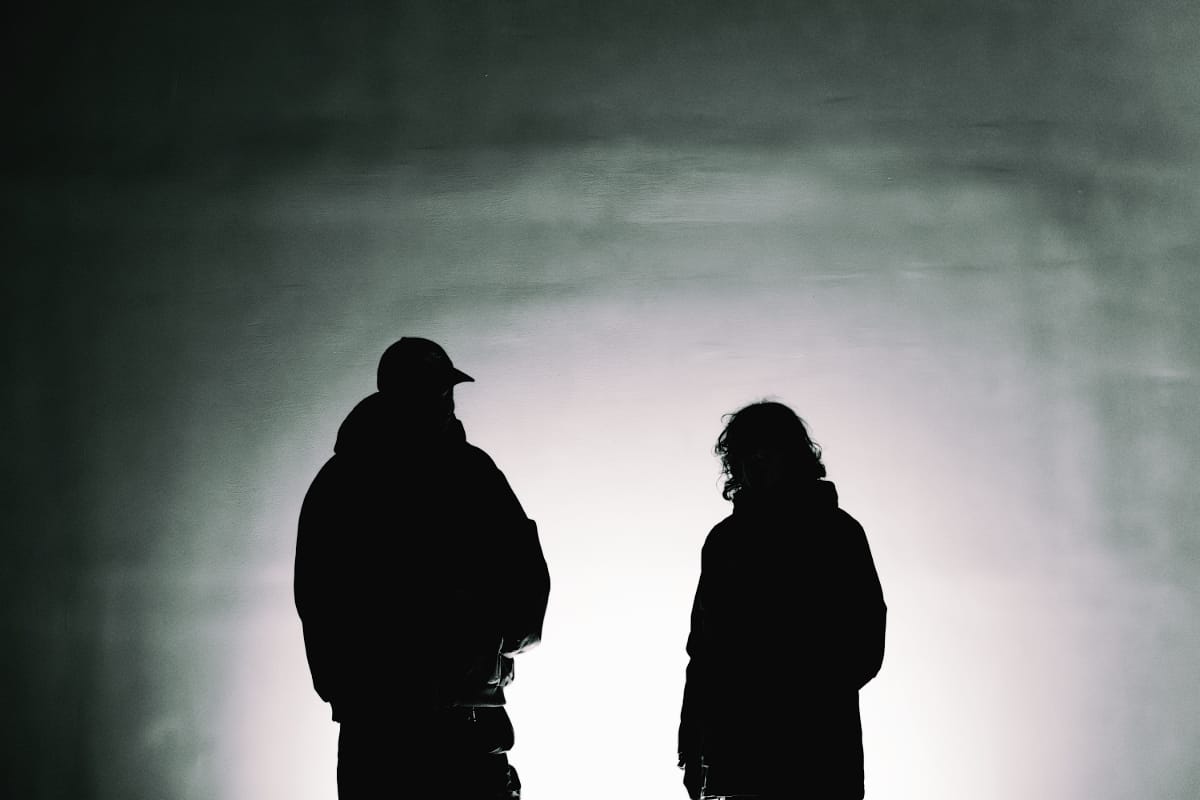
And then comes the discussion that, nowadays, has come up in various lengths and tempers in most every interview I conduct with artists.
Khagan: Touching briefly on AI in music, how safe do you feel within experimental shelters, of your craft being scraped and replicated? Do you think experimental music offers somewhat of a safe haven?
Ka: (sighs deeply) I have been thinking about and processing this.
Chris: I don’t think the sound of our music is necessarily safe from AI. There will be a time when computers can do that. They have already played a big part, with [George Lewis’s] Voyager, for example. There are all these examples of experimental music using machine learning. What we’re dealing with right now is people using it to steal work.
I do think the experience of live music, especially as you close in on this visceral sect of experimental music, is something that feels slightly safe. I hesitate to say it’s a safe haven, but, for now, I do feel a bit untouchable. I think people really yearn for that with this type of music.
Ka: And then there is the community aspect that comes with live music, all over the world. These pockets of human connection are so important. I will also say that the unmarketability of a record like this keeps it in the niche. There’s no demand for it to appeal to the masses. Who knows, though? There might be an AI noise band coming.
Khagan: I do think there will perhaps be an effect where AI is so pervasive and has such a captive audience that people will fling themselves to fringe art to have a singular human experience.
Ka: Right.
Khagan: This could be the next pop music. Instead of Taylor Swift, it could be Chris playing amplified trumpet at the Super Bowl.
Chris: I’m ready!
Check out more like this:
 Chaz Underriner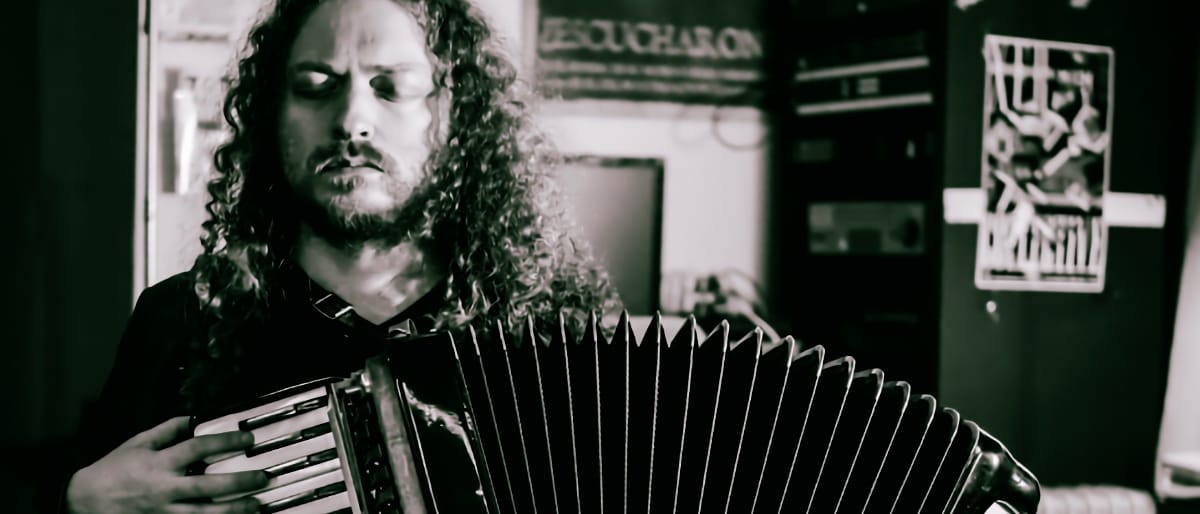
 khagan aslanov


Comments