


Brothers Henry and Reuben Vaun Smith are from Featherstone, a tiny coal-mining village near Leeds in the North of England. Featherstone experiences short summers and long, cold, cloudy, and windy winters. It’s not the sort of place you’d expect to inspire music that’s laid-back, sun-drenched, and soulful.
In fact, it doesn’t. But growing up, the Smith brothers’ family made regular holidays to Sevilla, Spain. And those experiences did exert an influence on the music that Henry and Reuben would make with their group, Sons of Sevilla. The band released its debut collection of songs, Lullabies for a Wildcat, in August 2024. While that initial effort found Sons of Sevilla exploring different textures in search of a signature style, the music’s overall retro-futuristic vibe fit in well with the eclectic array of music favored by the band’s label, California-based Ubiquity Records.
Some listeners may infer a stylistic kinship between Sons of Sevilla and other acts like Khruangbin, La Lom, and Orions Belte, original artists that deftly look forward and backward at once, favoring subtlety over displays of sonic power. But as Henry Smith explains, Sons of Sevilla don’t think of themselves as part of any musical trend, movement, or community. They simply make music inspired by what moves them.
And in the two years since Lullabies for a Wildcat appeared, they’ve done a lot. A second album, Street Light Moon, was released one year ago, and Sons of Sevilla have also recorded and released a handful of non-album tracks. Their latest, It Could Be Today, is out now, and more music is well on the way.
The transcript has been edited for length, flow, and clarity.
Bill Kopp: Will “Skinshape” Dorey produced It Could Be Today. Adrian Quesada produced Street Light Moon, and then Max Shrager produced a recent single. What did each of those producers bring to the sessions that set them apart?
Henry Smith: When we did Street Light Moon, that was the first time Reuben and I had ever been in a studio as Sons of Sevilla. And I think it’s the first time Reuben had ever been in a studio outside of our little demo lab that we have at home. So when we went out to Adrian’s spot in Austin for the first time, neither of us had been in a studio of that caliber. That was another level for us.
Adrian is a good friend of ours now. The gear in his studio is top-of-the-range. Reuben and I tried our best to keep up with all the mechanics of the studio, but for the most part, we stayed focused on the songwriting and let Adrian do his thing with the drum sounds and things like that. He’s got a very good ear for drums, and he knows how to get exactly what he wants with the mics and the room. Adrian just lets the songs grow; it’s a very calm, nice, relaxed atmosphere, and everything happens organically. Now and then, Adrian will throw in an idea; he’ll put something forward for a drum sound. So that was a fantastic experience; Adrian is an absolutely amazing guy, amazing musician, amazing producer.
When we finished the tour with Skinshape in October, we were invited by Max Shrager to go to his studio in New Jersey, but we didn’t have loads of time because we had a flight booked home. Reuben had the demo for “Forever Heaven” from back home on his laptop; he took his laptop on the tour, and we thought that song might work well in this session. So we went there to record that with Max. Ben Borchers is the drummer in the Shacks and a few of Max’s bands, and he’d done the whole Big Crown Records thing with Max when they were a lot younger. And he’s a really amazing drummer.
Reuben came up with the hook for [B-side] “Changing” somewhere on the tour. We had one day in the studio, and initially we were only going to do one song. But “Changing” was born a week before, and then put together and finished in that session: done and dusted. It was really organic how that all came to be. Max was setting up the room for recording “Forever Heaven,” and we said, “Do you mind if we give this a little go?” He just said, “No problem. Let’s try it while it’s happening.” And we just struck while the iron was hot.
That session was different from the time with Adrian, because Adrian doesn’t mind using modern recording techniques, whereas Max’s studio is set up to cut live; everything’s done live. It was a longer process, because when we got there, we rehearsed the songs for a few hours with just me, Reuben, and Ben. And then once we felt like everybody understood what they were doing, we could click “record” on the tape. Then a couple of overdubs, and done. For the most part, it’s all live, and I don’t believe Ben even used a click track. So, very different. Again, a fantastic studio, with a lot of vintage and really well-picked recording equipment, and two great guys.
We made friends with Will—Skinshape—during the tour; lovely, lovely man. We asked Will if he’d be open to producing our next album, and he was. He’s produced all of his own records since day one. Everything’s in-house with him; it was a bit more like, “Do you mind if I give this a go?” He just knows what he’s doing, and he’s been doing it for a long time. He’s done, I think, about 10 or 12 albums out of that studio in London. So we were happy to be there and happy to be working with him.
All their studios are different, and the sound of each recording is different. You can hear it on every album, the three of them. But it’s hard to define exactly.
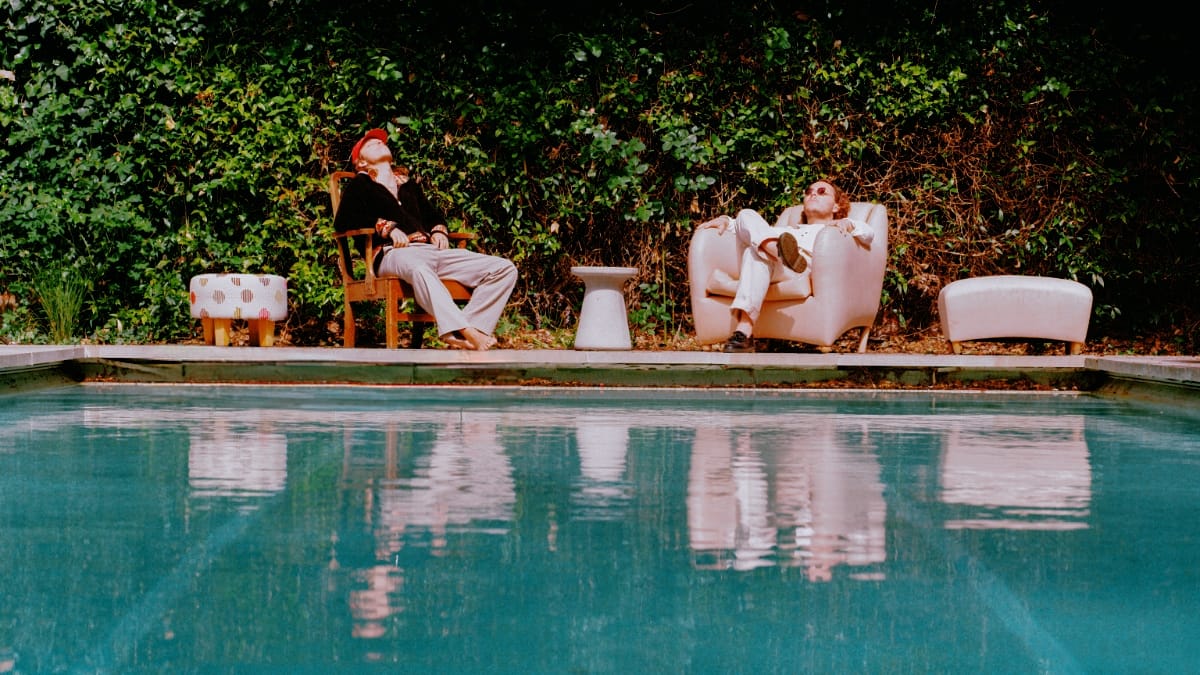
Bill: The official word is that your time in Spain has colored the music you make. Is that true, or is it fanciful record-company-speak?
Henry: Street Light Moon was written in Spain and in Gibraltar; maybe the weather rubs off on you in some way. But we’ve always had a bit of a more summery, major-key sound rather than anything too deep or minor-key or wind-and-rain. We could write something in Leeds, and it’d still have that sound. So I don’t know if it’s the weather, or if it’s just me and Reuben together.
Bill: What drew you to Ubiquity? How did you end up with a California record label?
Henry: Reuben and I had written all those demos in 2020, and then the lockdown came. So they sat on the shelf for two years, and we never pursued it because we couldn’t; everything was going on with COVID, so we were just getting on with our lives.
Reuben escaped the lockdown, and he was out sailing with his friends in a few places that didn’t impose lockdowns as many Western countries did. He shared some of the demos with a friend, and his mate said, “You know, this is really good. You should try and find a label to release it.” And funnily enough, Michael McFadden, who owns Ubiquity, had followed Reuben that week on Instagram. So Reuben just sent him a nice little message on Instagram with the demos, and then about a week later, Michael signed us. It was really fast, right out of the blue. If Reuben hadn’t been playing those demos that moment to his friend, I don’t know if any of this would have happened.
Bill: Do you consider what Sons of Sevilla does part of any kind of a larger musical movement?
Henry: I don’t know, really. We’ve never been from the city, so, you know, we’ve never been part of a music scene or anything like that. We’ve had a lot of friends growing up in school who all played in bands. But as we started Sons of Sevilla a little bit later in life—I was 28 when we made Street Light Moon—we were past the part of life when you kind of sat around all jamming with your friends in dingy little rooms.
So no, I think we just do what we do. We’re from quite a rural little mining village; we just get our head down and crack on, really. Where we’re from is not a vibrant music scene or anything like that. It’s a little spot out in the sticks.
Bill: Even though the music on the first album actually dates from 2020, from the perspective of the listener, you’ve had three albums and a number of singles inside of the space of two years. That makes you a “prolific artist.” Does writing come easily or is it something that you really have to work at?
Henry: For whatever reason, when Reuben and I are in a room writing music, we manage to get it down quite fast. We don’t like faffing around and overthinking things. We just click “record,” and the songs start coming thick and fast.
We’ve actually got another album already recorded; we’ve been back to Austin, and we’ve done a fourth album with Adrian. And that’s a 14-track album, so we’ve technically done four albums in three years. Brothers can write songs, can’t they?
Check out more like this:
 Tony D’Onghia
 Bill Kopp


Comments