


Now Playing on The Tonearm

Charlotte Greve’s Power Ballads, Choirs, and Saxophone Drones
Her tenth album as a leader and the first under her own name, ‘Waterbodies’ was tracked while she was pregnant, with Shahzad Ismaily pulling together its many parts. Interview by Lawrence Peryer.
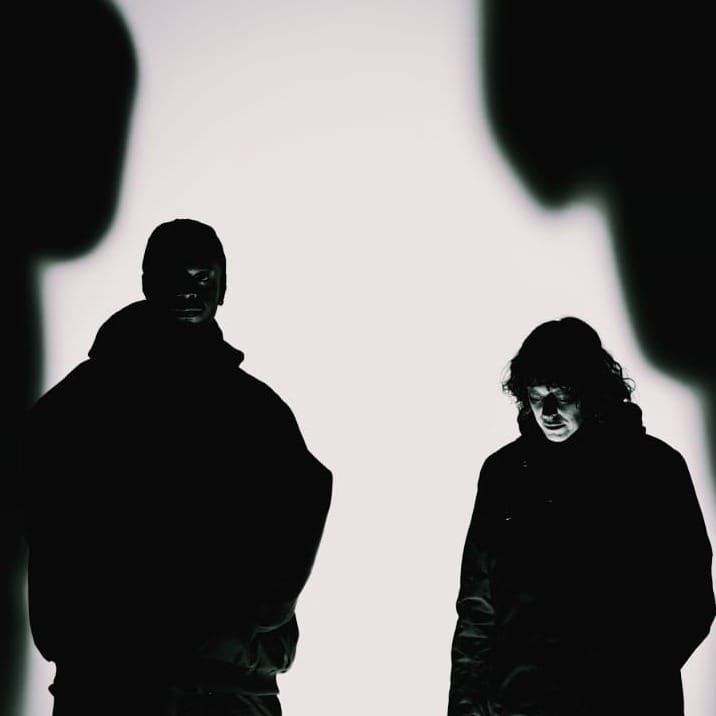
Ka Baird and Chris Ryan Williams, Through the Fractal Smog
On ‘Enthalpy,’ bass flute and amplified trumpet push against their own electronics until the lid starts to rattle. Interview by Khagan Aslanov.

Whitney George’s Telephone Noir
A look at ‘Eavesdropping,’ an ongoing phone-line drama of two characters, a piano score, and hints of a third listener, and at the telephone’s long career as a storyteller, from ‘Sorry, Wrong Number’ to the party line. Essay by Kurt Gottschalk.
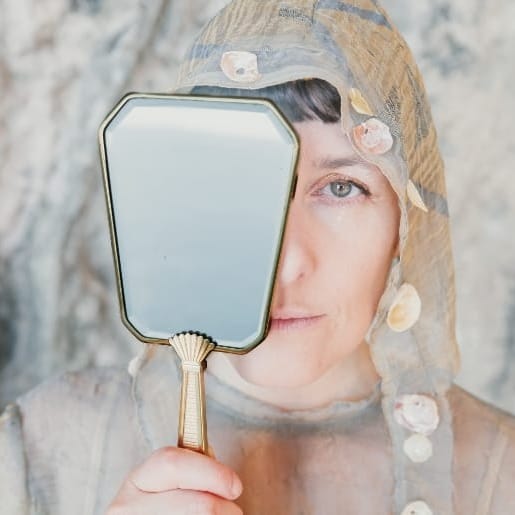
The Siren’s Shore — Jolanda Moletta’s Visual Music
The Italian composer discusses ‘Oceanine’ and its companion short film, and the witches, snake-women, and Pasolini films behind both. Interview by Carolyn Zaldivar Snow.
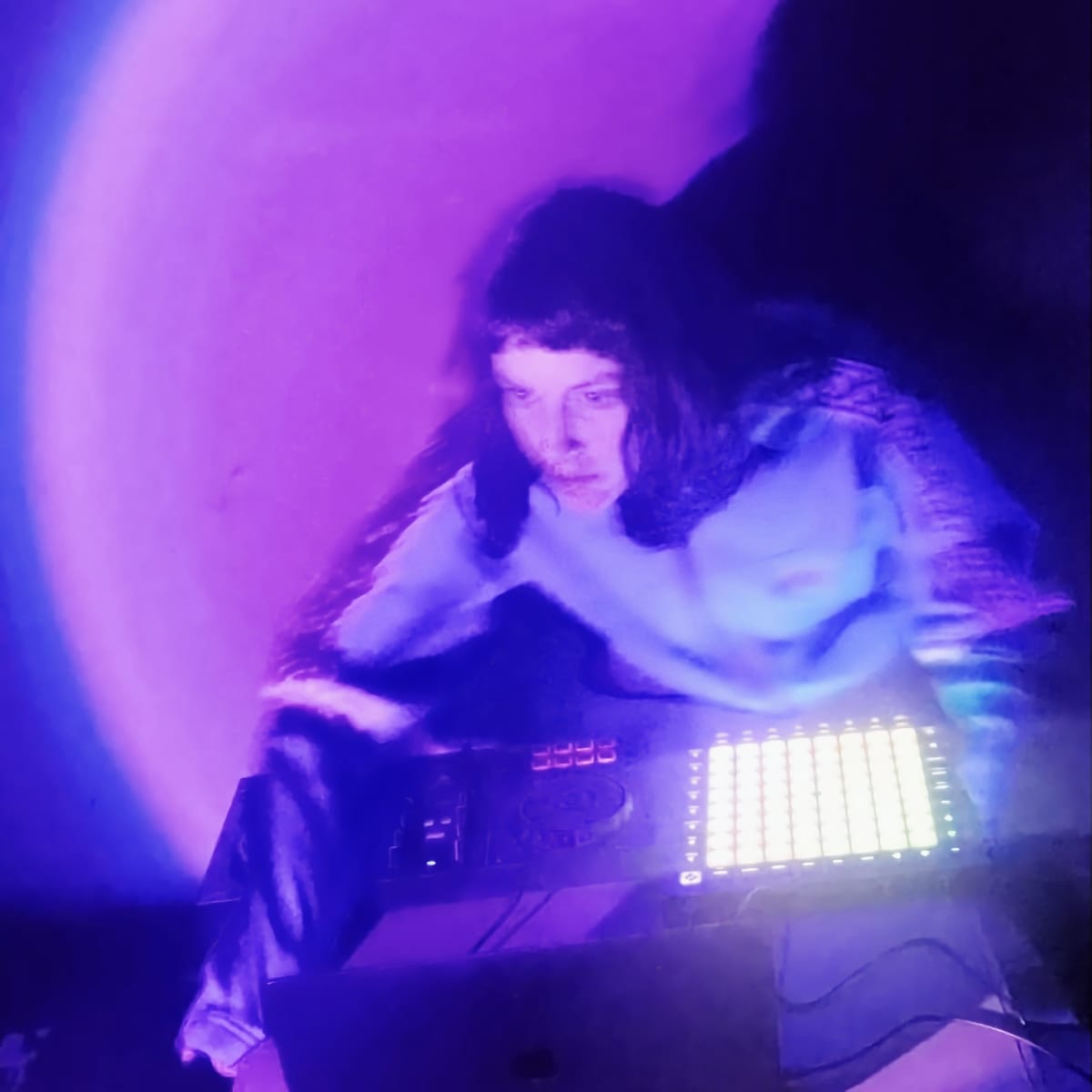
The Gentle Game Design of Tiiva’s Pop Universe
The musician, sound designer, and game maker talks through ‘This Could Be a Start,’ an AI character’s search for a soul, and writing about gender through invented characters. Interview by Arina Korenyu.
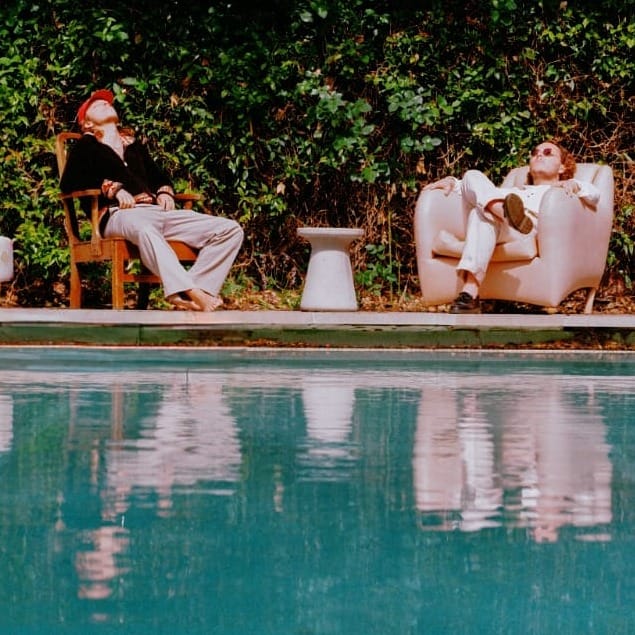
The Mediterranean Light of Sons of Sevilla
Recorded in London with Skinshape, ‘It Could Be Today’ holds the same summery, major-key sound the brothers were already writing into demos at home in 2020. Interview by Bill Kopp.
This Week’s Episode of The Tonearm Podcast
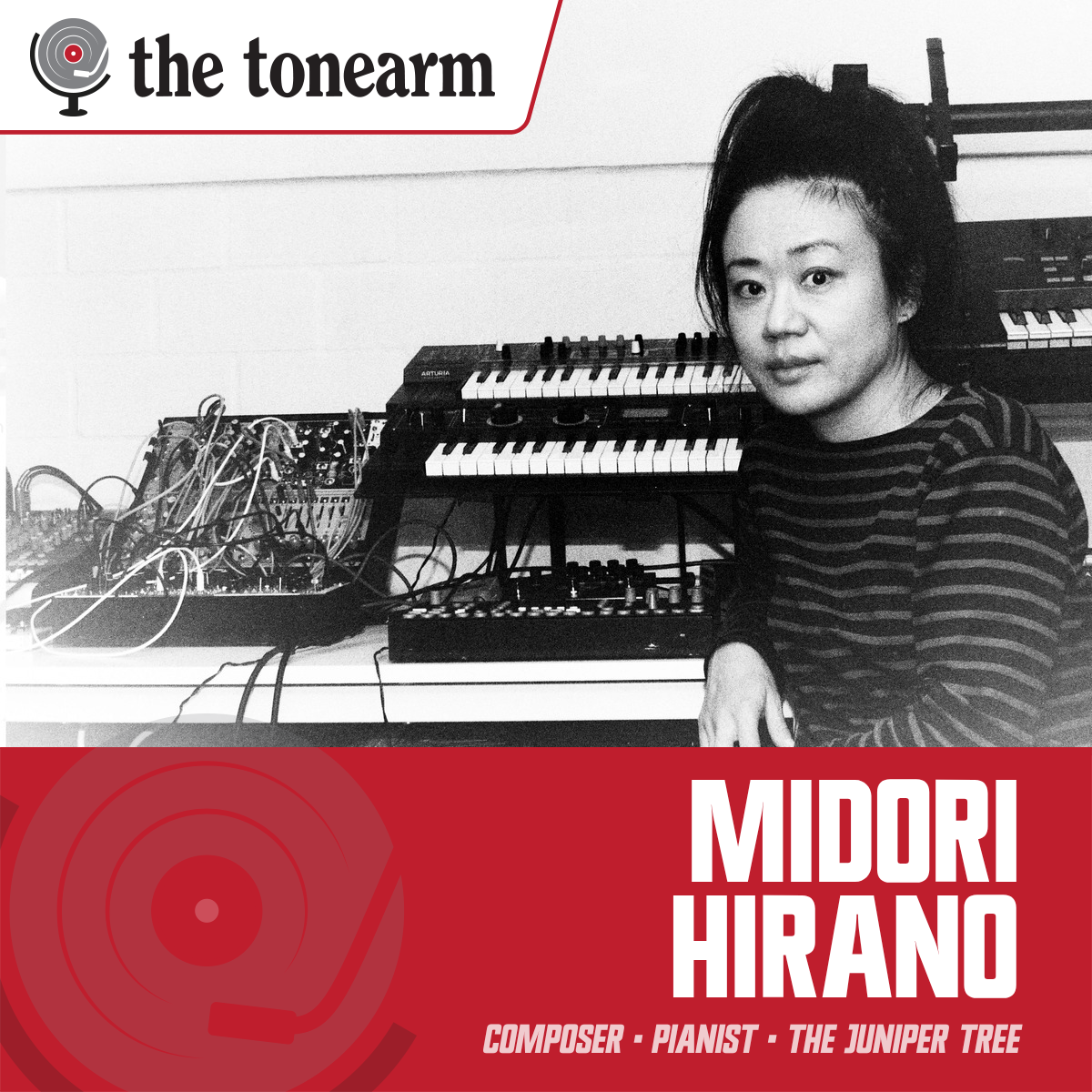
Midori Hirano: Piano and Synth That Know When to Stop
The Berlin composer and pianist joins us to discuss ‘The Juniper Tree,’ her new score for Nietzchka Keene’s 1990 film starring Björk, written without the original soundtrack in her ears and pared back by the Japanese idea of ma.
The Hit Parade
“If people think a kind of magic happens onstage, they ought to know that what they’re seeing is a lot of work. . . . To me, ‘charisma’ is just a fancy word for rehearsals. And if I catch you using the word ‘effortless’ about me, I’ll laugh in your face.” ❋ “The feeling of seeing myself in the studio, face-to-face with amazing amplifiers and instruments . . . things I couldn’t do in Os Mutantes, like playing a Gibson bass or guitar—is what makes me so eager to create.” ❋ “It was clear to me when I started ‘Music for 18 Musicians,’ given what I’d done in ‘Drumming,’ that there would be no conductor. That was a central premise. Each musician has to rely on each other musician, and they have to listen carefully. That mentality to me is the highest level of music-making.” ❋ “As a featured session musician, Ribot entirely changed the direction of Tom Waits on the singer’s 1985 album ‘Rain Dogs,’ inventing the fractured junkyard style that opened up brand new territory in popular music.” ❋ “I’ve never really been very much a goal-oriented person. I like thinking about how things are made, rather than what comes out at the end. So, I’m more of a means person. I like inventing new ways of doing things.” ❋ “The music released by [Kou Records] is cutting-edge, but how the label works is old-school in every way . . . the idea of a label as a holistic combination of music, media, graphic design, and documentation, all focused on something you can hold in your hands.” ❋ “The scenes where we see [John Hurt’s character] at work in the studio are brief but indelible. He records a handful of marbles rolling around in a metal tray filled with water, draws a violin bow across shards of a cut-up sardine tin, lights and draws on a cigarette, and strokes the fur of his dog, Buzz, with a microphone.” ❋ “Full of gleaming, warped melodies and sleek, entrancing percussion . . . the glissando function of the 303 became a clever stand-in for the microtonal glides typical of Indian Classical music.” ❋ “There’s a two-bar section where [Bull] plays a phrase that sits precisely between eastern Kentucky and somewhere on the eastern rim of the Mediterranean, half this and half that, before switching to a jaunty and immediately identifiable North American folk melody.” ❋ “One generation of baby boomers, two very different modes of musical expression. Or were they? Both New Age and AOR . . . were partly derived from prog rock. Both relied on the advent of analog synthesizers, plus a lot of drugs (New Age: psychedelics and marijuana; AOR: cocaine and booze). . . . Both were preferred for planetarium laser shows.” ❋ “We will never know what [early music] sounded like and we’ll never know any authoritative answer to how we should be performing this music. To really bring sound off of the page, we have to add an element of our own personal creativity to that. We have to add the human element.” ❋ “This embrace of Afrobeats mirrors a broader cultural reality on the Caribbean coast—it’s a sonic landscape finding new forms of expression while continuing to engage with the roots that never left the region. For many Latin artists, the relationship with Afrobeats is less experimentation than reconnection, with movements and rhythms that are already familiar to them.” ❋ “Editionism is a commercial imperative that serves to justify the understandable inclination of the music industry, in the absence of anything very new to get excited about, to remarket its old wares to a consumer demographic that has a redoubtable appetite for new editions of music they already own.” ❋ “Despite there being no internet access in Cuba at the time, despite mass media being controlled by the Communist regime and despite reggaetón being explicitly banned, the music found its way into Cuba through illegal satellite dishes that captured broadcast signals from Miami.” ❋ “The difference between artists like [Static Dress and Stand Atlantic] and Metallica is that the former are escapist in a manner that is very conscious of the outside world. They say, ‘We see what’s going on, and we see you, and we’re going to give you something joyous in a world that wants you miserable.’” ❋ For more curated music links, be sure to follow The Tonearm’s feeds on Bluesky and Mastodon.
New Music Recommendations: Darren Hayman - I’m Your Team (RIYL: minimal downtempo synthpop with soul and lovers rock underneath; Hefner, The Blue Nile, David Sylvian) ❋ Francis Harris & Gareth Quinn Redmond - Eyes Bright and Low (RIYL: ambient electroacoustic piano and synthesis with live drums; late-period Talk Talk, Mark Hollis) ❋ Geologist & Kyle Simon - The Sirens (RIYL: long-form modular drone and sonification; Éliane Radigue, Kali Malone, Johannes Kepler) ❋ Ibelisse Guardia Ferragutti & Frank Rosaly - O (RIYL: bomba, plena, batá, and dub rebuilt from drums, synthesizers, and field recordings) ❋ Kenny Ueda - Soft Suburbia (RIYL: instrumental bedroom pop with ambient textures; Air, Chihei Hatakeyama) ❋ Mali Obomsawin - Automatic (RIYL: free jazz and avant-folk built on Abenaki song and archival tape; Jeremy Dutcher, Irreversible Entanglements, Alice Coltrane) ❋ Marla Kether - Luso (RIYL: live-played Afro-Latin club music, batida to samba house, from Little Simz’s bassist) ❋ Ocean Moon & Silver Ley - Prismatic Fields (RIYL: fantasy synth, harp, and fourth world textures; Susumu Yokota, Boards of Canada) ❋ OLA TUNJI - TRUST (RIYL: long-form spiritual jazz; John and Alice Coltrane, Pharoah Sanders, Albert Ayler) ❋ Rob Kieswetter and Jona Bechtolt (of YACHT) - Greatest Hits from Planet Blip (RIYL: synth library music and jingles from an imaginary 1980s public-access channel) ❋ Russell Gunn & Blackhawk - Afrikan-Amerikan Book of the Dead: The Book of Going Forth by Any Means Necessary (RIYL: sextet jazz staged as a Black church service, with turntables and Hammond B3; Lee Morgan, Freddie Hubbard) ❋ Sonar with David Torn & J. Peter Schwalm - Movements and Interludes (RIYL: odd-meter polyrhythmic guitar music with David Torn’s looped feedback and Schwalm’s glitch electronics)
The Deepest Cut
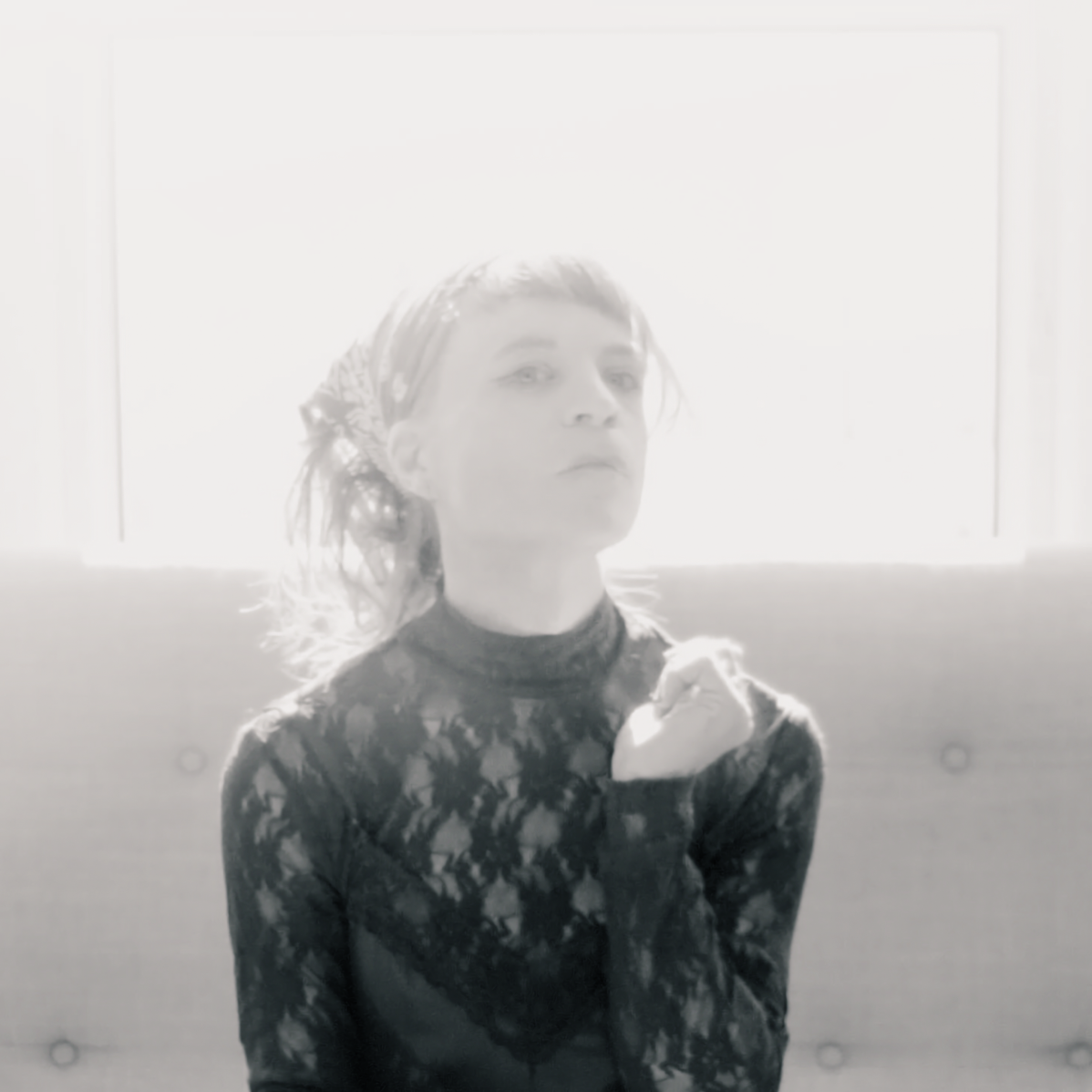
Working out of Brighton, Agnes Haus directs music videos and makes slow, dissonant drone music on a small modular synthesizer. The video work is perhaps better known, with clips for Mogwai, Penelope Trappes, Lau Ro, and Microcorps, whose “Zona” was shot in Brighton on Hi-8 and Mini DV, and its glitches were made by datamoshing and by filming a television screen. They also work alongside Trappes as her co-creative director, and their films have screened at London’s Queen Elizabeth Hall, Dark Mofo in Hobart, and SXSW.
Eidolon, out now on Richard Chartier’s LINE imprint, follows two cassettes for Opal Tapes and Inexorable Ascent on Nite Hive. Agnes Haus wrote it in anticipation of the images, which reverses their usual order of work: five cues, titled act.I through act.V, created with that dissonant modular rig and the occasional bowed tone from a handmade two-string, violin-like instrument. The music is beatless, slow, and dark, with the prominent hiss and grit of the rig left intact.
I’ve known Haus personally for a long while, spanning many of the ‘alter egos’ mentioned below, and have always admired their work. I found this new release particularly intriguing. I wanted to know what that reversal looks like from the inside, so I asked Agnes Haus about the film that could someday follow the music, the mention of Mark Fisher’s lost futures in the press materials, and the ghosts conjured by a modular synthesizer. The usual closer followed: something they love that more people should know about.
Over the last bunch of years, I have had several alter egos for different creative projects going on at once. When I moved to London in 2014, I created Agnes Haus as an identity to create visuals—Agnes being a name I always loved, as it was one of my grandmother’s middle names. Over the course of the following few years, people started calling me Agnes, and coincidentally, I also started identifying as non-binary around the same time. Infinite psychological explanations can be inferred here, but in the end, the name stuck. As it stands, I create slightly depressing aural landscapes with a small modular synthesiser that sound vaguely like bleak folk horror film scores.
I’m a bit obsessed with the dark and deathly side of things, which features heavily in my visuals and music—I like to think of it as a healthy acknowledgement of my shadow self. The visual side has emerged as a more viable thing at the moment, but sound is probably my first love.
As for the new album, I have this fascination with the concepts of time. Slow, slow music seems to do something strange to time—mirroring the parallax of how the world moves fast, while isolated elements move slowly and misaligned. I have a monthly radio show called Time Dilation, which also kind of explores this concept in other people’s slow and gritty work, but in my own music, it’s half-created by the limitation of my synth and half a study in hypnotising myself with restraint.
I do have a film that I want to make. It’s extremely rough and needs a lot of work, but it’s there. It’s loosely based on my childhood—interactions within the dark normalcy of depressing suburbia. A mild form of horror, really. I wanted to create the score so at least ONE piece of the interlocking rabbit hole of parts that make up a film was done as inspiration to finish everything else, which I thought might also help with acquiring funding to finish the film, or at least a residency to write in solitude. There are indeed five acts, which is a bit ambitious, but it’ll only be three if it’s a short film to start. Ideally it’ll be filmed on 16mm film to match the noise in the recordings—or maybe the other way around . . . As for whether anyone will see it, I certainly hope so! By stating all of this, I feel like I am manifesting a commitment to finish! But film is one of those art forms where ideas can easily fall into the sea and die forever, left unmade—economically ghosted.
The “lost futures” line is definitely a Fisher reference. I didn’t want to lean too hard into it in the hauntology sense, as it’s well-trodden territory, especially in music, but I feel an affinity with art that is classified under that umbrella. As for the sound, I’ve always been interested in hearing the process in the recording, and often that involves noise, artefacts, and dirt, which my modular produces constantly. Clean, polished music doesn’t feel as tangible to me . . . my favourite albums that I keep on listening to over decades are generally lo-fi noisy recordings. I think of it like epigenetics; it’s not random ghosts in the machine, but rather ghosts coming from me . . . from my generational traumas and forgotten lineages. Sort of nostalgic, but my childhood was often spent in solitude listening to music. A fond remembrance of bleak, lonely times somehow coming from me, into the machine, and out onto tape.
Philosophically, I honestly feel that time is all happening at once, and humans created clocks as a capitalist invention, like money or religion, to keep people feeling anxious about losing ground to others or the fear of being late to work. A means of control. I think the world needs to find a way to prioritise art over money. Nature over politics. Human connection over internet. Skinamarink over The Odyssey. Otherwise we are headed for such a homogenised Kafkaesque future, if we haven’t already gone there. Neoliberalism has taken its toll, along with the added death blow of AI and powerful tech bros running politics, but a more primitive kind of art is rising. Folk, punk, lo-fi, paint, 8mm, and older ways of creating. Not emulating it with modern plugins, but going through the full process, as that’s where the ghosts are. It’s magic to listen to the hiss of a real cassette recording . . . the irreplaceable spirits and energies are all there. I think it’s one of the few places where human positivity echoes on and repopulates.
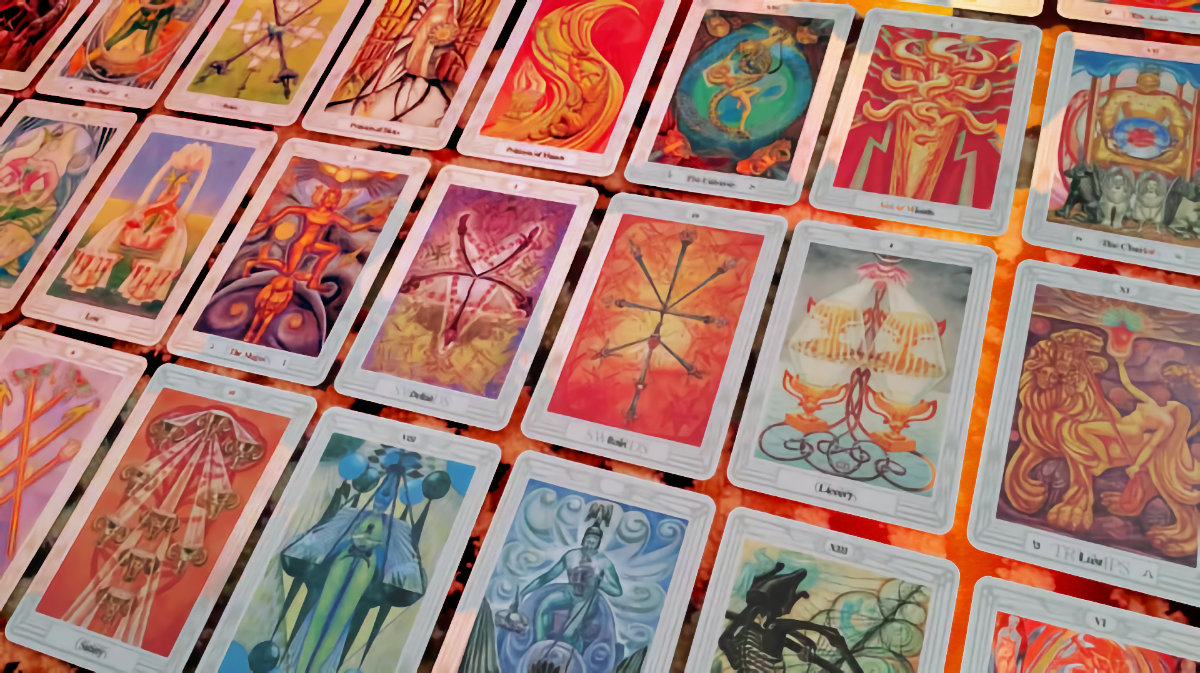
Agnes Haus told me about something they love:
I moved from the US to the UK, and when that happened, I sold nearly everything I owned, which has made me hesitant to collect more things. But one thing I adore owning is used pre-’90s tarot decks. I also have some new ultra-limited-edition decks, which are kind of amazing as well. As someone who has a hard time shutting off my mind to stop creating or working, a quiet night with a candle and a Thoth tarot deck reading does the trick.
The Run-Out Groove
- The Tonearm is a reader-supported publication, free of advertising and paywalls. Our supporters help fund our writers and make the site possible. Please consider joining and helping us to continue our mission.
- Join the rapscallions of The Tonearm on our new Slack community.
- Sign up to receive our latest articles directly to your inbox in a snazzy, easy-to-read email version. Just go to your account, manage your email preferences, and flick the lever to receive The Total Tonearm.
- The easiest and best way you can help us? Please share this newsletter and our stories with your friends.
Thank you for reading! We'll see you again next week. 🚀


Comments