


If the Beatles had still been a collaborative unit in 1968, and if they had to make do with the EMI Lagos studio that Wings would use for Band on the Run a few years later, then they might have made a sprawling record like the first or second albums from the Olivia Tremor Control. The world of the Olivia Tremor Control is one in which cellos, kazoos, distorted guitar, tape loops, and found objects all coexist—if not smoothly, then always in service of fascinating, cracked, ear-candy music. More than 25 years after releasing their second—and presumably final—studio album, the group has returned, after a fashion, with The Same Place.
The story of the Olivia Tremor Control is inextricably entwined in that of a larger organism, the Elephant 6 Collective. While it rarely paid handsome financial dividends to its participants, the Elephant 6 Collective was one of the most fertile creative musical incubators of the 1990s and beyond. Often—and often unfairly—tagged as “lo-fi,” the output of the Collective’s various aggregations was equal parts amateurishness and professionalism, experimentalism and pop songcraft, accessibility and difficulty.
With roots in Ruston, Louisiana—and that town’s murky and unexplained-to-this-day connection to fellow musical outsiders The Residents—the prime movers of the Elephant 6 Collective included Bill Doss, Will Cullen Hart, Jeff Mangum, and Robert Schneider. All but Schneider eventually migrated to Athens, Georgia, by then recognized as a hot spot for all things college-rock: B-52’s, R.E.M., Pylon, and more. But the Elephant 6 aesthetic was often more finely textured and less commercial-minded than the approach of Athens’ better-known musical exponents.
By the early 1990s, Doss, Hart, and Mangum had launched the Olivia Tremor Control with other like-minded musicians. Based in Denver, Schneider launched a record label, The Elephant 6 Recording Company. Eventually, his band The Apples in Stereo released a record on the label, as did Mangum on his exit from the Olivia Tremor Control with his new group, Neutral Milk Hotel.
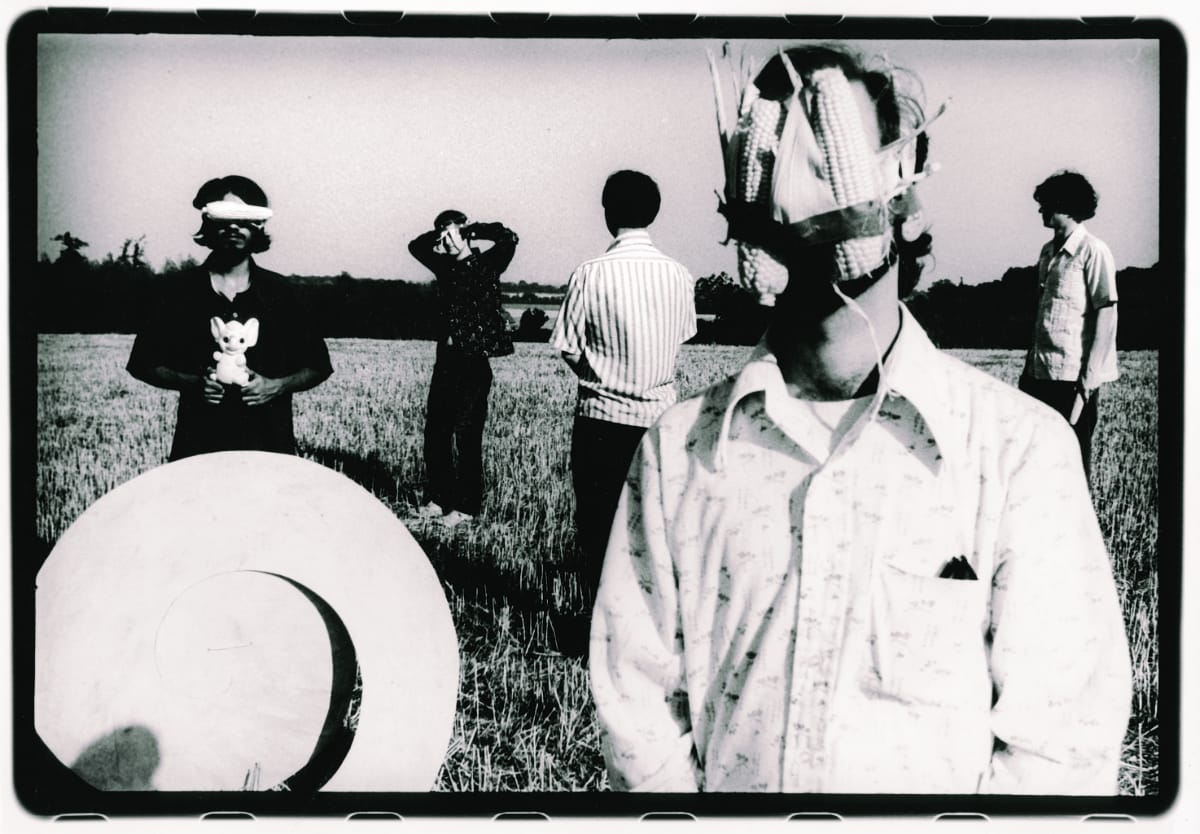
The Elephant 6 story got messier and more entangled as time went on. Other bands—of Montreal, Elf Power, and later Circulatory System and the Minders—all produced memorable music. But the core values of the Collective—and arguably its best music—came from the Olivia Tremor Control. The centerpieces of OTC’s catalog were a pair of critically lavished albums: 1996’s Music from the Unrealized Film Script: Dusk at Cubist Castle and 1999’s Black Foliage: Animation Music Volume One.
By the early 2000s, the Olivia Tremor Control had gone inactive, with their members inevitably moving on to solo projects and/or recombining forces in different ways. A reunion of sorts took place near the end of the new century’s first decade, with sporadic recording and a run of live dates. Founding member Bill Doss died in 2012, throwing the surviving members of the tight-knit group of friends into emotional chaos. More than a decade later, a revived Olivia Tremor Control completed two long-gestating tracks for a documentary film about Elephant 6; Hart died unexpectedly the day the songs were released.
But this time, the surviving members powered through their grief to finish what had been started long before. Spearheaded by multi-instrumentalists and producers Derek Almstead and Jason NeSmith, the group completed its long-delayed—and largely unexpected—third album, The Same Place. Informed by grief and loss yet exemplifying the hard-won optimism that characterizes much of the Olivia Tremor Control’s output, The Same Place ties a bow around the group’s history.
I spoke with Almstead and NeSmith about the genesis of The Same Place and how it fits into the group’s body of work.
The transcript has been edited for length, flow, and clarity.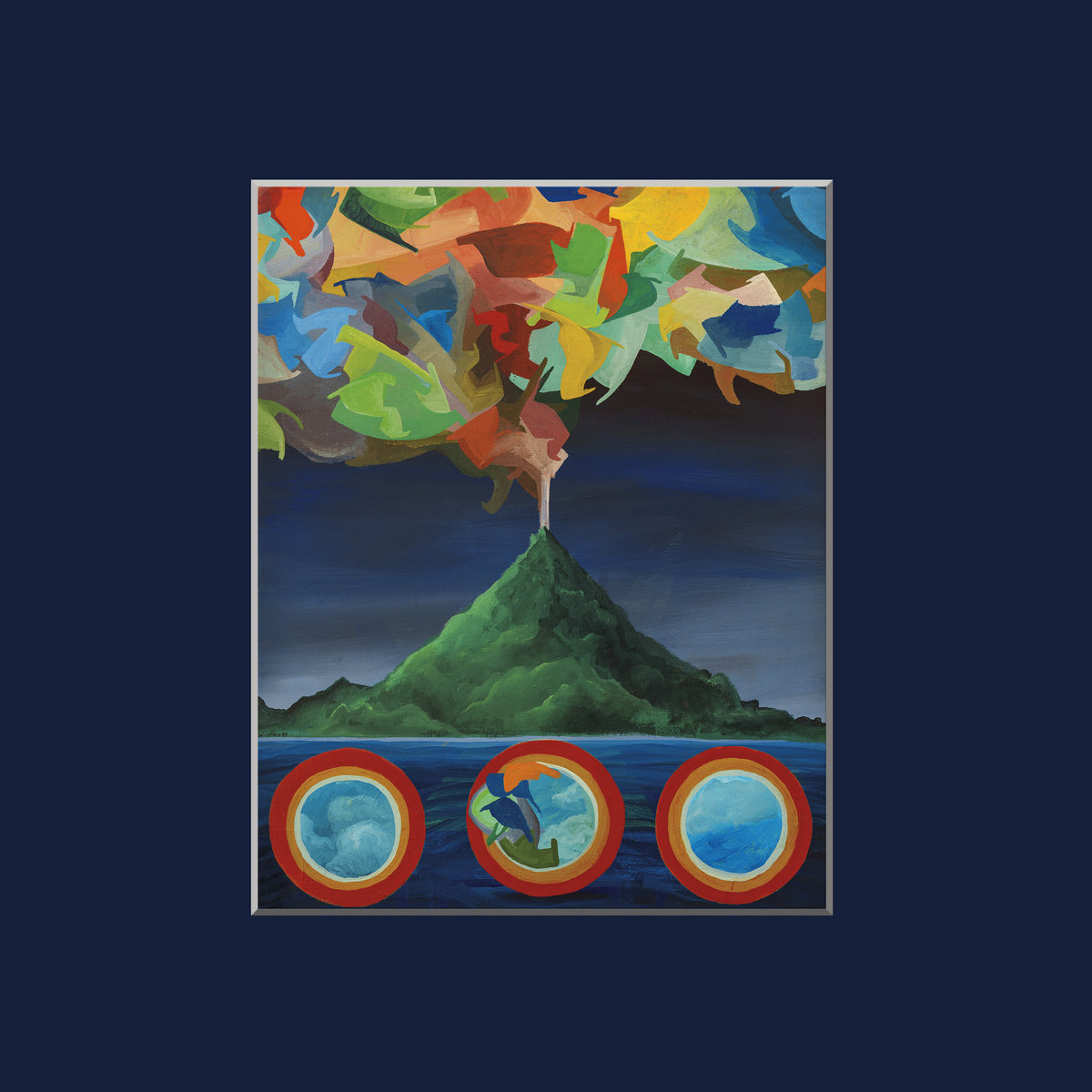
Bill Kopp: Derek, you landed in Athens back in ’95. How did you first come to be involved with Elephant 6?
Derek Almstead: I randomly met Kevin Barnes [of Montreal] at a weekend punk rock skater party where there was a half-pipe set up. I played a Minor Threat cover and a Bikini Kill cover on bass with a friend’s band. Kevin Barnes was there; we met, became friends, and soon started playing together. He was already friends with Elf Power at that point, and through Elf Power, I met everybody else within about a year of living there.
Bill: Tell me about the writing and recording that was going on in the early ’00s for what would eventually become The Same Place.
Derek: I joined Circulatory System in 2002. Will [Cullen Hart] and I started recording pretty much immediately at my house. I lived with of Montreal; I was still in the band at that point. And then also we’d do stuff at Will’s, in the front room of his house downtown. He had a digital 16-track—might have been a digital 8-track—but one of those rolling things.
We started maybe four of the songs that eventually ended up on this record—like “Begin Now!,” “The Spinning Continuous,” and “Meeting Ourselves” in 2002, 2003-ish. But to be fair, Jason really sort of exploded that and brought it back together in a new way. So sections of “Meeting Ourselves” and “Impressions Through the Ring” were all from that era, but they were sitting in the Circulatory System world in such a way that we’d work on them.
The trick with Circulatory System is that it’s pretty much Olivia Tremor Control minus Eric [Harris] and Bill [Doss], plus Heather [McIntosh]. So by the time we got back together in 2010, we were recording what became this record. There were definitely things from Bill and Will’s worlds that were like, “Hey, we never used this. How can we turn this into an Olivia Tremor Control song?” And that’s literally where those come from.
Jason NeSmith: The same thing was happening with Bill. After recording [The Sunshine Fix’s 2004] Green Imagination, he started to create more material, and he didn’t know what to do with it. He didn’t know what to call it; he didn’t want to use the names he’d used before.
He didn’t want to work with a record label; he was creating to create, bringing files to all his friends. Derek and I were two of those, along with lots of other folks. And some of those ended up being sort of thrown into the pot for The Same Place as well.
Derek: I remember “Garden of Light” specifically from when Elf Power was working on [2008’s] In a Cave at my house. We were working on that record, and Eric and I did the drum-and-bass foundation for “Garden of Light”; that would have been around 2008. There were some things in process, and then the band got a hold of them. We had a big meeting where we basically listened to everything everybody had. And we were like, “Okay, this is Olivia, and this will be Circulatory System. And this will be whatever Bill’s solo other thing is”—because he had a bunch of solo projects—“and then this will be Pipes You See, Pipes You Don’t” [aka Pete Erchick]. We were just separating things into piles, and those songs were the ones brought in at the time.
Bill: When you separated those songs out into piles, did it have to do with the character of the song? Like, “This just feels like an Olivia song. And this one doesn’t”?
Derek: Absolutely. I remember it being very easy. All six of us were in the room at the time, and there were no arguments or anything like that. Nobody fought for anything. Everyone knew that there were tons of outlets that you could go with, so why not just go with what flows?
Bill: Help me understand why the project remained incomplete for so long.
Jason: I wasn’t in the band at the time, so this is from an outsider’s perspective. Bill and Will were the sort of twin stars driving the band. Bill was the much more organized engine. Losing him [he died of an aneurysm in 2012] meant that everybody was just so grief-stricken; there was nobody to focus. I think there was so much sorrow and trauma from it that nobody really knew how to bring it back together. There wasn’t a single person who had the capability of taking all of those people spinning out and away from this incredible project and bringing them all back together to finish it. It just wasn’t a possibility.
Derek: I can be much more specific. We didn’t have the hard drive. We very stupidly had one hard drive that we were passing around for the project. And the week before he passed away, Bill was like, “Hey, can I take this home? I’m gonna work on some vocals.” And then through miscommunication and time and grief and those other complications Jason was talking about, it just sat there.
Jason: It was up in Bill’s attic. His widow, Amy, still lives there; I don’t know how often she goes up to the attic. But the hard drive sat untouched for years.
Derek: So in 2023, Jason made contact with Amy through Will and said, “Hey, can we go up there and look at the hard drive?” And he crossed his fingers when he pressed “power,” because who knows what could happen? It had been sitting there for 11, 12 years unpowered. It’s a miracle, really.
Jason: And that hard drive had so much more material than anybody remembered.
But before that, when Robert was involved with making the documentary with Chad [Stockfleth], Robert had two CDs of rough mixes that Bill had made; he shared those with me. We were just going to work on two songs for the purposes of the documentary. We would finish those songs, put them out as a single, and that would be the end of Olivia Tremor Control as a record-producing entity. But listening to those two CDs, I thought that there was a lot more there than just a single. And I know that OTC is a double-album band.
Derek: And Will would push for that as well.
Jason: I think it was a reaction to the time lost from the previous grief-stricken episode, like a lesson: “Don’t sit.” I don’t know if it was the day that Will passed—maybe I waited a couple of days—but I know I was walking around for a couple of weeks just thinking, “Don’t forget anything. Write all of it down. Record all of it. Take all the text messages that you and Will had, and save those. Don’t stop making the record; keep going.”
Derek: Yeah; who knows what the record would have been had they not passed away? I mean, we could have been done with it in 2013, and then it would have been a completely different thing. But they did, and here we are. It’s a Schrödinger’s record.
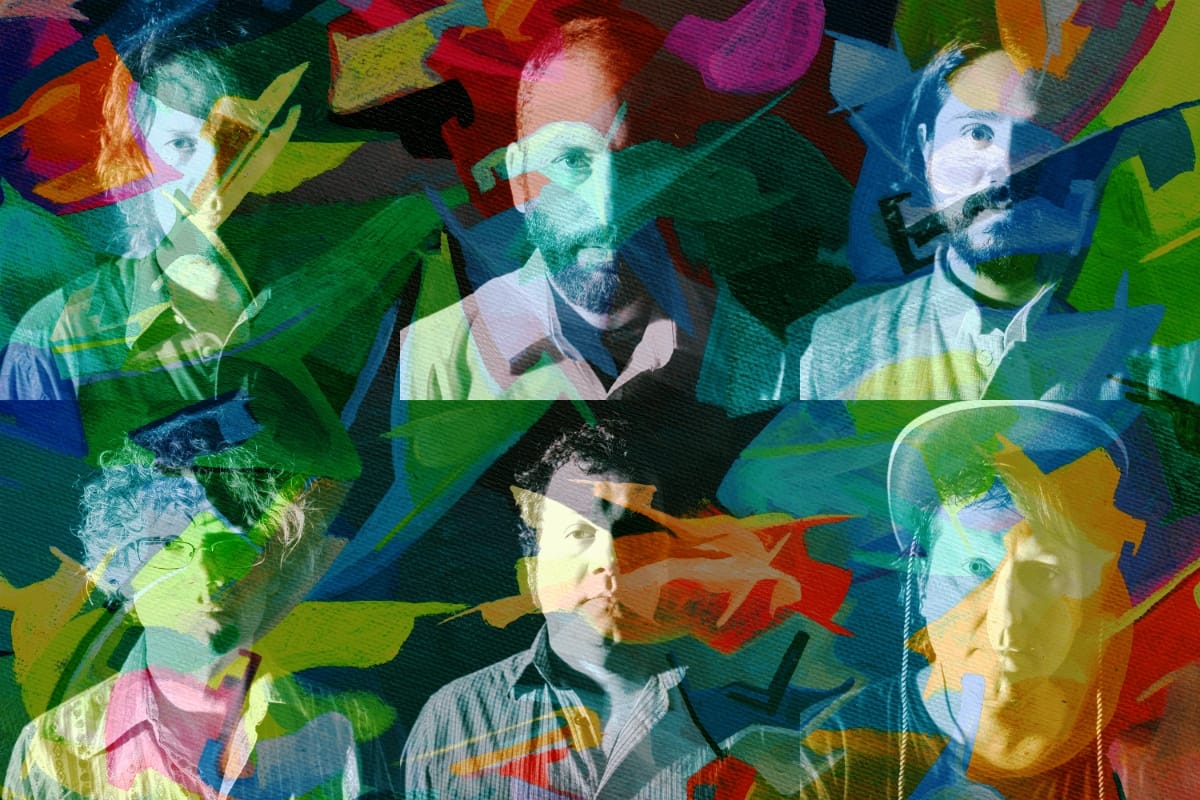
Bill: Do you think that “sounds loose, but isn’t” is a key part of the Olivia Tremor Control aesthetic?
Derek: Absolutely. That’s cooked in. Those songs, we didn’t struggle to make them sound like that. It’s just that the songs work like that, and the energy works like that. When you start playing “The Opera House” on stage, you get intense; you can’t help it. It’s fun; we’re all singing at the top of our lungs, playing at peak volume.
At that time, we were doing the entire “Green Typewriters” suite. We were traveling, doing that as a full piece, as the full, 20-minute-long song. And it was awesome! I had a typewriter on stage next to my drum set that I would play in that section. John [Fernandes] and I both had pitch shifters for our vocals. We were really like, “Let’s bring as much color as we can into it.” A lot of the songs are mashups of pieces, so they feel almost chaotic; to get from A to B, there’s a chaos moment. And that’s just the way it works.
Bill: In a very real sense, The Same Place is a tribute to the creativity and memory of Will Cullen Hart and Bill Doss. Is there any kind of possibility of—or would it even be appropriate for there to be—live work in support of the album?
Derek: No and no.
Jason: Who would want that? How would that ever be satisfying?
Derek: Yeah, Jason: you put on an orange wig. I’ll get up there, drink a gallon of coffee.
Jason: I mean, I would love for that to happen. But it’s just a physical impossibility on this timeline.
Check out more like this:
 Carl Dexter
 Bill Kopp


Comments