


Austin, Texas native Pat Blashill braved bedrooms, basements, back rooms, and the barrage of the mosh pit to bring home photographic accounts of Texas punk boiling up. His latest book, Someday All the Adults Will Die! The Birth of Texas Punk lays it all out in photos and oral history. He was kind enough to take some questions over email.
The transcript has been edited for length, flow, and clarity.Andrew Hamlin: Where in Austin did you grow up? What are your earliest memories of family, friends, and home?
Pat Blashill: We lived way out on the edge of town, outside the northern city limits. Close to Braker Lane, which is now practically central Austin. I went to Walnut Creek Elementary School, and I especially remember playing in our big yard on summer evenings and that fresh-mown grass smell. We lived in a solidly middle-class tract house development, but the people on the next street over were a little less well-off, and just up the street was a much poorer neighborhood, so I understood the idea of haves and have-nots.
Andrew: You mentioned loving the Beatles at age five, and Led Zeppelin at age twelve. What were your favorite songs and albums? How did those bands pave the way for your love of punk?
Pat: I loved the Beatles’ White Album and still do—Paul was my favorite Beatle. I would hate to have to pick a favorite Beatles song, though.
Led Zeppelin II and Physical Graffiti are probably my favorites, but Zeppelin records are all pretty great! I never stopped loving pop music and great melodies, but when I made it into my teens, I started leaning into heavier sounds and slightly darker moods, so that may have set me up for punk. I also always liked the weirder stuff. Two of the first records I ever bought were Roxy Music’s Greatest Hits and Mott the Hoople’s All the Young Dudes, which I feel are closer to punk than the hard rock I was listening to.

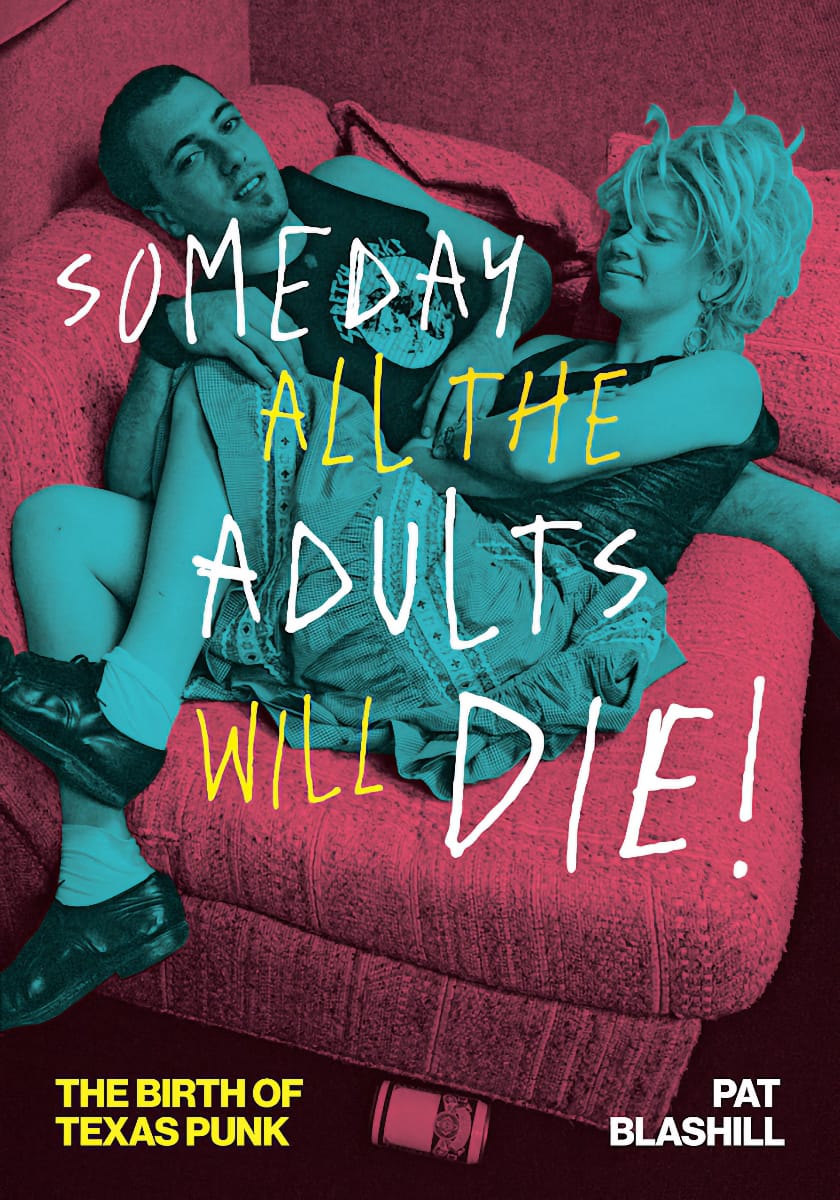
(L) Linda & Rene on the roof of their parents’ house, suburban Austin, fall 1984. Photo by Pat Blashill. (R) The cover for Someday All the Adults Will Die! The Birth of Texas Punk.
Andrew: How and why did you get started in photography? When and where did you pick up your first camera? What make and model was it, and how did you get it?
Pat: My father gave my brothers and me Kodak Instamatic cameras when we were very young. Then in high school, I took a photo class and learned how to use a 35mm camera. I started with a Canon TLb, and have stuck with Canons—the lenses are quite good. I still use the all-black Canon F-1 that I shot many of my best music pictures with—it’s a beast!
As to the “whys” of it, I’ve just always liked composing a photo, trying to fit the most important information into those four lines of the frame. It’s how I make sense of the world.
Andrew: What were the first signs of punk, new wave, or whatever you want to call it, in your area? What were your first reactions, and how did they grow and change?
Pat: Weirdos like me were already looking at rock magazines in the early to mid-1970s, and we started seeing photos and reviews of punk bands, especially in Creem and Circus magazines. So I started buying some of the music they were hyping, like the first records by Devo, the B-52’s, Gang of Four, and Wire, even Squeeze and the Cars. I loved it all, maybe because it sounded so different from Emerson, Lake & Palmer and mainstream shit like the Starlight Vocal Band.
Then I met my friend Steve [Collier], who was the first drummer for the Big Boys. He invited me to one of their early shows, and I was instantly converted into a genuine Texas punk rocker.
Andrew: I saw a lot of references to Devo. Did Devo hang over the scene like a sort of haunting?
Pat: Devo were very important to me and my friends, and also to lots of skateboarders, whose taste is often interesting. Devo used synthesizers and melody in a totally funky way, and their riffs were really convulsive, heavy, and rubbery all at the same time. I’m listening to them right now, as a matter of fact.
That said, a lot of other people underestimated and misunderstood Devo as a novelty group. So some punks seemed to be quick to disown Devo’s influence on them. The Butthole Surfers were an exception—they have always been vocal in their admiration of Devo.
I think a similar thing happened with the B-52’s. I think both their music and their concept were brilliant and singular, but people often misunderstood their sense of humor and took it as a sign they were just a goofy party band. The queer aspect of their music was overlooked by many. But go back to “52 Girls” from their first album, and you will hear a very savage group, who were certainly just as innovative as more critically acclaimed bands.
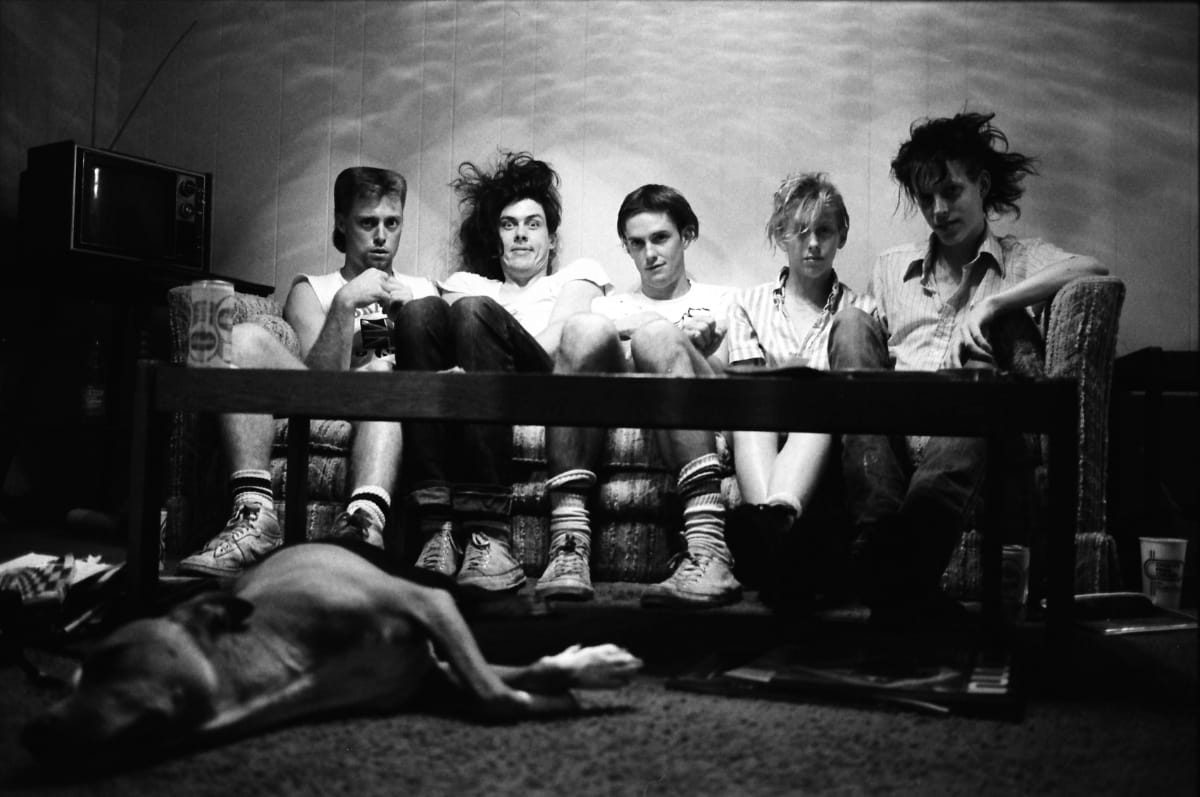
Andrew: You’re known far and wide as a photographer. What led you to do oral history for this book? Which oral histories and other books inspired you?
Pat: Actually, I was an avid reader and aspiring writer before I started using 35mm cameras. I’ve always enjoyed doing both, but I was much more financially successful as a writer in New York City in the 1990s. I wrote about music for Details, Spin, Rolling Stone, and lots of other fancy magazines, and that’s how I learned how to really hone my writing. I also learned how to interview people, and I still really enjoy hearing people tell their own stories in their own style. Texans often have marvelous storytelling skills, and I love their accents and the sound of their voices, so oral history seemed like a good way to tell the story of Texas punk.
Two non-music oral histories have been really inspiring: Ryszard Kapuściński’s The Emperor, about the last days of Ethiopian emperor Haile Selassie; and The Good War, by Studs Terkel, about World War II.
The two rock-and-roll books that have inspired my writing about punk most are probably Michael Azerrad’s Our Band Could Be Your Life and Jon Savage’s England’s Dreaming. Legs McNeil and Gillian McCain’s Please Kill Me is good, but it doesn’t focus on music as much as sex and drugs, so it comes up short. The best purely oral-history book about music I know is Mark Yarm’s Everybody Loves Our Town, about Seattle and grunge music.
Andrew: What are your best, worst, and wackiest stories of watching and photographing Austin punk shows? Were you ever in fear for your life?
Pat: Too many to tell! I never feared for my life. My subjects were my friends, and most everybody was used to me shooting pictures, and liked my photos. The best experience back then was taking pictures at a really insane Butthole Surfers or Scratch Acid show and feeling the crowd, the band, and everything in the room throbbing at the same time, on the same wavelength, just that feeling of being in the middle of the best noise you’d ever heard.
The worst moments usually involved some of the violent skinheads who were a curse on our scene. They would beat people up, steal shit, and destroy the clubs. I was at parties where we all had to clear out because some toothless Agnostic Front fan was beating up his girlfriend and anyone who tried to intervene. Those nights were the exception, but they were pretty awful.
One wacky night I can remember was being at a house party with members of the Big Boys, Doctors’ Mob, and some other folks. There wasn’t a band playing—we were just listening to punk records in a bedroom, and we spontaneously formed a mosh pit and started crowdsurfing in this little 20-foot-square room. It was really goofy, but we were just set on making our own fun that night.
Andrew: The Big Boys and the Dicks both had a power trio plus a singer; both singers were aggressive, over 300 pounds, and defiantly out of the closet. How did the bands compare/contrast in other ways? What were their biggest differences?
Pat: The Big Boys and the Dicks did a lot of shows together, but they were like the sun and the moon—or the Beatles and the Stones—in our scene. The Big Boys were ultimately very uplifting and positive, but the Dicks were scary. I made friends with the Big Boys immediately—they were the first punk band I ever saw—and they really invited me and many others into the scene.
I saw the Dicks’ very first gig, but they were so nasty and mean I avoided them for years! It wasn’t until I listened to their records (especially their side of the live record they split with the Big Boys) that I realized they had made some of the most astonishing, dirty, and passionate punk recordings in history.
Andrew: Which bands on the scene meant the most to you, and why?
Pat: The Big Boys were just a really good time, and they supported almost everyone in the scene. They were the scene’s godfathers. Butthole Surfers were so weird, funny, and theatrical—a photographer’s dream. And they made good records as well. Scratch Acid were a strange cross between arty punk and Led Zeppelin. They were psychedelic and trippy but in a nightmarish, violent way. And I loved Poison 13, who were bluesy and gothic but still very punk—like Austin’s answer to the Cramps and the Gun Club. And as I mentioned above, once I listened to the Dicks’ records, I realized they were one of the best American punk bands ever.
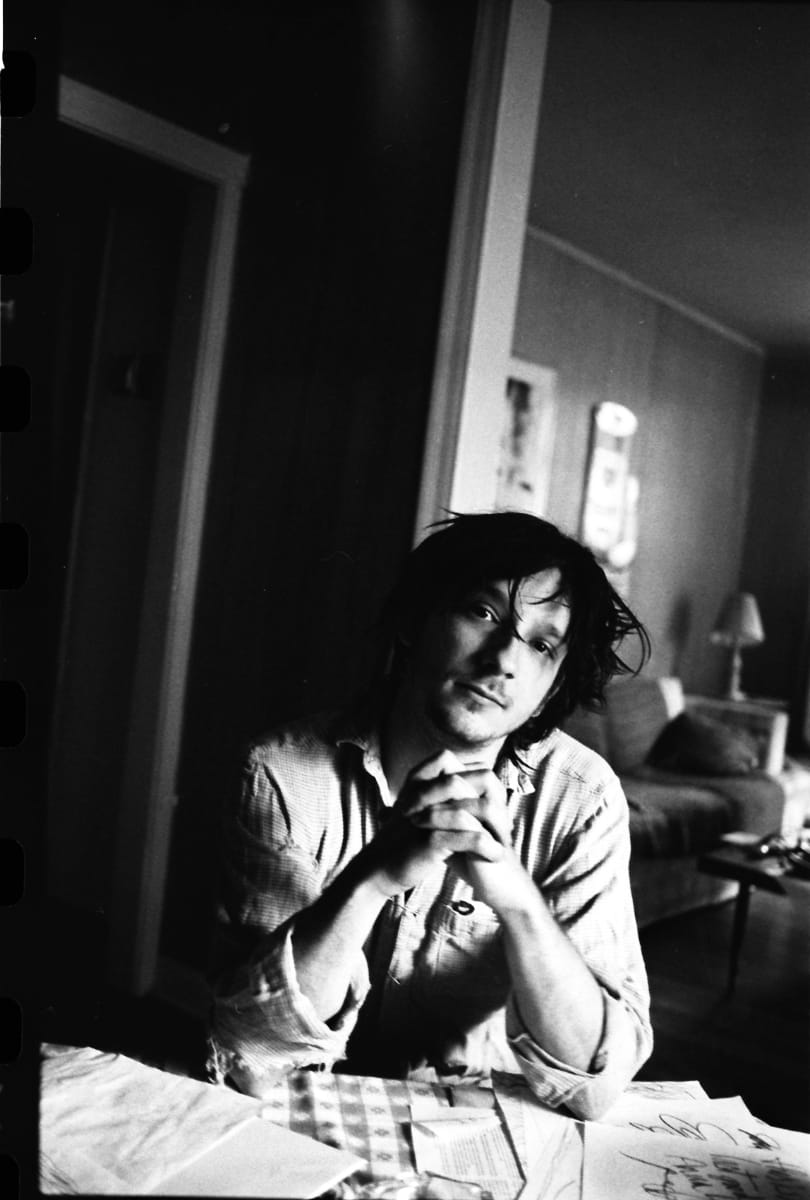
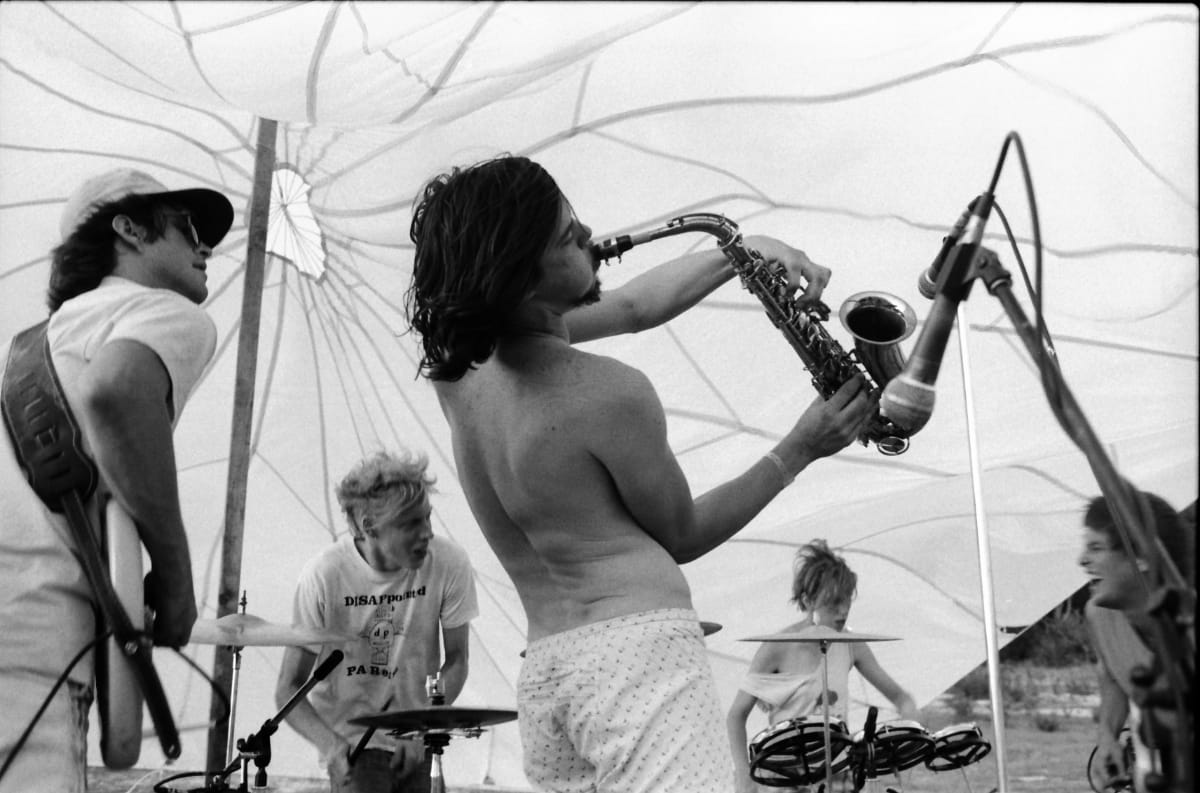
(L) David Yow at Muffy’s house, Austin, fall 1984. (R) The Butthole Surfers play a beach party, near Austin, June 1984. Photos by Pat Blashill.
Andrew: What impressions of punk outside Austin, and outside Texas, did you get—not only from bands touring, but records, cassettes, zines, stories making the rounds, media coverage, etc.?
Pat: In Austin, we were lucky enough to have great record stores and bookstores, so we were able to get English punk import records, and eventually punk fanzines from other parts of the US. Of the English groups, I think many of us in Austin were knocked out by both Gang of Four and Wire. By 1981, more of us were listening to Black Flag, Fear, and Bad Brains. I was never really a hardcore punk guy—it seemed very regimented and limited musically—but I loved the Misfits because of their B-horror movie obsession, and the Dream Syndicate and the Gun Club as well.
So I listened to and loved a lot of very different new wave and punk from the US and England. But when I started going to Raul’s, Club Foot, and other early Austin punk clubs, I didn’t like the local bands that sounded too much like UK bands or New York punks. It seemed like those groups were just following a template, and I thought Texas should have our own kind of punk. Something with a local twist. In the second wave of local bands, Austin punks really started sounding different from other bands I’d heard from other parts of the world. It became a very open, aesthetically free scene.
I can’t speak for others, but I certainly enjoyed the diversity of Texas punk (including bands like Marching Plague from San Antonio), and I think we started to expect bands to sound singular. So when bands like Crucifix came to town they got a lukewarm reception, but when Flipper and Sonic Youth came to Austin, we all went apeshit.
Andrew: The Butthole Surfers have two whole books and a whole movie to themselves. Your thoughts on those?
Pat: I assume you’re talking about the books Let’s Go to Hell by James Burns and What Does Regret Mean? by Aaron Tanner and Melodic Virtue. Both of those books are awesome in different ways. Hell is fascinating for its obsessive detail and enthusiasm, while Regret is just a gorgeous illustrated document of a band that was always a perverse, sideways art project.
I’m very happy about Tom Stern’s film The Hole Truth and Nothing Butt! It does a great job of capturing the madness but also the poignancy (!) in the Butthole Surfers, and most of the press about the group never quite got that balance right.
The funny thing about the Butthole Surfers, though, is that they’re very accomplished; they did so much crazy shit, and they had so many bananas ideas that I think we could make a few more books and movies about them and still find new things or hear more wild anecdotes. I say bring it on!
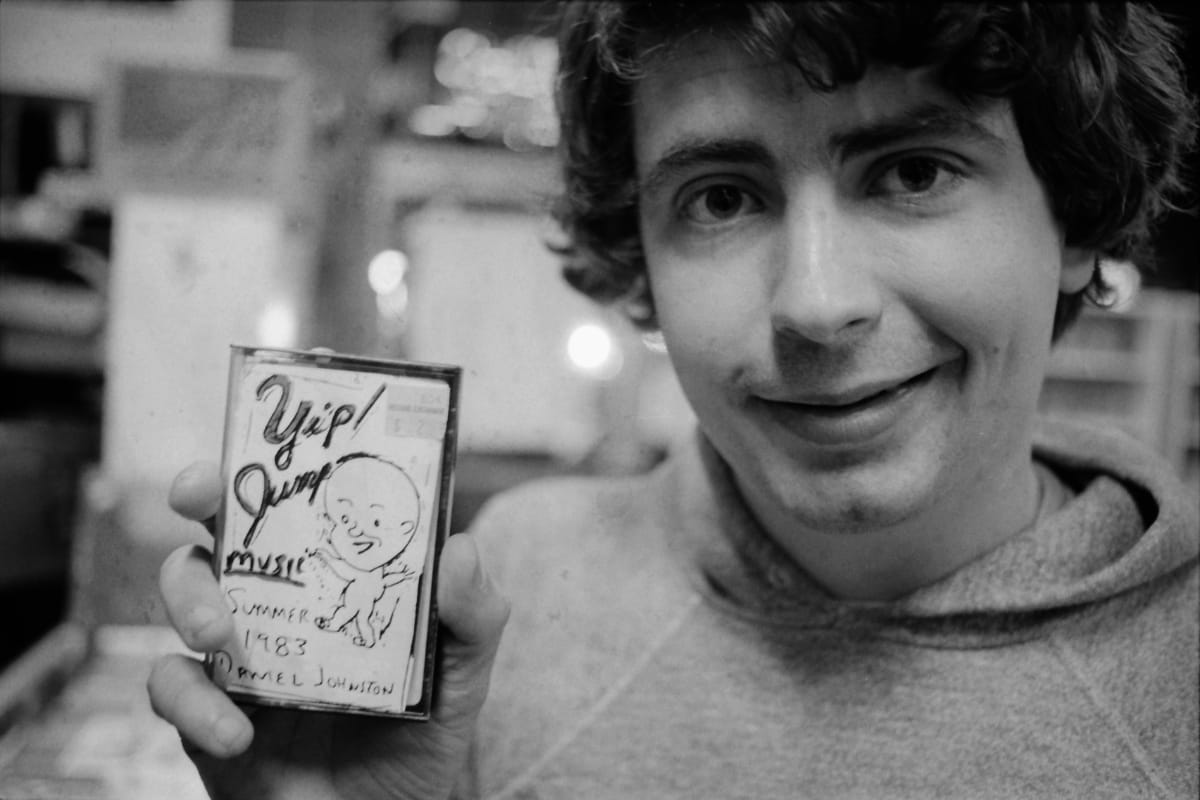
Andrew: Daniel Johnston has his own movie, at least. What was Johnston like in live performance, and to talk with?
Pat: (sighing) Okay, Daniel. Daniel was an odd duck, but he was very friendly and determined. He was always on the Drag (the main UT student street in Austin) or at my favorite record store, handing out his tapes. His music is obviously very raw and challenging, but painfully honest.
I liked him, but didn’t see him perform live in Austin that often. I do remember one riveting show he played in New York City after I’d moved up there. He was deep into a mental health emergency that was playing out like a slow-motion car crash across Manhattan. He performed four or five songs at a place called the Cat Club, shaking and rolling his eyes to the heavens. Afterward, we bumped into each other, and he told me I should come to Jesus. It was disturbing.
I am really happy Daniel’s music has come to mean so much to so many people, but I wish life had been easier for him. I wish he had experienced more joy.
Andrew: Of all the people on the scene who’ve died before, during, and after the book was coming together—who do you miss most, and why?
Pat: I am very sorry we’ve lost Biscuit from the Big Boys, and Gary Floyd from the Dicks. Same with Daniel Johnston and Roky Erickson, who was from an earlier generation but was still very punk in my book. But the person we’ve lost that I had the most personal connection with is Teresa Taylor [aka Teresa Nervosa], one of the drummers from the Butthole Surfers. Teresa was a real Texas character: she was super smart and articulate about music, art, and film, but she could also tell a really funny poop joke. With a heart of gold.
I interviewed her in 2017, and I hadn’t seen her in about thirty years. We were talking about some band or another, and then Teresa just stopped mid-sentence and said, “Do you remember that one night in 1984 when you and I were sitting on the loading dock in front of [Austin club] Voltaire’s Basement, just talking and swinging our legs over the curb? That was a nice night.”
Stay on top of The Tonearm.
Subscribe for exclusive interviews, cultural tip-offs, and community fun.
And your support keeps our site free of advertising and paywalls.
Andrew: The chapter about Nazis and skins in the scene was painful to read. In your view, how could the scene as a whole have handled that infiltration? Do you have any advice for young punks today on the subject?
Pat: I wouldn’t presume to say how we could have confronted racist behavior in our scene any differently. Most of us did the best we could in a complicated situation. Most of us were not racists, but we were not acting as anti-racists.
It was indeed painful to watch a dozen or so racist skinheads fuck up our scene, but some of our bravest brothers and sisters stood up against these dickheads, and most of the villains eventually moved on, perhaps to towns where they were less actively confronted. I never threw a punch or took one from a Nazi, but I had some close calls.
One thing I always think about is a guy in our scene named Roger. He was a big fan of most of our best bands, and he’d always show up, often climbing onstage to sing along with them. But he fell in with some bullies and skinheads, and some of those cats were Nazis. But Roger himself was actually Mexican American, and he had some conflicted feelings about that. He eventually realized he was on the wrong side of things, but before that, I was pretty scared of the guy.
I try not to give advice to anyone unless they really ask for it, especially not young people. But I can say that I’ve liked watching anti-racists who show and tell. The local punk club I go to here in Vienna, Austria, has a sign that reads something to the effect of, “This is a safe space. If you are racist, homophobic, or sexist, you are not welcome here and will be asked to leave.”
So that’s an example of telling. Showing racists they are not welcome is of course harder and more dangerous, but sometimes, somehow, it has to be done. And if you want to stay free, the sooner you show haters they’re not welcome, the better.
Andrew: What led you to move to Vienna? How does the city compare/contrast with Austin, and with other American places you’ve lived?
Pat: Old story: I fell in love with a beautiful Austrian woman. The EU is, of course, very different from the USA. I miss my American friends, and I miss swimming in an ocean of English language and US culture. But it’s beautiful and very peaceful here, and I really like having clean water and good health care!
Check out more like this:
 Chaim O’Brien-Blumenthal
 Andrew Hamlin


Comments