


It's hard to think of another musical form that inhabits such a creative symbiosis with visual art as does jazz with photography. From iconic Blue Note and Prestige album covers that remain etched in our memory banks to striking portraits of musicians and singers, jazz and photography have been intertwined for as long as we can remember.
Few understood this better than Don Schlitten. As a record producer, he spent a lifetime dedicated to jazz music, recording musicians like Duke Jordan, Gigi Gryce, and Red Rodney, to name but a few. "Don gave me challenges to rise towards, and it helped me grow," Houston Person told writer Ted Panken for the book. "He realized what musicians could do that other people might not have recognized."
As a writer, he penned hundreds of liner notes for jazz albums over the decades. And as a record label owner himself, most notably with Xanadu, he managed to record and distribute records by hundreds of artists, famous and obscure alike, getting their music and visions into the world. "Don planned through his recordings in advance, and spent a lot of time thinking about who works well with who," Gary Giddins recalled to Panken. "He understood how to get the best out of the musicians he was working with. You felt something magical going on."
He was a jazz scholar, memorizing discographies and songs, a trait that did him well, like when he first worked with Sonny Stitt in 1968, and the band was searching for tunes. "I suggested 'Ratio and Proportion,'" Schlitten recalled in a contemporary interview. The tune, an obscure one that Stitt had recorded twenty years earlier. "Sonny's eyes lit up. He remembered the song, and they played it. I think he looked at me differently afterward, because he knew that I knew."
What few on the outside knew, but those in the deepest jazz circles revered, was Don Schlitten's talent at capturing the musicians he admired and collaborated with on film. Now with the release of the book Love and Understanding: The Jazz Photography of Don Schlitten by Ted Panken and Zev Feldman, readers can dive deep into the photographs of Schlitten. He began photographing jazz in the fifties, and for the next twenty-five years, took a wealth of images of his musical peers. In Don's photographs, viewers can almost feel the expressiveness and improvisation that came across on the records he produced. They capture the quiet moments, the most candid moments of jazz legends, as well as the roar of the stage and the combustion of creativity.
Don Schlitten's creative drive began at a young age. Born in the Bronx in 1932, he attended the prestigious High School of Music & Art in Harlem, whose student body at the time featured, amongst others, several founding members of Mad magazine. With his creativity encouraged by his protective mother, Schlitten's interest in art sprang up as a child, only surpassed by his discovery of jazz in high school. As his friend Ira Gitler recalled in a 1969 profile from DownBeat magazine, "One day in Manhattan, he spotted a music magazine on a newsstand. It was Metronome."
Having been fascinated by the music of Louis Prima and burning to know who his tenor player was, the teenaged Schlitten eagerly bought the magazine. While he didn't find out that info, he made a stirring discovery, one that would change the course of his life. "He read a review of Savoy's Tenor Sax Album and decided he needed it. For his thirteenth birthday, he got five dollars from his Uncle Harry and instantly purchased the record." As Schlitten described it so succinctly, "I heard Coleman Hawkins, Ben Webster, Lester Young, and Don Byas, and I knew that this was my music."
Not satisfied with merely hearing these artists on record, Schlitten made a point of going to see them perform whenever he had the chance. He took special note of bebop legend Charlie Parker, managing to catch the Bird perform around NYC and his home base of the Bronx whenever possible. By the time he'd reached high school, he was becoming a fixture of the clubs of 52nd Street and mingling with the movers and shakers of the jazz world, something that would come in handy soon enough.
Newly graduated from Music & Art, he enrolled at the New York Conservatory of Modern Music; unfortunately for Schlitten, the school folded before he could graduate, necessitating that he get a job as a commercial artist. Bringing his portfolio to Bob Weinstock, who'd launched the New Jazz and Prestige labels a few years earlier, the young artist received instant work designing album covers for them. His layouts and designs evoked a modernist leaning, in keeping with the new sounds on those records by Miles Davis and the Modern Jazz Quartet. Seventy years later, they still bring a vibrancy when viewed.
His fledgling experience in the music industry served well when an uncle of his loaned him money to buy a stake in a different jazz label, Signal Records, which was started by fellow former Prestige employee Jules Colomby, revered by none less than Miles Davis, who credited Colomby with turning his career around after a 1954 sextet recording with J.J. Johnson, Lucky Thompson, Horace Silver, Percy Heath, and Art Blakey.
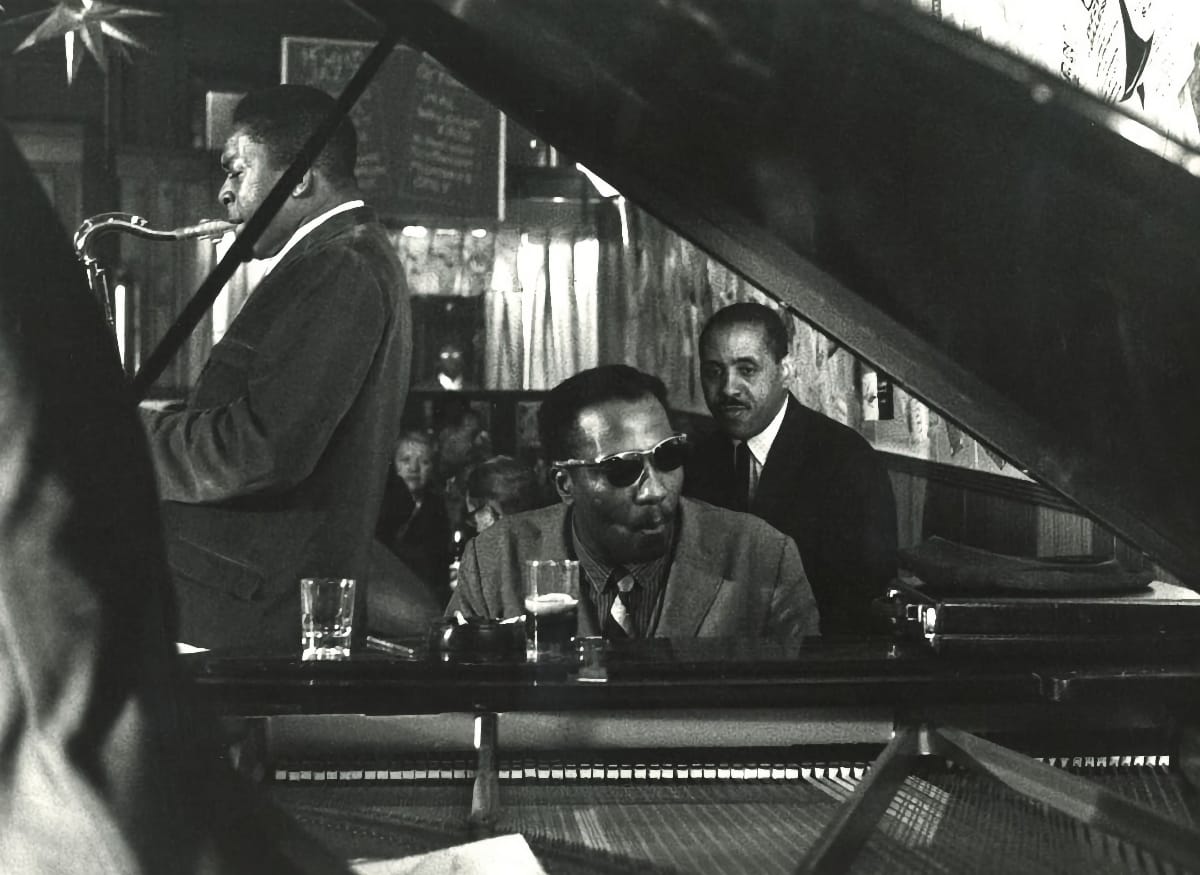
It was around this period that Don Schlitten became a serious photographer; as he told it, he first started exploring the camera shops in Manhattan during lunch breaks as a commercial artist, after being encouraged by work colleague Warren Fitzgerald. Wasting no time, the earliest photographs in the book, taken in 1957 at the Five Spot club on the Lower East Side, show Thelonious Monk performing with John Coltrane, Ahmed Abdul-Malik, and Shadow Wilson, together forming his band during this period. Knowing firsthand the darkness of jazz clubs, he "clipped two floodlights to the bar for the length of time it took to take 36 shots." The resulting photographs capture the tightness of the musicians and intimacy of the moment; Monk and Coltrane clearly grooving off one another, while patrons in the background soak it all in.
Newly married, and with a child on the way, Don Schlitten returned to his commercial art job, though never giving up the chance to shoot jazz in nightclubs or on excursions to the annual Newport Jazz Festival. And he was finding encouragement on all levels; taking a class from Harper's Bazaar art director Alexey Brodovitch, he was given an assignment to go to Greenwich Village and photograph art. He returned with "a picture of a jazz musician. When they passed the pictures around, [Brodovitch] picked it up and said, 'This is what I was talking about!'"
Encouraged, Schlitten began taking pictures at a rapid pace. The color shots from Newport in the book are as bold and bright as the day they were taken. Whether it's Buddy Tate laughing it up with Brew Moore, Milt Jackson at work on the vibraphone, or Paul Gonsalves honking away on sax, these photos put the viewer in a time and place, and much like the music being played on those stages in the photographs, it will never be experienced again. It's a moment captured in time.
Others were picking up on Schlitten's eye for detail; no less than DownBeat picked up a photo of Zoot Sims at the Half Note. His old boss Weinstock saw it and promptly asked him to art-direct his entire stable of labels. Suddenly, his photographs were being seen by everyone who purchased a Prestige album, be it jazz, blues, folk, or country. His influence at the label rose, as he began overseeing recordings by vibraphonist Dave Pike and veteran swing pianist Claude Hopkins. By 1964, he'd become head of A&R for the label, which led Schlitten to seek out young talents to record and champion those he felt weren't getting the respect deserved. Chief among them was pianist and composer Jaki Byard. Considering their friendship and work together, it's surprising there's only one shot of Byard in the book, but it's a great one, showing the legend laughing in a moment of candor.
It wasn't unusual for Schlitten to get jazz legends in such candid moments; be it Junior Collins staring into a restaurant window, a shot reminiscent of Garry Winogrand's work; Yusef Lateef cracking a smile, or even Booker Ervin waiting with his gear for a ride. By knowing his subjects, he managed to capture their true essence, not just as musicians, but as people.
As the sixties turned into the seventies and jazz music became even more freeform, Schlitten continued working for Prestige, with his freedom there allowing him to conceive of records like 1970's Consciousness!, which featured alto saxophonist Eric Kloss with guitarist Pat Martino and the electrified rhythm section of Miles Davis's band. But records like this weren't part of the label's future, and Schlitten left by the end of the year.
Ironically, it would be in the past that Don Schlitten saw the future; in 1968 he spearheaded the Historical division of the label, which saw them unearth rare performances and obscure sides by artists like bebop legend Coleman Hawkins and pianist and composer Mary Lou Williams. With a new generation of listeners discovering jazz, younger audiences could hear these records and get the same joy from them that Schlitten had when he first discovered jazz as a kid.
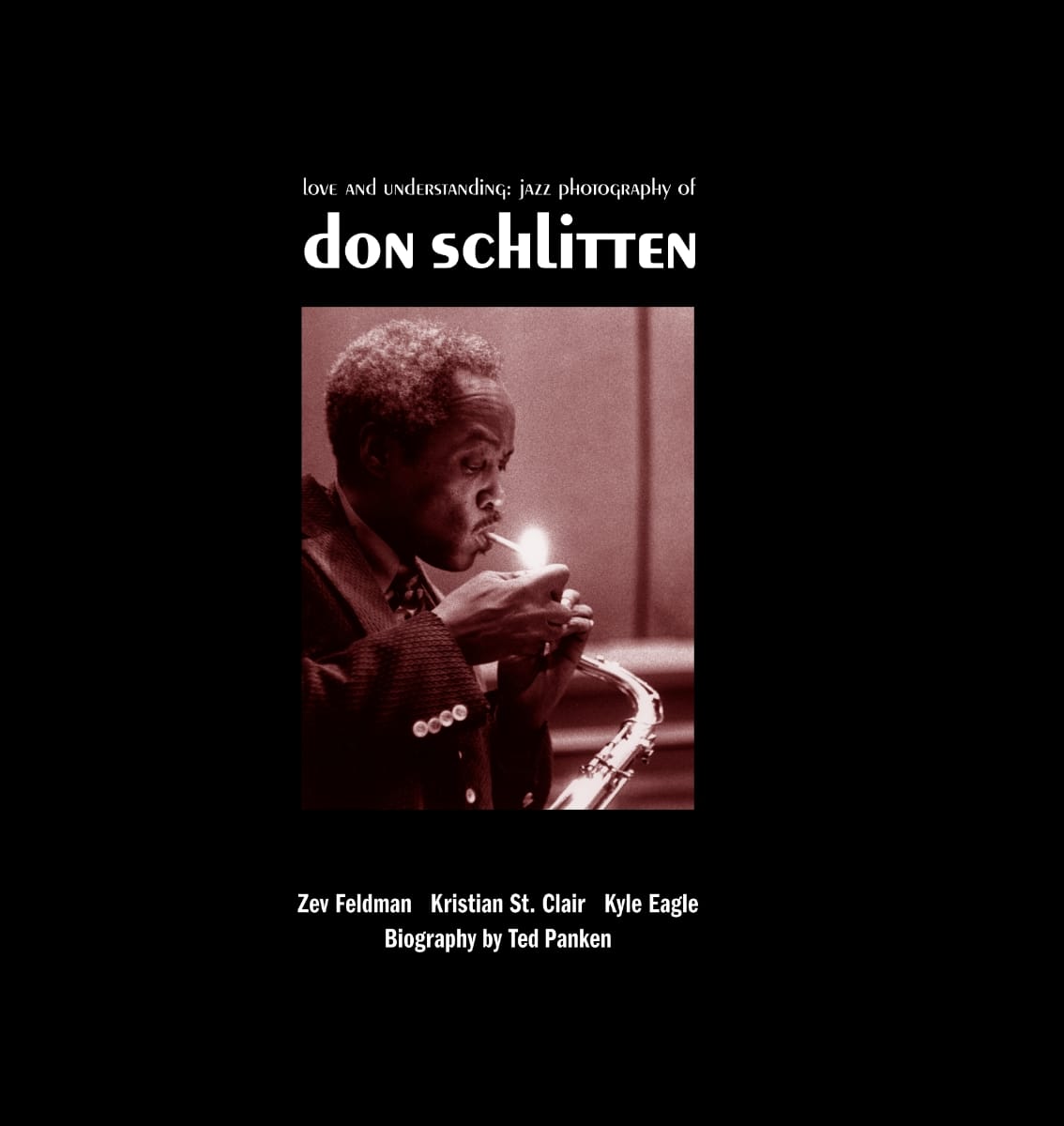
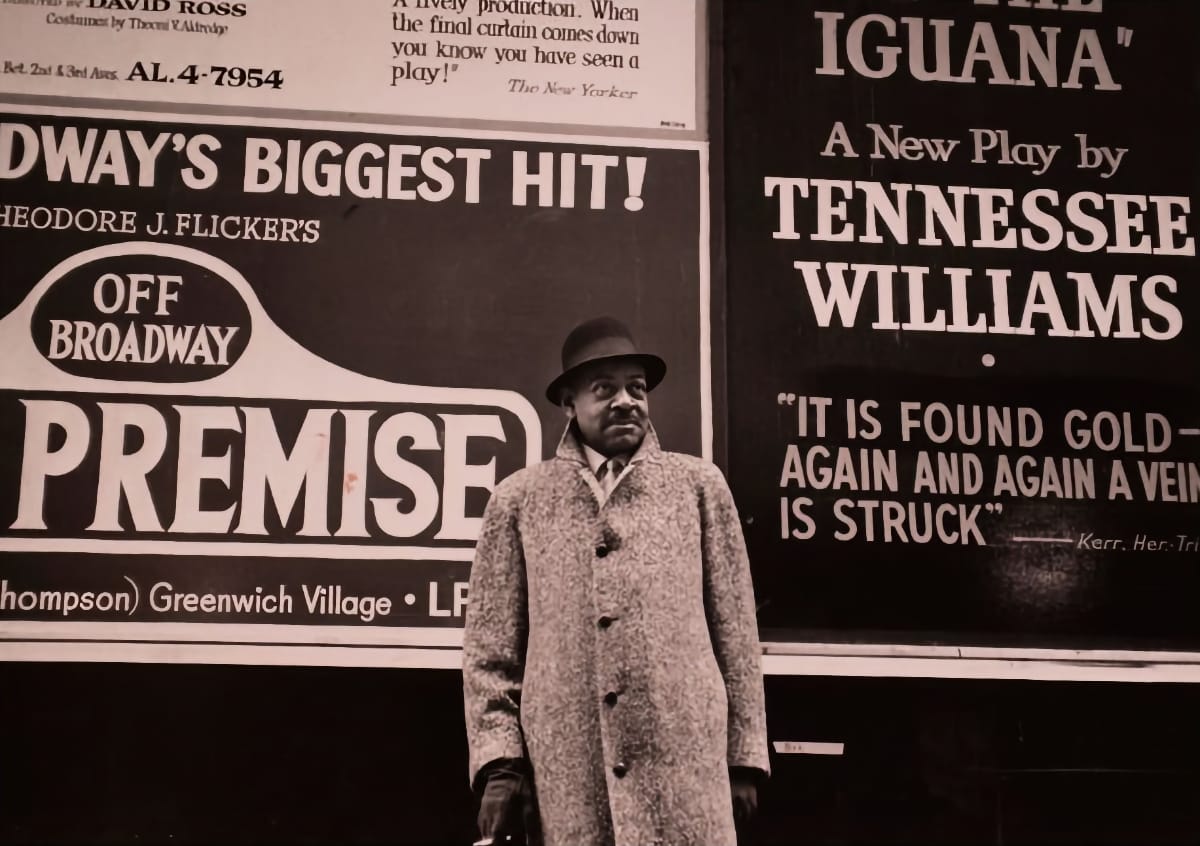
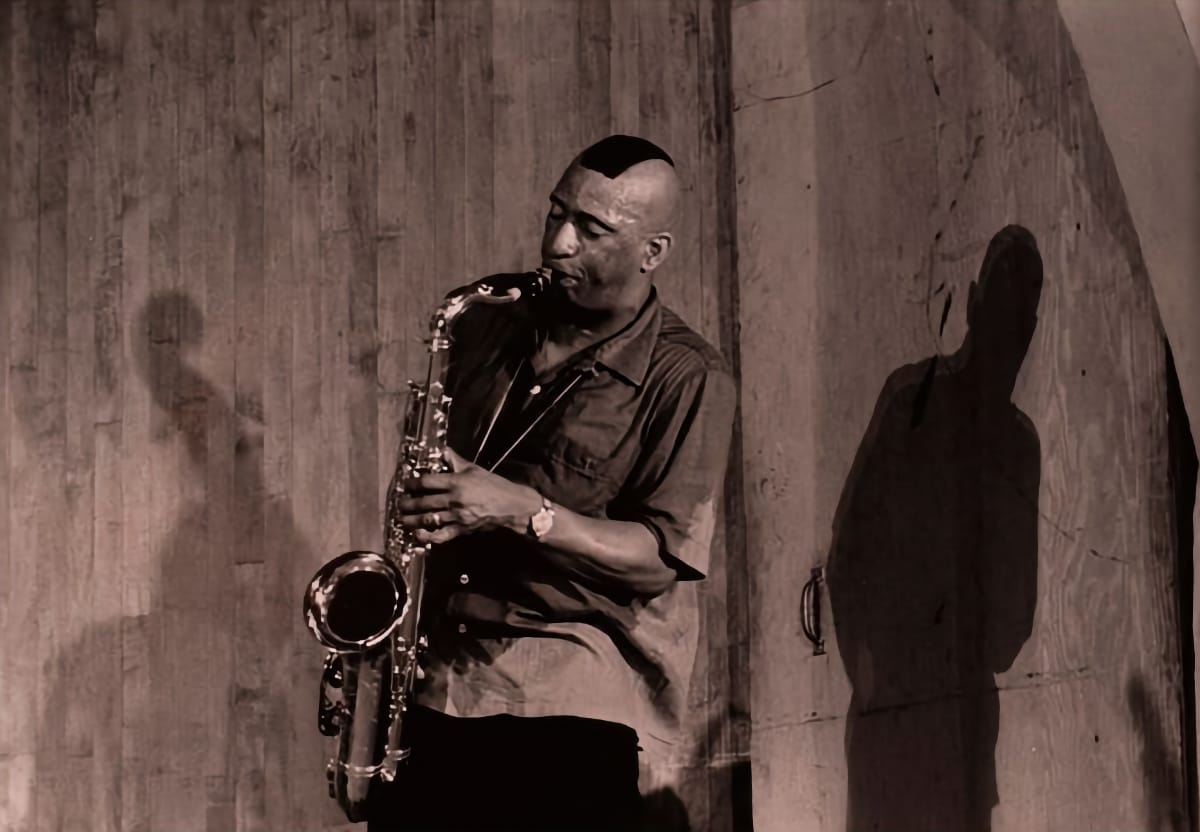
(L) Love and Understanding book cover. (R) Coleman Hawkins. Photo by Don Schlitten.
The 1970s were a period of transition, during which he worked with various labels before forming his own Xanadu label. Each release featured one of Schlitten's expressive photographs on its distinctive silver-grey colored backing, bringing a touch of class to the packaging. Always looking out for musicians, he paid them royalties before the label recouped costs. But it's clear the owner wasn't in it for the money. "The difference is that most people consider a record as a product. To me, it's music."
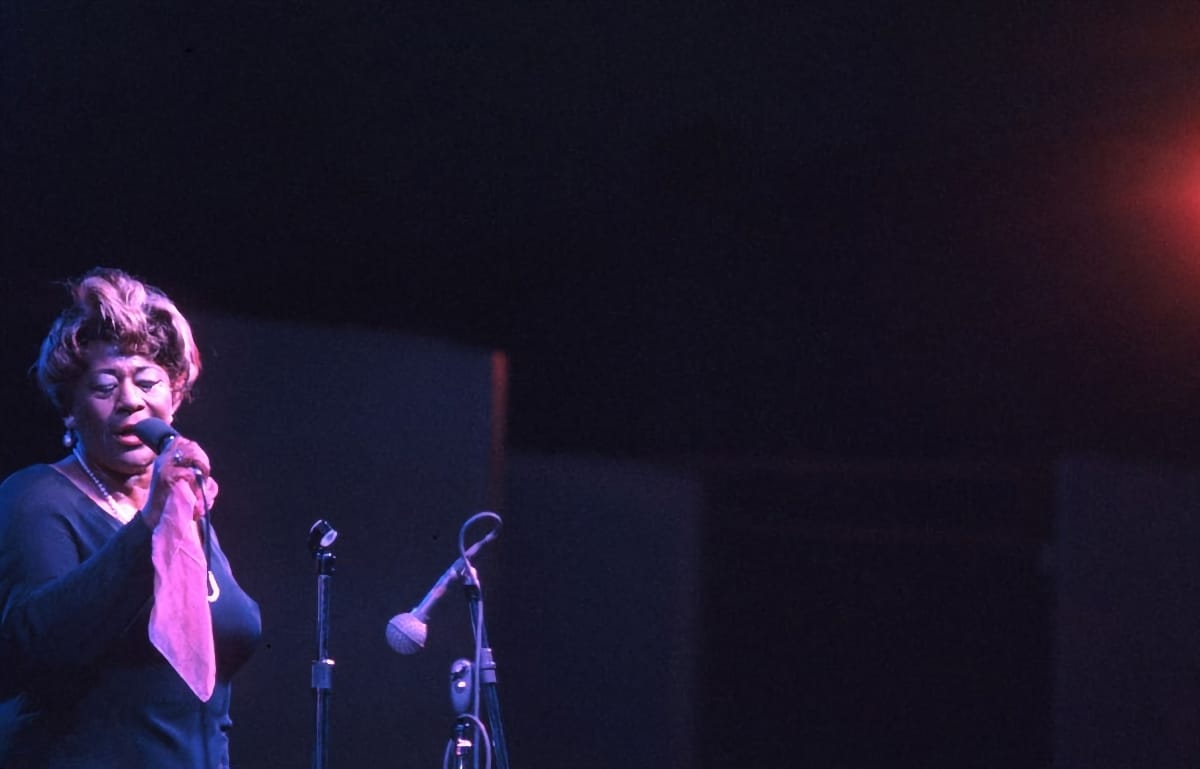
That level of expressiveness comes across in the photographs contained within this book; far from just snapping random shots of musicians, Don Schlitten took care to capture the beauty and mystique of the subjects while also showcasing what made them special: their charm, their character, little nuances that each musician brought into the recording studio or the concert stage. It's clear he saw the significance in documenting their moves; as he put it in a WBAI photographers panel he conducted, "photography is serious stuff—it's an art form, not just snapshots."
Don's photographs almost feel like a time capsule for an era lost in space and time, and thanks to the hard work of archivists and writers Panken and Feldman, anyone who picks up this book will be able to dive into the world of mid-century jazz and learn about Don Schlitten. "Jazz has been the most important part of my life," he recalled in an interview conducted for the book. "It's part of who I am, and so are my photographs." Sharing them with the world means Don's legacy will continue to live on.
Check out more like this:
 Bill Kopp
 Chaim O’Brien-Blumenthal


Comments