


As a teenager in Leland, Mississippi, Wadada Leo Smith played in Delta blues bands and took his musical education from his stepfather, the electric-guitar pioneer Alex “Little Bill” Wallace. By 1967, he had joined Chicago’s Association for the Advancement of Creative Musicians and co-founded the Creative Construction Company with Anthony Braxton and Leroy Jenkins. That same year, he first put Ankhrasmation into practice on “The Bell,” recorded for Braxton’s Three Compositions of New Jazz. He had been developing the language since 1965, and its name joins three words: ankh, the Egyptian symbol for life; ras, the Ethiopian word for leader; and ma, for mother. Its scores set traditional notation alongside colored lines, shapes, and symbols, guiding improvisers toward spontaneous composition.
In 1971, he started his own label, Kabell, and he has since recorded more than 100 albums as a leader or co-leader. Ten Freedom Summers, his four-CD cycle inspired by the civil rights movement, made him a finalist for the 2013 Pulitzer Prize in Music. Museums have shown his Ankhrasmation scores as visual art since 2015, when the Renaissance Society at the University of Chicago mounted its first full exhibition. The following year, the Hammer Museum gave him its Mohn Award for Career Achievement. He taught at CalArts from 1994 to 2013, and in 2023 he was selected for induction into the American Academy of Arts and Letters.
Constellations and Hemispheres, out now on Burning Ambulance Music, draws on four ensembles that Smith recorded at Firehouse 12 in New Haven between 2017 and 2022. The players include pianist Sylvie Courvoisier; bassists Bill Laswell and Melvin Gibbs; drummer Pheeroan akLaff; his grandson Lamar Smith on guitar; and vibraphonist Bobby Naughton, a longtime collaborator who died in 2022. Smith took the movement of light through the universe as his guide and assembled the music in post-production. He traces that method to the Rastafarians in Jamaica who shaped reggae. Smith does much of his composing after the session. “Some people say, ‘Well, I don’t want to do something and do something later with it,’” he says. “That’s fine, but I do.”
Lawrence Peryer recently hosted Wadada Leo Smith on The Tonearm Podcast. They discussed light, his six decades of art scores, his players’ preparation, the studio as an instrument, and love. Listen to the full conversation in our audio player. The transcript has been edited for length, clarity, and flow.
Lawrence Peryer: I want to start by asking you about the notion of light. You mention it in some of the press materials, and I’m curious how light, its properties, and what you think about it relate to the music on this record, or to music more generally for you.
Wadada Leo Smith: First of all, my awareness, my deep awareness and research on light, started with Einstein’s piece on light as particles. I immediately related that to sound, since sound has partials, which is basically the same thing. But the biggest quality of light is its consistent mobility, activity, and awareness that never stops. It maintains that level. That’s a quality we all admire and would love to be as consistent as, but we aren’t.
Light runs into an object in space, outer space, inner space, or wherever space, and it bounces right around it, goes under it, or goes through it. But nothing inhibits its mobility towards its own unregistered destination. That’s what fascinated me about it. But more than that, everything we see and can name, put a tag on, or think about is revealed through light. I can give you an example.
I have so many of my Ankhrasmation scores now that I started mounting them on my walls, like, a year and a half or two years ago, because I’d run out of space. And lo and behold, by mounting them to reduce the capacity of space being used, I discovered that I began to learn more about what the scores were by walking through them every day.
But the most remarkable thing is that in my bedroom, I can tell if daylight is coming by seeing the properties, or any parts, of the score hanging on the wall. And sometimes I just lie there and watch it, gradually, because at first you don’t see the colors. All you see is light, the light/color stuff. Then you see shapes with no color, and eventually it blooms, and you begin to see shapes and color. So light is marvelous. It’s a fantastic way to think about levels and degrees of knowledge.
Lawrence: First of all, that’s an insanely beautiful way to interact with your score, with your own work. And it seems like something that can be ongoing. You may notice something different as the light hits it, maybe as it changes with the seasons.
Wadada: Yeah. And inside each of the scores is a language, this Ankhrasmation language. It’s inside every score. But if there’s a velocity unit, every score’s velocity unit is different from all the rest of them. I have hundreds of scores with Ankhrasmation, and every single symbol looks different, though it’s recognizable as the same symbol. So the symbolic quality of it is that my awareness becomes deeper and deeper and deeper, and then the association of that awareness to whatever I’m experiencing as a human being also enriches me as to how to think about it.
Lawrence: When you were first speaking on this, you mentioned Einstein’s paper on light and how it also related to sound for you. Were you referring to the notion that it’s both particle and energy?
Wadada: Yes, exactly. Because the law of thermodynamics states that everything in creation has always been here and always will be here. But at a certain level, it changes form. So all creation is basically energy, and transforming from one state to another is a normal, ordinary event.
Lawrence: It’s a very interesting convergence of spiritual principles and scientific principles, basically both aiming to describe the same thing.
Wadada: Yeah, and I would add artistic principles, because I believe that the artist’s view is just as powerful as science, and that ultimately one of our biggest informers is giving us this courage and capacity for change and to move forward. I believe all that’s going to come through art. And not one art, all of the arts.
Art has been around for ages, too, but people use it more for entertainment, bargaining, investment, and things like that. But when art reaches a state where it has the purity of trying to just touch and benefit society, that’s when that flip, or that evolution, or that eclipse is going to take place. And we’ll all benefit.
Lawrence: Are the Ankhrasmation pieces themselves artworks, or do you view them as more utilitarian than that?
Wadada: Yes, they are artwork, too, and I call them art scores; they are scores, and they are art. A perfect way of realizing it is that you can visibly see an art score and read the symbols inside it. And that reading is only peculiar to people who can read the language.
I expect that people who are non-language readers of highly symbolic imagery will instantly make up a meaning for themselves as they view it. And if, in fact, it can be performed at the same time while they’re all in the same space, that’s a perfect rendition of that moment, as an art score that has been realized in its most practical way.
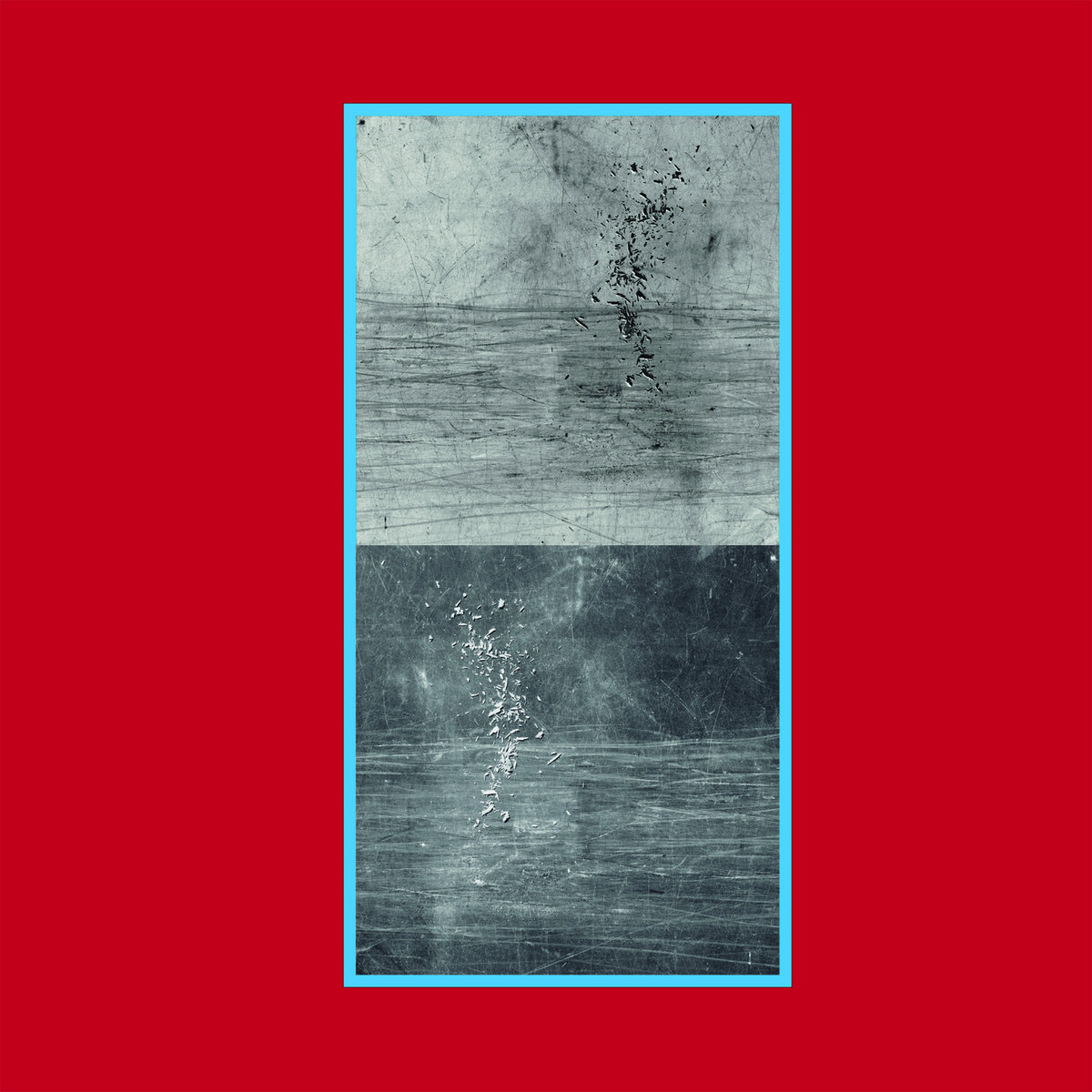
Lawrence: Tell me, if you would, about the title of the record, Constellations and Hemispheres. What is that about for you?
Wadada: I started to construct inside the art scores what I call sonic constellations. They’re simply loops and lines that shape certain kinds of structure, with sonics or velocity units inside them. They’re meant to be connected. But the beautiful thing is that when an ensemble plays it, no one knows exactly where anyone is in the performance, because my music is set up so you’re not supposed to know what the next person is doing. You’re supposed to keep that research to yourself.
So when they’re playing one of those sonic constellations, the most magnificent thing that I imagine is that at some point two of the performers will play the same one. And if they play the same one, they won’t realize it, I won’t realize it, no one would realize it, but striking the same one would create a third sonic unit that’s made from the two but also has another part that’s different from it, just like birth. But that realization cannot be experienced in real time, in a real conscious awareness. But it does happen, and because it happened, it’s unique. So that’s a constellation.
And hemispheres revolve around these objects of distance that have their orbit and connections and direction. So my imagination is that if we had a perfect picture of constellations and hemispheres, it would be all shaped in light, transforming and translucent and vibrating and moving. Not stationary. Moving.
Stay on top of The Tonearm.
Subscribe for exclusive interviews, cultural tip-offs, and community fun.
And your support keeps our site free of advertising and paywalls.
Lawrence: Do the players have to carry any characteristics? Do they have to be sensitive? Or is this magic that happens regardless of the player?
Wadada: I ask all performers who work with me to do research when we do our Ankhrasmation scores. The basic research for anyone interested in understanding or performing one of the scores is to start by studying the light spectrums, because that’s the scientific basis. Then you move from there, and you study all those ramifications between the visible and infrared structures of our energy.
Then you do your personal research. For example, I have about ten different ideas about color in my iPhone, and I call those cultural colors. I have colors from Egypt, and they tell how the material is mixed to produce this color and that color. It tells how it’s used ceremonially within the society of, let’s say, whatever dynasty from way back there.
In America and all over the world, we have what I call commercial color, like stoplights, stop signs, markings on the highway, those kinds of colors. But commercial colors include a lot of different things, like medicine. All different types of medicine have this range of colors and shapes. And so those kinds of common things that are not artistic in a sense by themselves, when you begin to lump that information together, give the performer the courage to dream bigger, larger, mostly uninhibited types of dreams.
Lawrence: There’s a scientific factual realm and a creative spiritual realm that can be just as empirical but doesn’t have to be.
Wadada: No, it doesn’t have to be because, see, art doesn’t need peer review to establish that it’s right or wrong. Art doesn’t need anyone in the ensemble to tell it that this is right, good, beautiful, or ugly. It doesn’t need any of that, because if the art has been authenticated by inspiration, which I hold true to, then all you can do is do it, feel it, hear it, and protect it.
Art is more than entertainment, feel-good, or something you like or dislike. It also gives us energy to make the right choices based on ourselves, not on something outside, but on what’s right. And to make the right choices always takes courage.
Lawrence: It’s a journey almost, to get to the playing part. It’s a preparatory process.
Wadada: Yeah, it is a journey. The most crucial thing, though, is that no one in an ensemble is allowed to share their research with others in the ensemble. And the reason for that is I don’t want two people thinking in the same way about a certain color or a certain shape.
I’ve had people in an ensemble who, every time they got to red, played it as danger or blood, and they did it consistently. That’s not what I mean by having a red spot in the score. I mean that red has so many multiple meanings. Don’t get locked into one, because if you circle around and come back to it a second time, you have to approach it fresh. Because the redundancy would destroy the work.
But the notion of not sharing information is kind of close to trying to have that person enter the space as nearly empty as possible, so that they don’t carry other people’s baggage along with them, so that when the engagement starts, they have enough clear drive, hard drive, to allow inspiration to start coming in.
And inspiration dictates how they use their research. They’re not supposed to fix it and construct it so that they say, “Okay, for the first two minutes I’m going this way and that way. I’m going to do this or that.” They just have that research as if it’s the energy bag that’s going to be employed while they make their journey.
Lawrence: What was in front of the different configurations of players as you recorded this record?
Wadada: Well, most of them had scores. Some of the solo spots were done completely isolated. In other words, I would tell Bill to go into the studio and give me five minutes or three minutes of solo, and he would solo for that time.
Now, he’s aware we’re working on a project, so that influences some of it, but I wanted the solo to be uniquely rendered so I don’t have to worry about where I’ll put it in post-production. I can put it anywhere. And not only could I put it anywhere, but I can save portions of it for some other project down the road, tomorrow or 20 years later. I can pull just their cymbals from a performer and nothing else, and use them. And when he hears the record, he’ll look over and say, “Well, I don’t remember that.” And he’s right.
Lawrence: There’s nothing to remember.
Wadada: There’s nothing to remember. What he remembers is playing the whole trap set.
I’ve been doing this since Luminous Axis. Luminous Axis was done with an electronic trio, The Hub, out of San Francisco, Mark Trayle and John Bischoff and those guys. It was a quartet of them. Me, William Winant, the percussionist. I recorded everything, and then I got back and started listening to it. On my second listening session, I started from the beginning again. I started to etch out in Ankhrasmation language what would be constructed as a piece.
Lawrence: What role does ritual play in any of this?
Wadada: Well, the ritual is only me. I don’t like to force people into stuff. My ritual is very simple. The night before a performance or a recording, my whole reflection is based on that, and I don’t try to figure anything out. I just observe how it feels in my body, how my mind is gelling, and stuff like that. And then I don’t like to do nothing the day before. I don’t like to rehearse in the studio. I like to just go in and start doing it.
In live performance, nobody knows it, but my whole goal is to not stay with the ensemble because they like to talk. I like quiet, with nothing said or done around me just before I play. And then when I walk out, I’m aware that we’re walking out all together to go on stage, but my focus now is that I’m in control. They’re just there with me in a peripheral way, as if you see what you’re moving past.
When I get to the stage, I step on it with my right foot, and if I’m conscious enough, I try to step off with my left, sealing the circle. I play with my eyes closed. The eye has really a huge volume of distraction. I don’t know what it is, but I’d say it’s more than 50 or 60 percent. And the ear hears what’s going on, but its focus is also inside. But I hardly tell anybody that, or even ask them to think about any of that, because I believe in discovery.
Lawrence: I’m really curious about what I would call the centerpiece of the album, “Dark Matter, Particles of Light, Mirror of the Unseen.” It’s a feat of musicianship, but it’s also a feat of engineering, isn’t it?
Wadada: Yes, it is. Building that piece probably took at least seven or eight sessions. But when I recorded it, I manipulated everything so fantastically. For example, all those strokes that are happening with the ensemble after that little intro—every one of them was recorded individually, every single one. So when I get ready to construct it, I know what I want, because it’s in the score. The score shows what should be done. But I may have one or two versions of that stroke that I want to use, so I’ll manipulate whichever one I want and have that be the one.
Sometimes the resonance is not full. You know, somebody does it a little bit weaker than the other person, so that stack of sound has a little bit different sound. So I’m looking for the one that has a much fuller, much more resonant sound. So that’s the first layout. And then pulling in the various ensembles to overlay and underlay and construct was just like a dream.
That little harmonic that keeps popping up in the interaction of the first part was only done once in the real performance. And the guitarist is my grandson. He’s the one who did that. And when I heard it, I said, “Oh, that’s really a great sound.” I laid it in, and then I went through it, and then something popped in my head: Wow, that’s a good marker that doesn’t stop the flow of stuff, but it gives it a little bit more mystery. Because the unknown or the unseen, that’s kind of unique. Like the core of the Earth is unseen. The backside of the Earth is unseen. No matter which side you stand on, it’s unseen. It’s all unseen, but even when we look at each other, we know we have organs and things inside us, and yet they’re still unseen. So all of that in the context gives meaning for me for how this works.
Most of all, I wanted to lay out the ensembles horizontally so they would illustrate how light moves and keeps moving. And whatever ensemble’s there, it just evolves into that, and evolves into the next. It ends with a trio, coming out of nine people, which, to me, is the first time I’ve tried that.
Lawrence: When did technology become something that you recognized as, “Oh, this can help me execute my vision”? Were you always interested in technology?
Wadada: I was, because I recorded my first record, Creative Music 1, three months before the release date, and the engineer was so unfamiliar with what I was doing as a performer that everything was distorted. Every single piece had too much distortion, and I couldn’t fix any of it. So I was disappointed for a second, then I said I would wait two or three months and do it again. Because of that, I started paying close attention to what was inside the booth and how to use that material.
When I mix, I mix each instrument one at a time. I don’t mix massively. I go through every single thing one by one. But every single instrument is done, mixed, edited, boosted, enhanced, and structured one by one.
And you mentioned “Deep Canyon of Mars.” That piece was never performed in the studio as a piece. I constructed it purely from stuff I asked people to do, and they had no idea what it would be for. Neither did I. Those two solos: Melvin Gibbs starts it, and Bill Laswell is the other one. Those were the two inputs, done separately, and Bobby Naughton’s part came from another performance, edited and inserted. The only thing that connected them all was me playing over it. I did that after everything was constructed.
Lawrence: That’s wild.
Wadada: It’s wild because it’s just a bigger instrument. I like that because it gives you a bigger instrument to work with, and you don’t lose anything, because the person playing is still alive, still human, still has feelings, and stays in touch with themselves and their environment.
Lawrence: How do you think about matching players and material and the different needs you have to achieve your vision?
Wadada: Well, one of the things that I like about a human being is that you put them into a situation, and you see how they discover how to use it, or get out of it, or pull it through, or whatever. Working with Bobby Naughton over the years, I know he’s a very sensitive player, and I also know his instrument isn’t very loud. So I have to be careful and understand that.
Lamar made his first record with me, on one piece, when he was 12 years old. But in this context, he always has to figure out for himself how to make his presence unique, which means I’m pushing him into an environment he has to discover how to use, and I love that he doesn’t overdo it.
Melvin Gibbs is my electronic ace. He’s not afraid to strike those pedals that give all kinds of sounds and distortion, but he makes art out of it.
Lawrence: When you’re doing the assembly work or the post-production work, are you alone in the studio doing that?
Wadada: Yes, because I learned long ago you can’t mix with musicians and friends. I take everything apart. It’s like you take a watch apart on the table, and every single part lies out there, and then I reassemble it into a new watch, a new piece, a new composition, or a new orchestration.
Lawrence: I spoke with an author named David Katz, and he’s got a book out about dub, about the history of dub. It’s sort of impossible to ignore the lineage, relationship, and dialogue between dub methodology and Rastafarianism. I’m curious about the studio as an instrument, those notions, and how they manifest and evolve through you and your music.
Wadada: The dub guys are, I can say, the root of what I began to explore. The fact that they would make those pieces with layers and layers and layers is just fantastic, and that’s a big influence, that notion of how they dub up all those compositions.
I wanted to take it in a different direction. By different, I mean I wanted to build entire pieces around that idea, and I wanted to ask people to record music without a place while they were recording it, so I could eventually use it in any context I want inside the studio. And I see that as a way of moving forward with that whole arc of dubbing, or using the studio as an instrument.
I know that Miles Davis and the great guy who worked with him, what was his name?
Lawrence: Teo Macero?
Wadada: Macero. I know they did a lot of overdubbing after the stuff was put in. I haven’t read that they built it from nothing, but it would not be surprising if they did. So what’s the difference? I don’t believe that there’s a real difference, except that it’s the spirit of being in America, in its form of artistic oppression, and of being in Jamaica, with its form of artistic oppression, because art is so commercialized and commoditized that it can’t reach its real source.
We’re supposed to live by art. I don’t mean follow art, or that art is life, because I don’t believe art is life. I believe art is something we, as humans, made. It’s the uncontrollable confession of ourselves that comes in the wake of art, and that’s supposed to reinform us of our liberty, freedom, and justice, just in the context of our family and the larger community.
Lawrence: And what’s the role of love in that?
Wadada: It’s the ultimate. By ultimate, I mean love is the greatest source of unification, but it’s the most misunderstood part of human existence because of the conflicts that happen all the time, from the beginning of recorded time to now. But I think art can push us across that gap, from this long line of violence and power and wealth and stuff to the decentralizing of all of those qualities, wealth, power, and so forth.
The record, Constellations and Hemispheres, is constructed like this: Mars in outer space, Lake Tanganyika, and love. There’s that polar expanse. So the project lays out love as the catalyst for everything in the context of Constellations and Hemispheres.
Lawrence: Before I let you go, I wanted to ask you about a quote of yours I saw. You said this when you turned 80: “It means I’m alive. The rest of it is not worth talking about much.” What is the rest of it that you were dismissive of?
Wadada: The rest of it is all the confusion on the planet. That’s the rest of it. But my notion about it is this: I refuse to let a dysfunctional planet ruin my life. That’s kind of what I meant. The rest of it is just stuff, and I’m not going to let it come over here and change my life and mess up my life, because I’m going to still love. I’m going to still move forward and think positively. I’m going to love my family from top to bottom. I’m going to make sure that I don’t hate or harm anybody, and I’m going to enjoy living.
Check out more like this:
 Lawrence Peryer

 Lawrence Peryer



Comments