

I do know of a longstanding, and frankly somewhat sassy, joke. Ready? Press enter.
Why doesn’t Texas fall into the Gulf of Mexico? Give up? Because Oklahoma sucks! Which brings me to Houston’s Chrome Chasm, a band named after a software platform (or not), who stir slowly into their coding a heaping portion of ambient, a pinch of lowercase, the drones from Beltway 8 or Grand Parkway (depending on tractor-trailer traffic), and zero boot-scoot boogie. Slow-moving and painterly, Chrome Chasm travel the million miles between heaven and hell, as the falcon flies.
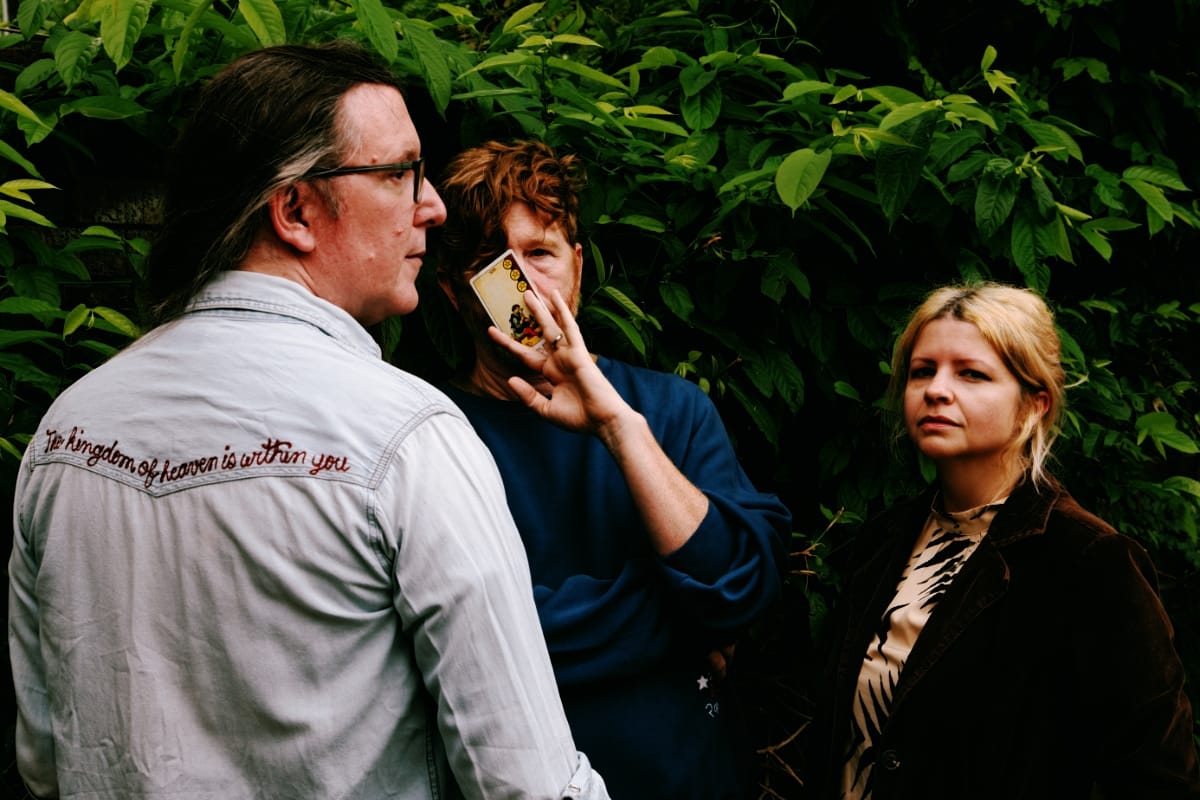
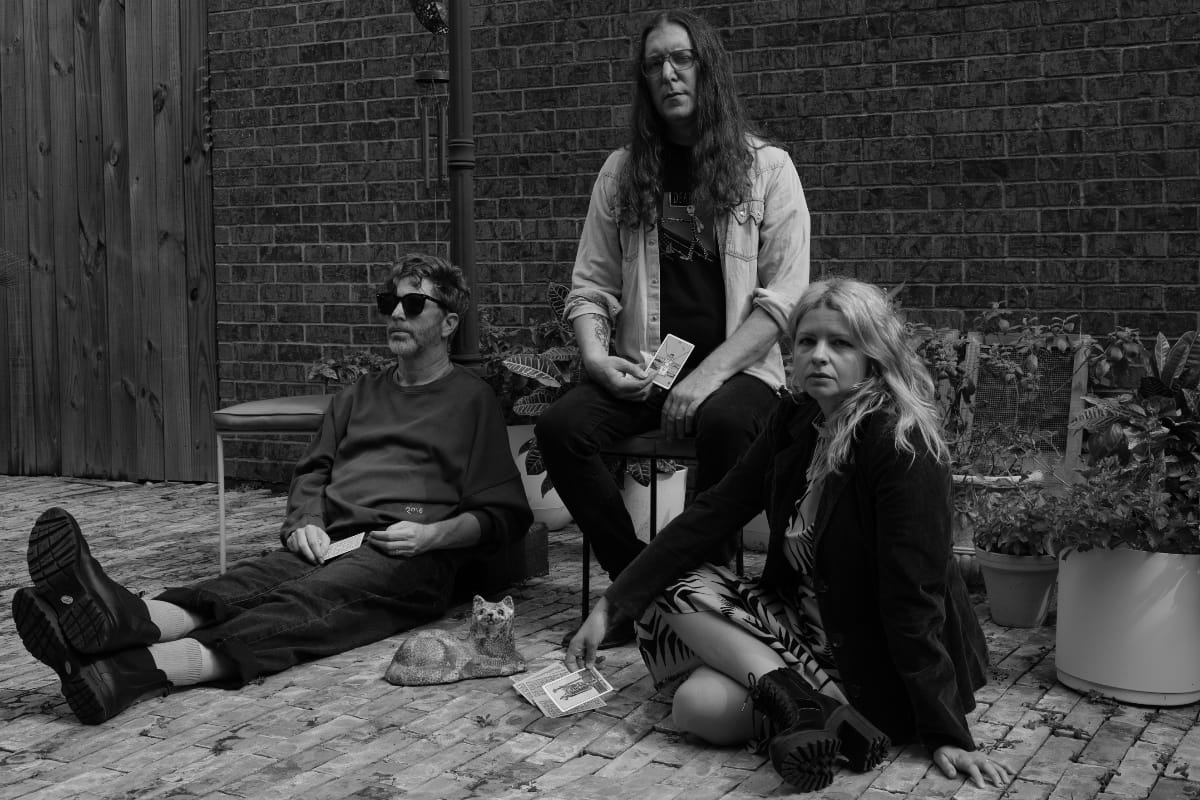
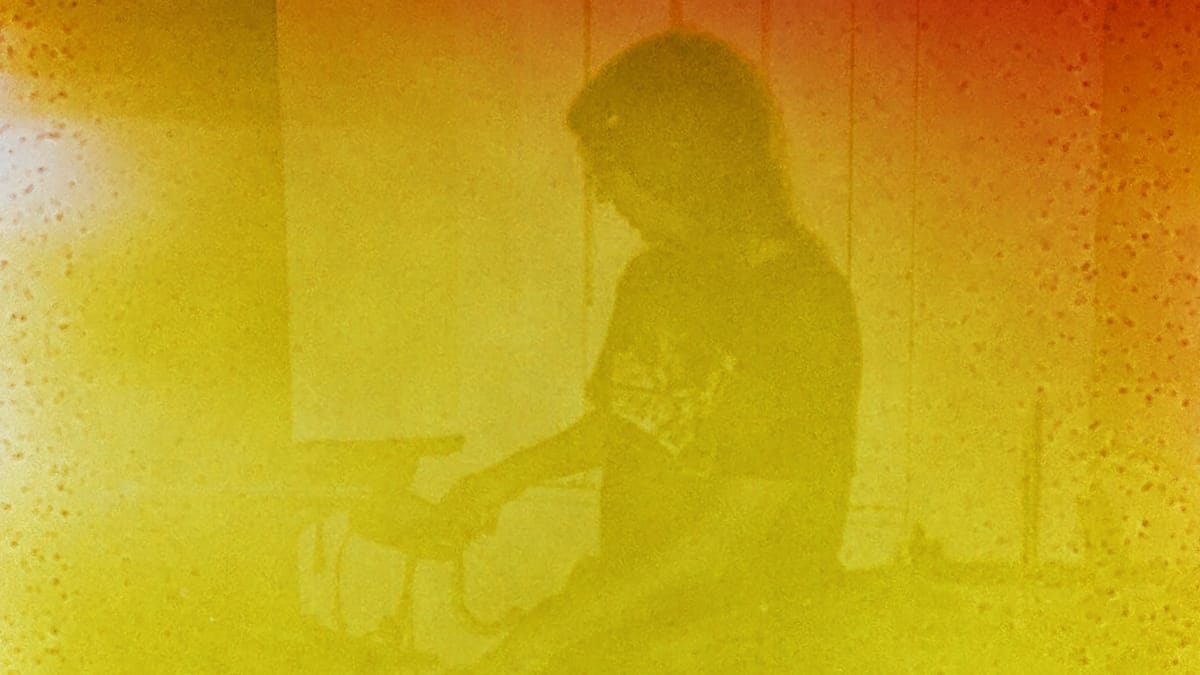
Chrome Chasm’s debut studio album, Interpreter, lands in T-minus-now courtesy of the consistently heady Silver Current Records. Membership includes three independent music stalwarts: Mlee Marie on alto sax, flute, and voice; Tom Carter on guitar; and Will Adams on pedal steel, synth, percussion, and also voice.
Let’s light this candle.
The transcript has been edited for length, flow, and clarity.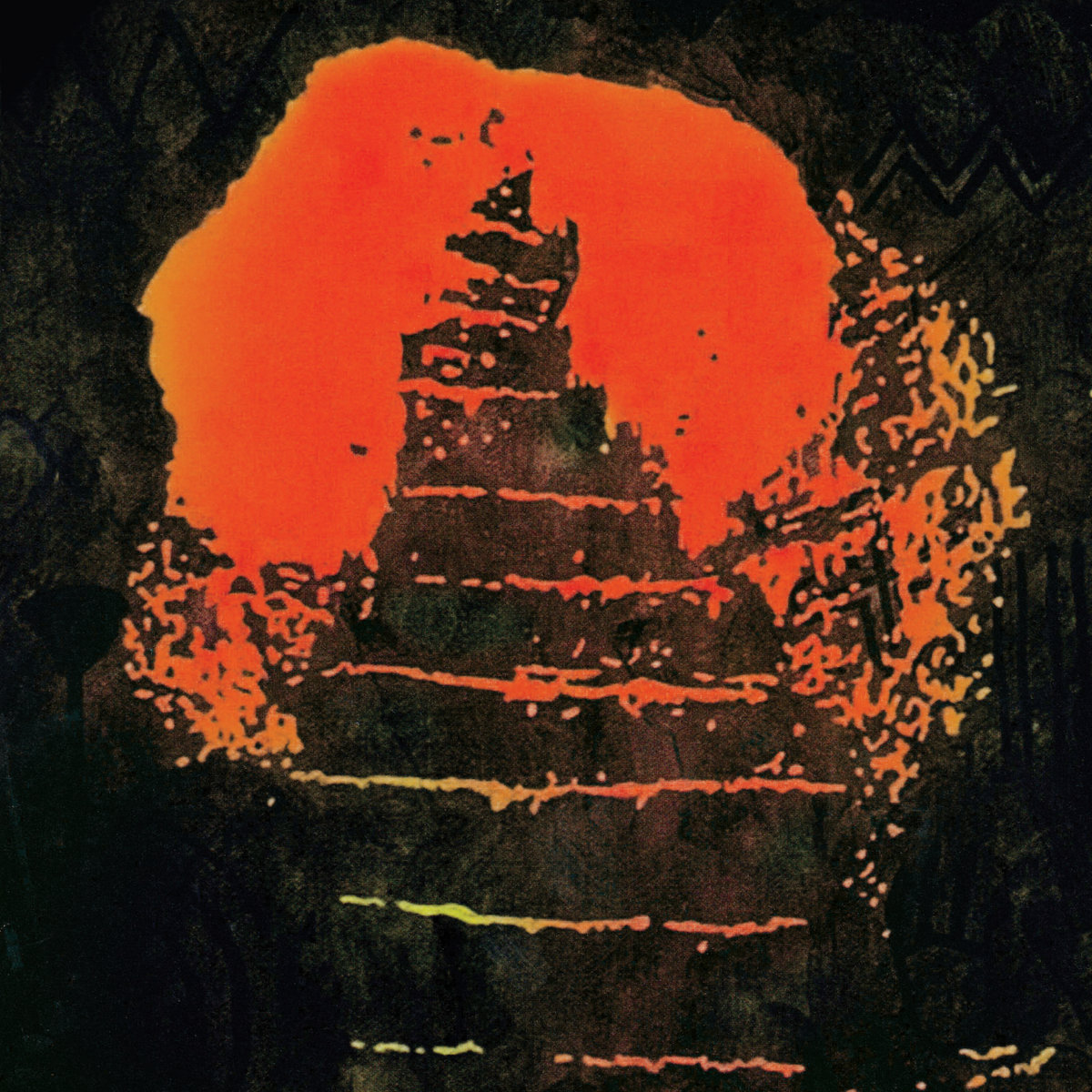
Steven Garnett: I was looking over your biographies, and it didn’t seem Houston was necessarily where you would find yourselves recording together. I would love to know a little bit about the collaboration. What brought you together at this moment?
Tom Carter: I guess we first started playing when I moved, because I had been living off and on in Atlanta and Houston for a while and finally decided to move to Atlanta for a year during the pandemic. I didn’t really get back to Houston again until early 2021. I was probably the last piece of the puzzle to move back.
Will Adams: I’d been living in New York City for about nine years before, and I moved back basically just in time for lockdown. When that was all over, I spent a lot of time with Tom and Mlee, and starting a musical project felt like a natural progression of all that time together. That’s the short version of how I ended up back in Houston.
Garnett: To me, there’s the distinct South Texas sense of place with Interpreter. I’m in Central Florida; our climates are similar, cicadas at 7:15 every night, whether you’re taking out the trash or having a cigarette; just the impacts of the metro sprawl.
Mlee Marie: I’ve lived in Houston my whole life, so to me it must all be subconscious, because I’m not intentionally putting a Texas sound on it. But as far as South Texas vibes, or whatever you’re trying to get at, my answer would be that Houston is extremely swampy. A lot of people, when they think about Texas, think plains and prairies and Hill Country and all that. Houston is this big, concrete, humid, cicada- and roach-infested swamp, and a gross bayou runs through it. And we have Galveston, which is this beautiful, mystical beach that’s really close. People like to slander it and say it’s dirty water or whatever. It’s just sediment.
I think all of that might add to the subconscious lore. For me, maybe I like a stew of sounds; maybe I just like things really wet and mushy. I don’t know. For my part, I’m not really putting intentionality behind that in this project, and that’s what I love about it: we’re just going, and whatever comes out is what happens.
Garnett: There seems to be some sort of new improvisational freedom in twenty-first-century music—not the same as the seventies American improvisers like Davey Williams and LaDonna Smith, but a similar sort of “We’re just going to find like-minded people, and we’re just going to jam and see what happens.”
Tom: I feel like we all are fond of big, slow-moving sounds and slow-developing melodies, and so as improvisers, I think that all comes out. We’re not really trying to make improvised music, unlike someone like LaDonna Smith and Davey Williams, who were intensely involved.
Garnett: To Tom’s point, while it’s not instant music that you’re making, you are counting on intuition.
Tom: Thanks to people like Smith and Williams, people now have permission to do that, who can follow their gut and maybe not think about compositions so much. We’re fond of long, slowly resolving things, and that comes out in the music a lot.
Mlee: Or maybe never-resolving things, too.
Garnett: “The Star” is the opening track. I thought, in the first twelve seconds, this has a purpose; you should dial into what’s going on here. The hook on the front end was clear. Tell me a little bit more about the composition and recording process. Was everything in one room? I know Will did the mixing, and there are some beautiful panning effects; there’s deliberateness.
Will: I remember when we started recording “The Star,” we were setting up for something else, and Mlee had her flute looping, and we were like, “No, wait, let’s just play this for a while.” And then that ended up being a take. Everything was in the same room, except at the end there’s a voice, and on the same track there are wind chimes and, I think, rocks clicking, which were happening while [guest vocalists Carmine Cascio and Joey Mains] were singing. So we did add that on. In the end, we sang along with the recording. But the saxophone, flute, two guitars, and Moog were all one live, uninterrupted take.
Mlee: I totally forgot, Will—yes, that was already happening with the flute on that song, and we just went with it. I think I was just noodling around while you guys were still setting up, and then it was a cool loop. Is that what happened? And then we just started playing. Sometimes we just do that. At Tom’s house, Tom will start playing, or he’ll build a cool loop, and then we’ll just be like, “Okay, let’s just go.”
I think I probably bring the most melodic structure, because I’m playing instruments that can only do one thing at a time, for the most part. So sometimes stuff does get built around that, but then sometimes not at all. With that track, it did get built around whatever I was doing, and the guys just happened to be more ambient. But it’s not always like that. Sometimes Tom is playing a melody, or sometimes Will starts with the vibe, and we’ll just go from there.
Garnett: The levels seem very balanced—the attack of the music from the speakers. Across the record, there’s the little crackle of jacking into the amplifier or unplugging, or the toggle on a guitar by the pickups. There were nuances like that where, even as I spaced out a little while listening, it was like, “Hey, every bit of this counts.” It felt very serious, like this was going to be delivered with real heart and consideration. Nothing felt unnecessary.
Will: I’m glad you noticed those small details. Sometimes they’re intentional and part of the playing, and sometimes they’re not. But it’s my feeling sometimes that the room or the space that we’re doing stuff in, which is usually Tom’s house, becomes another component of making the music. I’m happy that it comes across in what we recorded, because I hear it that way too, so I’m glad that it’s not just me.
Garnett: Do you have an appreciation, Will, for that when you’re listening to others?
Will: I do. Yeah, I think I would appreciate that more—intention of space, intention of setting. Sure, absolutely. I think that’s a huge part of what I enjoy about making music these days.
Garnett: Mlee, I’m thinking about publicist notes that refer to this as spiritual jazz. As a good music critic, and because I like a lot of different types of music, I dove into Alice Coltrane back in the day. But “spiritual jazz” gets thrown all over the place in contemporary music lingo, and I’m wondering if you would like to speak to what might be transcendent with Chrome Chasm. I’m thinking of you as the melodist primarily, perhaps bringing that, and that may be incorrect.
Mlee: When it comes to Alice Coltrane, I think Will is the biggest fan in this group, although I think we all are fans and appreciators. Maybe Will has something to say to that. But again, for me—and it feels like for all of us—the whole point of this group, in so many ways, the whole purpose in doing what we do, is to be free of any kind of intention or any kind of label, any kind of spiritual jazz or genre or whatever. I guess I could make it up as I go and answer with whatever feels like an answer to your question, but I think the real answer is that it is just very free, and that is the point. There’s no intentionality behind that for me, except for that freedom.
Stay on top of The Tonearm.
Subscribe for exclusive interviews, cultural tip-offs, and community fun.
And your support keeps our site free of advertising and paywalls.
Garnett: Ethan Miller [Silver Current Records mgmt] posted a picture of you all online, and it looked like tarot cards were spilled by your feet.
Will: I think when you talk about the spiritual component of this band, that might be where you could find a lot of your answers. I was just going to say, about the spiritual jazz thing: I was aware that was in our press release, and I feel like I was this close to asking to change it, because that is a slightly loaded and, to your point, also overused term. It means something really specific, and I don’t think that we have any claim or any intention to claim to be a continuation of that specific tradition, like Impulse! Records stuff. But I do think that there is a personal spiritual component to this group. Kind of like Mlee was saying, I think the biggest thing is just this big practice of relinquishing control, and also connecting with everybody. I was going to say that you all [bandmates] should talk about tarot, because you could do that.
Tom: I think it’s important to connect with a listener in a way that offers them a space to listen for their own—not abstract connections, but just connections between the sounds, and to experience the sounds happening in their own unique ways. If anybody experiences our music as hypnotic or entrancing or anything like that, it’s because they’re able to get into it and hear those things and get really involved with following the threads. To me, that’s really the most important part of it. In a way, it’s an inward experience that you’re having between yourself and something in your environment—the sounds. To me, that can lead you to spiritual things, possibly, but I’m not telling anybody where to go necessarily.
As far as the tarot goes, it’s just a tool to enter the music. I do use it in my personal life also, so it carries a lot of personal stuff into the music—a lot of personal data, and my own expectations and my own interpretations and things like that. But we’re not really trying to communicate any of that specifically to a listener.
A lot of our artwork, a lot of our imagery and titles, comes from that, and it’s a conscious decision. But we’re not really trying to add any significance to a song by titling it after a tarot card. Usually it just means that’s what we base the song on, or the card we drew before playing the piece—that kind of thing.
Mlee: It’s more of a ritual for us, interpersonally, as a band. When we were doing the photo shoot, we just leaned into using props, and that was one thing that we used, and we were like, “It looks cool, so just leave it.” But we definitely weren’t trying to be like, “Ooh, we’re so witchy.”
Garnett: I had the opportunity to see Bardo Pond twice, and aspects of what you all do reminded me of them. They weren’t shy about volume, so there were overtones and surprise pitches, and Isobel’s flute—maybe she was looping. I couldn’t tell. The sound was full. What would it be like at a Chrome Chasm show?
Will: Live shows have varied. We’ve only played in rock clubs a couple of times; it’s more often in a house or a gallery situation, and it’s usually pretty faithful to how the album sounds, for the most part. We’ve done some shows where the instrumentation isn’t the same. Sometimes I will just bring a synth and not the big pedal steel guitar.
Garnett: Did you prefer, say, a gallery kind of setting versus the rock club? Was it better understood, perhaps better appreciated? Any kind of experiential assessment there?
Will: Some of my favorite shows have been in smaller spaces like that. I would say we’ve played maybe twenty shows, give or take a little bit, so maybe we haven’t even done enough of that to say what I prefer best. We’re playing at a country bar tomorrow, so that’s going to be great. And I think it is conducive to what music is like in Houston. We don’t have an indie club, but we do have an experimental music foundation. That’s where those are more likely to go.
Tom: We haven’t really had a chance to ever just go super loud and try to be a fully immersive experience, and honestly, I don’t know if that would really work so much for us. I think that’s a really difficult thing to do with wind instruments.
Will: We’ve been a quiet, immersive experience.
Tom: Yeah. I think the wind-instrument thing was always a challenge for Bardo Pond, too, but Isobel just learned to work with it. She also wasn’t playing all the time, either—switching off between vocals, I think, maybe. But the volume—I’m not sure we would ever go the high-volume route, honestly.
Garnett: Maybe you are cosmic country, fundamentally. I’m a Floridian who’s heard a lot of country music, and I like pedal steel. I find it a very comforting signifier; it’s a beautiful sound.
Will: I think as a pedal steel player, I have more in common with an I–IV–V country player than some of the ambient pedal steel guys who are doing their thing right now.
Garnett: I got to see Duet for Theremin and Lap Steel out of Atlanta. They created a beautiful soundtrack to whatever you wanted to imagine, perhaps like what you all are doing: what the listener takes away is a nice gift.
Tom: I’m not super familiar with Atlanta improvisers. I have a few friends there, but for the most part, the music scene has been closed to me. I haven’t really been able to break into it, partly because when I’m there, I’m usually pretty busy. But I wonder if it’s the lack of venues there, too. That’s got a lot to do with it.
Garnett: It sounds like, then, you’re willing to hop from a city that has a lack of venues to a city that has a lack of venues.
Tom: That’s the South, right? That’s every city here.
Garnett: I’m seeing smiles on your faces. It seems that is the battle, or perceived battle. We’re going to play what we’re going to play, and we’ll forge ahead. So how long have you all been doing this together, then?
Mlee: I think it was maybe October 2023, when we played our first show in Galveston.
Will: That’s right.
Mlee: That was in a beer—
Will: A brewery.
Mlee: I want to say beer factory. What is wrong with my brain? Anyway, we played literally in front of these giant brewery kegs—beer silos, I don’t know. I love playing alternate spaces. Not having venues with this band is not really a battle, because we can play pretty much anywhere, because we’re so amorphous. I love that.
Will: I feel it is easy to complain about lack of venues in Houston or Atlanta, but to a degree it might be a choice, because Austin is two hours down the road, and they’re flush with them.
Garnett: I wanted to say something about ZZ Top—I love ZZ Top—but there’s only one Top left; one of the Z’s passed, and now the other Z’s gone. Would you align yourselves with other musicians to see what could happen, or is this a fixed trio?
Mlee: We never really thought about it. We do that separately so much, so I don’t think we would in this group. Not that I wouldn’t, but I think all three of us have so many other things going on all the time. Although I do want to play with a drummer at some point. I think it’d be cool to try just a drummer with a groove, but we’re not actively trying to do that either.
Will: Our local community has a lot of partner swapping—different than what I meant, but . . .
Garnett: I think I know what you mean.
Will: Yeah. I think we’ve all played in different combos with one or two other members of Chrome Chasm and another person, so there’s been a lot of that. But this feels like its own distinct thing, not just another iteration of the partner swap.
Check out more like this:
 Lawrence Peryer
 Steven Garnett


Comments