


The upright bass has long occupied a paradoxical place in jazz—initially tasked as a reliable bulwark, something that was meant to anchor the music around it, it has also acted as one of the instruments most responsible for unmooring it from its traditional modalities. From Jimmy Blanton’s expansion of the bass as a melodic voice in the late 1930s, to Charlie Haden’s radical freedom with Ornette Coleman, and the exploratory playing of figures like Peter Kowald, Joëlle Léandre, and William Parker, the instrument has repeatedly escaped its supporting role, becoming a source of harmonic instability, rhythmic disruption, and the most visceral physical expression.
On her most recent release, Automatic, Mali Obomsawin brings that loaded and unbridled history into contact with a distinctly personal and political musical language. An Abenaki bassist and composer working at the intersection of free improvisation, noise rock, and avant-composition, she treats the bass not merely as the ensemble’s foundation but as part of a larger, restless conversation between sound, memory, and collectivism. As she has done in much of her past work, Obomsawin finds a singular through-line, and Automatic’s archival voices and volatile arrangements expand the instrument’s possibilities beyond the binary distinctions of accompaniment and lead—here, the bass helps carve out a space in which inherited histories can be unsettled, reanimated, and heard anew.

A remarkable show of friction, where the expressive freedom of avant-jazz abandon meets meticulously arranged electronic interference, Automatic balances compact, sharply articulated passages and longer, patient stretches of improvisation with graceful command, with Obomsawin’s upright bass providing a shifting point of reference rather than a fixed harmonic foundation. The horn section moves between interlocking melodic figures and vast dissonance, while drums, electric instrumentation, and turntable manipulations act as restless disruptors of the ensemble’s rhythmic and textural continuity. Obomsawin balances these moments of abrasion with more spacious, vocal-led passages, giving the album a dynamic architecture that accommodates both compositional precision and improvisational brio. Yet, its most distinctive quality lies in how these elements make room for another sonic presence altogether—the archival voices that inform the album’s underlying structure.
At the heart of Automatic lies a trove of reel-to-reel mid-century recordings of Abenaki people and their language, collected by anthropologist Gordon Day, and held for decades at Dartmouth College. In Obomsawin’s hands, the archive ceases to be a mere storehouse of cultural material and becomes a striking conversation with spectral geographies and the fractured present. Obomsawin does not simply quote these voices. She cuts, processes, and weaves them into her compositions, allowing the recordings to move, interrupt, and exhale within a completely new fold.
“A lot of institutions have Indigenous recordings and cultural material that tribes are still becoming aware of—these missing pieces of ourselves. It’s an ongoing process across the country, getting these relations back. And when I put out Sweet Tooth, Dartmouth reached out to me and invited me to come look through their archival collection. I spent a lot of time going through it. It wasn’t cataloged or organized very well. I spent a week there, which wasn’t nearly enough time. But I was able to download the digitized reel-to-reels. I’m still working through them. But I highlighted certain ones that I had found so far that interested me, and then began working on them with Andrew Broder.”
Obomsawin’s collaboration with Andrew Broder is central to the aesthetic and stewarding space that Automatic occupies. The producer and turntablist brings a tactile, deft interventionist approach to the recordings, preserving their grainy, material imperfections while manipulating their temporal and textural qualities. Rather than treating the voices as sterile samples to be superimposed over finished pieces, the pair keeps all the jagged edges intact, incorporating them into the music’s very fabric, allowing their presence to shape its rhythms and atmosphere. Nothing about these samples is ornamental—in the midst of all that static, tape hiss, and crackle, Obomsawin and Broder raise a pulsing organism that could have functioned as a vital instrument on its own.
“[Broder] had approached me previously, just saying, ‘If there’s anything you want to work on, let me know.’ I didn’t take it seriously at first, I don’t know. But I ended up going to Minneapolis to work with him. The process was really cool. He has a different setup for his turntables and his gear, different ways of operating them. He just has a tremendous amount of skill that I was able to fold into.”
The handling of archival sounds inevitably raises the question of where preservation ends and transformation begins. Leaving a recording untouched may well preserve its original form, but it can also bind it to the circumstances and institutional frameworks under which it was collected. Manipulating it risks altering its meaning, yet transformation can also allow it a resurrection, catalyzing it to speak to audiences and generations beyond its original context. Obomsawin navigates this inherent tension without pretending it can be resolved—the voices, including Malian, her great-grand relative, remain recognizably rooted in the past, but their placement within a new musical language insists that preservation need not mean stasis, and that recorded voices can be living, evolving gestures rather than a stagnant repository.
“I’m going to be a student of the language my whole life, and I’m finding my way to do that, if that makes sense. As I learn these songs, I learn what they’re saying, what’s really contained in these recordings. That’s my relationship with it, and I think my role as an artist is to show how to innovate and move this forward. Language needs to move to stay alive. So it’s not a preservation to me, but a forward-looking relationship.”
There is something deeply immersive about Automatic, a record that rewards surrendering to its internal logic rather than attempting to impose some semblance of order onto it. Its shifting densities, overlapping voices, and restless interplay between acoustic instrumentation and electronic manipulation create a sound world that feels at once impossibly volatile and oddly intimate. The music draws you in through its sheer physicality, but its deeper resonance emerges gradually, as fragments of its private tongue and a myriad of small compositional strokes surface through the turbulence. It is an experience that invites a different kind of listening—one in which, as Obomsawin explains, the relationship between its played and grafted elements becomes impossible to separate.
“I wanted the whole record to feel like we were actually all in the reel-to-reel. Imagining that I’m in that room, just sort of sitting in the corner, watching Gordon Day ask really annoying questions for an hour, like ‘say the word for cat,’ you know. If you could hear the parts of the tape that don’t make it into the record, you’d think, ‘Damn, this was a lot of banal work, many boring hours.’ I didn’t want to make another acoustic jazz record. I felt like I had done that already, and I wanted to move forward. And Heba Kadry, who did the mastering, really made a huge difference as well. She’s super smart, and she mastered those pristine studio recordings to tape, which is, I think, what really made it all come together naturally.”
The cover of Automatic is almost as densely layered as the music itself—in it, Obomsawin sits in a room, amid a clutter of guitars, books, records, and other ephemera. Somewhere in that hyper-detailed melee of ash-splint basket-making materials, grenades and a rifle, and a Mohawk Warrior Society flag, a copy of Walter Rodney’s Decolonial Marxism: Essays from the Pan-African Revolution catches the eye, its title an unusually direct signpost to the political thought informing the album’s broader concerns. It feels lived-in and deliberately over-full—a constellation of intellectual, musical, and cultural references that invites close inspection. Like the album, it rewards looking beyond the immediate impression to discover how seemingly disparate elements can coexist.
“I hope someone asks me to do an exhibition or something, to blow that image up and set it up again. I asked my friends who helped me organize and photograph it to bring anything that was meaningful to them that they would want in a bunker. Their families’ baskets, their favorite records, funny little things. A friend of mine had just been to Ireland, and she got a couple of Irish Resistance flags that are tucked in there, too. It was cool, just all of us sort of navigating, understanding how un-alone we are. I think it can be really hard to learn that.”
As she moves between her solo work and the shape-shifting guitar-led affectations of her band project Deerlady, Obomsawin navigates very distinct musical worlds, each demanding its own lexicon and sensibilities. Where her solo compositions allow her to pursue the unruly possibilities of improvisation, Deerlady operates within a very different framework, drawing on the urgency and nervy energy of noise and indie punk. For Obomsawin, the challenge of making room for such different facets of her creative voice without letting one diminish the other is solved by letting them seep in and out of each other freely, and seeing where each aesthetic instinct or decision lands.
“When I create, I just let anything come out. And then it tends to sort itself out after. But it is getting less neat. We’re putting out Automatic now, but for me, I’m already living in the era after it, and after the next Deerlady album. I realize now that I don’t need just two boxes. Experimentalism and improvisation are always at the foundation of what I do. Even if the final form is something that’s completely composed. It just all comes out, one way or another.”
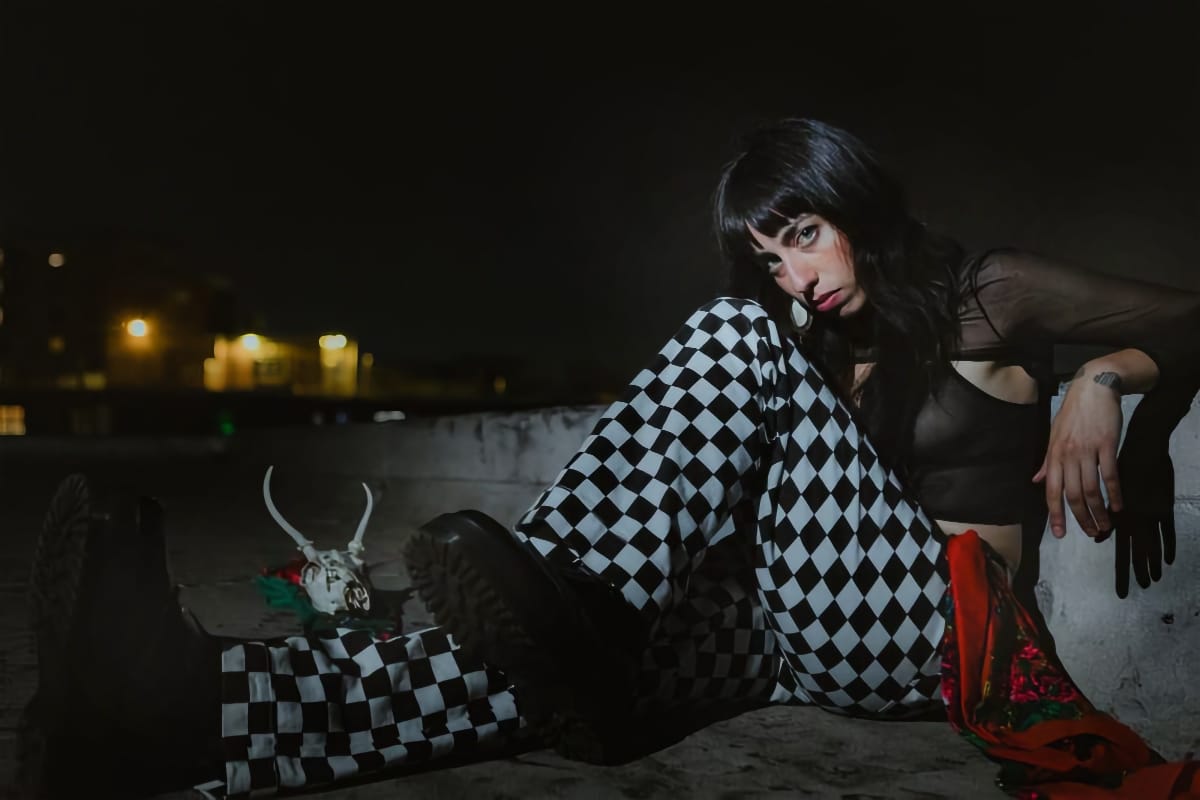
What makes Obomsawin such a needed and crucial presence in the contemporary experimental landscape is how she’s able to draw from the radical legacies of free jazz and improvisation without allowing herself to be confined by their pre-established vocabularies. Her work acknowledges those who came before her and who have taught her, but her relationship with that history is neither reverential nor derivative. And Automatic is a perfect example, its formal audacity inseparable from its sense of purpose. At a time when experimental music can too easily become an exercise in stylistic citation, Obomsawin offers something rarer—an artistic language deeply conscious of its antecedents, yet unmistakably her own.
As she speaks about her love of sound, as both a listener and creator, Obomsawin repeatedly and fervently highlights how the best life and the most freedom music can find is within a communal gathering, in the creative warmth and open-armed propulsion of collectivist passion.
“I’ve definitely brushed up against institutional music education, but everything that I’ve learned has been from people like elders, elder jazz musicians and local players, in real community music scenes. I’m a product of community music, and I do want to uplift the people that have taught me things. Yes, I learned jazz harmony at Berklee, but I learned about the way that music actually works playing folk music, where harmony is always malleable, and groove is really vital. These parts of free music aren’t taught in music institutions because they separate music from dance, and in doing that, they’re separating music from the community context. And what I learned from elders was that all music has a pulse, even if it’s totally free, and it always relates to dance in this way.
“And that’s something that really blew my mind: that it was never this museum piece, or art for art’s sake. That’s what I find really powerful about composers like Don Cherry, who knew that and went all over the world to learn that in a deeper way. Or Pharoah Sanders. One of the influences for this record was Trance of Seven Colors, his album with Maleem Mahmoud Ghania. That album was made in a community where they basically make and play music all night; the rhythm is going all night, and he’s just blowing over it. That’s what I’m interested in. I’m interested in music, as it relates to a community space.”
Check out more like this:
 Michael Donaldson
 khagan aslanov


Comments