


Brad Gowland learned synthesis at NYU Steinhardt on the school's Buchla Skylab and Moog Model D. He never took a composition class and went into the studio whenever it was free. He played drums since he was seven, inspired by Rush, John Bonham, and Keith Moon, and then Richard Murphy played him Neu!'s "Hallogallo." Gowland was floored by how little was happening in that song. Murphy, a high school friend, now plays guitar in his band and records doom metal on his own as Sif, with Gowland as producer.
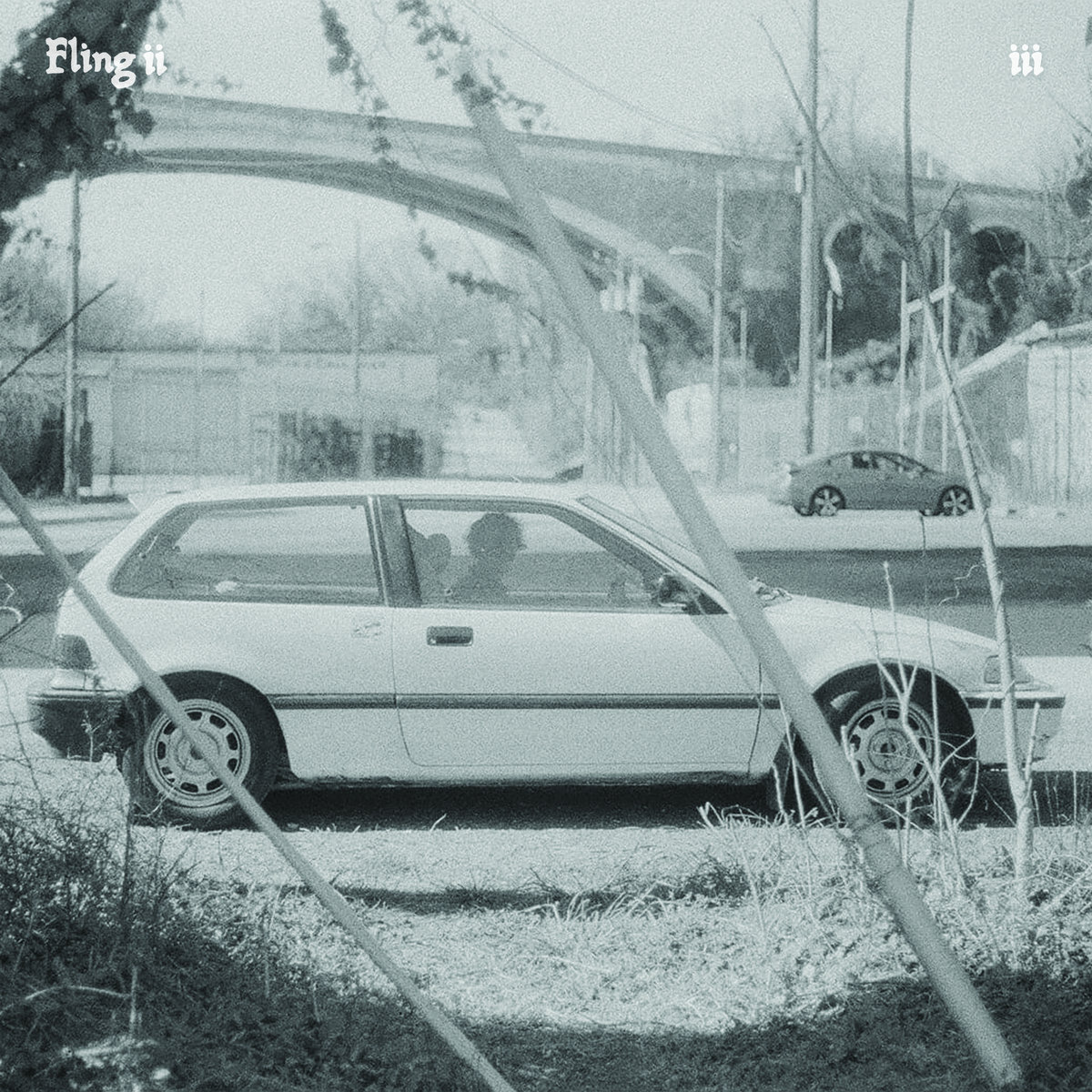
Fling ii began in an Ann Arbor basement in 2020, with a drum kit and a Moog Mother-32 bought used in Manhattan. Gowland punched in sequences and set LFOs running so the synth moved on its own while he drummed along. He booked a weekend at Willis Sound in Willis, Michigan, to get two tracks on tape, and ended up leaving with seven. Those became Fling ii's self-titled debut in October 2022, which Black Sweat Records reissued. The project continued to progress; now 3, the latest LP, is out on the eclectic Canadian imprint We Are Busy Bodies. Six tracks run just under forty-four minutes, and the last of them, "mago," takes fifteen.
Today, the band still follow the example of that first session. The members talk, then play takes of twenty to forty minutes with the mics running, with Gowland eventually culling six to eight minutes from hours of tape. Feedback between takes has to be positive and non-prescriptive. "Let's play more perfect intervals and see what that openness feels like" is allowed; "let's track that bridge and really nail it" is not. Gowland has said that Fling ii is the first music he has made that he could listen to six months later without wincing.
Brad Gowland and Richard Murphy of Fling ii recently appeared on The Tonearm Podcast. Lawrence Peryer spoke with the pair about where the band got its name, the shared ancestry of krautrock and doom metal, the trade-off between a drum kit and a modular rig, and the months Gowland spends alone with the tape after everyone else goes home.
You can listen to the entire conversation in the audio player below. The transcript has been edited for length, clarity, and flow.
Lawrence Peryer: Is there a bare minimum number of you that have to be there for the band to be Fling ii?
Brad Gowland: No. I'll play alone and use that name.
Richard Murphy: I think it's probably apocryphal, but the guy from The Fall is quoted saying, "If it's me and your gran on bongos, it's The Fall." That's kind of how Fling ii is. It's Brad, and if it's Brad and your mom, it's Fling ii.
Lawrence: That's funny. What's the story with the band name?
Brad: There was this Magic: The Gathering card that had great art of a giant throwing a goblin or an orc, and we were like, that looks like it should be an Osees cover, or a psych band album cover. And then we were like, yeah, we should name the band after that. But Fling is already a really common word for bands, albums, and songs. Amon Düül II, when they couldn't be Amon Düül anymore, they were just like, we're Amon Düül II now. And I was like, we should just do that. We're not Fling anymore, we're Fling ii. That was the whole bit.
Lawrence: I mean, that is a pretty ballsy thing to do. It'd be kind of cool if Lars Ulrich left Metallica, and he was like, "No, I'm just Metallica II." (laughter)
Richard: The scourge of sequels.
Brad: The story I heard was, again, maybe apocryphal, that Amon Düül was the commune that the band was living in. There was a little bit of a rift: some were just people from the commune, and some were pretty special musicians. When they started getting booked for bigger gigs, they were like, "Can we bring just the people who know how to play music?" The rest of the commune was like, "No, if you want to be the Amon Düül band, that means there's no exclusion. We're all in the band Amon Düül." And they were like, "Fine. Well, we're Amon Düül II then, and we're going to go play shows."
Lawrence: Are you playing drums in this band?
Brad: Sometimes, yeah. We kind of rotate around, because a lot of people can play a couple of things. I play drums and synth. Tony can play anything—Tony's a wild musician—so Tony plays a lot of the drums on 3, our new record.
Usually, songs come together in the studio like this: I'll record a track at my home studio here with my synths and stuff. I'll play some sketches through an amp or a speaker in the live room and be like, "What do we think of this one? Do you guys feel anything with this one?" Or maybe I'll patch something up on the modular and be like, "How do we like the sound of this?" We start putting together the basis of a jam. We don't start totally cold.
Sometimes it's just wherever people wander in the room. If Tony wants to play keys on something, I'll be like, "Cool, I'll just go sit at the kit." On 3, I think Tony plays drums on everything except for "ilia," where I think I'm playing drums, but I'm not sure.
Richard: You were tired of just setting up a patch and letting it go, and then you had to go play drums. You actually wanted to do a little bit with the modular sounds, which you hadn't been able to do until we had Tony and some other drummers coming in. You jumped at the opportunity to be like, "Oh, thank God I don't have to play drums anymore. I can go play with my toys."
Brad: It's cool though to get to do both, because modular is really interesting in that it feels different than playing every other instrument I know how to play. Whereas with drumming, especially if you're the drummer and you drop out of a song, that's a statement moment in the song. You're really doing it for impact. So I'm very used to that kind of playing, where your whole body is involved. There's something really cool about that—almost like a walking meditation. There's enough stimulation that I can't think about other stuff, and I have to be involved with my body. It keeps you really physically engaged with yourself.
But modular is a totally curiosity-based activity. You don't have to do anything. You can just sit there and look at it. So it's a cool thing to get to do both of those things when we're in the studio.
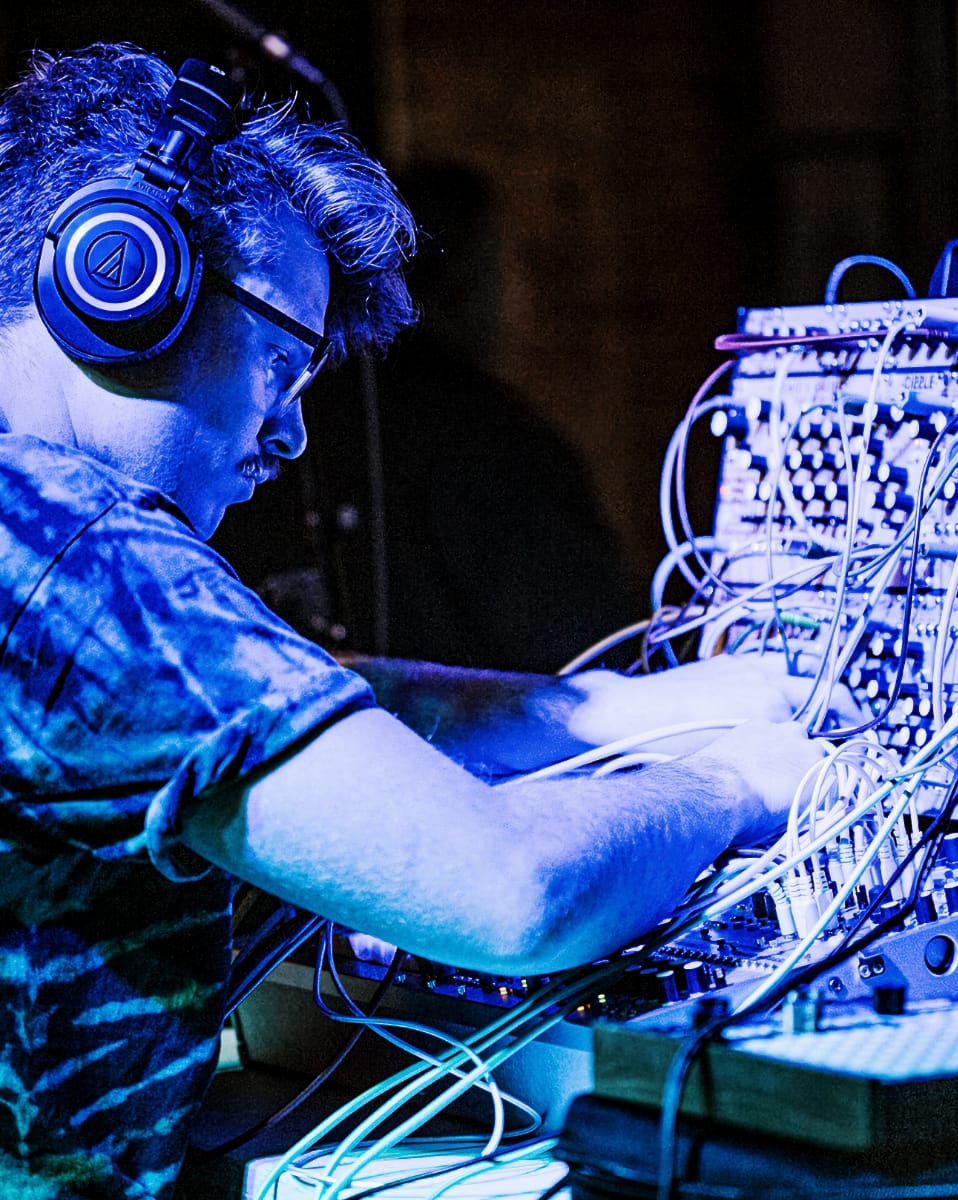
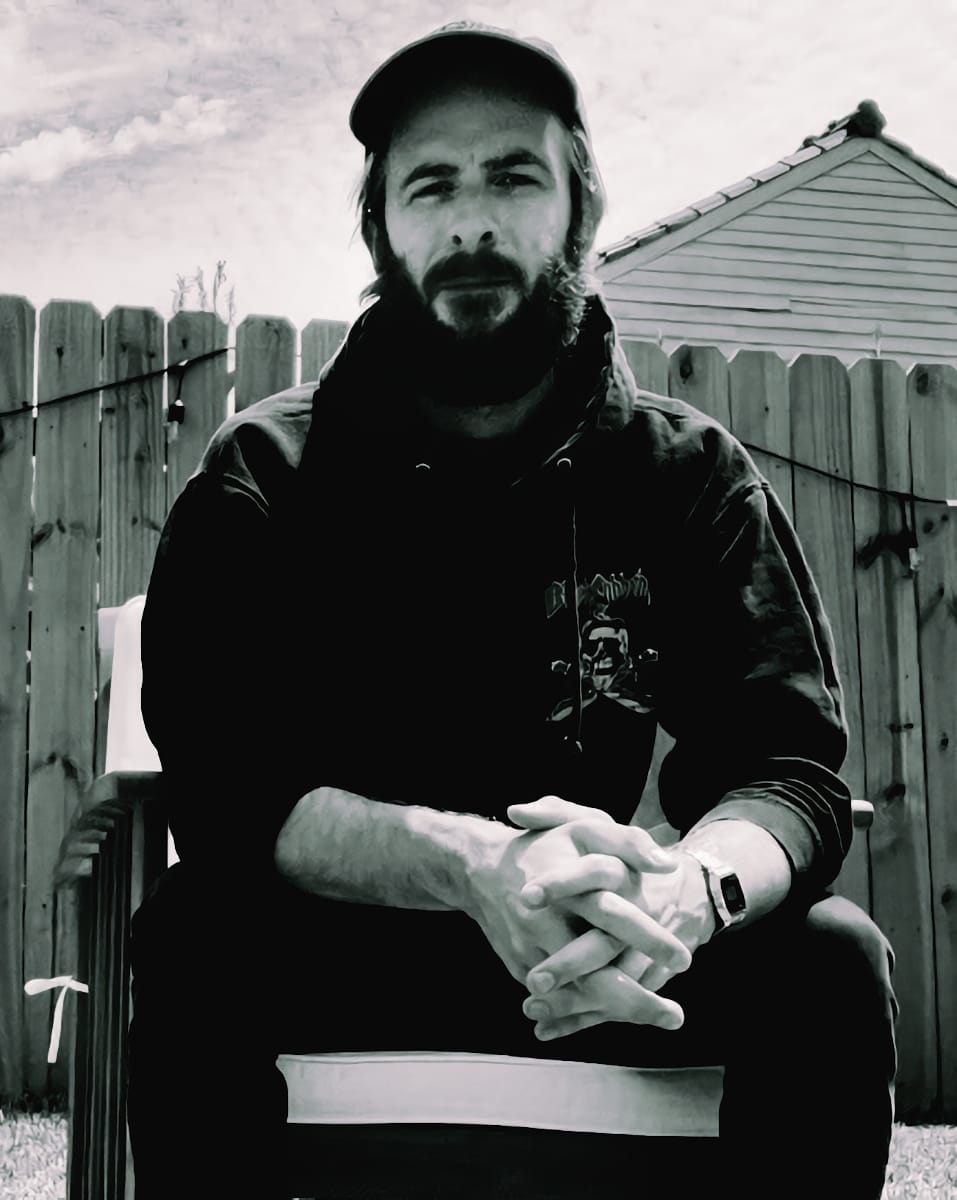
(L) Brad Gowland + (R) Richard Murphy of Fling ii
Lawrence: Richard, tell me a little bit about the overlap in your musical interests. You mentioned metal, and that always makes my ears perk up. Do the different musics have a dialogue?
Richard: Yeah, it's a good question. I trade mostly in doom metal—pretty heavy, slow stuff. I first started making music on my own, and it was improvised ambient guitar stuff. I got a lot of pedals and set up a lot of loops and do a lot of that, just to see where it goes, in a very similar way to how the Fling ii stuff happens, where you just set it and see where it goes. There were just a couple of snippets of the ambient music I was making where I was incorporating a little more, some more riffs, some more distinct guitar lines, which then evolved into what I do now, which is doom metal, sludge metal.
If you look at the actual genealogy of the two types of music—our type, krautrock, and then doom metal or whatever—they're only very distant cousins. You've got to go way back. But I think both forms of music get accused of being repetitive. You're kind of doing the same thing, but where you find the interest, where you try not to be boring, is the evolution of those core ideas across eight, nine, ten, however long, minutes.
So I'm the most technically limited member of Fling ii. I only play guitar. I focus a lot on going back to my ambient guitar roots: setting up big sonic soundscapes, drones, working on those, and then incorporating more distinct guitar lines. So on the surface, the two types of music don't sound incredibly similar, but if you look under the hood a little, there's some commonality.
Lawrence: The overlap to me as a listener would be in the areas of sonic textures and the slow movement, the subtle variation over time, how tones change. It's almost exploring sound and texture just with different configurations, but the exploration itself is kind of the same.
Richard: Yeah, that's a good way to put it.
Brad: From what I remember of the first conversations we had, the original hook that I gave you to draw you in was, "I'm thinking of something that's almost like a motorik beat under an Earth song"—that droney style of guitar, heavy ambient, but mixed with something a little more hypnotic, a little more of that kosmische kind of groove, instead of the usual metal drumming, which is either very ultra-present, super maximal, or like Earth, which is as minimal as you can get, with so much space in it. I was like, "Man, what if we had 'Hallogallo' by Neu!, but we had The Bees Made Honey in the Lion's Skull by Earth as that ambiance in the background?" So I think we were talking about metal pretty early on when we came up with the idea.
Richard: The other one that we were talking about is the band Elder, who I'm a huge fan of. Their old stuff is huge riffs, and then they put out a record of straight-up, no-qualifications krautrock. But it all makes sense within the same kind of oeuvre. So we kind of have some inspiration from that, however much that comes through.
Lawrence: And Blood Incantation is like this too?
Brad: Yeah. I don't really like most of their records—they're too heavy for me—but they have a couple of synth records that are right in my zone. So they also think about this heavy groove kind of music and slow evolution in a similar way, which we're definitely into.
Lawrence: One of the things that struck me listening to the new record is that the acoustic instruments and the electronic instruments don't get in each other's way. Everybody seems to have their sonic space, even if you don't necessarily know what the instrument is that's making any specific sound. What goes into the engineering?
Brad: The way that I think about space in a lot of Fling ii tracks is—especially when I'm doing work on synthesizer, and when Richard is doing really textural guitar stuff, and we also have Adam playing keys—those textures are super similar. The two ways you can deal with that are, "Okay, make space for everyone individually: we need to parcel out some space for you to take a solo, and then I'll take a turn, and then I'll pass it." Or what I really go for when I mix the music down is for everything to share that spot as one morphing sound, where the interest comes from as a listener.
You're not listening to it and thinking, "I'm hearing three people play on top of each other." You hear it more as a strange morphing texture in the middle of the song. Like it's one instrument, but it's the interplay of three instruments that are all completely mangled to the point that they're unrecognizable as a single timbre. And that's work that I do—although I should give everyone credit, it's something that comes across in the studio. If you're standing in the room, you would hear it like that. But it's also something I think about a lot when I take the record home and mix it.
When I took my hard drive home from our last recording session, it was like 250 gigs of audio, from a weekend of doing hours and hours of takes with 24 tracks and the whole board patched up. I take that home, and I listen through it, and some stuff just comes out that way. Like the last track of 3, "mago"—that was mostly how that song sounded when we played it in the room. But then there are some, like "ilia," that are super-assembled from scraps. That's really a collage.
A lot of that fitting textures together is something that I do in post. I'll label up all the takes: this is 120 BPM; it is in C Dorian. And then if I'm working on another song and there's empty space in here that I don't know what to do with, and I need something new, I'll look through all the labeled takes for something I'm not using that's in the BPM. A lot of what we record ends up in similar keys, so I can do this kind of collage work in post.
Sometimes I sit there, and I'm like, "Oh man, I wish Adam played Wurlitzer on this track," but he didn't—he was playing the Juno, or he was playing guitar. But he played the Wurlitzer in this key, at this tempo, on a different track. I'm just going to pilfer that and slot it in here.
Lawrence: And so Richard, when it comes back to you, it's pretty new?
Richard: It's a new experience for me. The first time I listened to the record, I was like, "Wow, I can't remember doing that one quite like that." You could view a good half of what we do as setting up a pretty elaborate boutique sample library for Brad, in a certain way.
Brad: A lot of times I listen to tracks where I think, this doesn't hang together well, but there's still really cool playing in here, so we'll just strip this one for parts, and I'll figure out a different way to jigsaw the cool elements that I liked back together, from maybe a few different tracks.
Lawrence: Have you gotten better and faster at this across the three records, or does it just take what it takes?
Brad: Do I think I've gotten better at it? Definitely. But getting faster, I don't think, is really possible, just because of the volume of it, and because listening to music is a linear time experience. There's no way to get through all of the tape without just getting through all of the tape.
I usually don't touch it for a couple of weeks, because I'm a little overwhelmed after being in the studio. I let it rest for a while, then start assembling a library of different stems. Labeling all the tape I got from the studio takes a long time. I could spend the entire year looking through just this one 55-minute take of one track that we did, if I don't at some point say, this is uniformly cool for X minutes, and I found a part that I really like there.
Lawrence: Is it a rule that you always record together in a room?
Brad: The reason the band exists is for doing the recording. The intent to make an album wasn't there at all when we were in the studio. I was super surprised how much good tape we got afterward. I get frustrated when I record at home alone. But boxing it in to using tape that we get when I'm in the studio—I think that's a good constraint to put on the project, because then I don't get frustrated about a song missing something. "What if I just punch in and add a couple of layers on my modular here at home?"—I think if I finick with it like that, I would just fidget forever and never finish any of our tracks. We got a massive amount of material from this recording session. I'm simply not allowed to go outside of that.
Richard: There aren't any specific rules. We didn't sit down and describe what we're going to do. But stuff that we've evolved to do, what felt natural to us, was—I don't think we've ever done a take of a song more than three times. So it's ultra-improvised at the beginning, and then Brad melts it down into what it ends up being, which is a way less improvisational process.
Brad: As far as who has a say in what the final mix sounds like, there's a dictatorial portion of the legal system of the band, and then there's a very democratic portion of our legal system, which is when we're in the studio. I try to be trusting of everyone, because I want it to be really fun. I don't want it to be me marching around the studio like Captain Beefheart, emotionally abusing everyone until they play something cool. I want it to be, "I trust you, and I called you to be here because I think you're my buddy and I think your intuitions are cool."
I'll tell people stuff like, "Can you play less?" Because there are like seven of us in here, and I need everyone to be a little clean and simple. But at a certain point, when we get into editing, I'm going to give you what you get. But when we're in the studio, that's when I try to say, this is everybody's band. Do whatever you want.
Stay on top of The Tonearm.
Subscribe for exclusive interviews, cultural tip-offs, and community fun.
And your support keeps our site free of advertising and paywalls.
Lawrence: Richard, what's it like for you, being part of a vision that is arguably someone else's?
Richard: It's very freeing. In a small system like this, where there's a lot of high trust, and we've all known each other for, in Brad's and my case, more than half of our lives, there are a lot of benefits to a strong executive. So I really enjoy being the soldier in this type of deal. It goes a little bit into a black box, but then it's pretty great to see it come out the other side.
Lawrence: I think Brad's the Donald Fagen of krautrock. That's the realization I'm having. (laughter)
Brad: I said this last time we were in the studio, when I called Tony in to play drums. He was like, "Yeah, I'd love to play, man, but you play drums in the band—what are you going to do?" And I was like, "Don't worry about me, I'm going to walk around and do my Donald Fagen thing." I want to appear on the record as little as possible, so I have space to set the thing up—to put together the Hot Wheels track and then watch the car rip on it.
Lawrence: And you don't bring stems with you.
Brad: No, I don't like doing that. I just didn't think it was that fun playing along to the stems, because the point of the band—and I think what feels cool when you listen to our albums—is that there's a lot of good feeling in it. If you tell someone, "Isn't it cool to listen to music that's rough around the edges?" I feel like most people would say, "Yeah, it is." Most music is not like that. It does get sanded down. And I try, when I put our tracks together, not to sand the edges off so much that you can't hear that this is people making stuff up.
Lawrence: My understanding—tell me if I'm wrong—is that these first three records are a collection together.
Brad: I think I was trying to be funny when I wrote the press release. They're really nothing. They're just three albums. The fourth one will just be the fourth. And maybe in the press release I'll say that that's the fourth in a collected series. (laughter)
Richard: Look forward to the fourth one whenever that comes out, featuring Tony on vibraphone. That's the cool new addition that brings a whole new flavor.
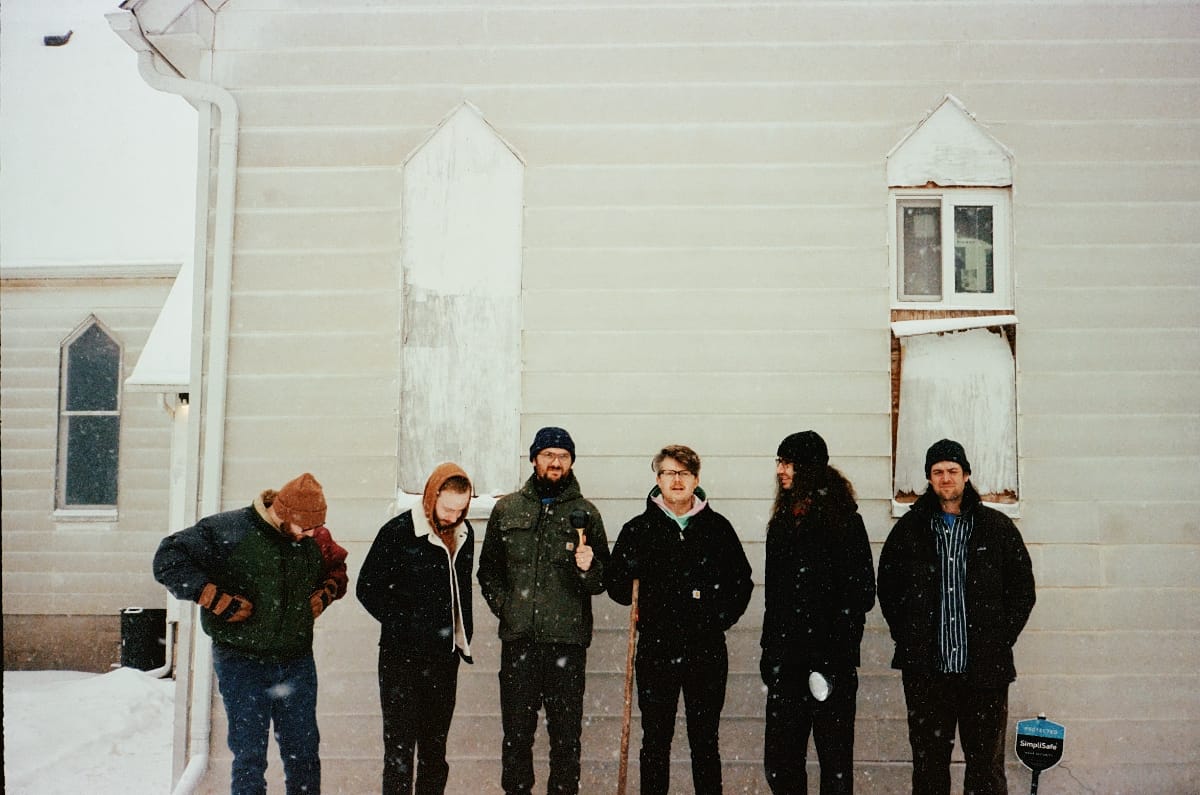
Brad: I think we'll keep having recording sessions. It's a little less than every year—maybe every 14 months we get back together to record another one. We do it to get everyone back in the room: me, Richard, Tony, Adam, and Sam too, who plays bass. We all grew up in the same hometown. When you're a teenager and you have a functionally limitless amount of time to kill, we would just play music together. That's why I do it, for the band.
Check out more like this:
 Bill Kopp
 Lawrence Peryer


Comments