


Before Zooming with Ethan Miller, curator of Silver Current Records, home of the label's latest release, titled The Odyssey Cult, Vol. 3, I spun the opening track, "The Yeti's Eyes," loudly and reconsidered switching to Sanka.
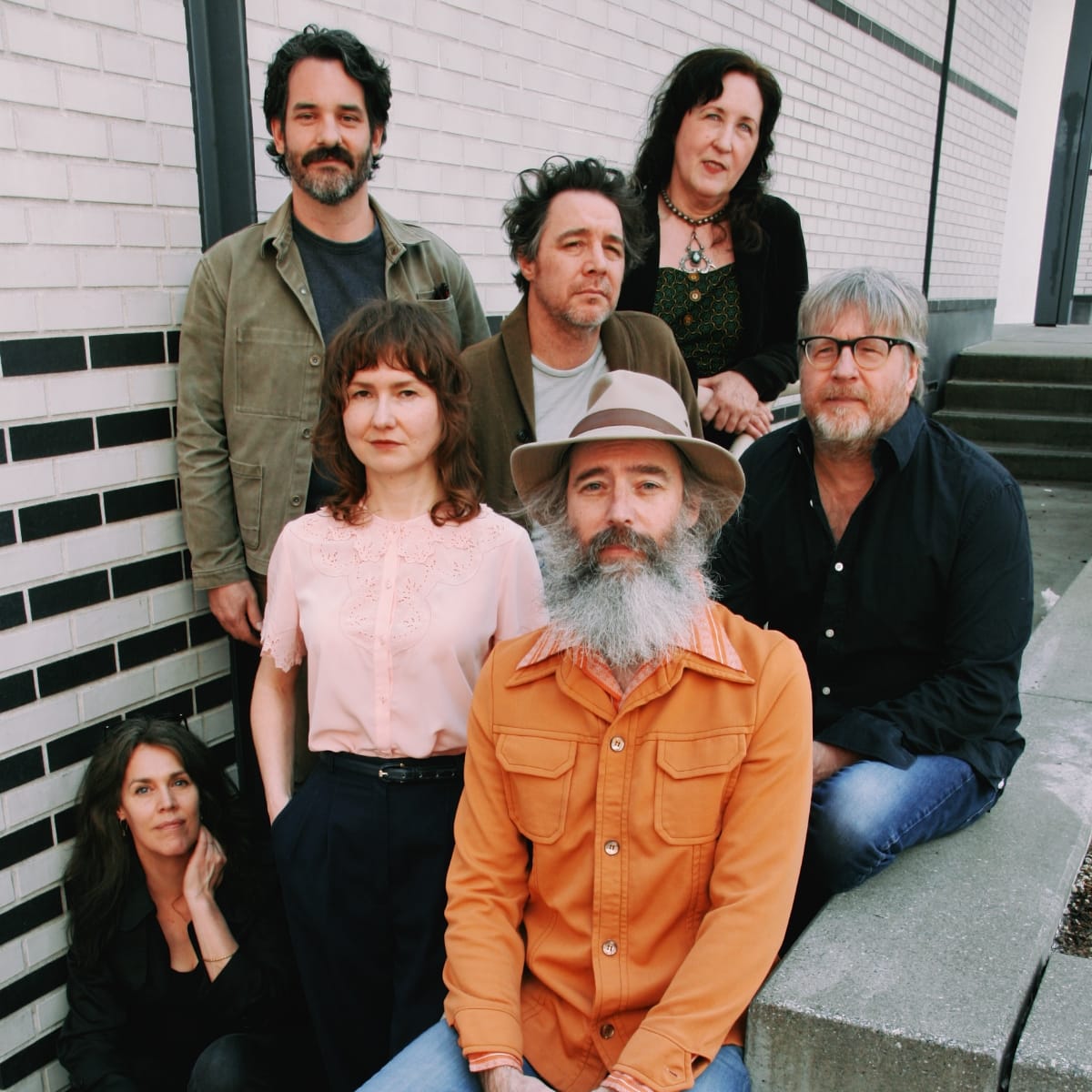
Miller co-founded the late-1990s/early-2000s noise rockers Comets on Fire, an Echoplexed, fuzzy, rip-roaring group whose final album was released by Sub Pop. He's the Höfner bassist with Orcutt Shelley Miller. There's a certain mythology wafting above Miller, pointing back to Sundazed hippie music and forward to great unknowns. With The Odyssey Cult, Miller is the lone guitarist and male vocalist. The Odyssey Cult, Vol. 3 is a Whopper of a record. Members hail from a diverse and superlative American independent musical canon. They include Zoh Amba (a Roulette saxophone fixture turned songwriter/guitarist and recently signed to Matador), Brigid Dawson (Osees), Paula Frazer (Tarnation), Inna Showalter (Magic Fig), Steve Shelley (Sonic Youth), Anthony Taibi (Carlton Melton), and former Comet Ben Flashman. They light up the sky. Merging early Hawkwind's space rock, Neu!'s motorik, and some surfer's Sundek trunks dripping Pacific foam, giggling as the arcade Centipede sprouts limbs and hoists the till. They deliver right on time.
Summer's here, and I was rolling over in my bed mythologies. Homer's Odyssey because it's epic. Also each one's personal lore, Ewoks, collective and unconscious yarns, the Loch Ness monster, an early retirement (I was none too amused to read the current spot price of silver is hovering around $57.14 per troy ounce, representing an increase of approximately +1.75% for the day), collective hopes for some enchanted harmony amidst today's cosmic slop, and because I'm me, rock and roll.
What follows is my conversation with Ethan Miller concerning The Odyssey Cult, Vol. 3 and Silver Current's history and future.
The transcript has been edited for length, flow, and clarity.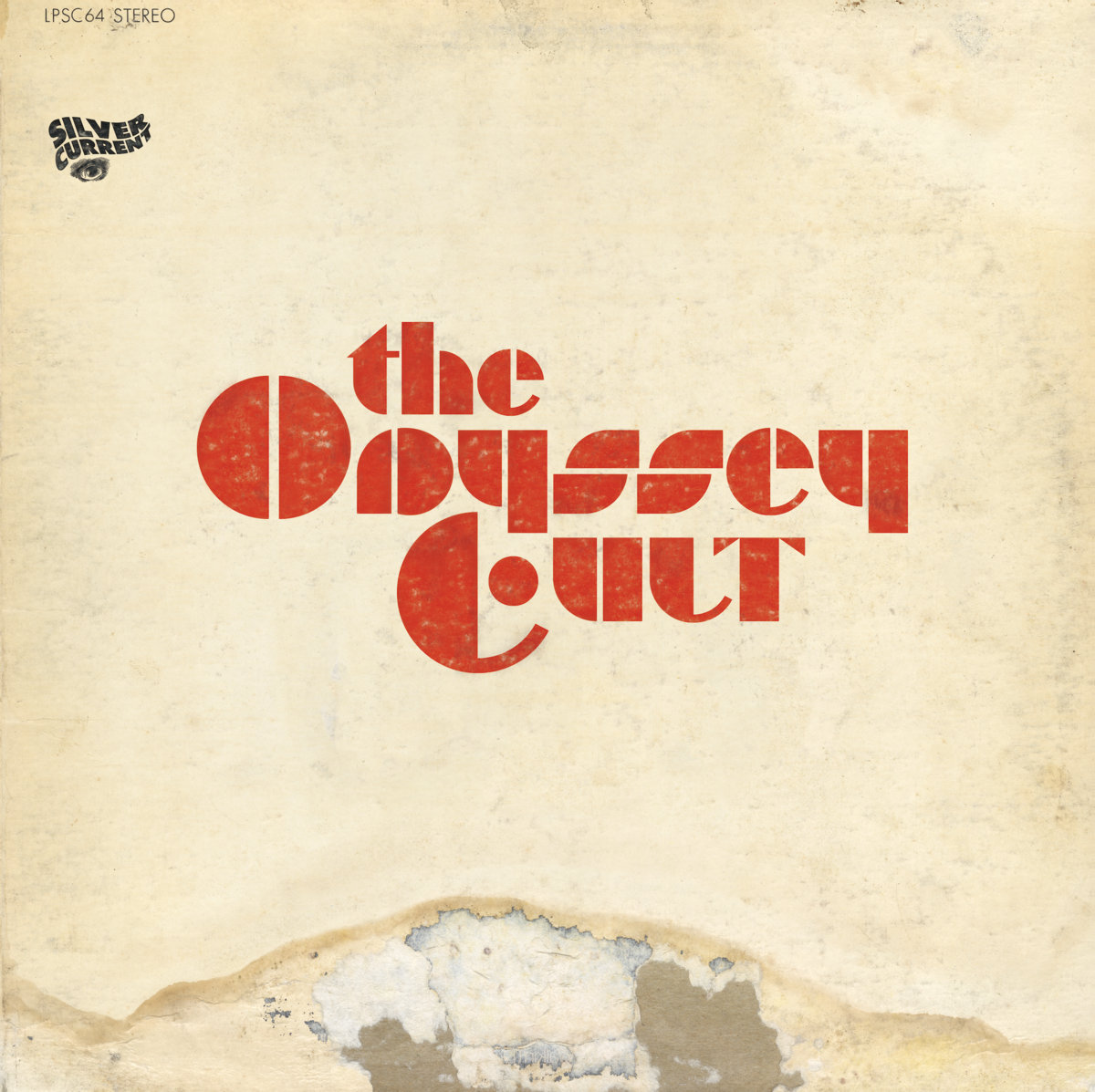
Steven Garnett: I wanted to have a conversation about the mythology of rock and roll, and how The Odyssey Cult, Vol. 3 and Silver Current Records seem deeply rooted in the rich history of West Coast rock and roll. I'd also like to know how this particular album fits your label's ethos, stylistically reaching across the Atlantic to Hawkwind or German Krautrock. It smokes.
Ethan Miller: This one is hard to talk about in a linear fashion. I started with my old bandmate Ben Flashman from Comets on Fire. Comets on Fire formed around '98 in Santa Cruz and went on to play a role in the West Coast neo-psychedelic movement of the late 1990s and early 2000s. Since Comets broke up, he and I hadn't had a substantial artistic endeavor together. He was flying up to see his mom—I live up in the redwoods in Humboldt County, in Northern California—and we got together and did random songwriting and jams to see what would happen.
Basically, he, I, and Anthony Taibi, the keyboard player, were plugged directly into the board at Anthony's studio, playing things in an experiment in random music creation, using an Oblique Strategy to see what we could create. As it went on, we thought, "Let's see how far we can take it, see if we can create an album." We kept using Oblique Strategies at each step, when we had to make a decision, rather than putting too heavy a guiding hand on it. Some ideas are pretty obvious—"Now we need a drummer." I'll invite Steve Shelley, because he's my bandmate and he's amazing, and it's a little strategic, because he brings such a musical, song-like approach even to improv. But we didn't rehearse with Steve—we barely sent him these weird demos of cut-up riffs that had been put together, sometimes just cut apart and reassembled in weird ways.
That was the origin of it: a good excuse for me and Ben Flashman to get together and do something artistic, and with Anthony, my neighbor, who's also a great musician up here in Humboldt. It just kept growing. For better or worse, it ended up as this large ensemble because, instead of making solid, strategic decisions, we kept making decisions like, "What if we have three more singers come on board for the vocals?" I don't know in what terms that made sense, but it was enticing and a little different. They were all people I'd worked with, that I thought it would be a pleasure to work with again and see what they did.
Garnett: I think of bonds that come with already being creatives and putting your heads together. Maybe that actually makes the friendship, creating something together.
Ethan: In this day and age, for the parts I have to write, I feel like I'm more affected by the musicians around me than by some kind of muse in a Beatles-esque way—"I'm going to write a song about world peace." No, I'd rather know I'm working with Ben Flashman. I write in a certain way with Ben Flashman and for Ben Flashman, and that's a big inspiration. It's not a technical thing to write for him; it's almost something really inspiring that happens in those relationships—to know who you'll be playing with, and then to write a certain way. It makes it feel natural.
Garnett: Swinging back to Oblique Strategies—I believe you're referencing Eno's theory of "Honor thy error as a hidden intention." Am I right? Were there any of those strategies that stood out—did you literally flip a card and go, "We're changing keys," or "We're going to slow this down," or "Let's go have lunch and walk away and pick up pine cones"? There's something very consistent through your record—but then again, there's something consistent in Taking Tiger Mountain. It's an organized rock album, but it's so oddly put together.
Ethan: That's what I was after. Ben and Anthony were my core—the three of us really working through the thing. We weren't actually using Eno's playing cards. I'm using the term loosely: if we were faced with a logical decision, or a rule, we'd try to let random chance dictate how it happened, and see if we could do that all the way through and still have a rock album at the end. Like Taking Tiger Mountain, where they're doing all these experimental methods and oblique decision-making, and it is a rock album, but it feels a little bit like a rock album from the dimension just next door—the upside-down dimension. Some of the things I'd do—even in editing—were like taking someone's solo from a different song, a saxophone or keyboard solo, or a bridge, a part they were doing, and putting it into a different song as the solo, even if it's in a completely different key. Sometimes just Frankenstein-ing a song together that way: "I think we've made this song sound traditional now. Let's take it apart, bring random elements in, and reconfigure it on Frankenstein-monster terms." And not completing rehearsals—"We've got a riff, we're doing first or second takes once Steve's on drums, but we don't really know how it ends. Maybe we'll cut some of this later."
Because we have so much capability with digital editing, pop producers sometimes do these cut-ups that would've been real experimental William Burroughs, Brion Gysin kind of stuff in the 1950s, and now they do it to make a Rihanna song in Pro Tools. They're not using random things—they take the end and put it at the beginning. That's been done for a long time to find the best combination, even in the analog era. But instead of the most appealing combination, we were trying for a little bit unexpected—that mix with that Krautrock infinite flow, and the oblique, all layering in.
Garnett: And there is a through line. What seems evident in your music is a real fondness for the adventurous 1960s sounds, such as those of the Grateful Dead. I think of Anthem of the Sun, which gets pretty far out given the limitations of analog gear. And you get to have more fun, because it's digital: if something goes sideways, you can discard it, and you don't waste tape.
Ethan: One thing we tried to do, so the digital didn't become too easy, or we weren't doing what pop producers do with endless options, is to make a decision fast, in the moment, and move forward with it. The whole song, and in some ways the whole project, keeps hinging on these fast decisions made quickly, sometimes without a whole lot of strategy—the oblique side of the thing. That's where it differs from traditional contemporary digital production, where you have infinite possibilities, which means you're safe—safe to go back, safe to fix it, safe to make it perfect. Sometimes they'll almost finish a song, then tear it down, go back to the basic tracks, and rebuild it a hundred times until they get the perfect hit song. It's even worse in indie music, because there's no hit song at the end—it's just a lot of messing around.
Our thing was more like Burroughs cutting up the words and putting them back together, not going, "I've made the perfect bestselling novel," but, "What abstractly feels right about this? What happens if we take the next step, the next chapter, based on the last chapter, which we made decisions with that we don't fully grasp?" And it speaks to the different players coming in. Steve, for instance—we thought we had a much more experimental-sounding record, but when he comes in, he really ties it together. His famous thing is that when he plays, whether it's improv or composed, it sounds like a song. It's one of the things that tweaks our improv in Orcutt Shelley Miller, too—people can't quite tell if it's composed or improvised. Part of that is just that Steve Shelley magic of making things sound like songs.
Garnett: You're also very deliberate with your label’s packaging across everything I can see on the Bandcamp page. The covers vary, but there's something with Orcutt Shelley Miller and The Odyssey Cult where the appearance is as if somebody found a forgotten bootleg with a water stain. There's this intimation from the worn packaging that you want to hear what's inside, something not so predictable, which is a very sweet, generous, and kind of goofy way to invite somebody into the catalog.
Ethan: I've always been obsessed with the landscapes of damaged or old records, especially the bootleg ones, like Trade Mark of Quality—basically blank covers, sometimes with a stamp, sometimes nothing. So the art itself often was the damage and decay of time. They're forever this artistic blank canvas that just shows time and damage, and somehow, to me, that's an irreparable artistic statement. You can't really make that up—you have to live it. It had to come down the ages to you that way, to not just be a blank canvas anymore.
Garnett: But an odyssey does for many, fundamentally—timely with Nolan's film—allude to the long journey home, the overcoming of obstacles, the potential reward after getting stung hard.
Ethan: The Odyssey Cult name probably refers less to Homer's story and more to the weight and obsession that humans can have with art. It's a little nod toward The Crying of Lot 49—how, within that Pynchon book, someone has created an alternate, almost terrorist faction of the postal service, an underground postal service that's not supposed to be operating, but does. It's really absurd, especially today.
We're like some kind of dangerous cult that's gotten out of hand, a secret society based on people's overwhelming, out-of-hand obsession with art that's spawned irrational, cult-like behavior. It's beyond people getting together and talking about it over coffee, "Oh, that was a good book," or people going to the goddamn IMAX to see a blockbuster about a fundamental piece of literature. Paying a thousand dollars a ticket to the IMAX is not an obsession with art; it's just blockbusters—the greatest Disney ride you've ever felt for the weekend. The Odyssey Cult is more like—what was that John Waters movie, Cecil B. Demented? It's basically a gang, like the SLA, that's become so obsessed with film that they become a terrorist organization. When the love of art and the power of art drive us beyond appreciation into obsession—who are those people we can bond with who can feel art or literature that deeply?
Garnett: Let's talk about Silver Current Records. Tell me about running the label and what you're accomplishing with it.
Ethan: It started because I'd worked with a lot of different labels, and at a certain point you're signing onto another label, and you think, "I've got a pretty good notion of how this is done now." I know the difference between Sub Pop and me; I've worked with them a number of times, and there's a huge staff, a big-guns operation. The funding and experience there are hard to beat. But fundamentally, I understand what they're doing, and we're not that far apart. And I saw friends like John Dwyer [Osees] finally getting to a place where their catalog was valuable and new releases were selling a lot.
There's a great joy in being behind artists and trying to lift them up—seeing the unexpected new albums from an artist I love. Whether it's Sonic Youth turning in a live record where I'm like, "This is incredible," or Julie Beth Napolin turning in her new album and I'm floored by what she came up with—you want the world to hear it, and it's a joy to see the world engage with it and to help it get out there.
Garnett: Joe Carducci worked for SST Records and later wrote Rock and the Pop Narcotic. Did you read that one?
Ethan: Yeah, I know of Joe. I know Joe's stuff.
Garnett: Some of it was pummeling, as far as his tone toward topics that would be sensitive in 2026. But he really emphasized that he wanted music to have power. And that's in what y'all are releasing on Silver Current—it's emotional. It can make you want to shake your ass, or just get crazy. You care about emotionally impacting people with your sonics.
Ethan: I'm not trying to curate the label intellectually. I wouldn't mind doing that if you could do it successfully that way, but for better or worse—and I talk to other people who run labels, like Steve and Bill [Orcutt]—something boils down again and again: you have to love something. Sometimes you pass up things you think might sell better than your other releases. It might be an easy release for sales, but there's a mental block if you don't feel that thing. That's why you see labels put out releases that only sell eighty copies, where nobody hears what the label hears, what they love. Sometimes ten years later, sometimes fifty years later, those things become a cult hit, become understood in time, like Nick Drake or Arthur Russell. But sometimes they don't; sometimes it's just washed away with history. It's the same feeling that makes you want to put that record out as much as your biggest-selling record, because the label is run by the heart, by whatever creates that electrical spark between the release and the person who decided to put it out. It's all part of my taste. Sometimes things are a little outside my taste and it takes me a while to understand, but something keeps calling me back to listen and go deeper. And then finally I fall in love with them: "Oh my God, I have to do this."
I started the label in 1998 as a CD-R label of sorts. The first release, I believe, was my pre-Comets Santa Cruz band The Philistine Tent Revival, with fellow Odyssey Cult-er and Comet Ben Flashman, then an unauthorized bootleg anthology of the Japanese band White Heaven, whose song "Silver Current" the label was named after. We did the first Comets on Fire album in 2001. I did it more as a personal art/music project, often creating micro editions for the merch table or gifts for friends, up until 2017, when I dug into the label work and released the Feral Ohms studio album, and then Howlin Rain's The Alligator Bride album, and expanded into a proper label from there. Since then, Silver Current has released albums by Growing, Osees, Sonic Youth, Galaxie 500, Mammatus, and Magic Fig.
We have all these little things we do to keep this industry going for the middle-class artists, or the obscure artists we're selling 250 to 400 copies of, so their amazing albums can exist even if they're not big sellers. But one thing you hit on that's inherently there—I'm a big believer that all music is part of a historical spectrum, a historical through line, part of a larger conversation. It starts with some caveman banging a rock and a stick on a wall and ends today with some album released in China or New Zealand two seconds ago, and we're up to date for half a second. All that time in between, every piece of music ever released, is part of this big conversation.
I very consciously want my music, and the music on Silver Current, to poignantly be part of that conversation—to be high-stimulus, to engage in it. Part of that is trying to be an authentic voice. So you really want to love it, and when it's said and done, whether it sold a lot or not, you can say, "Man, it was worth it. I'm glad all that work went into it, and I'm glad the record's out there." This is what we do with art—we try to get it into the world, so it exists and is part of the conversation.
Check out more like this:
 Jonah Evans
 Steven Garnett


Comments