


From the archive: this interview first aired on August 29, 2024.
Steve Wynn, the Dream Syndicate’s singer, guitarist, and songwriter, was twenty-three when the band spent three weeks in the spring of 1983 opening for U2 across the United States. The Los Angeles band signed with A&M Records the following year. They recorded in San Francisco with Sandy Pearlman, the producer behind Blue Öyster Cult and the Clash’s Give ’Em Enough Rope, and the sessions ran six months rather than the anticipated few weeks. Medicine Show came out in May 1984, the band toured it with R.E.M., and fans and critics heard a big-budget sellout.
Wynn tells that story in I Wouldn’t Say It If It Wasn’t True: A Memoir of Life, Music, and the Dream Syndicate, published by Jawbone Press in August 2024. The book traces his life from childhood in Los Angeles to the band’s breakup in 1988. Wynn signed its acknowledgments from Queens in May 2024 with a promise: “There will be a Part Two.”
Fire Records released Make It Right, Wynn’s first solo album since 2010, the same day as the book. He called in friends to play on it, among them R.E.M.’s Mike Mills, the Bangles’ Vicki Peterson, Chris Schlarb of Psychic Temple, Emil Nikolaisen of Serena-Maneesh, and Linda Pitmon, his wife and bandmate in the Baseball Project.
Wynn spent much of 2025 on the road in the United States, the UK, and Europe with A Night of Songs and Stories, a one-man show of readings, songs, and covers from the book’s years. Each evening ended in the Hot Seat, a short Q&A with a guest. Then the Dream Syndicate won Medicine Show back from Universal Music Group after a long fight over the rights. They revived Down There Records, the label they started in 1982 for their first EP, to release a four-CD Medicine Show: I Know What You Like (Deluxe Edition) in October 2025, with twenty-nine unreleased recordings from 1983 and 1984. “It took six months to make and over thirty years to get Medicine Show back in print,” Wynn said when the set was announced. The band played the album in its entirety on tour for the first time that winter, in the United States and then Europe, and toured it at home again in the fall of 2026.
Lawrence Peryer hosted Steve Wynn on Spotlight On, the podcast now called The Tonearm Podcast, in an episode that aired the day before Make It Right came out. They discussed his freshman year as a college sports editor; the memoir and its companion album; how he nearly wrecked the band’s best year; songwriting for the Baseball Project; and the small amplifiers behind the Dream Syndicate’s sound. This transcript has been edited for length, clarity, and flow. You can listen to the full episode here.
Lawrence Peryer: I don’t remember if it was something you said first person, in the press material, or a blurb on the book, but it referred to the book as a tale of redemption. It sounds like something maybe a marketer might write.
Steve Wynn: You’re right.
Lawrence: But I wonder, does that phrase resonate for you in the context of the book? And if so, what needed redeeming?
Steve: Well, it does, because I feel like there is a kind of redemption in that. I write a lot about the years 1983 and ’84 when we made our second album, Medicine Show, and we were touring with U2 and R.E.M., which . . . What a thing. We were in a big-label bidding war and went to a great label, A&M Records, which gave us all the freedom and money in the world, and time.
Lawrence: You spent some of their Police money.
Steve: We did indeed. Boy, did we. Sorry, Sting.
We were in the best possible situation. And that’s when, driven by fear or insecurity or alcohol or whatever else, I chose to try to sabotage it all. And the redemption, I think, is that by the time that year and a half had passed, I could say, “Okay, do I want to keep doing this?” If you asked me after two records and three years of being in a band doing all these things I’d only dreamed of, “Is this a life you want?” I would’ve said, “Yes, yes, yes.” If I could’ve looked ahead back then, when I was twenty-four or twenty-five, to me right now and said, “Well, here’s what’s going to happen. You’re going to make records and tour the world for the next forty years,” I would’ve said, “Great. I’ll take it.”
I think the redemption was in getting it together enough to get on the path, to get to work, as I say in the book. Just to say, okay, it’s time to get to work and start writing good songs, making good records, playing good shows, and letting that be the most important thing in the world.
Not how drunk can I get? Not how weird can I get? How confrontational can I get? Am I on this label or that label with this agent or that agent? None of that. Just write the songs. Record them, play the shows, not only the best you can, but with the heart of a ten-year-old who listened to free-form radio and fell in love with it. Be that guy for the rest of your life and see how that goes. And that was the redemption. I embraced that initial motivation and got rid of all the other garbage.
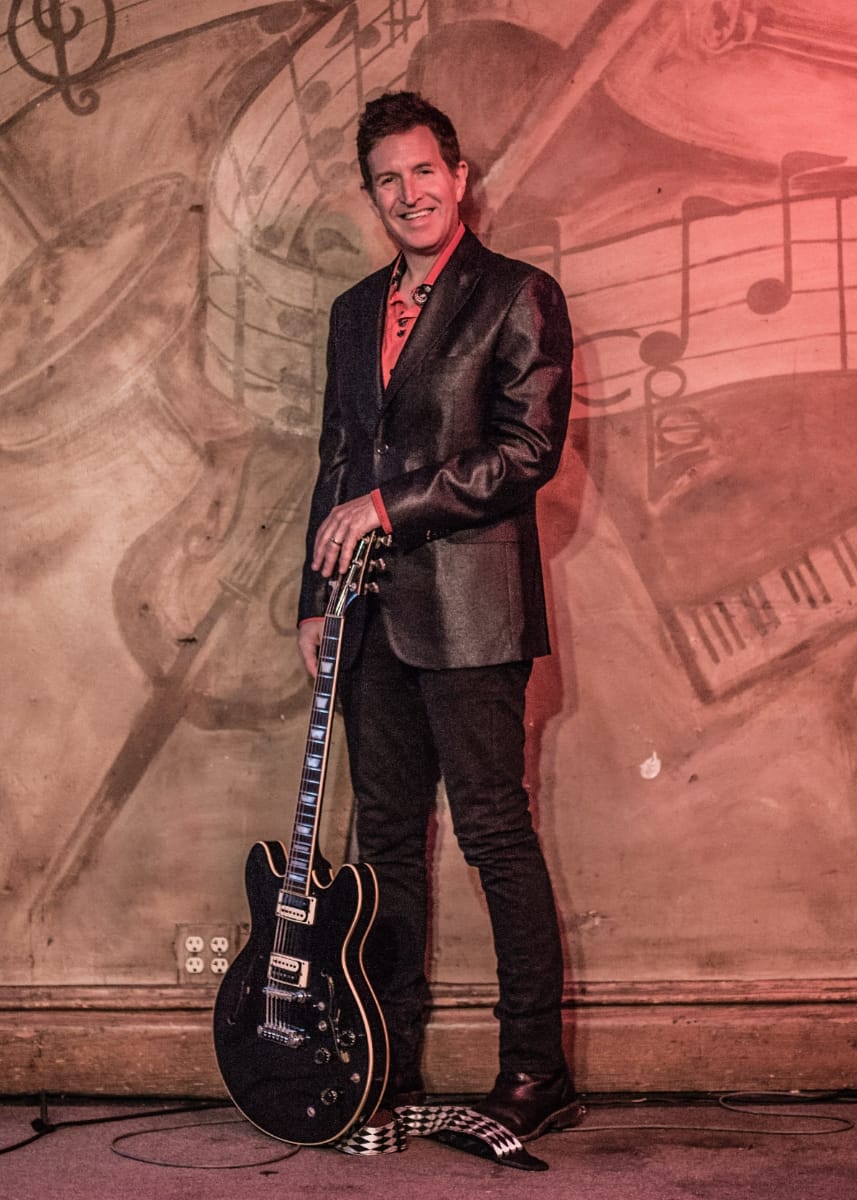
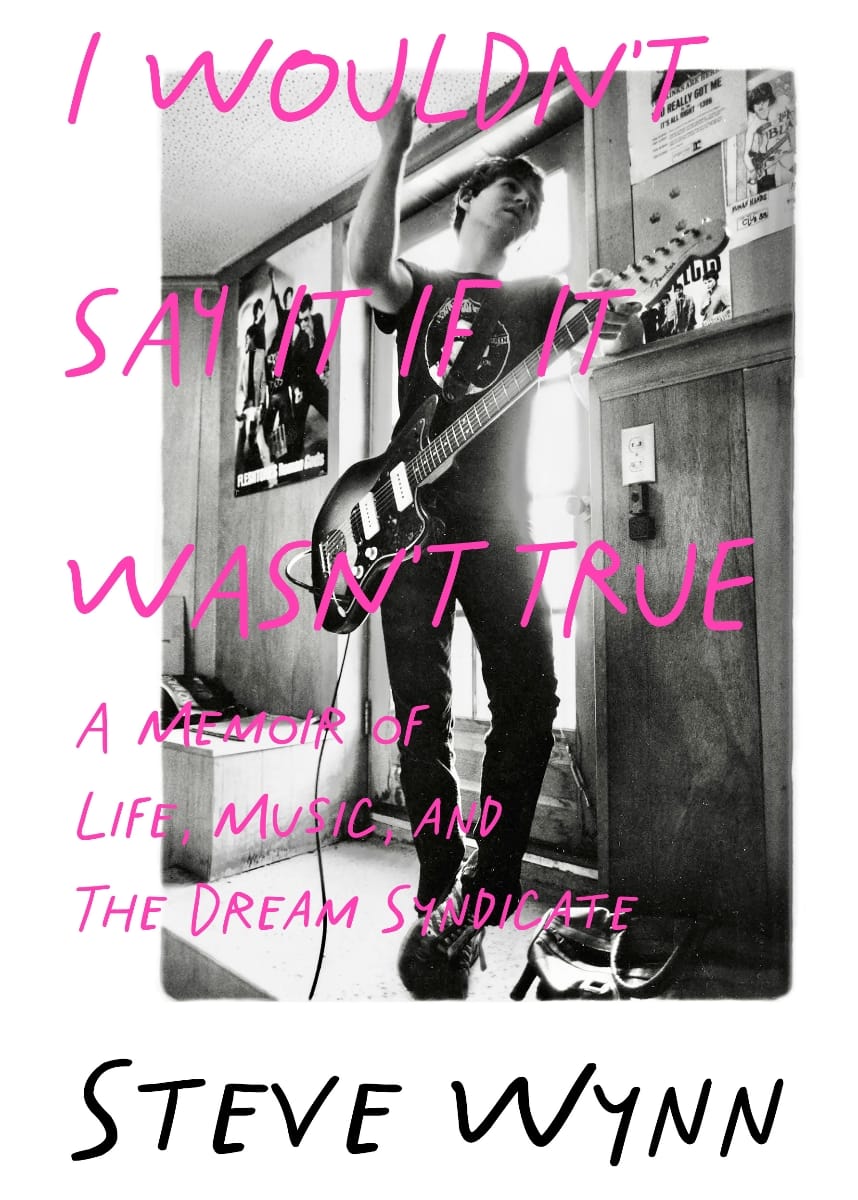
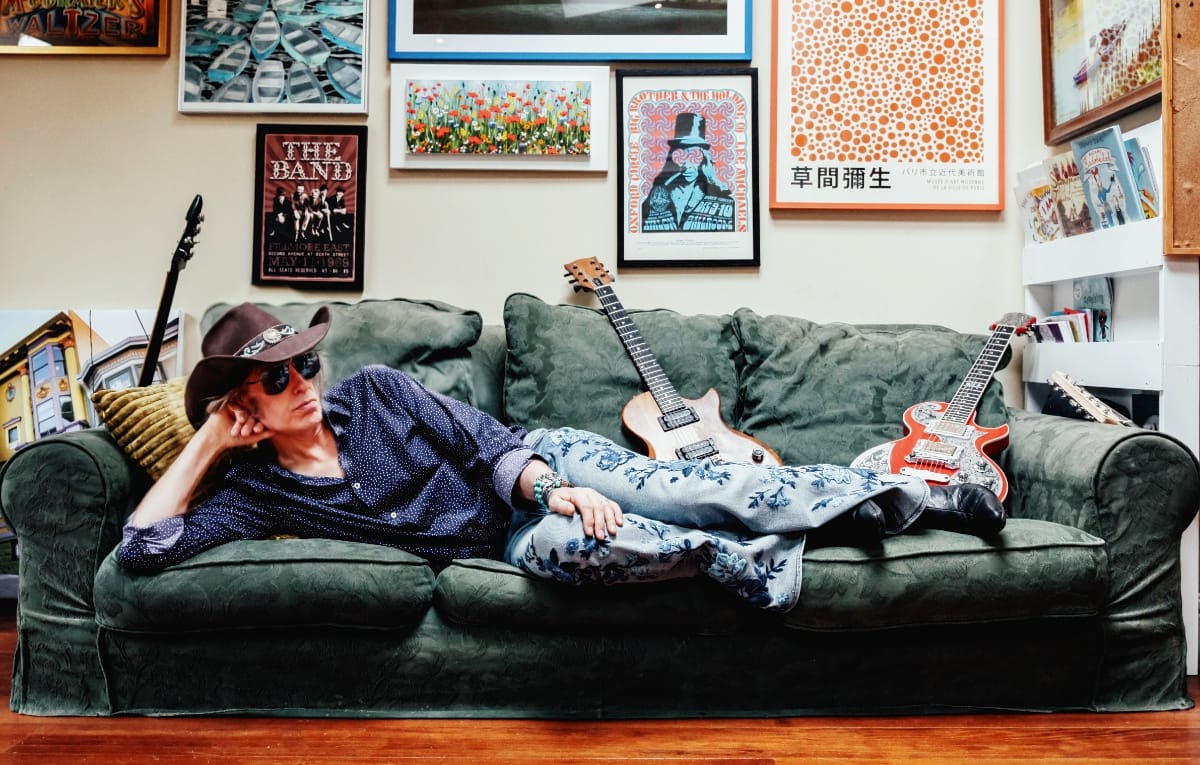
(L) Steve Wynn photo by Charles Cherney. (R) The cover for I Wouldn’t Say It If It Wasn’t True.
Lawrence: Were you a fan or a reader of other music artists’ memoirs before this or in preparation to write your own? And I’m curious about your experience after writing the book, because I think back to when Keith Richards’ book came out. In some of his interviews, he said it was one of the most grueling things he had ever done because he had to live it all again.
Steve: Wow, that’s interesting. I hadn’t heard him say that, but I could believe it. And his was one of the books I read. I read Bob Dylan’s Chronicles, a great book. I was very influenced at a young age by Ian Hunter’s Diary of a Rock ’n’ Roll Star, which is less of a memoir and more of a tour diary, but that was a revelation when I saw that. Once I started writing the book, I devoured everything I could read because I wanted to see how other people did it. Everything from Questlove to Richard Hell to Pete Townshend to Robbie Robertson to Charles Mingus.
Some were self-flagellating books, like the Pete Townshend book or even the Elton John book. I want to be honest and talk about things, but I also don’t want to use this as my confession. If I had to compare, maybe Questlove’s book is similar. I wanted to write a book about what music meant to me and how music was a magical force in my life.
And I realized, as I started to look at it that way, that the arc of the book is a young kid falls in love with music, and how that turns into a young kid having the actual gumption and dream of playing music in front of people and making records. Back then, making a record wasn’t something everyone did. You couldn’t say, “I’m gonna make forty records someday.” Really? Who the hell are you? Where do you get off having ideas like that? For the most part, you had to get signed to a label. That’s not easy.
I had this impossible dream. Then, amazingly enough, I achieved what I could only dream about. And then I did all I could to sabotage it. Then I somehow got myself back on track and salvaged the rest of my life by making music from it. And that was the arc of the book.
Did I feel sad at the end? No, because I ended up where I am. I like where I am. So it’s okay. If there’s anything I took from writing the book, I realized I didn’t always know how to deal with other people and confront relationships, mostly with other musicians. I look back now and say I wish I had handled that musical breakup differently. I wish I had been more communicative. I wish I had taken the time to, if not salvage the relationship, at least give it a shot or be more talkative about it. If there’s any regret, it’s that, but I was twenty-two, twenty-three years old, so I wasn’t who I am now.
Lawrence: A new memoir and a new album landing at the same time. Was the creative process done in tandem, or are these two projects in dialogue?
Steve: They were done in tandem. I started the book in 2015 but dove in in earnest in 2020, again, a pandemic thing. The book takes time, but while I was working on it, I was still writing songs, collaborating with people, and recording them. Once the book got a deal with Jawbone Press in the UK, and I knew it was coming out, I thought, “Well, it’d be nice to have a record to go with it.”
And I realized I’ve got the record. I’d been writing the soundtrack the whole time I was writing the book, without thinking about it. When I heard them all and checked them out together, I said, “Wait a second. This feels like the book.” It’s very personal. There’s a lot of reflection, regret, defiance, looking back, looking forward, making promises, making things right, and things like that, to be either vindicated or beaten down, and it’s all there on the record.
The final exclamation point, once I was putting the record together, was to have it start with “Santa Monica,” the city where I was born, and the street I was born on, Santa Monica Boulevard. And it ends with “Roosevelt Avenue,” which is the main thoroughfare where I live now in Jackson Heights. So it’s like, well, in forty minutes, I can tell you my life story. Bing, we’re done.
Lawrence: I’d like to hear you do a Creedence cover. That was a revelation when reading the book. And then, after listening to some of your music with Creedence in my head, I realized a couple of things. Some of your tracks have that swampy Creedence boogie. But the other thing that struck me is that some of the stuff sounds like it was recorded loud. I was listening to it, and I was like, this sounds loud.
Steve: I think you’re right about Creedence. I don’t know if you know they were supposed to be one of the loudest bands ever live. Not us, though. We’re pretty loud live, but I think I’ve made my last dozen albums with the same small Fender Princeton amplifier on every record. I love little amps. That’s something you learn over time. Even on The Days of Wine and Roses, Karl Precoda was using a Champ amp, and people would hear what he was playing, feedback and noise of doom, through an amp the size of a coffee table book. So it probably wasn’t recorded that loud, but we played it loud in our own way. Our brains were loud.
Lawrence: There’s this notion of what was happening in mainstream music in the late ’70s and early ’80s. It struck me how rock didn’t go away, and guitars didn’t go away. The idea that a guy like George Thorogood was on MTV in the early ’80s doesn’t make any sense if you try to explain it to somebody now who only remembers Duran Duran.
Steve: You’re very optimistic and cherry-picking the good news from back then, but for the most part, it was pretty dire. The reason the Dream Syndicate formed, I say this all the time, and it’s very true, is that we wanted to be the band that we weren’t hearing. We wanted to make the music that wasn’t there and felt we knew how to do it. Without being too calculating, we filled a void.
Things were so cleaned up, so shiny. I’d come along, and my bandmates would come along at a time when even the most mainstream things were still pretty rough on the edges. Think about Neil Young. Think about the Beatles, for God’s sake. Things were loose, rambling, and spontaneous. My favorite element in music is when it sounds like it was made once, documenting a moment that was never to be repeated. Even if it was labored over, you don’t want to think about it. The music from the late ’70s and early ’80s felt very labored over. And for a reason, because it was.
Lawrence: There’s this parlor game I love to get sucked into sometimes, trying to come up with bands with all their original members. Once you get past U2 and Phish, it gets really hard to find any other bands from the ’90s back that have their original members. My point in bringing that up is that there’s something beautiful about people being able to make a go of it and figure out how to grow and navigate.
Steve: I love that parlor game because I play the same one. That’s one of my favorite rock trivia questions. And yeah, U2 is the only band with the same uninterrupted lineup for thirty-plus years. I wish I could have had that. I play in a band, the Baseball Project, with two or arguably three guys from R.E.M., if you count Scott McCaughey, who was in the band for twenty years. They reunited about a month ago here in New York for the Songwriters Hall of Fame, and it was so beautiful. I went to some parties with them that week and could see the joy, like, here we are, the four of us.
And I have that in my life in my way with Dennis Duck, who’s the drummer for the Dream Syndicate. We’ve been there from back then to now. And to a slightly lesser degree, Mark Walton, the bass player in the Dream Syndicate, who joined the band in 1984. The three of us have been playing Dream Syndicate music, granted, with a long interruption in the middle, but we have been doing this together for forty years, and it’s great. We like each other, and we enjoy making music together. And we like making new music. It makes me so happy.
Lawrence: There must be something interesting, maybe even beneficial, to have new perspectives and musicians to react to and collaborate with come through your musical universe. You pop up in these different contexts with very specific groups of people. Could you talk a little bit about what you get from your different musical personas?
Steve: Working with new people is thrilling. On the one hand, I settled into my gang, whether it’s the Baseball Project gang with my wife and Peter and Scott and Mike, or the Dream Syndicate, which has now been a band with the same lineup for going on fifteen years, which is wild. I like the comfort of playing music with friends, people I don’t have to say anything to, and just know that a little nod here and a little movement of the hip there explains where things are going next. On the other hand, some of my favorite things I’ve done in my life were musical blind dates, where I got put together with somebody I barely knew, and that’s inspiring.
One of my favorite kinds of records to make is joining an existing band as the singer-songwriter. I did this with a band called House of Freaks, and we became Gutterball. That was back in the early ’90s. They had the connection of being a band. They had the chemistry, the road stories. I barely knew them. When we got together to make a record, we had all the advantage of them wanting to impress me and me wanting to impress them, and the element of surprise of new collaborators, like Bryan Harvey writing music I could write words to and say, “Wow, he writes music differently than I do. I’m excited by this.” And I did it again with a band called Come, out of Boston, a few years later when I made Melting in the Dark and toured with them. It’s the best of both worlds.
Lawrence: When you sit down to write a song, do you know at the outset, oh, I’m writing a Steve Wynn solo album song, or today I better get four songs together because the Baseball Project is going to need some music?
Steve: Whatever works is fine. I’m always writing, coming up with little bits, but these days, for the most part, I write because it’s time to do a record with somebody. Now, bear in mind that writing for the Baseball Project is very specific. I don’t say, “I wrote this song about Willie Mays, but it didn’t work for that band, so I’ll bring it to the Dream Syndicate.” Although I write a lot of music that ends up in the Baseball Project that wasn’t originally about a bunch of guys in cleats.
When I was nineteen, I’d write a hundred songs in two months because it was all new, and I was learning how to do it. I’d like to say I’m still doing that, but I think most songwriters I know will say the same. You get to a point where you say, “Oh, it’s time to make a solo record. It’s time to make a Dream Syndicate record. Okay. Let me think about what that record could be, and then I’ll knock out the ten songs.” That’s how I do it now.
Stay on top of The Tonearm.
Subscribe for exclusive interviews, cultural tip-offs, and community fun.
And your support keeps our site free of advertising and paywalls.
Lawrence: Are you still a baseball fan?
Steve: I am. Being in the Baseball Project is not a pose. Four of the five of us are big fans. The odd man out is Peter Buck, who just puts up with us because he likes playing with us. But Linda, my wife and the band’s drummer, is more of a fan than I am. She’s got the games on all the time. She comes from a family where the women have always loved baseball: her mother, grandmother, and, I think, her great-grandmother, too. And Mike Mills and Scott McCaughey are fanatics as well. And we have some of the most unbearably geeky van discussions of any band you could ever imagine on the road.
Lawrence: You were a sports writer early on?
Steve: Yeah. In junior high and high school, and even into the first months of college, that was what I was. When I said earlier that there’s no way I could have even begun to dream of being a professional musician, I could imagine being a sports writer. If you had asked me at sixteen or seventeen, I would have said I love rock music, and yeah, I love the Who, but what I’m going to be is writing about sports for the LA Times or Sports Illustrated.
I went to college, UC Davis, in 1977, and I went into the newspaper about a month before I started school there. I had a stack of clippings I’d written for my high school and regional papers in LA. And I walked in with my clippings and said, this is what I do. And they looked at me like I was crazy. They’re like, “Sure, kid. You wanna be the sports editor? It’s yours.” I’m a freshman at UC Davis and already the sports editor on the varsity football beat. And then I heard the Ramones, saw the Sex Pistols, saw Talking Heads, and heard the first Clash album, and all of a sudden, baseball and football didn’t matter so much, and immediately, everything changed.
Strangely enough, I did become a sports writer. I now write baseball stories the way I want to write them. I do it in lyrical form for a band. So things went full circle.
Check out more like this:
 Lawrence Peryer
 Lawrence Peryer


Comments