


Even in an era when changing trends in recorded media formats seem to spin at 78 rpm, with in-the-know journos and podsters announcing the new vogue of vinyl, the rediscovery of cassettes, even a resurrection of compact discs, there’s an irony about a compilation of tracks from the arty NYC 1980s cassette label Tellus being released on LP.
As much a resource for artists and avid listeners as it was a record label, Tellus launched in 1983 to document the sonics of the thriving, tooth-and-nail Downtown scene. Taking advantage of the DIY ethos made possible by cassette tapes, portable players, and affordable home recording decks, curator Claudia Gould, artist Joseph Nechvatal, and composer Carol Parkinson launched an effort that, for the next decade, would preserve work from a scene now celebrated but then often unnoticed.
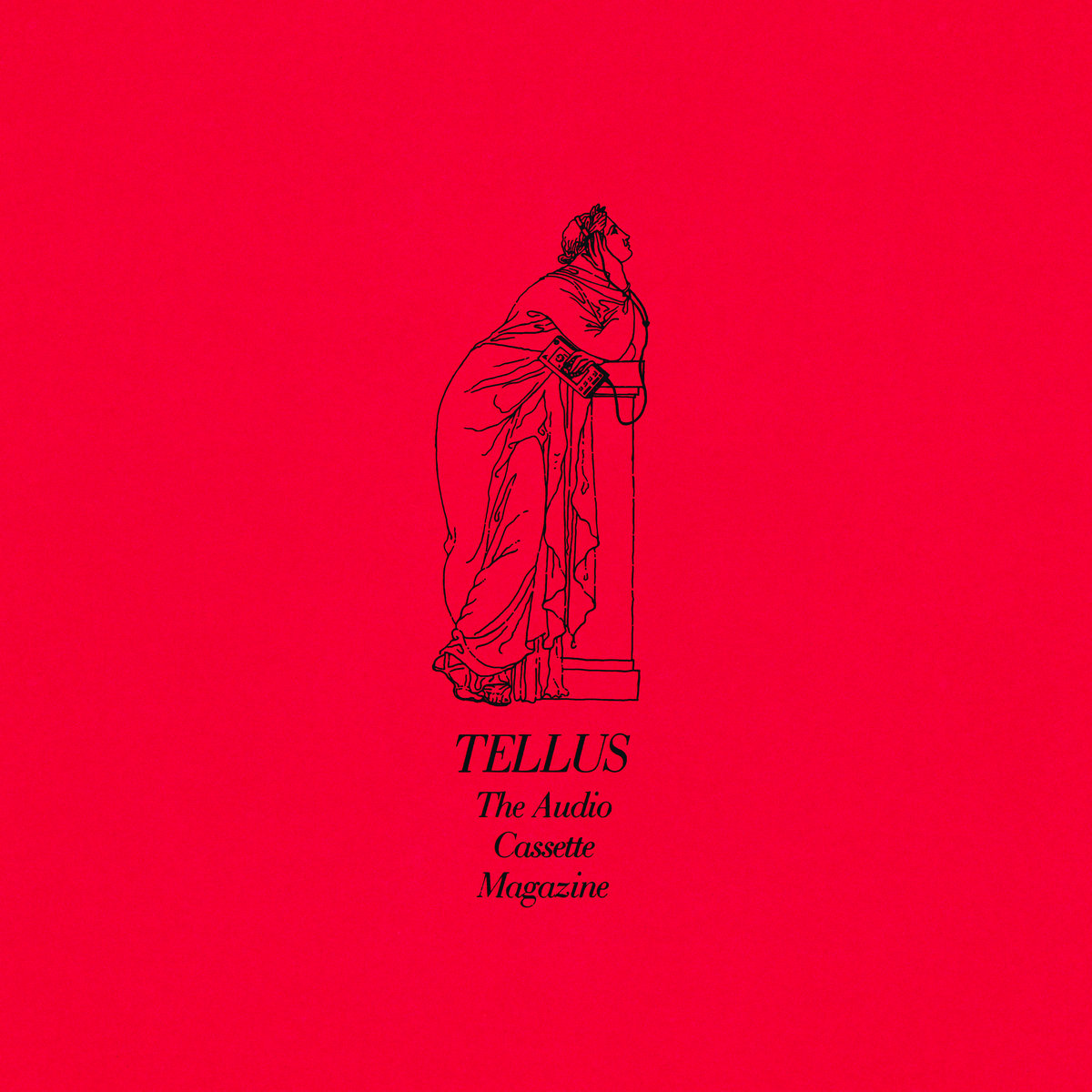
More than four decades later, the archives have opened again. At the start of a planned, ongoing collaboration with Earth Libraries, TELLUS: The Audio Cassette Magazine, Vol. 1 collects 30 tracks on a double LP with all the trappings of the current day: metallic silver vinyl and, of course, a limited edition. (The set is also available for download.) It’s a quirky, noisy, odd, artful, and sometimes somewhat danceable set of songs, chants, poems, and audio experiments.
Tellus began as an extension of Harvestworks, a downtown nonprofit still active today, providing support and resources for artists working in various media. Parkinson served as the organization’s executive director for 37 years, before stepping down and taking a board position in November 2025.
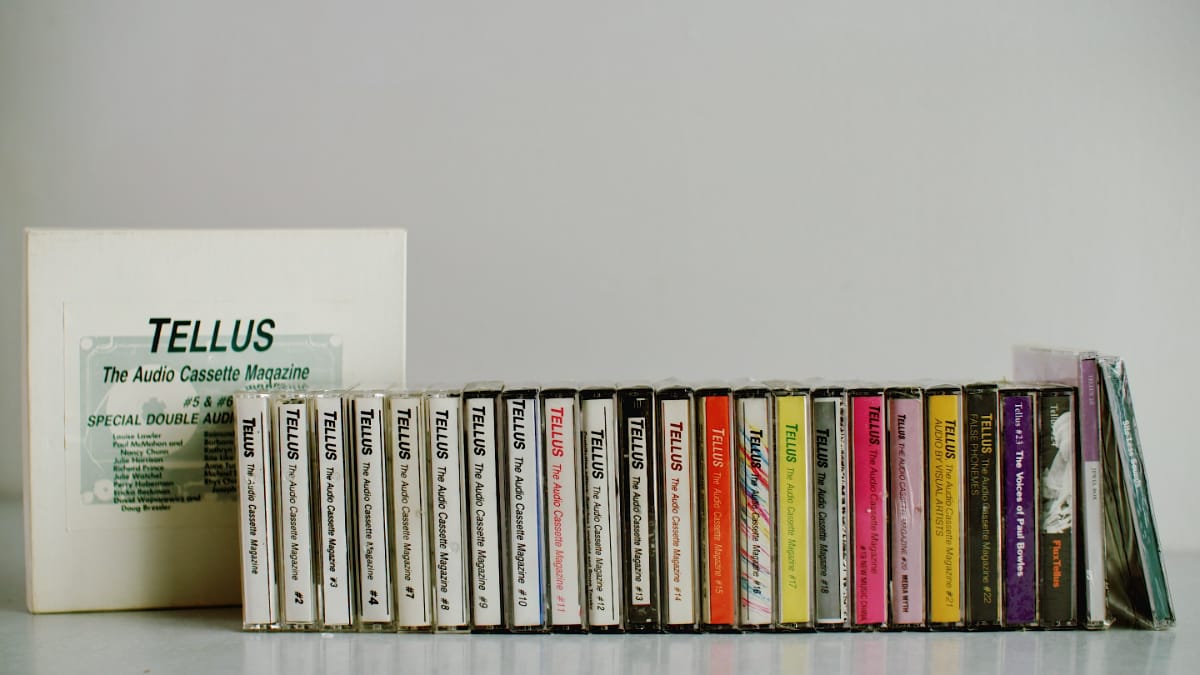
Carol Parkinson: We had a bunch of cassette decks. We knew that the community was interested in this cheap way of distributing their music with the cassette underground happening. So Harvestworks had invested in cassette decks, as an artist-run organization, always needing earned income, right? We could duplicate, probably five at a time. An artist would come in to the studio, and either we would create the master tape and then duplicate the material for the artist, or they would come in with their master tape, mostly reel-to-reel, but it could be cassette also, and then just duplicate it for them and charge them a nominal fee. It was the cheapest thing on the block at that time.
Central to the concept of Tellus was Nechvatal’s work—which incorporated reusing and repurposing imagery even before the computer manipulation he works with now was possible—as well as the dual cassette boombox he bought on Canal Street in 1980.
Joseph Nechvatal: It had two portals, and you could record and sort of re-record at the same time, so you could do these rough edits on things and put together mixtapes for your own pleasure quite easily. It opened up the frontier of manipulation of the sonic frontier for me. Then the Walkman came naturally, and that was also a recording device, but more portable, obviously, and much more sort of private.
The Walkman became a kind of vehicle for having a different experience of the city. I loved to go along the river and walk around way downtown under the Brooklyn Bridge and just have different stuff on my Walkman, and enjoy some commercial albums, but also stuff that I had kind of collaged together. That’s the genesis of Tellus. It starts with the collage aesthetic, but I was dissatisfied with the collage aesthetic.
The collaboration with Earth Libraries began with an idea to publish some of Nechvatal’s work. That project didn’t come to pass, but a few years later, producer and label founder Bryant Saxon got in touch again, this time about reissuing Tellus recordings. The label is based in Birmingham, Alabama, but also operates what they call the “World’s Smallest Record Store” on Manhattan’s Lower East Side. For Vol. 1, Nechvatal and Parkinson each curated one side, while Saxon took on the other two.
Parkinson: I think it was Joseph’s idea that we would each get a side, a discrete side, so that our aesthetic might shine through. Bryant was primarily interested in more of the commercial, and the more well-known, bands that came out of the ’80s. And I, of course, was quite interested in—I hate to say making my mark, but very interested in a visibility for long-form new music. So that our personalities can show through, but being cohesive in terms of the picture of what was happening at that time.
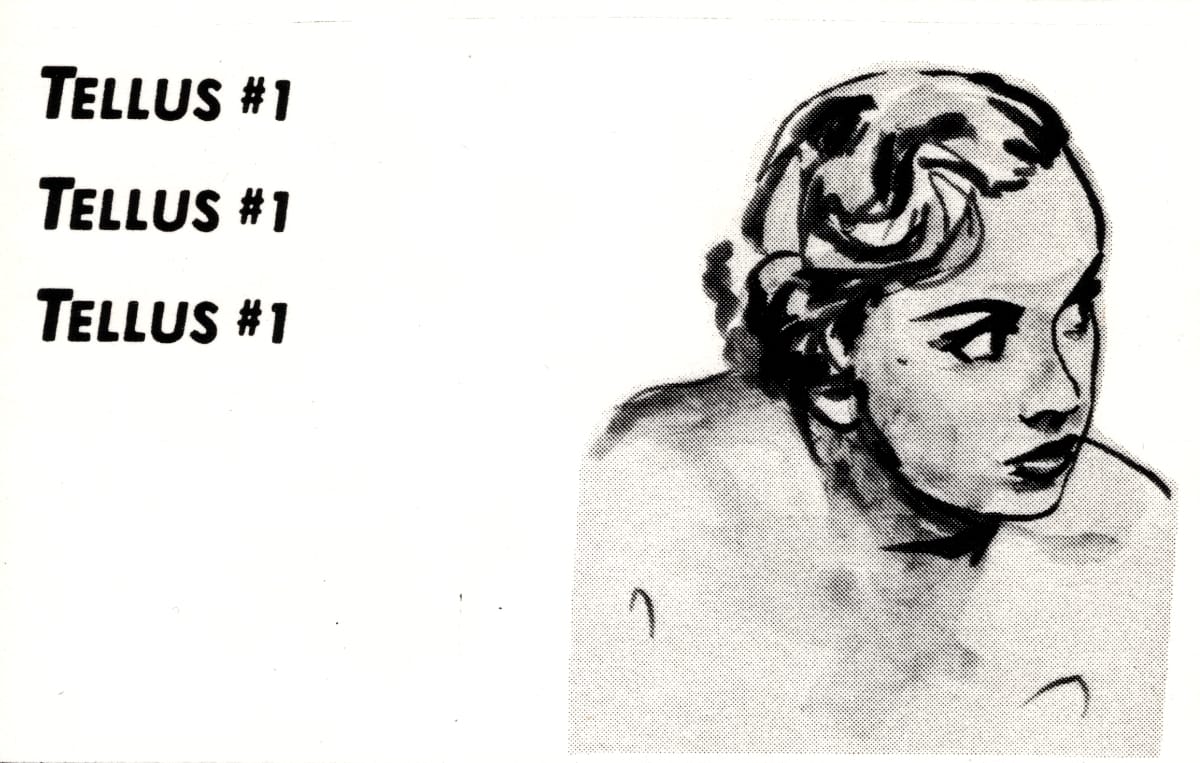
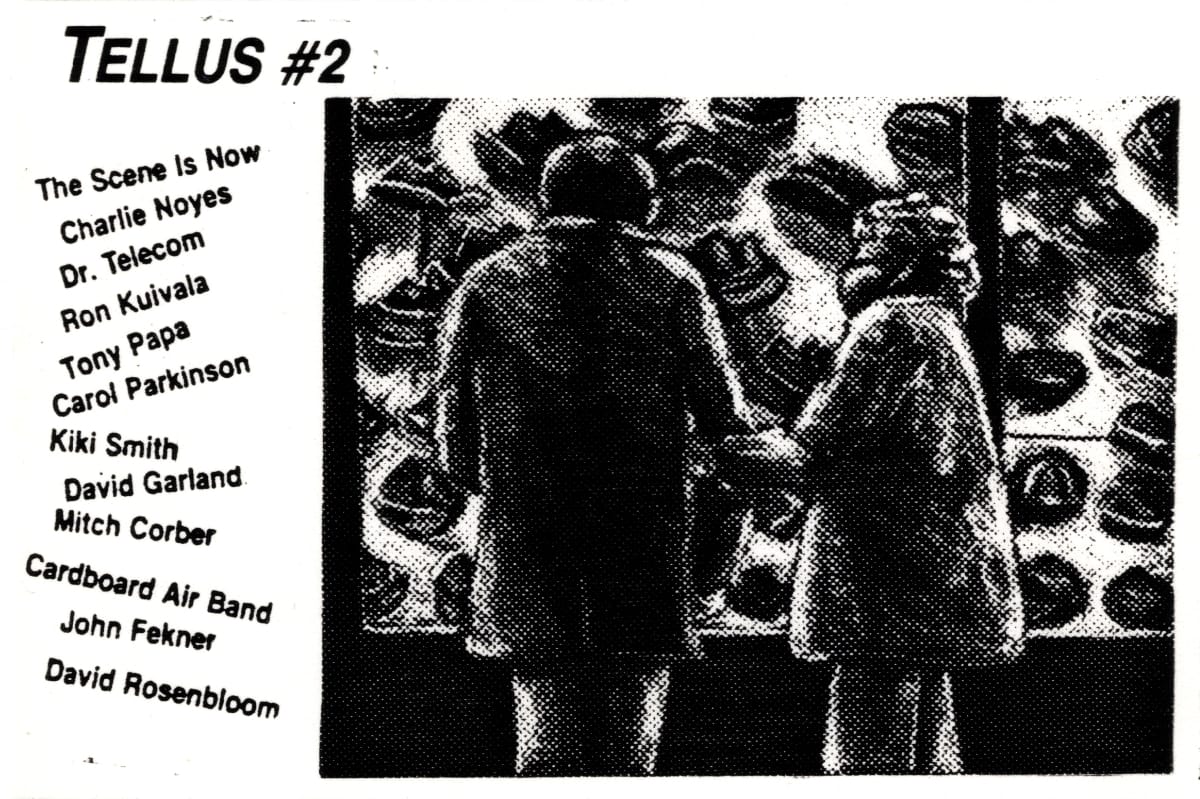
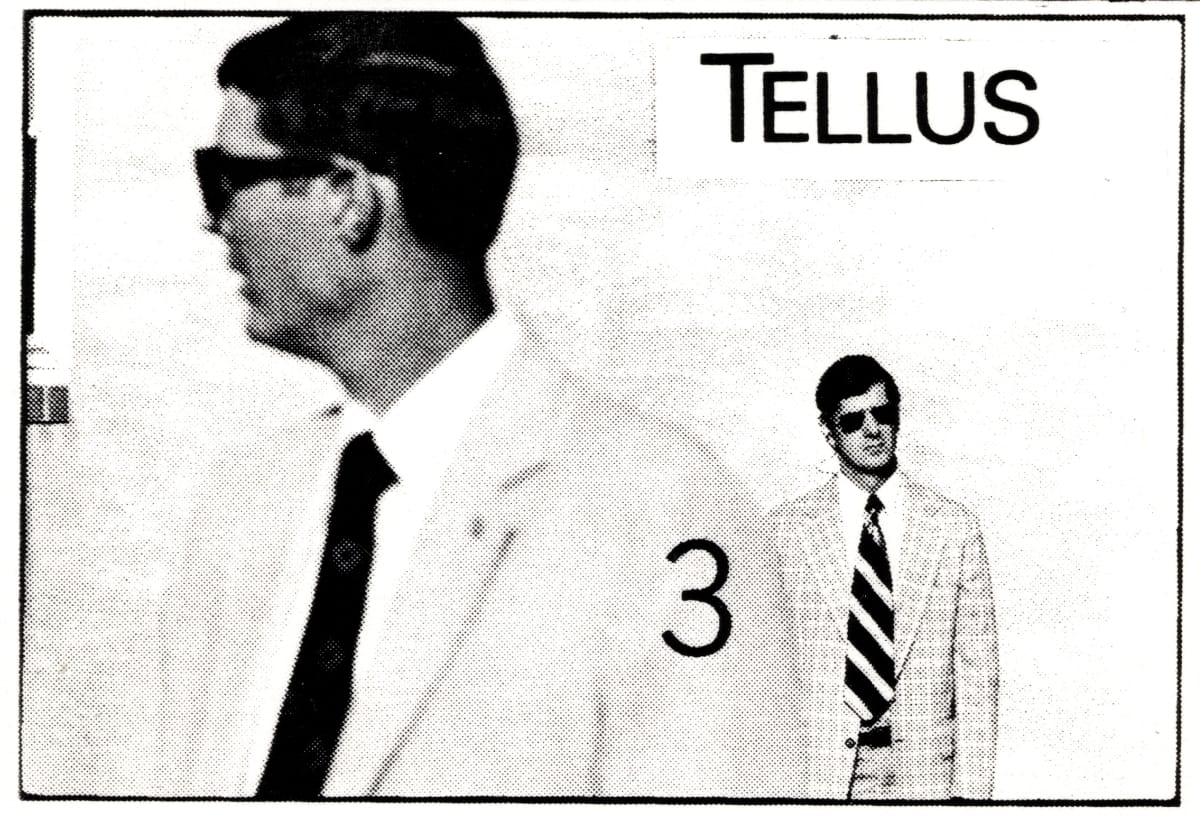
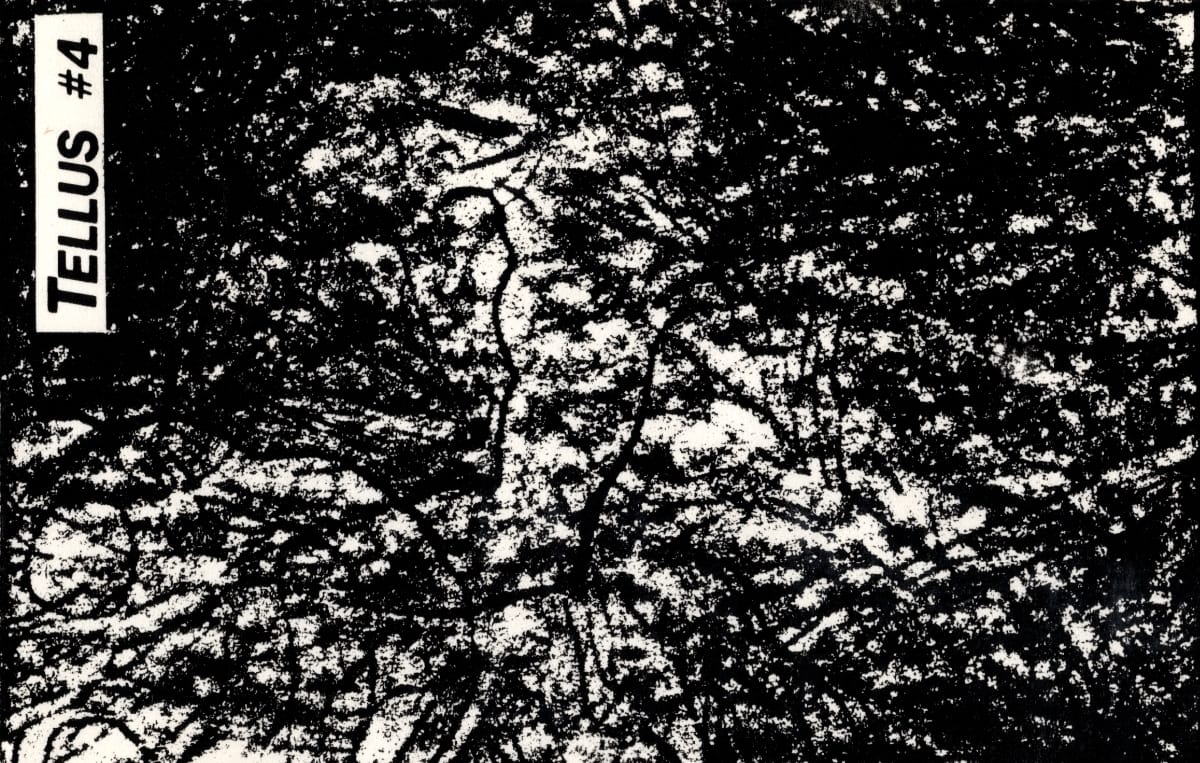
The cover art for the first four Tellus audio cassette magazines.
Saxon’s two sides include the proto-techno of Liquid Liquid, a miniature No Wave opera by the legendary Y Pants, an a cappella horror-show abstraction from Sonic Youth, and a riffy, rhythmic, easily likable instrumental by Parkinson. Her own side features a piece by sound artist Ron Kuivila, an electric guitar septet by the influential experimental composer James Tenney, an excerpt of a work by Fluxus composer Takehisa Kosugi, and a track by vocalist Shelley Hirsch (the longest piece on the album) that stands out even in her lengthy and diverse catalog. The first half of “#39” consists of layers of wind (actually Hirsch blowing into a microphone) before incorporating rapid-fire text by poet Angela Carter over a repetitive keyboard part played by her frequent collaborator, David Weinstein. The piece was created at home and refined in Harvestworks’ studio. Hirsch released a number of pieces through Tellus and has had several working residencies with the organization.
Shelley Hirsch: People haven’t heard a lot of this work, and I worked hard on it. I did a lot of recordings on the street. I had a little microcassette recorder that I took around with me. I made a lot of pieces in those days, but I didn’t do anything with them. I listen to sounds. Sometimes, I listen too much.
Like the work he does reshaping and repurposing imagery, Nechvatal’s side is more about sequencing than messaging.
Nechvatal: Everyone was doing collage; that was sort of emblematic of postmodernism. I wanted to push it into a kind of palimpsest, a kind of problematizing the collage, so that it’s not such an easy rip-off, that the things become brewed in a kind of noise aesthetic.
The pieces have to smoothly transition into the next one. This is why I like the whole thing to be played, you know, from beginning to end. I think the sequencing is what’s exciting about it. To recontextualize these pieces, which may be great, or mediocre, or pretty good, can be outstanding within a certain new context. I love the editing process. It’s really beautiful to select pieces that complement each other.
With the album just hitting sites and shelves, plans are already underway for Vol. 2, although such projects rarely happen quickly. (“We’re working on it now, and it will come out in 5 years,” said Gould, to a round of laughter from her longtime accomplices during a four-way video call.) But eventually, the series will continue to forward the preservation of a fertile audio past. If nothing else, Tellus and Earth Libraries are making public an archive much overlooked in its time.
Parkinson: Just that aspect is an encouragement to those young people who can see now, maybe, the impact a labor of love can have in a lifetime.
Check out more like this:
 Steven Garnett
 Kurt Gottschalk


Comments