


Quietly making a name for himself from the mid-2010s, on the heels of the Danish label Tartelet Records’ fresh reworking of electronic sound, Sudi Wachspress, aka Space Ghost, has spent the years since weaving soft sonic textures beneath his beats, whether R&B-flavored house or 1980s boogie funk. Sometimes he strips his tracks of drum machines and percussive samples altogether, letting his synth pads drift freely through the ether. When the beats recede, the pads take over, and this is where things get blissful.
Yet if albums such as Endless Light (2018), Aquarium Nightclub (2019), Dance Planet (2021), and Private Paradise (released by Canada’s Pacific Rhythm in 2022) alternated more danceable moments with dreamy ambient digressions, Majestic Fantasies (2025), his collaboration with vocalist Teddy Bryant, sees Wachspress veer decisively into UK street soul, G-funk, New Jack Swing, and R&B, giving free rein to his nostalgic leanings.
And if a common thread runs through all of Space Ghost’s work, even though he is still in his thirties, it is the sweet nostalgia at its core. That ever-present wistfulness becomes a vehicle for a kind of beneficial escapism, another hallmark of his sound that has so far stayed implicit and under the surface. On his most recent album, Back from Reality—on Peace World Records, the label he founded—he declares it outright, with a sense of release, as titles such as “Floating Soul,” “Dare to Dream,” and “System Reset” make plain.
The record’s debt to the ambient and electronic music of the late 1990s and early 2000s is stated openly, filtered through the soundtracks, startup screens, and save menus of PS2-era video games. Space Ghost, who grew up on titles like Spyro, Crash Bandicoot, Ape Escape, and Gran Turismo, describes the album, in its press notes, as a chance to write songs that “could have lived in games from that era.”
As proof of the almost therapeutic qualities of Wachspress’s music, I can offer my own experience. On countless occasions, and especially during the difficult months of the pandemic, I found refuge from the wear and tear of modern life among his luxuriant soundscapes. Grateful for his part in my mental health routines and for keeping me sane, I set up a video call to put a few questions to him.
The transcript has been edited for length, flow, and clarity.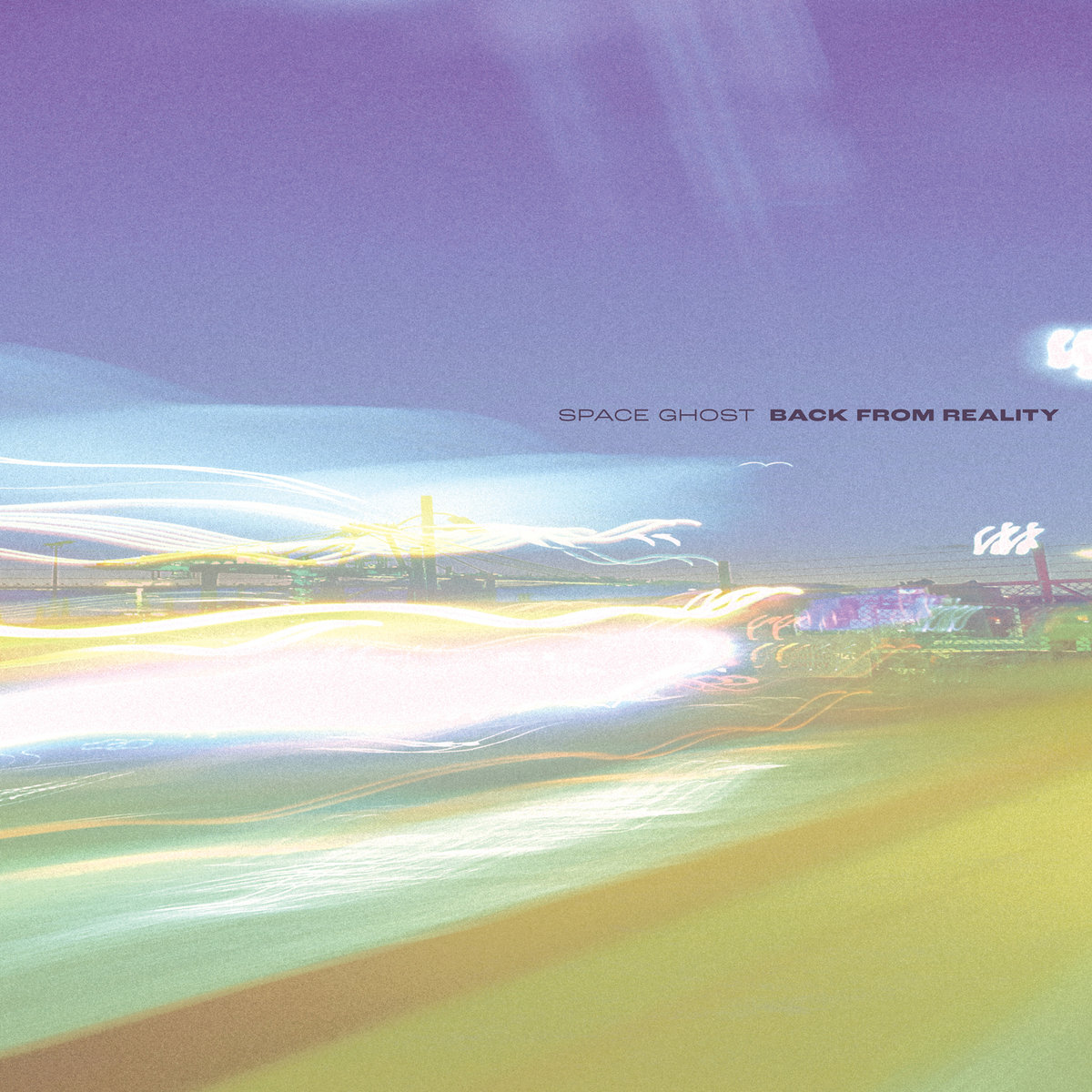
Tony D’Onghia: Talking about your sound, I would like to ask about the many influences you can recreate and reassemble into something that sounds entirely personal. Your music incorporates melodies and chord changes typically associated with a certain era, but you make them your own.
Sudi Wachspress: When I think about that, specifically of creating my own sound, it’s something I’ve always wanted. Before Endless Light, I really wanted that. But it was obvious. I was kind of copying ideas from people. I didn’t have the skills to make my own sound. Endless Light was me trying to figure that out. How do I make my own sound? Like using similar synths, maybe starting to make similar production techniques. I think ever since then, I’ve been practicing, trying to create things the same way every time, if that makes sense.
Tony: If I had to describe your music to someone who doesn’t know you yet, I would simply say: “It’s as if he were creating something very personal by taking the best parts of certain records of a certain era and putting them together.”
Sudi: Another thing that comes to mind is, sometimes when I’m going through an obsession with something, if I was really into ’90s R&B, for instance, I’ll find a group, and I’m listening through their albums and listening to all the tracks. Sometimes I don’t even like the songs themselves—I just like the production style, the way it sounds, how the instruments are used, and the transitions. Sometimes I find a really good song on that album, and that really stands out. It’s just a funny feeling. You’re like, this album has all the makings to be really good, but the songwriting doesn’t sound great to me. But I’ll focus in on the other elements and just absorb it. And then later, when I make music, maybe some portion of it will come out.
Tony: I imagine you listen to a lot of music, and you are surely very good at understanding the stylistic details of certain genres.
Sudi: That’s true. Whatever music I’m really fixated on at the moment, I’ll listen to it really intently. I’m listening to a lot of old house music. I’ll listen to the whole song, but then I hone in on specific elements, like a transitional hi-hat sound. Just little things that I noticed people put in their production back then, and I try to understand how they’re doing it, or I try doing my own version of it. That kind of touches on what you were just saying.
Tony: Talking about obsession, what’s one of your current musical obsessions?
Sudi: Let’s see. Well, just in the last couple of days, I was really listening to John Beltran. I like a lot of his older music. And I’m always really obsessed with this group of DJs and producers from Denmark. They go under the umbrella of Safe Distribution, which includes the artists C.K., DJ Popup, and Central. I really like their style of production in terms of modern house, techno and downtempo ambient kind of sounds. It hits really deep for me. And they’re probably inspired by the same stuff, but it sounds so modern.
Tony: Since you mentioned Denmark—you also collaborated with the labels Tartelet Records, also from Denmark, and Pacific Rhythm from Canada, and anyway you’re still based in Oakland in California. How is Oakland influencing the music you are making? Or how you started appreciating music?
Sudi: People ask me that a lot. I don’t really ever have a good answer for it. I think I just happened to live here. Because this is where I went to school, and I love living here. It’s really, really peaceful to me. I know the lay of the land. I feel comfortable. And, maybe for the longest time, there wasn’t a lot of competition here in terms of dance music. If you go to New York or Europe, so many people are trying to do it all the time. And here I stand out maybe because there’s not a lot of that here.
There are definitely a lot of people making music and DJ’ing here, but in the realm I’m in, I’m not too hip to it if it’s happening. I think just living here allows me space to be myself and create stuff. A lot of the music I make is inspired just from digging around on the internet or finding old records.
Tony: You’re very skilled at producing house music in its most classically ‘deep’ sense. From this, one can see a great appreciation for producers like Larry Heard, Ron Trent, and so on.
Sudi: House is a genre I like to focus on. Pre–Endless Light, I was really interested in dance music as a whole, trying to really reinvent the wheel, like how can I make a new genre almost or something? And that’s too big a task for anybody; that just happens naturally. And then I kind of got locked into house music because it feels very timeless and people weren’t playing it as much. And then now it’s really popular again. But it’s a genre that you can work within this frame, like a box that you work in there, but then you can break outside of that in different ways. And it sounds interesting because people know what it typically should sound like. But if you just make it slightly over here, then it sounds like a brand-new thing. So I think it’s something I can work on and just keep practicing, this really specific skill, of making house music.
Tony: How did you decide to start a label, through which some of your most recent work has been released? What is it like for you to be completely responsible for your own output?
Sudi: I just wanted to make something that I had more control over and that was my own, because I collaborated with a lot of people, as you mentioned. And I feel like that was key for me to get my voice out there and get to a lot of places. But I think the music industry right now for an independent artist like myself, it’s not built to make a living anymore. For people like me, it’s just for streaming.
I felt like, if I’m going to put out music and I want to keep any of my money, maybe I can figure out how to do it myself, and then down the line I can make most of my money back myself if it works out. But so far, it’s just an experiment. I’ve put out a few records in the last couple of years and quickly realized it’s a lot of work and really difficult. So I don’t even know the longevity of it. I feel like I’ll get burnt out after a while because it’s so much work and I’m not really even making money off of it. It’s just figuring itself out at the moment.
Tony: It’s maybe a sort of marathon in the end. You can expect some results only in the long term.
Sudi: Yes, that’s kind of the idea. It’s maybe ten years from now, something like that. Maybe I put out a record and then for the next five years, I’m just getting digital royalties from that, that just go directly to me. Maybe it’ll work out later. I don’t know. But I still want to collaborate with other record labels because now I’m starting to think about that again. Maybe I should make more music and branch out, because I’m probably best at just making the music. But for now, it’s another extension of my art practice, I guess, just an art project.
Stay on top of The Tonearm.
Subscribe for exclusive interviews, cultural tip-offs, and community fun.
And your support keeps our site free of advertising and paywalls.
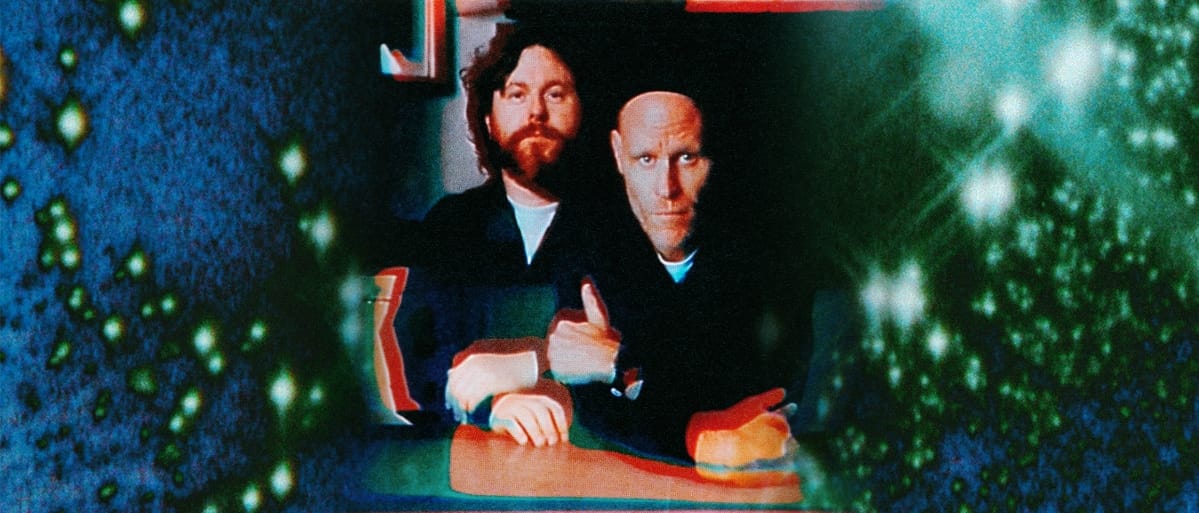
Tony: Last year you released an album with a singer called Teddy Bryant. From what I understand, it was the first album where you collaborated with a vocalist. It seems you found a good songwriting partner in him. Can you tell us something about this collaboration?
Sudi: That was a new one for me. I hadn’t worked with anyone where I’m producing and they’re singing. I haven’t collaborated like that in a long time because I used to play in different rock bands in high school. But then, once I got into college and then the next ten years, I just was making music by myself. So, it was kind of interesting, sharing the creativity with somebody. It’s not specifically just me. We have to come together and agree on it. But, that being said, we’re on the same wavelength. That was probably the easiest version of that because I could just make a song, send it to him, and he sings on it. He sends it back and I’m like, yeah, that sounds good. I like it. He is pretty easygoing.
Tony: I find the title of your new album, Back from Reality, very interesting. It seems to embody a certain concept and to highlight the escapist aspect that I feel your music conveys, and that makes me appreciate it so much. In this case, it seems you wanted to point out that feature explicitly.
Sudi: I guess so. A lot of my music already is kind of in that realm. Maybe my album with Pacific Rhythm was also more of a relaxing kind of escapism. I think maybe because it took me so long to make, and I was just starting to feel the pressures of just life, just having to work and not being able to just be creative all the time. And then that combined with the state of the planet, everything in the news, everything just seems so bad. We’re still supposed to just keep going to our job and making money and doing that stuff. And I felt like I needed to create something and tap into this other feeling that I really like from making music. Back from Reality is me coming back from all of that and coming into my own space.
Tony: In some other genres, alternative rock, for example, the idea of escapism, or the feeling of nostalgia, is seen as ‘uncool.’ Something that’s not OK to express. That’s perhaps why I find your music, and this album, so refreshing.
Sudi: We are constantly engaged. We’re constantly on our phones, looking at literally everything that’s happening all the time, whether it’s some fucked up shit or just somebody making a stupid video I didn’t even want to watch. So it’s trying to get myself into my brain. And I have a lot of nostalgia for my childhood and for the music and the video games and whatever stuff from that time period, because it was maybe simpler then. I’m not saying that we shouldn’t engage with our reality, the state of our earth and things that are happening, but also I like reflecting on my childhood and my inner self and my creativity and creating a whole album around that and letting people take a moment. Forty minutes to escape reality.
Check out more like this:
 Carl Dexter
 Tony D'Onghia


Comments