


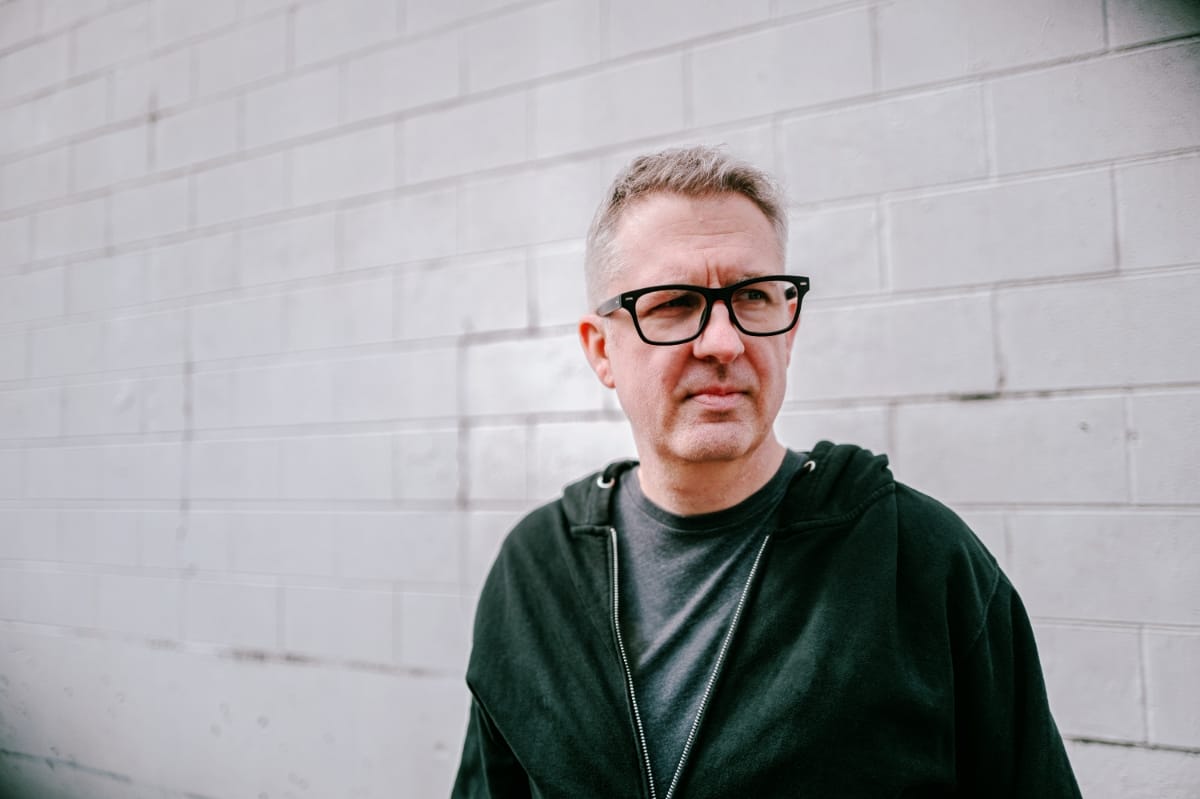
For more than two decades, Seattle-based producer Jeff McIlwain, aka Lusine, has quietly established himself as one of electronic music's most distinctive and enduring voices. Since his early releases on Ghostly International, McIlwain has developed a singular language that balances melody, rhythm, and finely detailed sound design, moving fluidly between ambient, techno, experimental electronics, and avant-pop without ever settling into one category.
His tenth Lusine album, Melting Days, marks a return to the immersive, textural approach of his earlier work, particularly the acclaimed 2007 album Language Barrier. Following the more collaborative and song-oriented Long Light (2023), the new record strips things back, allowing atmosphere, repetition, and gradual movement to take center stage. Rather than conceiving the album as a collection of individual tracks, McIlwain approached it almost cinematically—a continuous emotional journey shaped by sequence, texture, and intuition.
There is a rhythmic undercurrent for sure, characteristic of Lusine, but submerged within warm synthesizers, evolving loops, bells, strings, saxophone, and organic textures, creating an experience that feels both intimate and expansive, reconnecting McIlwain with the more fluid understanding of 'ambient' music in which rhythm and movement remain present even when conventional beats recede. Longtime collaborator Trent Moorman contributes sampled drums, while saxophonist Bryan Manzo provides the resonant threads that link the opening "Sightline" with closing track "Uncharted." The result is a deeply atmospheric yet subtly kinetic album that feels less like a departure than a refinement of a musical vocabulary McIlwain has been developing for decades.
The release of this album gave us the chance to reach out to him via video call at his studio and ask him a few questions.
The transcript has been edited for length, flow, and clarity.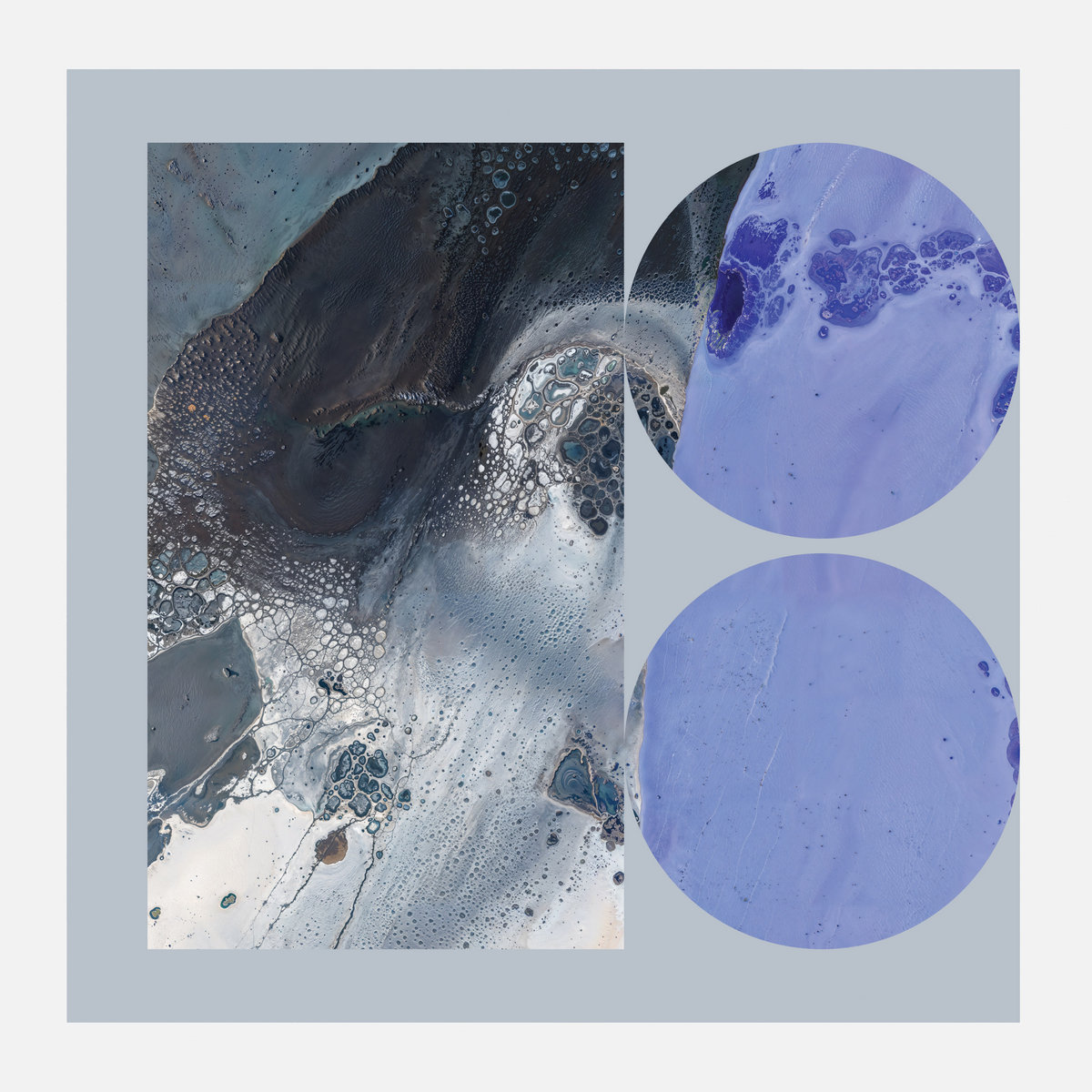
Tony D'Onghia: You are, in my opinion, one of the few exceptions in the electronic music field—where producers and hype just come and go—of an artist who has a long and very fruitful career, as well as a consistent discography. I would like to start by asking you: if you were to look in the rearview mirror at your musical journey, especially from a technical point of view, how would you describe it? For example, how did you start making music, what kind of equipment did you initially use, and how did your studio evolve, and how did your way of working change over the years?
Jeff McIlwain: I started just out of high school. I got a workstation keyboard, a drum machine, and a little mixer, and I started making songs. You can make a song pretty much completely using just an old workstation keyboard. Of course, technically speaking, the songs are not all that great, but that's how I got started. I had that set up for maybe a couple of years; this was in the early days. When computers came out, my friend was going, "Oh, you should probably get a computer because the MIDI sequencing is more capable." And these were the basic Cakewalk 2.0 days when it was all MIDI and a little bit of audio. So I got a computer sometime around 1995 or so, and I was still mostly using hardware, but I would record my songs in a software audio program. I would cut and paste chunks of the song together to make the whole song. I think my first album is based mostly on that idea: doing it mostly on hardware, then cutting and pasting chunks of audio together to make the song.
My second and third albums were a little more 'in the box' productions, really basic multitrack audio. This was probably the late '90s or early 2000s. Slowly, software really took off, but I still used a lot of my hardware. My workstation became less useful because I was doing a bunch of sequencing and multitrack audio. So it just became sort of an evolution, and software took over a lot more over the next ten years. And then I started breaking out into using other pieces of software. I went to an M-Audio-sponsored music festival showcase and was given a copy of Ableton Live, which was really interesting. So my live sets became less hardware-based and more Ableton-based. A huge change, especially in what you could do live compared to what I did before.
Over the years, I've been sort of figuring out which hardware is useful and when to stay 'in the box' for certain things. I've still been collecting hardware ever since, and I'm fairly comfortable using it and its MIDI, although even to this day MIDI confuses the hell out of me. You have a problem, and it's got to be some sort of MIDI loop somewhere. But I still love hardware. If you really want to get creative . . . it's maybe a cliché, but hardware offers a really useful perspective. If I need to get things done fast, it's often doing stuff 'in the box'. If I'm starting a new album, I definitely want to tinker around with my hardware.
Tony: From a more artistic point of view, do you think that being based on the West Coast, and especially in Seattle, where I know you live, has contributed to your longevity? Staying away from the fast-moving hype that one can encounter in the usual capitals of electronic music, such as Berlin?
Jeff: I think there's a couple of things here. One is that Samuel Valenti at Ghostly International was like pretty huge for me. And I didn't know that would be the case when he first contacted me, because he was just starting his record label. But I think getting with Ghostly was a big deal. I didn't really understand until a few years later, when I realized that they were developing a community of fans. That was really helpful for me.
I do understand what you're saying about not being in Berlin. If I were in Berlin, I still don't know that I would have gotten caught up in a particular genre of music, or developed in a particular way. It just isn't how my brain works. But I think Seattle has been helpful because it's a little quieter here, though people are really interested in music. And we had a good electronic music scene here in the early 2000s. We had this thing called the Decibel Festival that ran for about ten or fifteen years out of Seattle. It was a nice community of musicians and people that just liked to go out and enjoy the shows.
Tony: You mentioned the Ghostly International label. I was also going to ask you what kind of role it has played in your career. Of course, this is not the only label that published your albums; nonetheless, we could say that you are mostly associated with them, right?
Jeff: Right. I think they were a good label for me, because they are interested in doing all sorts of different stuff. And so they weren't like: "Oh, you need to...". I mean, they weren't like a label that was really focused on one genre. So I could explore and do different things. And I think that probably helped me continue to explore, instead of getting deeper and deeper into one thing, which I think would probably have burnt me out. So Ghostly was helpful in letting me do what I wanted. And having a label like that, with a nice reach, was super helpful.
Tony: I see Ghostly as the American counterpart of Warp Records in Europe, a sort of twin label or soulmate. I think that the two labels are quite similar in terms of the ethos that they pursue, if you know what I mean.
Jeff: To me, they're similar in that they're both jumping around and interested in different things. I think Ghostly has a little bit of a stylistic difference from Warp. I always thought Warp had been really edgy in the electronic music world, and Ghostly has a slightly more indie music tilt. Although Warp, I think, has gone in that direction as well over the past few years. Ghostly was really interested in Detroit techno and combining techno with indie music, indie rock, and stuff like that. Warp was more on the fringe, like experimental electronic stuff. But I do think they're more similar now than they were when they started.
Stay on top of The Tonearm.
Subscribe for exclusive interviews, cultural tip-offs, and community fun.
And your support keeps our site free of advertising and paywalls.
Tony: Over the last few days, I went back and listened to a large part of your discography. I rediscovered Sensorimotor and Long Light, in my opinion, two of the more song-oriented albums of your discography. I would like to ask you about how you approach more vocal, song-oriented material compared to the more instrumental stuff. I'm also thinking about your albums, such as the new one, that are entirely instrumental. I imagine the approach in those cases is quite different.
Jeff: So usually when I'm working with the vocalists, I come up with a temp idea of a track. I know it's not going to be anywhere close to what the final thing is, but it's something that a singer could use to sing off of. And when they send me vocals back based on the temp thing I gave them, I'll base my song on those vocals. So the song might be similar to what I sent them, but it comes out of what they sent me. And so it's sort of meeting in the middle between what the vocalists sent me and what I want to do, trying to find a happy medium or a way for those things to sync up.
When you're working on an ambient album like this, it's all up to you to figure out what the tracks are going to be. But I find it somewhat freeing in a way, because it's a lot of work to try to figure out how to deal with vocals, and it also takes a lot of time because you're both working on different schedules, so the timing of it isn't as immediate. It's taking place over several weeks, whereas when you're working on an instrumental or ambient album, it's however much time you want to take on it. Sometimes it's a lot more focused or a little bit more personal. Also, to have it be an ambient album and not be focused on the beats and whatnot, you're more focused on the melody, the feel, and the texture. So it definitely is a different process, though it's maybe hard to verbalize.
Tony: And that's the case of your new Melting Days. This is an album that, from what I read, is more personal, and that's maybe why you decided to go in a more spontaneous direction, making it instrumental only. Is that the case?
Jeff: Yeah, I think, just working on music, head down, is always like a relief. I don't realize how much I need it until I start doing it, and I think in that way, it's more personal. I really like ambient music. I'm working on this film score right now, so I wanted to get into that space and come up with ideas that didn't have to be latched onto a genre that has a lot of percussion. I wanted to find some interesting things I could do where I didn't have to worry about other things. I think the personal aspect is just where I'm at in my life right now, and the music is going to be reflective of that. It's always just going to reflect where you're at in your life.
Tony: You mentioned the ambient side of your music. Your new album, Melting Days, has a more rhythmically assertive feel than Language Barrier, one of your most atmospheric albums.
Jeff: Yeah, it was somewhat intentional, and I've also talked to a couple of friends who were like: "Is this even an ambient album?" It's kind of borderline ambient, I guess. I wanted to make an album that wasn't just a drone album or a background album. And I guess I still am fairly rhythmically inclined, so that's sometimes just going to come out. But yeah, I agree that this one has some rhythmic structure, a little bit more so than Language Barrier. And I like it this way. It's a little bit harder to categorize.
Tony: You mentioned your work as a soundtrack composer. Would you tell us something about it?
Jeff: I've worked on some scores in the past. I had a person that I worked with; his name is David Wingo, and we would work together. We co-composed a few scores starting in the mid-2000s. Language Barrier also came from a score I was working on at the time. It was called Snow Angels. This new movie that I'm working on is a small indie film called Giant Void. My friend Michael Reisinger is directing it. He was the director of several of my music videos, including "Just a Cloud," "Not Alone," and "Zero to Sixty." I've been working on the score for the past few months, and it is pretty much done now. He's trying to get the movie into independent film festivals. So we'll see what comes of that. It's a cool movie.
Tony: There's something that I noticed reading the comments to your music on social networks and streaming services. Your fans feel your music in a very deep, emotional way. Electronic music doesn't always work that way with people; for many it's just cold, 'machine music'. But there's something about your music that people respond to. I must also admit that I get goosebumps listening to some tracks of yours; there's something about them that I can't explain. Can you try to describe this sort of 'superpower' that allows you to write this kind of song?
Jeff: Well, I appreciate that. I mean, part of it is that my brain is maybe more into what you would consider minimalist musical techniques. And even at an early age, I would hear a song and be like, "I like that song a lot, but what I really like is that one section." And if they would just repeat that one section, I would get really into it. So, that's just how my brain interprets music. I think that style also became kind of a big thing in the early '90s, just this kind of idea of repetition and just building stuff. So, My Bloody Valentine or Stereolab and stuff like that—just these loops that build and build, and they just kept going, and you would feel them more. And that also happened in the electronic music world in the '90s. So, I was very influenced by those sorts of styles, and that's still sort of ingrained in the way that I write music now.
Check out more like this:
 Lawrence Peryer
 Tony D’Onghia


Comments