


Now Playing on The Tonearm
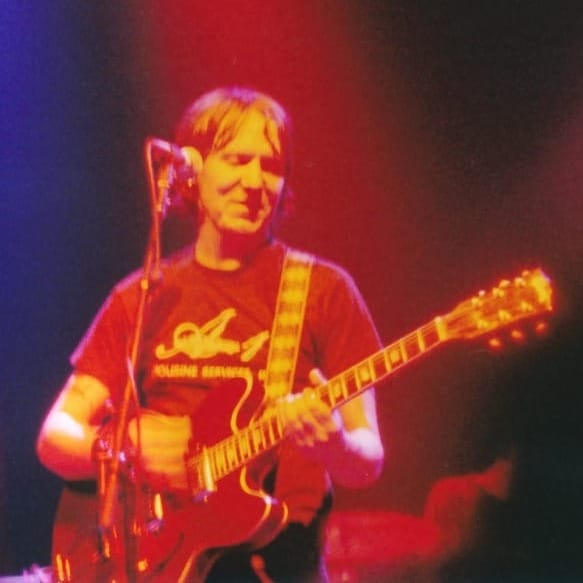
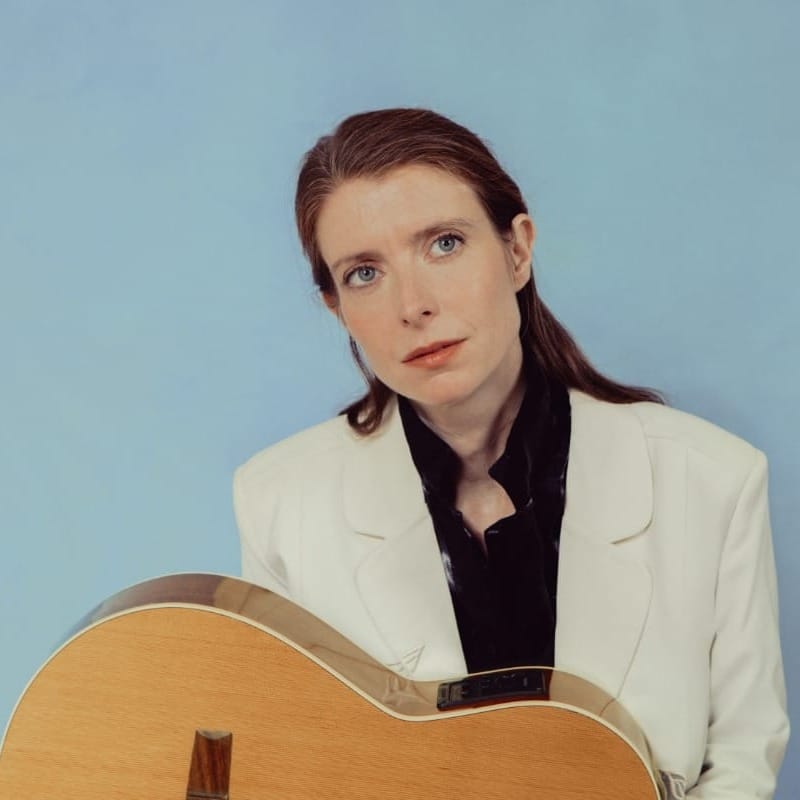
The Architect’s Restraint — Aure’s Songs of Open Space
Aure talks through her debut album ‘printemps,’ the multilingual songwriting behind it, and what she hears in Leonard Cohen, Atahualpa Yupanqui, and Jessica Pratt. Interview by Jonah Evans.
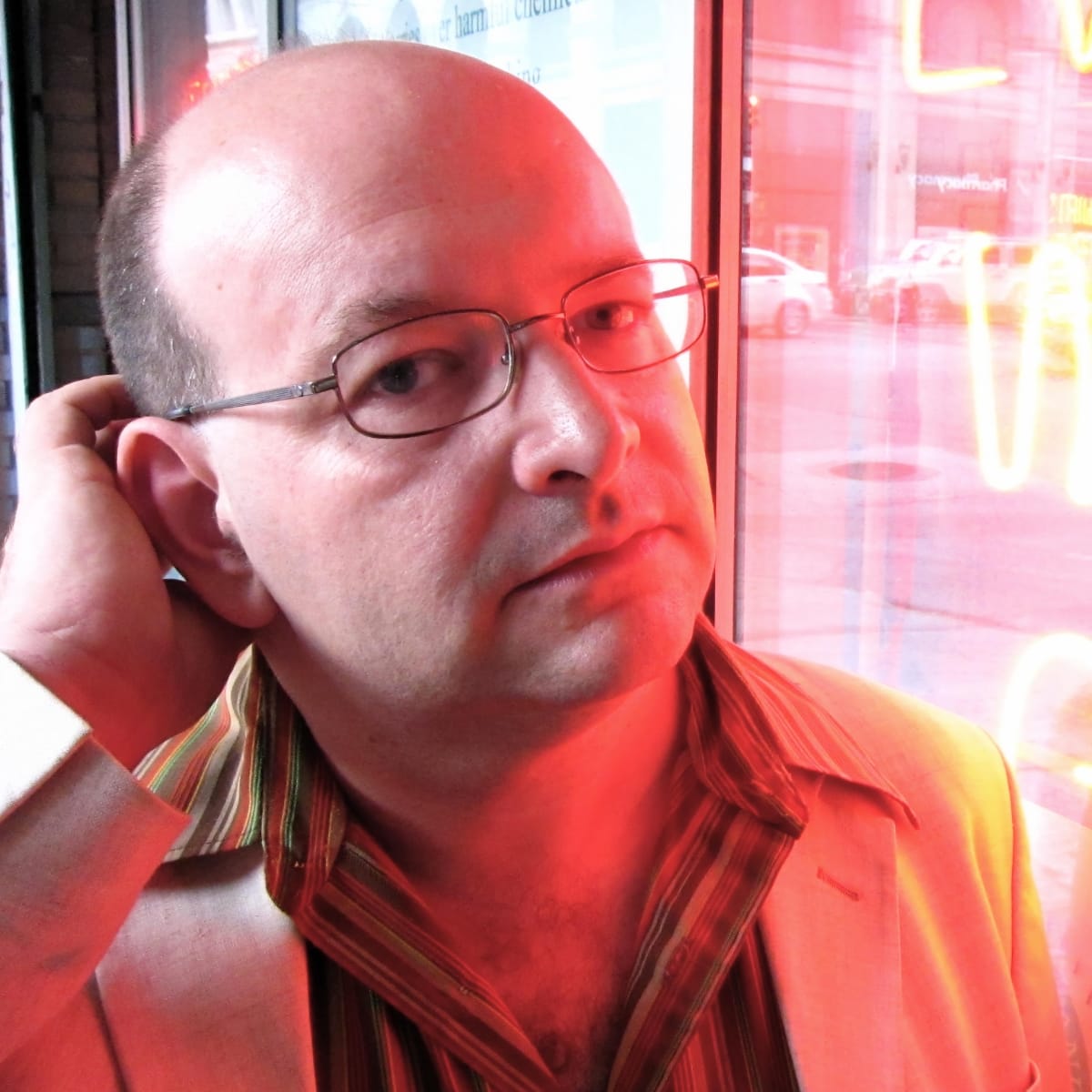
The Pop Song as Philosophical Object — Franklin Bruno’s Human Hearts
The Human Hearts’ leader talks about ‘Faith & Credit,’ recording with Mitch Easter, and songs drawn from Brecht, Situationist graffiti, and the language of American money. Interview by Jim Allen.

The Beauty of the Balance — Bajune Tobeta on Music Heard and Unheard
The Tokyo composer discusses ‘Anechoic,’ his EP in the lineage of Ryuichi Sakamoto’s late work, along with the walled town in a Haruki Murakami novel, Erik Satie’s furniture music, and the medical evidence behind his sleep music. Interview by Lawrence Peryer.
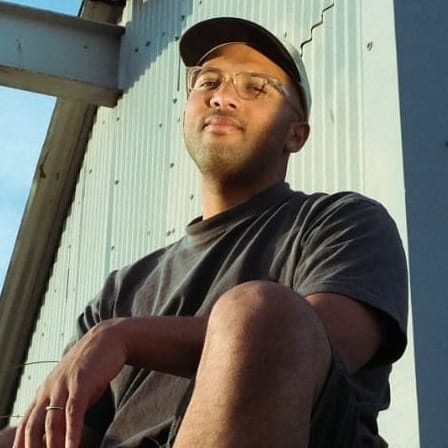
Space Ghost Leaves Reality at the Door
Nostalgia does the heavy lifting on ‘Back from Reality,’ forty minutes of house and ambient music made between the demands of work and a phone full of bad news. Interview by Tony D’Onghia.
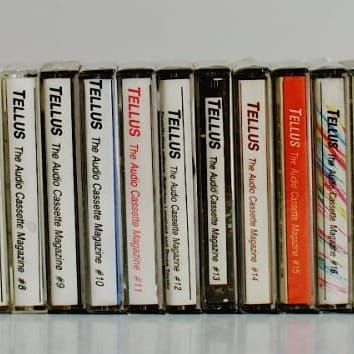
Downtown on Cassette — The Tellus Archive Reopens
Founders Carol Parkinson, Joseph Nechvatal, and Claudia Gould revisit the cassette magazine they started in 1983, its roots at Harvestworks, and how ‘TELLUS: The Audio Cassette Magazine, Vol. 1’ ended up on four sides of silver vinyl. Essay by Kurt Gottschalk.
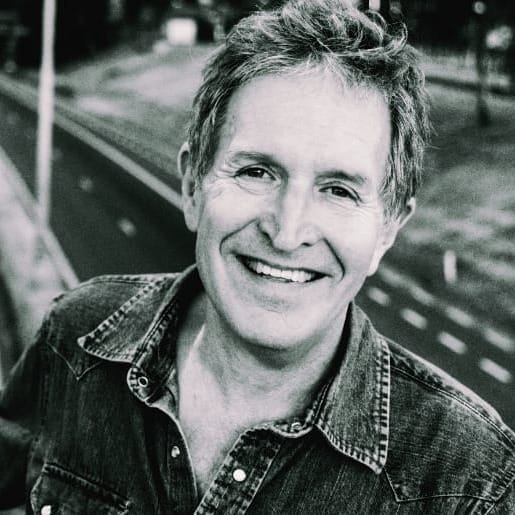
Steve Wynn Survives His Own Best Year
In a 2024 conversation from the archive, the Dream Syndicate founder discusses ‘I Wouldn’t Say It If It Wasn’t True,’ his memoir of the band’s early years, and ‘Make It Right,’ the solo album that turned out to be its soundtrack. Interview by Lawrence Peryer.
This Week’s Episode of The Tonearm Podcast

Ian Chang: Backwards Swing From the Drum Chair
The Son Lux percussionist and composer joins us to discuss ‘Out Into,’ the band’s ninth album, and the warped voices and ambiguous chords of their score for ‘Your Mother Your Mother Your Mother.’
The Hit Parade
“I think naturally when you get younger musicians in the band, they’re going to treat you with some reverence. . . . But it’s up to me to let them know, ‘Hey, we can’t make music together if we can’t communicate as equals onstage. . . . I want you to feed me.’” ❋ “Lyrically, I don’t co-write, because I want to be a maniac about it – it’s easier if I maintain full mania. . . . I can write more fluidly on an instrument, but sometimes I need a momentum and an energy that I’m not necessarily going to get on an acoustic instrument while writing.” ❋ “Amid furtive concerts and fervent fans, the band [Boris Grebenshchikov] founded, Aquarium, created not only music but a lifestyle that existed slightly apart from the oppressive state.” ❋ “Jean-Michel Jarre is the oversized jumper you get from your aunt at Christmas: all the elements are there for you to love it. And yet it makes me feel a little uncomfortable.” ❋ “Hejira might not be as well known or as universally lauded as Blue . . . it is here, in the shadow of its towering predecessor, that we encounter something out in the left field: a woman who is a little older, a little shrewder, a little more frayed at the edges.” ❋ “Listening to the Shadows at the dawn of the ’60s, Stanley writes, transported British teenagers ‘still ground down by national service . . .’ to ‘Dakota, or the High Sierra . . . if you got yourself a red Fender Stratocaster and learned how to play, you could be this free.’” ❋ “[Bobby] Charles (1938–2010) was unable to play an instrument yet wrote songs sung by everyone from Fats Domino to Etta James to Kris Kristofferson . . . a preference for living reclusively – with a pet alligator – ensured he vanished from sight.” ❋ “France’s role in the emergence of punk is downplayed or, more often than not, forgotten, largely because French punks are perceived to have got punk wrong. French punk wasn’t wrong, it was just of a different nature and origin.” ❋ “Delmore Schwartz threatened to come back and haunt Lou [Reed] if he ever sold out which probably shaped his uncompromising attitude to his art. . . . From Selby, he took his fascination with extremes and transcendence. Metal Machine Music reflects this.” ❋ “Frank Tiberi was a working saxophonist trying to understand what John Coltrane was doing. . . . So beginning in 1960, Tiberi smuggled a portable Concertone TR-100 reel-to-reel recorder into clubs in Philadelphia and New York, concealing the machine in a bag and running a microphone through his coat.” ❋ “We’d had enough of that music that doesn’t speak to us, that entertains us only for a moment but leaves us empty. . . . We began to create a new kind of song. It was born out of total necessity.” ❋ “The question was how to do cool music, interesting music, while not pissing off the establishment. . . . And that’s where the bossa sound comes in. The lyrics are super safe . . . it would satisfy the creative urge and drive of these super-talented artists.” ❋ “The oud playing can be really aggressive. . . . The mirwas drums are manic, syncopated and polyrhythmic. A lot of the recordings are so hot that everything starts to distort and saturate. . . . I heard a certain heaviness within this tradition. There was rock ’n’ roll already built into it.” ❋ “I realized that music comes from something greater than music . . . and it is about something greater than music. I realized that the way we had been experiencing music . . . was only one kind of way that music could be shared, and it was actually quite transactional.” ❋ “. . . the sad underlining of the transience of life, our finite existence, crystalises the Japanese notion of mono no aware which has been translated as ‘the sadness of things’. For all his highfalutin taste for theory Sakamoto has no issue with targeting the tear ducts, the clutch in the throat.” ❋ For more curated music links, be sure to follow The Tonearm’s feeds on Bluesky and Mastodon.
New Music Recommendations: AEAEA - Mist (RIYL: avant-classical guitar, live electronics, and ambient drone; Zs and Darkside) ❋ Danz CM - The Interdimensional Extraterrestrial Time Travelers Society (RIYL: analog-synth alt-pop and new wave from the artist formerly known as Computer Magic) ❋ Don Kapot & Renette Désir - Nou Pran Bal (We Took Fire) (RIYL: free jazz, Afrobeat, and krautpunk under Haitian Creole vocals) ❋ Grand River - Temporary (RIYL: guitar and modular electronics with kosmische and film-score leanings) ❋ Jonathan Uliel Saldanha - Khörus Anima (RIYL: choral sound art and low-frequency drone for a 100-voice choir and eight subwoofers) ❋ Kenichiro Isoda - Epilogue (RIYL: kankyō ongaku; Hiroshi Yoshimura and Satoshi Ashikawa) ❋ Lila Tirando a Violeta x Sylvia Meyer - Doble Ceniza (RIYL: acoustic experimental song with field recordings and Río de la Plata folk underneath) ❋ Michael Heinkel - EIGENWERKE 1980–1983 (RIYL: early-’80s Munich minimal wave and electro; Palais Schaumburg) ❋ Richard Skelton & Lawrence English - NOON (RIYL: longform ambient and drone from shortwave transmissions and low-frequency pulses) ❋ Saba Lou - Nothing But Love (RIYL: chamber-pop songwriting with harpsichord, clarinet, and cello) ❋ Sheherazaad - Khudgarzi (RIYL: Urdu art song and folk-noir; Arooj Aftab) ❋ Zhitong Xu & X SHAPE - Unfettered Hope (RIYL: chordless jazz quartet led from the drums; Elvin Jones)
The Run-Out Groove
- OK, yes — two weeks in a row without The Deepest Cut. It will be back next week along with some refinements. Stay vigilant!
- The Tonearm is a reader-supported publication, free of advertising and paywalls. Our supporters help fund our writers and make the site possible. Please consider joining and helping us to continue our mission.
- Join the rapscallions of The Tonearm on our new Slack community.
- Sign up to receive our latest articles directly to your inbox in a snazzy, easy-to-read email version. Just go to your account, manage your email preferences, and flick the lever to receive The Total Tonearm.
- The easiest and best way you can help us? Please share this newsletter and our stories with your friends.
Thank you for reading! We’ll see you again next week. 🚀


Comments