


The musician biography genre has always been abundantly represented in my home library, first in my home growing up, thanks to my father’s insatiable appetite for all Beatles books and abundant curiosity about artists from every musical stripe. Now, my partner and I carry on this tradition. Even in my leaner reading years, I devour at least one biography annually, so invested am I in the lives behind the music I love. While I relish fiction, I say with great conviction, and no hyperbole, that music writing has had the greatest impact on my life and personhood of any category of writing.
I evoke this so it lands when I say that Jamie Fisher’s Nobody Broke Your Heart: An Intimate Biography of Elliott Smith sets a new standard for what I expect of the musician biography genre. She sourced interviews widely. She colored in a fuller version of Smith, largely absent from the discourse surrounding him, by weaving these stories together.
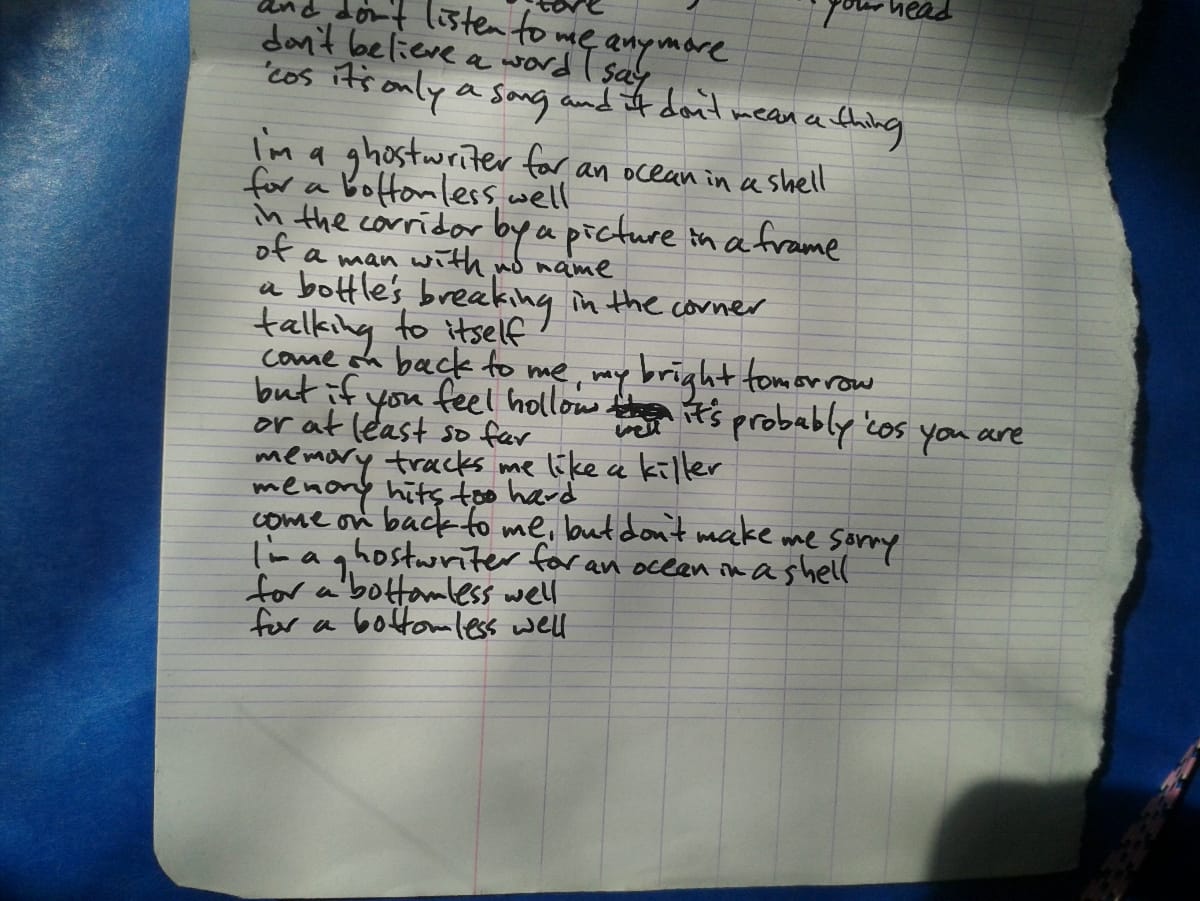
Fisher is a staff researcher at The New York Times Magazine, and her essays and reviews have run in The New Yorker, London Review of Books, and The Times Literary Supplement. Nobody Broke Your Heart is her first book, published by Dutton. She spoke with some 140 people for it and drew on unheard recordings and draft lyrics, and the book follows Smith from his childhood in Texas through Portland and New York to his final years in Los Angeles. I was grateful to get to speak virtually with her about her process and ethics surrounding this biography.
The transcript has been edited for length, flow, and clarity.
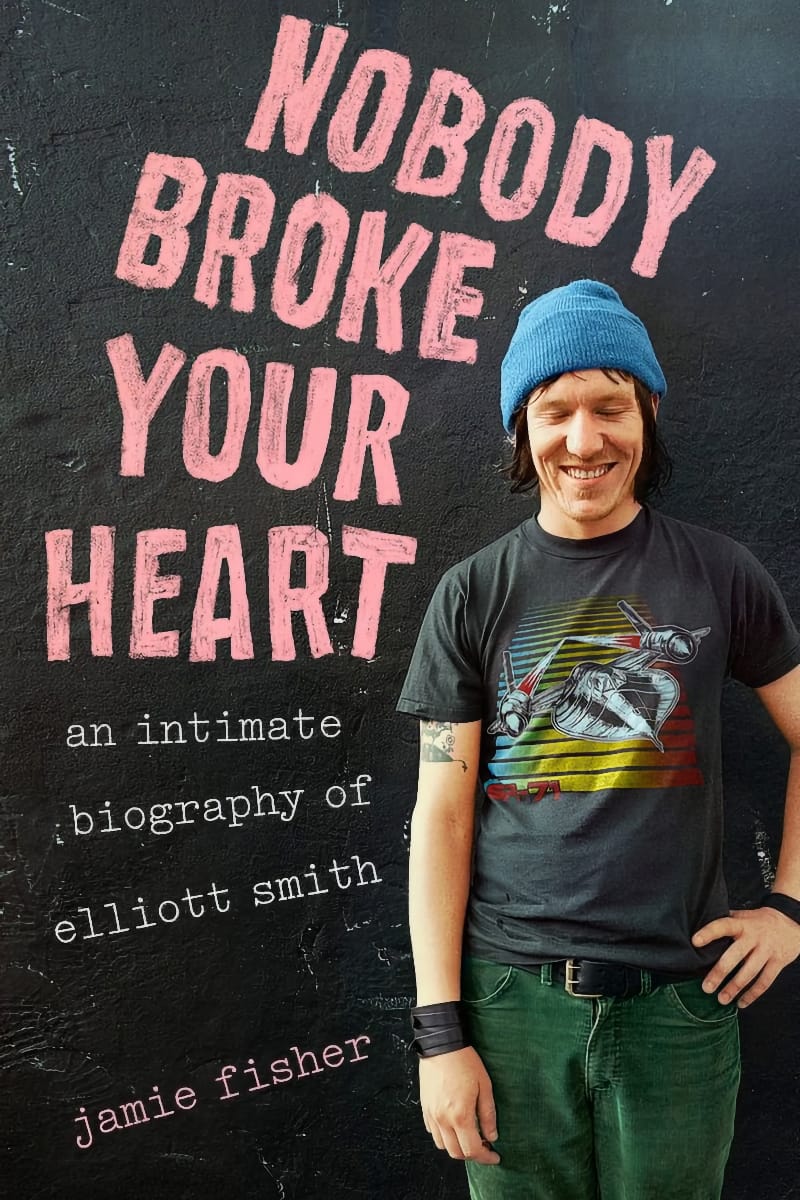
Author Jamie Fisher and the cover for Nobody Broke Your Heart.
Meredith Hobbs Coons: What is your personal history with books about music or musicians?
Jamie Fisher: I think of myself as a writer rather than a music writer, and as a reader rather than a music reader. I’m not someone who has read a lot of musicians’ biographies, in part because the focus isn’t where I would want it to be, which is on active creation and on the people. I approached the book more as a biography—period—rather than a musician’s biography. My model was much more my experience of reading literary biographies, where it’s like, “How does the life inform the work? How does the work inform the life? What goes into the rest of the day when the person is not making the work?”
Meredith: What are some biographies that inspired you?
Jamie: There’s this biography of Mike Nichols by Mark Harris, which I had read because I love reading Mark Harris, and I was really struck by the way he managed to talk to everyone with no pretension at all about people who might be seen as important or non-important. He talks to Meryl Streep, but he also talks to the nanny who, you know, washed Mike Nichols in the bathroom sink where he made newspaper boats as a kid.
Meredith: And you talked to Elliott Smith’s band teacher.
Jamie: Exactly. I was glad I could find him. And the people who worked with him at the bakery. And the people who did his tattoos. Especially without a written archive, you have to get more creative. When there’s a figure who’s kind of mythic or semi-mythic, the way someone like Mike Nichols is, or the way someone like Elliott Smith is, it really helps to approach the story at an angle that’s not head-on. You can find a lot more through these sort of side-alley relationships.
Meredith: People who ground them in a different reality.
Jamie: Yeah, “Elliott Smith: bakery coworker,” not “Elliott Smith: creator of the New American Songbook.”
Part of the inspiration for this book was that I had reached a point where I was deeply familiar with Elliott’s work, whether that means his released catalog or his unreleased catalog that’s leaked and all of the bootlegs, and I had a sense of him as an artist and as a person through that. So I thought, “Well, I should try reading a biography,” and realized the books out there weren’t doing what I thought they needed to do.
Sometimes it’s an accident of timing. The first biography of Elliott was finished very quickly because there was an interest in timing it for a year after his death. It’s hard to write any book under those conditions, but it’s also hard to imagine feeling ready to talk about someone you’ve just lost in a traumatic way, so it’s a biography that doesn’t include as many people as you’d like.
Then, William Todd Schultz wrote a book over ten years ago called Torment Saint: The Life of Elliott Smith, and that was the direct impetus for me to try to write a biography. I’ve been told Schultz is a nice person, but his book’s title is a lyric that he misheard. The lyric is “torn main sail,” and he kind of seized on the idea of Elliott as a “torment saint,” was told he was incorrect, and just stuck to it.
Broadly speaking, those are books that either don’t have the space or the inclination to explore the actual music, and didn’t talk to enough people either because of inclination or timing, so I thought, “there’s room here for more voices.” And I also think, in a book about a musician, there should be more about the music.
Meredith: Can you speak on the pitch and proposal process for this book, getting it made?
Jamie: At first, I had thought about it as a shorter, thematic exploration of his life through his lyrics. One detail of the original proposal I remember was a chapter called “Pitseleh” that would explore his relationships as they come out in his music and his ideas about love. Part of the reason that I’d been interested in writing about his life through an exploration of the lyrics is that, at one point, if you went on Genius and you looked up “Tomorrow, Tomorrow,” the annotation said it was a song about procrastination. I was like, “Well, this is a song about thinking you’re going to kill yourself and how everyone else overrates you.” Not that all of his songs are secretly about drugs or about wanting to kill himself; it’s an example of one of those songs where you really need to sit with it for a while before you realize what’s going on.
The same is true for something like “Bottle Up and Explode!,” where you eventually realize the “you” he’s speaking to is part of himself. “You look at him like you’ve never known him / but I know for a fact that you have / the last time you cried / who’d you think was inside?” The “him” and the “you” are different parts of the same person, and I think if you do a cursory examination of the lyrics, you’re going to miss that. And I’d spent years listening, so I was like, “I can help people with a window into the music for people who find it confusing.” To me, the best criticism holds your hand and shows you how to love something that feels forbidding, that you need someone to welcome you into. Not saying there’s only one interpretation, but, “Hey, here are some guidelines that can help you appreciate it more.”
Originally, that was the idea for the book, and I got, “This should be a podcast.” I got, “I don’t think there’s enough in his life for a book. Have you considered a long article?” Someone thought that you couldn’t really sell the book unless it included interviews with famous musicians talking about Elliott—which would have been interesting, but it wasn’t what I was trying to do. Then I found my agent, Jim Rutman, and we still had a hard time selling the book. There was a lot of “He’s not famous enough.”
Meredith: Which is ridiculous.
Jamie: Right. And it was funny too, because I know that there are books out there that are like, “Banana: A History.” To be fair, you can’t beat the household-name recognition of the banana.
But there was a point when we were still trying to sell the book, and, when I was listening to NPR, someone was like, “And now, an interview with this author who’s done a biography of the Thames River.” God damn it! (laughter) And this isn’t to say that there shouldn’t be space for biographies of inanimate objects or of concepts. It’s just that I felt like, if we could get a biography of the Thames, and we could get a biography of the banana, why can’t we get a biography of Elliott Smith?
During that process, I was working more on the book, because my initial thought was, this is really emotionally difficult territory for a lot of the people who knew him, and the last thing I would want to do is start putting people through interviews, and then find out that it couldn’t happen.
Different agents told me while I was still pitching, “You need to do some of the legwork as a proof of concept, to show what you can do.” And so I reluctantly got started on that, and as part of that process, Elliott’s friend Garrick Duckler started talking with me, his father’s side of the family started talking with me, and I started realizing that there was such incredible richness here, for one. For two, I didn’t know how many of these people would feel comfortable talking to anyone again, and I felt like, “Okay, I need to do a total biography out of respect to these people,” and that’s how the book reached its final conceptual shape.
Meredith: What did this book teach you about grief processes? I know you mentioned in the epilogue that you were also dealing with some personal grief as you were working on this book.
Jamie: Something I’ve learned from my own experiences is that grief never goes away. A couple of nights ago, I found myself really missing my aunt, and texted her old number. It was like, “I think this is probably someone else’s number now, but I just want you to know I’m thinking about you and I miss you”—no one responded, so this is still a little channel of access for me. But something I learned by asking a therapist about this was that there’s traumatic grief, where it never really gets any better, but for some people it has gotten better over time, and for some people, it’s just as hard as it always was. For example, I tried to limit how much I asked his family about the day that he died. I tried to keep that to one conversation. If there were any factual follow-ups, I kept that very minimal, because they cried when they talked to me about it. I cried too.
At the same time, I think that grief gets concentrated when it’s isolated. As you see in the epilogue, Steve Cole, who got to know Elliott working at the bakery, says that he wishes there was some kind of support group for people who knew Elliott, where you could say things like, “What did you love about him? What were the things that made you laugh? What’s really hard for you still?” Sometimes, by talking to me and hearing other people’s stories, people felt less alone and like they could place their stories in context.
I’ve been doing these benefit concerts around Elliott’s music and the places where he lived. Jenny Toomey [Tsunami] was part of a show, and what she said onstage was that reading the book and talking to me helped her understand that it wasn’t something isolated that happened to her, but was part of these patterns in his life that he could get stuck in, and that made her feel less crazy about the whole thing, and helped her process.
Generally, I learned that grief really does thrive in isolation, and it can be better when you have people to talk with. Time can really help too. Twenty years was, like, barely enough time for a number of people that I talked with, and for some people I reached out to, they were like, “It’s still too soon.” Which says something about the grief of losing someone really special, about how much he was loved that he could be that missed twenty years on.
Meredith: Your book seems like an incredible gift to everyone, because it exists as a tangible memorial. In August, my music community lost someone young. He was thirty-four.
Jamie: Elliott’s age.
Meredith: Yeah. Going to his service, taking part in the music there, and hearing everyone share about him was healing. It made me think about the people I’ve lost whose immediate family declined to do any kind of memorial.
Jamie: His sister Rachel said to me that his death felt so public, and it had happened in such a horrible way, that it felt like the memorial couldn’t be public. It felt impossible for them, and she said, “In a way, we’re getting it now through the book,” and I think that is true. The nice thing about a public memorial is you might have someone who you didn’t even realize knew the person you love, but they had this wonderful connection to them and stories you’d never heard before, and they suddenly get up on the podium, and they evoke the person who’s gone in this really lovely way, and bring more of them into the world than you had before, even though they’re gone. Sometimes a book can do that, too.
Meredith: Absolutely. And it seems like these benefits can now function as an ongoing memorial space.
Jamie: And I should mention these were inspired by the concerts that Elliott’s sister Ashley put on ten years after his death. It was like, “Let’s go to the cities where he was part of the community, and honor him through musicians he inspired, but also through his friends.” And I thought, “Well, I have a full-time job, and—I don’t want to spoil anyone’s dreams, but—I’m not a millionaire from the book. So, on my own, I’ll do a limited version of this in different places.” It’s been beautiful. I just look at the New York City one: We had his friends on stage, we had his friends in his audience, and Josh Diamond, who Elliott wrote “Independence Day” for, learned how to play it for the show. He was onstage with, you know, Dan Littleton and the rest of Ida playing “Independence Day.” It was just so moving.
Meredith: What are the benefits raising money for?
Jamie: His family supports the SIMS Foundation, which connects artists with mental health care. As anyone can imagine, when you’re a musician, you don’t get an insurance plan, which is difficult if you need therapy. The other cause they support is Outside In, which supports homeless youth in Portland. So with the shows, the proceeds get split between the SIMS Foundation and a local organization in each of the cities we’re in that supports unhoused people in some way—for New York, that organization is Win, which supports women and families and helps them get housing.

Meredith: Touching on the mental health piece, what cultural changes that have taken place since Elliott’s death do you think may be benefiting similarly gifted and troubled musicians working today?
Jamie: I talked to Myles Kennedy, who was his tour manager on the Figure Eight tour, and Chris Chandler, who was one of his producers in the last couple of years of his life—he was involved in getting Elliott to the Wilco show [he opened for Wilco, and it was this infamously heartbreaking show]. They both talked to me about how they’ve seen the industry change over the years, and it’s partly because the job back then was that you had a product to sell. The product was a person, and you just had to get them on the road. They both felt that mentality has changed. But they also both talked to me about how they noticed younger artists, because of decreased stigma in talking about this, haven’t felt as hesitant to say, “Hey, I actually need to end this tour early,” which can be so hard if you have commitments, or to say, “Hey, this tour needs to be shorter than you’ve envisioned,” because it’s hard to be a sane person when you’re constantly traveling.
There are a couple of things that were interesting to me about writing a biography twenty years after someone is gone, but one of them is that you can track these changes over time, whether it’s decreased stigma or whether it’s our understanding of interventions. Something I remember reading in other biographies is that it was kind of taken for granted, for understandable reasons, that an intervention was the way to handle addiction, when, actually, we can look back and say that doing the equivalent of a surprise party isn’t going to be the best fit for everyone. Everyone was doing the best they could with the vocabulary and tools they had at the time.
At the same time, we can look back and see different approaches now, which is a big change in the mental health landscape. People are aware there’s more you can do—or less you can do. Elliott said to Margaret Mittleman [his manager who helped with Elliott’s intervention], “You didn’t have to do it that way for me. I’m not like those other people. It could have been different.” At the same time, it was an emergency, and they were all in fear for his life. There wasn’t going to be a lot of brainstorming with a big whiteboard, like, “Let’s reinvent a new way to treat addiction in the five days we’re organizing this.” That’s completely unreasonable.
Meredith: Yeah, they were all living their lives and doing what they could. It’s interesting to me, personally, because I’ve spent so many years doing a Wilco fan podcast, and I’m drawing a connection between Elliott and Jeff Tweedy. Tweedy has also been in a dark, bad place with addiction. I look at what Jeff Tweedy is doing now and what a cool career he has, and reading your book, I was like, “God damn it! I wish Elliott Smith had that, too.”
Jamie: Yeah. When I met with Rob Schnapf [producer] and Margaret Mittleman, we talked a bit about Beck’s career [Margaret used to work with Beck], and it’s like, “Would Elliott have been like Beck now?”
Meredith: So how has your relationship to music scholarship evolved through this project?
Jamie: I still think of it less as a relationship with music scholarship, and more as a relationship with people. If I get to know someone, I’m always going to want to know about their world.
Meredith: It’s interesting to be talking to you about acknowledging the humanity of the artist in making the work. Also, what the fuck was happening at SPIN in the late ’90s and early ’00s?
Jamie: Yeah, there was this cover where Elliott had to kneel, and they wanted him to rip his shirt open, and of course, he came to the photo shoot in his favorite shirt, right? That wasn’t even part of the storytelling, either. People in his life were remembering that shoot, and then I found the photos of it later, and I was like, “Oh, he literally came in one of his favorite shirts,” but the photographer had been like, “Yeah, can you destroy it?”
Meredith: It feels like a metaphor for profile culture at that time.
Jamie: I’ve been thinking lately about the death of a certain kind of celebrity profile that’s partly a good thing and partly a really sad thing. It used to be easier to get someone to pay you to hang out with someone for a couple of hours and talk about what they do. I was really struck by that when I was writing the book, because I wasn’t a conscious consumer at that time. I was born in ’91. I wasn’t avidly reading SPIN in, like, ’99.
It was interesting looking back on what music journalism was like then and how people felt like they had the authority to comment on people’s personal appearance like it was part of the thing being reviewed. It’s like, “No, you’re reviewing the show. I don’t really care if you think he looks like a convict.”
Meredith: There is a faction of people who still want that, who are like, “Why do we have to be so gentle with these artists?” Your book helps make the argument that humanity should matter, too. Asking questions and getting to the truth of things should matter, but with more questions like, “What were you thinking about when you wrote that?” that are neutral, but more accurate and important than, “How often are you using heroin?”
Jamie: Right. There are avenues that gentleness opens up. It’s not like, “Oh no, I’m taking away my heavy machinery with which I can drill down into your soul by asking you repeatedly about heroin.” If you take that tool out of the box, you have a lot of subtler tools. You’re not sacrificing something. You’re opening an avenue for something important and worth exploring, even if it doesn’t make headlines that are as sensational.
I struggled so much with the ethical questions in the book in terms of, like, when it comes to more sensitive areas, how do you cover them to a degree that feels responsible, where you don’t want to say too little, and you also don’t want to say too much so that it becomes sensational? I wrestled with that the whole way through.
Meredith: In my life, I’ve been a CNA, a speech therapist, a parent, so I’m always trying to think of how we can get better at providing care, and I feel like this biography reads as care.
Jamie: A friend at her birthday party, years ago, was like, “I’ve given all of you a word as my gift to you.” We opened our words, and my word was ethical. Over the years, I’ve thought that was really nice, actually, because I spend a lot of time thinking, “Am I being as good as I can be to the people I’m writing about?”
Check out more like this:
 Lawrence Peryer
 Meredith Hobbs Coons


Comments