


Now Playing on The Tonearm
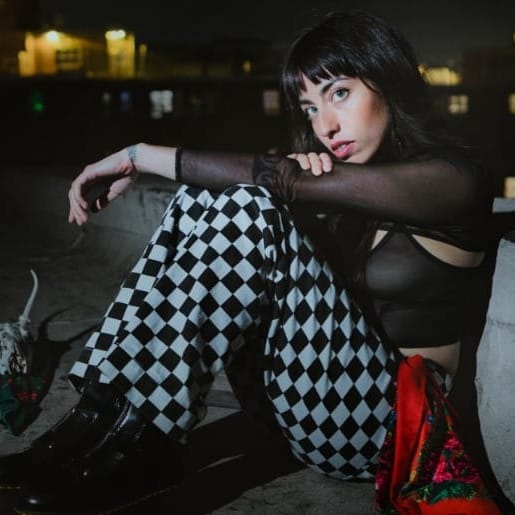
The Abenaki Voices in Mali Obomsawin’s Jazz
The bassist and composer discusses ‘Automatic,’ the mid-century language recordings at its core, her work with turntablist Andrew Broder, and the malleable harmony of folk music. Interview by Khagan Aslanov.
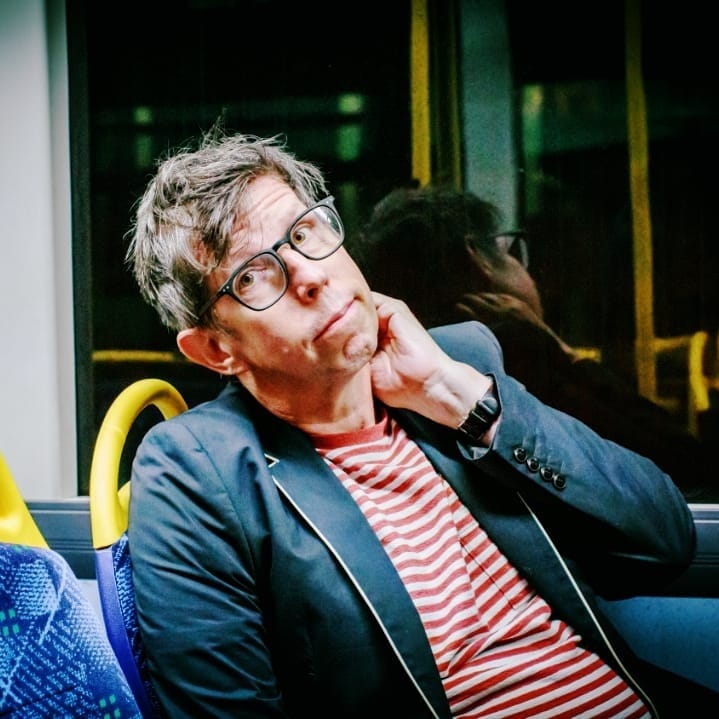
A Hard Drive Full of Darren Hayman
With ‘I’m Your Team’ and a 2004 Peel session by The French both newly released, the former Hefner frontman talks about writing to a drum machine, copying the ‘Hill Street Blues’ theme, and the chance of another record with John Morrison. Interview by Arina Korenyu.
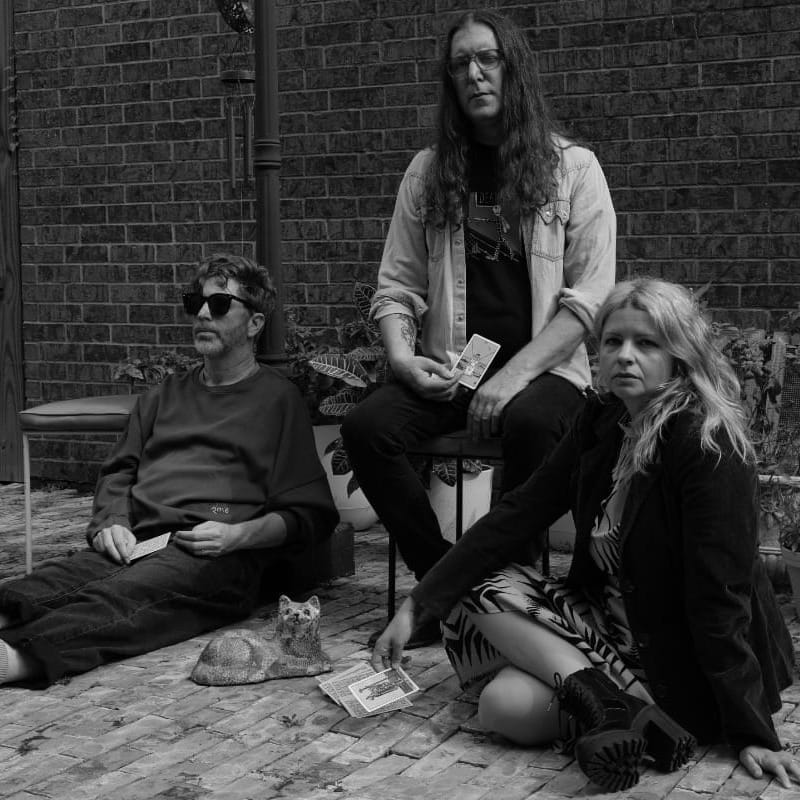
Chrome Chasm’s Slow Houston Drift
Its pedal steel rooted in country, its guitar in Texas psychedelia, and its saxophone in no hurry, ‘Interpreter’ leaves the listener to start “following the threads.” Interview by Steven Garnett.
A Band Assembled Apart — Koen Holtkamp’s Electroacoustic Ensemble
The composer and Mountains co-founder discusses ‘Nightlife,’ its kora-inspired synthesized strings, his sense of sound as something sculptural, and the hard work of letting a record go. Interview by Lawrence Peryer.
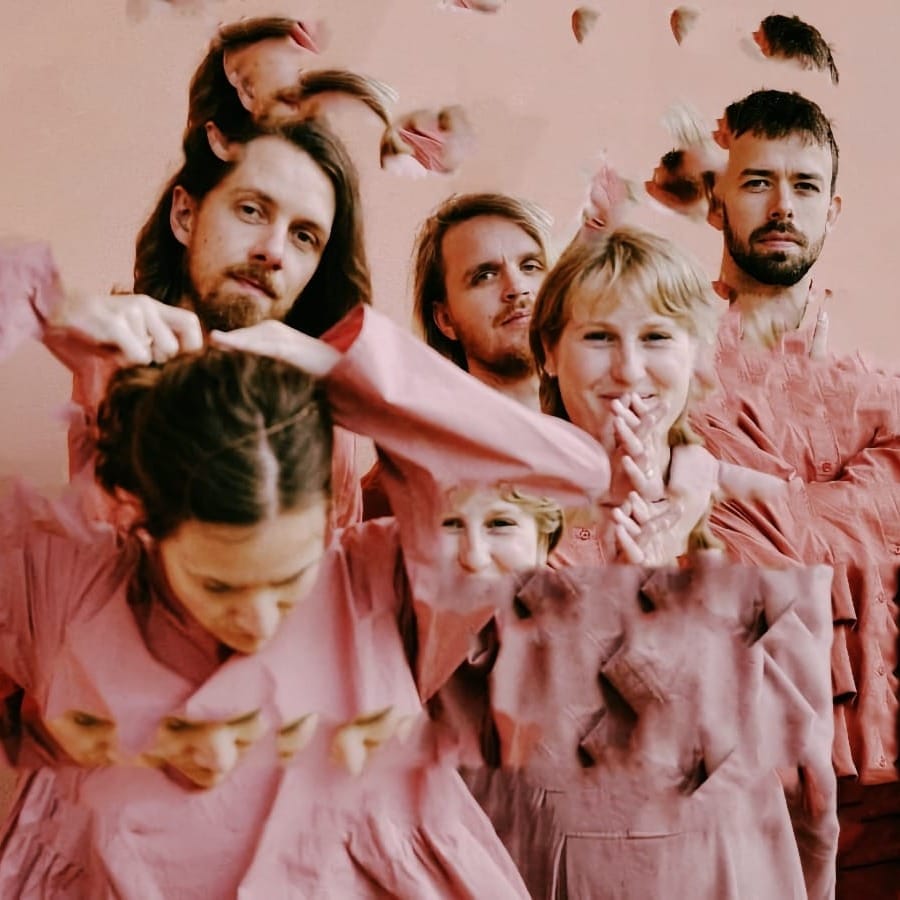
Lowly Turn Down the Pressure
With four of five members writing lyrics, ‘Softy’ arrives in one combined voice, its first ideas kept and its rough edges left alone. Interview by Carl Dexter.
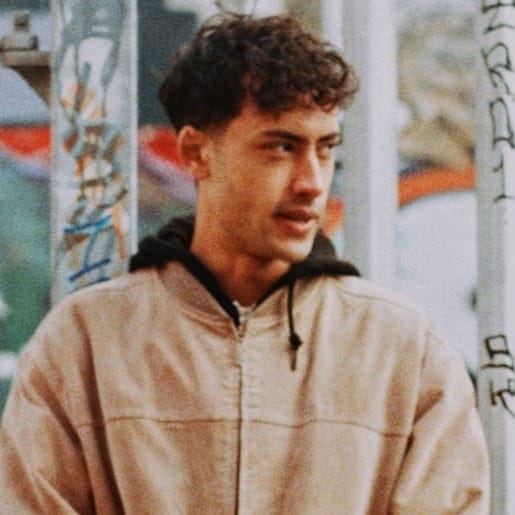
The Comfortable Discomfort of d_abdu
Irish bassist Dara Abdurahman discusses his solo debut as d_abdu, ‘we’re still down here, looking up,’ along with his years in Bricknasty, Mark Fisher’s hauntology, and the half hour before a gig he calls “painful.” Interview by Damien Joyce.
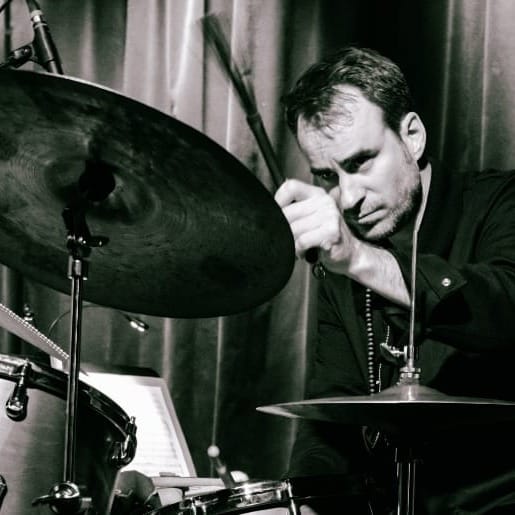
Devin Gray Takes the Drum Solo Seriously
In a 2024 conversation, the drummer and composer discusses ‘Most Definitely,’ his first solo album, along with a Maine childhood within earshot of a neighbor’s drum kit, the funded arts scenes of Berlin, and the samples he feeds into his live set. Interview by Lawrence Peryer.
This Week’s Episode of The Tonearm Podcast
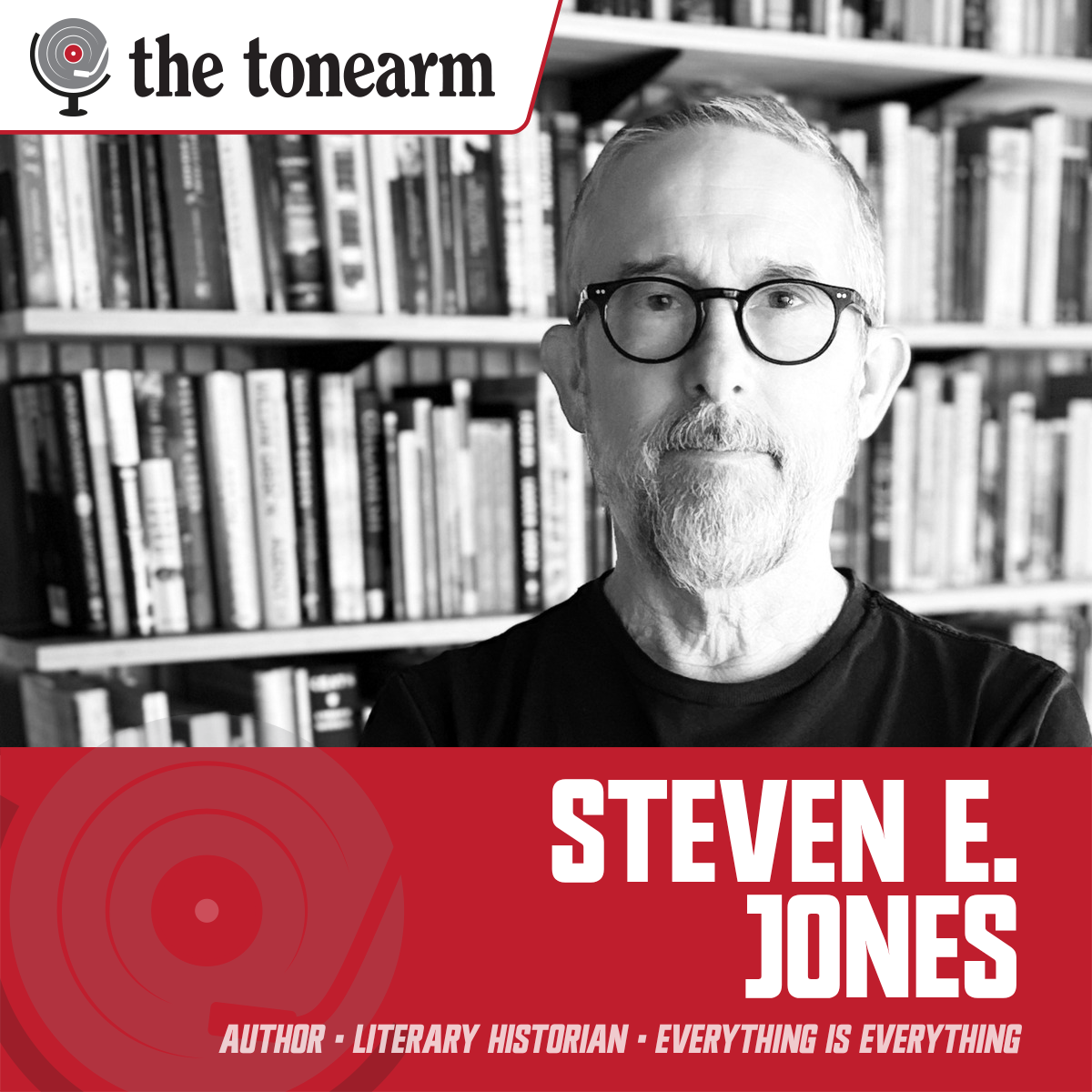
Steven E. Jones: Tom Wilson’s Radically Eclectic Pop of 1966
The literary historian joins us to discuss ‘Everything Is Everything,’ his book on how the Waco-born producer Tom Wilson took Bob Dylan electric, signed Frank Zappa, and stood by Nico through her exit from the Velvet Underground.
The Hit Parade
“The records weren’t just musical milestones — creative experiments achieved, acknowledged and then surpassed. Decades later we still talk about them. And decades later we still want to hear Juan Atkins, both records he made and records he played.” ❋ “There’s no denying that Tom [Verlaine] was a genius. He was a poet. I’m not poetic. His double and triple entendre was better than mine . . . But in the realm of our magic, my guitar playing was on another level.” ❋ “Not everything [Clem] Cattini touched turned to gold . . . but he had no time for snobbery, and as a self-proclaimed ‘musical navvy’ was as happy to receive his fixed fee for a turkey as a prize bird. ‘I’m not ashamed or embarrassed to admit that I played on anything,’ he said. ‘In the end it was all just work.’” ❋ “Most rock ’n’ roll bands that have some element of performance, they’re paying someone to make the shit that they make, or they’re just not ambitious enough . . . Like maybe they make their masks, but they’re not bringing out a 14-foot dinosaur that they built themselves.” ❋ “Elephant 6 was pre-internet and self-contained. People had to be in the room. But it’s because of the internet that we were able to finish this record. That closeness is what formed this collective. The vastness is what completed it.” ❋ “The intention has always been to excite people and make them exult. We’re not performing a riff or trying to nail a show. We’re giving the crowd the vibration to destroy Babylon. This music is the spearhead – that’s what we go on stage with.” ❋ “Can you imagine if Taylor Swift did something proportional to where she’s at, or somebody that’s on that level would do something? I mean, it’s ridiculous not to give back to your community.” ❋ “Aged ten, I remember looking up ‘Radiophonic’ or ‘electronic music’ in a big reference book in the local library. There was a single paragraph, accompanied by a grainy photo of a woman looking over a huge machine, painting on reels of film and smiling. I now know that to be the Oramics machine.” ❋ “In contrast to Kraftwerk’s mechanised tautness, Sowiesoso’s synth-patterns have a humanised looseness, their eddying movements suggestive of shifts of light and weather rather than the flicking of a switch or plugging-in of a patch cable.” ❋ “The friends would play together and jam in Schmidt’s parents’ basement. Which is how the music for ‘Gates Of Steel’ came to be and got that unusual writing credit two years later, when Mothersbaugh remembered that jam and finished off the song in DEVO style.” ❋ “Fripp had measured where each note would sustain. ‘An A would feed back maybe at about four feet from the speaker, whereas a G would feed back maybe three and a half feet from it,’ Visconti recalled. He described a strip on the floor that Fripp would step to when he wanted an F# to feed back.” ❋ “Most of the artwork you’ll see [on Appalachian album covers] features straightforward portraits. Some resemble the corporate headshots you see of store managers at the grocery store checkout, while others include accents of religious and patriotic tributes.” ❋ “Evenings in Montevideo are all about drums. Every Monday, behind the Uruguayan Cinematheque, the Rueda de Candombe gathers in the grassy Plaza España to perform classics from Rubén Rada, Eduardo Mateo, and other architects of the national songbook . . .” ❋ “Bands come and go because that’s just life here. A lot of musicians eventually leave Nepal for work or studies, so many bands have a short lifespan. But every time that happens, there’s always a younger generation starting new bands and carrying the scene forward.” ❋ “Earbuds and headphones have a similar blind spot, aurally speaking. The listener on headphones is forever at the center of the soundspace, like the blue dot on a GPS map. Sounds enter that field from left or right, but they never seem to come from where we are heading: straight ahead.” ❋ For more curated music links, be sure to follow The Tonearm’s feeds on Bluesky and Mastodon.
New Music Recommendations: Chantal Michelle - Unit of Heart (RIYL: Éliane Radigue, Maryanne Amacher, Annea Lockwood) ❋ Dabin Ryu - Discomfort. (RIYL: through-composed large-ensemble jazz in the orbit of Billy Harper and David Virelles) ❋ Ingri Høyland - Container for Wee Objects (RIYL: Nobukazu Takemura, ML Buch, clarinet and viola trading places with electronics) ❋ Markus Guentner - In Moll (25th Anniversary Edition) (RIYL: GAS, Kompakt’s Pop Ambient, ambient dub) ❋ Mike Ladd - Nonechosen (RIYL: Gil Scott-Heron, billy woods, spoken-word rap) ❋ Mínim - El Pes Del Món (RIYL: modular-synth minimalism charting ancient spice and silk routes) ❋ Noé Tavelli Double Drums Quartet - Curves (RIYL: Elvin Jones, Ornette Coleman, two drum kits and Cuban batá polyrhythms) ❋ The Sleep of Reason Produces Monsters - Reason (RIYL: Mariam Rezaei, Mette Rasmussen, turntablism colliding with free jazz and noise) ❋ Takeshi Nishimoto and Hiroshi Watanabe - Curving Time (RIYL: Ralph Towner, Steve Tibbetts, ECM-lineage ambient guitar) ❋ Zohar & Adam - Osmosis (RIYL: Chick Corea, Hiatus Kaiyote, Nala Sinephro)
The Deepest Cut

Jenny Scheinman grew up on a homestead in rural Northern California and has since toured and recorded with Lou Reed, Lucinda Williams, Bruce Cockburn, and Joni Mitchell. She appears on the original cast recording of Anaïs Mitchell’s Hadestown, has scored several feature films, and was voted Violinist of the Year in the 2026 DownBeat Critics Poll.
One Hundred Years Today reunites the sextet from her 2024 album All Species Parade for seven new compositions, much of the music written on the piano her grandmother left her. The album plays as a loose suite, moving from the tender acoustic shipboard romance of “Stars of the Lower Deck” to the uptempo swing of “Alive at the Kakadu,” named for the Weimar-era Berlin bar where Scheinman likes to imagine her grandmother first encountering unbridled music and theater, and on to the gathering dread of “The Edge of Dawn.” Elsewhere, Scheinman, Frisell, and Lage pare down to a trio for the Caribbean-tinged “Dream Beguine,” and the record closes on “So Many Moons,” a love song dedicated to the late producer Hal Willner.
I reached out to Scheinman, curious about what “end-of-times jazz” sounds like coming from this band and about the musical codes she says run through the record. And when I asked for something she loves, she sent me to the Metropolitan Opera on Halloween.
I seem to drift in and out of Jewishness. I didn’t grow up observant, but have a solidly Jewish last name, so when John Zorn introduced himself at Amoeba Records circa 1998 and offered me a record deal on his Radical New Jewish Culture series, I said, “Of course!” That led to a year of pondering the ways in which my Jewish heritage has influenced my music, my playing, and my sense of community, and ultimately my second album, entitled The Rabbi’s Lover.
Twenty-five years later, I stumbled across a box of postcards that my Jewish grandmother received between 1926 and 1937, while she was traipsing around Europe teaching piano and blossoming into a young adult. The postcards were written in many languages, and many were from her young artist friends. They created a picture of exuberant expression set against a backdrop of rising authoritarianism and persecution, and this resonated with my own predicament as an artist in a political climate of fear. Again I found myself pondering my heritage. I am of a culture that elevates the arts to highest virtue. And a culture that whole nations have deemed “degenerate.” This album is a culmination of those musings, and it retraces my grandmother’s steps as she elopes from Palestine, tromps around Europe, and finally lands in Brooklyn.
The album features some of my longtime musical collaborators who happen to be some of the greatest artists on the planet. Lucky us! Bill Frisell, Julian Lage (I have been blessed by guitar!), Carmen Staaf, Tony Scherr, and Kenny Wollesen. It has been called “vibey,” “heartbreaking,” and “addictive.” It’s got a lot of chordal instruments on it—two guitars and piano—and this gives it a lush but not overly crowded sound.
Me? I play violin. I wrote the songs. My charts are pretty simple, and my aim is to connect.
It was before we recorded “Django in America” that I blurted out, “More apocalyptic!” I wanted to free us from any obligation to play a certain way, or feel constrained by anything in the tune that might seem overbearing. I wanted to capture the unhinged quality in Django Reinhardt’s art, but not fall into the often straitjacket approach to his legacy. To my surprise, this comment actually unified us. Our musical instincts, in response to the idea of apocalypse, were to huddle up and support each other. So there’s this big ball of unified, unstoppable melody that just barrels through the form. And no, I wasn’t joking! Life of late has often felt apocalyptic.
The four repeated eighth notes in the bass line of “Turns the Wagon Wheel” are one code on this record, but any repeated theme is a code. Take the motif in “Django in America,” the more sneaky intervals of “The Edge of Dawn,” or the alarm-bell relentlessness of the A section of “Alive at the Kakadu.” We are all on the receiving end because we have receivers, otherwise known as ears. We hear the code, we recognize it as human, and this gives us a sense of belonging.
Whose ears? Well, for sure everyone alive now. And since music lasts much longer than those of us who make it, it is also everyone in the un/foreseeable future.
Wouldn’t it be cool if somehow this gift could extend in the reverse direction too? So that my grandparents could hear me thinking about them?
Scheinman then reached somewhere between this plane and the next to tell me about something she loves:
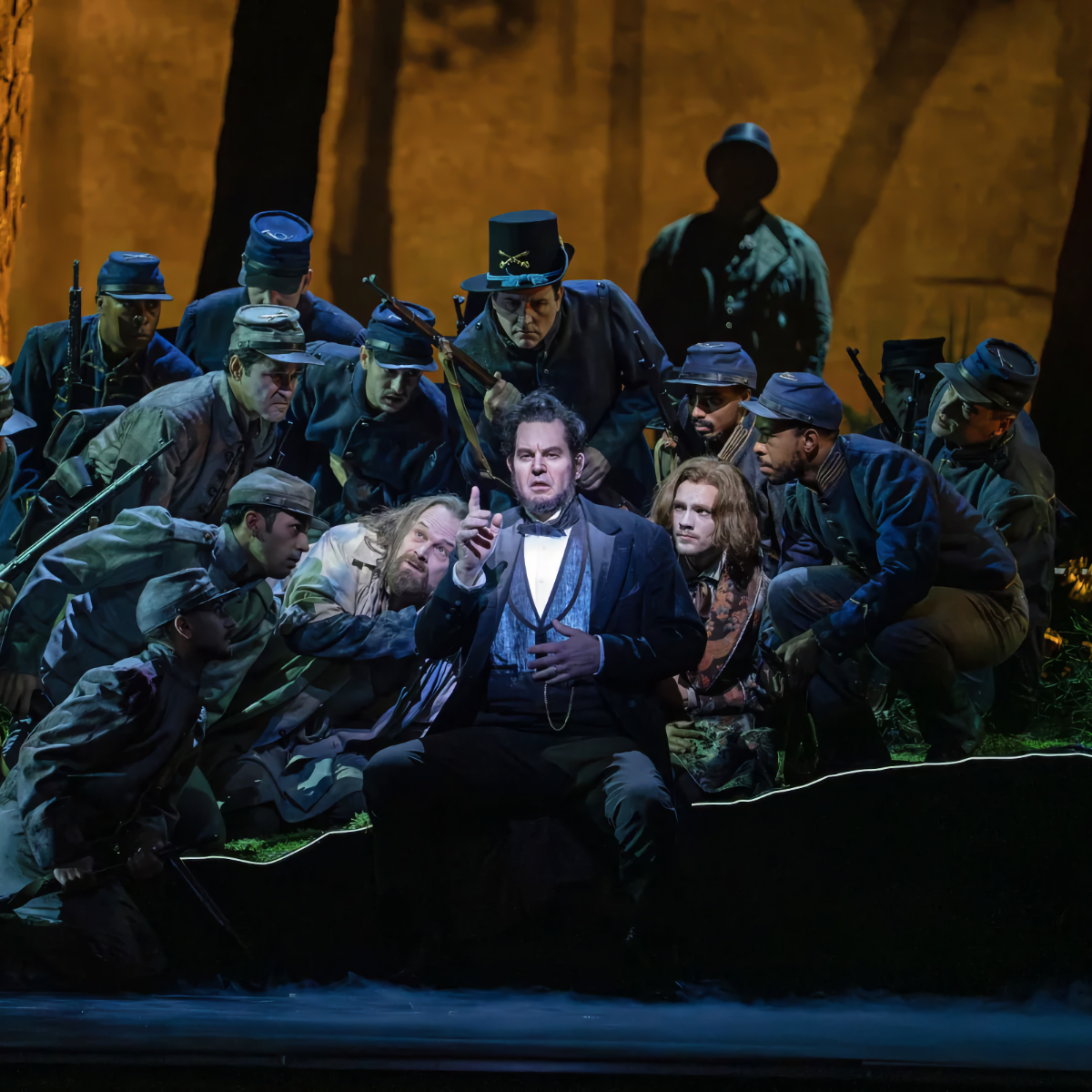
On Halloween, I went to the Metropolitan Opera to see Missy Mazzoli’s brilliant adaptation of George Saunders’s Lincoln in the Bardo. I highly recommend! It is a spectacular! It features a six-foot penis and a live horse, of course!
The setting is a graveyard where young Willie Lincoln has just been interred, and which is crawling with ghosts of the Bardo, the zone in between death and the afterlife. Willie, believing that his father will come visit him, sits atop his mausoleum, waiting, while the other ghosts implore him not to “tarry.” However, his father does visit him, and his grieving heart opens to the suffering of all the characters, most notably the Black characters, who ultimately give him the moral authority to liberate the South. It’s big! And brilliant! And makes a powerful case for kindness. It was especially fun to see on Halloween because the audience was dressed either to the nines or in full Halloween costumes. Quite a scene.
The Run-Out Groove
- The Tonearm is a reader-supported publication, free of advertising and paywalls. Our supporters help fund our writers and make the site possible. Please consider joining and helping us to continue our mission.
- Join the rapscallions of The Tonearm on our new Slack community.
- Sign up to receive our latest articles directly to your inbox in a snazzy, easy-to-read email version. Just go to your account, manage your email preferences, and flick the lever to receive The Total Tonearm.
- The easiest and best way you can help us? Please share this newsletter and our stories with your friends.
Thank you for reading! We’ll see you again next week. 🚀


Comments