


As the days shorten and winter approaches, it marks a quieter time of year. On this small island of Ireland, there is an expression in Gaeilge called Cois Tine, which translates to “beside the fire,” but it is more than that; it is a feeling of coziness and comfort, and during this time, certain albums seem to resonate more.
One such album is we’re still down here, looking up, an intimate debut record full of exploration, quiet moments, noise experiments, and heartfelt songwriting from d_abdu, the moniker of musician Dara Abdurahman, a young Irish bassist of Ethiopian heritage.
Dara wrote, recorded, mixed, and mastered the album all by himself in a small room, slightly wider than his wingspan. He was formerly the bassist of the Dublin collective Bricknasty, which has developed a reputation for unpredictable song structures and restless experimentation, with a genre-fluid approach blending elements of neo-soul, jazz, hip-hop, and psych. I underestimated them until I saw them live, and without following them, I probably wouldn’t have discovered his music. Their music is so sonically different; I don’t associate Bricknasty with anything quiet.
But that’s what’s so appealing about this new lo-fi record from Dara; it was such a surprise. This album is reflective, contemplative, and ideal whether you’re indoors or in motion, traveling home on a busy bus or train commute. It’s also a perfect accompaniment for an armchair stay, transporting you into a meditative state from the opening strummed chords of “Evangelion” and his hushed vocals to songs like “Flower Song,” “Peter,” and the heavier “Happy Ending.”
d_abdu is a young musician with a real hunger to improve in every aspect of his music. I caught up with the quietly spoken musician via video chat and started by asking him about recording this album at home.
The transcript has been edited for length, flow, and clarity.
Damien Joyce: I have been enjoying the album, and I was wondering, do you classify it as sadcore, slowcore, experimental indie folk, or all those things?
Dara Abdurahman: I wouldn’t really want to be labeling, to be honest. I think DIY indie is probably the best way to do it. I didn’t know what kind of album I was making until it was done. Then I had it, and it is pretty sad, but I don’t know if I meant any of that intentionally.
I did it all here where I’m sitting now, in this room where I can touch both ends of the wall here if I stretch my arms out far enough. It’s a very DIY album, which is the way I like to do things. I’ve had experience before with doing bigger-scale projects. For my own stuff, I seem to get the best out of it when I’m doing it myself.
Damien: The late author, David Foster Wallace, lamented modern life, especially internet culture, and everything being so fast, where people want stimulation all the time. But part of us is also looking for quiet.
Dara: Recently, I was reading some Mark Fisher. He talks a lot about hauntology and how audibly that can live in the music. It’s not until I was doing it that I kind of noticed some of the characteristics of that in my music, like the kind of vinyl distortion crackle that’s going through it. And, yes, there’s not really any hope in it either. I mean, there is, but upon first listening you might not get that; it’s pretty heavy stuff. But I just find it interesting that you can learn about something and it can recontextualize the whole thing after the fact. I was just making it for the sake of needing to make it; it felt necessary for me to do.
Damien: That appears to be a common theme among so many different artists who are compelled to get this music out, that’s within them reverberating through their minds. Someone you’ve worked and collaborated with, Irish singer-songwriter David Keenan, spoke about that when I interviewed him. He talked about that creative cycle, and how happy he was once a song was outside of him.
Dara: David is a prolific artist in the way that he’s not precious about any of it. When you’re in the room with David, the song is done before you’ve even really learned what it’s going to be. It feels like he shows you the song, you play along, and then all of a sudden you turn around, and it’s been recorded. You don’t even get a chance to really sit with it or live with it, which has been hugely beneficial for me because I’d be the type of person to go back over something a thousand times and try to make it the exact way that I’m kind of trying to hear it in my head. But I don’t know if that’s necessary. If the core of the song is good, then the deliverable at the end, once the performance is good, should carry.
Damien: With those kinds of traits, zeroing in on the details, was it difficult for you to step away from the mastering?
Dara: Yes, there was a bit of going back on it, but I set dates with myself because I knew that was going to be the craic. I set myself pretty hard deadlines for when I wanted them done, and I also know nothing about mixing or mastering, really. I’m pretty uninformed about how I did it. I just did it the way I thought it sounded good to me, and I’m sure a professional mix and master has listened to it and is getting sick all over themselves, but I think it sounds good. I would hazard to think that the next thing that I’m making probably sounds a lot better because I’ve learned a lot through the process of doing this one.
Damien: The track “Money” has Norah Stevens on gentle violin strings and your former bandmate, Korey, playing drums. When I saw him play live as a drummer with Bricknasty, I thought he was incredible.
Dara: He’s terrifying.
Damien: How did you find playing for those years in Bricknasty along with Korey and keeping up with him?
Dara: Korey is my best friend. There’s very little difference between getting Korey to record on my own stuff and playing with him in Bricknasty. It’s always a very intuitive thing, a weird chemistry between us from the jump. I remember the first day I met Korey was in Unit 1 Rehearsal Studios, and we were rehearsing with Tadgh Griffin [AKA performer Sexy Tadhg]. It was our first week of college. From the first note, it was clear why we were meant to be in the room together doing this, and it’s been the same ever since. He’s the best.
Damien: Bricknasty, as a band, have these blended genres and a mix of dynamic sounds; the instrumentation is so good.
Dara: But what’s funny about that is that both Korey and I do not come from backgrounds of listening to those styles of music genres. Korey was a metal drummer in a band called Greyface for years, and he’s played in a thousand bands before landing on Bricknasty. My first band was Tadgh Griffin’s band in Carlow; we’re both from Carlow. Genre-wise, I’ve always been into the sounds that you’re probably hearing on the album now. I never would have really been into neo-soul jazz stuff; I have learned to love it now. But my initial taste and the sounds that I would enjoy wouldn’t really align with that stuff at all.
Stay on top of The Tonearm.
Subscribe for exclusive interviews, cultural tip-offs, and community fun.
And your support keeps our site free of advertising and paywalls.
Damien: As a musician then, Dara, where are you at your happiest or most comfortable? Is it composing in your room, the recording process, or performing those new songs live?
Dara: It’s a tough question, because in all those aspects that you’ve just mentioned, I run into trouble when I’m recording something or producing something. It feels like my brain is on fire; I get very manic in the way that I do it. My room gets so messy by the end. I think it’s in the discomfort of it, where I’m maybe most comfortable, or I feel like I’m being most productive. That’s been the main benefit of doing it, I guess.
It’s very easy for me to sit down and play bass, but I can go into a weird, mindless state where I don’t feel like I’m really pushing myself. Whereas in this, I constantly run into things I can’t do and things I need to work on. That’s what makes the most interesting out of any of the things that I do. Maybe not the most enjoyable thing I do in terms of any of that, but I love having something to show for it at the end of it. I love being able to walk up the road once I’ve bounced something out and put on the headphones; just be settled in the fact that I’ve finished something. It’s like, “Did I really just do that?” That’s the best part. All this is surprising yourself that you came towards the end of something.
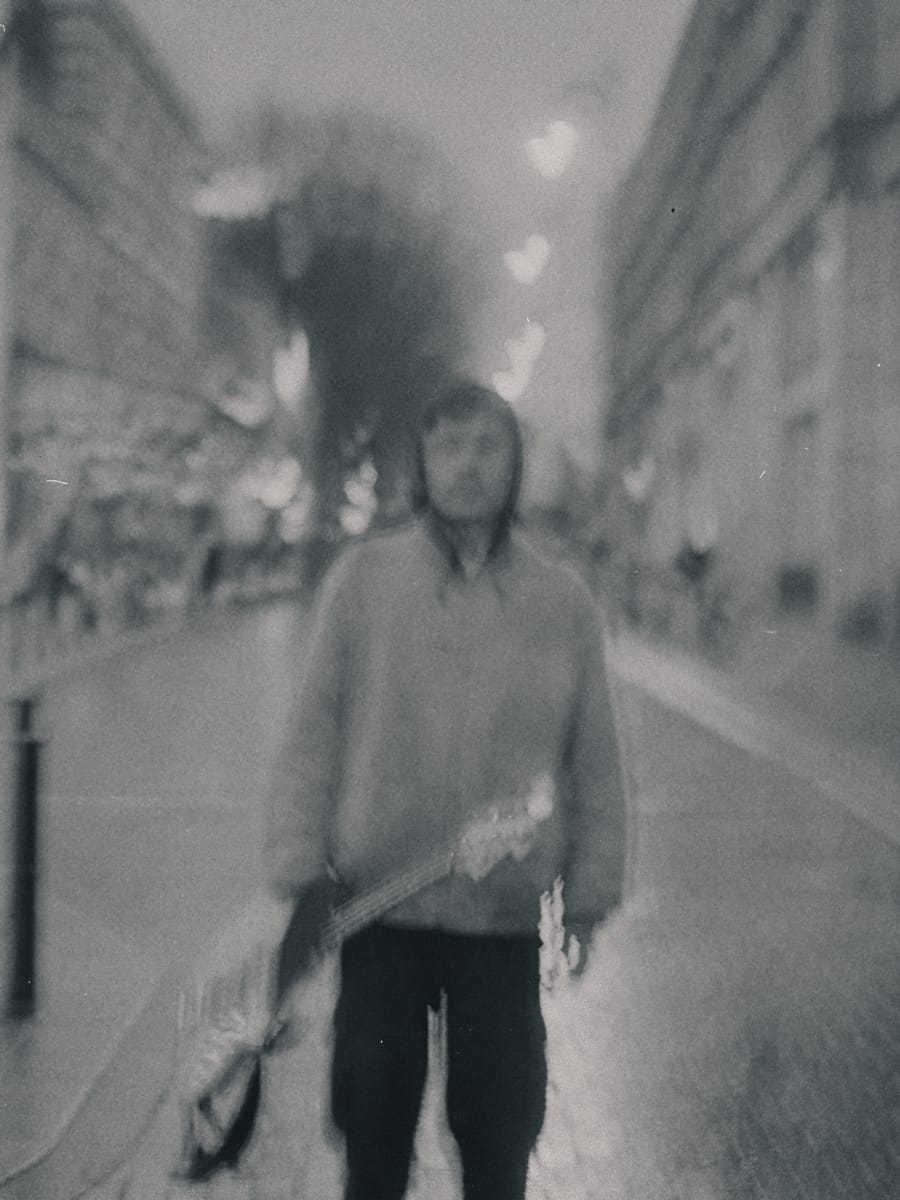
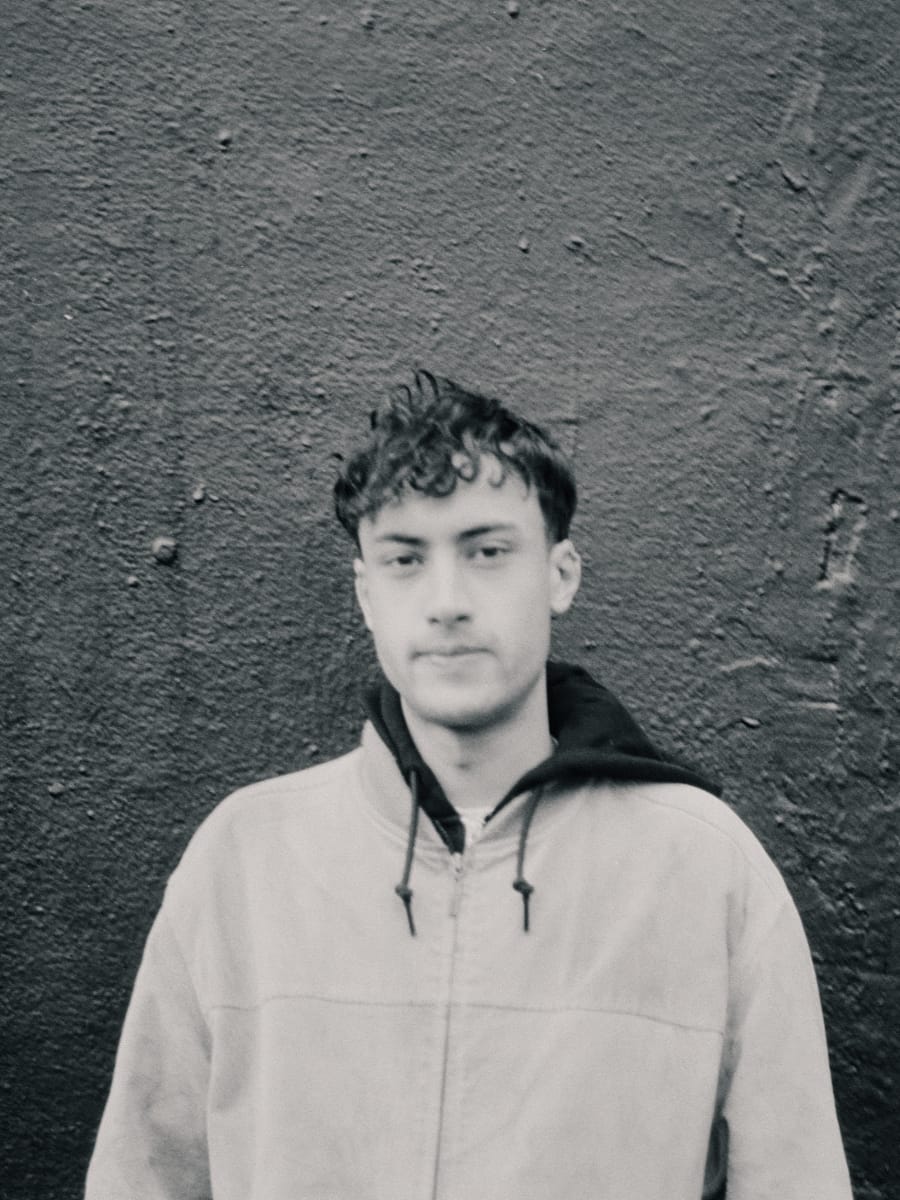
Damien: Is it weird for you to come from the shadows on bass in the background when you were in the band, and now you’re center stage? Does it feel different to perform and sing these new songs from this project?
Dara: It’s a funny thing because I end up in the same place in my brain if I’m having a good gig on bass or doing my own thing, where there’s no thought, and it just feels good. More often than not, I think I’d have a more successful bass gig when I get to that place. But I think if you’re having a good singing gig, you might get there a lot quicker, or you must be way more into it. When I’m playing bass at weddings, I can just kind of flick the switch and be somewhere else, thinking about my dinner and what time I’m going to be home. I am never really given the opportunity to do that while performing solo stuff now. I have to be so in it. I’m sure that’s going to change over time, because the more I do it and the more I get used to it, the more I risk getting comfortable.
Damien: The preparation then, that half an hour before getting on stage, is that very different for you just going on to the stage as a singer and central stage person? Is there a challenge to overcome there as well?
Dara: Definitely. With the bass, I can hide out in the green room and then just walk out on stage; I’m comfortable there. But with the singing thing, those thirty minutes are painful right now.
Damien: Is it a feeling of self-pressure, for wanting to give the best performance on stage?
Dara: Absolutely. When it’s just yourself, it becomes much more an ego thing. It’s like nearly the best performers, the likes of David Keenan, just leave that at the door, and they’re able to rock up there and do their thing because it’s not even necessarily about them; it’s about the songs coming through them. They’re channeling them, as opposed to being a good performer or a good singer or a good artist.
I think some of the best music, if you’re able to detach it from even having come from you, is going to be a lot better. It’s going to sound a lot better by the end of it. Ultimately, we’re just vessels for things to come through, which probably sounds crazy to non-musicians. But in the same way that, if you were to sit down and do a painting and/or if you’ve ever entered a state of flow, you’re just enjoying doing it, and it’s not about you.
Damien: I totally get it, and I imagine it’s very satisfying. When you’re performing these songs live, sometimes I imagine it’s difficult to talk to an audience between them, moving from a heavy subject or heavy tonal space to then interacting with a crowd and, “Hey, how’s it going tonight?”
Dara: A lot of the time, I don’t bother. I feel it’s a fight for my life, like I’m just trying to get to the end of that set, and I just have my songs. It comes down to how you are as a person. If you’re that way inclined, you’d have a lot to say about what you made, and you’re up for a bit of talking anyway. But I’m struggling to talk to you right now, to just even get this sentence out of my mouth; that’s a lot. That’s 100 times harder when people are in front of you, and no one’s going to talk back.
Recently, I’ve started playing with the band, and my bandmate, Milo, plays bass for me. He lets it fly; he doesn’t care at all. So, I let him take the bulk of the talking these days, and I don’t worry about it too much.
Damien: Is it hard to play those quiet songs live, to get the attention of an audience?
Dara: It depends on the audience. You hear stories of Elliott Smith, just making a crowd go silent off the back of the songs themselves. I never got the chance to see him, but it’s so engrossing and immersive to be at one of those shows where the room goes dead silent; you could hear a pin drop. He seemed to have that power over a lot of crowds, but I’m also sure there were gigs where he didn’t win them over. I’m trying to just accept that the better a performer I become, the more chance I have of kind of winning over a crowd in that way.
I’ve had a few nice, successful moments in it now, but I’ve also had some tougher gigs too, but you know, walking into the gig, what kind of crowd it’s going to be. I did a Hennessy-sponsored gig, and just for the fact alone that they were giving out free drinks, I was never going to win. It’s hard to play in pubs because even if people are engrossed, a barman is moving glasses around the place, and that can take you out of the moment for a second. A house gig where there are people sitting on the floor and the whole point is that you go in there and you listen to the thing is a lot easier.
Check out more like this:
 Arina Korenyu
 Damien Joyce


Comments