


I have to truncate the beginning of this interview because Steven Hall (Nirosta Steel), a beloved collaborator of Arthur Russell, instantly dives into questions about my personal life. He’s strumming a guitar over the screen in downstate Illinois. His maybe-three-decades-younger husband appears periodically on screen to fix the sound and optimize the internet connection. We are casually mentioning dating apps. We are discussing a working definition of “daddy” in this context at Hall’s almost 70 years. He’s dated Steve Rubell and a few Warhol models. The men (but henceforth referenced as boys to capture the white-flash, hot-pants feeling of the last days of disco) have names.
The boys show up in songs. My Skyscraper is pure (Buddhist) bubblegum trance where all problems come to the dance floor, but can also be resolved on the dance floor. The tracks are technical, spongy, a groove sucking you into sweat pores. I almost feel like I shouldn’t be listening because I’m not sure I’ve ever had this level of freedom in a third space. Later I’ll ask if anyone has written any homages and love songs to Hall, as he has for everyone. We are both in love with and saddened by life, but now I have to resort to a lightly shielded professionalism I am not great at.
Here’s where I try to steer the interview. It’s futile. I am about to walk with Hall through something more than nostalgia. The kind of memories that leave a long reverb chain in your limbic system. Of course, Hall, with his microtonal Scottish church-boy training and distaste for the experimental pedalboard that Arthur Russell loves, will not touch an effects chain. I start challenging myself in my head—can there be a Steven Hall without Arthur Russell? That’s the crux—he assumes you want to talk about Arthur. It’s a default. But I recognize the sweet lore resting in Hall. He is soft-spoken and dreamy. Every bit a movie star, every bit a contemplative human that can fuse an emotional core with pop.
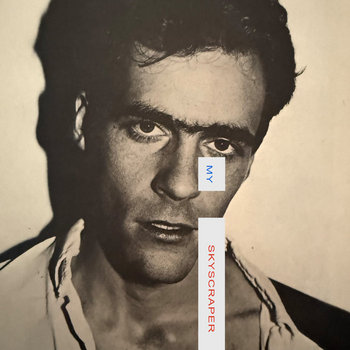
Carolyn Zaldivar Snow: I have some questions just from listening to this record about place—and sometimes, instead of being a historian, I want to talk about you in this place. I am wrapping my head around New York City at a time that I’ll never experience because of my age.
Steven Hall: When I arrived, things were happening at breakneck speed, and also very easily in terms of having access to people or places. But it was kind of a peak there, and then it fell off suddenly, like going off a cliff in terms of the impact of AIDS on the culture, particularly in queer culture. This is where Arthur [Russell] was coming from and what, at that time, was known as the queer mafia—certain figures in the queer world. They were in control of what was happening in the clubs and also with disco music as well.
Carolyn: How are you feeling about your creative practice being in the Midwest?
Steven: I’ve traveled so much and lived in so many different kinds of places, it doesn’t really faze me. I have a simple setup that I take with me everywhere I go. [Holds up guitar to the screen] This guitar—it’s been all over the world with me for years; it’s my main writing instrument and almost indestructible.
With Arthur’s Landing, and also with Arthur, I was using just the guitar. Arthur’s whole thing was manipulating the sound. He got a lot of inspiration from John Martyn’s use of different pedals, fuzz pedals, things like that. He was also studying guitar magazines to find out what heavy metal guitarists were using to get that big, dramatic sound. My thing was playing very straight in terms of sound, so when I played with him, I would use a pickup on an acoustic guitar so the sound was just the guitar. I never used pedals or effects, so that’s kind of my signature in the work I did with other people. In the last few years, I’ve been into heavy effects, somewhat like what Arthur was doing when he was experimenting, and I’ve been using the effects on my laptop.
Carolyn: Are you free-flowing with your practice, or more structured?
Steven: In some ways, working from home is better for me because I can control everything that’s going on and have everything set up and ready to go. When Arthur and I would work together, we wanted everything ready to go. Sometimes he would have his tape start as soon as he walked into the studio, just so absolutely nothing would be missed. The other approach I take with recording is that although the rhythmic structure can be very rigid, the actual playing, both the singing and the guitar playing, is totally organic to offset whatever is going on with the beat. I hardly ever edit, so most of what you hear is performance, and that way it’s totally improvised. I have a certain structure for the song, but I don’t always follow it. Particularly with lead guitar, I’m not a whiz, but if I do it fifty times, I can get something really good. Or it might be the first time. That’s the luxury of working at home, and of being in the digital age: everyone can get a high-quality recording at home, just as good as in some of the best studios.
Carolyn: Something I’m noticing is that you and Arthur seem like perfectionists, but then free-flowing at the same time.
Steven: I think that would come with the bipolar nature of a lot of artists, particularly musicians, who tend to be manic depressive. I never knew anyone in terms of Arthur who was more confident and also less confident. In terms of being a boss in the studio, he could be very exact and very particular about what he wanted in terms of the sound, but then in terms of his approach to the musicians, he could let them feel completely free, so that something could happen in the moment. It’s a two-sided thing.
Carolyn: How about you? How do you navigate those two sides in yourself? I already see both coming out in this interview.
Steven: Sometimes it’s mysterious, because I was trying to think about the songs you’ve been listening to on My Skyscraper, like where they came from. I’d say maybe half of them were talking about a particular person, usually a guy, and some kind of experience or fantasy about that person.
The song “Mohan (Mandarin Version)” is interesting. I went to Columbia College, and there were students there from all over the world. Mohan was in the Sri Lankan army, which I found really interesting—I think in his country they were required to join the army. I was hopelessly in love with him. He just wanted to be my friend. I wrote a song that I thought, if he heard it, he would fall in love with me. I tried to make it sound exotic, so it has a really strange melody.
Carolyn: Did Mohan ever know you wrote a song about him?
Steven: I never sang it for him, so that’s kind of bittersweet.
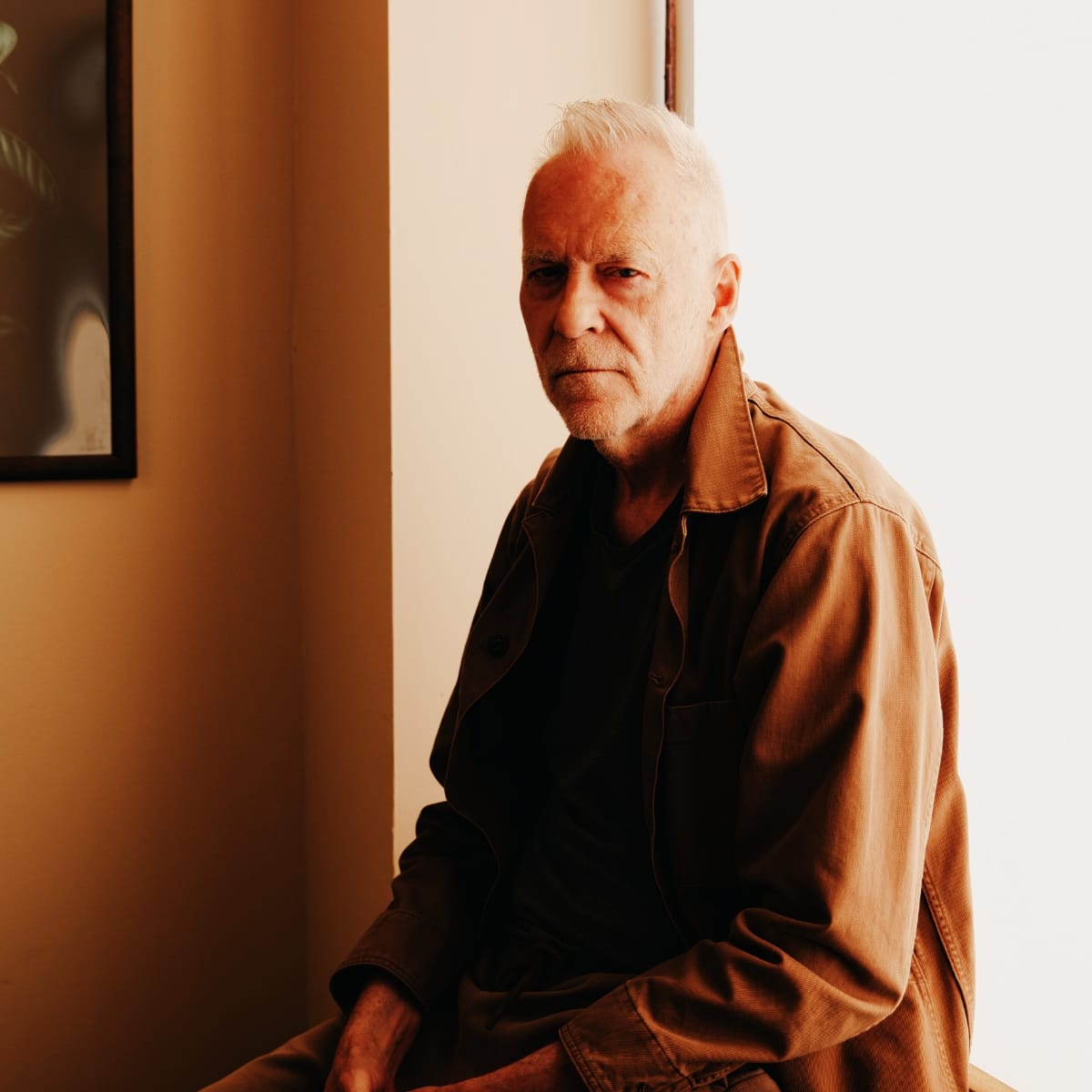
Carolyn: Let’s talk about men, or colloquially “boys,” because this is a large theme in your body of work, and I have questions about various boys in your tracks. There’s a track called “First Love”, and I am wondering how you have changed since putting that composition together.
Steven: That’s a really heavy question.
Carolyn: You can always pass.
Steven: No. When I think about these songs, some of them are so long ago that I don’t even remember what was going on when I wrote them. So “First Love” would have been written in Asia many years ago. “First Love” is a Buddhist song, written in Taiwan or Hong Kong. It’s funny, because to me, all the songs are kind of the same, but people have really sort of attached themselves to this song, because there are covers of people singing this song.
A friend of mine is making a documentary about the gay nightclub The Saint, which used to be on Second Avenue in the Lower East Side. It was the last really big disco. Very heavy drug scene, endless nightlife, endless sex, and that was right at the top of it. People were starting to fall off at that point. That was the end of the disco dream. I lived down the street from it. He’s using “First Love” in the movie for the trailer. He is also using some archival photos of me from that time, and Eric from Secretly Canadian likes some of them, which you’re seeing with the record. It’s strange, because most people are seeing me at a very young age, so they might be shocked when they see me now.
Carolyn: But here’s a question. When you walk into the club, what boy do you hope to see at the club? Someone from your past, someone who’s not with us, someone with us now?
Steven: I’m trying to think of clubs that would make me excited just to walk in the door. I used to go to Studio 54, and I dated Steve Rubell for a while. I could count on one hand the number of geniuses I met in my life, and he was one. He knew how to put together a party. Talk about boys? The boys that he would hire to walk around in their little mini shorts, serving drinks, were so beautiful. It was like being in a Greek temple with gods and goddesses. Walking into Studio 54, what would I want to see? Probably an Andy Warhol model, because they were hanging out there, and were not interested in me at all.
Carolyn: Sorry, but I have more questions about boys.
Steven: Go ahead.
Carolyn: Give me a definition of a “super boy” and a “wonder boy”.
Steven: Okay, well, “super boy” is a real person. I went to Shanghai with my straight friend Jim Shong, who’s now teaching film studies and film scores at Beijing University. We met in Hong Kong and then ended up in Taiwan, working together on movies and TV commercials, doing sound. I did the soundtrack for a movie in Taiwan called 18, which was co-produced by the Taiwanese mafia and the Taiwanese government. It was a movie about gangsters, and there were real gangsters who wanted to be in the movie. They got small parts in the movie, and I did the soundtrack for it.
Carolyn: This is basically a plot from The Sopranos. Keep going.
Steven: We also worked on an experimental movie in Shanghai with a lesbian Hong Kong director, starring some really big mainland stars. The superstars in China are much bigger than the superstars here, because they’re everywhere. At that time, online chatting was just getting started. So this boy from southern China got on a train and traveled for 8 hours to visit us in Shanghai. I opened my door, and he was there with a suitcase, and he had left his family to go and visit me. He was 16, and that was very dangerous at the time because people could just disappear in Shanghai, and no one would ever know. He stayed with us for a while and hung out on the movie set. We never had any intimate contact, but it was totally fascinating to have him there. So that was a song about “Super Boy”.
Stay on top of The Tonearm.
Subscribe for exclusive interviews, cultural tip-offs, and community fun.
And your support keeps our site free of advertising and paywalls.
Carolyn: So—you’re from Scotland. Is Bronski Beat? This makes me think of “Smalltown Boy”.
Steven: Jimmy Somerville. I think he’s from Glasgow. There’s a certain tradition of great singers from Glasgow. I grew up just outside of Glasgow, and with my Scottish background, I sang in a church. That morphed into an obsession with folk music, and then I was involved with church youth groups that used folk music as a focus. I was getting into pop and folk music on my own, starting with Joni Mitchell.
In high school, I started playing the dulcimer because of Joni. Even before I moved to America, I listened to her early stuff. It just grew on me. When I met Allen Ginsberg at that time, I was doing a lot of strange open tunings, trying to match what Joni was doing. When I started working with Allen Ginsberg, he would get really pissed off and say, “Stop using all these weird jazz tunings; we’re just trying to play the blues, just play regular chords.” Arthur taught him the basics of music, so his understanding of music was very simple. I went back to using a regular tuning because of Allen.
Carolyn: You’re a poet too, right? That’s what you went to college for?
Steven: Yes, part of it. In high school, I was part of a program that got a grant to teach writers. I went to high school in Delaware, so they brought down poets from New York to teach creative writing. Some of them, who I didn’t know at that time, were quite famous, and we did workshops. These poets from New York, they were wild. They were the most experimental poets, some of them from the Lower East Side scene, who were connected to the music and art scenes. People like Larry Fagin and Kenneth Koch. I definitely wanted to study poetry, so when Kenneth Koch was teaching at Columbia, I saw him teach a workshop and give a reading. I said, “This is the guy; this is my teacher.”
I would go to New York and visit Larry Fagin in the same building where Allen Ginsberg, Arthur Russell, Richard Hell, and Bob Rosenthal all worked and lived. Arthur was living on the top floor without electricity and had a wire running down to Allen Ginsberg’s apartment to get power. That’s the way Allen Ginsberg would help people he believed in, to literally help them: “Here’s my electricity”.
Allen would give money to crazy poets and crazy musicians, who couldn’t handle their own lives. Arthur said that what he wanted to do with money was to create a fountain of money, with himself at the center, and money would rain down on his friends. The idea was that many of his friends were really not capable of taking care of themselves. Outsiders or other people who were borderline in terms of their dysfunctionality, but who had so much to offer in terms of their creativity.
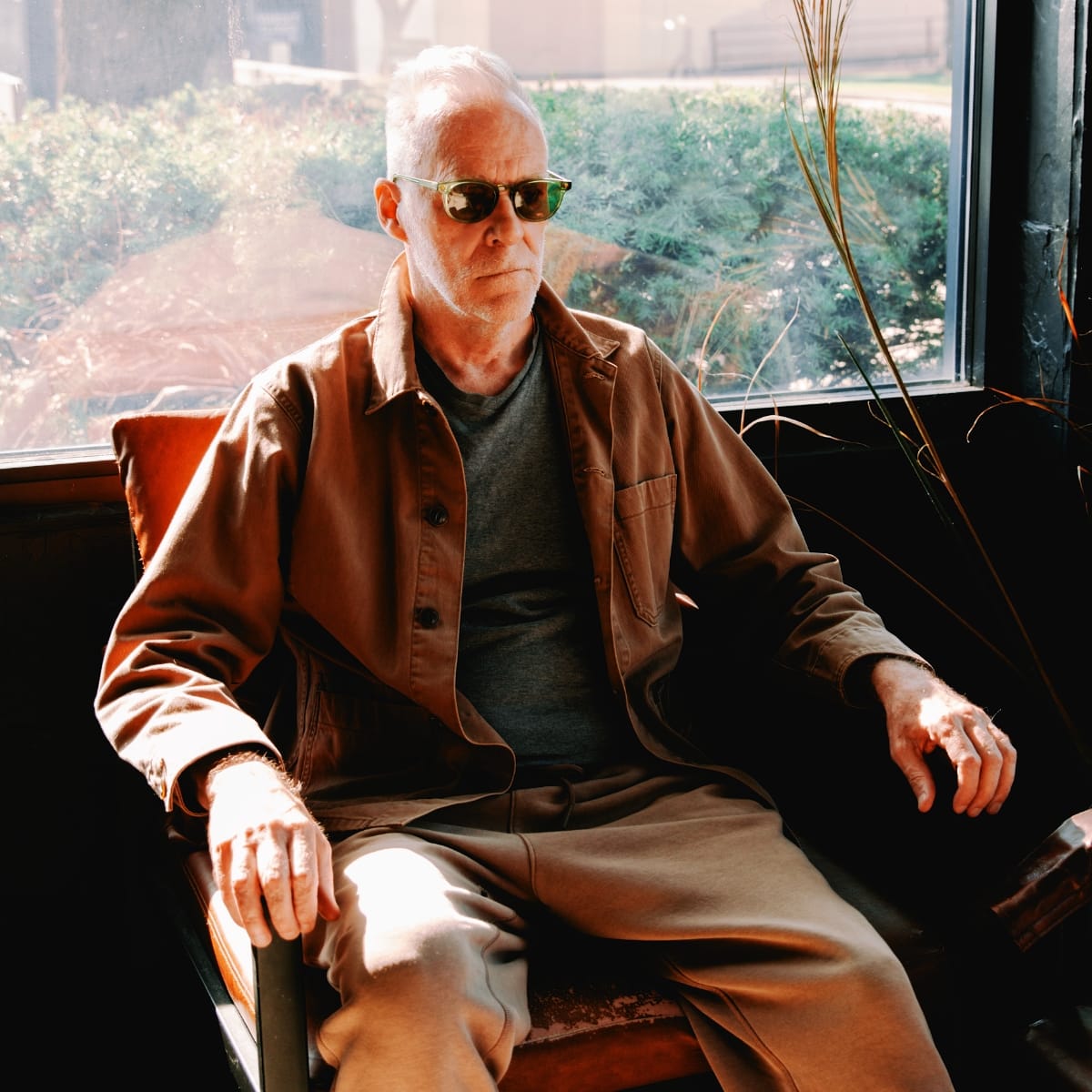
Carolyn: Moving to My Skyscraper, I wrote down “Boss Tricks” with a heart next to it in my listening notes.
Steven: That is a song about a particular person called Benny; he was my boyfriend in Taiwan, and he has a very interesting story on his own. So that song I gave to the Dropout Orchestra, those two guys in Sweden, they’re this amazing Swedish remix team, and they also play instruments, which makes them unusual for DJs, because a lot of DJs who do remixes don’t have much of an ear. The original song is, you know, all the tricks, the cereal “Trix”, sex tricks, people who are tricks, particularly in the queer world. You talk about having lots of tricks, and then tricks you can do in bed. Benny was an athlete in terms of sex. The Dropout Orchestra left out all the really dirty parts. They sent me all the instruments recorded with a new beat, and then I added that part, “it’s all coming down, blessings of peace and love.” Which is totally out of character for me, because I never use the word love in a song. It’s so corny, I never use it as a verb.
Carolyn: It’s this notion of Buddhist bubblegum praxis.
Steven: That was something that Arthur was very particular about; we didn’t talk about Buddhism in the lyrics. When we were in the studio, we were very conscious of it being in the process, and that the process itself was not necessarily religious, but our attitude towards it was religious. It was mystical in the sense that we tried not to know what would happen next, even though, on the engineering and technical side, Arthur was often on top of it.
There’s also the new Arthur Russell thing that just came out on Audika, which has two tracks from [the unreleased album] The Bright & Early. I don’t know if you heard those, but that’s me playing guitar and Arthur playing cello, and he’s singing. That was the ultimate collaboration because, in terms of the process, we would rehearse the songs, then go into the studio together and play live onto two-track tape. Then we would take the two-track to his apartment on East 12th Street, we would sit in front of his aquarium, and Arthur would splice the tape with a razor blade. That’s why in “Triangularize” you’ll often hear a sudden change in the music; that’s where the tape has been spliced. The process was often much more complex and laborious than the final result.
Carolyn: So, here’s kind of a table turn for you, you’ve written so much about all of these boys you’ve admired for different reasons. Are there songs out there about you? Do you think you are the “Wonder Boy,” or are you the boy at the club to someone else?
Steven: I don’t know. Maybe. In some of the stuff, Arthur might refer to something that happened that day, because some of his songs were like diaries. I don’t know. That is really a nice idea. I think maybe in some of my songs I’m that person.
Carolyn: There have to be poems and songs about you out there, maybe you just don’t know it.
Steven: Well, there actually may be more drawings and photographs.
Carolyn: I was going to say maybe everyone who is in love with you works in a different medium.
Steven: There were some painters like Billy Sullivan who did a whole bunch of nude paintings and drawings. Joe Brainard did a bunch of drawings. I was in a lot of photographs around that time because I loved having my picture taken.
Carolyn: Why do you like having a picture taken? I feel like so many people really do not.
Steven: I just think it’s fun.
Carolyn: It strikes me that you’re comfortable with yourself.
Steven: I am, and that’s partly being older, which I don’t think about very much, but sometimes I feel like I’m Rip Van Winkle. It’s funny because, also coming out of Covid, I had sort of retired, and I wasn’t really doing very much. Then these young musicians found me, like Eric from Secretly Canadian. They discovered Cool Fire and saw something they liked. That has caused a resurgence, and people are interested in what I do, which is really nice, because at this point in my life, I don’t really care about money, but it’s nice to have some respect, so I think that that’s something I value more.
The thing about My Skyscraper was that I sent Eric a whole bunch of stuff. He picked some of my weirdest stuff, like that one where I’m screaming ["Yhema"]. I sent it as kind of a joke, to show the harmonies, but he understood that there’s something unusual about my harmonies. Sometimes they’re like Gregorian or something, because of some of the church training. I think I get a lot of my sense of harmony from the Beach Boys and the Beatles, which is really interesting. I mean, the Beach Boys are just sublime, where it sounds like 10 people singing, and sometimes it is, because they added many, many tracks.
I always think of myself as a backup singer, and I love working with lead singers and just doing harmony. My favorite harmony singer is J.D. Souther when he worked with James Taylor on “Her Town Too”. What I do with singing is I sing harmony lead. I don’t sing lead vocal; I sing harmony to myself, and that’s sort of how I get around not wanting to be out front.
Carolyn: So, you love having your picture taken, but you don’t want to be the front man.
Steven: My involvement and fascination with Andy Warhol, and the whole concept of the superstar, is that now you can make yourself into something totally different, virtually. But in those days, you did it with makeup, paint, lighting, and photography. A lot of that I learned from Andy Warhol, and then consequently from his superstars, from knowing Holly Woodlawn and Jackie Curtis, is how you can transform yourself into a different character, like from a man into a woman. René Ricard had a total fascination with photography and lighting, so he taught me a lot about how to pose and what kind of lighting to use, which he was studying at the time himself, to make himself look good in pictures. I learned a lot, and I’m very comfortable being around photographers and working on movies, being around the camera, because to me it’s not such a big deal.
Carolyn: I have some notes here about “First Love”. Who is “the new boy” in the composition, and who is the new boy right now?
Steven: The new boy in the composition is just a fantasy. Half of my songs are about someone, and the other half are not. I realized a lot of my songs talk about the concepts of heaven and perfection when I listened to them. When you add love into that, where do you go from there? The idea of “First Love” is okay; you’ve got love with its associations and limitations, but what if there is something else? Something more, something better, something that’s more free, or more realized? So let’s explore that.
Carolyn: I thought we didn’t like using the word “love”.
Steven: I didn’t finish. The “new boy” is, well—I’m staying in a university town, so sometimes I meet university students who have a daddy thing. I don’t feel like I’m a daddy type of person; I think I’m actually a big kid in terms of my energy. I don’t think of myself as an older person. I met a university student who’s studying architecture. So I’m in love with this guy who was not really interested in me, but when I first met him, I said I’m 68. Is that okay? He said, “I’ve dated guys who are older than you,” and I was like, wow, so that’s Nixon, the new boy. Yes.
Carolyn: Is there anything you wish someone would ask you right now?
Steven: What’s my favorite song?
Carolyn: Man, I try to avoid questions like that, but hit me.
Steven: It changes a lot, but for me, the test is whatever song makes me cry continuously, and there are a couple. “I Can’t Make You Love Me”—the version by Bonnie Raitt with Bruce Hornsby on piano just destroys me now.
Carolyn: I might have spent a portion of my life crying to that song, too.
Steven: There’s more, there’s more. My father died in Scotland when I was young, and my mother remarried an American guy when we moved to America. My American stepfather, in his Thunderbird—that’s the song that he would play to my mother because he wasn’t sure if she really loved him. But she did, because it evolved. It started out as kind of a friendship, but it evolved into something very deep. That was their song.
Carolyn: Nothing like being triangulated into your mother’s adult relationship through American soft rock.
Steven: I’m trying to cover that song, but it’s a real challenge. So what I do is play the Bonnie Raitt version over and over again and try to harmonize with her. Bruce Hornsby is coming here to Champaign in the fall, and I’m going to meet Bruce Hornsby. I want to ask him to play piano on my cover of that song, and I’m really, really hoping that he’ll do that.
Carolyn: I will light a candle in my weird girl creative practice for this to happen.
Steven: Another song which I really like—I’m sorry, I’m going to get really heavy on you. My twin sister did a version of “Your Motion Says” with me, singing along and adding some harmonies. She died a few months ago. I sang "Love Comes Back" at her funeral. [Softly singing] “In the soft energy we are away . . .” That’s the song that Arthur sang when he was sick.
In the soft energy
We are away
Intelligence in your hands
It’s willing me again
It is two songs. We always sang this song at the beginning of every Arthur’s Landing concert, because it’s like a Buddhist prayer.
We're meeting in the moonlight
When you are there
Rising in the moonlight
Love is back
So put your little hand in mine
I couldn’t sing that song; I couldn’t function after that. That song by Arthur is just incredible. There are tapes of him singing it when he had throat cancer, and he could barely sing. He kept on because he was singing this song to Tom.
There’s a line in the song: “Being sad is not a crime . . .” He was singing that to his partner while he was dying. It’s just mind-blowing. So yeah, that song is maybe my favorite of Arthur’s.
Do you like Johnny Cash?
Carolyn: I mean, I guess I relate to “A Boy Named Sue”.
Steven: I didn’t really like Johnny Cash, and then I discovered an old YouTube video of Joni Mitchell singing with Johnny Cash, which blew me away. After my twin sister died, I recorded this song, but I haven’t shown it to anybody.
At my door the leaves are falling
A cold wild wind will come
Sweethearts walk by together
And I still miss someone
Dolly Parton did a version of it, which is just sublime. Her harmonies are just incredible. That’s my favorite recent song.
I go out on a party
And look for a little fun
But I find a darkened corner
’Cause I still miss someone
Carolyn: Great. I am crying on the job in an interview. I appreciate your emotional depth and candor very much. Thank you for talking.
Steven: You’re very welcome. You went there first; I just went there further.
Carolyn: Someone has to bring it home and be the bigger crier.
Check out more like this:
 Lawrence Peryer
 Carolyn Zaldivar Snow


Comments