


Whether you believe in it or not, manifesting your own destiny through attention, focus, and thought has become a popular topic of discussion in recent years. For the Beijing-based artist named Mixol, it's a big part of life, alongside other spiritual aspects like tarot. Tarot cards also inspire her debut EP's title, The Fool—named after the first card in the Rider-Waite Tarot. A collection of six tracks that meld genres consistently and constantly, they range from "april siren," a sultry jazz lounge song merging with Japanese city pop, to the extensively eclectic operatic yet decidedly pop music of "a play of reincarnation."
But the wide-ranging genre expressions don't just end with Mixol's music; they only begin here. Watching videos like "we jump, our carnival," one can see how the 24-year-old artist blends cult video inspirations, creepy witchy vibes, and animation. To push her hard-to-pin-down nature further, Mixol has also chosen to roll out a game for the EP release featuring certain tracks.
And yet, Mixol wasn't originally sure whether she should even focus on music as a career. Though this dream may have burned in her soul for years, Mixol has faced roadblocks on the way that could have stopped her from releasing music at all. I spoke with Mixol a few weeks before her EP release over video chat to learn more about these obstacles, her songwriting and manifestation processes, and how she defines success.
This conversation has been lightly edited for length and clarity.
Bill Cooper: Tell me more about your name and its origins.
Mixol: It came from one of my friend's dreams. When I was living in Tokyo, he shared a dream in which Earth was conquered by aliens, and people had to drink lemonade to determine whether they would work for the aliens on Earth or be sent into space to explore. I can't remember all the details, but at the very end of the dream, he pulled out his phone, and on the screen was the word "mixologist." [This title eventually became one of her songs.]
In early 2025, I started thinking about a name for myself. I originally wanted to name myself Mixo without the "L" at the end, but I felt the "L" added something—a bit more mysterious, a cooler vibe.
I'm the kind of person who loves talking to myself. I remember last year in Tokyo, sitting on my bed, preparing my Grammy speech . . .
Bill: You prepared your Grammy speech?
Mixol: I've prepared it several times. The first time was for the Grammys last year. Then, several days later, I watched a documentary about Lady Gaga and prepared it again. A few days after that, I watched a clip about Dua Lipa and prepared it again. At that time, I didn't even have an artist name yet, so I just said, "I'm—whatever. Let's say M." I was literally in tears because I was so touched by how Lady Gaga and Dua Lipa had made it. That was very encouraging. Eventually, I'd say: "Hi, everyone. I'm Mixol, and I'm so grateful to be here."
Then last November or December, when I really had to name myself something, I thought: "I'll just call myself Mixol. I've already practiced it."
Bill: Now, let's talk about the album title, The Fool. In what ways do you feel the tarot card is relevant, both to the album and as your first step as an artist?
Mixol: I'm a pretty spiritual person. I don't follow any religion, but I believe in manifestation, the universe, that sort of thing. Sometimes I'll just open my phone, scroll YouTube, and watch tarot card readings. I have a favorite tarot reader, and in my hard times, she somehow supported me. But as a symbol, I think the Fool card is just cool and mysterious. There are different versions and aesthetics with the same theme, and people can create different paintings around it. I think that's charming.
Then, there's the title of the card—the Fool—which symbolizes how I feel and how I view myself. Sometimes, I feel raw, clumsy, and unsure of who I am. When I was younger, I imagined that by now I'd be elegant, a proper adult by twenty-four, the age I am now.
But there are so many things I don't know. I say that literally all the time. Even when I'm alone. So, the Fool basically represents how I view myself in its most literal meaning.
I feel like twenty-four is probably too late to debut. A lot of my favorite artists released their albums when they were eighteen or nineteen, and they were considered geniuses. So, I just wanted to put out this album before my twenty-fifth birthday and take that leap of faith, hoping I could land it beautifully.
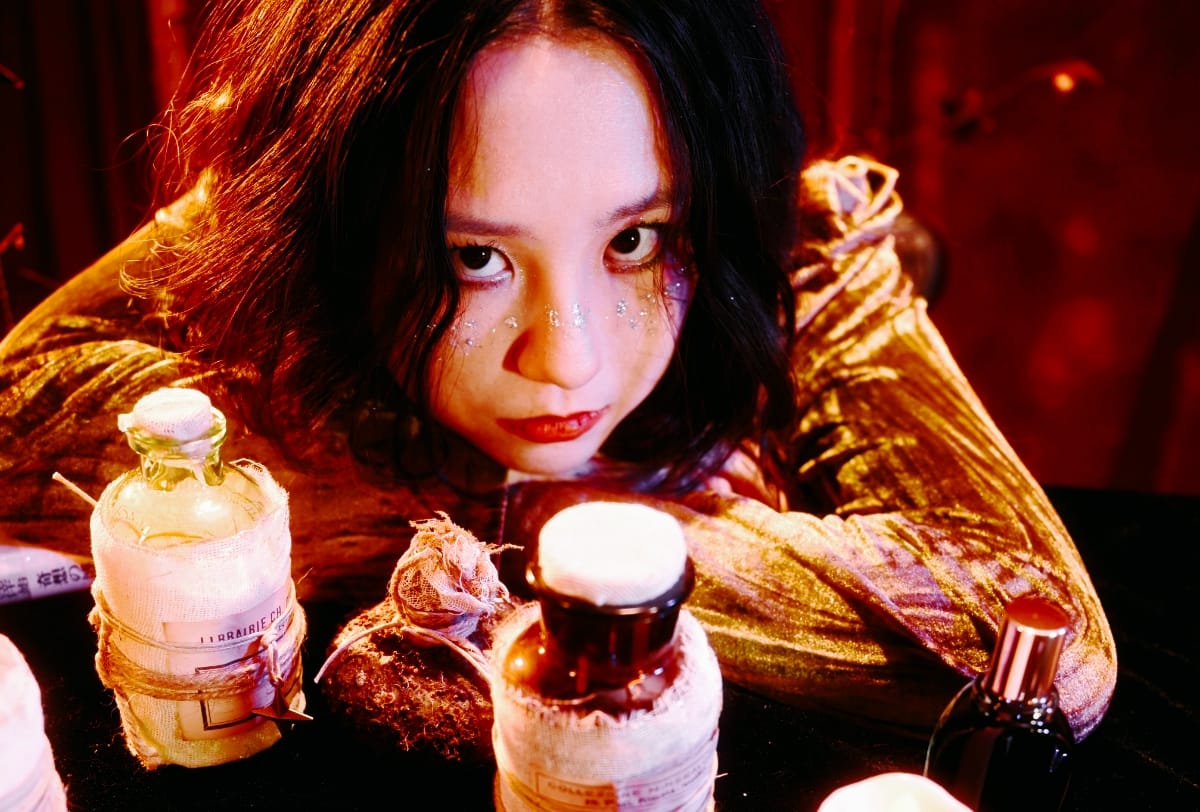
Bill: Your music—and I mean this in the best possible way—is a little out there and different. Because of that, I'd imagine it could be hard to connect it with an audience. How have you learned to do that?
Mixol: That's a long story. When I was sixteen, I watched my favorite artist, Sheena Ringo, in concert for the first time. I knew then that I wanted to be an artist with my own world-building, someone whose world you're inside of.
Then I went to Berklee, but during COVID, I went back to Beijing and auditioned for music TV programs and reality shows. Many people, in these shows and elsewhere in the music industry, told me, "Your music is good, but if you want to be a star, probably not." I was traumatized when I heard that. By the time I was twenty, I just gave up writing songs for myself. I started thinking it would be better for me to be a film composer because I love films.
Then after I graduated from Berklee, I moved to Tokyo—I love Japan, and I wanted to learn more from different cultures. I remember it was late 2023 when I met a group of new friends. I played an orchestral piece for them, and afterward everyone told me, "Do you have your own songs? Do you sing?" I said yes, but I wasn't writing songs anymore. They said, "We want to hear them." So, I played them the songs I wrote when I was sixteen or seventeen—songs I had produced—and they said, "You should probably release these." Mysteriously, everyone I met during that time told me to release my songs and restart.
That was like a switch. By the time I went home, I was convinced. I gradually restarted writing songs during 2024 and 2025. This is my second attempt at starting the journey, and I'm taking it very seriously. This is probably my last chance to really face myself and seriously write something.
I've been through hard times—mental health issues, the anxiety of asking myself, "Am I doing good enough? Am I going to make it?"—I just blocked that possibility and aimed for my goal. I'm focusing on the production, on the final stage of the EP, on everything, and on the faith that I'm going to make this. Because the universe put me here. It's not going to let me suffer my entire life.
Bill: When you're writing your music, what does that process look like?
Mixol: From last year until now, I have probably around fifteen to twenty songs—some demos, some in EP production. At the time, I was still living in Tokyo and had a production room that my professor lent to me. I'd go there almost every night because it was always crowded during the day. I'd arrive around nine in the evening, sit down at the piano with the laptop open and Logic Pro ready, and just randomly play something or sing along with it.
It's about pushing myself to write something every day, putting myself in that specific environment—because being in the work environment signals to my brain that it's time to focus and create.
Bill: You have so many genres bouncing into each other in this wonderful way within your music. How do you determine what to keep?
Mixol: I wrote songs when I was sixteen or seventeen, then deleted them. When I restarted in 2024, I found a problematic tendency in my writing: I listen to Björk, Kate Bush, Fiona Apple, and Sheena Ringo a lot, and I could feel when a song was drifting closer to Björk or Fiona Apple. I don't like that—I really want to be myself, not Mixol doing Björk style or writing under Fiona Apple's influence. So, I delete tracks. I kept the songs that felt more like Mixol.
Bill: To be clear, you don't go back and review old tracks? If it doesn't work, it's gone?
Mixol: I really believe in the moment and the spark. When I'm in the production room, and I think, "Oh my God, I love this. This is genius." Even though I probably am not, I still love that moment. If I'm excited, I feel I could put this on an EP. But if I have a song that isn't quite there, I won't keep it. I've already proved I can produce that kind of song, so it's saved in me rather than on the laptop. Because if it's saved in the laptop and I shuffle back to a song I wrote two years ago that wasn't good enough, it would make me question my work.
Bill: When watching your videos, there's a blend of media, including but not limited to animation, cuts to these cult-inspired images, and witch imagery. Can you tell me how you create that aesthetic, what you're aiming for, and what drew you to it?
Mixol: I'm a person who loves watching films. Cult films, in particular—my best friend introduced me to those when we were sixteen or seventeen. I was shocked at first, and it made me so uncomfortable. But after I turned twenty or twenty-one, I thought it was so cool.
I really wanted to achieve those settings and aesthetics like the great directors do, but the budget just can't accommodate that. So we made it ourselves—just me and my video director. She's awesome. She shoots videos of me, and sometimes we script, sometimes we don't. Sometimes we'd arrive at a location and think, maybe we do this, and that, or maybe a weird movement would be cool, and we'd just film it. A lot of actions were spontaneous.
For the animations, because I don't have the budget to make a hundred people dancing with me in a golden palace—that sort of grand medieval cult-film feel that I love—and AI video is not something I want to use, I asked two of my friends who are art college graduates. Those two just did the animations for my three pre-release singles. I love that. Basically, I asked them to script scenes I couldn't capture in real life. I told them the background story of each song—for example, "mixologist" is about the conversation and imbalance between me and the monster that lives in me—and they just got it. I feel so grateful for having them.
Stay on top of The Tonearm.
Subscribe for exclusive interviews, cultural tip-offs, and community fun.
And your support keeps our site free of advertising and paywalls.
Bill: One of the things that fascinated me about this EP was the eight-bit kawaii creepy narrative games tied into some songs. Can you share more about it and how it works?
Mixol: I was thinking about the days when we didn't have iPhones or smartphones—when we were just bringing magazines into the restroom. And then I thought, "I really want to have a game that people could play while listening to my songs when they have some spare time, or even when they're on the subway or in the restroom." I just think that's pretty fun.
One of my friends is an animator, and I asked her for help. She became the leader of the animation part of our game team. She also has a friend who loves coding and works in Japan right now, and she loves indie games too. So, we became a small team, discussed the script, and I thought maybe we could put the background stories of the songs into the game. That's basically how we made it.
It's a pretty light game, so it doesn't take that much time. Basically, the player becomes a witch, where they mix some ingredients into a poisoned soup, and depending on the combination of ingredients they choose—because we have nine ingredients tied to three songs, three ingredients per song—they'll be taken into different worlds and play soft puzzles or follow the story.
Bill Cooper: Is it going to be part of the EP release?
Mixol: Yes, it will be part of the EP release, but it's not tied to every song on the EP—it's tied to the three pre-release singles. My very first single is called "we jump our carnival," and that song is on the EP too, so there's some overlap. The other two songs ["mixologist" and "bibiboobiboo"] are previous singles. So, we have three songs and three different worlds in the game. For example, in the "we jump, our carnival" world, the background story is about a princess who runs out of her castle because she sees something odd and wants to find out why. She becomes an explorer and meets her gang.
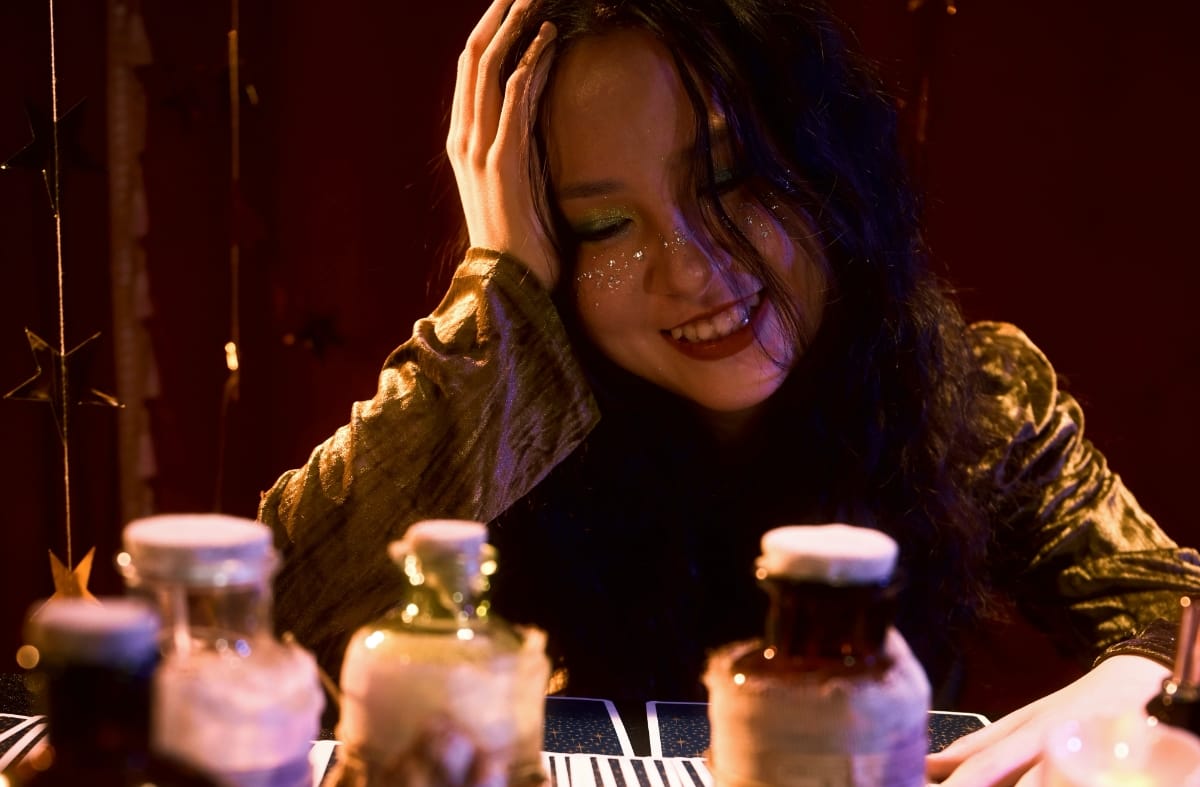
Bill: What have you learned from your first release here, and what advice would you give to other musicians trying to write their own music?
Mixol: Just be faithful. What supports me is the faith that I can do this, even though sometimes I know it's hard, even though sometimes no opportunities come my way. That's all fine, because I know my destiny will be success. So: be faithful, love the process, and be brave.
Bill: What does success look like for you? Is that a manifestation you've planned out?
Mixol: It looks like thousands of people listening to my music, coming to my concerts, and singing along with me. Sometimes, when I'm feeling ambitious, I even wish aliens were listening and thinking, "Earth is good. They're listening to Mixol."
I find it very difficult to define 'successful' or 'unsuccessful.' Stars and celebrities have their aura. I always feel so awkward. If someone comes up and says, "I love your music," or if I became a bit 'famous' and people were curious about me, I'd think, "I'm just a normal person. An ordinary person. I read fan fiction. I love peanut butter. I love snacks. I love junk food." That doesn't really have the celebrity aura, that elegant, very-mature-adult feeling.
I wish I could leave my name on music history. I know that sounds very silly, but that's why I'm writing in English—I want language to be a bridge, not a barrier. I really want to do something that nobody is doing right now. Separate from success, I have another goal: to just write good music. Music that makes me feel earthquakes in my heart. I've always wanted that.
Check out more like this:
 Damien Joyce
 Bill Cooper


Comments