


The LA-born-and-raised musician zzzahara, aka Zahara Jaime, has released their fourth album for Lex Records with Distant Lands, the last under their record label contract.
The album is a tender, hazy blend of genres, from early-2000s lo-fi to modern dream pop with elements of slowcore and shoegaze/emo, all conjured up through a basic setup on old analog equipment. Their hushed vocals add a textural layer that communicates this soft, melancholy, nostalgic vibe alongside uplifting synths and melodies, as on tracks like "Butterflies," "Garden," and "I Can Be Yours," featuring NYC-based artist Winter (Samira Winter). "Whispering Tree" has this driving indie rhythm, and it sits well alongside slower-paced tracks such as "Wandering Eyes" and the more shoegazy "Chinese Tobacco."
zzzahara is a prime example of the type of artist that the democratization of music once promised. They played guitar in lots of different bands growing up, including with Idris Vicuña on his project Eyedress, which resulted in a further collaborative project with The Simps. That spurred zzzahara on to start their own music and, during the pandemic, they self-taught the required skills to produce an EP from their bedroom. Following up quickly, they released their 2022 debut album, Liminal Spaces, which documented their heedless coming-of-age in Highland Park, East LA. Their 2023 follow-up, Tender, provided a brief pause before they released an awkward breakup album, Spiral Your Way, in 2025.
While there is a vulnerability, finally attempting to articulate deep, bottled-up feelings and emotions, zzzahara is maturing as an artist on Distant Lands. They leave some of the goofy love life tribulations, themes, and lyrics behind to contemplate on their life journey so far, including much personal trauma from an impoverished childhood in Highland Park, losing a young brother to a rare genetic disease, a troubled family life, and their experiences with opioid addiction from an early age.
They were determined to make something that was more personal and authentic, not about frivolously chasing chicks, and more of a record about growing up in a non-traditional sense as an artist that is half Filipino, a quarter white, and a quarter Mexican, dealing with complicated emotions about loss. This record was unlike previous records because it also considered the art of making music and being a musician. Rather than following a dictate to just get the record out, they decided to let a riff sit for a while, experimenting with how a melody sounds with other melodies, listening to more music, discovering more musical influences, and simply playing more.
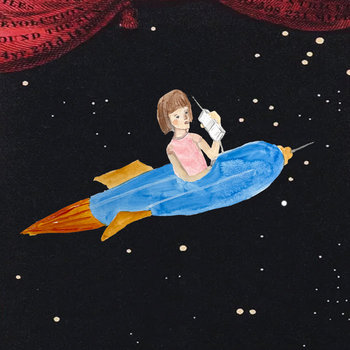
When I began talking to zzzahara, I asked—because this album is far more personal—if they had taken a beat before attempting to write these songs, or if they jumped right in.
zzzahara: Honestly, I think I did take a break. I was still writing, but I didn't really think of anything as an album. I was contracted to make a record every year, so there's no time to waste. But I did a lot of reflecting during this period because I feel like my album, Spiral Your Way Out, is like a breakup album. Sometimes I think I'm a little embarrassed by it now, but I just needed to get something out, and it was true to me at the time. Then, when that time passes, it's not true anymore. Also, Spiral Your Way Outwas intended to soft-launch this emo-kind-of sound that I've always been part of or liked since my youth, but I don't think it really belongs in this project anymore. I mean, aspects of it, yes, but I think my fans really like the indie aspect of my music. I think I'm just going to keep it that way and start a new project for the other thing.
After a relationship is done, you have a lot of reflections about who you are—who am I by myself? What has made me? What are my morals and traditions? What are my family values? I did a lot of reflecting on that and reading books. Also, I tried to get sober—this is my third time trying. In the last two attempts, I tried all the different AA meetings. I heard other people's stories and thought they were so similar to mine. I never really thought about it—you don't really think about your makeup until you start getting older, because it starts to reflect off you and bounce onto other people, and then you hear feedback from them, and then you just get in your head about it.
So, I think that's what was going on when I was writing Distant Lands. But, yes, there was a break in between and stuff, thinking and getting out of my head and listening to others, mostly versus or trying to translate my inner monologue from the past and what is present and stuff like that. It's a lot of introspection.
Damien: Oh, I get it. I remember reading a Miles Davis interview in which he was once asked whether he would be a musician if no one heard his music. And he replied, "Sure, because I love music, and it's in my head, I can't get it out." Is that something you can relate to, having to get that music out of your head?
zzzahara: For sure, I have a backlog because as a teenager, I would try to record myself on a sound recorder—I had this shit Microsoft computer and a kind of gamer mic. But I feel like I just had songs ruminating in me since I was young. Now that I have all the equipment and everything to record in my house, and I know how to engineer myself and do all those things, I'll just make music all the time, and there are so many demos. On tour, I'll play them in my tour van and show them to my friends who play in my band, but that's pretty much it. They won't be shown to anyone else. They'll say, "You should put this out," or "This is good." But I feel you can make so many songs, but they're for yourself. Honestly, if no one heard my music, I guess I'd be cool with it, because it's the only art form I know how to do. I don't know how to draw or anything else.
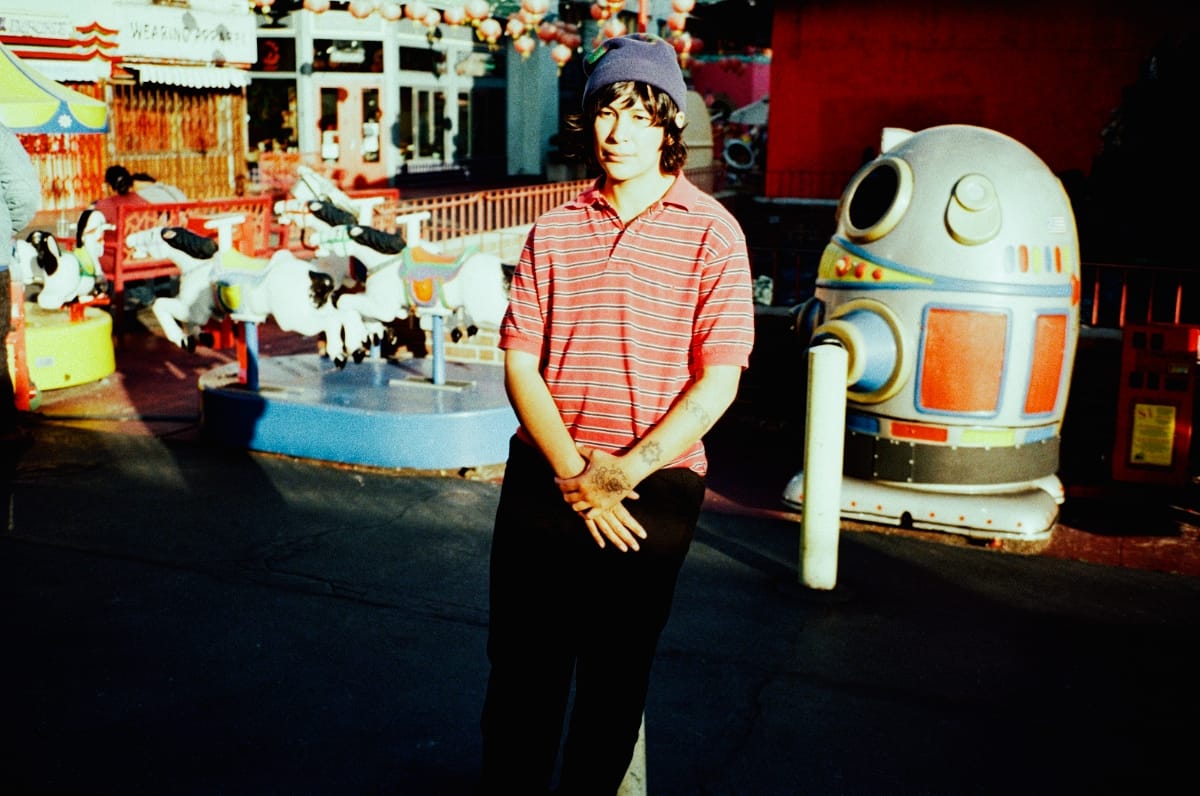
Damien: Can you tell me a little bit about working with producer Casey Lagos? Did he push you to be more open lyrically and melodically on this record, or did he just leave you to it?
zzzahara: No. He just sort of leaves you to it. That's why I think we vibe so well. I always made sure it was good before I brought it in, and the melodies made sense. Casey then brought out a lot of the melodies, especially through his engineering. He has such a good ear for hearing frequencies, for what isn't filling out in the middle, and for what needs to be in the low end. He's so good at making the song sound full. He's a drummer first and a producer second, so Casey has that rhythmic capability, especially with bass. He plays a lot of bass on the tracks. I'm all the lead guitar and rhythm guitar for this record, most of it, and then he's like a rhythm section. We just play as a band, and so that's what really brought this record to life. It's just two people, nobody else.
I think that's my favorite thing about Casey, that he's down to roll with anything, and he really just makes the songs pop. I think mixing as you go is crucial because some producers can't do it well. If you can't see the vision in what's already going on, then the song's not going to sound that good in my opinion. It could sound good at the end, but I need to hear it now to believe in it.
Damien: There are different vibes that I got off different parts of the record, and I'm attracted to that lo-fi sound, which makes me think of an album called The Glow Pt. 2 from the Microphones from back in 2001. You would be amazed at how often this record comes up cited as an influence in my interviews, especially with modern indie experimental artists. I went back listening to that again, and it still sounds so fresh.
zzzahara: Phil from the Microphones, I love his vocal style. The Glow Pt. 2 is such a great album. The Neutral Milk Hotel album On Avery Island is also a big influence on this. So is Sparklehorse, some Sun Kil Moon, all those records!
Damien: There are other little effects on the album; I was reading a bit about some of the gear you used. Was it a Korg CR-4 you were working with? That's a four-track recorder, a guitar amp, and a boombox?
zzzahara: Yes, I don't want to tell anybody, because if this one were to break, I would just have to scour the internet to find it. I don't ever want it to get expensive. There's something special about that tape machine. I remember picking one up and being like, "What are all these knobs, and what do they do?" Then I played with all the different settings, and I thought, holy shit, that is magic. That costs a lot of money to do stuff like that in the studio.
It's super sick, and the track "Gardens" was recorded through [a CR-4]. But for "Gardens," it's mainly Nick Drake that influenced it because I feel like he's always talking about flowery things, the stuff outside. I was thinking, well, how does this stuff outside relate to what I feel on the inside? I read this 33⅓ series book on Nick Drake, and I thought it was so interesting.
Damien: I've been watching a lot of your older videos, and I noticed some of the skateboarding gear. You sent me back down the rabbit hole, watching all these skateboarding videos with skaters like Tony Alva and Jim Greco. Do you remember Jim Greco?
zzzahara: Oh, yeah. From back in the day?
Damien: Yes. Jim Greco has those cool vignettes of just cruising down the streets on his board. Can you tell me how skateboarding has influenced your style, fashion, and music, and how important it is in your story?
zzzahara: So, growing up in Highland Park, we had this skate park connected to our middle school called Garvanza Skatepark. It's famous in Los Angeles. I would skate, but I wasn't that good. That's all anyone would do at people's houses—buy a case of beer, weed, and just watch skate videos, then go skating. It was just part of the culture. Then, afterward, we would go to a punk or metal gig, and it was just so tied in.
We would play Tony Hawk's Pro Skater 2, and that's where I first heard "Warsaw" by Joy Division. All of that really influenced the music, to be honest, and even the clothing—it just all tied into that aspect of growing up around it. I connected with music through skate clips and by syncing music with video games. Obviously, you have your headphones in when you're skating.
I remember seeing "Where Is My Mind?" by the Pixies on a skate clip, and Daniel Johnston—I think I discovered from a skate clip, too—"True Love Will Find You in the End" was the song. The beauty of skate culture in Highland Park is that we had one of the first skate parks connected to a middle school, so you could ditch your middle school and then go to the skate park. There were all these aspects and perks of skating: the clothes, the shoes, the music, the thrill of it all. I remember everybody was always fucked up—it was like what you see in some of the movies, like Paranoid Park by Gus Van Sant. But I don't think that culture is as prevalent as it was back then.
Damien: I still think it's amazing to see someone like Tony Alva still skating at almost 65—his is a wild story as well. But before I get too distracted talking about skateboarding, another creative influence for you was David Lynch. Do you still enjoy his work?
zzzahara: Yes, I do, but I only just got into film three years ago. I was in a film as a lead, and I would just hear all these people talk about films. I thought I had to start watching some more films. David Lynch really stuck out to me because it is kind of creepy, but it's dreamy, it's left to your interpretation, and that's what I like about his films. The plots are all over the place, but the visuals and aesthetic are so cool that they keep you locked in. It's like a movie that's ADHD or something very arthouse, and I kind of like that vibe.
Damien: But the sound and music were very important to him as well, equally as much as the visuals.
zzzahara: He had a good taste in music—he worked with Mark Linkous from Sparklehorse. I think they made music together, too, and took pictures.
Damien: You've also become a voracious reader of late?
zzzahara: The thing with David Lynch that I really like is his book Catching the Big Fish, where he talks about meditation, his inspiration for Lost Highway, Mulholland Drive, all these different movies, and that the best time to start is now. He always has good tips on creativity, and he never let budget stop him; he never let anything stop him. Coming into sobriety, there's a page in Catching the Big Fish where he says, you don't need to have trauma, you don't need to be fucked up, you don't need to have all these things to make good art. I was kind of scared that being sober would take away from all of this stuff, and that's just not true at all. If anything, I have more time on my hands to actually focus on being a better musician, honing my craft, and reading more books and watching more films. It leaves more of a way to think of things differently, versus being fucked up all the time. Sometimes you're shortsighted by that stuff, and I think that's what's cool about David Lynch. He's such a big manifestation of creativity.
Damien: Speaking of creativity, you appear to be someone who's constantly jamming and creating music?
zzzahara: I'm outside every day, always making music. Even my friends nowadays are all musicians. We just go to shows, and my life revolves around it. Honestly, I'm much happier this way. Nothing beats this; I'm so happy that I leaned into this career where I met other like-minded people, and even while going to Alcoholics Anonymous. It's not that I feel like we're at the end of times, but I feel like technology has just made people stay at home and watch TikTok. I'm kind of doing the opposite. I'm documenting every time I see a friend—I'll take a picture just to relive the memory of where we were back then. Who knows? It might be a big archive when you're older; you can reflect on it. But I really like going out, meeting new people, and doing different things. I like the natural aspect of the way things are, not what they are behind the screen.
Check out more like this:
 Meredith Hobbs Coons
 Damien Joyce


Comments