


You open the door—maybe straight in, maybe up or down some stairs—and the music encircles you. The street side evaporates. Light's probably low; wood paneling probably proliferates, along with long walls of LPs. Welcome to a jazz kissa (singular and plural) or jazz café, a small but vibrant self-contained octopus' garden where jazz, burbling from a carefully-crafted audiophile audio system, holds sway over all.
You order coffee and/or booze as quietly as you can manage. Counter seats go to regulars—if you're not one, you respectfully take a table or a booth. You study the collection. One order gets you one side of one LP. Two orders turns the record over.
Katsumasa Kusunose, a Japanese national, writer, editor, and photographer, began visiting jazz kissa as a teenager. Now in his sixties, he's racked up trips to roughly four hundred kissa in Tokyo and all over Japan. Jazz Kissa, a book collecting his photography and reminisces about the kissa scene, appeared recently. It's a love song in print to his favorite establishments and the high-tech stereo systems making them possible, complete with a cover modeled on the texture of the coveted Altec A7 speakers, and diagrams of audiophile equipment down the decades. He was kind enough to take some email questions.
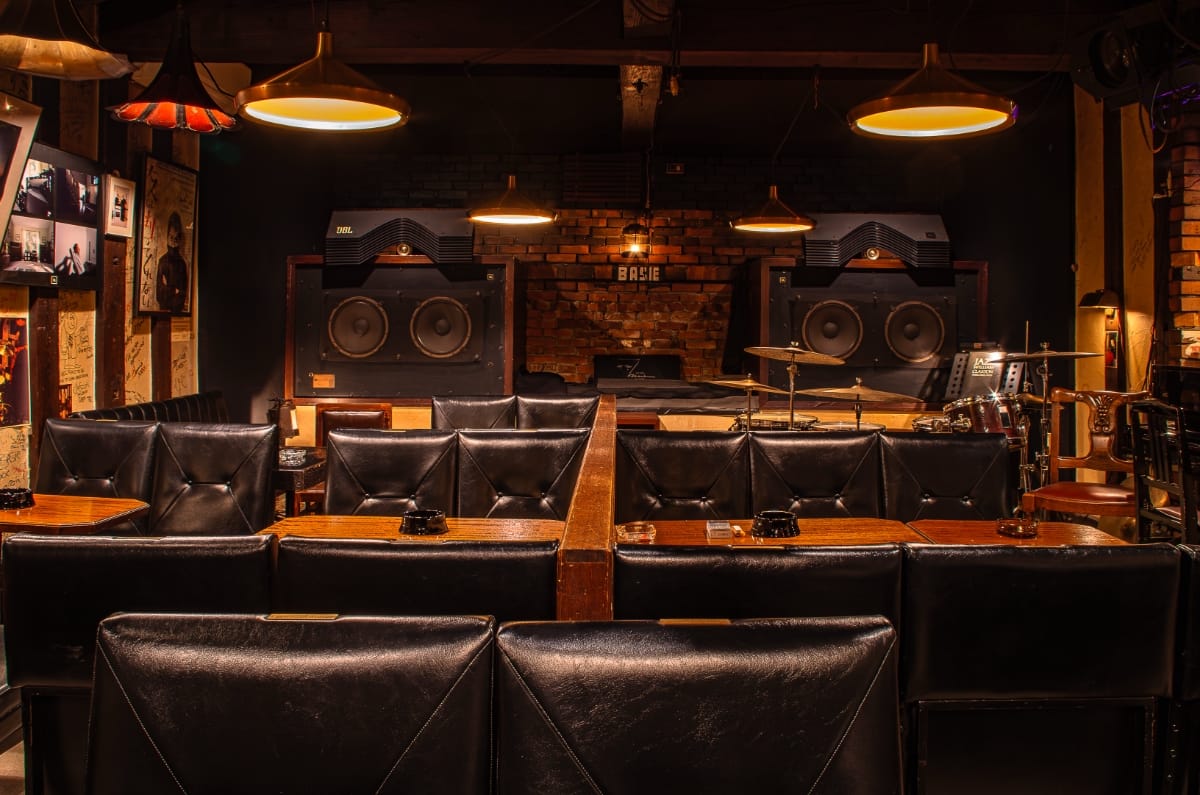
Andrew Hamlin: What are your earliest memories of hearing jazz?
Katsumasa Kusunose: The first time I thought, "So this is jazz," and fell in love with the genre was when I was seven years old; I heard Dave Brubeck's "Take Five" used in a television documentary about the future of humanity and science. By my mid-teens, I was listening avidly to Western pop and rock music, but I began to notice that the impressive solos within those tracks were often played by jazz musicians. That realization led me to wonder if jazz might be a kind of music that could further enrich my own sensibilities and perceptions.
Andrew: How did your jazz tastes grow and change over the years?
Katsumasa: I started out by avidly listening to jazz from the 1950s and '60s—artists like Miles Davis, John Coltrane, and Bill Evans. Later, wanting to understand the roots of those styles, I traced the music back through the 1940s, '30s, and '20s, listening to recordings by key musicians from each era.
At the same time, I also constantly listened to contemporary jazz. Personally, I prefer an approach that takes in the entire history of jazz, rather than focusing on the music of specific musicians or eras.
Andrew: How did you fall in love with photography? When did you get your first camera?
Katsumasa: I began working as a magazine editor at the age of twenty-six, and that was when I started photography. Before then, I had little interest in photography and had never taken any pictures myself. What captivated me about photography wasn't the act of shooting itself, nor the work of so-called fine-art photographers; rather, I was drawn to the photos of musicians featured in magazines, and the cover art of rock and jazz albums.
I stopped shooting with film cameras in my late twenties because I lacked the necessary optical skills and knowledge to capture images as I envisioned them. It was akin to wanting to play the guitar like Eric Clapton, but finding myself utterly unable to do so. Convinced that using a camera was simply beyond my capabilities, I gave it up.
Since then, and I'm not exaggerating, I never pressed a camera shutter until 2014, when I was 55 years old and decided to take photos of jazz kissa all over the country as part of a project for a publisher. Digital technology resolved the optical challenges I had faced, enabling me to express myself photographically exactly as I had intended.
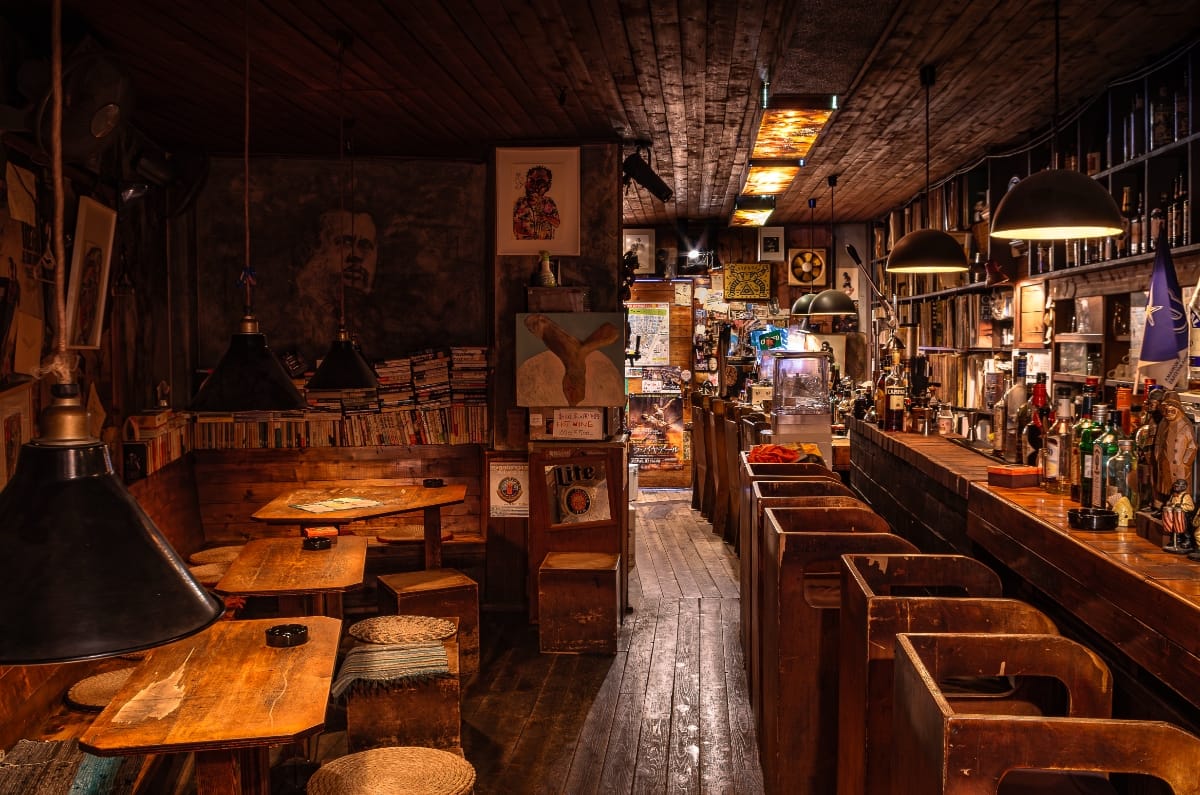
Andrew: What got you into visiting jazz kissa? Which did you first visit, and what were your initial impressions?
Katsumasa: The first jazz kissa I ever visited was a café called Rakko (Sea Otter) in Kochi City, located on the large island of Shikoku in western Japan. I was seventeen at the time, and the café was just a five-minute walk from my high school. I hadn't set out with a burning desire to visit a jazz kissa; I simply wandered in after spotting the sign while walking nearby.
The jazz kissa was equipped with Altec A7 speakers. As soon as I sat down, a cat hopped onto my lap. I listened to Eric Dolphy while petting the cat, and I felt incredibly at ease.
Andrew: How did your impressions of the jazz kissa grow and change as you explored further?
Katsumasa: When I was young, I visited jazz kissa for two reasons. One was to deepen my knowledge and experience of jazz; for me at the time, these kissa were like libraries where I could go to listen to the specific records I wanted to hear. I would hop from café to café in search of the music I was interested in.
The other reason was to escape reality. Immersed in a dim space filled with loud jazz, I would eventually lose all sense of time and could happily spend hours there alone. That was exactly the kind of time I needed.
Now that I am in my fifties and visiting jazz kissa again, I notice that the audio equipment is far superior and the environment much more comfortable compared to the cafés I knew in the 1970s and '80s. The old underground atmosphere—reminiscent of an opium den—is largely gone, replaced by a very wholesome vibe. And I don't think that is a bad thing at all. Unlike in the past, I now find myself enjoying the subtle differences in acoustics and sound quality between the various cafés.
Andrew: How do the kissa outside Tokyo compare with those in Tokyo?
Katsumasa: Most jazz kissa in Tokyo do not own their buildings and must pay rent; since Tokyo has the highest rents in Japan, these costs place a significant strain on their operations. As many kissa are tenants in multi-tenant buildings, they often lack optimal acoustic design and face constraints regarding noise issues. However, they enjoy a distinct advantage over their regional counterparts in terms of attracting customers; thanks to the recent surge in the popularity of jazz kissa, most cafés seem to be drawing sufficient crowds.
In contrast, many jazz kissa in regional areas own their own buildings—often designed specifically for that purpose from the start—resulting in excellent acoustics and no noise concerns, allowing them to play records at high volumes. Yet, they tend to attract fewer customers. Nevertheless, since most regional shops anticipate low profitability from the outset, they generally manage to stay in business.
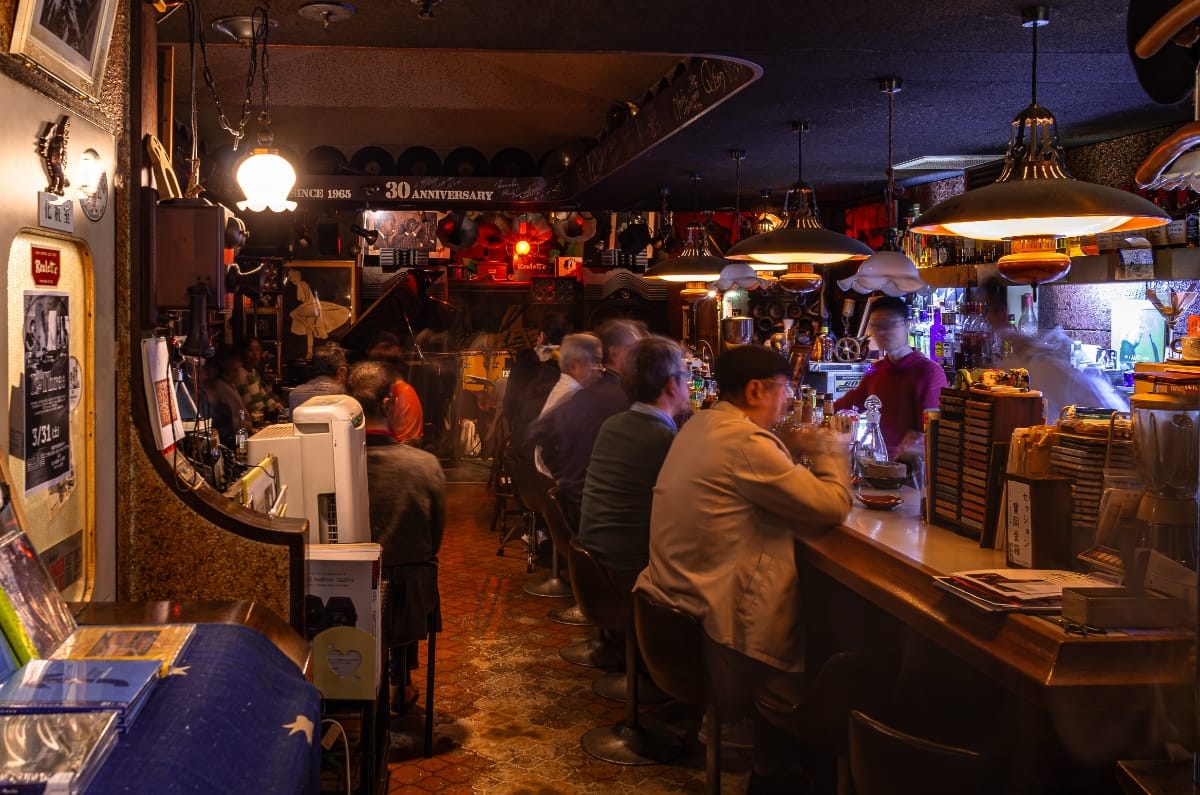
Andrew: What are your favorite kissa of all time?
Katsumasa: I love every jazz kissa I've visited, so I don't have a single favorite. While these cafés vary widely in character and style, I'm able to embrace and enjoy whatever each one has to offer; every café has its own unique charm. That is why I decline whenever the media asks me to rank them. You wouldn't rank your own children, would you? That said, there is one café I visited more than any other in my life: Mozu in Tokyo. I went there almost every day from 1979—when I moved to Tokyo—until 1996, when the proprietress passed away. It didn't have a particularly high-end audio system, nor did it boast a massive record collection, but it was simply the most comfortable place for me to spend my time.
Andrew: What are the challenges of photographing inside a jazz kissa, and how did you respond to the challenges?
Katsumasa: Most jazz kissa have very dim interiors—far darker than they appear to the naked eye. Yet, I never use artificial lighting; doing so would destroy the authentic atmosphere of the space. That is why bringing a tripod is essential when photographing a jazz kissa. You need to securely mount the camera on a tripod, and use a very slow shutter speed.
Andrew: Your kissa photos rarely have people in them. What led to that choice?
Katsumasa: When I began photographing jazz kissa in 2014, their popularity had waned significantly, and most cafés had hardly any customers. The reason no customers appear in my photographs is simply that there were none present at the time; it takes me about two hours to photograph a single café, and often, not a soul would walk in during that period. Furthermore, owners of cafés in major cities like Tokyo often refused to grant permission for photography while open for business, fearing it might disturb the customers. Consequently, I frequently had to shoot outside of business hours.
Andrew: I loved the jazz kissa matchbook photos! Are those from your collection or someone else's? Any specific skills involved with photographing them?
Katsumasa: Those boxes are all part of my personal collection. Some I picked up myself at cafés, while others I bought at auctions. When photographing them, I used a photography box to ensure the light hit the boxes evenly; avoiding unwanted shadows is important, too.
Andrew: Who and what determines which records get heard, at a jazz kissa?
Katsumasa: The owner—known as the 'Master'—manages and controls everything regarding the records played. During the 1960s and 1970s, when these jazz kissa were immensely popular in Japan, a key service offered was allowing customers to request that an entire side of a record be played in exchange for the price of a single cup of coffee. Records were expensive back then—costing around one-third of a monthly salary—so young people with limited means flocked to jazz kissa to request the music they wanted to hear.
The Master decided the order in which these requested records were played; when there were no requests, he would select records that suited the atmosphere of the moment. In recent years, however, fewer customers make requests, and an increasing number of cafés no longer accept them.
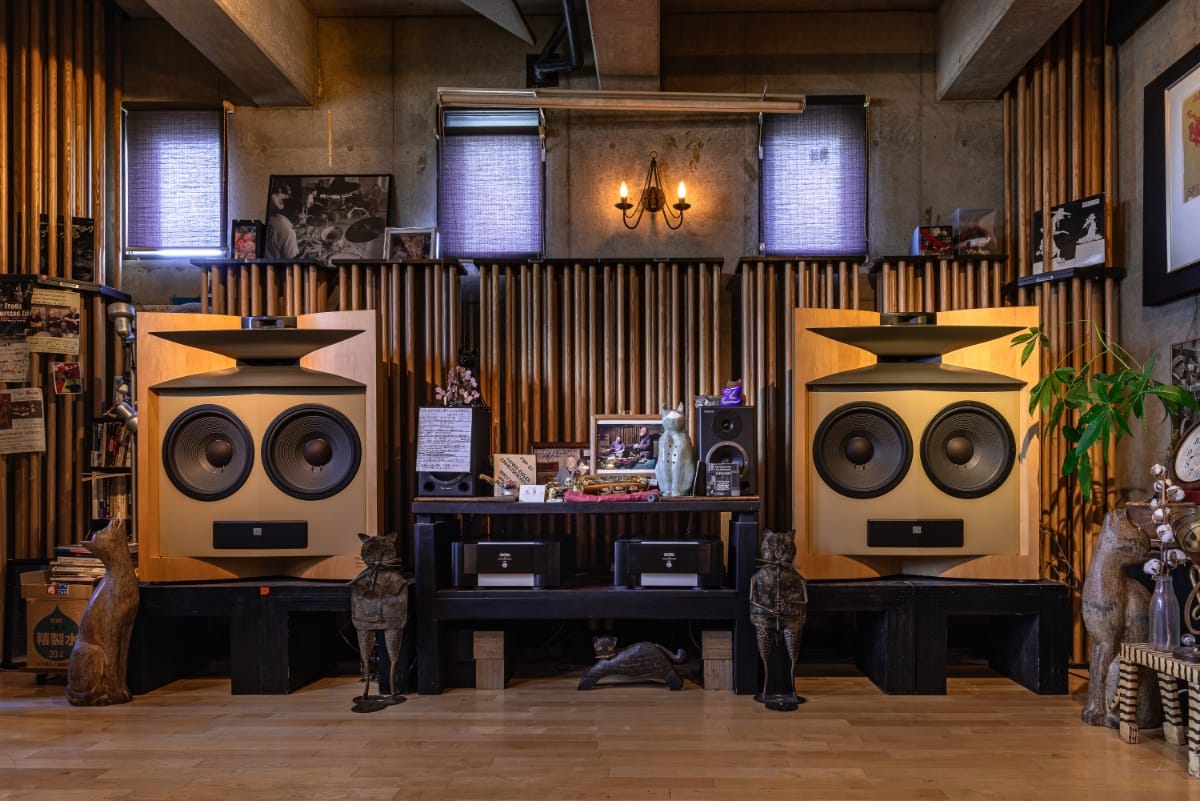
Andrew: Your book chronicles some businesses that have since closed. Which ones do you miss the most?
Katsumasa: I have fond memories of all the cafés that have closed down, but Tokyo's Full House stands out; its interior was fascinating—a perfect embodiment of the classic jazz kissa. The owner's passion for jazz was also remarkable. Although it closed in 2016, had it remained open, it would undoubtedly be popular today.
Andrew: What is in the future for the jazz kissa in Japan?
Katsumasa: Over the next few years, the proprietors who sustained the golden age of Japan's jazz kissa will pass away, and in all likelihood, most of their establishments will close down. Consequently, a drastic decline in the number of jazz kissa seems inevitable.
At the same time, an increasing number of people—both from my own generation and from the younger 30-to-40 age bracket—are expressing a desire to run a jazz kissa themselves. The aspiration to one day own a café where music plays appears to be a fundamental human desire that transcends both geography and age; as long as this desire persists, the jazz kissa will not vanish.
Ultimately, much like jazz itself, the jazz kissa will continue to survive by constantly evolving its style to suit the times.
Check out more like this:
 Lawrence Peryer
 Bill Kopp


Comments