


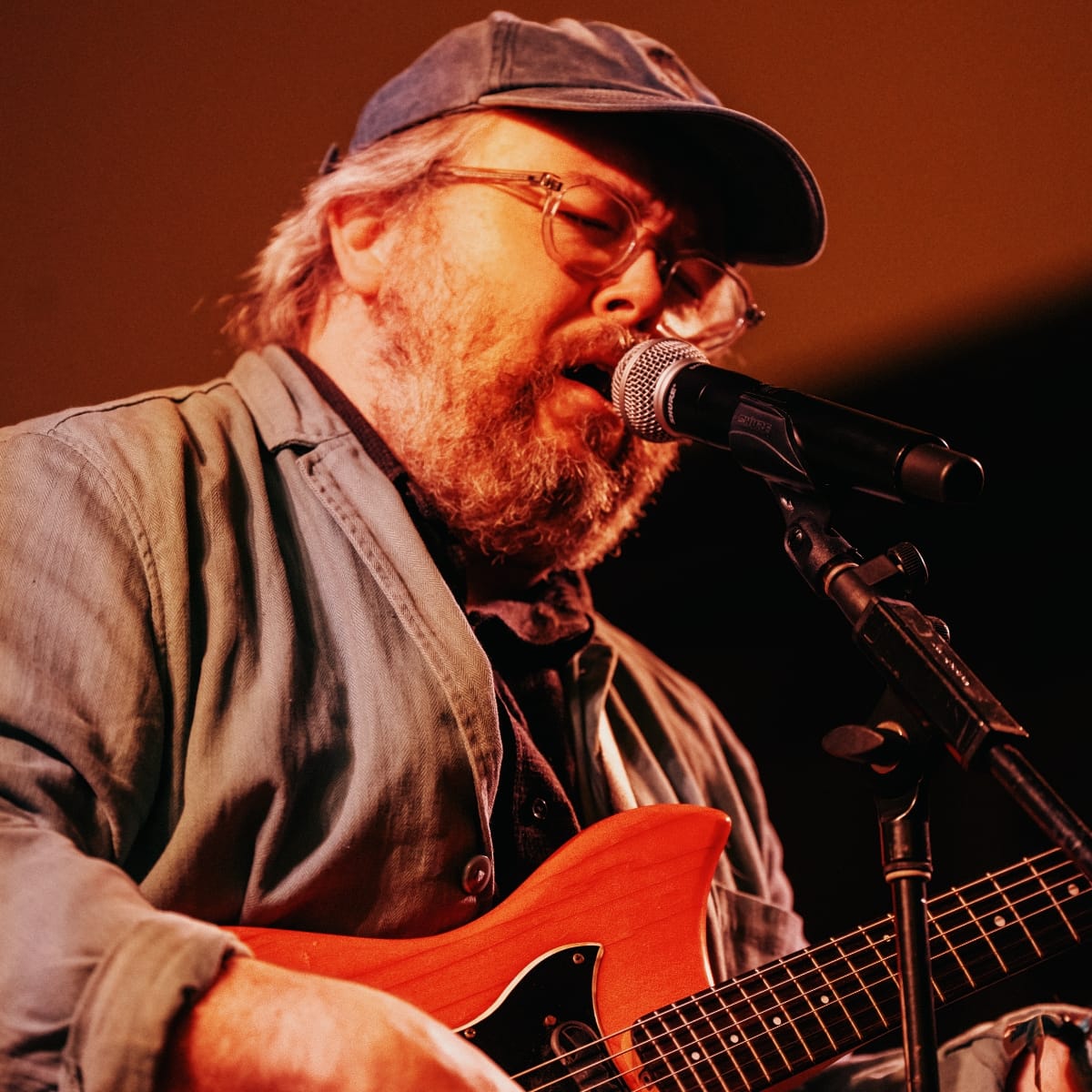
I saw Richard Dawson of Hen Ogledd perform a set at Big Ears Festival, alone with an electric guitar and a microphone. I think what shocked me the most on my first time experiencing Dawson's music was the dynamic composition he uses in his guitar work—he moved from melodic guitar riffs to eclectic fingerpicking, to folk-style strumming, to heavier rock or punk riffs, to full major chords. When he played "Bolt" from his 2025 album, End of the Middle, it was one of the clearest contrasts; the music was like an emotive roller coaster. The other thing about Dawson was the essence of his sincerity, an unmitigated realness that allows him to explore a gamut of emotions from song to song through guitar and voice. He tells stories, oscillates in octaves, produces urgent rising tension, and subverts any kind of expectation.
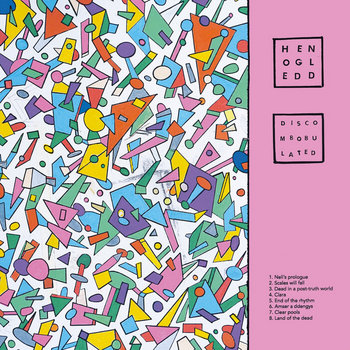
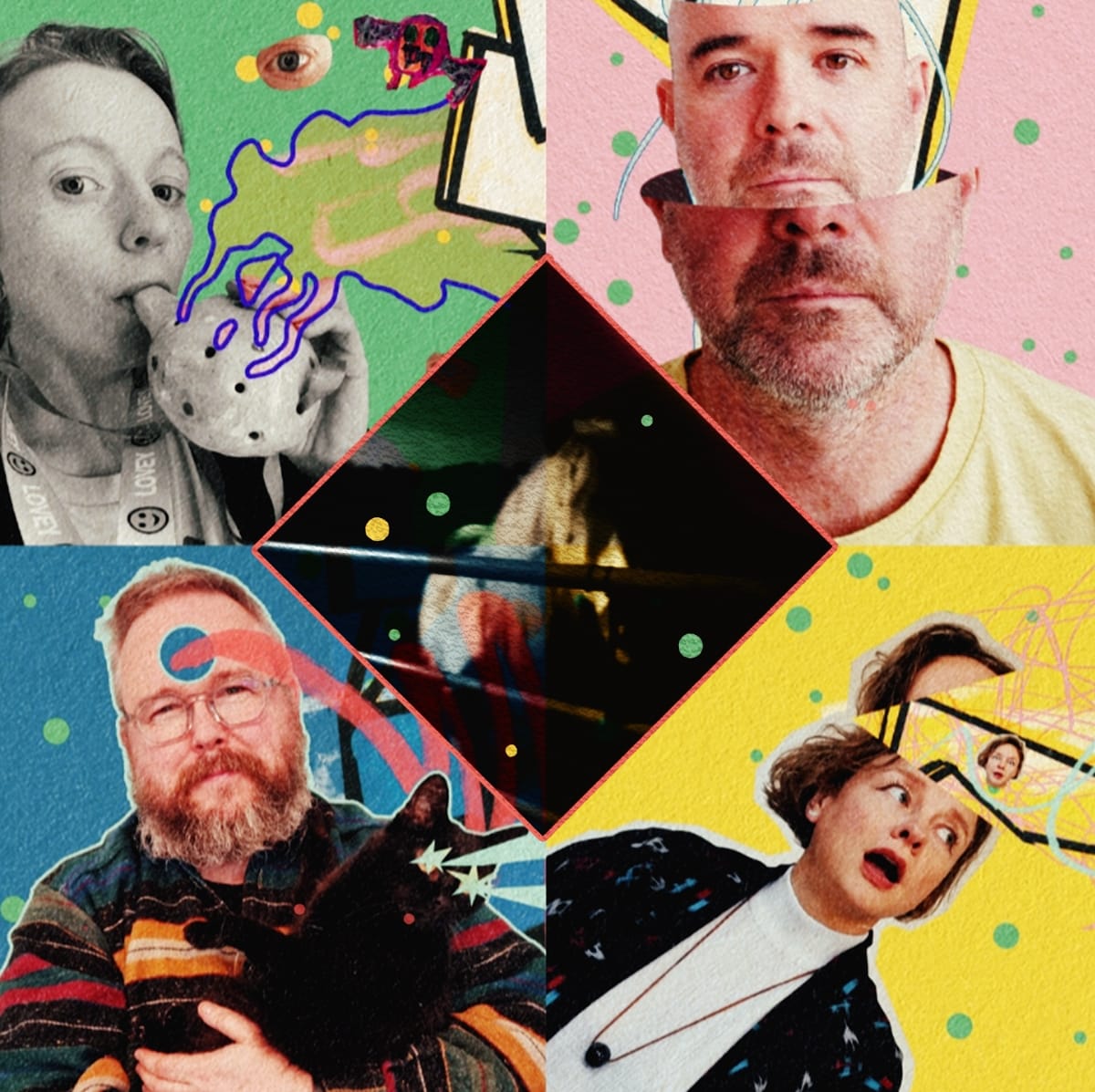
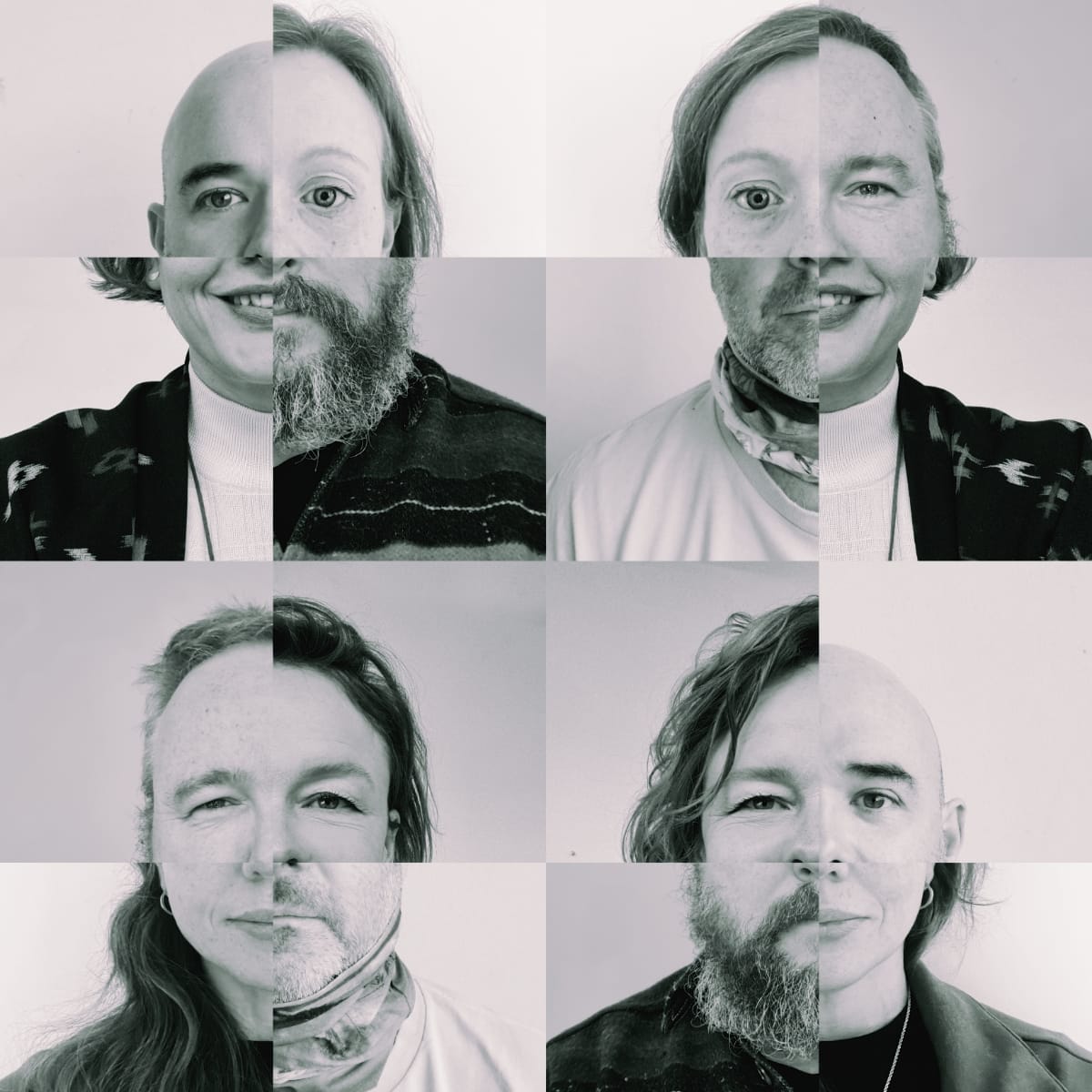
The collaborative project of Hen Ogledd is a different sound, but there is a thread. Just like Dawson, Dawn Bothwell, Sally Pilkington, and Rhodri Davies all have their own music and art projects that equally explore and express their identities. Rhodri Davies is a harpist, composer, and multidisciplinary artist. Bothwell is a musician, curator, and community programmer. Pilkington is a musician and a performer. There is a collective subversion corralled by an impetus to speak plain truths—to sing in the Welsh language that lives in a state of vulnerability, a potent decision to let the Scottish accent fly thick and full with the recognition that it means something to let these things exist. The amalgamation doesn't end there, as their latest record, DISCOMBOBULATED. includes voices of friends' and band members' children, spoken-word contributions, drumming by Will Guthrie, saxophone by Faye MacCalman, trumpet by Nate Wooley, and flute by Davies' daughter Elliw. This incites a form of play as well as an open-ended coordination to bring voices in and create this thing of beauty, of friends and family.
In "Scales Will Fall," the second track on the album, I would be remiss if I didn't mention Bothwell's voice while she raps—this anger roiling underneath the surface and restrained. One stanza is "These bogus leaders and parties stall, choose election campaigns and forfeit withdrawal. What is this bogus leadership, towin' strength and justice? It stems from feudal lordship." And each stanza is mirrored by a chorus of voices, saying things such as "People standing side by side," and "but the day will soon arrive." These textures, I think, exemplify Hen Ogledd's map of contrasting tensions, not just in the lyrics, but in the sound. In a larger sense, much of the second half of the song is instrumental, but there is an absolutely stunning, drawn-out trumpet solo by Nate Wooley, filled with so much joy, playfulness, and purpose. And I think this is emblematic of Hen Ogledd in the way they hold together a multitude of emotions in their songs.
Beyond songs like "Scales Will Fall," the modes of rhythm can shift greatly, like in "End of the Rhythm," which is up-tempo and drives potently, or "Amser a ddengys," which is an interlude-type song and feels similar to a church choir. DISCOMBOBULATED is filled with a complexity that can only be truly described by listening to it, letting the collage give space to each and every voice and self-actualized agency in its sound.
We talked a little bit about how they got to the places in their third album, what ideas they play with, and how they work as a community. This interview has been edited for length and clarity.
Jonah Evans: How are you guys doing today, just in general?
Dawn Bothwell: Good.
Sally Pilkington: Quite good.
Rhodri Davies: The sun is out, which is rare in Wales.
Richard Dawson: And just to be different, I feel quite worn out. But it's fine. It's not an unpleasant feeling.
Jonah: I actually saw you perform at Big Ears Festival, Rich.
Rich: The trip to America is one of the reasons I'm still quite worn. I think it took a lot out of me.
Jonah: I bet. This might be a cheesy question—in what way or ways have you guys felt discombobulated in the last year or two?
Sally: Actually, getting the album out was very discombobulating and discombobulated. It took a really long time from when we actually started making it to when we actually got it out. So I think I found that discombobulating, just the time span, which was about two years. And I also find it especially weird because we're not playing gigs, so the music is just out there in the world. I guess we get a bit of trickle-back from people, but it's a strange feeling to spend so long making something and then not get that kind of direct feedback from playing to an audience. That's also a bit discombobulating.
Rhodri: I feel that now the album is out, things have stopped being a little bit discombobulating in relation to it, because it felt as if it was going to go on and on forever. And now it's out. It's finished. So it's one loose thread that's been getting out of control in my head. And now it's been solved. But everything else in the world is completely discombobulated as usual.
Rich: Yeah. I feel like I've entered a phase. Maybe it comes in seasons of being really caught up with everything that's happening in the world, especially America's and Israel's foreign policies and how they entwine with the UK's. But engaging with it, feeling infuriated and horrified, and then having these strange periods of numbness to it—that is quite disturbing in and of itself. But I guess it's also natural and necessary in some way just to maintain. With this last album that Hen Ogledd made, and with the work I'm doing at the moment, there's some kind of pull between wanting to respond and be of use, but also to keep the work mine, keep it something of its own spirit as well. So lots of questions, but I guess that's a good thing, asking what direction you want to go and what your art is for.
Dawn: I think the time we live in is quite confusing. I was told an interesting fact when I went to Scarborough on holiday. Do you know the song "Scarborough Fair"?
Jonah: Yeah, I do!
Dawn: There are lots of dinosaur fossils there. And I met some geologists, and they were talking about how, along the coastline in Scarborough, you're in the Jurassic period, but if you go up to Northumberland, you actually travel back in time because of coastal erosion.
I found that quite discombobulating. I always knew that things were different in the northeast of England, but the further northeast you go, the further you go back in time, and you just go into a sort of obliterated existence. The point is, nothing really matters; all of this political stuff is just bullshit. We're all just going to succumb to coastal erosion.
Jonah: Spiritually and physically?
Dawn: Yeah.
Jonah: Speaking to that push and pull of what's happening in society—is there a conscious effort not to be entirely reactionary to what's going on in the world, but still speak about it when you're creating the music? Then, allowing them to still have space in the music that you create?
Dawn: I guess it's hard not to react. There's no single answer to anything, so I guess you have to be careful. Opinions can become outdated pretty quickly, so don't pretend you have the answers. But obviously, there are some things that need you to speak out about. So it's a guess, just trying to find the balance in that, isn't it? It helps if you have other people to hold you accountable for your opinion, and that's the pleasure of being in a band.
Rich: I think one nice thing about this album, in relation to your question, is that in some way it doesn't make any sense. There are four different voices saying different things, plus lots of other voices in the mix, so these ideas sometimes pull in different directions. More important than the actual statements on the album is the fact that we got together and made it, even though we're all from different disciplines. We were all going in different directions, but we had this little area of crossover. I suppose that's true of any band to some extent, but maybe it's really extreme with this one. And so the magic bit was the point where we actually found the common ground, especially in the last few years, and that feels like the action itself is the important thing.
Jonah: It's interesting that you say there are four different voices. I'm reminded of when Rhodri sings in Welsh and has his own thread there, right? And then how everyone sings differently, maybe also in the things that they talk about. What do you think those extreme differences stem from? Is it from your personal history? Is it where you're from?
Sally: Yeah, because politically, I'd say we're all roughly on the same page. There are lots of similarities.
Rich: Yeah, I guess a really interesting group would be one with some far-left and far-right extremists in, but I can't see it ever working.
Sally: (laughter) That would be a great project.
Rich: Yeah. I don't want to hear it.
Jonah: Did you guys come from very different training or experiences with how you came to make music?
Rich: I would say so. I'm coming from this kind of song place and structure. Dawn's coming from more of—correct me if this is wrong, Dawn—the art world, curation, and this holistic view of things. And Rhodri . . .
Sally: Performance art, maybe.
Rich: Yeah. Rhodri's coming from being quite deeply immersed in the London improv scene as well as a kind of training in classical music. And then I don't know how you would describe what Sally does. It's very . . . I don't know what the word is.
Sally: I did have some piano lessons when I was little. (laughter) They were terrible.
Rich: When we talked about the album, we all wanted different things out of it. I think we all feel quite satisfied with what we have, and it isn't what any of us wanted.
Jonah: Do you talk about your influences and how you want to incorporate them into the music, or is it more passive, where those things just come into the music?
Rhodri: I don't listen to something and try and go, "Oh, I want to do that," replicate it. So if it's an influence, it's not a direct influence. But my main influences are these three people in the band because what they bring to the table is mind-boggling.
Sally: I think there is a certain level of trust, isn't there? In just coming together and trusting in the chaos that emerges, and that something good will come out the other side. I guess we talked about themes that we wanted to explore. And I don't know if this really worked out in the end, but when we first started thinking about the album together, we had the idea that it might be a bit freer, more meandering, more improvised, and less song-based than the previous ones. But we came around to it actually being songs again. But yeah, just trusting in the band chaos.
Jonah: This reminds me of the Big Ears Festival. As I was hearing music I hadn't heard before, I was like, "What's happening?" And it feels like there is a form of acceptance, and when you hear something so unfamiliar, interesting, and unique, there's a need to just go with it and trust it, right? Does that sentiment pop up when you're making music?
Rich: Maybe. I always tend to think of things as anything but music, so I think of it as a painting or a movie scene. We'll have this big splodge here, or the camera will zoom in here, or it's a scarf, and it will be this long. I think of it in any terms other than musical, and I think that's a good way forward for me. And then it avoids any question about whether it's bonkers.
I think we have more fixed ideas about what constitutes 'mad' in music. It's quite strange, maybe because music's so functional and it's in everybody's lives in such an everyday way. I think that when mad things happen in other art forms, it's "Oh! That's inventive!" and we go with it. We call it anything but bonkers, but maybe in music it's like "Ugh, it's so weird." So nothing is weird. I'm going to contradict myself in a second, though, because there were definitely some moments when it felt like we needed to stick our finger in the cake and spoil it.
Rhodri: You're really mixing your metaphors into the cinematic scarf cake.
Rich: Many metaphors there. Clumsy, but that's fine.
Jonah: It sounds like you're treating your music like a painting, and you're not trying to dictate the layers too much.
Rich: I think it works because we probably threw everything at the canvas during the three-day studio splurge, and then there was a lot of editing after the fact, but not much sound manipulation or anything. So the metaphor works.
Sally: Quite collage-y, too.
Jonah: Are there any painters or collage artists you guys are drawn to or think about a lot in the art world?
Dawn: I like Hannah Höch.
Rich: I guess I always think about Frank Auerbach a bit with this record, and Hen Ogledd in general. There are layers and layers of too much. Sally and I are both fans of Agnes Martin.
Sally: Oh, yeah. For some reason, I can never remember Agnes. Yeah, Agnes Martin, that was who I was trying to remember.
Rich: Rhodri and I are big fans of Éliane Radigue, and I think there's some crossover with Agnes Martin. We did talk about Éliane Radigue as a musician when we were making the album, but the album is as far from her music as you can get. There was a saying of hers that Rhodri brought to the table: "Simplest is best."
Jonah: What is it about Éliane Radigue's work that connects with you?
Rhodri: As Rich says, Éliane's music is miles away from his sound world. It's hard to talk about the two things together in the same place. Maybe the only thing that connects it is that sentence that was a working method. She did these long-form pieces and would do them all in one take, which is the opposite of what we did.
Jonah: I can see simplicity is best in action.
Rhodri: It was a guiding principle: if we had any decisions to make, that kind of helped keep things from overcomplicating. Because actually, it's already overcomplicated. You don't need to add more layers.
Jonah: How do you construct lyrics, and what discussions surround that?
Sally: Within this album, we had a few tricky songs where, maybe due to miscommunication or just all of us having lots of ideas, a few of us had written lyrics for the songs, but not necessarily with the original intention of them all being put together. Like "End of the Rhythm," the lyrics there alternate between me and Dawn, and that wasn't really a plan or an intention when we were writing them. So there are ways our lyrics kind of butt up against each other, but not intentionally. It's now part of the collage.
Dawn: When we started, we had this instrumental backing track from almost the first recording that we did in the studio. And then a really long period of going away with that and thinking about lyrics or overlays on top of it. I was looking at the initial recordings as a soundscape or a landscape. I could react to the instrumentation and picture in my head what it was dealing with. So there was something about the heart of the song, like the feeling of it really shaping it.
For instance, with "Scales Will Fall," we had the melody and chorus to start with, and then the lyrics from that. And then the rise and fall of the song—it feels like the middle part—it builds and builds up to something that feels like things are coming to a meeting point, a battle, or something. We talked a lot about it being quite a ferocious challenge: "What does it mean to have a confrontation? What would you have a battle about? And who would have that battle?" But there was something nice for me in how this actual soundscape molded the content. It usually feels like it's the other way around. You have these words and an idea, and then you build a feeling or sentiment out of the music. But people work differently, don't they? Some people put words first, and some people put music first.
Jonah: That's an interesting contrast to one of the songs Rhodri sings in "Amser a ddengys." It's Welsh for "Time Will Tell," right? What makes you want to sing in Welsh? Why not sing in English or in another language?
Rhodri: Yes, "Time Will Tell." Rich told me to sing in Welsh, and I do everything he says. (laughter)
Rich: Because of a historic English sort of supremacy over the Welsh, it's very controversial.
Rhodri: We Welsh have done everything the English have said since 1288 or whatever it was.
Jonah: So you told him to sing in Welsh? You were like, "Hey, you should sing in Welsh”?
Rich: I didn't tell him. I suggested that it would be great to have more Welsh on the album and that it felt important. Rhodri's singing is so lovely, and I think it has been a process over the last few years of finding more of your own singing voice. It's not what you're known for. But in terms of the lyrics, one thing we had talked about was their being more personal than the previous record and maybe a bit more naked or something like that. And I think the years leading up to making this album, we had all been through quite difficult times, some kind of personal turmoil each member had in different ways. So, in particular, Rhodri's singing was linked with that. Can you say a bit more about that, Rhodri, or are you happy for me to?
Rhodri: You say it. I'm interested.
Rich: Just that I think Rhodri had a problem going over bridges because of some anxiety.
Rhodri: In a car, not just in general.
Rich: Not on foot—or on a donkey, for instance.
Rhodri: Donkeys are fine. (laughter)
Rich: Donkeys, no problem. But part of getting over the bridges in the car was singing really boldly. He sang at first in a humorous manner, akin to the clichéd idea of an old shepherd. Kind of very strident. But when we actually heard that, it was like, "That's really good, Rhodri." We thought that was great and beautiful singing. And so Rhodri did a lot of work on that, brought it to that track, and to some other moments as well. So it was born out of this very acute difficulty of driving over bridges.
Stay on top of The Tonearm.
Subscribe for exclusive interviews, cultural tip-offs, and community fun.
And your support keeps our site free of advertising and paywalls.
Jonah: Are there any other stories attached to the cadence, delivery, or your approach to singing on this record?
Rich: My voice just gets higher and higher the further I go through life, and the more terrified I become of everything. So yeah. Singing way up here now.
Dawn: For me, there's some Scots language throughout the album. I guess it's important that we all sing in our own accents and try to stay connected to that sort of tonality. I feel like it's really important to explore that diversity, quite honestly, from whatever background you have. There's just so much within it that I feel like it's important to speak from your own voice.
Jonah: Can you tell me more about the Scots language, its relationship to colloquial or a dialect?
Dawn: In Scotland, it's more broadly known that you have Gaelic and English, and Gaelic is more specific to the northwest coast of Scotland. But in the lower lands of Scotland on the borders, there's a history of Border Scots, with its own dialect and everything. So I was interested in that—even within migration patterns, there're different approaches to speaking Scots. There's also Lallans Scots, a form of Scots spoken by much of the Scottish diaspora who went to the States. And I guess there's an idea therein that communities kind of travel in themselves and that nothing's really fixed. It's complicated because, in some ways, it's like you could portray it as a sort of nationalism, a kind of purist idea of what your language and culture are. That is one of the complexities we're all working within.
Jonah: I think about this idea of nationalism a lot. There's this idea of preserving culture, but nationalism can sometimes come into play.
Dawn: Yeah, definitely. And there's quite a complicated picture in the UK itself. If we go back to what Rich was speaking of, there was an eradication of Welsh, Scots, and Gaelic. And I guess part of it is trying to appreciate the diversity and complexity we have, but not hold them up on a pedestal as some sort of ideal that can't be changed.
Jonah: Was this album—the musical side of it—improvised in a way?
Sally: Yeah, the first three days of recording involved a lot of improvisation. Some of it was a bit sketched out and planned, but there was a lot of improvisation in there.
Dawn: Sometimes you have constraints, and you can riff off those constraints. Aiming for a record, pinning it down into that format, you obviously have limitations. Like, how long is a record? How much material can you put on it? That's the first one. It feels like an interesting space for me, thinking about what the possibilities are beyond that in a live situation when you don't have those constraints anymore.
Rich: I quite like the push and pull between the improvisation and the superstructure of songs. I like the tension of building something from improvisation to something that's quite rigidly structured. But I think it works the other way as well. Within a song, even if you stick to the plan with every note, you're always improvising, even though you might have a lot of the information set, it should always be improvised. So I think it's nice to make an album that makes those contradictions explicit.
Jonah: Because we are all contradictions. It's quite simple. It's complicated.
Rich: Yeah. You could write that one in big letters.
Jonah: Any improvisational advice for people who want to create through improvisation?
Rhodri: Play with other people. Choose who you play with well.
Rich: Is that a dig? (laughter)
Rhodri: No. No, it's just, it's proof that I've chosen well.
Dawn: I'd say you have to be able to give the person a really hard, cold, blank stare for a good ten minutes without breaking into a smile. That's when you know you've got a serious improviser in your court.
Check out more like this:
 Sam Bradley
 Jonah Evans


Comments