


The general cultural understanding of classical music is that it is a musical museum. Like the Louvre and the Metropolitan Museum of Art, classical music contains established works that are admired as part of the past of Western culture and that are also frozen time. They are relics of cultural ideas about worthwhile subject matter, aesthetic language and values, and styles that were à la mode or even avant-garde in their day, but that, in the 21st century, are clearly archaic, if not awkward and even corny. Classical music is to be admired as a relic of the past, the way we admire geniuses of the past like Michelangelo and Shakespeare, and have a vague idea that they are, in part, responsible for what we experience in the present, without having to know much about the details of their achievements. We don't need to hear a Beethoven symphony because we know Beethoven was a major dude, we can see his bust in Central Park, hear Linus play "Für Elise" on the Charlie Brown cartoons. Besides, what does he have to do with our society, our politics, the way we move and dance?
This is, of course, mostly assumptions and bias, and little in the way of truth. Yes, a lot of classical music is literally old, but it's nothing like pictures hanging in a museum. All music is alive in the present moment when it's being played, and even when what's being played is a recording on a stereo. Music is vibrations in the air that touch the body and the ear, so when that orchestra is playing a Beethoven symphony in a concert hall, what the instruments are doing is touching your body. And what's spooky and also tremendously cool and powerful, is that Beethoven is also touching you—his ideas, how he heard them, are alive and speaking to you. Beethoven is speaking to you.
Music is only dead when it's not being played, and Beethoven lives on in performance. That is true for any and all classical composers. The magic is in how their music has been preserved through notation; the central feature of the music is that it is written out, documented, sheets of paper sitting quietly until someone picks one up, pulls out their instrument, and starts to play. There is a common notational language that most composers have used, but it's not the only one, nor is it required (though it is quite useful), because a musical score is a set of instructions for musicians to perform. Those can be as Joyceian and detailed as one of Gustav Mahler's symphonies, or as prosaic in manner as one of the text scores from Karlheinz Stockhausen's Aus den sieben Tagen:
"play a tone for so long
until you hear its individual vibrations
hold the tone
and listen to the tones of the others
to all of them together, not to individual ones –
and slowly move your tone
until you arrive at complete harmony
and the whole sound turns to gold
to pure, gently shimmering fire"
– "Setz Die Segel Zur Sonne (Set Sail for the Sun)"
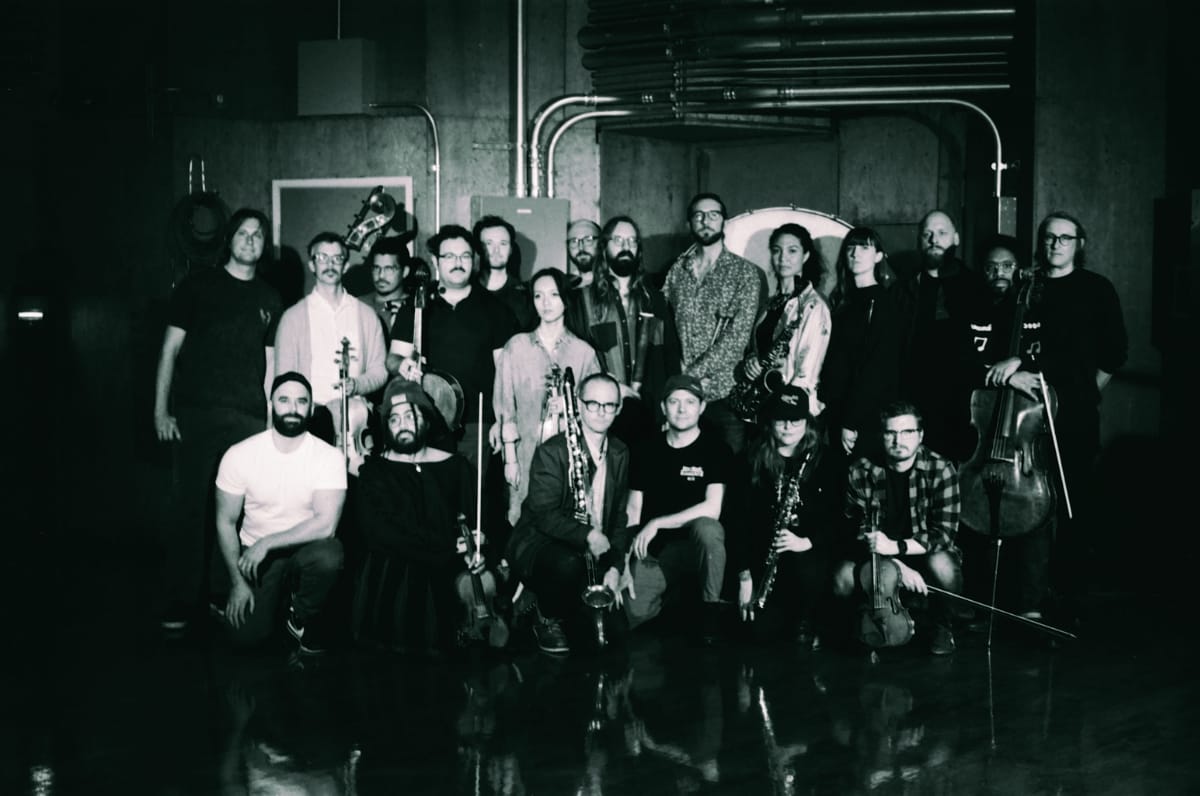
That, as much as note heads, stems, and rests on five ledger lines, is classical composing. And that idea is the first thing I asked conductor Chris Rountree about when talking with him recently about his new recording with the ensemble Wild Up, Julius Eastman Vol. 5: Gay Guerrilla. This is the final volume in Wild Up's series of recordings of music from Eastman, a deeply and uncannily talented musician who didn't survive the savage difficulties of his life, dying in a Buffalo hospital in 1990, 49 years old, the final result of the accumulated ravages of drug use, periods of homelessness (probably wrapped up with mental illness), and HIV/AIDS.
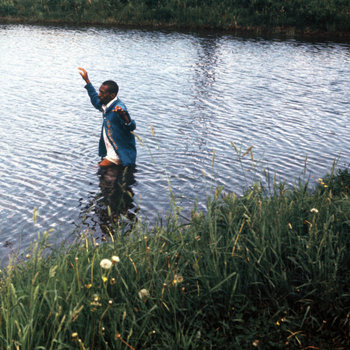
The Wild Up project has been reinforcing what a loss this was to classical and modern music, making his music alive for new listeners. But as Rountree himself asks back, "Can we do Eastman's work without him?" The combination of the chaos of Eastman's life and his working methods has meant that bringing his scores back from the past has been a complex labor of archival research. And, as Rountree adds, "Does it come from standard tradition, or is it some hybrid of classical, experimental, minimal, and a kind of partly improvised, partly spiritual practice?
"Without a doubt, there's a lot of research that goes into it, and with a work like this, we build twice as much rehearsal time, so that we can triangulate meaning. And it's a dialogue; it might be a negotiation; we all are trying to, like, put our weight on the scales in various moments to triangulate what our vision is." Engaging with Eastman's music means not just dialogue within ensembles, but trying to talk to the composer himself, across the gaps of history and the afterlife. Composer Mary Jane Leach, a friend of Eastman's, is substantially responsible for getting this underway, discovering Eastman's scores and posting them online, and then helping to produce Unjust Malaise, an essential collection of new performances of some of Eastman's finest music that New World Records released in 2005.
Getting those scores in shape, understanding Eastman's instructions, has meant editing together notation and notes that might be nothing more than a note or two and a couple of words, the barest instruction for one moment without any context of a larger form or structure, even transcribing old, private recordings of early performances. This makes Eastman's compositional catalog a hybrid of written and oral traditions. That's unusual—and also arguably comes from necessity rather than intention—in our era, but not so much in the long history of music, nor in non-classical, even global traditions (Charles Mingus wrote out his music for himself, but taught it to his musicians by playing it on the piano or singing it to them, and having them play it back, and Steve Reich points out that the valuable drumming lessons he learned in Ghana was that the teacher plays to the student until the student can play back correctly, then they move on to the next bit of music).
The unjust malaise that used to surround Eastman's work and that Wild Up has had a major hand in dispelling is that he was somehow not a serious composer, or like a previous avant-garde/outsider figure, Giacinto Scelsi, the musicians were more responsible for the music than the composer himself, that his instructions weren't of good enough quality to be considered compositions and to endure. There were always social issues around this, racism and homophobia undercutting the Black and gay Eastman. His self-possession about who he was, and his attitude about his place in society, come out in many of his titles, like Gay Guerrilla, Joy Boy, the rather notorious Evil N#gg#r and Crazy N#gg#r, and the explosive, anthemic Stay On It. And his spirit, a combination of emotional power, physical action, and determination, erupts from his music. Listening to Eastman means listening to Eastman.
As a composer, Eastman was a minimalist. He was a performer as well, with a gorgeous bass-baritone voice and charismatic stage presence. Along with Petr Kotik and Jan Williams he was a founder of the S.E.M. Ensemble at the University of Buffalo, where they were graduate scholars, was in Meredith Monk's ensemble for a time (he sings on her classic Dolmen Music album), and was famous both for performing and recording Peter Maxwell Davies' Eight Songs for a Mad King and for a controversial performance of John Cage's Song Books that infuriated Cage and Morton Feldman. Minimalism for Eastman meant repetition and what he called an "organic style." Eastman built up layers of musical material and extended them through time, always adding but never taking away. His music grows through time, and the energy it produces comes out of the score and through the musicians in every performance.
The new Wild Up recording captures this with a slow-burn feeling that insinuates itself into the ear, from near silence, into resonant sonic and emotional power. Eastman's style is a close cousin to Terry Riley's for his In C, and Wild Up's playing and instrumentation (Eastman often wrote for open instrumentation or piano ensemble, and Gay Guerrilla was originally for four pianos), and likely the musicians' own experiences playing other music, produces specific moments that refer to John Adams, like a hint of the trombone roars in Harmonielehre and the shimmering piano-against-instruments sounds of Grand Pianola Music.
Stay on top of The Tonearm.
Subscribe for exclusive interviews, cultural tip-offs, and community fun.
And your support keeps our site free of advertising and paywalls.
"We did three takes in the studio, and what you're hearing is the second take, but it's the entire take, all the way through." That adds to the grip of the album and sets up the climactic stretch, music that Rountree points out is part of Eastman's strong spiritual drive in music in the early 1980s, when he was still in a relatively stable environment, before he was evicted from his apartment, his scores impounded by the New York City Sheriff, his bed a bench in Tompkins Square Park. The fifth section of the piece, "Dies Irae," with hints of incantatory liturgy, segues into "A Mighty Fortress Is Our God," a cascading fanfare for brass in the Wild Up performance. Eastman's friend, composer, musicologist, and critic Kyle Gann, calls this a "gay manifesto," and perhaps it is. But mainly, this is Eastman announcing his presence, under God, as an artist who is Black and gay, but is mainly Julius goddamn Eastman, listen to my voice . . .
This exalted moment subsides into, as the section says, a C-sharp minor seventh chord. There's an ebb, but not a dying away—the music sounds like Eastman is collecting himself and moving into the future with assured determination. Almost forty years after his death, at what is hopefully the start of a long afterlife for the artist, Gay Guerrilla is tremendously stirring because it feels like it leaves a permanent mark; the life of the man is in the sound, and the sound is so wonderful that you want to hear it again, you want to feel that life again.

With the work and discussion that goes into organizing performances like this, and the varied instrumentation, Rountree points out that, "every time we do it, it's a completely different piece." That's also classical tradition, perhaps more structurally radical than Mozart's chamber music, but every time a score is brought to life, musicians aspire to say something new about it. The idea is that a good composition will always be recognizable, even if it sounds different each time it's played. Eastman will always be there.
And Eastman belongs to now, more than ever. "The shock and awe of the title, honestly, the activism, the challenge of the marquee, and not just Gay Guerrilla, but the N-word pieces," that social revolutionary, even confrontational, spirit, drew Rountree and Wild Up to the whole project. "Then you listen to the word, and it feels like a spiritual ritual, and also, sometimes it feels like Music for 18 Musicians, sometimes it feels like Glassworks. It feels like Alice Coltrane. I was thinking recently about how Pharaoh Sanders' Wisdom Through Music is from the same year as Feminine." To Rountree, Eastman feels a part of a dialogue about spirituality and one's place in society, especially from a marginalized status, that was taking place through music and albums in the early- and mid-1970s.
"And it's such emotional music," he adds. "It's so moving, and it's the combination of those things, it's almost like it's head and heart, or the spiritual psyche of our society, and this emotional resonance," in Eastman's music. "I think we started being interested in the pieces for both those reasons, and that they overlap, and then as we started to work on them, they did this other thing, which is that when you work on these pieces, they create a horizontality of power." That brings Eastman back around to the classical tradition, the power available in writing out instructions that develop ideas through time, that use the accumulation of memories in the listener to set up balances and imbalances in harmony and rhythm that resolve into satisfying conclusions. Or, in more modern methods, build a foundation and then grow into something glorious and mighty, like an oak or a fortress. The possibility that a notated composition is a kind of manifesto.
"There's this horizontality of power that happens," Rountree explains, "classical notation, I think, has a verticality of power issue . . . Euro-adjacency and white supremacy and all the histories of class warfare, things about luxury and wealth, and all those symbols are such a problem in classical music. Of course, everybody in Wild Up grew up in conservatory; we all come from that thing, which is this verticality. And when you start to question it, a piece like any of Eastman's works, they require that you question the symbols," not so much notation, as, Rountree says, "the kind of epistemological symbols. Just as much as you have to question the quarter notes and the half notes, and sometimes you actually don't know what the value of a note is in Eastman . . . we don't know the answer, so there's a lot of questioning and dialogue, and in the room . . . power spreads out, and at different moments someone in the group makes a choice that ripples through everyone else, and then we all, when we pause to do feedback, which is the way we rehearse; what happened, what did we like?"
Eastman gets them talking. His presence comes through the scores, into the musicians. It is, to paraphrase the title of one of his greatest works—that Wild Up recorded for their Volume 4—the holy presence of Julius Eastman. His scores scattered to the wind, Eastman scattered to the streets, essentially dying there, but still culturally alive, because he wrote things down, and sang them, and some people listened. The words and sounds are there, if you know where to look, and like they say, the words of the prophets are written on the subway walls.
Check out more like this:
 Lawrence Peryer
 George Grella


Comments