


In a world where we are increasingly witnessing a decline not only in attention but also in our mindfulness toward one another, our traditions, and our languages, it is refreshing to meet someone like Jamie Livingstone—the leader of the band Wild Gods. He is not only creating The Glorious Abysmal, an album that embraces the gradually disappearing Gàidhlig language, but also working with organizations such as Vox Liminis, which supports people after their release from prison, and is developing the Ùrlar Chamber project—a resonant space where people who have experienced trauma can grieve together and heal.
Livingstone grew up in Taynuilt, a village below Ben Cruachan in Argyll, and now lives in Glasgow. He learned Ableton at Vox Liminis and stayed on to teach it to others there, and the earliest Wild Gods material dates from those years, in song drafts written with Jill O’Sullivan and demos worked up with Louis Abbott of Admiral Fallow. He has also co-written for the Scottish electronic producer Barry Can’t Swim, on Loner and on his Late Night Tales contribution.
Three others play on The Glorious Abysmal. Susannah Stark, who released Minor Gestures through Night School and Stroom last year, sings in both Gàidhlig and English. Niall MacDonald, who makes his own music as Blackboxx, plays bass and co-produced. Càit O’Neill plays fiddle and sings.
Wild Gods’ debut album, out on Wren Cathedral Records, is powerful and moving. It feels dark and elemental, yet bursts with moments of extraordinary beauty and poetic depth. Its seven tracks were recorded across one week at Dystopia Studios in Partick with Luigi Pasquini, and they hold Celtic folk, drone, electronics, and noise alongside archival Gàidhlig source material and the waulking songs of the Hebrides. It has been created by a community of friends and fans of their culture, committed to the act of “loving their neighbors.” This interview explores the ideas, experiences, and connections that shaped the record.
The transcript has been edited for length, flow, and clarity.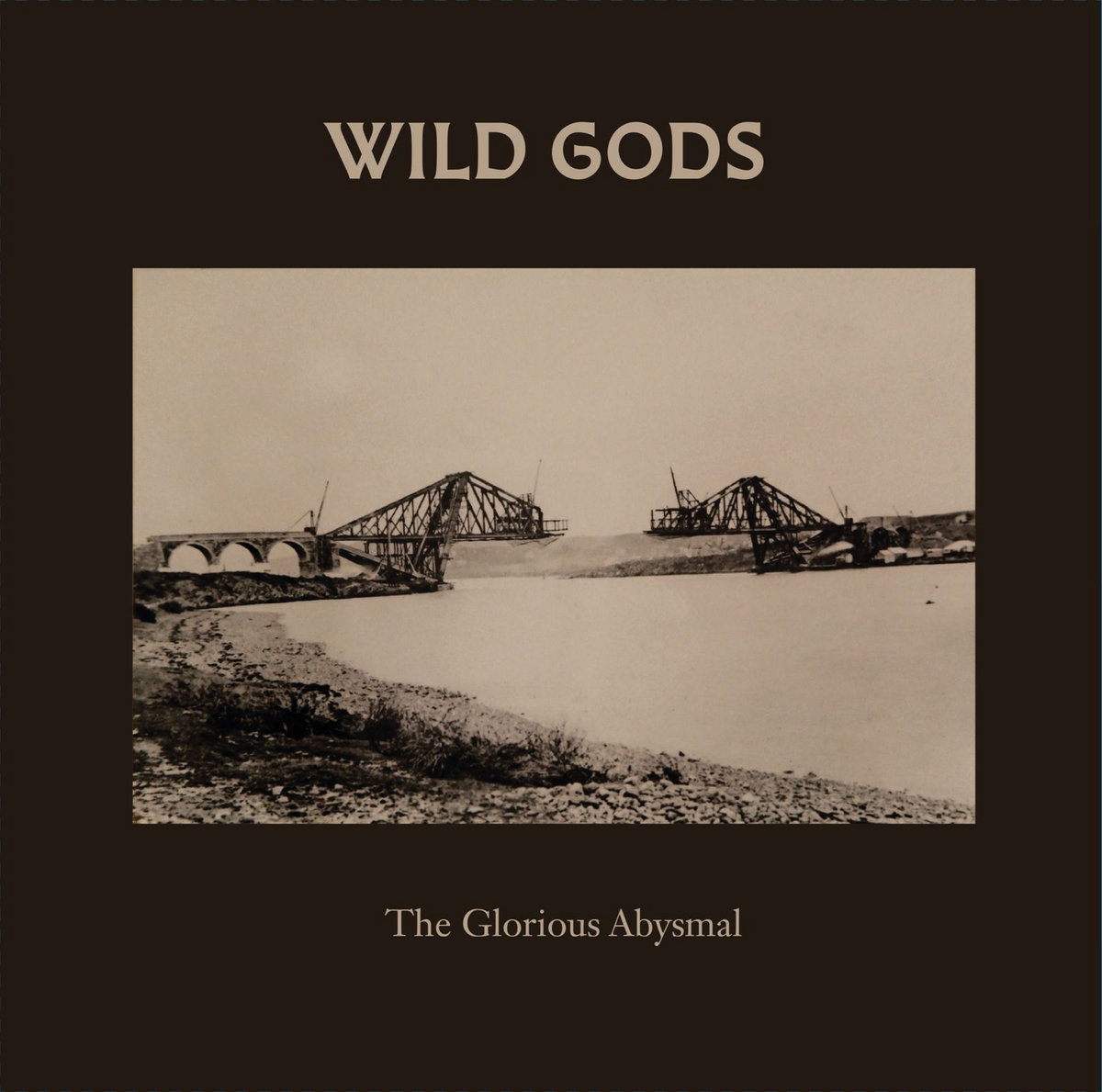
Arina Korenyu: Wild Gods pull together people from quite different places and musical backgrounds. How would you tell the story of how you all actually ended up in a room together?
Jamie Livingstone: There’s Niall, who plays bass, co-wrote the songs, and did a lot of the production. We mixed the record over a weekend before taking it to Luigi Pasquini, who recorded it at Dystopia Studios. I’ve known Niall since I was fifteen—we grew up together. He’s from Oban, I’m from Taynuilt—pretty close.
Susannah joined by chance. I went to an art exhibition on my own, and she was there helping her friends at the door. We got talking about the work, and she mentioned she made music. She was just about to release the album, and it was similar to the music that had been in my imagination.
Around that time I’d been getting into Lankum and learning more about Gàidhlig. My ex taught Gàidhlig and had told me loads about its history, so when I listened to Susannah’s music I just thought, “this is out of this world.” We ended up talking about Gàidhlig, traditional music, and this new wave of Gàidhlig artists, and that’s how she ended up singing on the record. She was also interested in the Carmina Gadelica, a collection of Gàidhlig prayers and incantations. She wrote original Gàidhlig songs for the release.
I’ve known Càit, who plays fiddle on the record, for about ten years. Some friends lived in a student co-op, and I’d head down to see them every now and then. Càit and her sister were always singing Irish songs. We were just pals.
In the end, it all came together through luck—serendipity, really. We were supposed to have four days of rehearsal before going into the studio, but Càit was busy, so we only had two. We made the whole album in five days. It was quite frightening.
Arina: What does a village like Taynuilt actually feel like day to day, versus the Glasgow scenes you also move through?
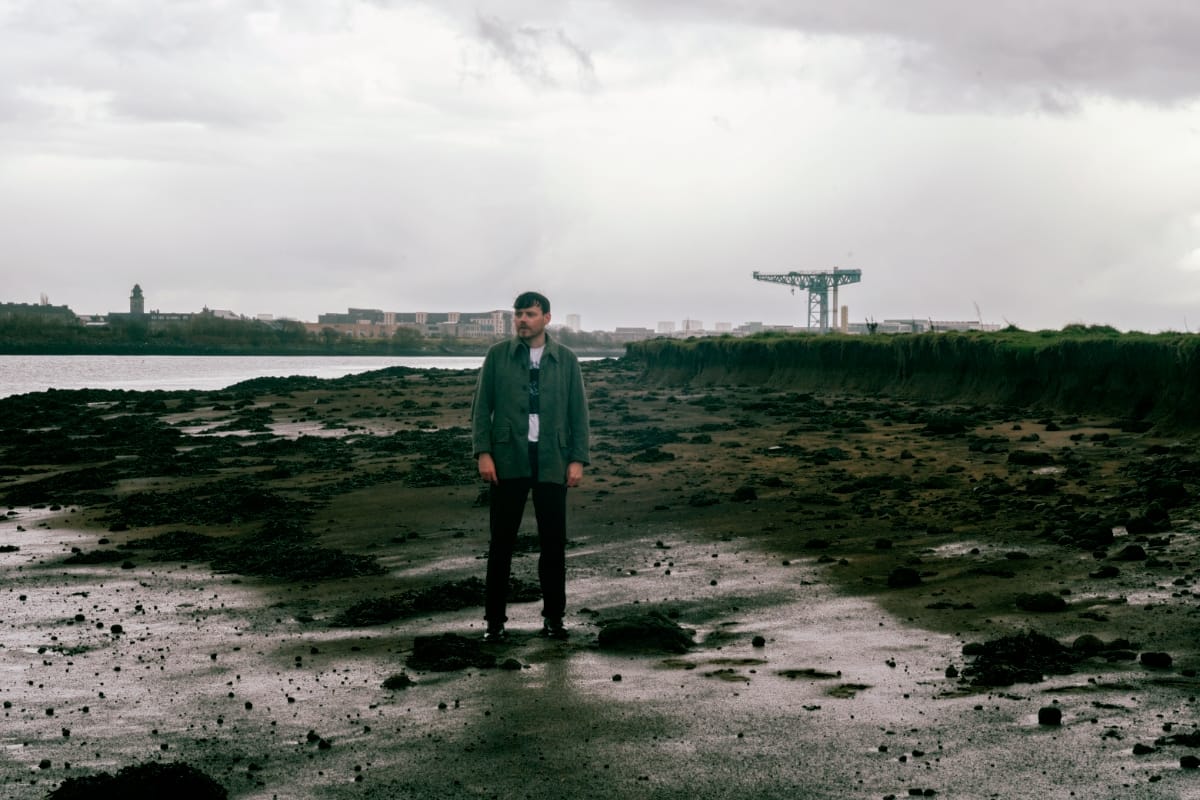
Jamie: I’m living in Glasgow now, but I’m from Taynuilt. It’s a stunning place, right below Cruachan, with lots of lochs and woodland. I miss it.
I think there’s a certain way people from Gàidhlig-speaking cultures speak, even if they don’t speak Gàidhlig themselves anymore. The history of the language shapes the way people speak English. There’s something about people further up the West Coast that’s different. I think part of making this record was trying to get at that culture. It’s nice having some anonymity in Glasgow, being able to wander about without people beeping their horn at you because they know your uncle or something.
I think all of that does something to the music. There’s a word, fonn, in Gàidhlig, which describes a similarity between the landscape and the song. They meet each other. I can see now how growing up beside lochs and Cruachan affects the landscape of the music. I was saying to Niall that I wanted the sonic stuff to be like a cèilidh, or a fucking mountain range. And he was always taking the piss out of me: “Are we in a cèilidh now? Is this cèilidh? Is this cèilidh the word?”
Arina: I also wanted to ask about Vox Liminis. How would you describe what they do, and why is that work necessary?
Jamie: Vox Liminis is a charity opposite the Barrowland in Glasgow. They work with people who are leaving prison. There are also social workers there who run things or sometimes come along simply as part of the community. What’s cool about Vox Liminis is that you wouldn’t necessarily know who’s who. That’s useful because when people are leaving prison, they don’t necessarily have anywhere to go where they can feel a sense of belonging, be treated with respect and anonymity, and just experience some basic human care. Having a place where people can meet is a beautiful thing.
I found that the songs people were writing when they’d just come out of jail were often stunning. Sometimes they were just great songs, but sometimes it was the subject matter—maybe they were talking to their daughter or son, or maybe they weren’t seeing their family at all, and they were communicating what was in their heart. It was humbling. I found the people leaving jail to be some of the most caring, funny, loving, gentle people I’ve met anywhere.
Arina: You’ve said that being there gave you hope. Was there a specific moment that shifted something in you?
Jamie: Yeah. I think having a place to go where people eat together is so important. Seeing somebody who has caused harm, feels a lot of regret about it, and is still able to share honestly, love and care for other people, and forgive themselves—that’s one of the most humbling things I’ve experienced. I feel lucky that I get to experience that quite regularly. If I’m working in prisons or with people recovering from addiction, people are sharing at a level that’s necessary for their survival. It’s a beautiful thing. That gives me hope. So much hope that there can be forgiveness—for anybody.
Arina: The album leans on Gàidhlig vocals and sampled archival material. For listeners unfamiliar with the waulking songs of the Hebrides, what are they, and why that tradition specifically?
Jamie: Waulking songs were sung by women working tweed. They’d work at a long table, and as they banged and worked the tweed—that’s why it’s called waulking—the table would make a beat. To keep themselves occupied, they’d sing while they worked.
There’s a great joy in these songs. They’re often about all sorts of things. As far as I understand, they might make up the lyrics on the spot, so they could be singing about who fancies whom or whatever was happening around them. Or they’d sing songs they’d already learned. Sometimes you hear real laughter at the end of the recordings.
What I loved was that these women singing together had this incredible power, but they also had this joy. They’d be pissing themselves laughing afterwards, and I wanted some of that feeling in the album.
I went to a group called Scottish Histories of Resistance, where Margaret Bennett, who works with traditional song and keeping those traditions alive, was talking about waulking songs. That inspired me to look for them in an archive called Tobar an Dualchais. It’s brilliant—like the Alan Lomax recordings, but for Scotland and Ireland. There’s this huge selection of beautiful songs.
What I love about those recordings is their rawness. You can really hear people’s hearts in them. My pal Madge, who did the keening, used to be a trauma therapist, and she told me that what was respected within the tradition and among the Travelers wasn’t necessarily someone with a traditionally beautiful voice. If they could feel it, that was the important thing at a cèilidh. The Travelers call it the conyach. A raw quality in the voice. Madge talks a lot about how it was distorted when an oral tradition became something that was notated.
Arina: All of that was passed on by ear. What did you want those traditions to do inside the album itself?
Jamie: You’ll see the word canntaireachd in one of the songs. That was traditionally a way of teaching the bagpipes. Canntaireachd vocalizes the fingerings. These sounds were taught through the breath, so pipers learned them orally, and there was a feeling behind them—a kind of heart resonance, as Madge calls it.
So I wanted the ancestral contributions of the Gaels—Scottish and Irish people who came before us—to echo through the album. Not as something belonging to the past, but as something that brings all music to life. As if music is this huge field that’s always there, and everything is connected.
I feel that more and more through the process of making this music. I feel like those people have been of service to us by singing these songs and passing them on. So there’s an element of gratitude in it, I suppose.
And because they sound fucking class.
Arina: You named madness and language as some of the album’s themes. Can you unpack how those threads show up in the album?
Jamie: Language—that’s on “Carlene’s Pin.” I was reading this Gabor Maté book called The Myth of Normal, and there was a story about a young Indigenous girl in primary school in Canada who was speaking her native language, and they put a pin through her tongue. It reminded me that Gàidhlig was punished too. When people spoke it, there were policies that required teaching in English, and if they spoke Gàidhlig in school, they were sometimes punished.
I was also watching a biology lecture by Robert Sapolsky, and he was talking about how places with greater linguistic diversity tend to have greater ecological diversity. Gàidhlig contains a lot of that ecological connection, which maybe isn’t so apparent in English.
I could see that in my friends, too. My friend Carlene had a hard childhood, and for me the song was about somebody losing their language, perhaps having a traumatic childhood, and then using that pain as a source of redemptive strength. Susannah wrote all the original Gàidhlig lyrics, but that was how I understood the song. The section where everything is smashing together with the samples was about coming out of that with strength, and having a reason to live well and with dignity. There’s so much beauty in the language—and in so many other languages in Scotland and Ireland, like Doric.
There’s also a personal sadness for me that Gàidhlig wasn’t passed down in my family. The last person to speak it was my great-granny. She could understand some. And apart from the violence and punishment people experienced for speaking Gàidhlig, there was also a sense that it wasn’t necessarily useful, even among Gàidhlig speakers themselves.
In “Carlene’s Pin,” the madness comes in with the line, “the last time I seen you, you were walking through fire.” That’s directly about one of my friends, Dana, who was going through the homelessness system with her young child. I was at a rave people had organized in the forest, and at about four in the morning I saw her walking barefoot through this fire. I knew how much pain she was going through, and it resonated with the witch trials in Scotland, where women who had some connection to medicinal plants were sometimes burnt at the stake. There was an echo of that in Dana walking through the fire because of what she was going through with her child.
There was another resonance for me through the writer James Kelman, who said, “If you lose your language you’ve lost your culture.” The pain of losing your language and the distance it can create from a sense of belonging might lead you to walk through fire. But really, I wanted the song to be about the redemptive qualities of madness.
Arina: That thread runs into the album’s title as well. Where did the phrase The Glorious Abysmal actually come from?
Jamie: “The Glorious Abysmal” was something that just got caught in my mind. I was at a music festival, trying to stay clean, and it was good to have somewhere to go where I could do that. I remember all these naked people dancing in a waterfall, and I felt nothing. I was completely detached. All I could hear in my mind was, slowly: “the glorious abysmal. The glorious abysmal.”
Then I went to visit Madge’s spiritual teacher. She was talking to me about how there were two types of spiritual movement that can happen in some people’s lives. One was the void, and one was the abyss. I didn’t know about that at the time. I think so much creativity in life has a non-linear quality.
I took ayahuasca around that time, and I was stuck in hell for what felt like eternity. Then I saw this huge sheet of all human souls—these eyes, each containing a human lifetime and everything that person had experienced emotionally. But before I could get there, there was this abyss of hell, self-centeredness, distraction, and fear. Once I stayed in it long enough and surrendered—surrendered to ego death and the abyss—it opened up into this sense of the interconnection of all human souls.
Arina: You’re also drawing on other abstract concepts—early mathematics, infinity, black hole event horizons. How do these ideas translate into arrangement or production choices, if they do?
Jamie: Niall and I made an art installation about Georg Cantor, the mathematician. You know that idea Cantor had about the line, where you split it, and it creates a new shape? We started thinking about how we could translate that musically, so we began splitting the bass and sub-bass parts according to that pattern.
Even though everything was fractured, it came together to create the whole sound. We were really interested in that because, to me, it had a similar feeling to what happens to people through trauma—they fracture and fracture, and then, through therapy or recovery, those fractures can become whole again. It was a happy accident that came from splitting Cantor’s sets.
The mathematics of infinity fascinated me too—this idea of transfinite infinities, that some infinities can actually be larger than others. That echoed some of the themes in the album: language, madness, sex, and particularly the redemptive side of pain, where a similar process of breaking apart and suturing back together happens.
Arina: You talked about the arrangement, but is there anything you can say about how those ideas affected the production itself?
Jamie: Some of the synth parts that Luigi and I made were about trying to capture the wail of a witch.
The ideas of black holes and event horizons came more from my lifelong fascination with space. It was something that connected me to my dad, because we both loved documentaries about the universe. I heard that the brightest thing in the universe is the light created when matter gets sucked into a black hole—especially when two black holes are interacting. I was fascinated by that idea: that something so dark and dangerous could produce something so bright.
I was also interested in the experience of fracture and breakdown at the edge of a black hole. Some physicists have suggested that, in those conditions, you might experience all moments of life simultaneously. I wanted to bring that sense of intensity and collapse into the songs.
Generally, Niall and I talked about three sonic worlds while working on the production: the cèilidh, the cathedral, and the kitchen.
The ‘kitchen’ sound was inspired by records like Talk Talk’s Spirit of Eden and Laughing Stock, as well as the use of archival samples. To me, those recordings feel almost like someone playing guitar alone at three in the morning. There’s a tenderness and intimacy that comes from that.
The ‘cèilidh’ world was about creating a sense of chaos and celebration—like old folk songs, a wild gathering, or going to see The Pogues.
The ‘cathedral’ sound was heavily influenced by film scores and electronic music—Hans Zimmer’s Dune soundtrack, as well as artists like GAS, Jon Hopkins, and Floating Points. I was drawn to sounds that feel galactic, like they stretch across light-years or are made from thawing frozen light.
Arina: How did the album lead directly into your architecture project, the Ùrlar Chamber?
Jamie: Ùrlar means ‘ground’ in piobaireachd—the traditional form of Scottish bagpipe music. It begins with a phrase, develops it, and then returns to the ground before building again.
We went to visit Madge. She’s an international trauma therapist who worked with sexually abused children. She created a doll that allowed children to express what had happened to them, so they could communicate the abuse and help bring perpetrators to justice.
I’d originally sampled her for the keening—with her permission—and asked if she’d be interested in doing gigs in psychiatric units and mental health settings. She said it was more service music and she wasn’t interested in performing, but she became interested when I started talking about fracture and the bass patterns. So me and the piper went up to visit her.
She’s an incredible archive of knowledge—an encyclopedia of tradition, especially Scottish tradition.
On the way back, I was talking to David, the piper, about how you rarely hear the drone used in much modern pipe music. I said, “Why don’t we build a drone chamber?”
Madge had noticed that, when working with children recovering from sexual abuse, holding a drone with them helped them remain stable as they processed what had happened. She talks about harmony as an essential part of somatic healing for people who have experienced such trauma.
Stay on top of The Tonearm.
Subscribe for exclusive interviews, cultural tip-offs, and community fun.
And your support keeps our site free of advertising and paywalls.
Arina: You’ve described where the idea came from. What will the Ùrlar Chamber be, and who is building it with you?
Jamie: So we started imagining this resonance chamber. We’re now working with two architects, a bagpipe maker, a stonemason, and a city planner to create a space for people leaving prisons and psychiatric units, or recovering from addiction, where they can experience Indigenous Scottish and Irish Celtic healing practices—keening, piobaireachd piping, and different forms of song.
The process began through sampling Madge’s keening. We’ve already tested some of the exercises we hope to bring into prisons, and it’s been incredibly moving. People have cried about loved ones they lost to suicide, or grief they had never been able to express. I think these traditions were originally forms of communal grieving, and that’s something that has been lost in a lot of modern culture.
Madge told us she sees us as continuing her work, which is a huge honor. But we’ll need a lot of funding for the chamber.
It’s been incredible—people keep offering their support, and every group we’ve spoken to has wanted to help. The chamber will have a bagpipe drone at its center, and the rest of the design is inspired by Irish sweat lodges. A friend told me there may have been similar traditions in Scotland, where people would go after traumatic events, like battles, to release emotional baggage before returning to their communities.
I also wanted to run it through direct democracy, because I think that’s essential to creating a real sense of community. Not just community as something written on a funding application, but an actual community where everyone is a member—and membership is the highest level of belonging—with a direct say in what happens to their Ùrlar Chamber.
I’m really looking forward to working with people who can find healing together through drones, keening, and piobaireachd piping. We’ve also started working with the piper Allan MacDonald, who worked with Madge, and it’s a great honor that he’s interested in and supportive of us. His knowledge of Scottish bagpipe tradition is—well, it’s all fucking a bit wild.
Check out more like this:
 Jonah Evans
 Arina Korenyu


Comments