


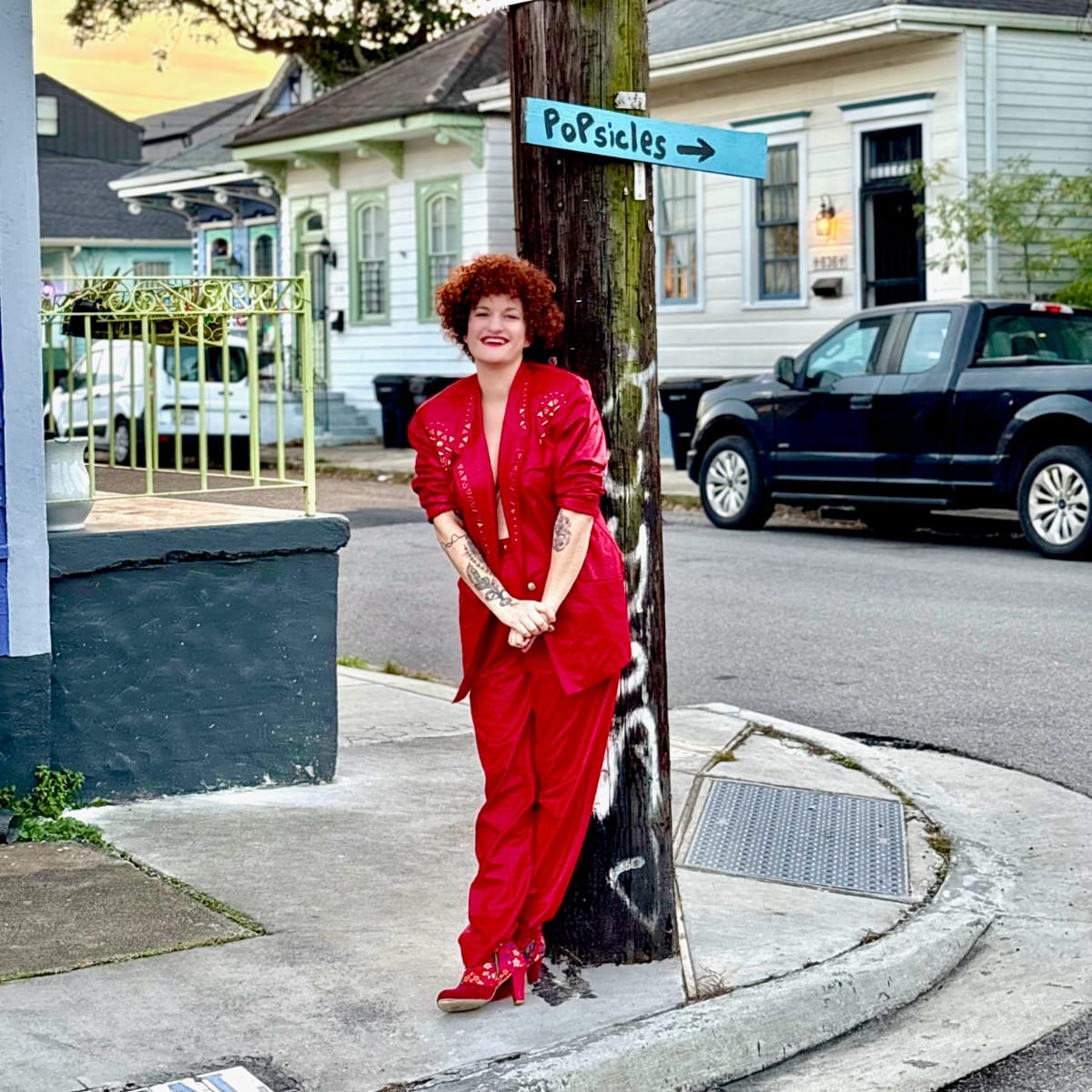
Radical folk artist Carsie Blanton announced on Instagram that she would be giving away free tickets to some of her concerts. Anyone in a socialist organization was welcome. “Verification will be a screenshot of all your unread Signal chats,” she quips in the comments—socialist organizers like Blanton are in a lot of Signal chats. Blanton, an active member of the Party for Socialism and Liberation, a communist political party, wants to fill her concerts with comrades. She can also afford to. With viral songs, music videos, over three thousand Patreon subscribers, and hundreds of thousands of social media followers, she is uniquely positioned to make use of the tools of the 21st-century indie musician.
Like a folksy Nina Simone, Blanton uses her warm mezzo to invite us into a different world. The albums she has released since joining the Global Sumud Flotilla to Gaza in 2025 raise hell in the here and now and give shape and aura to a brighter future. Her collaborations with Canadian folk music duo The Burning Hell have a breadth of subject matter unusual in contemporary folk music. At their concert at Le Poisson Rouge in New York, the audience was packed with union members and socialist organizers wearing buttons and campaign T-shirts. Like attendees at a political meeting, their fans vary in age from 20-somethings to 80-somethings. (You haven’t lived until you’ve sung along to Blanton’s “Ugly Nasty Commie Bitch” with somebody’s great-grandma.) As political songwriters, they bring wit, beauty, and precision to topical issues, just like folkies from the Guthrie era. Their genre-fluid songs, however, are unmistakably millennial, with a setlist that includes ’90s grunge vocal stylings, klezmer-inspired syncopation, and plenty of clean, high-energy axe shredding.
Blanton says she wants to “bring the party to the party”: to make the arts more political and left-wing movements more artful. We spoke in a phone interview about the artistic freedom that political radicalization can give to artists and the need for more songs written with the future in mind, “songs for the world worth saving.”
The transcript has been edited for length, flow, and clarity.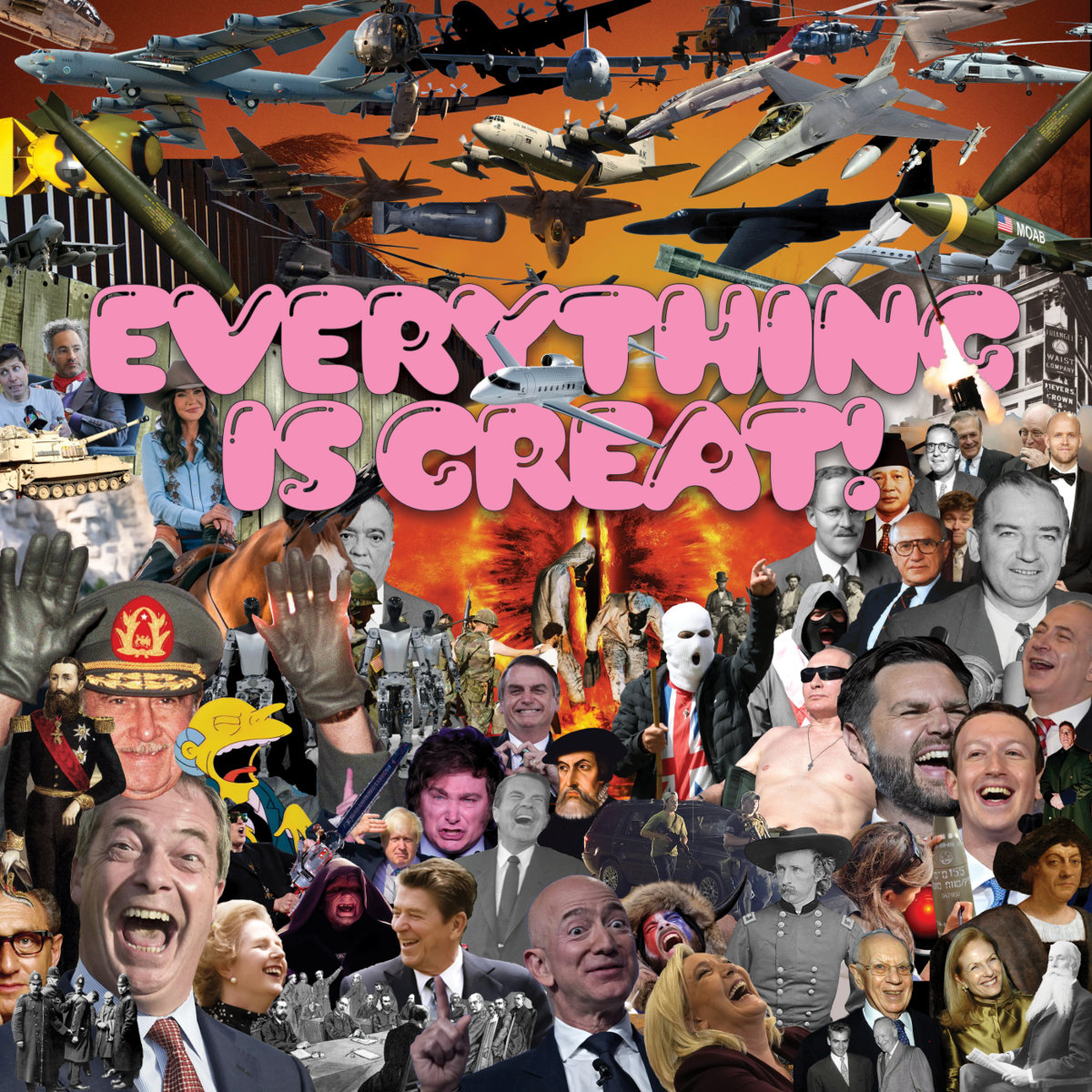
Annie Levin: You’ve been on a pretty busy touring schedule, and I understand that’s pretty normal for you.
Carsie Blanton: I’m happy with a busy tour schedule. I like to be going somewhere. In the pandemic, when we couldn’t tour, I had a mental health crisis, as many people did. I got into therapy, and my therapist was like, touring is a great choice for your personality type because you need a lot of thrills. If you hadn’t been a touring musician, you would have had to be an ER doctor or in the military. I was like, oh nice, I chose the right one.
Annie: So when you had this opportunity to go on the flotilla, that must have seemed very right to you.
Carsie: In a way. I always tell people trying to get into political activism to pick something that suits their personality. For me, risky direct action is a good choice.
Annie: When I first heard your music, it stood out because you communicate your politics so clearly. You’re eloquent about ideas in a style you don’t see outside very old labor songs. Do you connect with some of those older traditions in your work?
Carsie: I’m a Marxist, so I’m from a pretty old political tradition but one that’s been heavily censored in the US. Growing up, I was listening to a lot of old folk music, people like Woody Guthrie, and was hearing something that was a bit of a lost art by the time I was born, largely because of the Red Scare and the FBI’s crackdown on communist artists. As I’ve grown up politically, I’ve been trying to find the tools that were put down after the late forties, which is just a way of understanding politics that’s bigger and more beautiful and has more symbolism in it than the way American politics is usually dealt with. There are a lot of artists who were taken away from us by the Red Scare, people like Malvina Reynolds, whose work I admire and try to learn from.

Annie: I understand you were a musician first and came to politics later in life. Can you talk about what radicalized you?
Carsie: It was such a series of unfortunate events. I was interested in politics as a young person, but I was more like a standard-issue liberal Democrat, and I campaigned for Obama. I think Obama’s second term going into Trump’s first term was the breaking point. I was like, oh no! The thing I thought was happening, the long arc of history bending towards justice, doesn’t seem to be happening! Something else is happening.
I’ve always been somebody who’s writing about my real life, my real thoughts and feelings. When I was younger, that meant writing about love and romance because that’s what I was thinking about. As soon as I started thinking and feeling about politics, it made its way into my songs. I remember writing a little novelty song the day after Trump got elected in 2016 called “We’re All Fucked Let’s All Fuck.”
Annie: One song I particularly love off Everything Is Great is “Stafford Beer.” I’ve heard you say that artists can make political theories more beautiful. I know the theories you talk about in “Stafford Beer” aren’t pretty; these are harsh realities, but I think that’s exactly what you’ve done here.
Carsie: I’m so glad you like that song. That’s one of my sleeper favorites. That whole record is a collaboration with The Burning Hell, a Canadian band I met on tour. They were also writing about Marxism and the future and imperialism and stuff most people don’t write about. So it was quickly clear we needed to collaborate. That’s a song we wrote together while recording the album in Ireland. We set up a little recording studio at my friend Frank’s house, and we wrote and recorded at the same time. I brought that phrase, “The purpose of a system is what it does,” to the group because I had listened to a podcast about Stafford Beer, a British cyberneticist hired by Salvador Allende to build an internet for Chile. This is in 1971. So Chile had a socialist revolution, electorally. They elected a socialist president, Allende, and they were like, “We need to plan production, but we should use this cool new thing called a computer.” And so they hired a guy to build the internet so they could plan production efficiently. And then the US was involved in a coup because that was way too threatening to our interests.
Anyway, Stafford Beer had a phrase, “the purpose of a system is what it does,” which is historical materialism, but in a much cuter, more singable phrase. Historical materialism is very hard to say, but I’ve wanted to write it into songs for years. I couldn’t figure it out. So “the purpose of a system is what it does”—it’s almost like a Motown song you would hear on Sesame Street.
Annie: How did the album and its music videos come to have this childlike, Schoolhouse Rock! style?
Carsie: It hasn’t been a very conscious process. My longtime collaborator, Joe Plowman, and I met Mathias and Ariel, The Burning Hell, who are a married couple, and it immediately felt like we got picked up in a slipstream where we were all having so much fun collaborating, and everything we’ve made has felt like it blew out of a wormhole we accidentally opened when we met. The first one that felt really muppety was “Price of Eggs.” We were writing this weird klezmer song, and then Joe started singing like a muppet, and we were like, yes, of course, this is the right way to sing these songs. Once we had those songs, and we had all these other characters we had created in the studio with silly voices, it became clear we had to find somebody who could make puppets. I did a social media post. Hey, can anybody make puppets? And then we ended up recording videos in New York. Similarly chaotic. It took us two days to make like nine videos.
Annie: Wow.
Carsie: The whole thing felt like a crazy carnival ride.
Annie: You mentioned “Price of Eggs” is a klezmer tune and it’s got this great clarinet part. Is there an accordion on the album too?
Carsie: Oh yeah. So [Sharon Shannon] plays melodeon and button accordion. She’s a legendary Irish musician, and she lives close to where we were recording. And she had come to some of my shows and heard I was in Ireland and texted like, hey, what are you guys doing in Kinvara? I was like, “Oh, we’re recording an album. You want to come over?” So that’s how the accordion ended up on the record.
Annie: Can you talk about organizing artists and the development of People’s Songs?
Carsie: People’s Songs is the relaunch of a historical organization with the same name, launched in 1945 by Pete Seeger and Woody Guthrie and others. And the goal of that project is to organize musicians to be integrated into the movement. As a first goal, we want to make music at protests better. But there’s a bunch of longer-term goals, including political education for musicians and organizing music events as fundraisers for political actions. When artists are able to become political actors, it’s very freeing. It feels good psychologically, but it also frees up a lot of our talents and energies that capitalism can’t really make use of. Being radicalized was such a big development for me artistically, and I feel so much more connected to my true purpose than I used to. I want to offer that experience to other artists.
Annie: I’ve heard you say that songs are beautiful technology to help people get through hard things. As somebody who’s cherished these old songs as beautiful artifacts, I didn’t recognize how practically useful and spiritually necessary they are until I put them to use at a protest. What do you think makes a good protest song?
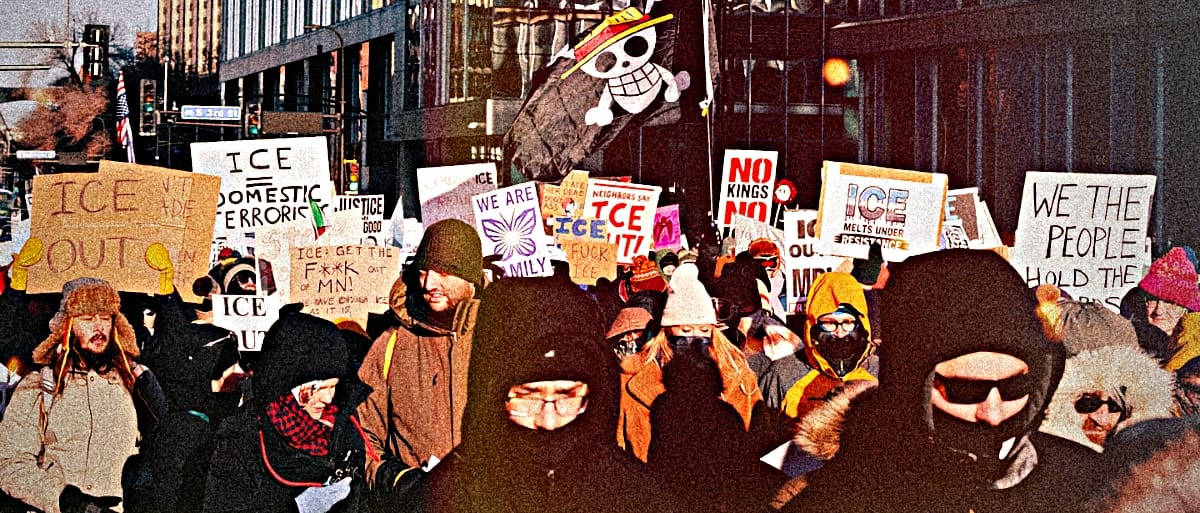
Carsie: It’s a hard question because there’s a bunch of different kinds, but the kind you’re talking about where it’s designed to help people get through a difficult experience together, it has to be singable and memorable and beautiful. Those are all qualities that come from the other world. I was just learning about the history of the song “We Shall Overcome,” and the original melody is called “Hymn for a Sicilian Mariner.” It was a Catholic hymn that Italian sailors sang on boats, but then Italian sailors ended up manning some of the slave ships that were bringing enslaved people to the US, and that’s where the enslaved people learned that melody, and then it became a slave song, and then the lyrics were rewritten for emancipation, and then rewritten again in the civil rights movement, and now people are singing it at anti-ICE protests. Melodies like that feel so good to sing with other people and have this enduring quality where you can repurpose them over and over again because they are useful.
Annie: I really like this idea of this spiritual freedom that comes to artists through radicalization and a different political reality.
Carsie: Chomsky said something like, in a liberal democracy we don’t have state censorship; it’s just that there are certain things you’re not allowed to think. I think about that a lot because for me the process of being radicalized has felt like taking blinders off over and over again. I’m seeing more and more of the world. As a writer, that means there’s more to write about. In my 20s, I thought we lived in a democracy, and we would just elect better and better Democrats until we had socialism. There’s not much to write about in that reality, and now I see it this way: there are class forces, historical forces, and people with beautiful desires for their lives and their children. There’s a lot of love in being a revolutionary. It’s like Che said, the true revolutionary is guided by a great feeling of love. So I have a lot of love for people that I didn’t used to have, and so in a way, I have more love songs to write than I did when I was just writing about whatever guy I had a crush on.
Stay on top of The Tonearm.
Subscribe for exclusive interviews, cultural tip-offs, and community fun.
And your support keeps our site free of advertising and paywalls.
Annie: You said in an interview, “when leftists are considered funny, sexy, and competent, when there’s a robust movement where all the qualities that you’re seeking in your life you have in the movement, that’s when people will join the party.” How can political movements be made more artful, more attractive, and have more of those things that everybody wants to find in their lives?
Carsie: I think New York DSA is teaching the rest of America how to do this right now. Like partly the Mamdani campaign, but also throwing socials and like dance parties and shit. I love that. I don’t even believe electoral politics is the path to revolution, but culturally, the Mamdani campaign has created a movement that’s fun and sexy, and young people want to be in it. And they’ve tied it to material gains for the working class. It’s beautiful to watch. I’m sure when you put this on the internet, some other communist will be mad at me for admiring the Mamdani campaign, but they can suck it.
Annie: And Mamdani was a musician.
Carsie: Yeah, he was a musician. He’s very charismatic, hot, and charming, and I love it. And I think, like, more of that, please.
Annie: So obviously you participated in this major world-historical event in the Global Sumud Flotilla. Can you speak to how it impacted you as a songwriter, your creative process?
Carsie: It’s my one-year anniversary of getting home from prison right now. We did sing in prison, and we did sing on my boat, and that singing was some of the best I’ve ever done. I felt like having songs was truly important, and that changed me as a musician. I want to connect more musicians to that feeling of being useful to the movement, and like the best song is one that people can sing together in that situation in prison or when you’re trying to break a siege. That’s what makes a song good, not winning a Grammy. That experience really drove that home for me. I had the song “Little Flame” when I went on the boat. We sang it together, and people felt really moved. I heard people singing it in prison from other cells, and that felt like, oh! This is what it means to be a songwriter. I thought it meant this whole other thing where you’re singing in a stadium on a microphone, but what it really means is you made a song people needed. So to me, that’s what my job means now.
Annie: What would you like to see more of in protest songs?
Carsie: In this new wave of protest music, because I think we’re on the edge of a wave right now, there are people like Jesse Welles getting really famous and playing big late-night shows and stuff, and a lot of young bucks out there trying to write protest songs. What I’d like to see is more hope and more willingness to imagine the future, because there’s a lot of cynicism, and you can still write a protest song as a cynic. You just write about what’s fucked up. Until we start writing about what’s possible, we’re not really helping. I’d like to see this wave of protest songs take on the future, take on a willingness to imagine past what we have right now. Songs for the world worth saving, not just the ones that we see when we look outside our window. Songs that make people want to save the world instead of abandon it.
Check out more like this:
 Lawrence Peryer

 Andrea Mazzariello


Comments