


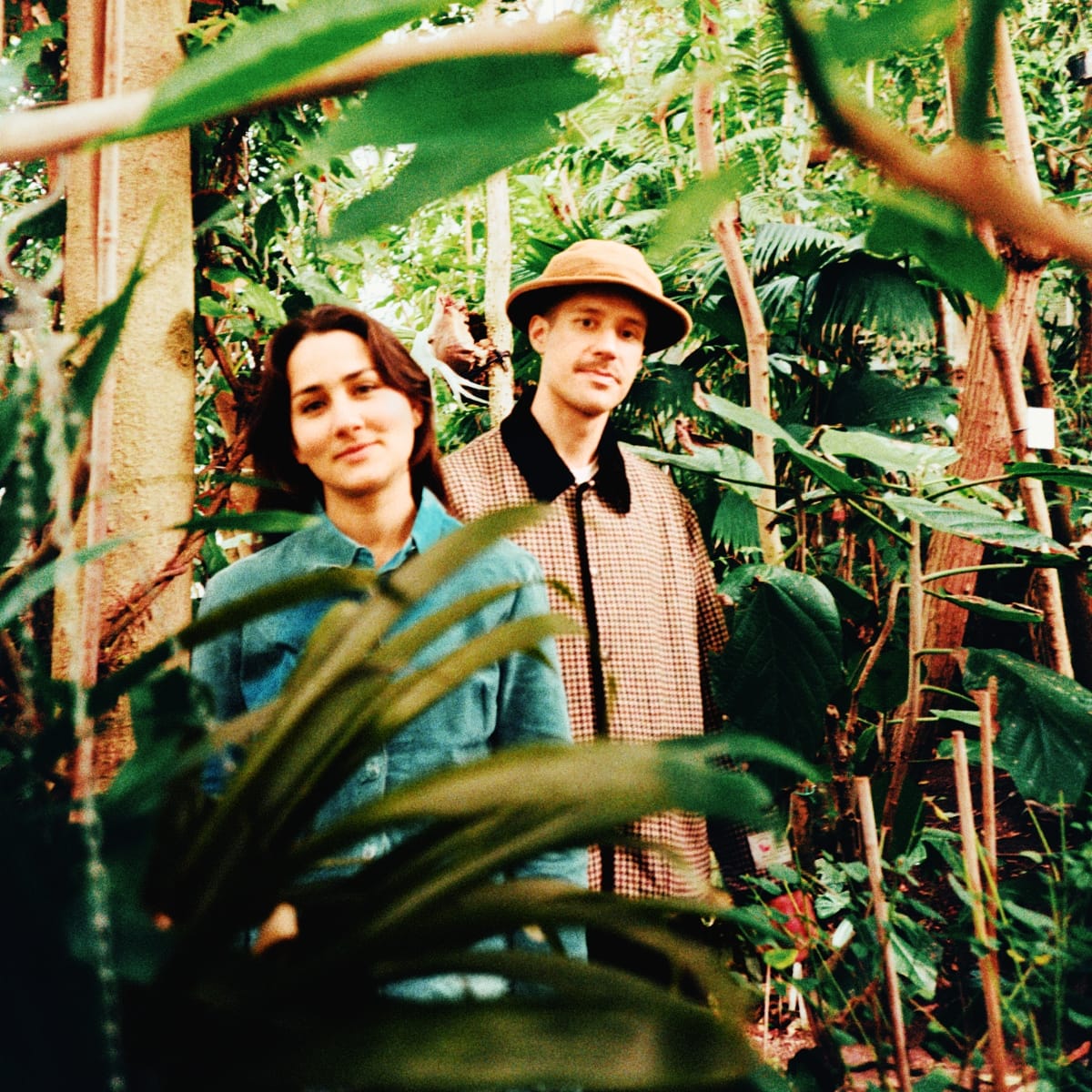
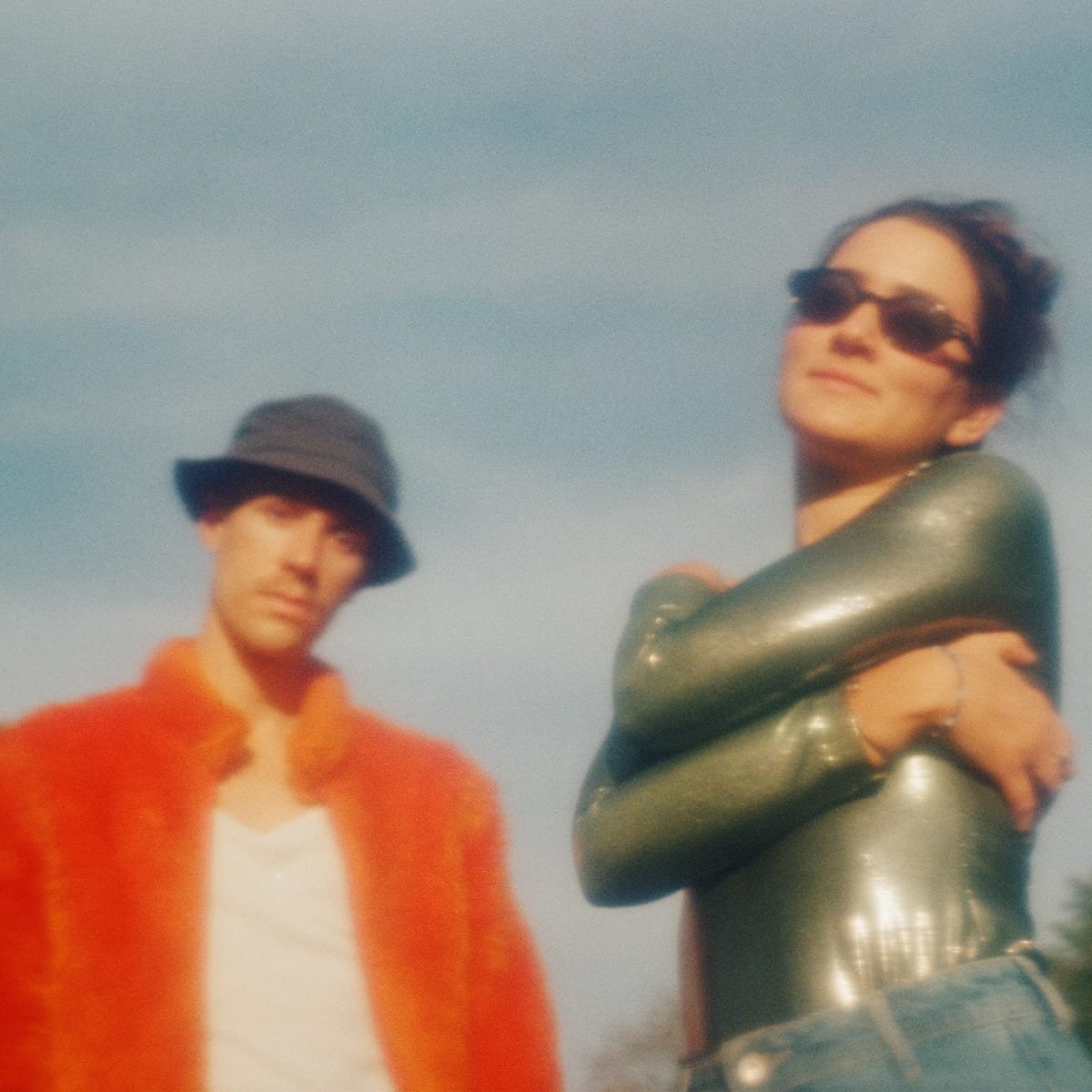
Rio-born, Austrian-based singer Luiza Monteiro and German producer Dustin Braun of Curió Curió have crafted a perfect summer record in their self-titled debut. Braun crafts groove-centric instrumentals that are often psychedelic and funky, allowing Monteiro to expand upon them with dynamic and expressive vocals. Most songs on the album are likely to stick in your head like glue, from the delightful, horn-drenched earworm "Bem Querer" to the bright, jazzy pop of "Menina Passarinho" to the sensational disco of "Amor Doente."
As a Brazilian native transplanted to Europe years ago, Monteiro explores lyrically through Curió Curió how difficult it can be to find your roots when you've moved to another country. Even if you can't understand the Portuguese language, you'll still be able to connect to the themes musically. This is because, along with the classic touchstones of Brazilian music à la Jorge Ben Jor, other MPB (Música popular brasileira), Brazilian disco, and Tropicália's psychedelia, Monteiro and Braun's project also injects influences from other countries, from the US to Japan.
Throughout Curió Curió, Monteiro brings multiple "vocal characters" to the album, all under the cohesive umbrella of Braun's sound. It often feels effortless, even when she calls like a bird or shifts into dulcet spoken word whispers. It likely comes from Monteiro's years of experience as an actress—something she still does under contract with a local theatre while working with Curió Curió.
Curious about how Monteiro integrated her theatre experience into her work, I spoke with her and Braun over a video call. As they also cite how the project came to be "by chance," I wanted to hear about how the duo met and what work went into making such a fun, upbeat record.

Bill Cooper: How did you two meet, and how did this project start?
Dustin Braun: I was already living in Berlin, but I visited Ingolstadt for some family reasons—I'm originally from there. I went to a concert at an art café where a music friend of mine was playing. It was a temporary quartet playing Brazilian classics—Jorge Ben, that kind of thing. And Luiza was the singer.
Luiza Monteiro: Yeah, I used to live in Ingolstadt because I worked in the theatre there. It's a small city, but it has a nice cultural scene. I have the feeling you get to know everyone active in the arts quickly, which is cool.
Dustin: I was already in love with Brazilian music. I'd always wanted to start a project in this Brazilian-groove direction, and that was the first moment I thought, "Okay, if I get this rolling, it could actually happen." So, after the concert, the whole band went to a bar, and I joined them. After two beers, I had the balls to ask Luiza if she'd want to start recording with me.
Luiza: I was really into the theatre, but I had this crazy longing to make my own music. And then Dustin came and said, "Do you want to do a Brazilian project?" And I said, "Yeah, absolutely."
Dustin: We didn't really know each other at all then. We'd basically just met each other.
Luiza: Dustin was a bit of a legend in Ingolstadt—everybody knew him from DJing and producing. I'd heard his name, but we didn't know each other personally. Because I was very busy in theater, it took half a year to get back to Dustin after he first approached me. When I finally had time, I reached out to try and see where things went.
Bill: How do you balance the theater and your music? It seems difficult.
Luiza: Yeah, it has been a process. I love working in theatre, and I sing a lot there, too, but the shows I work on there aren't my own projects. I've realized that doing my own projects is way too important. So, I've reduced my theater contract: instead of four productions a year, I do three. That gives me more time during the year to travel, to meet Dustin, to help produce the songs. Still, it's a struggle, because I have to work on [Curió Curió] with any breaks I might have. Because I have shows that I can't miss, it's not flexible in that sense. However, I'm happy that the theatre I'm working with right now is supportive of allowing me to have time to work on my projects outside the theatre.
Bill: How long did this record take to make?
Luiza: It took us pretty much one and a half to two years to finish the whole album.
Dustin: Two and a half, even, I think. We also had quite a distance between us. I sometimes say we could have wrapped all the recordings within six weeks, which is probably too optimistic—but we're nine hours apart, and that makes it a little complicated.
Luiza: It was a long process, but sometimes that's good, because you grow along the way.
Bill: Tell me more about what that process looked like and how you wrote the songs on the album.
Dustin: We always tried to arrange at least a week to spend on writing and recording—never just a day. Mostly we recorded at my place, but sometimes, to make things easier, we rented a studio halfway between us and met there to record and write.
We built the foundations together and then brought the project to other musicians to record afterward. With the distance and our time limitations, it would have been impossible to do it with a full band in the studio. I also don't like the workflow of working with a whole band at once.
Luiza: It wasn't like a classic singer-songwriter thing, where I write the song on my piano at home, I bring it to Dustin, and then we produce it together. Instead, Dustin and I had a clear vision of how the project had to sound. Then Dustin met with other musicians, and they built parts for the music—parts A, B, C—as well as grooves and textures. Then we'd meet with that structure in place, putting the parts together in a way we felt comfortable with and liked. I'd improvise over that and build melody hooks, verses, everything. So, it was kind of like a collage.
Bill: One thing I really enjoy about this record is the improvisational aspects. Can you speak to where that comes from? Is it from your music experience or the theatre, or a little of both?
Luiza: Yeah, I guess it's a mix. I've always been that kind of singer. I don't sit at the piano for eight hours writing difficult material; I'm more into improvisation. Because we're both in this creative process together, making choices as we go, we can have a sketch of something that I take back home. Then I refine it, and it grows. It worked well because that's also how you work, too, Dustin. You like to try things out.
Dustin: All this improvisation was helpful because we didn't know each other or how we'd behave in the studio. I knew Luiza was comfortable improvising. We'd do several takes, improvising from beginning to end. Then we'd try things out and move parts around. Sometimes, we'd try to glue something together, or Luiza would come up with something so catchy and so good that we just locked it in right away.
Luiza: I will say, though, that theater does help me with improvisation, because we often work that way. You must have the freedom to try things, even crazy stuff, to see if it works. Sometimes, we thought we'd never go in a specific direction with this album, but then we'd decide to try it out.
Dustin: I'm also convinced—correct me if I'm wrong—that because you're such a talented actor, Luiza, you can really feel during recording that you're improvising without fear. I've worked with a lot of musicians who don't have that skill that comes from being an actor, where you can confidently slip into different characters. I feel like they're different characters, but in the end, each one still sounds like Luiza.
Bill: Luiza, it's cool how you were able to go out into these wild pathways, but it still feels consistent in terms of sound.
Luiza: A lot of that comes from you, Dustin, because from the first day I had the feeling you had a clear vision of the sound you wanted. There were songs where I'd say, "We can do that with a little more reverb," and you'd say, "No, I think that's not the right choice, because then we leave this world we're already in." You were a great director.
Dustin: We were privileged that we weren't rushed. We'd bring a song to the trumpet player, then to the vibraphone player, and the energy of the songs sometimes changed. At the end, we wanted to make sure the vocals and their energy still fit with the instrumentals. With most songs it worked, but sometimes we had to push in another direction. It's good that we had the time to revisit tracks and see if they still felt right after two years.
Bill: One of the things I remember reading about the record is that you were trying to create a Brazilian work that isn't cliché. How would you say you worked to make sure that didn't happen?
Luiza: I'm not sure it was conscious. It was more like searching for something that felt authentic and connected to our energy.
Dustin: It's about being honest with your craft. Luiza's very experienced, so she knows who she is as a singer. I'm experienced as a producer. I wouldn't have brought her a classic bossa instrumental. I love bossa, but I'd be bored. I want to explore something new. Also, Luiza has a style, so you want to match and support it instead of forcing it into something it's not.
We didn't reinvent the wheel, but we tried to express ourselves. We wanted to make a Brazilian project, and since we have inspirations and references—because we're fans, not only creators—we tried to blend it together.
Luiza: It's funny, because at some point in the process I was afraid it wasn't Brazilian enough. I thought, "Should we get some more Brazilian instruments in there or a little more percussion?" I was afraid it wasn't true enough to my roots. It was always about what felt authentic. 'Authentic' is a weird word, but it's like: what feels right? You want something that feels like what you want to listen to.
Dustin: I don't want to sound too spiritual, but sometimes when you create, there's something in the room, as Luiza said, that just feels so right. It's a certain feeling you always want to chase, and it has to do with where you are right now with your art and what you expect from it.
Bill: Luiza, you're clearly coming to this record with other experiences, so I'm curious how else that factors into the overall making of this record.
Luiza: My focus has always been singing. I'm crazy about finding new techniques and fine-tuning them. My passion is figuring out how to use my voice for different styles, ranges, and colors. I've played with many jazz musicians and bands too, so I have a lot of experience. But I don't have a music-theory background. My main experience is stage and voice. That's where I came from—singing in a lot of different styles. I love pop, and I met jazz at some point, so I started learning a bit about scat and similar techniques. I do a lot of musical theater; I did a little live opera singing. I like to do different things.
Bill: And you, Dustin, what else have you done in the past that you feel like you brought into this record?
Dustin: I spent many years digging into rare music to sample. I was really into the record game and listened to a lot of music from around the world, but what really helped [with Curió Curió] was that I have a Turkish project I also produce called Peki Momés. It's very different, but it's also groove-oriented. Our label guy back then convinced me to get rid of the samples and play it myself or record it with someone.
At first, I was annoyed, but later, I realized it was one of the best pieces of advice anyone could have given me. I knew it was way more effort to record all this shit, but after I heard the result, I only record real instruments. That really changed my production style, and it's something I brought to this project—coming fresh from that finished Turkish record, using samples wasn't even an idea anymore.
Stay on top of The Tonearm.
Subscribe for exclusive interviews, cultural tip-offs, and community fun.
And your support keeps our site free of advertising and paywalls.
Bill: Luiza, what made you decide to sing the record only in Portuguese?
Luiza: Portuguese is a hard language and always has been for me. Yet, I've done projects where I wrote in English, but it has such a different quality when you write in the language you can connect to emotionally. I've always written down my ideas, and I really like working through thoughts in my writing.
I never write in German or English, because it just doesn't feel that deep. It was clear from the beginning that this project had to be in Portuguese. Dustin is also a fan of the language, which made the decision even stronger. It's also a project about a search for belonging—trying to reconnect with my roots, and it's so important to keep them alive. It was a beautiful process to do that through writing in Portuguese, because throughout, you find places in you that are deeply anchored to where you come from.
I'm interested in the resonance and how it gets received. My mom once said this record is for foreigners in Europe, because that's going to be our listening public—people with the same kind of background. But I'm interested: does it make a difference if you're in Brazil and listen to the songs? Does it make a difference if you're in Europe?
Bill: Obviously, I heard it as a sonic experience first—I don't understand Portuguese. But it's one of those albums where, after two or three listens, it really grew on me. After I felt it sonically, I looked at the lyrics to then understand them. In the States, at least, I think people are becoming more open to international music, which is super cool. I hope it connects with everyone.
Dustin: Yeah, I think the whole world is shifting in this way now. A lot of people now tend to sing in their mother tongue instead of in English, which is good, because the delivery is more solid. It feels more appreciated now too, whether it's Afrobeat music with the languages of different African countries or Turkish psychedelic music, which is popular again. It's cool to share this feeling with others, as English-speaking listeners continue to find more foreign music.
 Jonah Evans
 Bill Cooper


Comments