


Now Playing on The Tonearm
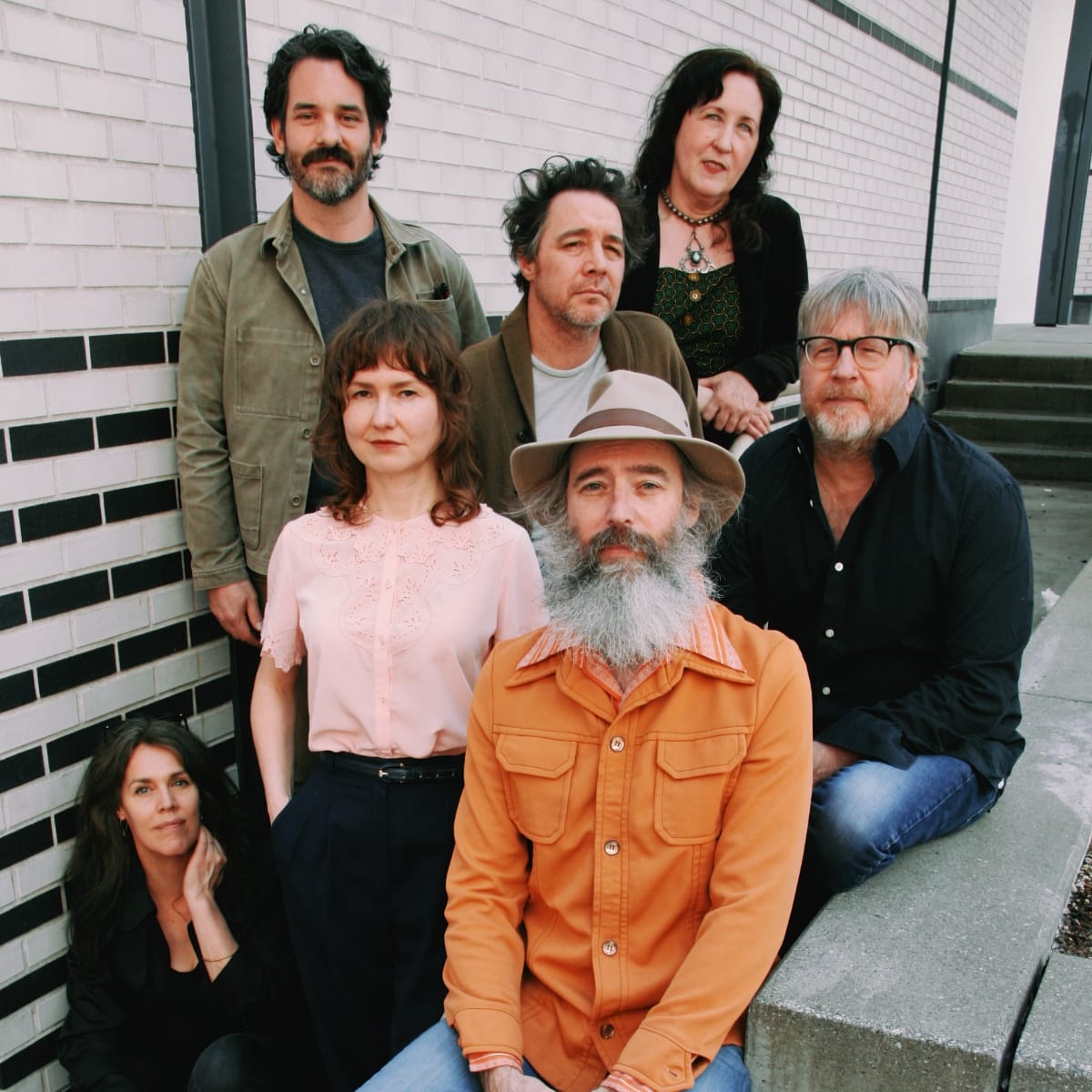
From the Dimension Next Door — Ethan Miller and The Odyssey Cult
The Odyssey Cult is less a band than a secret society of people whose obsession with art has gotten out of hand, and ‘Vol. 3’ is its communiqué. Interview by Steven Garnett.

The Tape Remembers — Concepción Huerta’s Very Small Gestures
The Guanajuato-born photographer and sound artist on the Buchla 200’s own memory, the imagined celestial space she built for her signals to travel through, and a composition that took an afternoon to patch and several months to finish. Interview by Kallie Marie.
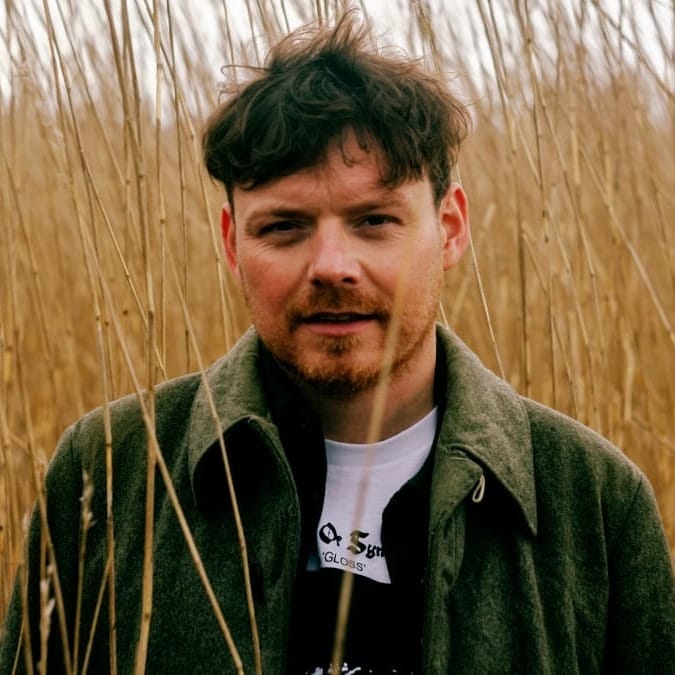
A Word for Melody, Mood, and Land — Wild Gods on ‘The Glorious Abysmal’
Recorded in five days and sung in Gàidhlig and English, ‘The Glorious Abysmal’ draws on the waulking songs of the Hebrides, Georg Cantor’s set theory, and the year Livingstone spent learning production alongside people leaving prison. Interview by Arina Korenyu.
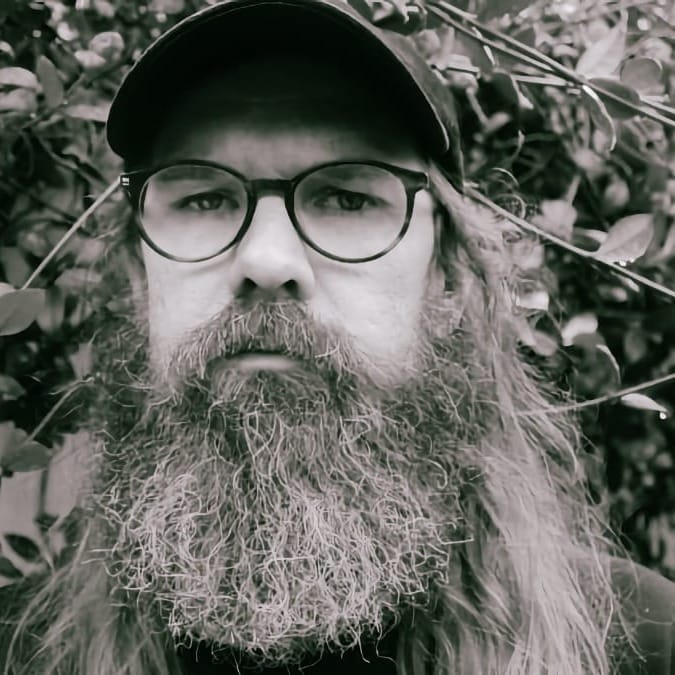
Josh Mason, Better Punk Through Circuitry
The Florida sound artist walks through his greyfade debut ‘Kicking A Dark Horse,’ the punk shows that taught him to build things himself, and the modular practice that, 15 years in, no longer surprises him. Interview by Lawrence Peryer.

Amateur Hour — Takashi Murakami and the Uses of Failure
Bad filmmaking and Superflat theory turn out to be remarkably difficult to tell apart. Essay by Bill Cooper.
This Week’s Episode of The Tonearm Podcast
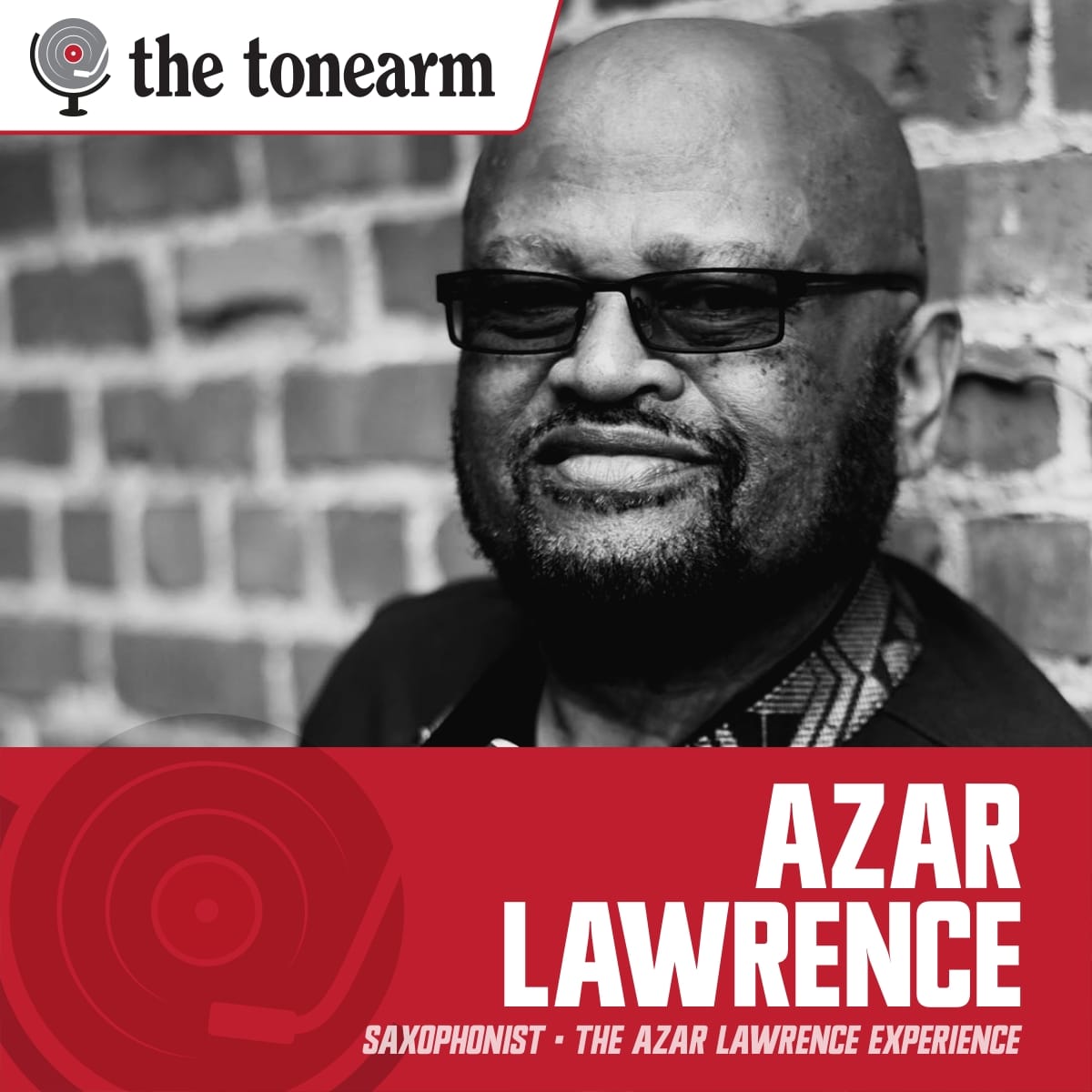
Azar Lawrence: Spiritual Jazz With the Funk Left In
The saxophonist joins us to discuss ‘Turn the Music Up,’ his friendship with Pharoah Sanders that lies behind its central tribute, and why he refuses to think of the jazz lineage as something outside himself.
Rotations
Lawrence Peryer has been thinking about where music turns into ceremony, and this week’s Rotations, the official radio show of The Tonearm, is what came of it:
Our August 18 episode of Rotations is up on Mixcloud. It is a set inspired by my ongoing interest in and exploration of the place where music and ritual meet. Formal ritual, spiritual gatherings incorporating music, even liturgical music. Then there are the rituals of making music: the band silently setting up and breaking down, both onstage and in the studio. The order in which gear gets assembled, plugged in. The in-jokes or running gags. All of these things contribute to creating a space for magic to happen. This week, the conjuring comes from Koen Holtkamp, Guest Bartender Deborah Toyota, Brad Mehldau, Joshua Redman, and others. Some were explored by The Tonearm’s contributors; others were added to the set as my offering to our listeners.
Listen to the latest show, featuring the artists highlighted over the past week on The Tonearm plus much more:

The Hit Parade
“Dave Marsh brought me to Creem, brought me to Rolling Stone for some projects, brought me to Newsday . . . He led the way for me, blocking and opening holes for my career to flourish. In that way, Dave Marsh invented me as a writer, and I will always be grateful.” ❋ “Oliver [Jones] often said he found it impossible to plan a set in advance, because he didn’t know the atmosphere of the room until he actually stepped onto the stage . . . You couldn’t rely on memory or habit; you had to listen and respond in real-time.” ❋ “Sometimes, on the top deck of a London bus, pension-age punks will politely disturb the concentration of a man on his iPad.” ❋ “I believe that protest music and folk music is a pretty big tent. It can both encompass ‘We Shall Overcome’ and, ‘Fuck you, I won’t do what you tell me.’” ❋ “I can only describe the process of the improviser as one of trust in the spirit and the goodness of the future, which is the next note. I deal, often, in that realm.” ❋ “I want my music to reach as far as it can. When I die, I want it to be said that I made the most inventive, interesting music that I could to try to push culture forward.” ❋ “Little mention is made of how much crap music an average music lover is liable to pass through before ‘graduation’; entire bands and genres that form a sizeable chunk of anyone’s listening life.” ❋ “Imagine around a dozen simultaneous waves of piercing feedback, like sirens, echoing painfully through a high school gymnasium. For about an hour . . . [The Clash] sounded like the greatest band in the history of mankind, the only one that mattered. And I am totally serious about that.” ❋ “As we learned, Mahalia’s faith, her politics and her music were inseparable . . . We did not set out to write about Mahalia’s civil rights work, but our research found it at the center of her life for four decades.” ❋ “I don’t think the band made it through three songs before the club cut the power . . . We were all on a mission back then to save the world from bad music, and that sense of purpose fueled my questionable choices.” ❋ “The piece is a set of 53 short musical fragments and a set of instructions on how to play them and move through them – and no two performances of this nearly 60-year old work are ever the same.” ❋ “After seeing The Cramps, I never got better. I saw them and got completely infected, and to this day I am still staggering and wounded from having seen them.” ❋ “Funaná, the accordion-driven rhythm that emerged from Santiago’s interior, was banned by the government. The colonial authorities wanted it kept out of cities and off of the radio. It was the music of the poor, music that talked about what colonialism felt like.” ❋ “[Jack] Hamilton notes in his book that not talking about race in rock was the most common way critics and scholars addressed the topic.” ❋ “The work is the suitcase you’re living out of, and is somehow the Pakistan that you’ve brought with you, or which you carry around with you wherever you go.” ❋ “[These three artists’] accreditation on their respective hits instead came down to cases of unfair promotional practices, sloppy paperwork, or sheer industry unpredictability.” ❋ For more curated music links, be sure to follow The Tonearm’s feeds on Bluesky and Mastodon.
New Music Recommendations: bu.re_ - seasons in migration (RIYL: ambient and field recording in the Hiroshi Yoshimura and Harold Budd lineage) ❋ Donatell - Water, CA (RIYL: experimental pop built from obsolete gear and dead-tech gestures) ❋ Elanor Moss - The Knife, The Needle (RIYL: English psych-folk with horn and string arrangements; Sandy Denny, Nick Drake) ❋ fling ii - 3 (RIYL: motorik neokrautrock and kosmische drift; Neu!, Cluster, Ashra) ❋ Frances Chang - been thinking bout confession (RIYL: synth-tinged art pop; Björk, Broadcast) ❋ GB - Herzsprung (RIYL: fusion-inflected noise-rock and outsider pop from Denmark) ❋ Giraffe - The Towering Inferno With Bongo Drums (RIYL: cosmic psychedelia and improvised jazz-rock from members of Darkside and the Greyboy Allstars) ❋ Lusine - Melting Days (RIYL: rhythm-driven ambient with pinwheeling bells and warm synth pads) ❋ Patrick Yim - Bamboo Grove (RIYL: contemporary classical for strings pushed toward guqin, erhu, and Peking opera percussion) ❋ Raymond Roussel - No One Asked Us Yet (RIYL: processed jazz trio between post-fusion lyricism and Supersilent-grade electronics) ❋ Riviera Gaz - Catacroma (RIYL: Can-influenced psychedelic rock and glam with fuzz-heavy studio experimentation) ❋ Siavash Amini & Eugene Thacker - Songs for Sad Poets, Vol. III (RIYL: spectral vocal composition dissolved past the point of words) ❋ Stephen O’Malley - Avaeken (RIYL: microtonal guitar drone and phase cancellation from O’Malley of Sunn O)))
The Deepest Cut
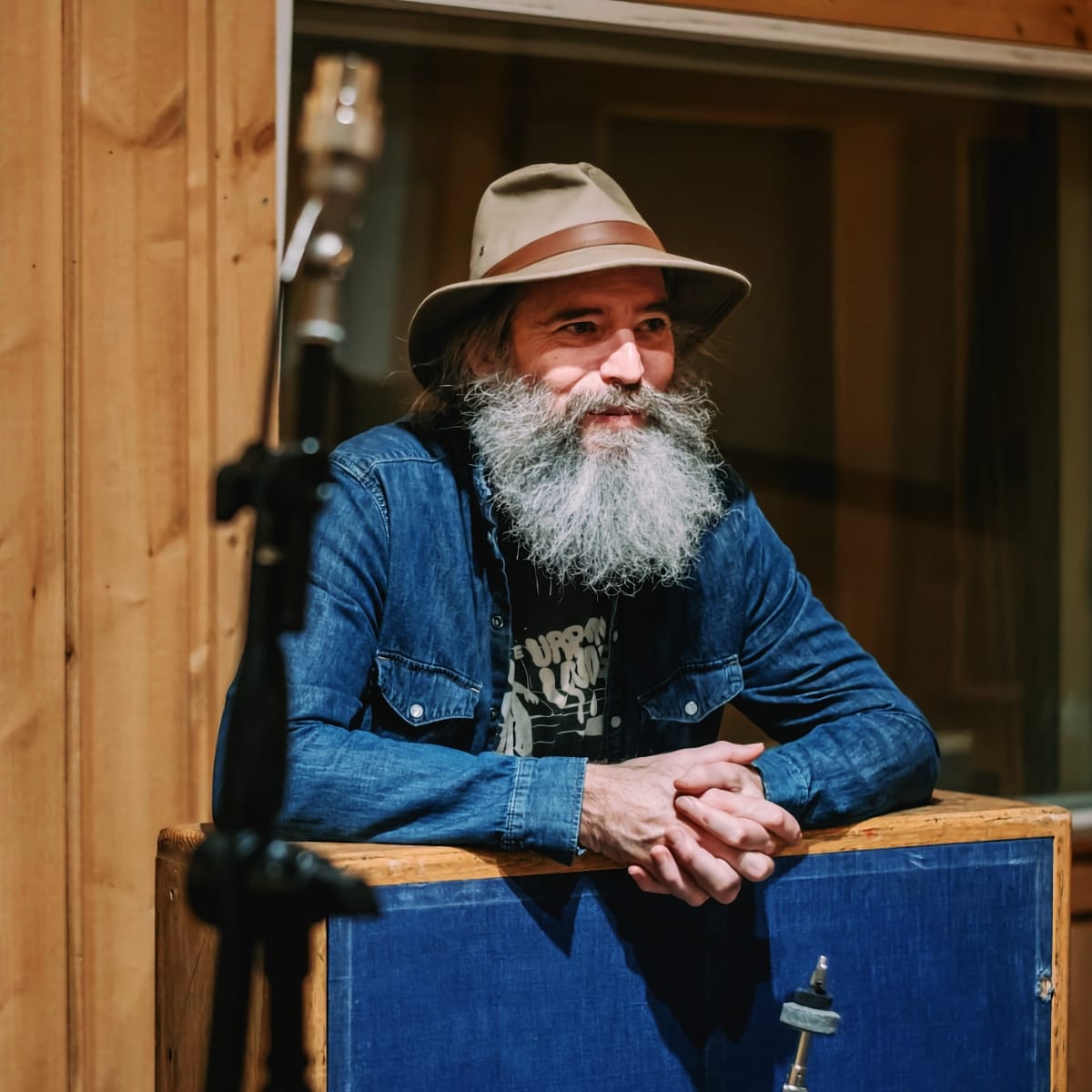
This week, The Tonearm published a feature on The Odyssey Cult, a collective psychedelic improvisational outfit headed by Ethan Miller. Miller is a busy guy, running the ascendant Silver Current Records and involved in a myriad of projects, including Orcutt Shelley Miller, Howlin Rain, Comets On Fire, Heron Oblivion, and probably several more.
Vol. 3 arrived August 21 — eight tracks of fuzz, motorik pulse, shimmering noise, and buried vocals. Ben Flashman, Miller’s Comets On Fire bandmate, co-wrote it with him, their first collaboration in nearly two decades. Steve Shelley plays drums, Anthony Taibi keys, and Zoh Amba saxophone, with vocals from Brigid Dawson, Paula Frazer, and Inna Showalter. Volumes 1 and 2, released in 2017, were mostly Miller alone with loops and feedback, and this one is a band playing loud AF.
After his conversation with Steven Garnett, Miller followed up with an email of bonus material, digging even deeper into The Odyssey Cult and its origins, literary influences, and modus operandi. Here’s Ethan Miller with more:
Obviously I haven’t wrapped The Odyssey Cult up into a little bite-sized thought yet, so my discussing it is a bit of a yarn ball unravelling as I go, trying to figure out what it’s been and what it is now. Hopefully that ambiguity continues.
The first two volumes of The Odyssey Cult were released simultaneously in 2017 with a long-form poetry book called The Odyssey Of Odelgaene oOo Bloovenbeetle. Vol. 1 and 2 were a lot more abstract — loops, spliced sounds, feedback performances — and by title and sonically they traced Joyce’s Ulysses over the two albums. Though because Joyce’s Ulysses traces Homer’s Odyssey there is that palimpsest thing going on, literary and abstract creatively. I suppose this is the epitome of my thinking of music as a single endless conversation with all music. Briefly linear engagement with the nearly infinite through-line of art and music, quickly transformed into the non-linear master flow of it all.
I originally created The Odyssey Cult outlet to be a fresh entity with no rules and no expectations. A place I could do anything creatively. That guiding principle fed into our path for the third Odyssey Cult album at hand.
All three of the Odyssey Cult releases and the book are some of my favorite Silver Current releases. With the Odyssey Cult albums and the book I really felt like they were fairly pure states of creativity. I didn’t know where they were going or what they would be exactly. Nor did I know who was waiting for them or how they would be perceived. It’s a record label’s nightmare really, ha ha.
But we’re so strategized to succeed in music now, and contemporary music has become so un-chaotic in creation and marketing, that I really yearn for that creative chaos and unknown to balance out other places in my musical life and label that are guided by strong concepts and where the fan base is a known influence. When we so often can find information on every little thing or strategize every single nano-bit of our process, I still want to have a creative space to spend a few days waving a metal pole around in a lightning storm and see what happens. To let loose a drop of India Ink from 100 feet in the air onto white cotton paper and see what kind of painting that makes. To see what kind of rock music a group might make when they can’t see the big picture or know what the song sounds like.
I’m certain there is something beautiful in human creativity when it is entangled thoroughly with chance. There are always little moments in rock music that have come about by chance — oh, the guitarist hit the wrong chord or wrong note for a moment and it is kept and the part sounds unique — but fundamentally, usually, rock music is either improvised or structured by highly scrutinized strategy. But what about those in-between instances?
With Vol. 3 I was interested in trying to construct recognizable and pleasurable rock form through and by chance steps in every instance possible. That said, I also tried to abide naturalism wherever it came up. If the players or the song itself seemed to naturally go to a certain place or do a thing, I tried to let that happen and not get in the way. So in many instances certain songs didn’t end up being outwardly reflective of experimental construction or means, but I do think that they still have this certain “bent” to them.
It goes back to the Taking Tiger Mountain reference point again, which I think is a very apt model for Vol. 3. From what we hear in the final product, does it sound like Taking Tiger Mountain could have been theoretically constructed by a rock band through conventional strategy and means? Yes. But would it have existed by any other means? No. In other words, as listeners we may not be able to hear all that oblique strategy in there, but we can feel it. The album is hyper endowed by that fundamental structure of chance under its flesh.
The Run-Out Groove
- The Tonearm is a reader-supported publication, free of advertising and paywalls. Our supporters help fund our writers and make the site possible. Please consider joining and helping us to continue our mission.
- Join the rapscallions of The Tonearm on our new Slack community.
- Sign up to receive our latest articles directly to your inbox in a snazzy, easy-to-read email version. Just go to your account, manage your email preferences, and flick the lever to receive The Total Tonearm.
- The easiest and best way you can help us? Please share this newsletter and our stories with your friends.
Thank you for reading! We’ll see you again next week. 🚀


Comments