


Now Playing on The Tonearm
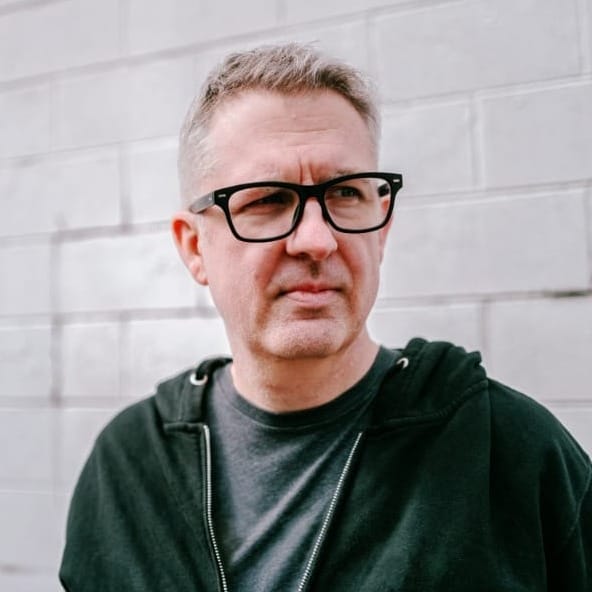
Borderline Ambient — Two Decades of Lusine
Jeff McIlwain's tenth Lusine album, Melting Days, makes the case that rhythm and atmosphere were never opposites to begin with. Interview by Tony D'Onghia.
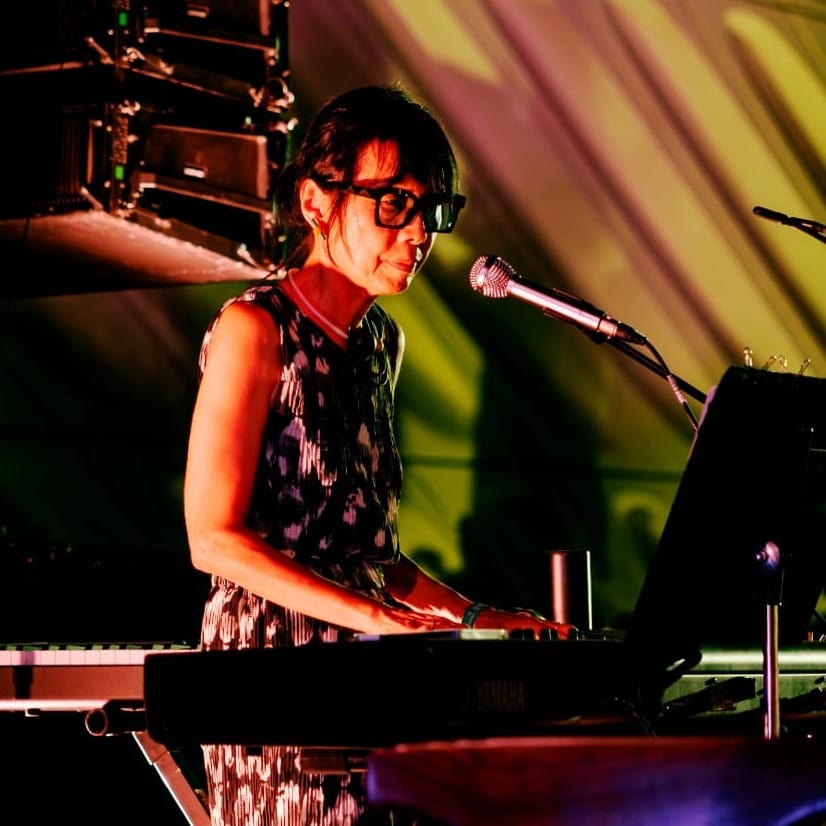

The Underdog Beat — Ira Robbins on Trouser Press
A second anthology, Zip It Up! Too, finds the magazine's co-founder still keeping faith with the bands that sold ten copies rather than ten million. Interview by Jim Allen.
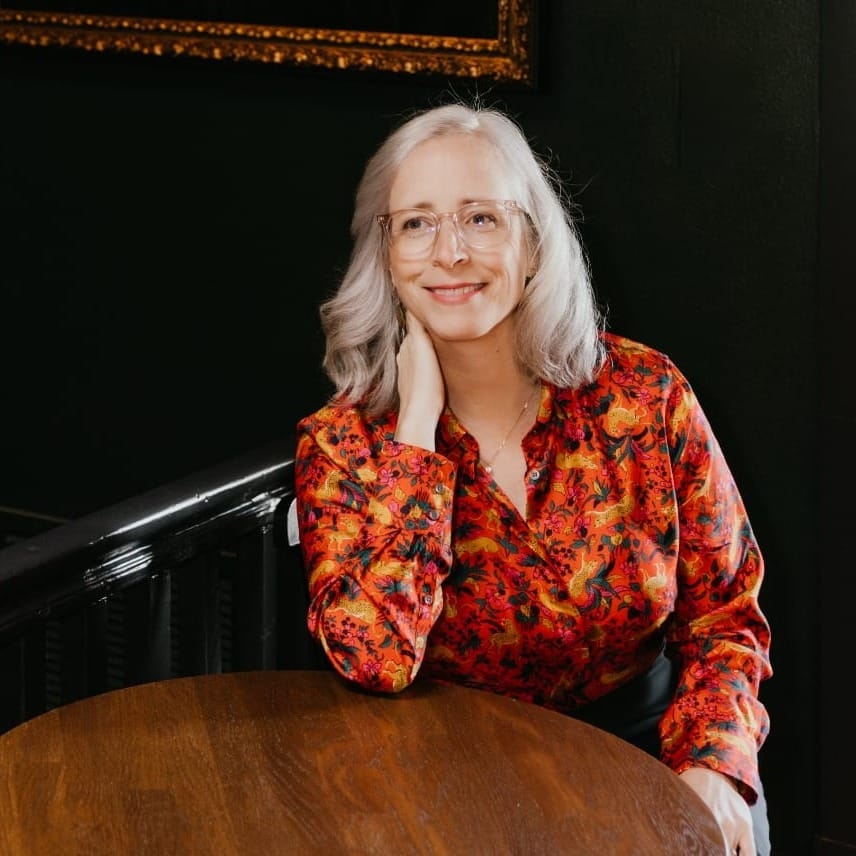
Laura Veirs Alone in the Temple of Bloom
After 30 years of handing her records to producers, Veirs recorded Temple Songs entirely alone, guided by wabi-sabi, the DIY ethos she took from Ani DiFranco, and a determination not to fall down perfectionism's rabbit hole. Interview by Carl Dexter.
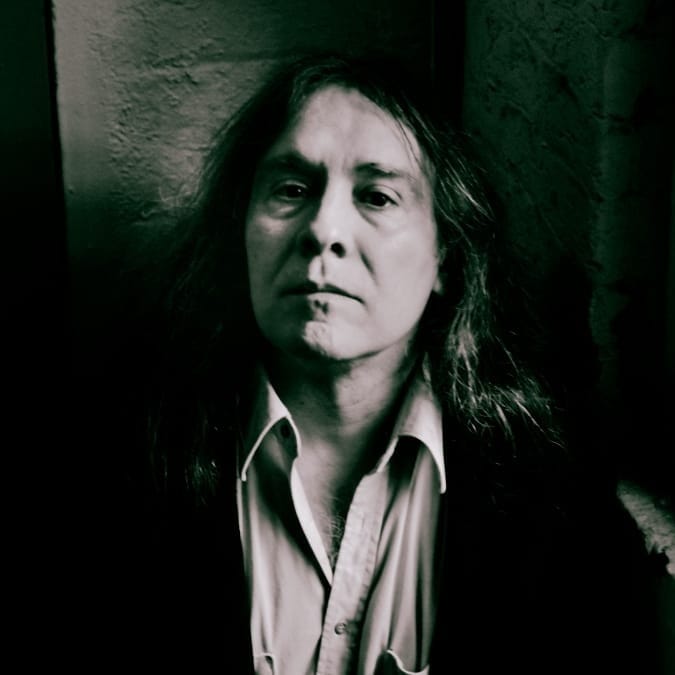
Martin Bisi, Recording Engineer Without a Uniform
Forty-five years into BC Studio, Bisi talks through hardcore and hip hop as underclass music, the trouble with the post-genre label, the taboo of anger, and the collaborators who shaped Dancing On The Power Lines. Interview by Lawrence Peryer.
This Week's Episode of The Tonearm Podcast
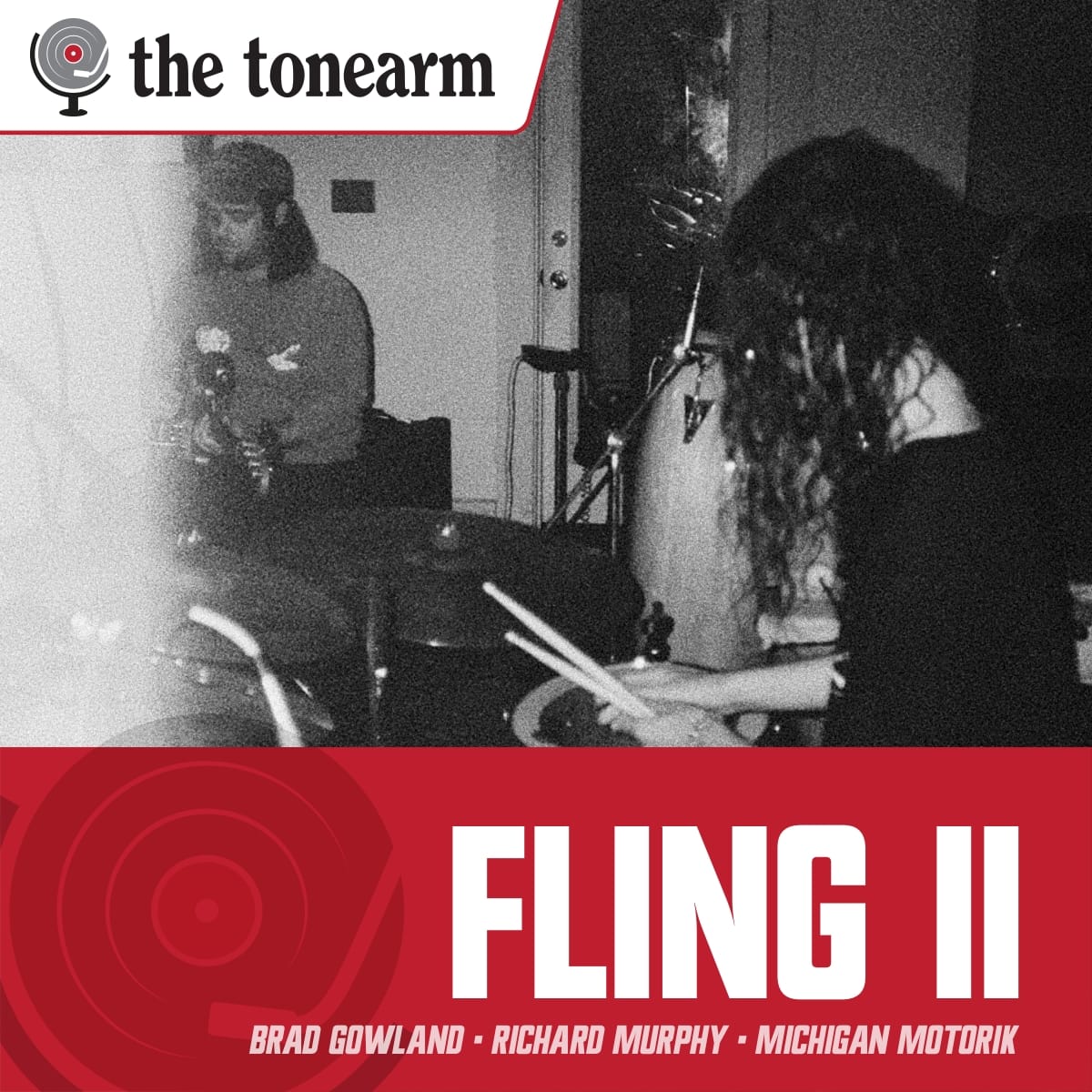
Fling ii: Modular Synths, Pedal Steel, and Michigan Motorik
Seven players, four cities, and no rehearsals: Fling ii's Brad Gowland and Richard Murphy describe a recording method that turns a weekend of continuous tape into a six-track album.
Rotations
This week, Lawrence Peryer was immersed in the not-so-enviable activity of moving house, but even though he didn't have time to draft an introduction for this newsletter, a terrific new episode of his Rotations radio show still appeared on our Mixcloud archive. This one features many of the artists profiled above, including Lusine, Laura Veirs, Martin Bisi, and Cibo Matto covering Yoko Ono, as well as choice cuts by Christer Bothén, Oren Ambarchi, and many others. No packing of boxes or moving vans required—just click on the Mixcloud player below to have a listen:

The Hit Parade
"One throughline in [Cassandra] Wilson's musical output was the enthralling tether of her voice, whose timbre could inspire metaphors of maplewood smoke or wildflower honey. Another was the mystique she imparted to both original songs and an assortment of material culled from the jazz songbook, the Delta blues, Laurel Canyon folk-rock, even mainstream pop." ❋ "[Half Japanese] traded instruments, ignored traditional tunings and song structures, and built their earliest recordings around the belief that raw sound and flowing imagination mattered more than the 'right' way to play." ❋ "I drop acid and listen to Bartók's first violin concerto, and I think, 'Oh my god, what am I doing? This is not my life. I want to make music like that.' I thought, 'I've got to change all this' . . . and I did." ❋ "[Sampling]'s not so much about what you're using or where you're taking it from, but more the ideas that you're adding on to it. It's about the way it's being used and the way it's being manipulated. The ideas, more than ever, are what drives interesting music for me." ❋ "In San Francisco, for instance, there was a larger number of trans and gay kids at the [Cabaret Voltaire] show, which was great to see. People coming out to enjoy themselves and express themselves is always good for music and for us." ❋ "[Ulysses Owens Jr.'s] version of Pearl Jam's 'Even Flow' goes Latin jazz halfway through, without warning, and/but it works . . . And their reggae-fied version of Hole's 'Celebrity Skin' will remind you that the Skatalites were a jazz band." ❋ "I went on the TV as gay and as out there and as camp and as queer as possible . . . But it was important for us to do that, and to try and make some sort of subversive statement." ❋ "This offshoot of grindcore delivers short blasts of glitchy noise over a frantic drum machine, creating time signatures the average human mind could scarcely comprehend. Bear in mind, there is no suitable time to put a cybergrind album on, other than when you're cornered by robot gangs in a dystopian city war." ❋ "With David Sylvian often dismissed as 'new age,' his evanescent second solo album, Gone To Earth, might be better remembered if reframed as dream pop or post rock." ❋ "Boston was the whole thing as far as we [the Velvet Underground] were concerned. It was the first time we played in public and didn't have all those things thrown at us—'leather freaks,' 'druggies,' they're this, they're that. It was the first time anybody just listened to the music, which blew our minds collectively." ❋ "The [Notting Hill] riots were in full force but the music never stopped. There were sound systems on each corner and they couldn't stop every single one. I couldn't tell you what records were playing. You're just trying to get away." ❋ "In November 1995, an NME review of Flying Saucer Attack's Chorus mentioned the 'ambient-folk-rulebook' as though somebody, somewhere, had already written one. No explanation followed. The phrase was simply left there among the guitars." ❋ "In a neighborhood where these gray, muted houses have really multiplied, [Richard Segovia] is doing the exact opposite. This is the other extreme. It's as loud as a house can be." ❋ "Choking clouds of dust were kicked up by almost 40,000 people trudging from stage to stage. Some people who'd thought ahead—or knew of just how dusty All Points East can be—were wearing bandanas. Some wore Covid-style face masks, adding an eerie tone to an otherwise joyous day." ❋ "One noticeable feature of the passing decades is the vehemence with which the older generations hate on the music of the young generations. 'Music was better in my day,' apparently. Even if your day included hit songs by the Wurzels and nonsense like 'Mouldy Old Dough' by Lieutenant Pigeon." ❋ For more curated music links, be sure to follow The Tonearm's feeds on Bluesky and Mastodon.
New Music Recommendations: Asaf Yuria - In Light of a New Moon (RIYL: hard bop played straight, in the Sonny Rollins and Hank Mobley line, with George Cables and Billy Hart in the rhythm section) ❋ Brittany Pitt - Shapeshifter (RIYL: a chordless tenor-guitar-drums trio in the Tim Berne and Tom Rainey lineage) ❋ Carmen Villain - Memoria (RIYL: decelerated, spectral dub and fourth world running through Rhythm & Sound, Jon Hassell, and Actress) ❋ Loula Yorke - Starling Sessions (RIYL: improvised modular synthesis, adjacent to Luke Sanger and the Late Junction orbit) ❋ Mr Sun - The Idea Guys (RIYL: progressive bluegrass and New Acoustic Music with jazz harmony, played by a fiddle-mandolin-guitar-bass string band) ❋ Peter Gall - Drum Seeds (RIYL: drum-led vintage analog synth music, Krautrock and jungle by way of Boards of Canada and Caribou) ❋ Raphael Loher - Figuren (RIYL: prepared piano and tape manipulation in the Morton Feldman and William Basinski line) ❋ Various Artists - Sergio Mendes Tribute (RIYL: the Brazilian songbook rearranged out of ambient and contemporary classical, with Japanese bossa nova singers and Atom Heart on programming) ❋ Windy & Carl With Optigan Conservatory - Windy & Carl Meet Optigan Conservatory (RIYL: guitar-born ambient drone thickened with electro-acoustic electric piano, edging toward science-fiction soundtrack)
The Deepest Cut
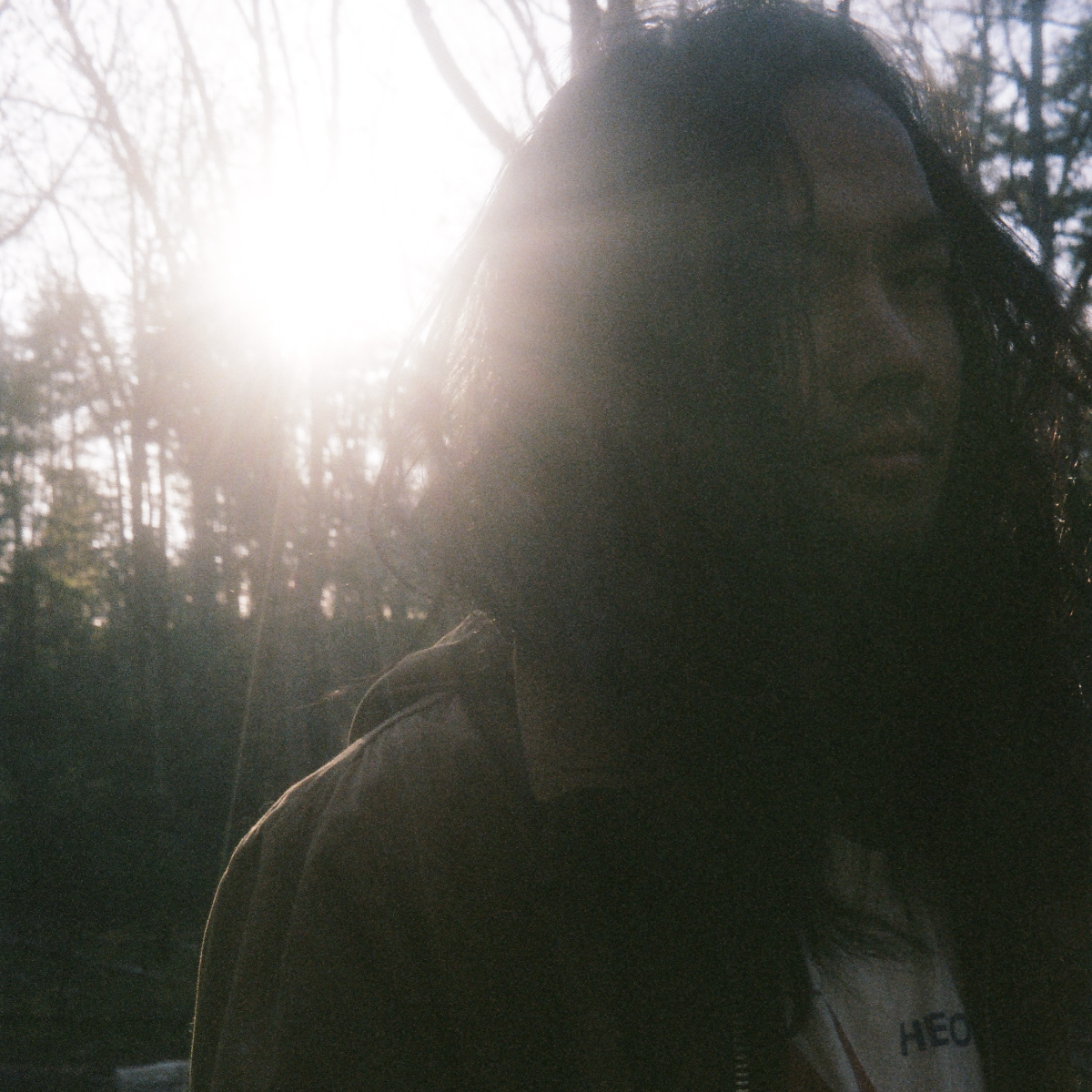
Christian Li is best known as a sideman with credits including Dave Liebman, Sungazer, Kevin Sun, Shubh Saran, Siv Jakobsen, Montell Fish, Orville Peck, and Alison Shearer. He's also performed at Newport, Monterey, Glastonbury, the Sydney Opera House, and the Hollywood Bowl. He teaches private instruction and performance labs at Berklee, and he has held adjunct posts at The New School and Columbia. Broken Neon Sign, out now on Endectomorph Music, is the first record with his own name on the cover.
Broken Neon Sign runs fourteen tracks in thirty-one minutes, which is punk-record proportions on a jazz pianist's debut. Six of those tracks are Li alone at a prepared piano, most of them under two minutes. The rest bring in Asher Kurtz on guitar, JP Bouvet and Jordan Rose on drums, Mike Bono on bass and guitar, Jackson FitzGerald on bass, Michael Sachs on woodwinds, Akhil Gopal on trumpet, Christopher Marion on strings, and Veronika Morscher singing. It all grew out of improvisations taped at Figure 8 Recording in Brooklyn, then sifted, cut, and fastened back together over months. The result is haunted and lighthearted in roughly equal measure, and the track titles split the same way, with "Leaky Brain," "The Robots Are Coming to Kill Us All," and "Ambulance Chaser" on one side and "Monks," "Grotto," and "Firmament" on the other.
The one that got me is "Grotto," a hundred seconds of prepared piano that sounds like a music box somebody dropped down a stairwell. Then I read the credits and discovered that Li is the only one performing on this cut, and that five more tracks are the same way. The press notes are almost entirely about the room, so I was curious about the idea of peppering Broken Neon Sign's room with solo pieces. I also pushed on a sentence from those notes, the one where he says that for his own sanity he still sees this as an instrumental record with vocals, because "for my own sanity" seems to point to something provocative. Then, as always, I made him name something he loves that more people should know about. Here's Christian Li:
Thanks for having me! I'm a pianist living in Brooklyn, NY. I discovered jazz in my teens—I was lucky to have been mentored by older musicians when I was growing up around Elmira, NY in the early 2000s. There was this bar called Green Pastures in Elmira which had been open since the '30s, and this incredible drummer named George Reed held court there. He was in his eighties when I was in my teens, and we played together almost every week with different musicians from the area. Growing up with that, it would have been crazy if I had decided to become a doctor or something. After I graduated high school, I left for college, George died, and Green Pastures closed. I was lost in the musical wilderness for a good decade or so. I'll spare you all the gory details. These days I play with Unknown Mortal Orchestra, and being around them has helped me find my feet again. I'm feeling pretty good.
Anyways, this is all relevant because in the wilderness years I was just looking for an excuse to get out of music entirely. When things started feeling better, it suddenly seemed really important to make a record. I booked the only studio I knew of where I could prepare a piano and recorded some improvisations with drummer JP Bouvet and guitarist Asher Kurtz. I forced myself to follow ideas even if they made me uncomfortable or required skills I didn't yet have—writing lyrics, working with new song forms, singing, screaming, using half-broken gear—and I had to figure out how to do all of that in a way that felt genuine. I'm excited to continue and make a body of work, which is something I had until recently felt incapable of.
I couldn't possibly have come up with any of the solo improvisations without the mise-en-scène in the studio. I was struggling gleefully with the unpredictability and nonlinearity of the prepared piano, and being with Asher and JP in an improvisational churn of response and counter-response helped me make meaning of the sounds that were coming out of the instrument. The solo tracks were doodlings between trio takes or excised pieces of longer trio improvisations, but regardless, they were part of the conversation happening that day.
I didn't really have a concrete narrative about the record as I was making it. I was mostly lost in the sauce. It's only when I was getting ready to put the record out that people started asking me to tell stories about it, and the simplest story is the one about the three musicians in a recording studio. And in trying to tell that story, reflecting on the feeling of making music that day, the distinctions between 'we played this together' and 'I played this alone' are totally flattened. It may not be the most accurate representation of the hard facts of reality, but I do think it's the truest.
It's probably like how parents sometimes still see their adult children as kids (or is that just my parents?). For many months, the record was just a brood of cute little instrumental tracks that I was developing, and even now, the instrumentals are the essence of the record for me since everything grew out of them. I'd be lying, though, if I said that my self-image and my various insecurities didn't play a role in how I chose to present the record. It feels a bit premature to call myself a 'singer-songwriter' or to take on a whole new identity. I'm also lowkey afraid that calling myself anything but an instrumentalist will put me in a conversation with artists I can't measure up to, or that it'll make people listen too closely to my voice, or whatever. It's silly.
On "Firmament," I was trying to make the vocal parts feel like a synthesizer. The melody doesn't feel intuitively vocal to me—it's pretty pointy and almost entirely made up of large leaps. It's the type of thing that I would play on a keyboard, and it's pretty unwieldy to sing (although Veronika was able to just toss it off!). To me, that track actually feels like a good example of how I'm songwriting from an instrumental perspective, but your mileage may vary.
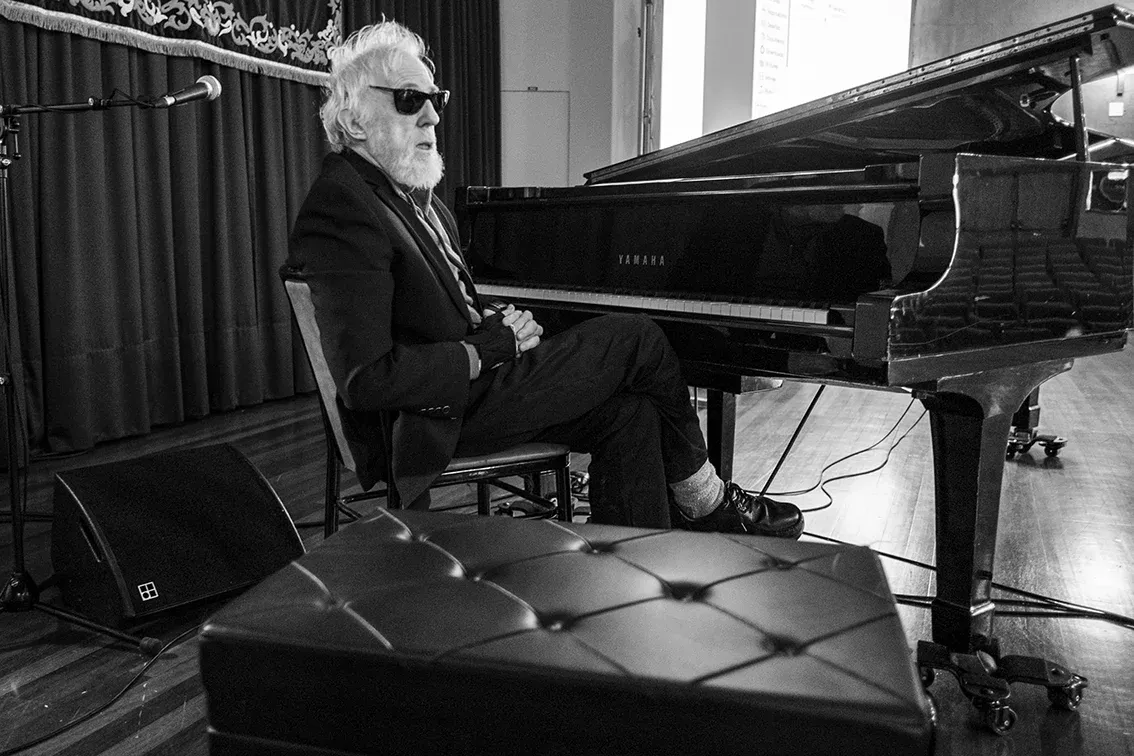
Christian Li now generously tells us about something he loves:
There's a pianist I really love named Ran Blake. I would say he's a pianist's pianist. I heard his album The Newest Sound Around when I was about 20 and it really spun me out. The setup of the album is pretty conventional—the tracks are all jazz standards that he recorded as a duo with vocalist Jeanne Lee. But the actual sound of the record is totally off the charts. Ran loves film noir, and he's quite open about the genre's influence on his playing. His playing does really unfold in shadowy black and white, with these thick harmonies and dramatic gestures that can cut you down and seduce you in the same breath. He's a master of balancing density and space, and somehow both feel heightened in his playing. And no matter how arcane his choices, he always draws you deeper into the feeling of the song he's playing. Maybe it's that film noir influence, but his playing feels somehow closer to the cinematic or theatrical roots of a lot of these standards, even as he hits you with voicings that wouldn't sound out of place in a Charles Ives composition.
Listening to a Great Master like Ran Blake reminds me of how amazing the piano is. Maybe that sounds trite, but I take it for granted sometimes. I've been with this instrument for 31 years. I don't always feel like I have the juice. Experimenting with prepared piano for this record was my way of trying to gin myself up again. It's comforting to know that, somewhere out there, a pianist can please the gods with just two hands and the instrument.
Run-Out Groove
- The Tonearm is a reader-supported publication, free of advertising and paywalls. Our supporters help fund our writers and make the site possible. Please consider joining and helping us to continue our mission.
- Join the rapscallions of The Tonearm on our new Slack community.
- Sign up to receive our latest articles directly to your inbox in a snazzy, easy-to-read email version. Just go to your account, manage your email preferences, and flick the lever to receive The Total Tonearm.
- The easiest and best way you can help us? Please share this newsletter and our stories with your friends.
Thank you for reading! We'll see you again next week. 🚀


Comments