


For over 25 years, Laura Veirs has built a career around music that mixes intimate storytelling with adventurous musical arrangements. After releasing her self-titled debut album in 1999, she gradually established herself as a distinctive voice, releasing 14 albums while moving between folk, indie rock, blues, bluegrass, and country, with standout songs including "Galaxies" and "July Flame." Along the way, Veirs has continued to evolve as a songwriter, producer, and musician, collaborating with artists such as Neko Case, k.d. lang, Sufjan Stevens, and the Decemberists. After more than paying her dues in the music trenches, Veirs received the Oregon Music Hall of Fame Lifetime Achievement Award in 2024.
Veirs has also explored other creative outlets, including visual art and writing, while also teaching and raising a family. After years of documenting her life and creative process in journals, she has found herself looking back on different periods of her career and how they've shaped her as a person and an artist.
I spoke with Laura about her latest album, Temple Songs, how her songwriting process and sound have progressed, the different ways she approaches collaboration and recording, and some insights into her past work.
The transcript has been edited for length, flow, and clarity.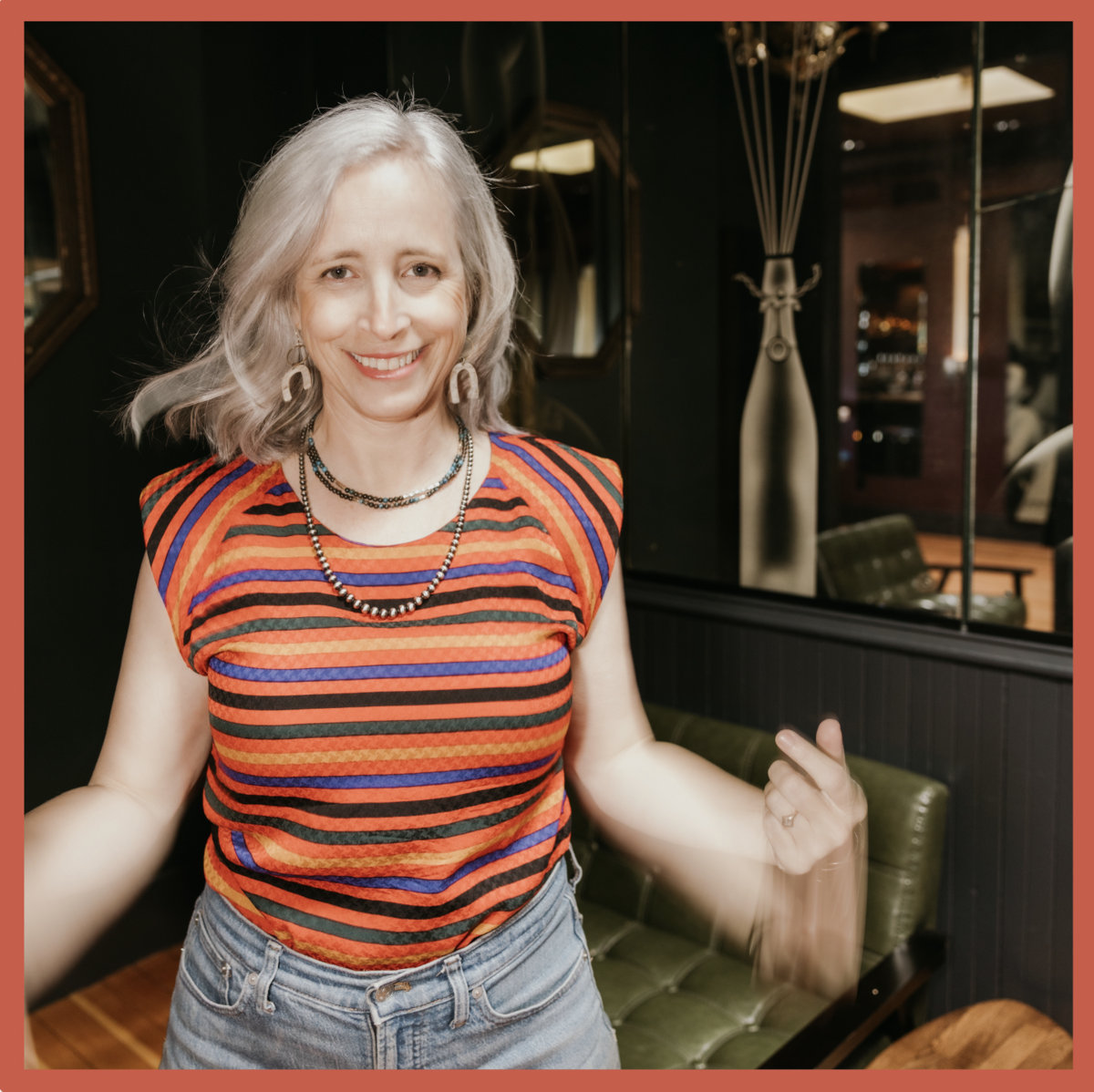
Carl Dexter: I started listening to you around 2006 or '08, when I was in university; I was in an indie-folk kind of phase, and I've gotten away from that in the past few years, but reintroducing myself to your music has been really interesting. And that led me to Temple Songs. This is the first album you've been completely on your own; was there a specific moment where you really realized you wanted to go it alone, or was it more gradual?
Laura: I keep this journal; it's a five-year journal, so you do a page every day, and it's like 2024, 2025, 2026. So I was looking through 2024 the other day. In September 2024, I saw that I had written that I wanted to create an album all by myself. And then, a year later, I was doing it.
But really, it took 30 years of thinking about it; this is my 14th album. I've always worked with producers, mostly my ex-husband, who was my producer for 20 years. Then, in 2022, I recorded an album with Shahzad Ismaily in New York and Portland, which was my first co-production. So I dabbled in production.
Over the last few years, I lost my connection to music. I just didn't feel inspired, didn't feel like pushing myself to write, and I was going through a lot of transitions, like moving houses, getting married, blending a family, and remodeling the house to add the new kids. We've got four teenagers, and I'm also working in visual art and teaching and coaching, so I've been very busy, but the music side wasn't interesting to me for about four years. I wasn't feeling it; I think I was burnt out. Now, I'm in this studio I built called the Temple of Bloom.
Carl: Yeah, I wanted to ask about the studio. It seems cozy.
Laura: It's not very big, but it's where I made the record, which is why it's called Temple Songs. But this did happen pretty slowly, the realization that this is something I wanted to do. I was doing a lot of other work here, like coaching, artwork, and working on a book about creativity. I realized this was a really quiet space. I didn't build it to be a recording studio; I built it to have a place to work away from the blended family, because there are six of us. I thought, "Oh, maybe I can record here."
Carl: Sounds like an awesome process. Were there any roadblocks along the way?
Laura: I had a lot of negativity and fear associated with recording. When I recorded, I realized I have a bunch of songs; I have hundreds of songs no one's ever heard, so I wanted to grab one. It still resonates, and it was one I wrote in, I think, 2021 about one of my kids, and it's called "River's Song"; it's towards the end of the album, it's got a simple structure, but kind of a complicated guitar part. I wanted to try to record this, so I set up the mic four inches away from the sound of my voice and my guitar, and then the two mics, and I just played it across.
I think I did three passes, then came back later to listen, and I was like, "Sounds good, I really like this." And that was the beginning of realizing I can create on my own. And then I was like, "Oh, I have all these older songs, like 'Arc Still Bends.' That's a cool song; I want to record that."
So I recorded that one, then I did "Pulse," and from there a new song started coming to me, and then the album was done. So it didn't take very long once I made the decisions and commitments. There were a lot of days where I was feeling doubt and feeling worried that I was maybe wasting my time, or didn't know what I was doing, but I just remembered: "You're 52, you've been doing this forever. It's the time for you to decide what you're doing with your music."
So it's like I was wearing the songwriter hat. The performer hat. The engineer hat. The arranger hat and the producer hat. So, a lot of hats, but I was able to do it and navigate the problems that came up for me, whether that was a creative problem, like this bass line, or a technical problem, or "Why isn't this sound going through the computer?"
Carl: How did doing this on your own compare to working in a traditional studio?
Laura: At this stage, I really wanted to be alone. I just wanted to be by myself. And I didn't want anyone listening and judging in that moment of creation. When you have even one engineer in the studio, they're listening. That's their job. They're listening and recording you. They have to be there.
But it does add a layer of self-consciousness for me. I wanted to get into a place where I wasn't thinking about anyone else listening. And I was able to do that alone, in a way I think makes the performances sound relaxed, gentle, and authentic. And I also intentionally didn't learn how to edit because I didn't want to take out all my mistakes and all that stuff. It's so tempting to do that, but I wanted to capture performances, so I didn't edit. I think that the value of working alone for me is just that pure self-consciousness that can be captured. But I'm sure I'll work in studios again and with other engineers. I just needed a break from other people listening, judging, and deciding.
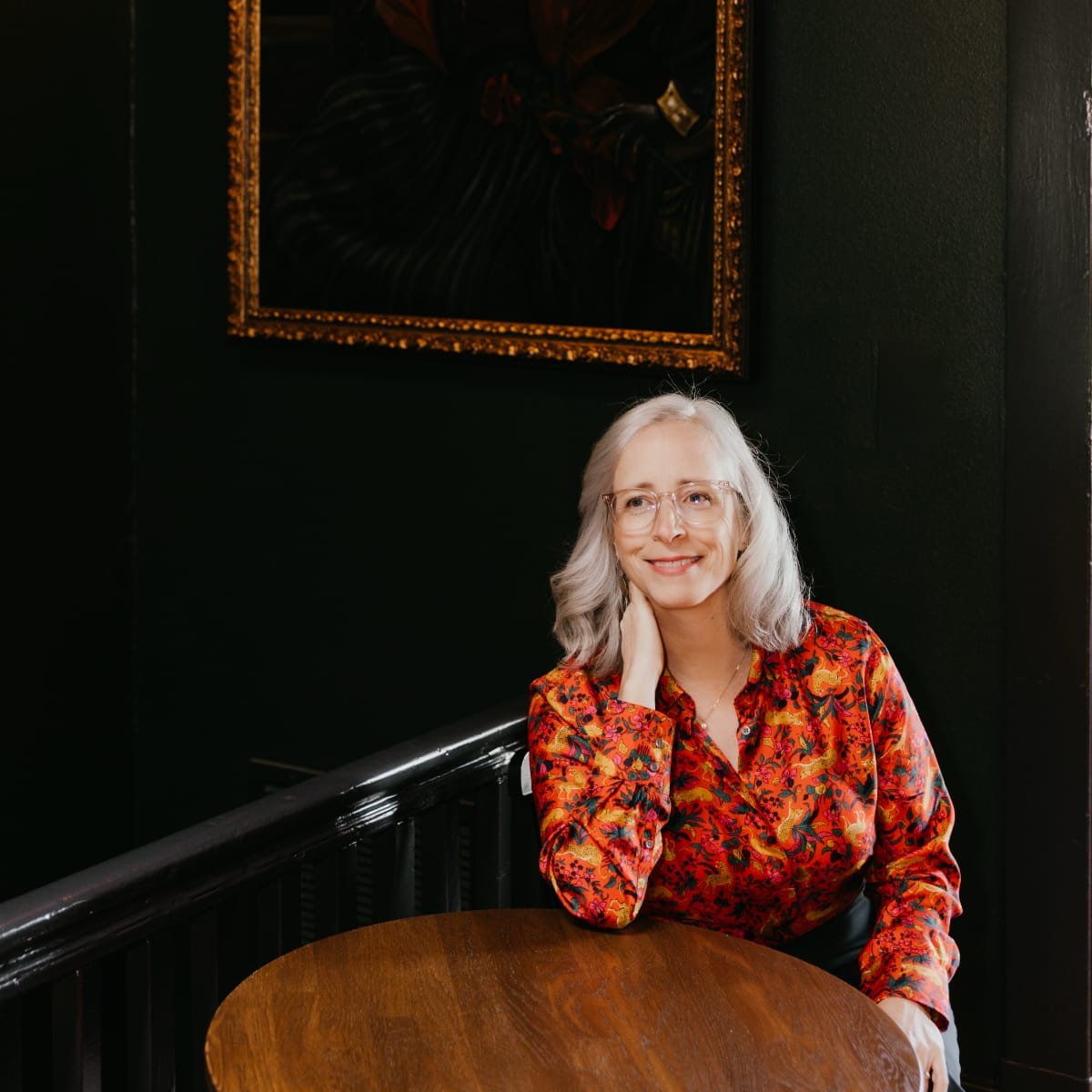
Carl: To go along with not wanting to edit, I believe you said something about embracing wabi-sabi. I want to hear more about how that philosophy changed the way that you make your music.
Laura: I'm a little new to the concept, but it resonates with me. It's the idea of embracing things as they are, embracing aging, embracing things falling apart, imperfections being beauty, like that concept of kintsugi. For example, the bowl is broken, and they put it back together with golden glue, and then it looks even more beautiful, because it has the golden stripe. I love that. And so that's the kind of aesthetic that appeals to me now, more than a perfectly polished pop presentation. It's coming more from using minimal tools, like two mics and a laptop and an interface, and I only used organic instruments. I didn't want to mess around with MIDI, because I was just starting to do that. It wasn't working out, and I thought, "Just play real instruments."
That's the focus of the album: interplay between nylon-string and electric guitars. There are a few tracks with layered vocals, bass, and drums, but pretty minimal tools. Then see what you can do with these limitations and be unattached to the perfection vibe—more attached to authenticity and performance in the moment. It's more folk or outsider art in terms of the philosophy I approached the recording with.
Carl: Would it be fair to say that you were emotionally attached to some of these imperfections in some kind of way?
Laura: I think that more than anything, I didn't want to tarnish the beauty of this piece of music. My friend likened it to a Japanese painting you see on white paper with a black paintbrush, and it's just a circle. It's beautiful, complete, but a little rough at the end. Beautiful, simple, elegant, like I didn't want to mess with that painting because if you edit it, it's gonna look weird. I want to capture this music as it happened in this moment, and not mess with it. So there was an emotional attachment to showing the listener that this is a passage of music that happened, and that's how it happened, instead of, like, going in and comping vocals, adjusting things, moving things around, and taking out weird hisses, knocks, or breaths.
For me, it's like I'm not going to fix it for many reasons. I was worried that if I started doing that, I would go down a rabbit hole of never-ending perfectionism. Building and then never finishing the record. That was a fear of mine because I have friends who are doing that. It's so tempting to make everything sound perfect. And so I just wanted to say there's another way here; you don't have to do that.
I like things that are a little messed up, but not, like, sloppy. I like things that sound alive and human. And so that was the underlying philosophy of my approach to this. I don't listen to it very much because I'm moving on, but when I do, it feels open-hearted and gentle, and a little vulnerable, too, because I did leave things on that other people would probably take off. But the overall feeling people have about the record, when I get feedback, is like, "I like this album. I like the vibe." And so, if I'm capturing a cool vibe, that's the most important thing to me.
Stay on top of The Tonearm.
Subscribe for exclusive interviews, cultural tip-offs, and community fun.
And your support keeps our site free of advertising and paywalls.
Carl: Temple Songs balances a lot of different feelings, like sometimes hope, but sometimes uncertainty, and I was just wondering if you could maybe speak a little bit more towards that balance.
Laura: That's what I'm interested in. Art is like the tension between light and dark, and the artist's ability to speak to both at once. To offer a reflection of the times we're in, and a sense of connectedness, hope, and forward motion. I didn't want to only write songs about rainbows and unicorns in the flowers. It's not how the world is right now. You know, it's never been like that.
But I also didn't want to just be swirling in darkness, because I'm not. And personally, I'm on a path to blossoming into a new life. My identity is shifting and changing, and I'm trying to capture the sense that you can go through divorce and single parenting and still meet someone awesome. My partner now, Morgan, plays sax on two tracks on the record. He's the only one who played on it.
Carl: Oh, he's the one who played on "Pulse"? Wow, great song.
Laura: Thank you. And then also "Out From Undercover." But yeah, we're in a crazy time with climate change, racism, misogyny, anti-trans, and rising autocratic governments all over the place. Many people are out of work, the income disparity, the billionaire/trillionaire class; it's crazy what we're all living through. I can't pretend we don't live with that, but I also don't want to just talk about that. I also want to say I'm here making my work, trying to show that there is joy, there is beauty, and there is love, and it's not all lost, because that's what I think. Partly the role of an artist is to provide a sense that you're not alone. I feel what you're feeling; we feel similar things, we can move through this together, and then also, yeah, this shit's messed up, so let's talk about it.
Carl: "No Masters" is not this spirit musically, but lyrically, I get this punk rock energy from it. I don't know if that's what you intended, but would that be a fair take?
Laura: Definitely, yeah. It's not a straight-up punk song, though. I've written those. I used to be in a punk band. It was all girls, in college. It was a very short-lived project, but my beginning was an all-women punk band.
Carl: That's very interesting to find out, because I previously thought your beginning was, from your first album, really bluegrass, country, kind of Americana.
Laura: I was into Riot Grrrl in the beginning. So late '90s, I was in college and learned about Riot Grrrl because I grew up in Colorado, where there was no music scene that I could see, especially no women. But when I went to college in Minnesota, there were a lot of women playing music and telling me about bands like Bikini Kill. And I was like, "Oh my god, this is awesome, I want to do that." So I started playing in a women's punk band, and we made, like, a short EP, and then we graduated, and it kind of fell apart.
Then I got interested in finger-style country blues and all that intricate guitar stuff. But my introduction to music was Ani DiFranco, the DIY release-your-own-stuff, be-your-own-manager, do-your-own-posters, like, the community working together to make stuff happen. And that's still the way that I work, in terms of self-releasing this album on my own. Like, money isn't the biggest reward here. It's a community and all hands on deck. Let's make cool stuff together.
Carl: You've collaborated with a lot of musicians over the years. When you did this album on your own, was there anything that you missed about collaboration? Or did it impact how you view working independently?
Laura: No to the first part. I didn't miss it because I was just very curious what my ideas were, because a lot of times when I made records I would just write the songs, and then everybody else would play all the parts, all the additions, and make many of the decisions. I had more say on Found Light, but I didn't assert my own voice very much in the studio, and so I didn't really miss collaborating, because I didn't miss that feeling of, like, whose idea is gonna rise to the top. I don't want to have to push my idea. But I do love working with other musicians, and I have so many musician friends who are so talented, far more talented than me in many ways.
I think I will collaborate again in the studio in the future, though I don't know what that means, since I haven't envisioned my next record. I love playing with people and collaborating, but for this one, I didn't miss it.
Carl: You said you've been writing for 25 or 30 years and took a break for a while. What keeps drawing you back in, and is there anything that's still challenging?
Laura: Probably the mystery of a song is what draws me back in. It's just such a mysterious thing. And everything is challenging—never-endingly difficult, you know, like in terms of writing.
It's weird, because I'll go through phases. Right now I'm in the tour promo phase. Then I'll stop that, go into the writing phase, and then the recording phase. It's, like, different phases, so I'm not writing right now. When I am in a writing phase, it's just such a mystery how a song comes together, and I can't explain it. I don't think anyone can. I think that that's just such a cool thing. That is always the allure: how can I find my way into another one? Or what's coming next? Music will evolve in my hands, in my head, like, what is coming. It's such a mystery.
As an artist, you don't know what you're going to do next. No one can see the future, but if you work an office job, you're pretty sure you're going to go in at 8 a.m. tomorrow and do your work. But as an artist, you don't know what's going to happen today. And so I think that part of the fun for me is just the mystery, but it can also be difficult, like if the money's not coming through, or people don't listen to that album as much, or it got bad reviews. There are a lot of pitfalls.
But I do love it. It's a never-ending discovery that can be directed in any number of rays off the sun of creativity. It's like guitar playing, specifically nylon string guitar playing, or singing; you could go down infinite paths of learning. And, like, recording—it's a whole art form that I'm now interested in again. I was kind of interested in my 20s with four-track cassettes, and then I moved away into just working with people who did it for me. And also mixing; that's a whole art form I have not bitten off. This album was mixed by Philip Weinrobe, and he's an amazing mixer. So I'm grateful to him, but like any one of those pathways for me is very interesting, and it's just up to me to decide, "Okay, which one are you going to explore next?"
Check out more like this:
 Carolyn Zaldivar Snow
 Lawrence Peryer


Comments